
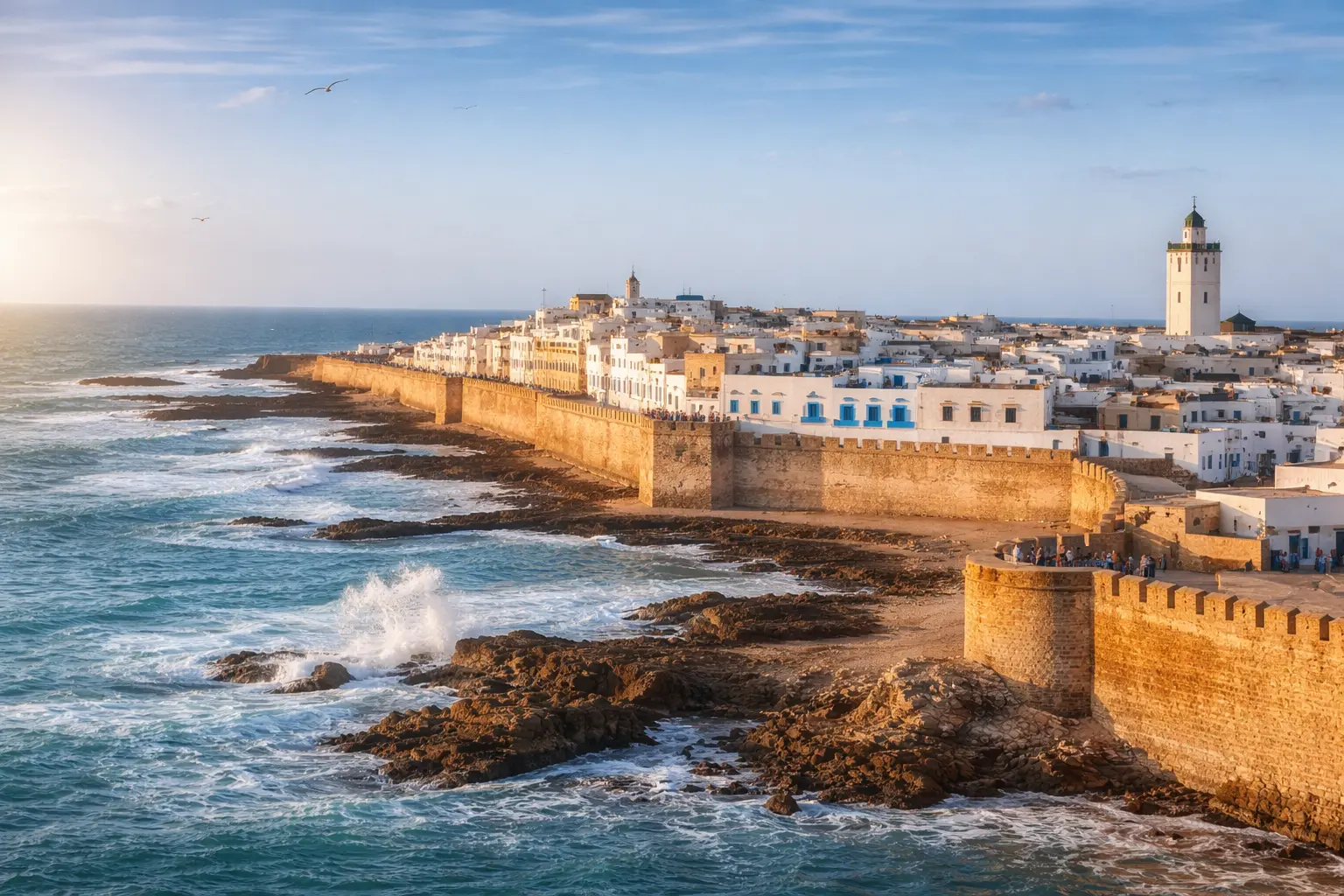

When I first arrived in Essaouira nearly a decade ago, I was in desperate need of a reset. I had come from Marrakech, where the energy can be thrilling but also overwhelming: the crowds, the noise, the constant movement, and the pressure of the souks had left me more exhausted than enchanted. I hoped that this smaller Atlantic town might offer a softer, slower side of Morocco.
It did exactly that.
From the moment I stepped through its gates, Essaouira felt different. The pace was gentler, the streets more breathable, and the atmosphere noticeably lighter. Instead of chaos, there was rhythm. Instead of pressure, there was ease. I spent my days wandering through the medina, lingering in little cafés, admiring the white-and-blue facades, and walking by the ocean whenever I felt like doing absolutely nothing at all. I loved it so much that I extended my stay.
I finally returned this year, this time with my family. Even though I already knew how special Essaouira could be, I still arrived with a touch of anxiety. So many places that once felt soulful and unspoiled have changed dramatically under the weight of tourism. I wondered whether Essaouira had become another version of itself—more polished perhaps, but emptier somehow.
I’m delighted to say that it has not.
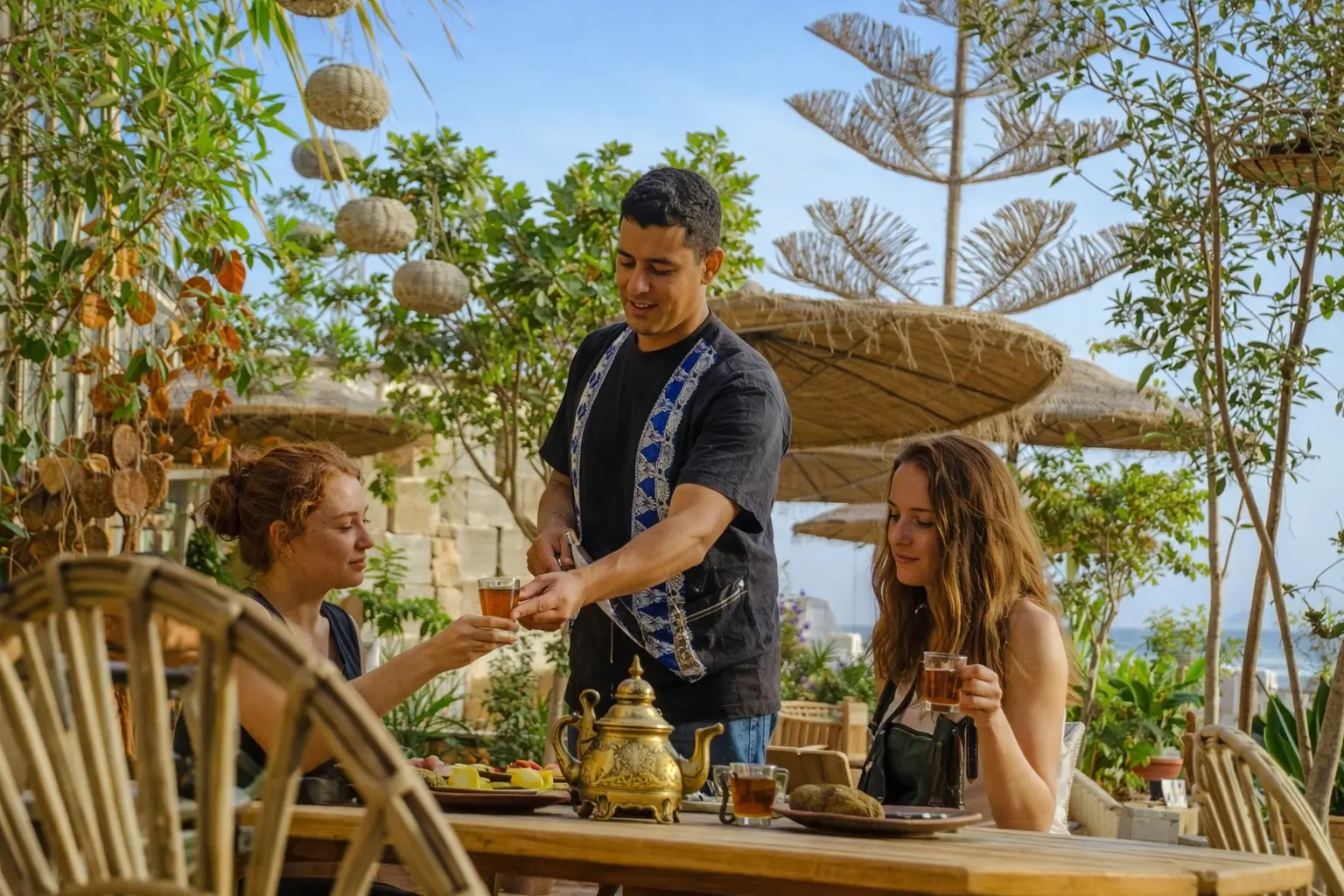
Yes, the town has evolved. More riads have been restored, more businesses have opened, and the visitor economy is more developed than it once was. But the essential spirit of Essaouira remains intact. It is still a place to slow down. It is still a place to breathe. It is still a place where art, sea air, fresh fish, and everyday beauty seem to exist in perfect balance.
If you are planning a trip through Morocco, Essaouira deserves far more than a rushed day trip from Marrakech or Agadir. You certainly can visit it that way, but doing so misses the point. This is not a destination built around checking off major landmarks at speed. Essaouira is best enjoyed over several days, with room in your itinerary for aimless walks, unplanned meals, and hours that pass with nothing more ambitious than sitting by the sea.
That, really, is the magic of the place. Here is how to enjoy Essaouira at its very best.
Explore a creative sanctuary
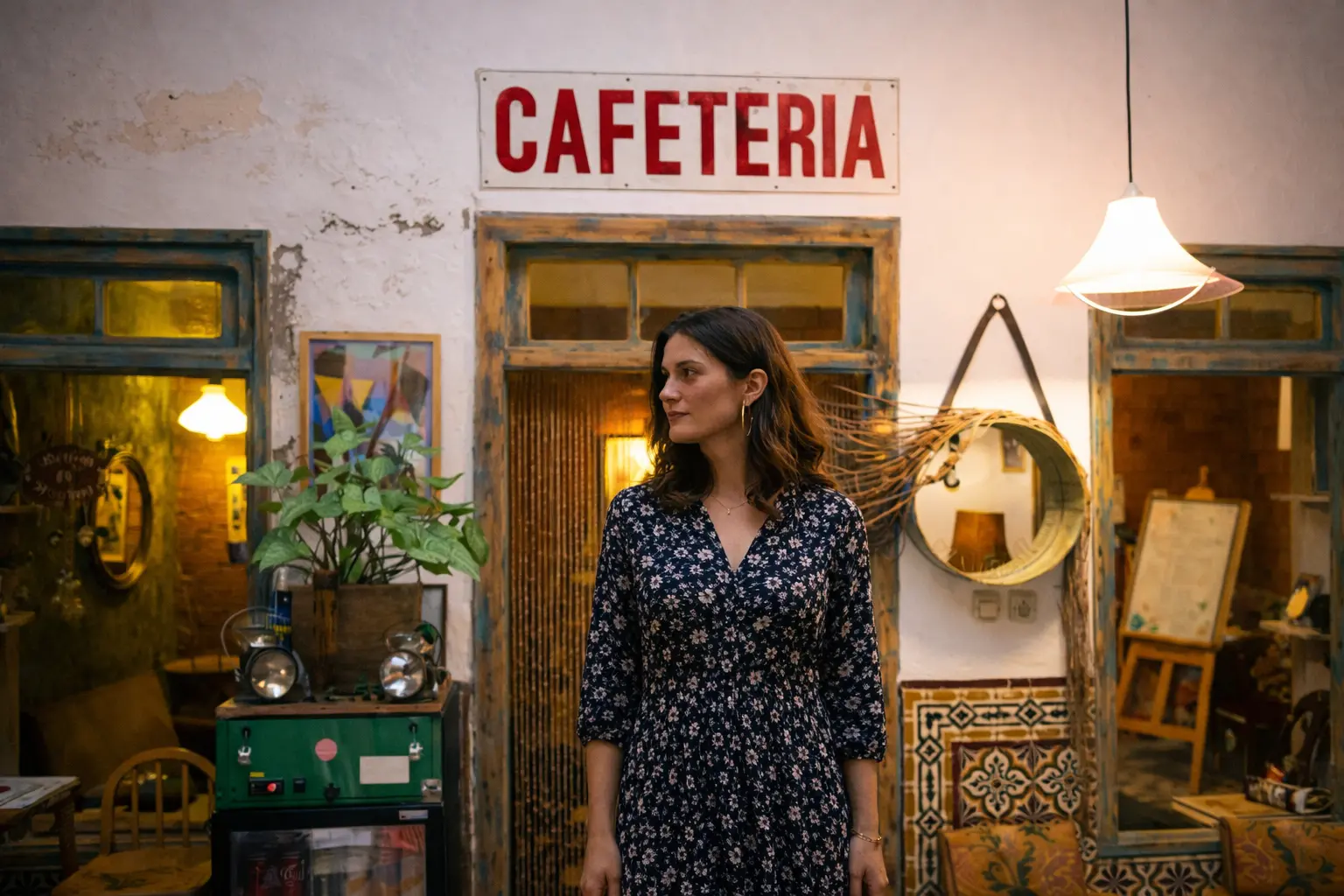
One of the first things that makes Essaouira feel distinct is its creative identity. This is not just a historic seaside town; it is also one of Morocco’s most artistic and atmospheric places. For decades, it has attracted musicians, painters, writers, designers, and independent spirits drawn to its light, its coastline, and its relaxed mood. Its reputation grew in the 1960s and 70s, when it became associated with the overland “hippie trail,” and that bohemian influence still lingers in a very pleasant way.
The medina is full of small galleries, workshops, concept stores, and boutiques. You can turn down an ordinary lane and suddenly find bold stencil art, handmade jewelry, delicate watercolors, or beautifully crafted woodwork. Essaouira’s creative energy is not confined to a handful of curated venues; it seems woven into the daily life of the town. Even many of its cafés, guesthouses, and shops feel thoughtfully designed rather than merely functional.
That sense of character is part of what makes simply walking around so enjoyable. Unlike in more intense Moroccan cities, you are rarely made to feel that you must buy something every time you pause to look. You can browse. You can admire. You can wander without agenda. In Essaouira, the atmosphere invites curiosity rather than consumption.
The city is also strongly associated with Gnaoua music, the hypnotic and deeply rhythmic genre rooted in sub-Saharan African and Moroccan traditions. If you are lucky, you may stumble upon live performances in town, where the sound of metal castanets and trance-like chants creates an atmosphere that feels inseparable from Essaouira itself. And if your trip happens to coincide with June, the Gnaoua World Music Festival is one of the most memorable cultural events in Morocco.
Even if you have no specific cultural agenda, Essaouira rewards anyone who likes places with soul. Its beauty is not polished into perfection. It is textured, weathered, artistic, and deeply human.
Go shopping without the stress
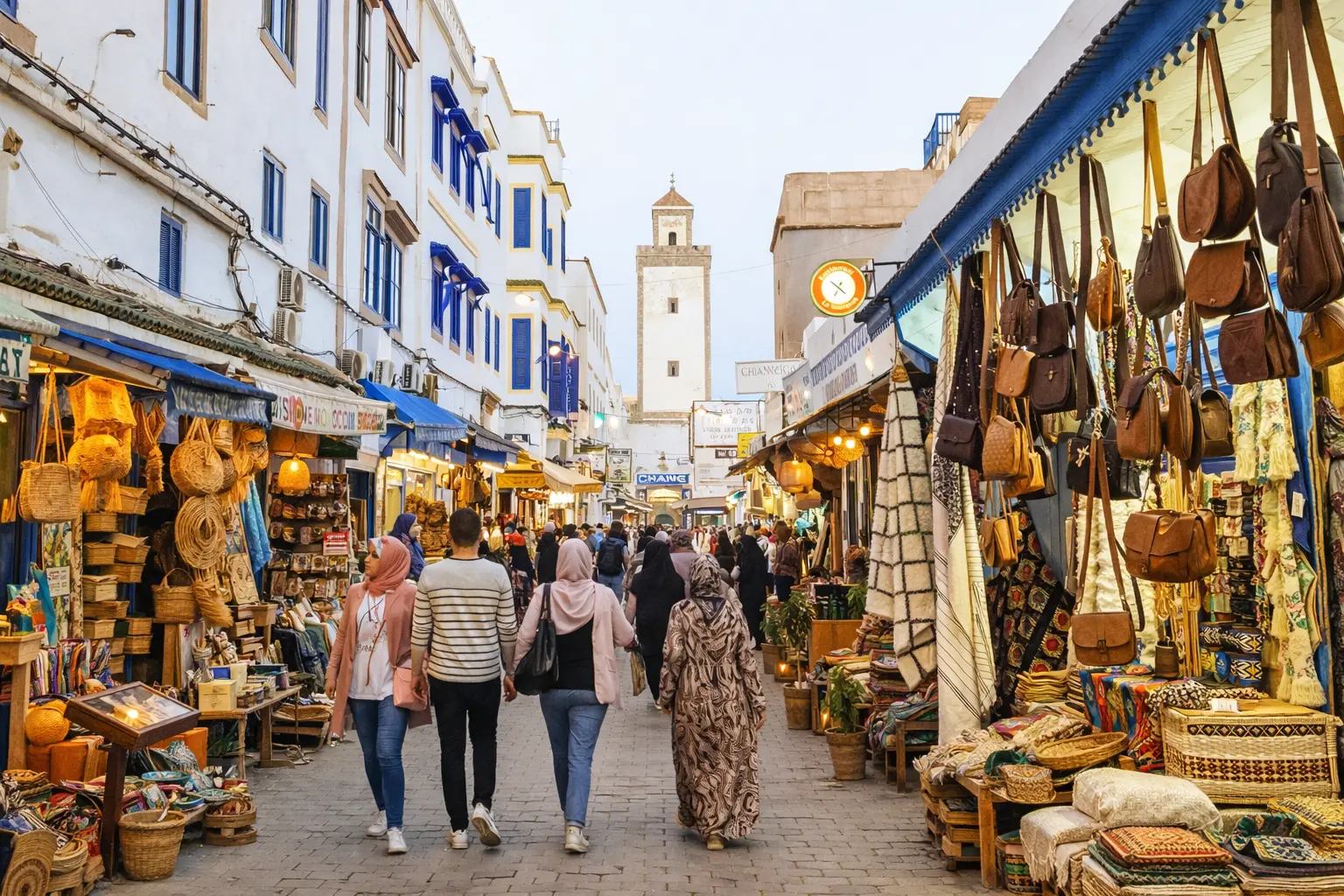
If you have already spent time in Marrakech, Fes, or other major Moroccan cities, then shopping in Essaouira may feel like a revelation. The medina here is lively and attractive, but the overall experience is far less intense. Sellers tend to be friendlier and more laid-back, and although bargaining still exists, it rarely comes with the same level of pressure.
This makes Essaouira one of the best places in Morocco to buy souvenirs, gifts, and small design pieces for your home. You can take your time browsing ceramics, spices, textiles, leather bags, woven baskets, oils, tea blends, and artwork without feeling immediately cornered into a transaction. The result is not just a more pleasant shopping experience, but often a more successful one as well. You are better able to notice quality when you are not simply trying to escape a hard sell.
That said, it is worth being realistic: prices in Essaouira are not necessarily cheap. Vendors understand what international visitors are willing to pay, and not everything is a bargain. Still, the gentler atmosphere makes the process much more enjoyable. For many travelers, that is worth a great deal.
Whenever friends ask me where to buy souvenirs in Morocco, I often suggest waiting until they reach Essaouira. It is simply easier to make thoughtful purchases here. During our last trip, we left with bags of mint tea and royal tea, spices, art prints, and a beautiful leather shoulder bag—items we were happy to buy because the experience felt enjoyable rather than exhausting.
Slow down and savor the flavors
Moroccan cuisine is already one of the pleasures of traveling in the country, but Essaouira adds a coastal dimension that makes it especially appealing. Fish and seafood take center stage here, and many restaurants base their menus on what has come in fresh that day. That alone gives the town a culinary identity of its own.
Of course, you will still find all the classics—tagines, grilled meats, couscous, salads, msemen, mint tea—but Essaouira is the kind of place where a lunch of grilled calamari or a perfectly cooked fish fillet with saffron sauce can become one of the highlights of your stay. There is something deeply satisfying about eating seafood within sight of the harbor where it was landed just hours earlier.
The dining scene is also pleasantly varied. You can choose traditional Moroccan restaurants tucked into the medina, relaxed terrace cafés, modern brunch spots, or places with a more contemporary international feel. During our visit, we found ourselves alternating between seafood dinners and lighter lunches of bruschetta, dips, yogurt, and fresh juices in small square-side cafés. It suited the rhythm of the town perfectly.
Essaouira is a place where meals should not be rushed. Sit longer than necessary. Order another tea. Watch the passing street life. Let the wind and the sunlight do part of the work. The town encourages a kind of dining that feels leisurely and grounded rather than scheduled.
Head into the wild dunes
One of Essaouira’s great advantages is how quickly it gives way to open landscape. Drive just a few minutes south of the medina and the urban texture begins to dissolve into sweeping sand, scrubland, and beach. The transition is dramatic. Within almost no time at all, you go from old city walls and painted doors to wind-shaped dunes and wide Atlantic horizons.
This is one of the best areas around Essaouira for outdoor activities. Camel rides, horseback excursions, and quad bike tours all head through these sandy stretches, and the scenery is genuinely beautiful. I approached camel riding with some hesitation, because animal-based tourist activities can be deeply problematic in some places. But in our case, the experience was reassuring from the start: the animals appeared well cared for, the guide treated them respectfully, and the entire outing felt calm, professional, and humane.
What surprised me most was not just how scenic it was, but how enjoyable the movement itself became. Riding along the shoreline, crossing dunes, and even passing through shallow water for stretches created a surprisingly dynamic experience. With the ocean on one side, Mogador Island in the distance, and kitesurfers tracing color across the sky, the backdrop was constantly shifting.
The dunes also offer excellent opportunities for photography. From the right angle, the landscape can look almost desert-like, which is ideal if you are not heading farther inland to the Sahara but still want that evocative Moroccan sense of vastness. Yet the real pleasure lies less in the photos than in the simple feeling of being out in the open air, away from town, moving through a landscape that feels both coastal and wild.
If camels are not your thing, there are plenty of alternatives. Horseback riding is popular here, and quad biking offers a more adrenaline-driven way to explore the dunes. Whatever your preference, this southern stretch adds a wonderful sense of space to the Essaouira experience.
Relax at the beach
South of the medina lies Essaouira’s long sandy beach, backed by a wide promenade lined with cafés, restaurants, and hotels. It is one of the town’s defining features and one of the easiest places to spend a lazy afternoon. If you are staying in the medina, simply head out through the southern side and follow the sound of the waves. If you are staying in the newer part of town, the beach is even more immediately present.
Before setting out for a full beach day, however, it is worth checking the wind. Essaouira’s nickname as the Windy City is well earned. On some days, the breeze is refreshing and invigorating. On others, it can feel like a full sandblasting session. That said, even the windy days have their charm. Dozens of kitesurfing sails lift above the bay, the light is beautiful, and the beach remains a great place for a walk.
On calmer days, the atmosphere changes completely. The broad sweep of sand becomes ideal for sunbathing, paddling, or simply sitting and looking across the water toward Mogador Island. There is enough space for everyone, and the general mood is relaxed. It feels more open and breathable than many urban beaches.
For those who want an even quieter coastal experience, Sidi Kaouki makes an excellent day trip. Located roughly 30 minutes to the south, it retains the feel of a low-key surf village, with a handful of hostels, auberges, beach cafés, and campsites scattered along a wide, often beautiful shoreline. Although tourism development may eventually change it, for now it still offers a peaceful escape from town and a wonderful place to do very little at all.
As for beachwear, common sense and cultural sensitivity go a long way. Locals often dress conservatively, even by the water, but tourists generally have much more flexibility on the beach itself. Swimwear is accepted in the beach zone; just remember to cover up when walking back into town or sitting down at cafés and restaurants nearby.
Hit the waves
Essaouira’s coastline is not only beautiful to look at; it is also a playground for watersports. The strong Atlantic wind makes the town especially well known for kitesurfing, but regular surfing, bodyboarding, and windsurfing are also common. Even if you are not particularly experienced, it is very easy to get involved.
Surf rental shops are easy to find, and lessons can be arranged without much effort. That accessibility is one of the town’s strengths: you do not need to arrive with your own gear or with months of planning. If the conditions look inviting, you can simply decide to try.
I am by no means an expert surfer, and if I am honest, I prefer bodyboarding for its more forgiving learning curve. But even from that perspective, Essaouira is a fun place to get in the water. There is a strong sense of activity along the beach, and even watching the kitesurfers from shore is entertaining in itself. The bay becomes a constantly moving scene of color, speed, and athleticism.
If kitesurfing is something you have always wanted to learn, Essaouira is one of the best places in Morocco to do it. The wind is a challenge, but also the reason the sport thrives here. Several schools offer structured courses for beginners and multi-day programs for those who want to progress more seriously.
Stay in a traditional riad
A stay in a riad is one of the defining pleasures of travel in Morocco, and Essaouira is an excellent place to experience one. While the grandest riads in Marrakech may be more lavish or theatrical, those in Essaouira often feel more intimate, relaxed, and in keeping with the town’s character.
We stayed in a charming riad tucked down a quiet alley inside the medina, and it turned out to be the perfect base. The location allowed us to step directly into the life of the old town while still enjoying peace and quiet at night. Like the best riads, it revolved around an inner courtyard and featured thoughtful traditional details without ever feeling heavy or overly ornate.
One of the pleasures of staying in a riad is that it changes your relationship to the city. Instead of sleeping in an impersonal hotel block, you become part of the architectural language of Morocco itself. You hear the sounds of the medina at a distance, climb tiled staircases, eat breakfast on a terrace or around a courtyard, and return in the evening to a place that feels distinctly local.
Essaouira offers options for nearly every budget, from sociable hostels to affordable guesthouse-style riads and more upscale boutique stays near the beach. Solo travelers, couples, and families can all find something suitable. In most cases, staying within or near the medina is ideal, as it keeps the city’s atmosphere right at your doorstep.
Watch life unfold at the fishing harbor
If there is one place in Essaouira where the town’s working identity still feels especially vivid, it is the harbor. This is best visited in the morning, when the scene is busiest and most photogenic. Fishermen unload their catch, repair nets, sort crates, and move with the practiced efficiency of people repeating routines shaped by generations.
The harbor is visually unforgettable: rows upon rows of blue wooden boats, piles of nets, gulls circling overhead, workers bent over repairs, and the white walls of the city rising behind them. It is at once industrious and beautiful. Even travelers who are not especially interested in maritime life often find themselves lingering here much longer than expected.
There is also a practical pleasure to visiting the harbor: in some cases, you can buy fish directly and have it prepared at a nearby restaurant. I did this once on an earlier visit, and it turned a simple lunch into something far more memorable. It is not every day that you can choose your meal almost at the source.
Beyond the mechanics of fishing, the harbor provides one of the most grounded glimpses into Essaouira’s daily life. It reminds you that this is not merely a pretty coastal destination for visitors. It is still a working port, still tied to the sea in very real ways.
Go on a cat safari
This may sound like a joke, but it is one of the most charming parts of the city—especially if you are traveling with children. Essaouira is full of cats. They are everywhere: dozing on café chairs, sleeping on motorbikes, weaving between market stalls, watching fishmongers with professional focus, or curling up in baskets and doorways as if carefully placed there by a stylist.
Unlike some urban stray populations elsewhere, many of Essaouira’s cats appear healthy, calm, and accustomed to a degree of affection from locals and visitors alike. For families, this can become an unexpected source of delight. Our young daughter treated each cat sighting as if it were a major wildlife discovery. At no point was she bored.
Even without children, the cats contribute to the atmosphere of the place. They seem to belong naturally to the visual language of Essaouira: whitewashed walls, blue shutters, weathered wood, sea light—and a cat asleep in exactly the right corner of the frame.
Climb the fortress walls
No visit to Essaouira is complete without spending time on the city’s ramparts. The walls offer some of the most iconic views in town: the Atlantic crashing against the rocks, cannons aimed seaward, gulls wheeling overhead, and the medina stretching behind you. It is one of those places where history and scenery reinforce each other beautifully.
Essaouira was deliberately developed in the 18th century by Sultan Mohammed III as Morocco’s principal Atlantic port, and the fortifications remain a powerful reminder of that strategic past. Their design reflects European military influence, and the city’s old Portuguese-style bastions give it a character unlike anywhere else in the country.
Walking the ramparts is not only visually rewarding; it is also one of the best ways to understand the city’s identity. Essaouira was never just a picturesque town by the sea. It was a place of trade, defense, international exchange, and maritime ambition. The cannons lining the walls—some bearing Dutch and Spanish inscriptions—speak to that layered history.
The views are magnificent, but a little caution is wise. Some sections feel quite exposed, and there are no extensive barriers. It is best to stay mindful, especially when the wind is strong. Even so, the experience is exhilarating. Few places combine sea air, history, and cinematic beauty so effectively.
You may also recognize the ramparts from popular culture. Essaouira appeared in Game of Thrones as Astapor, the city where Daenerys Targaryen acquires the Unsullied. Even for those unmoved by television references, it is interesting to see how little cinematic embellishment the location required. The architecture and seafront drama were already there.
Why Essaouira remains my favorite place in Morocco
Morocco is full of unforgettable destinations: imperial cities rich in history, mountain landscapes of startling beauty, desert camps under vast skies, and villages where time seems to move differently. Yet Essaouira continues to hold a special place for me because of what it does not demand.
It does not demand stamina in the way Marrakech often does. It does not require a tightly planned sightseeing agenda. It does not insist on spectacle. Instead, it offers something rarer: balance.
In Essaouira, you can spend the morning at a working harbor, lunch on fresh seafood, shop without stress, watch kites drift over the bay, explore a creative medina, and end the day on fortress walls with the Atlantic in front of you. Or you can do half of that and still feel that you have had a perfect day.
That is why I continue to recommend staying longer than you think necessary. Essaouira reveals itself best when you stop trying to optimize every hour. Leave space. Follow the streets. Sit down when something looks inviting. Return to the same café twice. Let the town set the pace.
After all these years, that is still what I love most about it. Essaouira remains one of the few places where doing less feels like experiencing more. And in Morocco, for me, it is still the place I would return to first.
That’s my guide to enjoying Essaouira at its best. If you’re planning a wider journey through Morocco, this town is one stop you should never rush. Give it time, and it will reward you generously.