


This article contains affiliate links. If you book through one of our links, we may earn a commission at no additional cost to you.
On Nyepi, Bali’s Day of Silence, public life falls quiet and major services close, making the date as important to a trip as the weather. At other times, the island offers a clear choice of moods: Ubud’s rice terraces and spas, Seminyak’s restaurants and sunset beach clubs, Sanur’s calm promenade, or the quieter east-coast landscapes around Amed and Sidemen.
This Bali travel guide is for couples planning a first or repeat holiday who want shared experiences without turning every day into a transfer. Use it to choose dates around the drier season, July and August crowds and the annual Nyepi closure; match your base to the atmosphere you want; and shape a realistic seven- to 10-day route with time for scenic dinners, cultural sites, beaches and downtime.
Quick answer: For most couples, April–October is Bali’s broadly drier travel window; July and August are busiest, while November–March is wetter and more humid. A balanced seven- to 10-day trip can combine Ubud, a southern-coast base such as Seminyak, Jimbaran or Sanur, and optionally Nusa Lembongan or Nusa Penida, but check the annual Nyepi date because closures affect transport and services.
Why Bali works for couples

For couples who want changing scenery rather than a single resort, Bali offers an easy mix of places and pace. In Ubud, a morning might run from rice-terrace walks and craft areas to a spa or a slow dinner beside a river valley. It feels cultural and green, but beaches are not close, and traffic can make short journeys feel long.
Evenings suit Seminyak and Petitenget, where restaurants sit alongside boutiques, villas and sunset beach-club settings. Jimbaran is better for a simple beachfront seafood dinner; Sanur has a calmer promenade and an easier seaside rhythm. Downtime comes naturally at these southern bases, although popular dining and beach areas can feel busy at peak times.
For more quiet, head east to Amed’s coastal scenery or inland to Sidemen’s rice valleys. Either works as a slower retreat, not a rushed sightseeing stop. Bali’s appeal lies in that contrast: shared walks, temple visits and boat trips balanced with pool time, long meals and unplanned afternoons.
Best time to visit Bali: weather, crowds and Nyepi
For most couples, the best time to visit Bali is April–October, when the Denpasar area is broadly drier. July and August are the busiest months, while June, July, August and December are peak travel periods; book earlier if you want a particular boutique stay or villa.
| Travel window | What to expect | Best suited to |
|---|---|---|
| April–May | Broadly drier conditions, outside the main mid-year rush | Couples wanting a calmer balance of sightseeing and pool time |
| June–August | Drier travel window; July and August are busiest | First-time visitors prioritising weather reliability and lively evenings |
| September–October | Broadly drier, with fewer peak-month pressures than July and August | Beach days, outdoor excursions and a more measured pace |
| November–March | Wetter and more humid; rain does not necessarily last all day | Flexible travellers comfortable adjusting plans around showers |
These broad patterns come from climate data for the Denpasar area; conditions vary across the island, so check the latest official information before fixing dates. December is also a peak travel month, making the Christmas and New Year period a less spontaneous choice for couples seeking quiet.
Plan around Nyepi. The Balinese Day of Silence fell on 19 March 2026 and is announced for 8 March 2027, according to the Secretariat Cabinet of the Republic of Indonesia. Mandatory quiet and major public-service closures affect transport and services. Verify the annual date, airport operations, your hotel’s arrangements and the holiday calendar before booking.
How to get to Bali: flights, ferries and road connections
Most international visitors arrive through I Gusti Ngurah Rai International Airport, also called Denpasar or Bali Airport and identified by the code DPS. It is Bali’s main gateway, with onward travel continuing by road rather than rail.
Bali has no intercity rail connection. From DPS, couples can arrange a hotel pickup or private transfer, or use a Bluebird metered taxi, Grab or Gojek; app-based pickup points can vary, so follow the airport’s current instructions. A pre-booked transfer is the simplest choice if you are arriving late or heading directly to Ubud, Seminyak, Canggu, Sanur or Jimbaran.
For nearby islands, fast boats commonly depart from Sanur, Padangbai or Serangan. Sanur is the practical departure point for Nusa Lembongan and Nusa Penida, while Padangbai serves east-coast and wider island connections. Services are weather-dependent, so check the operator’s current timetable, luggage rules and cancellation policy before committing. Lombok is also reachable by domestic flight, which is often more predictable than adding a long boat connection.
Where to stay in Bali: choose the right base for two
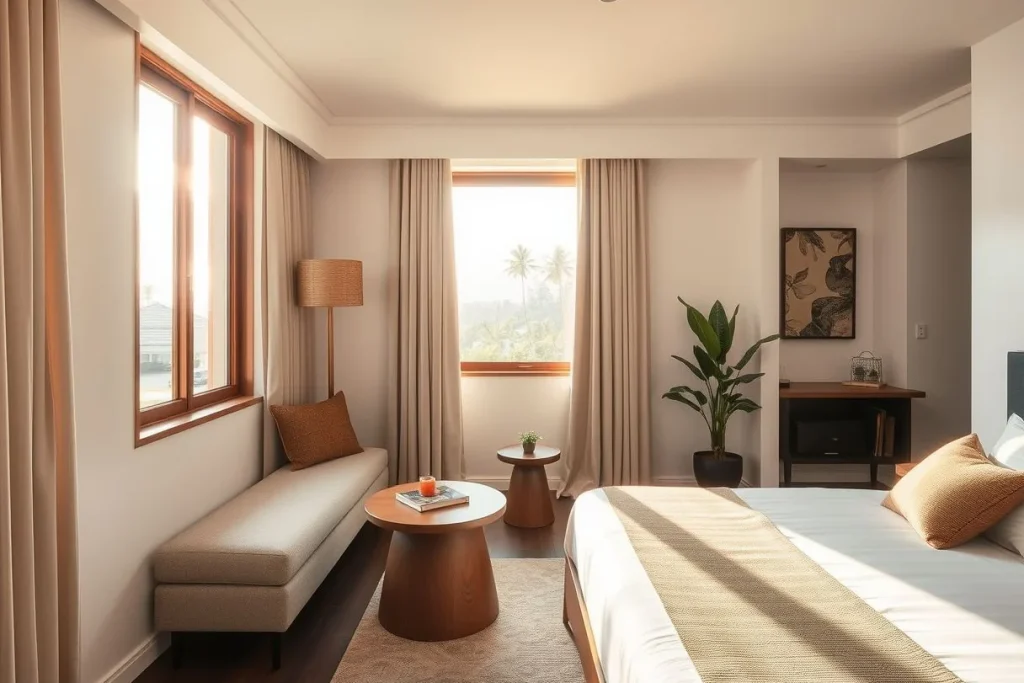
Choose your base by the atmosphere you want at the end of each day, not just by its position on the map. Bali’s traffic can make a short-looking transfer slow, so two well-chosen bases are often more comfortable than changing hotels repeatedly.
| Area | Atmosphere | Best for | Trade-offs | Accommodation style |
|---|---|---|---|---|
| Ubud | Green, cultural and wellness-focused | Boutique stays, rice terraces, spas and dinners with atmosphere | Inland rather than beach-based; road journeys can be slow | Small hotels, design guesthouses and private villas |
| Seminyak and Petitenget | Polished and sociable | Restaurants, boutiques, villas and sunset beach-club settings | Busier and less tranquil than Sanur or Sidemen | Pool villas, hotels and serviced apartments |
| Canggu | Café-led and youthful | Couples who want casual dining, nightlife and a younger scene | Traffic and a busier feel; less suited to quiet, walkable evenings | Private villas, apartments and lifestyle hotels |
| Sanur | Calmer and beachfront | Seaside walks, slower mornings and boats to the Nusa islands | Less nightlife; check whether the nearby beach suits swimming | Beach hotels, relaxed resorts and boutique stays |
| Jimbaran | Low-key and sunset-oriented | Seafood dinners and an easy southern-coast base | Fewer independent cafés and boutiques than Seminyak | Resorts, villas and hotels near the bay |
| Nusa Dua | Managed and resort-focused | Privacy, polished facilities and downtime without moving around | More self-contained, with less local street life | Large beachfront resorts and private-pool accommodation |
For a first Bali trip, pair Ubud with Seminyak, Jimbaran or Sanur. Choose Amed for a quieter east-coast stay with snorkelling access, or Sidemen for a rice-valley retreat; both are better alternatives for couples prioritising calm over convenience. “Beachfront” is not a guarantee of a swimmable beach, so inspect the property’s exact setting and recent access information before booking. Ubud’s cultural and boutique-stay profile is documented by the Ubud Monkey Forest visitor guide, while Seminyak, Petitenget and Sanur’s different profiles are outlined by Wego Travel Blog.
Best things to do in Bali for couples

For couples, the strongest Bali itinerary alternates one planned outing with a slower shared experience. Choose a scenery-led day, then leave room for a long lunch, a spa treatment or an unhurried dinner rather than stacking distant temples and boat transfers.
| Experience | Best for | Time | Planning caution |
|---|---|---|---|
| Ubud rice-terrace walk and riverside dinner | Gentle, romantic atmosphere | Half day | Keep the evening free after walking. |
| Uluwatu Temple and sunset kecak | Scenery-led couples | Half day | Expect crowds, steep steps and wind; check the performance schedule. |
| Jimbaran seafood dinner | A simple sunset date | Evening | Plan transport home rather than relying on a long walk. |
| Nusa Lembongan or Nusa Penida | Active couples and snorkellers | Full day | Use a reputable operator; check sea conditions and currents. |
| Ubud spa and wellness day | Rest and recovery | Most of a day | Place it between, not after, demanding excursions. |
| Tanah Lot | Coastal scenery | Half day | Arrive early for a calmer visit; sunset is busy. |
| Ubud Monkey Forest | A short cultural stop | About one hour | Follow signage and never feed the monkeys; check official hours and tickets. |
| Tegalalang rice terraces | Photography and a short walk | Short visit | Check local admission and parking arrangements. |
| Besakih and Mount Agung viewpoints | Temple-focused scenery | Full day | Allow for traffic and ceremony-related access changes. |
| Sanur promenade | Slow mornings | Morning | It is also a departure point for Nusa-island boats. |
| Amed | Quiet stays and snorkelling | Overnight or full day | Check sea conditions and operator standards. |
| Sidemen | A calm rice-valley retreat | Overnight or full day | Its tranquillity comes with less southern-coast convenience. |
The Ubud Monkey Forest’s official visitor information recommends allowing about one hour. Most importantly, do not schedule the Besakih day immediately after a Nusa boat excursion: the combination of an early departure, sea conditions and a long road day leaves little space for the downtime that makes Bali work well for two.
Top Bali attractions and how to visit them well

These sights reward different pacing: pair one major temple with a slower meal or spa session rather than crossing the island for several in one day. Check current access, tickets and performance details before setting out, particularly around ceremonies.
| Attraction | Location | Best timing | Access considerations | Best for |
|---|---|---|---|---|
| Ubud Monkey Forest | Central Ubud | Early or later in the day | The official visitor information recommends allowing about one hour. Check current opening hours and tickets; follow signage and never feed the monkeys. | Couples combining a short nature visit with an Ubud walk |
| Tegalalang rice terraces | North of Ubud | Morning, before stronger heat and congestion | Expect uneven walking; check local admission and parking arrangements. | Photography and a brief scenic outing |
| Uluwatu Temple | Southern Bali cliffs | Late afternoon | Allow for crowds, wind and steep steps. Confirm current access and kecak performance arrangements. | First-time visitors seeking a dramatic coastal setting |
| Tanah Lot | West coast | Before sunset | Sunset is popular and congested, so arrive early enough to walk and find a viewing position. | Couples wanting a temple-and-coast evening |
| Besakih Temple | East Bali, on Mount Agung’s slopes | Earlier in the day | It is a longer road outing; ceremonies can change access. Mount Agung viewpoints depend on conditions and are not guaranteed. | Travellers with a full day for Bali’s cultural landscape |
Bali’s best neighbourhoods: where to base yourselves

Choose your base by the evenings you want, not only by the hotel. Bali’s neighbourhoods change quickly from walkable lanes to traffic-heavy roads, and a scenic beach is not always a swimming beach.
| Base | Character and walkability | Beach, evenings and ideal stay |
|---|---|---|
| Ubud centre | Most walkable for galleries, craft shops, spas and cafés; roads beyond the centre need a car. | No beach; atmospheric dinners and cultural evenings. Stay several nights. |
| Ubud outskirts | Quieter rice-valley setting, but little is walkable from many boutique stays. | Private, green and restorative rather than lively. Best for two or three nights. |
| Seminyak/Petitenget | Walkable pockets of restaurants, boutiques and villas, with congestion on connecting roads. | Sunset beach-club atmosphere; beaches are scenic more than reliably swimmable. Several nights. |
| Canggu | Spread out and traffic-prone; less convenient without a driver or scooter. | Cafés, bars and surf-coast sunsets. Suits couples prioritising nightlife. |
| Sanur | Calmer beachfront promenade and easy seaside walking. | Gentler beach feel and Nusa-island boat access. Good for several nights or one night before a boat. |
| Jimbaran | Relaxed, but not a base for exploring on foot beyond the beach area. | Sunset shoreline and an easy romantic evening. One or two nights works well. |
| Nusa Dua | Polished resort district with limited local wandering. | More suitable for swimming and resort downtime. Choose it for a full beach holiday. |
| Amed or Sidemen | Amed is a quiet east-coast base; Sidemen is a rural rice-valley retreat. | Snorkelling in Amed, landscapes in Sidemen; both suit two or three slower nights. |
For couples choosing only one base, Ubud offers more shared culture, greenery and spa time, while Seminyak makes dinners, boutiques and sunset drinks easier. A first trip is usually better served by splitting them than by asking either neighbourhood to provide the whole island.
What to eat in Bali: dishes and settings for couples
What to eat in Bali: dishes and settings for couples

Food is an easy pleasure to share in Bali. Start with local dishes at a warung, then plan one dinner around its setting. Nasi goreng is fried rice; nasi campur combines rice with small portions of vegetables and meat, plus sambal. Both offer good-value introductions at local eateries. Ask how spicy the sambal is, or request it separately.
For a distinctly Balinese dish, look for bebek betutu: duck cooked with a fragrant spice paste, served at a Balinese restaurant. Sate lilit is minced seasoned meat wrapped around a skewer and suits traditional restaurants as well as coastal ones. In Jimbaran, a seafood dinner on the beach makes an easy sunset occasion. Check the day’s selection and preparation before ordering.
After a walk or spa afternoon, Ubud suits a riverside meal. Seminyak and Petitenget are better matched to polished date-night restaurants and bars. Local meals are generally the inexpensive option; scenic or specialised venues cost more, so choose deliberately rather than expecting every dinner to be an occasion. Carry allergy information in clear written form, confirm ingredients with staff, and use sealed bottled water when that’s your preference.
Getting around Bali: drivers, taxis, apps and boats
Getting around Bali: drivers, taxis, apps and boats

For couples, a private driver works well for sightseeing days, while walking and app rides cover the area around your base. In southern Bali, road journeys can take much longer than the map suggests, particularly in congestion, so don’t pack distant stops into one day.
| Option | Best for | Trade-off and practical note |
|---|---|---|
| Private driver | Ubud, east Bali or temple day trips | Comfortable and flexible; arrange through your hotel or a reputable operator. |
| Hotel transfer | Airport arrival or departure | Simple after a flight; confirm the meeting point and current rate in advance. |
| Bluebird taxi | Short urban journeys | Metered service; use the official booking channels and check the Bluebird terms. |
| Grab or Gojek | Flexible, lower-cost rides | Pickup points vary; follow the app and ask hotel staff where drivers can legally stop. |
| Walking | Sanur, central Ubud or Seminyak | Best for nearby cafés and evenings, but not for linking spread-out sights. |
| Scooter | Confident, appropriately licensed riders | Not necessary: use the correct licence, a helmet and insurance, and be comfortable in local traffic. |
| Fast boat | Nusa Lembongan or Nusa Penida | Departures commonly use Sanur, Padangbai or Serangan; choose a reputable operator and check sea conditions. |
Grab and Gojek are the practical choices for app rides, rather than informal touts. If the pickup area is unclear, ask your hotel for help. Bluebird runs metered taxis; check its current booking and fare information before travel.
Boat schedules and crossings can change with weather. Leave some flexibility around a Nusa-island day.
Bali travel costs: daily budgets for 2026
For couples, Bali travel costs are easiest to plan per person per day, then adjusted for the fact that a double room and private driver are shared. The following are indicative 2026 estimates from recent cost guides by Hootling and Travel Guides Tip; they vary by area, season and activity.
| Estimated 2026 costs, per person per day | Typical style |
|---|---|
| Budget: US$25–45 | Budget accommodation, warung meals and low-cost local transport |
| Mid-range: US$80–180 | A good double room or shared private villa, restaurant meals and some private transport |
| Luxury: US$300+ | Private-pool villas, upscale dining, beach clubs and private transfers |
The budget and mid-range figures are based on Hootling’s 2026 guide and Travel Guides Tip’s 2026 estimates; the luxury benchmark is reported by TuneX Travels for 2025. International flights, shopping, major tours, boat tickets and holiday surcharges may sit outside these daily figures.
Sharing a room makes the mid-range figure more favourable per person, while a private driver’s cost can also be divided between two travellers. Check current hotel, flight, transfer and boat prices before booking, particularly for July, August, December and dates around Nyepi.
| Item | Budget | Mid-range | Luxury |
|---|---|---|---|
| Budget Bali trip | US$25–45 per person per day | — | — |
| Mid-range Bali trip | — | US$80–180 per person per day | — |
| Luxury Bali trip | — | — | US$300+ per person per day |
Estimated ranges based on the sources listed below. Prices change; check with providers before booking.
A realistic 7–10-day Bali itinerary for couples
For a first trip, use two or three bases rather than crossing Bali every day. This route keeps the first days gentle, places the busiest sightseeing before the final transfer, and leaves a buffer for traffic, ceremonies and changing sea conditions.
| Day | Base | Plan |
|---|---|---|
| 1 | Ubud | Arrive, transfer inland and keep the evening free for a quiet dinner or spa treatment. |
| 2 | Ubud | Walk through the rice terraces and browse the central craft areas; leave time beside the river. |
| 3 | Ubud | Visit Ubud Monkey Forest or choose a cultural activity, then make the evening deliberately slow. The official visitor information suggests allowing about one hour at the forest and advises checking current hours and tickets. |
| 4 | Seminyak or Petitenget | Transfer south, settle into a boutique hotel or villa, and watch sunset near the beach. |
| 5 | South coast | Visit Uluwatu Temple, then choose a sunset kecak performance or a seafood dinner on Jimbaran beach. |
| 6 | South coast | Keep this as a flexible day: choose Tanah Lot, a beach-club afternoon or downtime by the pool. |
| 7 | Sanur | Move to Sanur and use its calmer beachfront promenade for an unhurried evening. |
| 8 | Nusa Lembongan or Nusa Penida | Take a boat day for coastal scenery and snorkelling. Boats commonly leave from Sanur; check sea conditions and operator arrangements before committing. |
| 9 | Sanur | Return to Bali and keep the day open for rest, or make this another Sanur beach day instead of taking the boat. |
| 10 | Departure | Allow a generous road-transfer buffer before your flight from DPS; do not pair departure day with a distant excursion. |
For seven days, remove day 6 and make the Nusa trip a day excursion. Quieter couples can replace the southern coast with Sidemen or Amed, but should not combine either with Ubud and a Nusa boat trip in one day. Traffic, ceremony-related access changes and disrupted ferries are good reasons to preserve at least one flexible day; around Nyepi, confirm hotel operations and transport before booking.
Bali entry requirements and safety: check before you fly
Check before booking — information checked 20 September 2026. Entry rules, health advice and travel conditions can change. Recheck Indonesian Immigration or your relevant embassy, the U.S. State Department’s Indonesia advisory, and the CDC travel-health guidance before paying for flights or accommodation.
The cited U.S. guidance says tourists need a visa and describes a 30-day electronic visa or visa-on-arrival route for eligible arrivals in Bali or Jakarta. That does not establish eligibility for every nationality: confirm the current visa type, passport validity, application process and permitted stay with Indonesian Immigration or your embassy.
The U.S. State Department classified Indonesia as Level 2, “exercise increased caution”, in guidance dated 7 July 2026. Treat that as a reason to stay informed, not as a blanket verdict on Bali. Follow local advice around demonstrations, crowded areas and changing conditions, and check your accommodation’s emergency arrangements.
For health planning, consult the CDC or an equivalent official authority about routine vaccinations, hepatitis A and B, rabies exposure and yellow-fever documentation, particularly if your route includes a relevant transit country. Keep travel insurance details accessible.
Build flexibility into the itinerary for earthquakes, volcanic activity, severe weather and disrupted ferries or flights. Nyepi also brings mandatory quiet and major closures; verify the annual date and confirm hotel operations and transport arrangements before travelling near it. Official guidance and attraction or transport operators are the right places to check again shortly before departure.
Practical Bali travel tips that prevent mistakes
Small planning choices make a noticeable difference in Bali, particularly when road traffic, ceremonies or weather disrupt a tightly timed couple’s itinerary.
- Allow extra road time. Keep airport transfers, restaurant bookings and inter-area journeys flexible rather than scheduling them back-to-back.
- Reserve strategically. In July, August and December, book popular boutique stays and sunset venues ahead, then confirm the reservation directly.
- Clarify your DPS pickup. Ask the hotel where its driver will meet you; app-based pickup procedures at the airport can vary. Bluebird offers metered taxis and publishes booking terms.
- Dress for temples. Carry a sarong or cover-up, follow local instructions and check whether ceremonies affect access or photography.
- Check before sightseeing. Verify current hours, tickets and access with each attraction; the official Ubud Monkey Forest visitor guide recommends allowing about an hour. Do not feed the monkeys.
- Vet boat trips. Confirm the operator, cancellation policy and sea conditions before travelling to Nusa Penida or Nusa Lembongan.
- Treat scooters seriously. Ride only with the appropriate licence, a helmet and suitable insurance; otherwise use a driver or taxi.
- Keep options open. Carry modest cash and a backup payment method, buy suitable travel insurance, and leave a departure buffer. A spa, cooking class or slow café day works well when rain, ceremonies or Nyepi alter plans.
Conclusion: choose your Bali base, dates and pace
For most couples, the simplest Bali plan is to pair three or four nights in Ubud with a southern coastal base such as Seminyak, Jimbaran or Sanur. On a 7–10-day trip, add Sanur for an easy beach rhythm or continue to Nusa Lembongan or Nusa Penida if sea conditions and boat logistics suit you.
April–October is the broadly drier window; choose July and August for dependable holiday weather only if you accept higher demand and busier attractions. Check the annual Nyepi date before booking, since silence-day closures affect transport and services.
Next, confirm entry guidance for your nationality, select areas by atmosphere, reserve accommodation and airport transfers, then protect one slow day for a spa, beach or long lunch.
Frequently asked questions
Is Bali a good destination for a first trip as a couple?
Yes. Bali suits a first couples’ trip because one holiday can combine Ubud’s rice terraces, cultural sites, spas and boutique accommodation with southern-coast restaurants, villas and sunset settings in Seminyak or Petitenget. Sanur adds a calmer beachfront base and access to Nusa-island boats. The main trade-off is planning transfers carefully, since road travel connects Bali’s regions and there is no intercity rail connection.
How many days should couples spend in Ubud?
Allow several days rather than treating Ubud as a quick stop. Its inland setting gives couples access to rice terraces, cultural sites, craft areas, river valleys, spas and boutique accommodation, so it works well for a slower part of a Bali itinerary. Use the time for a rice-terrace walk, the Ubud Monkey Forest and a wellness day, then leave room for a relaxed dinner rather than adding too many excursions.
Can we visit Bali without staying near the beach?
Yes. Ubud is an inland base associated with rice terraces, cultural sites, craft areas, river valleys, spas and boutique accommodation, making it a practical choice for couples who prioritise culture, greenery and downtime over daily swimming. You can add the coast later if desired, but road transfers take planning. Sidemen offers another calmer inland-style retreat, while Sanur, Seminyak and Jimbaran provide easier beach access.
Are Nusa Lembongan and Nusa Penida suitable for a relaxed day trip?
They can suit couples seeking dramatic coastlines and snorkelling, but neither should be treated as a guaranteed slow day. Fast boats commonly operate from Sanur, Padangbai and Serangan, and sea conditions or operator quality can affect the experience. Choose a reputable operator, check conditions before departure and keep plans flexible. Sanur is a useful base when boat access is a priority.
What should couples pack for temples and Bali’s changing weather?
Plan for the broad seasonal difference: BMKG-related climate data identifies April–October as generally drier around Denpasar, while November–March is wetter and more humid. Pack clothing suitable for respectful temple visits, plus protection for rain and humidity, and check the individual temple’s current access guidance before going. Attraction arrangements can change, particularly around ceremonies, so confirm practical requirements locally.
Is it easy to find quiet, romantic experiences away from Bali’s busiest areas?
Yes, if you choose the base and timing carefully. Sidemen is associated with a calmer rice-valley retreat, Amed with a quieter east-coast base, and Sanur with a calmer beachfront setting and slow seaside walks. Ubud also supports spa time and atmospheric dinners. For a quieter experience, avoid building every day around the busiest southern areas and allow time between transfers rather than chasing a long checklist.