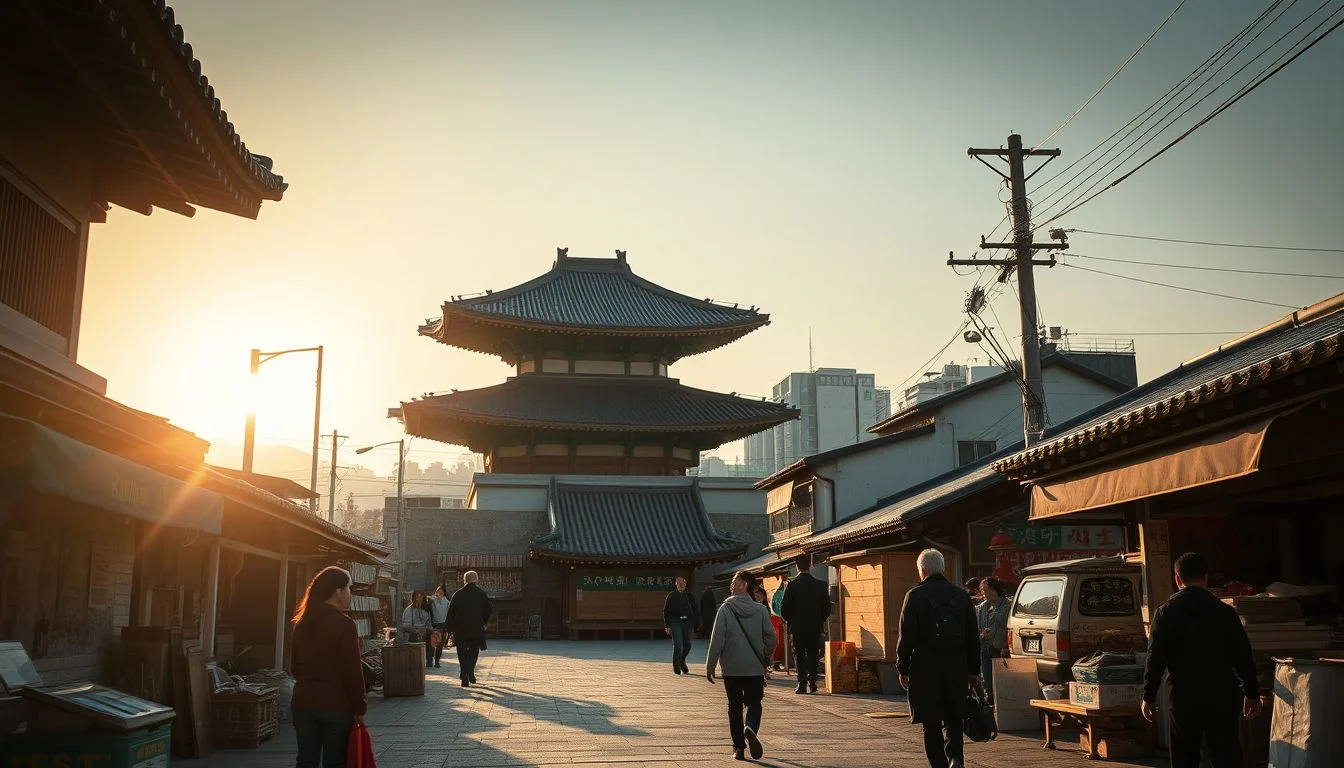
At Gwangjang Market, mung-bean batter hits the griddle as bindaetteok, while trays of mayak gimbap and seasoned raw beef turn a short walk from Jongno 5-ga Station into a practical introduction to Seoul’s food culture. The city’s cooking moves between fermented kimchi and doenjang, fiery gochujang, rice, seasonal vegetables and communal banchan, with street stalls and sit-down restaurants offering very different ways to eat.
This Seoul food guide is for food-focused travellers planning a first visit who want to know what to eat in Seoul, where to find it and which experiences suit their appetite and comfort level. It matches signature dishes to Gwangjang and Namdaemun markets, Myeongdong, Hongdae, Itaewon and the traditional areas around Insadong, Bukchon and Jongno, while covering Korean barbecue, seasonal specialities, food tours, cooking classes, dietary questions and the practical details that shape a good food day.
Quick answer: Start with bibimbap, bulgogi, tteokbokki, bindaetteok, mayak gimbap, naengmyeon and hotteok; try yukhoe only after considering its raw-food safety implications. Gwangjang Market is the strongest first stop for market dishes, while Namdaemun, Myeongdong and Hongdae suit street-food grazing, Itaewon offers international and potential halal options, and Insadong, Bukchon and Jongno provide more traditional settings.
What defines Seoul’s food culture: fermentation, banchan and communal meals
Seoul Korean food is built around fermentation, rice, seasonal vegetables and assertive condiments. Kimchi brings a spicy-sour edge to meals, while doenjang, a fermented soybean paste, adds depth to soups, stews and dipping sauces. Gochujang supplies heat and gentle sweetness, but the meal is rarely defined by chilli alone: rice, broth and fresh vegetables help balance stronger flavours.
A typical meal may place one main dish at the centre of the table alongside several small sides known as banchan. These are shared rather than ordered as separate courses, and can include vegetables, pickles, seasoned greens or kimchi. The exact selection varies by restaurant and meal, so think of banchan as a changing accompaniment rather than a fixed menu.
That communal structure makes Seoul particularly rewarding to eat in stages. A market allows you to sample small portions while standing or sitting at a shared counter; a traditional restaurant gives you rice, soup and banchan around a more substantial dish. Korean barbecue adds another format, with diners cooking and sharing food at the table, while a bowl of rice or soup can soften the impact of salty, spicy or fermented flavours.
For a first visit, plan around that contrast: graze through a market, choose one sit-down meal, then add something seasonal. Spring and autumn are comfortable for outdoor market eating; hot weather suits cold noodles and restorative chicken soup, while winter makes hot filled street snacks especially appealing. Check each market’s current stall hours before going, since vendors may keep different schedules or close for holidays.
What to eat in Seoul: 11 Korean dishes worth seeking out
For a first Seoul food guide tasting list, combine a familiar rice dish with a grilled speciality, market snacks and something seasonal. The dishes below fit naturally into a day of eating; they aren’t a checklist for one sitting.
Everyday foundations
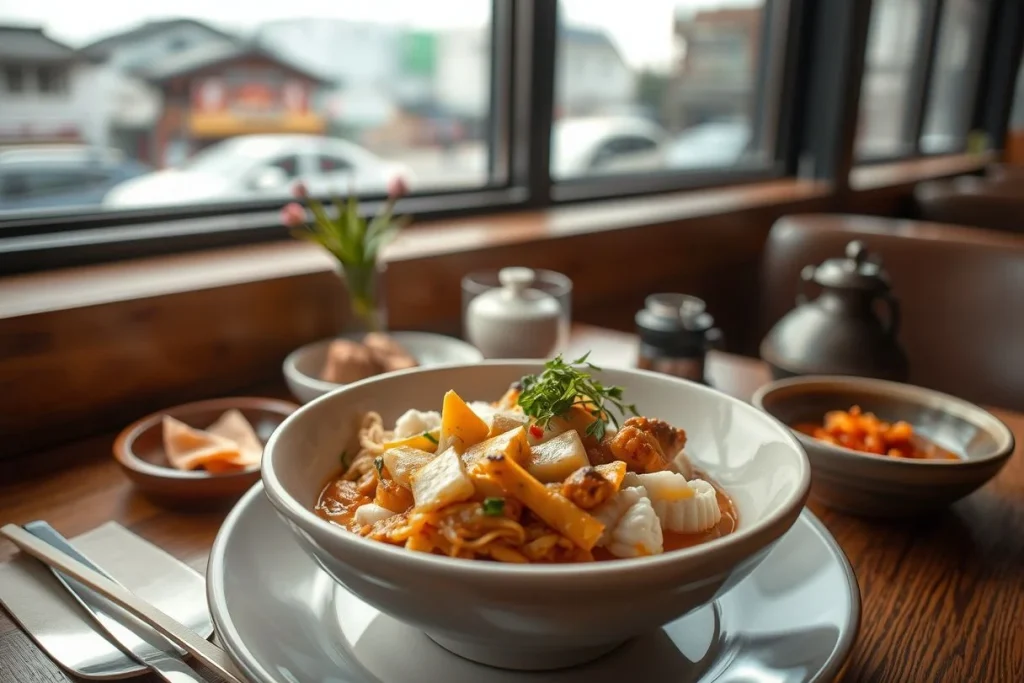
Kimchi is fermented napa cabbage with a spicy-sour bite, usually served as banchan rather than ordered as the main event. It offers the clearest introduction to Seoul Korean food, where fermentation, rice, vegetables and gochujang-based seasoning shape the meal. Recipes vary, so the heat and acidity can change from one table to the next.
In one bowl, bibimbap brings together rice, sautéed vegetables, gochujang and usually an egg. Mix it just before eating, while the chilli paste can still coat the grains. Bulgogi—thinly sliced beef in a sweet-savoury marinade—is typically grilled or pan-cooked. It makes a gentle entry point to Korean barbecue-style flavours.
Naengmyeon is a bowl of cold buckwheat noodles in an icy broth, particularly welcome on a hot day.
For a contrasting summer meal, try samgyetang: a whole chicken stuffed with rice and ginseng, traditionally treated as a restorative dish. Together, these dishes reflect two responses to Seoul’s heat—cooling noodles and a nourishing hot soup.
Market dishes and street snacks
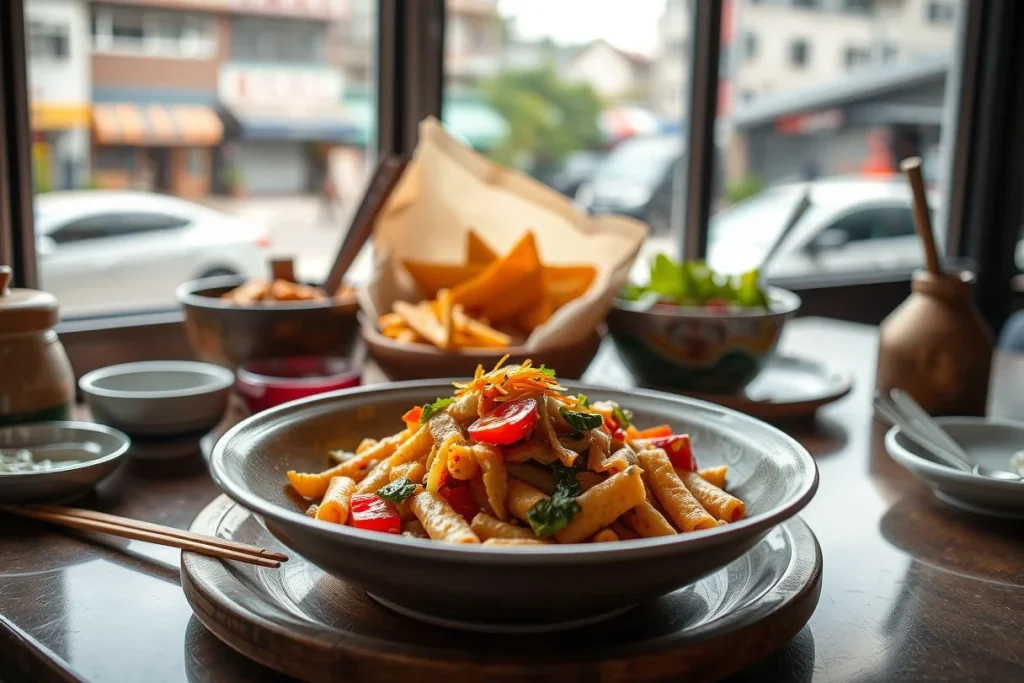
At Gwangjang Market, look for bindaetteok, a savoury mung-bean pancake with a crisp-edged, substantial texture, or mayak gimbap, small rice-and-vegetable rolls made for grazing. The market is also associated with yukhoe, Korean-style raw seasoned beef. Because it is uncooked, check freshness and sourcing carefully; the Seoul food-tour guide notes that travellers who are immunocompromised should take particular care with raw dishes.
Tteokbokki—chewy rice cakes in a spicy-sweet red-chilli sauce—is a year-round Seoul street-food staple. Hotteok, a warm filled pancake, is especially satisfying in winter. Another year-round option is bungeo-ppang, a fish-shaped filled pastry. These work better as small stops between sights than as a complete meal.
Haemul pajeon is a savoury scallion-and-seafood pancake, often served with makgeolli. It is useful for sharing, but seafood makes it unsuitable for vegetarians and many vegans. Ask about the batter and dipping sauce rather than assuming either is vegetable-based. The Seoul tourism guide lists tteokbokki, hotteok, bungeo-ppang and the market specialities among local favourites.
Vegetarian diners should treat bibimbap as a starting point, not an automatic safe choice. Confirm that the vegetables, kimchi and sauces contain neither fish sauce nor anchovy stock. If you want to sample widely, order small portions and leave room for the dish that best matches the day’s weather.
Where to eat in Seoul: markets, neighbourhoods and Korean barbecue
Choose the market for the kind of meal you want
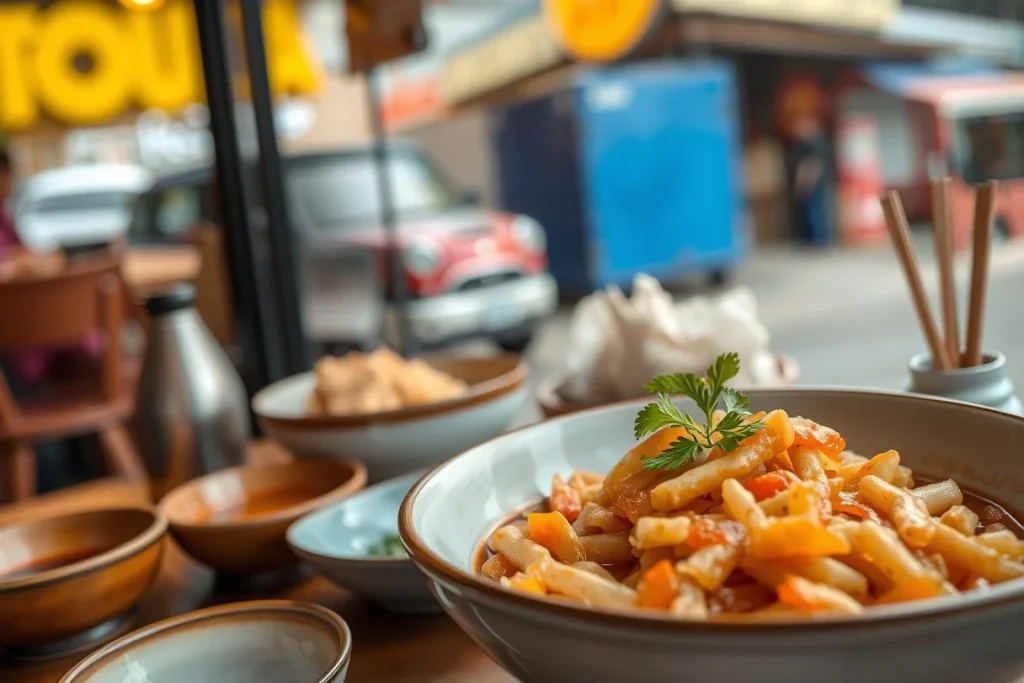
Gwangjang Market is the clearest first stop for a concentrated introduction to Seoul market food. Near Jongno 5-ga Station, its stalls are known for bindaetteok, mayak gimbap and yukhoe, while the close-packed counters make it easy to sample several dishes instead of committing to one restaurant. Guided food tours are also common here, which can help if you want translation support or an explanation of what is in each bowl.
The trade-off is intensity. Gwangjang can be crowded, with limited seating and stall-by-stall differences in service and availability. Individual vendors don’t necessarily follow the market’s advertised schedule, and holiday closures can affect the experience. Check the current market information and the specific stall before setting out; the Seoul Metropolitan Government guide is a useful starting point.
Match the neighbourhood to your evening
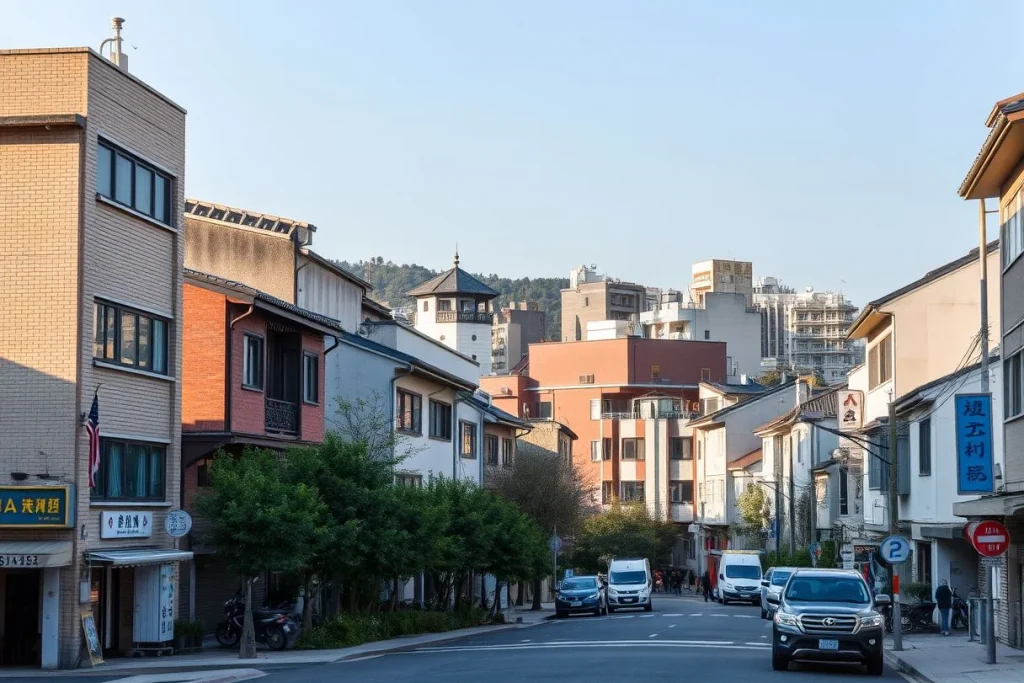
Namdaemun Market, reached via Hoehyeon Station, suits travellers looking for food alleys and relatively low-cost street-food stalls alongside general market browsing. Myeongdong, by Myeong-dong Station, is more convenient than destination-worthy: choose it when shopping has already brought you there and you want an easy round of street-food snacks. For youth-oriented, casual eating and later street-food grazing, Hongdae has good public-transport access.
International menus and potential halal choices make Itaewon the place to start. It offers the broadest useful contrast to traditional market food, but “halal” should never be assumed from the neighbourhood alone: confirm certification, ingredients and preparation with the individual venue. Public transport connects these districts, as well as Gwangjang, Insadong and Jongno, so there’s little reason to organise a food day around taxis alone.
Choose a slower, more structured meal
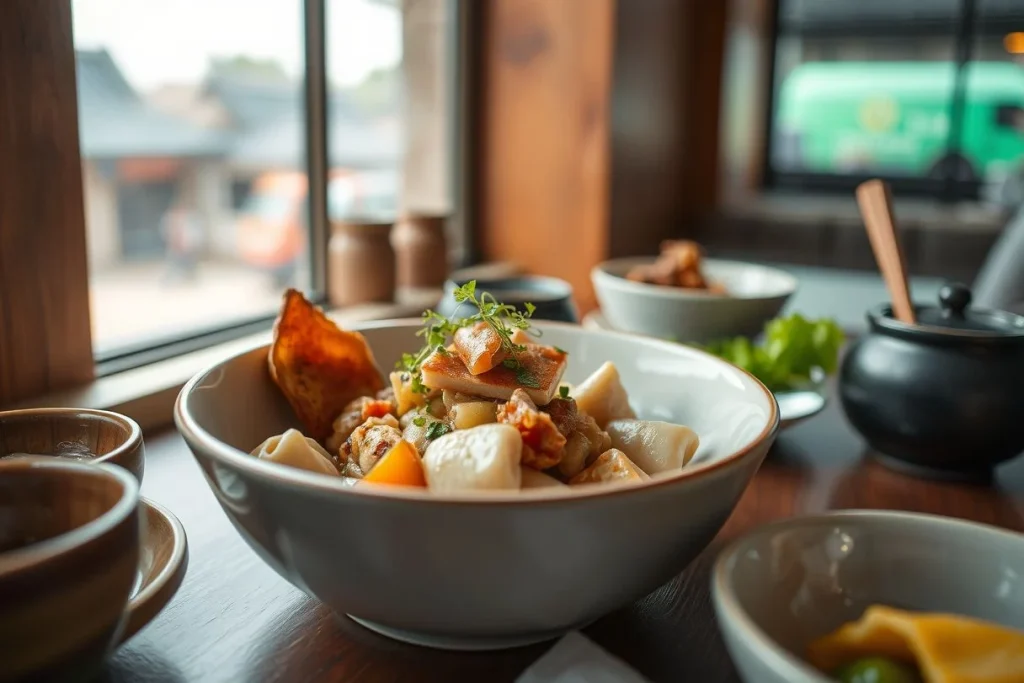
For traditional restaurants, hanok tea houses and Korean confectionery, choose Insadong, Bukchon or Jongno rather than a market. These areas suit a slower meal, followed by an afternoon among older streets and cultural sights. Some hanok venues and market spaces have steps, narrow entrances or uneven surfaces, so they aren’t always straightforward for wheelchair users or pushchairs.
At a Korean barbecue restaurant, meat is cooked at the table and served with shared banchan, giving the meal a more contained rhythm than market grazing. It suits a proper group meal, but it’s less flexible for solo diners, strict vegetarians or anyone who wants to taste many unrelated dishes. Individual restaurants change, so verify the current menu and booking arrangements rather than relying on an old recommendation.
Practical checks before you go
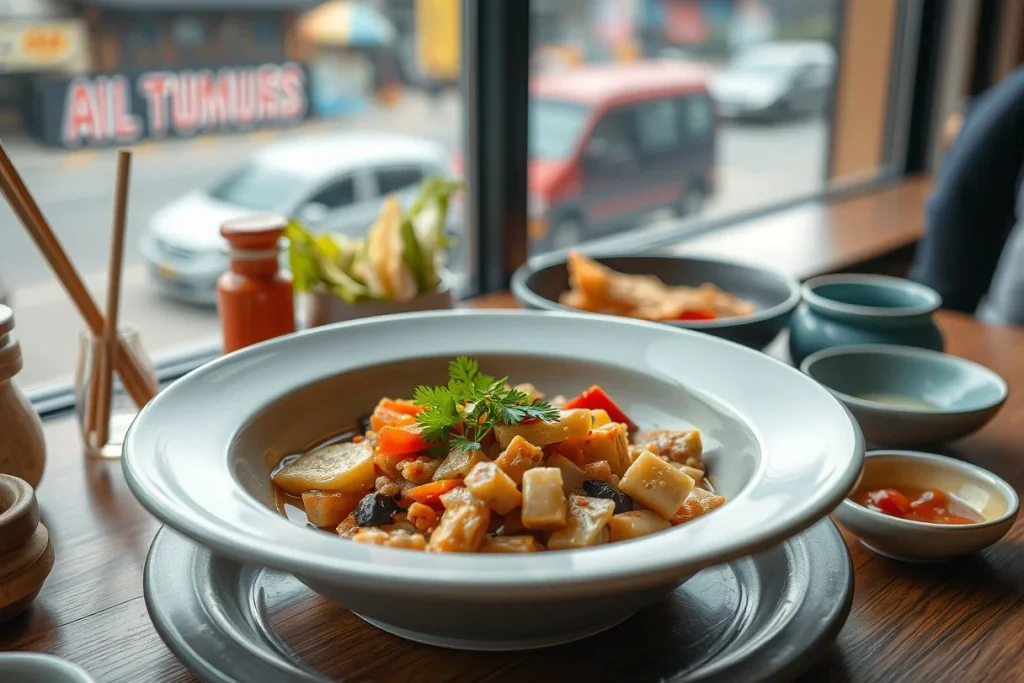
Carry some Korean won for small market purchases. Many larger businesses accept cards, but individual stalls may prefer cash.
In crowded markets, keep phones and wallets secure, and check the surface underfoot before moving between counters. Market-wide opening hours are only a guide: stall schedules, weekly rest days and holidays vary, so confirm directly before travelling.
Planning a food day: cash, timing, transport and realistic costs
Set a food budget around the way you plan to eat. A street-food snack is roughly ₩3,000–₩10,000 per item, based on 2026 research notes; a meal built from several market snacks can therefore add up quickly without feeling like a formal restaurant dinner.
For organised experiences, popular Gwangjang Market food tours were priced at about ₩90,000–₩135,000 per person in July 2026, usually for 2.5–3.5 hours. English-language cooking classes generally range from ₩40,000–₩150,000 per person in the 2026 research notes, depending on the operator and class length. Check the live listing for current prices, availability, cancellation terms and what is included.
Make the day easier by grouping stops around stations rather than crossing Seoul between every bite: use Jongno 5-ga for Gwangjang Market, Hoehyeon for Namdaemun, and Myeong-dong for Myeongdong. A market-heavy route works particularly well in spring and autumn; from June to August, heat and humidity can make outdoor grazing tiring, while July rain favours a flexible plan with indoor restaurants or a cooking class.
Carry Korean won for small stalls, even when the larger businesses on your route accept cards. Before setting out, check the official market or venue information for stall hours, holiday closures and temporary changes, since market-wide schedules do not guarantee that every vendor will be trading.
Seoul food tours and cooking classes: which experience fits your trip?
A self-guided market visit suits travellers who prefer to choose small portions, pause when they like and avoid paying for dishes that do not fit their diet. A guided Seoul food tour is more useful when menus are unfamiliar: market tours commonly run for about 2.5–3.5 hours, include roughly six to 12 tastings, and add translation, ordering help and local context. The trade-off is a fixed route and group pace, with less control over substitutions. Examples of popular Gwangjang Market tours listed in July 2026 cost around ₩90,000–₩135,000 per person; check the live listing before booking.
Choose a hands-on class if you want a skill to take home rather than a broad tasting. English-language classes from established providers such as O’ngo Food Communications and Food & Culture Academy generally last about two to four hours and may cover two to four dishes. The 2026 research range is approximately ₩40,000–₩150,000 per person, depending on the operator and class length.
Use Viator, GetYourGuide, Klook and Trazy as comparison channels, not interchangeable endorsements. Before paying, compare the current menu, date, language, group size, cancellation terms and accessibility, particularly if a market route includes crowded or uneven spaces. Ask directly whether the organiser can accommodate allergies, vegetarian or vegan requirements, or halal needs: a tasting menu may contain fish sauce, anchovy stock or seafood even when its headline dish appears suitable. Confirm live prices and availability on the operator’s booking page.
Korean dining etiquette: chopsticks, shared dishes and tipping
Korean meals are often shared: a main dish arrives with several small side dishes, or banchan, placed within everyone’s reach. Take modest portions so others can try them too, and ask before taking the last piece when the table is sharing a favourite. You don’t need to know every custom; watching your companions is usually enough.
When older diners are present, it is courteous to wait for them to begin. Use the spoon for rice and soup, and keep chopsticks beside the bowl rather than standing them upright in rice. When receiving or pouring a drink, use two hands; this small gesture is especially useful at a meal with Korean hosts or older diners. These are among the common courtesies listed by the Official Travel Guide to Seoul.
At Korean barbecue, follow the table’s lead on grilling, turning meat, sharing banchan and calling staff. Some tables handle the grill themselves, while others rely more on staff, so observe before taking over. Say “sillyehamnida” to attract attention politely if needed; a calm wave or raised hand also works.
Tipping is not customary in Seoul restaurants and is generally not expected. If a venue adds a service charge, it should appear on the bill, according to the Official Travel Guide to Seoul. Check the total before paying, but don’t add a tip simply because you are used to doing so at home.
Dietary needs and food safety in Seoul
Vegetarian and vegan travellers can find temple food, vegetable banchan and meat-free versions of bibimbap in Seoul. The important qualification is the stock: fish sauce or anchovy stock can appear in dishes that look vegetarian, including soups, sauces and side dishes. Explain your restrictions clearly, ideally with a translated note, and confirm ingredients with the restaurant or vendor rather than relying on a dish name alone, as advised in the Korean food guidance from VisitKR.
Itaewon is the most useful neighbourhood to investigate for international and potential halal food. It is not a blanket guarantee: ask each venue about halal certification, meat sourcing, alcohol and shared cooking equipment before ordering. A dietary-aware food tour or cooking class can help with communication, but confirm substitutions and allergy handling with the operator in advance; complex allergies may not be accommodated at every stall or class.
Take extra care with raw dishes such as yukhoe, Korean-style seasoned raw beef, which is associated with Gwangjang Market. Travellers who are immunocompromised should check freshness and sourcing particularly carefully and choose a cooked alternative if uncertain, following the food-safety caution in Seoul food-tour guidance. Haemul pajeon contains seafood, so it is unsuitable for vegetarians with a strict diet and for anyone avoiding shellfish. At busy markets, a written restriction is useful, but it does not replace a direct confirmation from the vendor.
A practical first food day in Seoul
For a first food day in Seoul, begin at Gwangjang Market and make it a grazing itinerary: share bindaetteok, mayak gimbap and another cooked snack rather than committing to one large meal. Continue with Korean barbecue, or choose a traditional restaurant or tea house around Jongno or Insadong for a slower second sitting. Travellers who want more than tasting should add a Korean cooking class, where a two- to four-hour session can turn familiar dishes into practical skills. Before departure, check live market hours, individual vendor suitability and tour or class booking details, especially if you have dietary restrictions.
Frequently asked questions
Can I eat well in Seoul if I do not speak Korean?
Yes, but choose structured experiences when you want explanation or help communicating. Guided market tours commonly include context and translation help, while English-language classes are offered by providers such as O’ngo Food Communications and Food u0026amp; Culture Academy. For independent eating, use the dish names in this guide and confirm ingredients directly, especially for dietary requirements.
How do I order at a Korean barbecue restaurant as a first-time visitor?
Korean barbecue is generally a communal meal cooked on a grill at the table, with banchan served alongside it. Start by choosing a grilled meat such as bulgogi, the thinly sliced beef with a sweet-savoury marinade, and expect to share the meal rather than order an entirely separate plate for each diner. If you are unsure about the format, a guided food experience can provide context and translation help.
Which Seoul food market is easiest for a solo traveller?
Gwangjang Market is the strongest first choice for a solo food traveller because its established food area is associated with bindaetteok, mayak gimbap and yukhoe, all suited to sampling across several stalls. It is also a common stop on guided food tours, which can make the first visit more straightforward. Check current stall schedules before going, since market-wide hours do not guarantee that every vendor is open.
What should I know before trying makgeolli with Korean food?
Makgeolli is commonly paired with haemul pajeon in Seoul food guidance, so the combination is an easy one to encounter. Haemul pajeon contains seafood and is therefore unsuitable for some diets; ask about ingredients if you avoid fish or shellfish. Carry some Korean won for market purchases, since small stalls may prefer cash, and check the bill rather than adding a tip: tipping is not customary in Seoul restaurants.
Can children find familiar or mild foods at Seoul markets?
Market food varies in heat and flavour, so choose carefully rather than assuming every stall offers a mild option. Bulgogi has a sweet-savoury flavour, while bibimbap combines rice and sautéed vegetables; these may be more approachable starting points than spicy-sweet tteokbokki. Hotteok and bungeo-ppang are year-round street-food staples, but check the filling and temperature before serving them.
How far in advance should I reserve a cooking class or food tour?
The supplied Seoul food research does not establish one universal booking window. Reserve after choosing your dates, then check the live operator or booking-platform listing for current availability, price, cancellation terms and group size. Market food tours commonly last about 2.5–3.5 hours with approximately 6–12 tastings, while English-language cooking classes generally last about 2–4 hours and may teach two to four dishes; compare current listings from providers such as O’ngo Food Communications, Food u0026amp; Culture Academy, Viator, GetYourGuide, Klook and Trazy.