In Hanoi, a bowl of phở Bắc is defined by a clear, aromatic broth and restrained seasoning; farther south, noodle soups more often meet sweeter flavours, tropical produce and generous herbs. That contrast is the starting point for understanding Vietnamese food by region, from the Red River Delta to Hue, Quảng Nam and the Mekong Delta.
This guide is for food-focused travellers planning a first or repeat journey through Vietnam who want to choose dishes with confidence rather than follow a generic checklist. It compares the flavour profiles of the north, centre and south, then points you towards food hubs such as Hanoi Old Quarter, Đông Ba Market, Hoi An Market, Ben Thanh Market and Chợ Lớn, with practical advice on tours, cooking classes, spice, dietary needs, safety, etiquette and costs.
Quick answer: Northern Vietnamese food is generally restrained and broth-focused, Central Vietnamese cuisine is layered and chilli-forward, and Southern Vietnamese food tends to be sweeter, richer in tropical produce and more liberal with coconut. Start with phở Bắc, bún chả and chả cá in Hanoi; bún bò Huế, mì Quảng and cao lầu in the centre; and cơm tấm, bánh xèo and hủ tiếu in the south.
Vietnamese food by region: the flavour map
That shorthand becomes more useful at the table: treat it as a flavour map, not a set of fixed borders. The regional comparison follows Vietnam Tourism’s overview, with local variation at every stall and dining table.
| Region | Typical flavour profile | What you may notice in the bowl |
|---|---|---|
| Northern Vietnam | Restrained, balanced and aromatic | Clean broth, measured seasoning, charred pork, fresh herbs and gentle acidity |
| Central Vietnam | Layered, savoury and more chilli-forward | Lemongrass, chilli, concentrated broth, herbs and contrasting textures |
| Southern Vietnam | Sweeter, fruit-led and more generous with coconut | Tropical produce, coconut richness, brighter sauces and southern Chinese or Khmer influences |
In the north, especially around Hanoi and the Red River Delta, seasoning tends to support rather than dominate the main ingredient. A bowl of phở may read as clear and aromatic, while grilled pork brings smoke and caramelised edges without overwhelming the herbs. This restraint is a useful starting point for travellers who prefer savoury dishes that are not aggressively sweet or hot.
Central Vietnamese cuisine has a sharper visual and sensory profile. Hue’s imperial culinary tradition is associated with carefully layered flavours, while food from Quảng Nam and Đà Nẵng often combines chilli, lemongrass, herbs and intensely seasoned sauces. The result can move quickly between heat, salt, freshness and crunch; ask about chilli before ordering if you are sensitive to spice.
Southern cooking makes more room for sweetness, coconut and the abundant tropical produce of the Mekong region. Broths and dipping sauces can taste rounder, while herbs, fruit and acidity keep richer dishes lively. This is a tendency rather than a rule: migration means Hanoi serves southern-style food, Ho Chi Minh City has northern specialities, and individual cooks adjust sugar, chilli and fish sauce to their customers.
Vendor variation matters as much as geography. Two bowls with the same name may differ in sweetness, heat, herb garnish or the amount of broth, so describe your preference clearly rather than assuming a regional label guarantees a particular intensity. For the broader comparison, see the regional guide from VNLocals.
Vietnamese regional dishes to try from north to south
North: clear broths and restrained seasoning

Start in Hanoi with phở Bắc, the northern style of phở. Its beef or chicken broth is clear and aromatic, with restrained seasoning and a relatively modest herb garnish. Compared with versions farther south, it is a useful introduction to the Red River Delta preference for balance rather than overt sweetness; the regional distinction is also noted by Vietnam Tourism.
Bún chả offers a different texture and a more immediate smoky flavour: grilled pork is served with rice vermicelli, herbs, pickles and a sweet-sour dipping broth. Eat the components together so the charred pork is lifted by fresh herbs and acidity. Chả cá is another distinctly Hanoi dish, made with fish marinated in turmeric and galangal, then finished with dill, vermicelli and peanuts.
Round out a northern food list with bún thang, an additional Hanoi speciality. It is worth ordering when you want to move beyond the internationally familiar phở and compare several of the capital’s more specific noodle traditions; Hanoi Food Tours and the Michelin Guide both identify these dishes among the city’s defining foods.
Centre: chilli, concentrated broth and texture
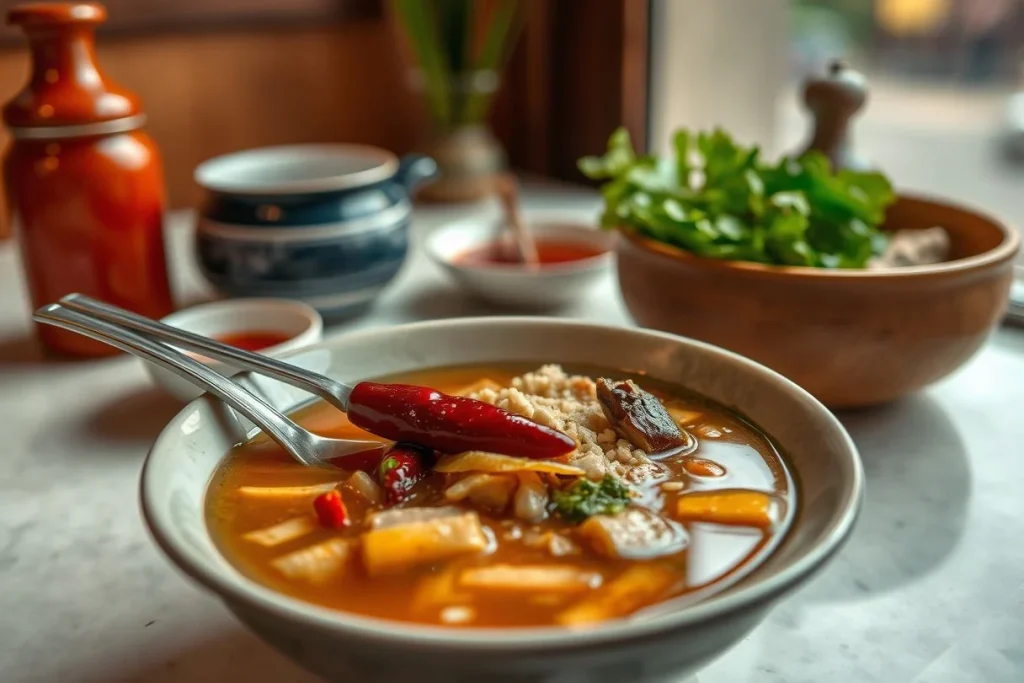
Bún bò Huế is the central bowl to choose when you want more assertive seasoning: its darker broth is spicy and strongly marked by lemongrass, with beef and pork. It reflects the broader character of Central Vietnamese cuisine around Hue, Quảng Nam and Đà Nẵng, where layered flavours and stronger chilli are associated with Hue’s imperial culinary tradition.
In Quảng Nam and Đà Nẵng, try mì Quảng. Wide, turmeric-coloured noodles sit in a concentrated amount of broth with herbs, peanuts, protein and a rice cracker, so this is not a soup in the same sense as phở. In Hoi An, cao lầu is the more localised choice: chewy yellow noodles, pork and herbs are combined with a small amount of intensely seasoned broth. Its identity is tied to Hoi An’s local rice, water and ash-soaking production traditions, making it a dish to prioritise in the town rather than treat as a generic noodle bowl.
Bánh bèo belongs on a Hue-focused tasting list as another regional speciality. Order it alongside bún bò Huế if you want to see the contrast between Hue’s highly seasoned noodle soup and its more delicate small-plate tradition.
South: sweetness, tropical produce and flexible noodles
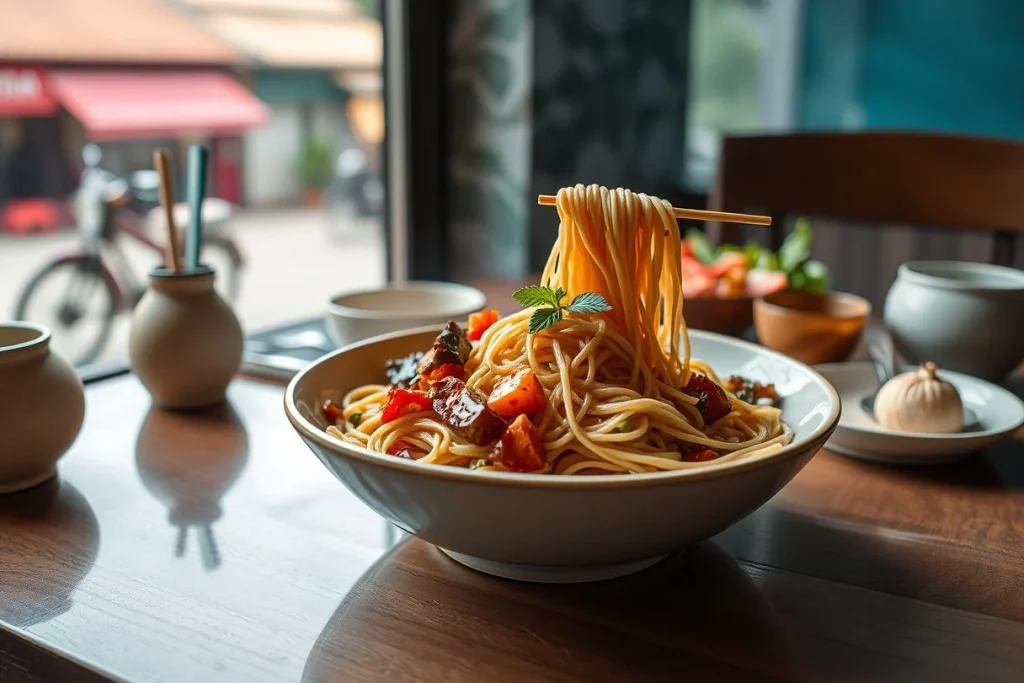
Cơm tấm is a Saigon staple built around broken rice, commonly served with grilled pork, pickles, egg or shredded pork skin. Bánh xèo brings crispness: the thin rice pancake is filled with pork, shrimp and bean sprouts, then wrapped in herbs and dipped in fish sauce. Southern Vietnamese food generally uses sweeter seasoning, tropical produce and coconut more liberally, with southern Chinese and Khmer influences.
Try hủ tiếu for a southern noodle comparison. It may arrive in a clear broth with pork or seafood, or dry with sauce; its flexibility and Teochew influence distinguish it from the more fixed identity of northern phở. Gỏi cuốn and bánh mì are familiar nationwide, but fillings, herbs, sauces and sweetness can shift by region and vendor. Treat them as useful comparisons, not as dishes with one national formula.
Where to eat in Hanoi, Hue, Hoi An and Ho Chi Minh City
For Vietnamese food by region, choose places where the cooking is visible and the menu turns over quickly. Markets offer breadth and atmosphere; street-side quán offer a more focused dish. The recommendations below identify food hubs, not guaranteed restaurant choices: check current access, opening hours, closures and conditions before setting out.
Hanoi: compact street food in the Old Quarter
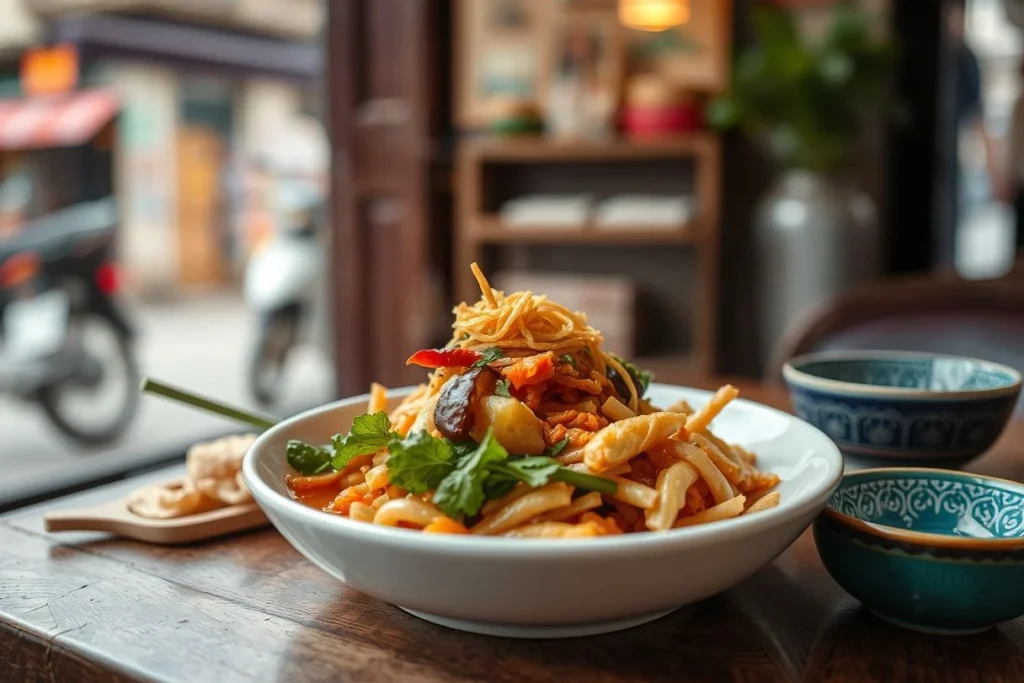
Hanoi Old Quarter is the easiest place to compare Northern Vietnamese food on foot. Its small streets and concentrated food stalls suit a first evening of phở Bắc, bún chả or chả cá, while the surrounding atmosphere lets you see how locals eat at low tables rather than in formal dining rooms. Hanoi Food Tours and Vietnam Tourism both identify the city as a key place to explore these northern specialities.
For a different setting, go to Long Biên Market early, when the market is oriented more towards produce and wholesale trade than a leisurely visitor meal. It is useful for seeing the Red River Delta’s ingredients and working rhythm, but access, crowding and the availability of ready-to-eat food can change, so check locally before making it a fixed itinerary stop.
Hue: Đông Ba Market and the culinary shadow of the Citadel
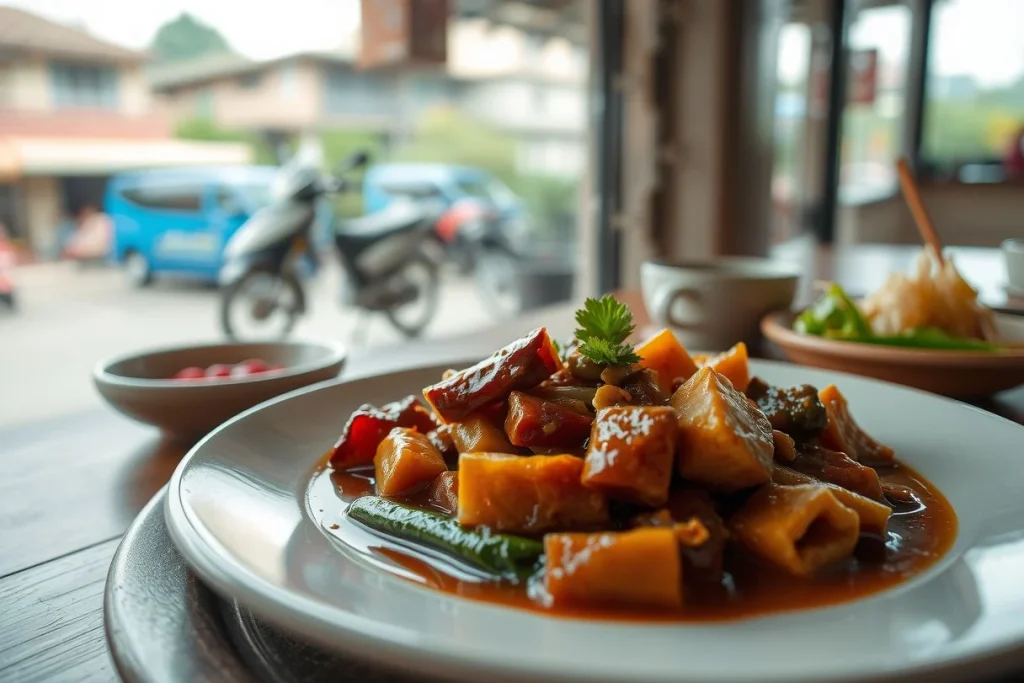
Đông Ba Market is Hue’s practical starting point for central dishes and ingredients. Look for opportunities to try bún bò Huế, bánh bèo and other small-format foods associated with the city’s layered, chilli-forward cooking; Vietnam Tourism links Hue’s food culture with both stronger seasoning and imperial culinary traditions.
The Hue Citadel provides useful cultural context, but it is not a guarantee of a particular dining experience. Plan the market and Citadel as separate stops, then confirm food stalls, access and weather conditions—especially during Central Vietnam’s wetter period.
Hoi An: market dishes and old-town lanes
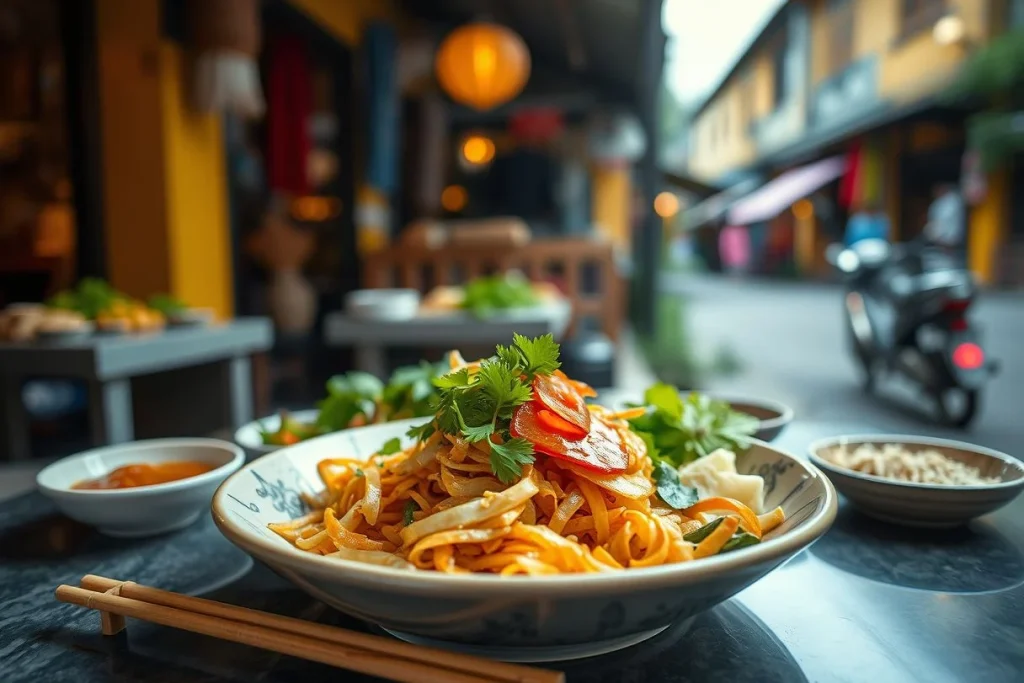
Hoi An Market is the most direct place to sample Quảng Nam flavours, while the lanes around the Japanese Bridge provide an atmospheric setting for a meal. Cao lầu is particularly associated with Hoi An: its chewy noodles, pork, herbs and concentrated broth reflect local rice, water and ash-soaking traditions, according to Vietnam Tourism and VNLocals.
Ho Chi Minh City: central stalls, Chợ Lớn and the Mekong
Ben Thanh Market offers a central introduction to Southern Vietnamese food, including sweeter seasoning and abundant tropical produce, though stall conditions and menus vary. For southern Chinese-influenced flavours, explore Chợ Lớn; Mekong Delta markets offer a broader view of regional fruit, produce and noodle dishes rather than a single representative meal.
At any market, favour busy vendors with high turnover, visible cleanliness and clearly handled ingredients. Check that seating is stable, ask how a dish is prepared, and state allergies and chilli tolerance plainly; never assume a vendor can provide a safe substitution. Use bottled or treated water, following the food-safety guidance from Vietnam Tourism. Confirm market conditions and hours directly before travelling.
Food tours and Vietnamese cooking classes: what to book
Choose a food tour if your priority is orientation: a guide can help you decode menus, identify regional dishes and build confidence ordering from markets and small food stalls. A Hanoi street-food walk is a natural introduction to phở Bắc, bún chả and chả cá around the Old Quarter; a Hue outing can focus on Đông Ba Market and the city’s chilli-forward specialities. In Ho Chi Minh City, look for a tour through local food areas or Chợ Lớn, while a Mekong Delta option suits travellers more interested in produce, regional noodles and market life than city dining.
A Vietnamese cooking class is the better choice when you want techniques to repeat at home. Hoi An is particularly suited to a market-to-table format, while Hanoi, Hue and Ho Chi Minh City also offer classes built around local ingredients and sauces. According to Vietnam Tourism, the common structure is a market visit, instruction on ingredients or sauces, hands-on preparation of two to four dishes, and a shared meal.
Before booking, ask about group size, walking distance, transport and the market meeting point. For Hoi An and Hue, check the wet-weather plan, particularly during Central Vietnam’s heavier rain and typhoon period. Confirm the chilli level, fish sauce and seafood use, vegetarian or vegan substitutions, allergy handling and accessibility: markets can be uneven or involve steps. Current operators, schedules, inclusions and reviews change, so check the provider’s own listing before paying. A private or small-group booking is worth considering for serious allergies, limited mobility or a focused regional menu.
Vietnamese food etiquette: sharing, chopsticks and tipping
Vietnamese meals are commonly communal: several dishes arrive at the centre of the table, and diners serve themselves with chopsticks and spoons. Start with a modest portion, use the serving utensils where they are provided, and take more once you know what you like. If only one portion remains, it is considerate to ask before taking it, particularly when eating with hosts or a mixed group.
Keep chopsticks beside your bowl or on the rest provided; do not leave them standing upright in rice or noodles. The practice is considered inappropriate, according to Vietnam Tourism. At informal noodle stalls, follow the room rather than applying strict rules about slurping or silence: restaurant formality varies, and observation is the safest guide.
Tipping is not compulsory nationwide. Rounding up or leaving a small amount may be appreciated in tourist-oriented and higher-end settings, but it is not a substitute for checking whether a service charge is already included. For an organised food tour or cooking class, around 5–10% is reasonable for good service, based on the guidance cited by MICHELIN Guide; treat that as a useful convention, not a universal requirement.
When seasonal weather changes the food trip
Peak travel months include June, July, August and December, but the most convenient season for a food trip depends on the region. Northern Vietnam is generally cooler and drier from November to March, making Hanoi’s outdoor eating areas and market walks more comfortable. The regional flavour profile does not disappear in the cooler months, but individual stalls and seasonal produce can vary.
Central Vietnam needs more contingency. Around September to November, heavier rain and typhoon disruption can affect outdoor dining, market access and transport, particularly around Hue, Hoi An and Đà Nẵng. Vietnam Tourism’s regional food guide is useful for the broad culinary pattern, but it cannot confirm which stalls or markets will operate on a particular day.
Southern Vietnam has a rainy season from May to November; the drier period from December to April is associated with more abundant tropical fruit. Before committing to a market visit or food-focused transfer, check the latest weather forecast, local market updates, venue closures and travel advice. GOV.UK’s Vietnam travel advice, updated 21 September 2026, is one place to check current travel information.
Street-food safety and dietary needs in Vietnam
Street food can be part of a sensible Vietnam food itinerary, but no stall is automatically safe. Choose busy vendors with high turnover, where food is cooked hot to order when possible and preparation areas look clean. Avoid visibly unhygienic stalls, and drink bottled or treated water. This approach follows the food-safety guidance from Vietnam Tourism.
Vegetarians and vegans can eat well, particularly in larger cities, but never assume a dish is meat-free. Fish sauce, shrimp paste, meat stock and egg may be used in soups, dipping sauces or apparently vegetable dishes. Chay is a useful term for vegetarian food, but ask the vendor to confirm every ingredient if you are vegan or have an allergy.
Carry a written Vietnamese translation or allergy card, and show it before ordering rather than relying on gestures. State both the ingredient you must avoid and your chilli tolerance; substitutions are not guaranteed. For a cooking class or food tour, disclose allergies, vegetarian or vegan requirements when booking and confirm the menu directly with the operator.
How much to budget for food in Vietnam
For everyday eating, Vietnam is usually inexpensive at the stall level, while city location, ingredients and service style can quickly raise the bill. The figures below are indicative 2026 guidance from the undated Vietnam Visa by BDA food guide; they are not fixed tariffs.
| Estimated food cost | Typical amount | Basis |
|---|---|---|
| Street-food meal | Low tens of thousands of VND | Per person, for a bowl or dish such as phở or mì Quảng |
| Casual restaurant or quán meal | 100,000–200,000 VND | Per person in a city casual restaurant |
Check the displayed price before ordering, and confirm whether drinks or extras are included. Tours, cooking classes and Michelin-listed or higher-end restaurants need separate, current research: ask the operator or venue for today’s menu and price. Costs can differ substantially between a neighbourhood quán, a market stall and a tourist-area restaurant, so verify locally on arrival.
Choose your flavour route through Vietnam
Choose Hanoi if clear broths, restrained seasoning and balanced flavours are your priority. Choose Hue or Hoi An for chilli, herbs and layered Central Vietnamese dishes; choose Ho Chi Minh City and the Mekong Delta for sweeter seasoning, coconut and abundant tropical produce.
For a first trip, book a street-food walk early in your stay, then use what you learn to order independently. Add a market-to-table Vietnamese cooking class if you want practical skills to take home; formats commonly include shopping, preparing several dishes and sharing the results.
Before committing, recheck weather and transport—particularly in Central Vietnam from September to November—along with market access, class availability and dietary arrangements. Tell the operator about allergies, vegetarian or vegan requirements and chilli tolerance in advance.
Frequently asked questions
How different are northern and southern versions of phở?
The regional contrast is clearest in seasoning. Northern Vietnamese food, including phở Bắc, is associated with restrained seasoning, balanced flavours and a clear, aromatic broth; southern food generally uses sweeter seasoning and more tropical produce. Expect the same dish name to reflect local preferences, so describe your preference for a less sweet or more intensely seasoned bowl when ordering. This comparison follows Vietnam Tourism’s regional cuisine guide.
What should I say if I have a peanut, seafood or fish-sauce allergy?
Tell the vendor clearly before ordering and name every ingredient you must avoid; do not rely on a dish’s name to indicate that it is safe. This matters because dishes such as chả cá may include fish and peanuts, bánh xèo commonly includes shrimp and fish sauce is widely used as a condiment. Chilli levels and substitutions vary by vendor, so ask whether the dish can be prepared without the ingredient.
Can I find satisfying vegan meals outside major cities?
The supplied research does not verify vegan availability by city or town, so do not assume that every market or rural stop will have a reliable choice. Vegetarian suitability varies by vendor, and travellers with strict requirements should communicate them clearly before ordering. Markets and busy food areas may offer more opportunities to compare dishes, but check ingredients and preparation directly rather than assuming a vegetable dish is vegan.
Is breakfast really the best time to eat many Vietnamese dishes?
Breakfast is an important eating occasion for some dishes, but it is not a rule for every regional speciality. Cơm tấm is described as a Saigon staple often eaten for breakfast, while phở, bún chả and other dishes can be sought at different times depending on the vendor. For the freshest choice, follow local turnover and check when a particular stall serves its signature dish.
What does “chay” mean on a Vietnamese menu?
The supplied sources do not define the Vietnamese menu term “chay” or establish whether individual vendors use it for vegetarian or vegan food. Treat the label as a prompt to ask what is included, particularly regarding fish sauce, seafood, meat, eggs and cooking stock. Explain your restriction directly, because dietary suitability and available substitutions vary by vendor.
Which region is best for travellers who do not enjoy chilli?
Northern Vietnam is the safest starting point: Hanoi and the Red River Delta are associated with restrained seasoning, balanced flavours and clear, aromatic broths. Try phở Bắc or bún thang, and tell the vendor that you prefer no extra chilli. Central Vietnamese cuisine, especially around Hue, is more strongly associated with chilli, while southern dishes may be sweeter and richer in tropical produce.