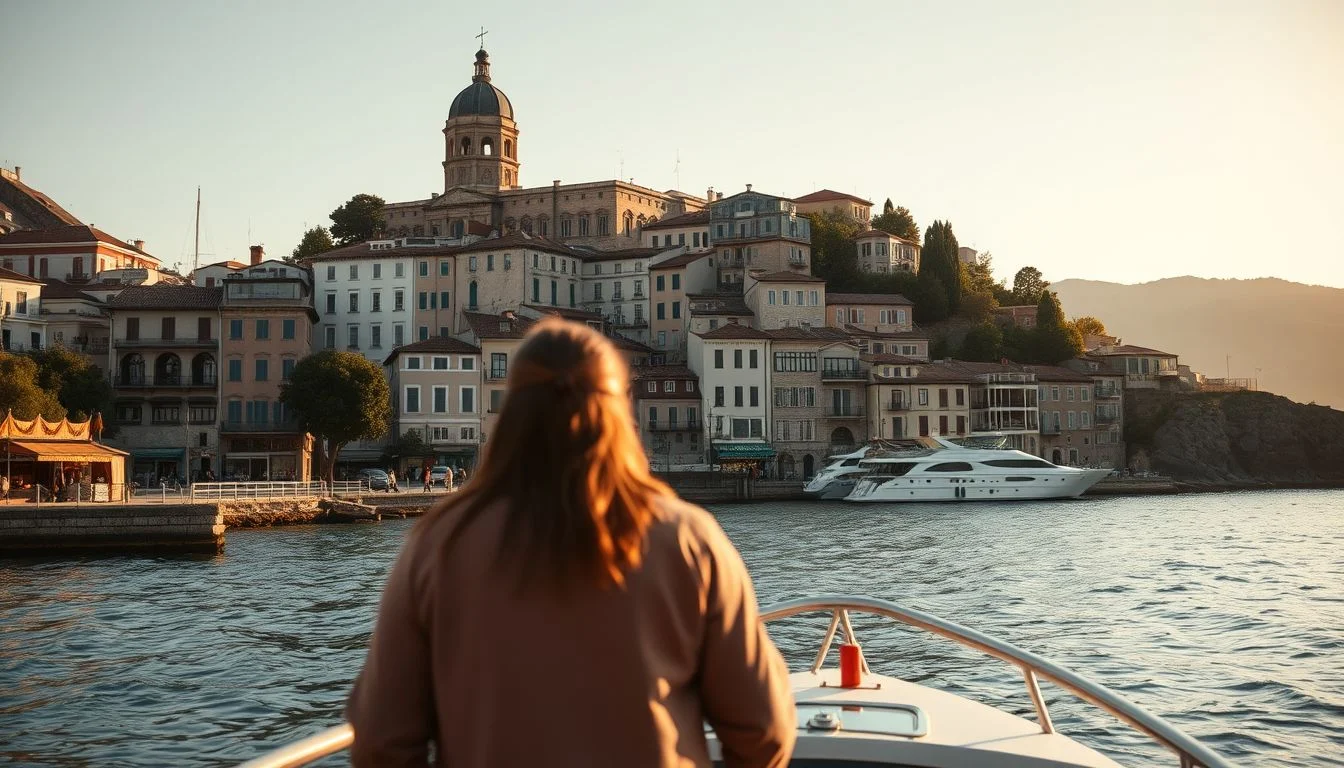
A family boat trip starts before the engine does: with a gangway, pontoon or ladder. That access route matters as much as the view. A stroller may need folding, a toddler may need carrying, and older children may receive a different safety briefing from adults. Choose an operator whose boat matches your children’s stamina, age limits and comfort in open water.
This guide to how to choose a boat tour operator is for parents comparing trips with infants, toddlers, school-age children or teenagers. It sets short sightseeing cruises against wildlife trips, sailing, guided small-craft outings and private charters, then checks the details that listings often leave unclear: correctly sized child PFDs, toilets, shade, indoor seating, group size, boarding assistance and bad-weather terms. You’ll also find the trade-offs between an organised tour and going independently, so your next step is based on the boat and the children rather than the itinerary alone.
Quick answer: Choose an operator whose trip suits your children’s ages, stamina and mobility, then verify the boarding route, group size, shelter, toilets, weather policy and correctly sized child PFDs before paying. For babies and toddlers, a short, sheltered sightseeing cruise is often the most practical starting point. Older children may suit wildlife, sailing or guided small-craft trips once you’ve confirmed the age limits, conditions and safety support.
Types of boat tours: which format suits each family?
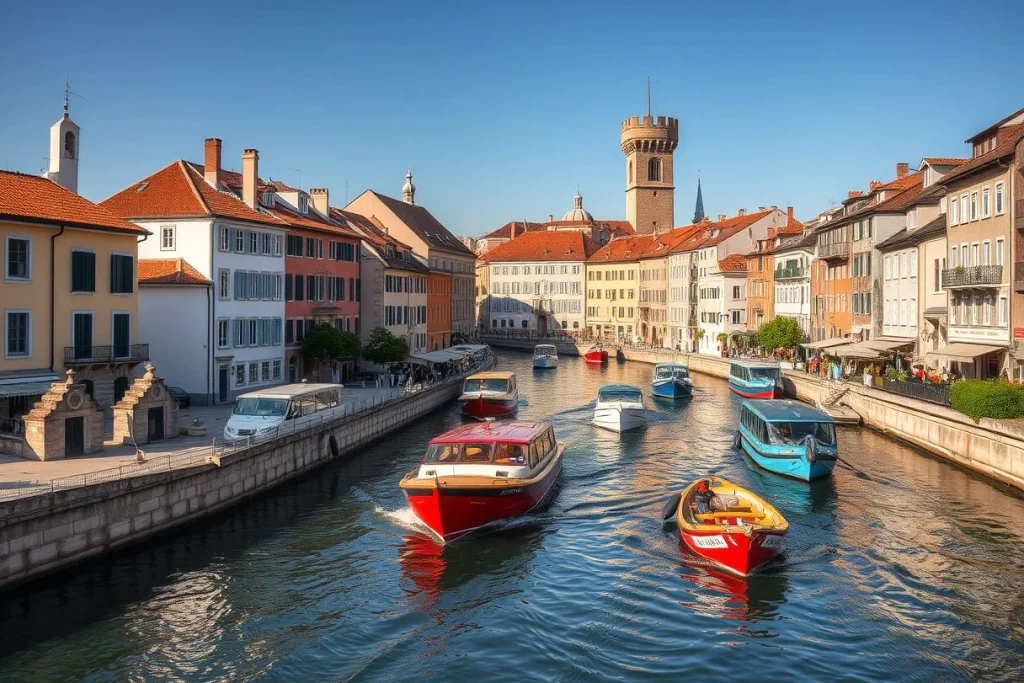
Use the children’s likely day on the water as the filter: a short, sheltered outing is a different proposition from an exposed wildlife trip or a hands-on paddle. Tour names can sound family-friendly while concealing long durations, ladders, rough water or no indoor seating. Check the operator’s stated age limits, PFD provision, toilets, shade, food and group size before treating any format as suitable; the Family Travel Association highlights these practical details as central to family planning.
| Children’s age | Formats to consider | Check before booking |
|---|---|---|
| Infants and toddlers | Brief narrated sightseeing or harbour cruise | Sheltered seating, toilet, simple boarding, stroller policy and infant PFD availability |
| School-age children | Short wildlife trip, sailing lesson, canoe or kayak outing | Minimum age, water conditions, swimming requirements, supervision and PFD fit |
| Teenagers | Wildlife trip, sailing charter, high-speed ride or expedition-style outing | Sea exposure, duration, medical support, weather shelter and emergency communication |
| Mixed ages or accessibility needs | Private or family-tailored charter | Exact vessel, boarding route, toilet, breaks, seating and whether staff can help |
For a baby or toddler, a quiet harbour cruise is usually easier to manage than a high-speed ride, dinner cruise or party boat. Late hours, noise, spray and fixed meal schedules can quickly collide with naps, feeding and an early bedtime. Ask specifically about a cabin or covered area, rather than assuming that “panoramic” means there is shelter.
School-age children often have the stamina for a wildlife or whale-watching trip, but open-deck exposure and rough water make the operator’s conditions important. A guided kayak or canoe trip can work for active older children only when the stated age policy, swimming expectations, supervision and correctly fitted PFDs are clear. US Coast Guard guidance explains why fit matters; in the United States, federal rules require children under 13 on recreational vessels to wear an appropriate USCG-approved PFD while underway, but requirements elsewhere differ.
Teenagers may enjoy longer sailing, high-speed or small-ship expedition trips, provided the vessel has suitable shelter and the operator explains its emergency arrangements. For context, the UK Small Passenger Boat Code applies to a defined category of vessels carrying no more than 12 passengers on certain inland waters; regulations vary by vessel and jurisdiction.
With any age group, confirm whether boarding uses a gangway, ramp, pontoon or ladder. The UK Health and Safety Executive advises checking access conditions, so ask how a folded stroller is handled and whether staff provide assistance. Also verify current PFD standards: US approval and carriage rules were updated in the Federal Register on 6 December 2024, and infant policies should be confirmed directly with the operator.
Tours worth considering: what to check in each category

“Family-friendly” is only a starting label. Compare the actual vessel and itinerary: children’s age limits, rough-water exposure, seating, shade or indoor shelter, toilets, food, group size and the way emergencies are handled. The Family Travel Association also recommends judging a trip around practical family needs rather than assuming that a tour title guarantees comfort.
| Category | Best age range | Ideal duration | Questions to ask | Red flags |
|---|---|---|---|---|
| Short sightseeing or harbour cruise | Infants, toddlers and mixed ages | Brief, with a simple return route | Is there shade, indoor seating, a toilet and room for a folded stroller? Is the water usually sheltered? | No clear child policy, exposed deck only or boarding that requires carrying a child without staff help |
| Wildlife or whale-watching trip | School-age children and teenagers | Longer outing, if children manage waiting and open water | What shelter is available if the sea turns rough? Are sightings guaranteed, and what is the minimum age? | High-speed travel, no indoor refuge or no plan for children who become seasick |
| Guided kayaking or canoeing | Older, confident children and teenagers | Short session with breaks | Must children swim? How are PFDs fitted, and what rescue support is on the water? | Unclear age or swimming requirements, strong current or no explanation of emergency communication |
| Sailing lesson or short charter | School-age children and teenagers | Short lesson or half-day pace | Can children sit safely during manoeuvres? Are there a toilet, cabin and protection from sun or rain? | Children are expected to move around freely, or the operator cannot explain supervision |
| Private or family-tailored charter | Mixed ages, including nappers | Adjustable, with planned breaks | Is the named vessel the one supplied? Can the route, food and rest stops be adapted? | Vague vessel details, no written cancellation terms or facilities assumed rather than confirmed |
| Dinner, party or high-speed cruise | Older children and teenagers, depending on the policy | Later or faster-paced outing | How noisy is it, and is the schedule compatible with bedtime? Is seating secure? | Late hours, loud entertainment, alcohol-focused marketing or no quiet, sheltered area |
| Small-ship or expedition trip | Older children and teenagers | Multi-hour or longer itinerary | What are the age limits, medical arrangements, sea conditions and onboard facilities? | No clear medical support, demanding transfers or a long itinerary with no child-appropriate alternative |
For every format, ask to see or confirm correctly sized, serviceable personal flotation devices before paying. In the United States, children under 13 must wear an appropriate US Coast Guard-approved PFD while a recreational vessel is underway; that is a US rule, not an international standard. USCG approval and carriage standards were updated in the Federal Register on 6 December 2024, so an old listing is not enough evidence of current compliance.
Ask how the operator manages a child who is tired, seasick or frightened, and whether the crew gives a safety briefing before departure. Commercial operators should provide safety information and appropriate equipment; families should still confirm certification, emergency communication and child policies for the relevant jurisdiction through the operator or its maritime authority.
Finally, get the weather policy in writing. A cancellation may result in a refund, rescheduling or credit depending on the operator, so check the precise terms before booking and make sure the trip still works if there is no indoor shelter, a nap break or a suitable rainy-day alternative.
How to vet an operator before you book
Before comparing routes, apply this five-point operator check. A polished website or positive reviews can help with service expectations, but neither proves current safety compliance.
- Check the relevant credentials. Ask which licence, inspection or commercial-vessel rules apply to this boat and destination, and request the operator’s current certification. Regulation depends on vessel and location: the UK Small Passenger Boat Code example covers vessels carrying no more than 12 passengers on defined inland waters, while US requirements are not universal internationally.
- Expect a proper safety briefing. The operator should explain emergency procedures, provide appropriate equipment and have a reliable way to communicate in an emergency. These are sensible questions to confirm under the rules applying locally, not assumptions based on a tour description.
- Verify every child’s PFD. Ask for a serviceable, correctly sized personal flotation device and confirm that children will be shown how to wear it. In the US, federal rules require children under 13 on recreational vessels to wear an appropriate USCG-approved PFD while underway; other countries may differ. USCG approval and carriage standards were updated in a Federal Register final rule published on 6 December 2024, so don’t rely on an old listing.
- Inspect the practical details. Confirm the exact boat, crew, toilets, shelter, seating and stroller arrangements. Boarding may involve a gangway, ramp, pontoon or ladder; ask whether staff can help with a stroller or mobility equipment.
- Judge the answers, not just the marketing. A reachable operator who answers specific family questions clearly is a better prospect than one offering vague assurances. Keep the replies, including the written weather and cancellation terms, with your booking documents.
Copy and paste: “Can you confirm the minimum age, child PFD sizes and fit, toilet and sheltered seating, stroller handling, exact boarding route, staff assistance, emergency communication and what happens if conditions make the trip unsafe?”
Organised tour or independent outing: the honest trade-offs
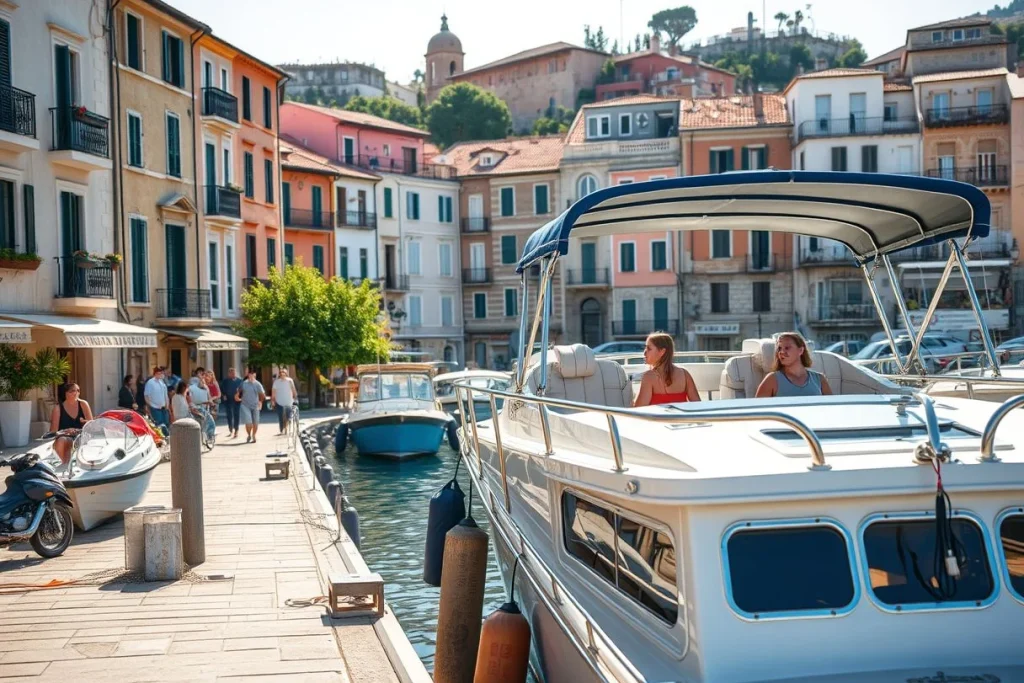
An organised boat tour removes much of the work from a family day on the water: the operator handles navigation, gives the safety briefing and supplies the relevant equipment. That is usually the calmer choice for first-time boat users, unfamiliar waters, wildlife trips or parents who do not want to supervise every decision while also managing children. Commercial operators should provide safety information and appropriate equipment; confirm their certification and emergency arrangements for the jurisdiction, as advised by GOV.UK.
| Consideration | Organised tour | Independent outing |
|---|---|---|
| Safety and navigation | A skipper or guide manages the route, conditions and emergency procedure. | An experienced adult carries responsibility for navigation, equipment and decisions. |
| Local knowledge | Guides can interpret wildlife, landmarks and local water conditions. | You choose the route, but need reliable local information before setting out. |
| Flexibility | Departure time, route and duration are usually fixed. | Breaks and an early return are easier, provided the vessel and rental terms allow them. |
| Privacy and pace | A shared boat may suit children who enjoy structure, but not a nap schedule. | A private outing offers more control, though babies and mixed ages still make a self-managed trip demanding. |
| Comfort | Check the actual boat for toilets, shade, indoor seating and food. | You control what to bring, but cannot add facilities the vessel lacks. |
| Boarding and access | Staff may help, but confirm the gangway, ramp, pontoon or ladder in advance; access routes vary, notes the Health and Safety Executive. | You must judge whether the vessel and boarding point work with your children and stroller. |
| Weather decisions | The operator assesses conditions under its stated policy. | You make the call and carry the consequences of changing conditions. |
Independent boating can work for experienced adults on calm, familiar waters, for a short outing in a vessel that genuinely fits the family. It is not automatically safer or simpler, particularly with babies, several age groups or open-water exposure. A private charter can bridge the gap between guidance and flexibility, but check the exact vessel, skipper, facilities and emergency communication rather than booking from the charter label alone.
For rentals, kayaking or other water activities, ask your travel insurer whether the activity and any cancellation or missed-departure scenario are covered. Keep that answer with the booking documents.
Booking tips: cancellation, group size and the meeting point
Booking tips: cancellation, group size and the meeting point

Use this checklist before paying. A tour title rarely tells you enough about access, shelter or comfort: family suitability depends on the vessel, the route and the operator’s rules, not simply on whether an excursion is described as “family-friendly”.
- Read the cancellation terms in writing. Check what happens if the operator cancels for rain, wind or rough seas, and what applies if your family arrives late or cannot travel. The outcome may be a refund, rescheduling or credit, and terms differ between operators; the Association of Canadian Travel Agencies advises travellers to obtain these conditions before booking. Do not assume bad-weather cancellation means a cash refund.
- Ask for the actual maximum group size. A small group may make it easier to settle a toddler, while a larger vessel may offer more stable seating and indoor space. Confirm whether seats are assigned, whether there is a quieter area, and whether children can move safely without entering crew-only zones. Also ask if the boat has indoor shelter, shade and a toilet; these are practical factors the Family Travel Association identifies as important to family suitability.
- Verify the meeting point as if you were arriving with luggage and a pushchair. Request the exact pier, terminal or map pin, then ask about the walking surface, stairs, parking, public transport, toilets and distance from your accommodation. Boarding can involve a gangway, ramp, pontoon or ladder. The UK Health and Safety Executive’s guidance on access to vessels makes clear why the route matters, so ask whether staff can help with a stroller or mobility equipment and whether the pushchair must be folded, stored ashore or left in a vehicle.
- Confirm the boarding process and arrive with time to spare. Ask when check-in closes, where the queue forms and whether every child must be fitted with a personal flotation device before boarding. Arrive early enough for check-in, the walk to the correct berth and PFD fitting rather than treating the advertised departure time as your arrival time. If you are travelling in the United States, federal rules require children under 13 on recreational vessels to wear an appropriate US Coast Guard-approved PFD while underway; elsewhere, verify the local requirement. The US Coast Guard guidance also stresses correct fit and wear.
- Match the outing to your child’s routine. Ask for the total duration, likely open-water exposure, motion, shade, indoor seating, drinking water, food and toilet arrangements. For a baby or toddler, check whether the timing crosses a nap and whether there is a quiet place to sit. Ask what happens in rain and whether the operator has an alternative date or another sheltered plan; also verify the sailing calendar, seasonal closures and local conditions for your dates, particularly during locally busy periods such as June, July, August or December.
- Confirm age and equipment rules directly. Ask about minimum ages, swimming requirements and whether the operator has a correctly sized, serviceable PFD for every child before departure. For kayaking, canoeing or other small-craft trips, ask how children are secured, what emergency communication is available and what support exists if conditions change. Commercial operators should provide safety information and appropriate equipment, but the relevant rules and certification depend on the vessel and jurisdiction; government vessel-safety guidance is a useful starting point for UK inland waters.
A concise message to send the operator is: “We are travelling with children aged [ages], and one child uses a stroller. Please confirm the exact meeting point and boarding route, maximum group size, trip duration, toilets, indoor shelter, stroller storage, age and swimming rules, child PFD sizes, and your written policy for weather cancellation, refunds and rescheduling.” Keep the reply with your booking documents.
The sensible family choice: match the boat to the child
For most families, the sensible choice is a short, age-appropriate trip with straightforward boarding, correctly sized child PFDs, and a toilet or sheltered seating when young children need one. A manageable group size can matter as much as the route, particularly for toddlers, nappers or children who find noise and waiting difficult.
The right operator is the one that answers specific questions clearly—not necessarily the cheapest or most heavily marketed. Before paying, send your family details and the checklist of access, facilities, safety equipment and weather arrangements. Keep the written reply alongside the booking confirmation and cancellation terms, so you know exactly what happens if conditions change.
Frequently asked questions
Can babies go on a boat trip, or is there a minimum age?
There is no universal minimum age in the supplied guidance: the operator, vessel and local rules decide. Treat a baby’s trip as a safety question, not an automatic booking assumption. Ask whether infants are accepted, whether a suitable, correctly sized PFD is available, and whether the route is sheltered, brief and equipped with toilets, shade or indoor seating. The US Coast Guard advises careful planning for infants and suitable PFD selection.
What should families pack for a boat tour with young children?
Pack only what the operator permits, but plan around the vessel’s facilities and conditions: spare clothes, weather protection, nappies, wipes, any required medication and familiar food for children. Confirm whether drinks and snacks are allowed, and whether toilets, shade, indoor seating and shelter are available before departure. Do not rely on bringing your own flotation device without first checking with the operator; it must be appropriate for the child and activity.
How can we reduce seasickness on a family boat trip?
Start by choosing a shorter trip with less rough-water exposure, particularly for toddlers or children who have not travelled by boat before. Ask the operator which parts of the vessel offer the most sheltered seating and what happens if conditions worsen. The Family Travel Association identifies trip length, rough-water exposure, shelter and seating as factors in family suitability. For medication or a child with a medical condition, ask a qualified health professional before travelling.
Are snacks and drinks usually allowed on board?
Do not assume that food or drinks are included or permitted. Ask the operator before booking about outside snacks, water, allergies, refrigeration and rubbish, then check whether the trip has a galley or scheduled food service. Food provision is one of the practical suitability points families should confirm directly with the operator, alongside toilets, shade, shelter and seating. Bring familiar food only if the operator confirms it is allowed.
What should we do if a child becomes frightened or overwhelmed during the trip?
Before departure, identify the quietest sheltered area, ask where a child can sit safely, and tell the crew that your family may need a calm break. Choose a shorter, sheltered outing rather than a high-speed, noisy or late cruise if your child is sensitive to motion or crowds. The operator should provide safety information and appropriate equipment; follow crew instructions and ask in advance what assistance or early disembarkation options exist.
Does travel insurance cover kayaking, boat excursions or a missed departure?
Do not assume that a standard policy covers every water activity or every missed departure. Ask the insurer specifically about the planned excursion, including kayaking, rafting or a small-boat trip, and whether cancellation caused by a missed or cancelled departure is covered. Also request the operator’s written weather and cancellation terms: operators may offer a refund, rescheduling or credit under different conditions. Check both documents before paying.