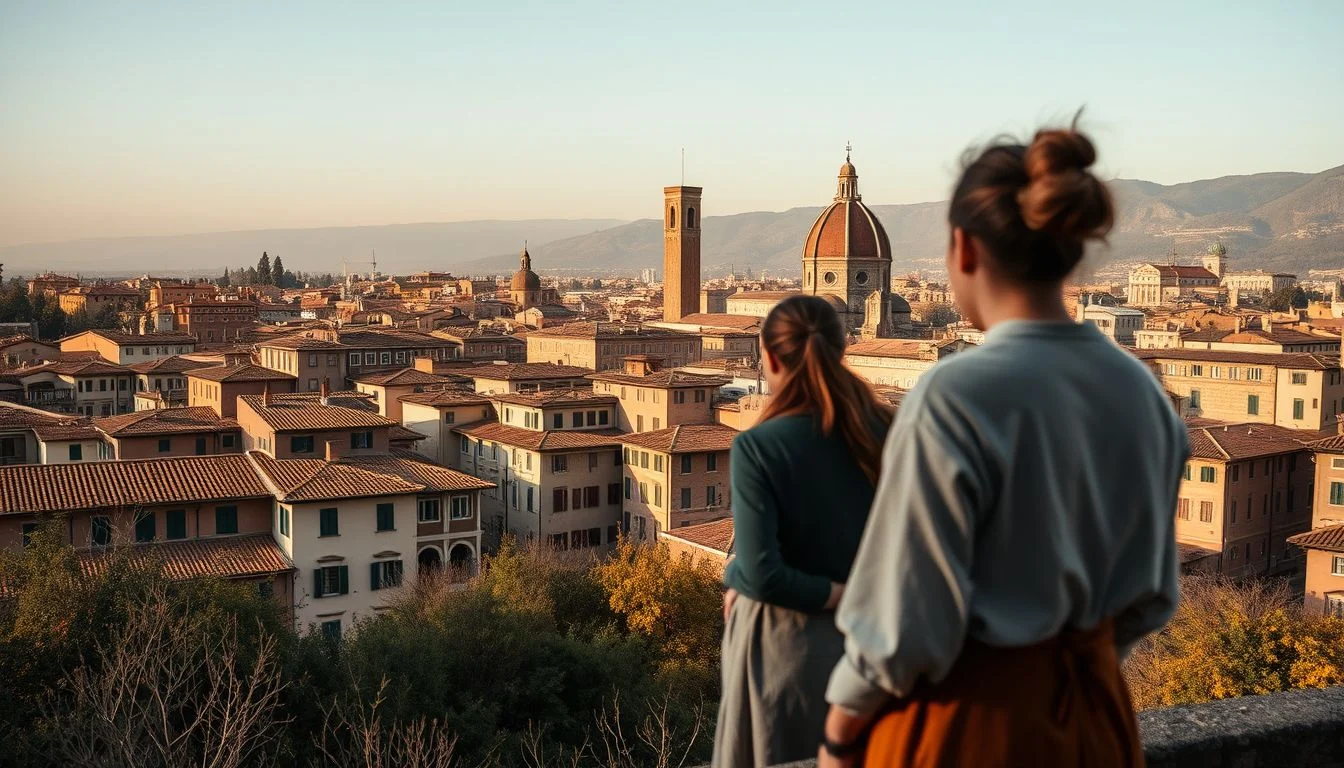
At a Bologna cooking class, a hand-rolled sheet of sfoglia becomes tagliatelle or tortellini beneath the guidance of a sfoglina, before the group eats what it has made. The most complete versions begin with a walk through the Quadrilatero or Mercato di Mezzo, turning a market visit into a practical lesson in dough, filling and regional ingredients.
This guide is for adventure travellers who want to work with their hands rather than simply watch a demonstration. It compares central market routes, Mercato delle Erbe workshops, home-based lessons and private teaching kitchens, so you can choose between atmosphere, technique, schedule control and price. You’ll also find the walking and access questions that matter in Bologna’s historic centre, plus advice on dietary requests, booking lead times, seasonal availability and leaving enough time for the meal to run over.
Quick answer: A typical Bologna cooking class combines a market or specialist-food visit with hands-on sfoglia work, such as rolling dough and shaping tagliatelle or tortellini, followed by eating the prepared meal. For most visitors, a central Quadrilatero or Mercato di Mezzo market-and-class format is the best all-round choice; expect roughly €80–€120 for a group pasta class or €130–€200 for a market-and-cooking experience, based on listings checked in late September–October 2026.
What to expect from a Bologna cooking class: market, sfoglia and shared meal
The work begins at the table, not at the dining room. After meeting near the historic centre, you may browse a market or specialist food shops before returning to the kitchen with ingredients and a clearer sense of Bologna’s pantry. Bologna Tourism describes this market-and-class format as a particularly rewarding way to encounter the city’s cooking culture.
Then comes sfoglia: mixing eggs and flour, kneading until the dough becomes smooth, and rolling it thin by hand. The aim is usually to cut tagliatelle, fold tortellini or prepare both, often with a sauce such as tagliatelle al ragù. Some sessions add tiramisù or another simple dessert. The defining moment is practical rather than polished—the dough resists, sticks, tears and gradually responds to pressure and patience. The tradition is associated with the sfoglina, the specialist who turns a basic dough into delicate pasta, although not every class is led by one.
Allow approximately two to four hours, depending on whether the booking includes a market visit and a meal, according to Bologna Cooking Class. Expect to stand for much of that time, walk between food stops, knead, roll and shape pasta, then sit down to eat what the group has made. It is an active workshop with a generous finish, not a restaurant meal with a demonstration attached.
The format changes the experience. A small group gives you instruction while keeping the social energy of a shared table; a private lesson offers more control over pace, menu and technique. Home-based sessions favour an intimate domestic setting, while a teaching kitchen tends to make the sequence easier to follow. Independent cooking is possible only in the loose sense of practising recipes later: during the class, the advantage is having a guide correct your dough thickness, folding and shaping as you work. Providers vary in language, dietary policy and inclusions, so check those details on the live booking page before committing, as advised by Bologna Tourism.
Where to do it: Bologna’s best market, home and teaching-kitchen formats
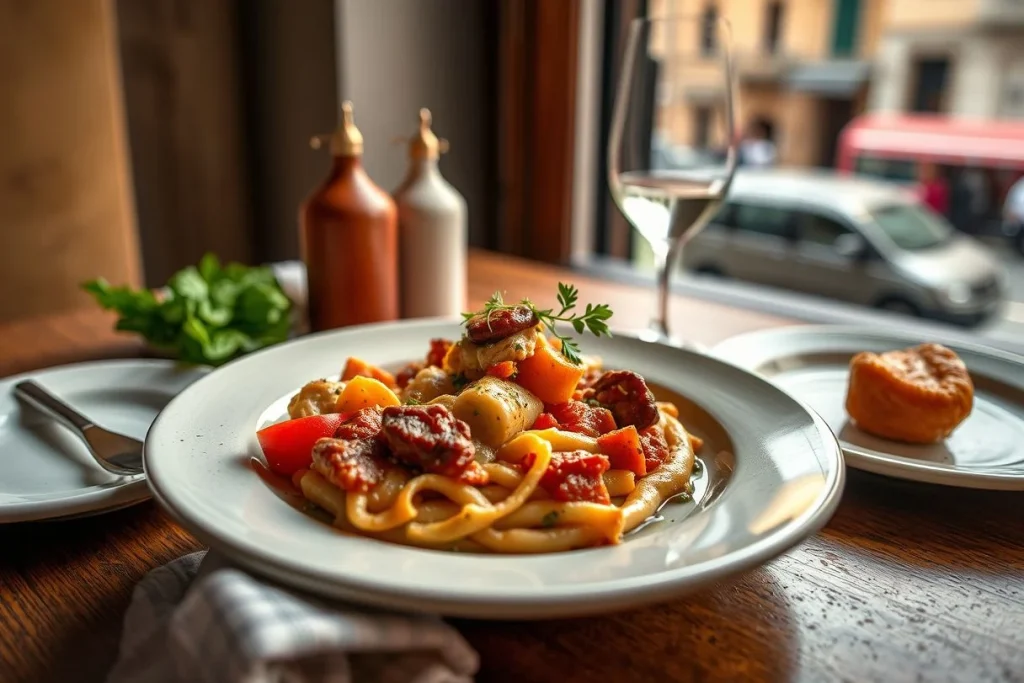
Choose the setting before choosing the menu. Central market formats keep the route compact and add the visual energy of food stalls; home lessons trade that street context for conversation and a more personal kitchen. Bologna’s cooking classes commonly run for around two to four hours, depending on whether the experience includes a market visit and a meal.
| Setting | Likely route | Strengths | Limitations | Best fit |
|---|---|---|---|---|
| Quadrilatero and Mercato di Mezzo | Meet around the market or a nearby piazza, then walk to the cooking venue | Most complete central experience: market atmosphere, specialist food shops, sfoglia technique and a shared meal near Piazza Maggiore | Historic-centre navigation can be slow with luggage or a pushchair; the exact kitchen may not be inside the market | First-time visitors wanting a Bologna cooking class with a market walk |
| Mercato delle Erbe area | Covered market visit followed by a nearby workshop or teaching space | Useful for seasonal-produce context and a weather-resistant market route | Check the current meeting point, vendor schedule and whether the cooking space is in the market area | Travellers who prefer a covered, produce-led introduction to Bologna food |
| Le Cesarine home-based experience | Travel to an individual host’s home at the address supplied after booking | Intimate domestic setting and a smaller-scale local food encounter | Kitchen size, stairs, restroom access, menu and accessibility vary by host | Travellers who value conversation and atmosphere over a central market circuit |
| Felsina Culinaria or similar teaching kitchen | Go directly to a dedicated instructional venue | More structured focus on technique, useful when rolling and shaping matter more than sightseeing | May provide little or no market element; confirm the current class format and inclusions | Hands-on learners seeking a focused sfoglia class in Bologna |
| Bologna Gourmet or comparable private lesson | Meet at the chef-led venue or agreed location | Greater schedule control, individual attention and scope for a tailored menu | Private instruction sits in a substantially higher price band, and the exact format varies | Travellers with limited time, specific dietary needs or a strong preference for privacy |
These formats are represented by providers such as Bologna Welcome, Bologna Gourmet and Le Cesarine listings, but availability and arrangements are not identical. Check the live booking page for the host, language, meeting point, menu, cancellation terms and dietary policy before paying.
Some central meeting points around the Quadrilatero, Mercato di Mezzo or Piazza Maggiore may be walkable from Bologna Centrale. Allow extra time: the route through the historic centre and the final kitchen address differ by provider, and a home lesson may involve local transport. If mobility is a concern, ask directly about step-free entry, stairs, the restroom and workspace layout rather than relying on the neighbourhood name.
A Bologna-to-Parma or Bologna-to-Modena food day is a different proposition. It can add producers and several stops, but it is a longer regional itinerary rather than a concentrated city workshop; choose it only if the journey matters as much as learning to make pasta.
Best time to visit for comfortable market walks and reliable class availability
For a Bologna cooking class that includes walking, market browsing and time at the worktable, aim for May–June or September–October. These shoulder-season windows generally offer more comfortable conditions for moving between the Quadrilatero, Mercato di Mezzo or Mercato delle Erbe and the teaching venue, while avoiding some peak-period pressure. Weather Spark’s Bologna climate guide is useful for comparing months, but check the forecast close to departure.
| Season | Walking and market conditions | Crowd and booking pressure | Best suited to |
|---|---|---|---|
| May–June | Comfortable window for a market walk and a warm kitchen session | Moderate; book ahead for popular dates | First-time visitors wanting the fullest city-based experience |
| July–August | Plan market walking earlier in the day; conditions can feel less comfortable | June–August is a peak travel period, although August may have reduced artisan or class schedules | Flexible travellers who can adapt their dates |
| September–October | Another strong window for combining outdoor browsing with hands-on sfoglia | Autumn interest can make sought-after sessions harder to secure | Food-focused travellers seeking seasonal atmosphere |
| November–December | Good for a workshop-led visit, with less dependable market planning around holidays | Truffle and tortellini interest, then late-December demand, can tighten availability | Travellers choosing dates for seasonal food themes |
August can be quieter locally, but that does not guarantee more choice: some artisans and classes reduce their schedules. For any month, check current event dates, market opening times and vendor schedules with Bologna Welcome and confirm holiday closures and provider calendars directly. Booking around two to three weeks ahead is sensible in shoulder season; allow more time for private sessions, autumn dates and late December.
How to book or go independently: routes, meeting points and checks
Compare the format before you book
Fully independent pasta-making is harder than it sounds: you need a suitable kitchen, a rolling surface, ingredients, equipment and someone who can demonstrate local technique. A guided Bologna cooking class removes that setup and much of the language uncertainty. Most sessions last about two to four hours, depending on whether they include a market visit and a meal, according to the live information collated by Bologna Cooking Class.
For the clearest introduction, choose a small-group market-and-class format. The usual sequence is a meeting at a central market entrance or piazza, a short food walk, then hands-on sfoglia work: rolling dough and shaping tagliatelle or tortellini before sitting down to eat. Bologna Tourism describes this market-plus-cooking structure as a particularly useful way to connect the city’s ingredients with its cooking culture.
What to check on the live listing
Before paying, confirm the exact meeting point, route and start time. Central venues around the Quadrilatero and Mercato di Mezzo may be reachable on foot from Bologna Centrale, but allow extra time for historic-centre navigation, finding the correct entrance and any local transport. Do not schedule an immediate train connection afterwards: the meal and final clean-up can extend the advertised finish.
- Check the teaching language, maximum group size and whether the instructor is a sfoglina, chef or host.
- Confirm the menu: ask specifically whether tagliatelle, tortellini, tiramisù, Parmigiano Reggiano, wine or another meal is included.
- Make sure a market visit is genuinely part of the booking, rather than simply a nearby meeting point.
- Read the minimum-participant rule, cancellation terms and current availability on the provider’s own page.
- Declare allergies and vegetarian, vegan or gluten-free requirements in writing; providers set their own dietary policies.
- Ask about stairs, step-free access, restroom access and kitchen layout, particularly for a home-based class in an older building.
Useful comparison points include Bologna Welcome, Bologna Cooking, Le Cesarine, Felsina Culinaria and Bologna Gourmet. These are options to compare, not identical products: home-based lessons favour intimacy, while a private chef-led session offers more control over pace and menu at a higher cost.
In shoulder season, booking around two to three weeks ahead is advised; reserve earlier for private lessons, holidays and autumn food dates. Check the live booking page for the operational details, and leave a generous buffer around the class rather than treating its end time as a fixed departure time.
Travel costs: Bologna cooking class prices checked for autumn 2026
Prices vary most with the amount of guidance, the size of the group and whether the experience includes a market walk, a full meal or a private chef. The figures below are market snapshots from listings checked in late September–October 2026, not guaranteed quotes.
Estimated costs: indicative prices checked in late September–October 2026
| Experience | Budget | Mid-range | Luxury |
|---|---|---|---|
| Group pasta class, around 2–3 hours | €80–€120 per person | Not separately supported | Not separately supported |
| Market-and-cooking class, around 3–4 hours | Not separately supported | €130–€200 per person | Not separately supported |
| Private or bespoke lesson | Not separately supported | €200–€249 per person or experience, where listed | €250–€400+ |
| Local transport to the meeting point | €2–€15 per journey | Not separately supported | Not separately supported |
These bands are based on Bologna Cooking listings for group sessions, 2026 operator and Bologna Welcome listings for market formats, Bologna Gourmet listings for private lessons, and late September–October 2026 transport guidance from Bologna Cooking Class. The evidence does not support separate budget, mid-range and luxury bands for every category.
Ingredients and a meal are included in the cited group-class range, while market-and-cooking listings commonly include a meal and wine; confirm the exact inclusions before paying. Market purchases, extra drinks and transfers may sit outside the advertised price. For a private lesson, check whether the quoted amount is per person or for the whole experience, as the basis varies by operator.
Use the provider’s live booking page for the current price, cancellation terms and minimum-participant rule. Bus or taxi choice affects the roughly €2–€15 local-transport estimate, so confirm the current fare when you have the exact meeting point.
| Item | Budget | Mid-range | Luxury |
|---|---|---|---|
| Group pasta class | €80–€120 per person | Not separately supported | Not separately supported |
| Market-and-cooking class | Not separately supported | €130–€200 per person | Not separately supported |
| Private or bespoke cooking lesson | Not separately supported | €200–€249 per person or experience, where listed | €250–€400+ |
| Local transport to the meeting point | €2–€15 | Not separately supported | Not separately supported |
Estimated ranges based on the sources listed below. Prices change; check with providers before booking.
Travel tips that make the workshop smoother and safer
- Dress for flour and standing. Wear comfortable closed-toe shoes and clothing you can move in; kneading and rolling sfoglia are not technically difficult, but several hours on your feet can tire your legs, back and wrists.
- Carry lightly through the market. A small cross-body bag is easier around crowded stalls than a backpack, and leaves both hands free for browsing, dough work and tasting. Use normal crowded-market precautions, especially around the Quadrilatero and Mercato di Mezzo.
- Put dietary needs in writing. Tell the provider about vegan, vegetarian, gluten-free requirements and allergies before booking, then ask for written confirmation. Traditional menus and shared kitchen surfaces may limit substitutions or create cross-contact, so do not rely on assumptions.
- Check the teaching language. Confirm whether the session is taught in English, Italian or another language, and ask how much demonstration is provided. This matters when the focus is technique—stretching sfoglia evenly or shaping tortellini—rather than simply watching a chef.
- Ask precise mobility questions. Confirm step-free entry, stairs, restroom access, seating and the width of the kitchen. Older home kitchens can be compact; Bologna Welcome and other booking pages describe different small-group, home-based and teaching-kitchen formats, so the provider must confirm the actual layout for your session.
- Leave time after the meal. Classes commonly last about two to four hours, and eating the prepared food can extend the finish. Allow a generous buffer before a train from Bologna Centrale or another fixed appointment; central meeting points still require time for historic-centre navigation.
- Check the practical kit before setting out. Permits and specialist equipment are not normally required, but ask whether an apron, rolling pin and all ingredients are supplied. Reconfirm the schedule around August, public holidays and late December, when reduced or tighter availability may affect classes; live provider information is the safest check.
Conclusion: choose the route that matches your appetite for adventure
For a first Bologna cooking class, choose a market-and-sfoglia session in the Quadrilatero or around Mercato di Mezzo. It gives you a purposeful walk through Bologna’s food centre, the physical challenge of stretching sfoglia, practice shaping tagliatelle or tortellini, and a meal at the finish—more involving than a demonstration alone.
Choose a teaching kitchen such as Felsina Culinaria when technique is your priority. A private Bologna cooking class is the better fit for a tailored menu, dietary requirements, accessibility questions or a schedule that cannot bend around a group departure, though it costs more. Select your dates, then confirm the live meeting point, language, menu, access, cancellation terms and finish time in writing. Book around two to three weeks ahead, earlier for private sessions and holiday periods.
Frequently asked questions
Do I need to speak Italian to follow a Bologna pasta-making lesson?
Not necessarily, but the answer depends on the provider and the specific session. Bologna Tourism notes that operators set their own language policies, so check the live booking page before paying; if the listing is unclear, ask whether the instruction is offered in English and how demonstrations are handled. This is particularly important in a hands-on class, where timing and shaping instructions matter.
Will I learn the difference between fresh pasta shapes and sauces?
A typical Bologna cooking class focuses on making sfoglia: rolling the dough and shaping pasta such as tagliatelle or tortellini, then eating what you have prepared. The meal may provide context for matching shapes and sauces, but the depth of explanation varies by class. Confirm the planned menu and teaching content with the operator rather than assuming every session covers sauce technique. See Bologna Tourism’s overview of local cooking classes.
Can children or teenagers join a hands-on sfoglia workshop?
The supplied listings do not establish a universal minimum age or child policy. Classes are offered in small-group, private, home-based and teaching-kitchen formats, so suitability may vary with the kitchen layout, pace and supervision. Ask the provider to confirm age limits, adult accompaniment, participant numbers and whether the planned work is appropriate for your child before booking. Bologna Tourism advises checking each operator’s conditions.
What should I wear for rolling and shaping fresh pasta?
The cited class information does not give a universal dress code, so check the selected provider’s instructions before travelling. Ask specifically about clothing, footwear, aprons and any restrictions in a home kitchen or teaching space. The practical priority is to follow the operator’s guidance, since formats differ between market-linked sessions, compact home kitchens and chef-led lessons. Bologna Tourism notes that providers set their own class details.
Is a market walk worthwhile if I have already visited the Quadrilatero?
It can be, if the walk is part of the teaching rather than a repeat sightseeing circuit. The Quadrilatero and Mercato di Mezzo are commonly used for market-and-cooking experiences, and Bologna Tourism describes the combination of a specialist-food visit, sfoglia work and a shared meal as a rewarding way to understand local cooking culture. If you have already explored the area, choose a class whose listing clearly explains what the market visit adds.
Can I take the pasta I make home after the class?
Do not assume so. The typical format is to prepare pasta and then eat the resulting meal, often as part of a two- to four-hour experience; the supplied sources do not promise takeaway portions or uncooked pasta. Ask the provider in advance about leftovers, packaging and food-safety rules. Also check whether the meal, wine and ingredients are included, as inclusions vary by operator.