
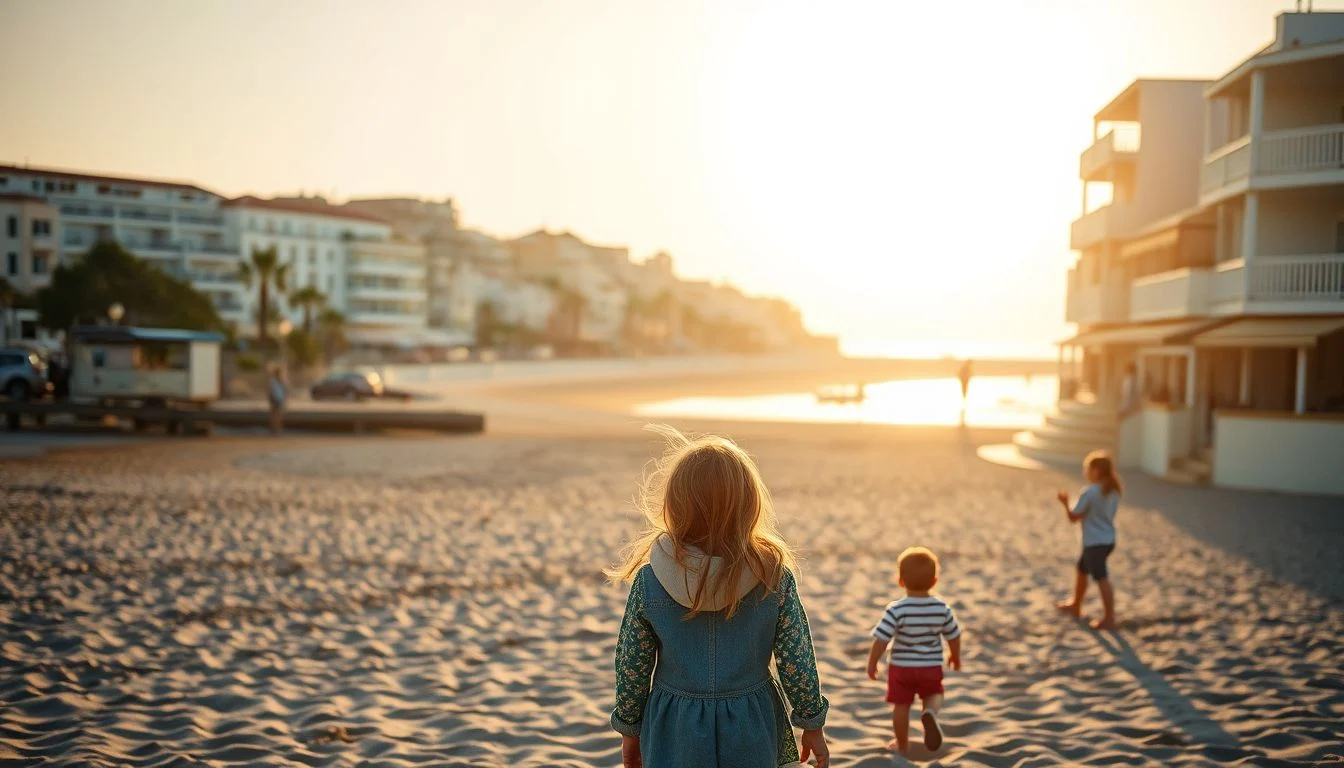
A shaded base a few steps from the sand can matter more than the view when planning beach holidays with young children: it makes a midday nap, a forgotten snack or a quick change far easier. The right break is built around practical details—short airport transfers, stroller-friendly promenades, reliable shade, child-appropriate food and a room where sleeping children do not stop the day for everyone else.
This guide is for families travelling with babies, toddlers, preschoolers or younger school-age children. It helps you choose between a self-catering apartment, beach house, hotel or family resort, then shape activities and transport around your child’s age, nap pattern and comfort near water. It also separates universal precautions from checks that must be made locally, including lifeguard coverage, water quality, heat, tides and rainy-day options.
Quick answer: The best beach holidays with young children combine a lifeguarded beach, short transfer, dependable shade, flexible sleeping space and easy access to food and laundry. Choose a self-catering apartment or beach house for space and routine, or a family resort for on-site meals, childcare and convenience; plan activities by age and never rely on lifeguards instead of close supervision.
Why beach holidays can work well for families
Why beach holidays can work well for families

Beach holidays with young children offer flexibility. Sand play needs little equipment, and a family can leave after 45 minutes without abandoning a paid attraction. The arrangement works best when the beach, accommodation, toilets and food are close enough for an easy return during a nap or a hungry spell. Look for a lifeguarded beach with a shallow paddling zone, a level promenade for stroller walks and a short, simple route back to the room.
Build the day around an early-morning beach session, a proper break for lunch and sleep, then a shorter visit in the late afternoon. That way, a baby or toddler won’t need to stay outdoors through the hottest part of the day, and there’s still room for an unplanned rest. Shade is essential. The World Health Organization advises using shade and protective clothing, with infants under six months kept out of direct sun where possible.
Lifeguards provide an important layer of support. Parents still need to supervise children closely, as the U.S. National Water Safety Action Plan makes clear. Before booking, check the destination’s official beach or tourism authority for lifeguard coverage, seasonal closures and water-quality advisories, as well as local hazards such as tides, rip currents or jellyfish. Shoulder-season dates may bring quieter beaches and lower prices where the climate is suitable, but verify those conditions locally rather than assuming services and swimming areas operate year-round.
Things to do with kids by age group
0–12 months

For a baby, the beach is mainly a change of scenery rather than a swimming destination. Set up a shaded base away from the water and use the time for sensory play: feeling cool sand with bare feet, watching waves from a safe distance and listening to the shoreline. The World Health Organization advises keeping infants under six months out of direct sun where possible, with shade and protective clothing doing the main work; ask your healthcare professional about suitable sunscreen for your baby.
Keep feeds and naps close to the usual rhythm. A short morning visit, a promenade walk with the baby in a stroller or carrier, and an early return for a proper nap will usually work better than a full day beside the water. Choose somewhere with a cool indoor room nearby, rather than planning around a baby sleeping for hours on a hot beach.
1–3 years

Toddlers tend to enjoy short, repeatable activities: filling a bucket, digging in damp sand, collecting large shells with an adult and paddling at the edge in calm, shallow water. Keep an adult within arm’s reach near any water; the CDC identifies children aged one to four as having a particularly high drowning risk and stresses constant, close supervision.
Build in snack and drink breaks before tiredness turns into a meltdown. A splash pad or spray park can provide a low-depth alternative to the sea, but check local hygiene rules. The CDC reports that splash pads have been associated with waterborne disease outbreaks, so children should not use them when they have diarrhoea, and families should follow nappy-changing and hand-washing requirements.
3–5 years

Preschoolers can manage longer stretches of play, provided the day still has a clear pause. Try sandcastles, simple water-skill practice with an adult, kite-flying on a suitable beach and a short nature walk along a promenade or coastal path. Tide pools and rock pools can be absorbing, but only visit where local guidance confirms they are safe; supervise closely around slippery rocks, changing tides and deeper water.
Swim lessons or a water-safety programme may build useful skills, but they are not a substitute for an adult watching from close by. The CDC’s national water-safety plan also recognises the extra safety benefit of a lifeguarded beach without treating it as a replacement for parental supervision.
6–12+ years

Older children may be ready for calm-water snorkelling, beginner paddleboarding or kayaking, a short boat trip, or an eco boat tour focused on wildlife. Match the activity to local conditions and the child’s ability, and use the operator’s required flotation equipment; a child-size life jacket should fit correctly rather than being borrowed as an afterthought. Keep the first outing short, with an easy route back if wind, waves or attention spans change.
A nap-friendly sample day
7.30–10am: breakfast, sunscreen, then a short beach session. 10am–2pm: wash off sand, eat lunch and protect the youngest child’s nap in the accommodation. 2–4pm: quiet indoor time or a shaded promenade walk. 4–6pm: a second, cooler beach visit, followed by an early meal.
Rainy-day backup

Before booking activities, identify an indoor attraction or accommodation with a genuinely usable indoor living area, especially if you are travelling with a baby or preschooler. Verify the destination’s current options, transport and opening arrangements with its official tourism authority: a rainy-day plan should be practical, not dependent on an unconfirmed facility.
Where to stay: match the base to your family’s needs
The right base matters more than being directly on the sand. For families taking a beach holiday with young children, prioritise a short route from arrival point to accommodation, a genuine sleeping area away from the main living space, dependable shade and food that can be served without a daily restaurant expedition. A lifeguarded beach is a useful safety advantage, but it never makes water access safe for unsupervised children; the CDC’s National Water Safety Action Plan still emphasises close parental supervision.
| Traveller type | Best location | Accommodation style | Advantages | Watch-outs |
|---|---|---|---|---|
| Baby or nap-focused family | Quiet beach neighbourhood near groceries and a promenade | Beach house or self-catering apartment | Kitchen, laundry, separate sleeping space and flexible feeds and naps | Check shade, air conditioning, blackout options and whether the balcony or terrace is genuinely usable for daytime sleep |
| Convenience-led family | Beside a lifeguarded beach, with food and services on site | Beachfront hotel or family resort | Minimal transfers, cribs, on-site meals and possibly a kids’ club | Family rooms may place children in the same open space as parents; confirm the layout rather than relying on photographs |
| Budget-conscious family | Driveable coastal area just beyond the premium beachfront strip | Family-friendly motel, older condo or shared holiday home | More space and the option to bring familiar equipment; a kitchen can reduce food costs | Older buildings may lack lifts, step-free access, laundry or reliable air conditioning |
| Family with preschoolers | Near a shallow paddling zone, beach promenade and rainy-day alternatives | Apartment hotel or resort with indoor living space | Easy returns for toilet breaks, naps and snacks, with activities close by | Pool, splash pad and sea access still require close adult supervision |
Estimated basis: the comparison is practical guidance, not a price ranking; costs vary by destination, season and room configuration.
Before booking, verify the actual walking route to the sand. “Beachfront” can mean a road, steps, dunes or a seawall between the door and the water, and it does not automatically mean stroller-friendly access. Ask the property about lift access, step-free entrances, stroller storage, cot availability, family-room doors, blackout curtains, kitchen equipment, laundry, grocery delivery and air conditioning.
A self-catering apartment or beach house is usually the calmer choice for babies and toddlers who need predictable meals, separate sleep and a midday retreat. Accommodation with a kitchen and laundry can support feeding and nap routines while helping control food costs, according to family travel planning guidance from Endless Travel Plans. A beachfront hotel or family resort costs more in many destinations, but may repay that premium when on-site food, childcare and a short arrival route matter more than floor space.
For any property near water, check barriers, balcony security and the route children would take from the room to the beach or pool. Also confirm the nearest indoor space for a hot or rainy afternoon. If travelling in a shoulder season, quieter beaches and lower prices may be possible where local weather is suitable, but check the destination’s current lifeguard coverage, closures and facilities with its official tourism authority.
Getting around with children, strollers and beach gear
Choose the simplest route that protects your child’s sleep. A driveable destination avoids airport connections and makes it easier to bring a travel cot, buggy and familiar snacks, but build in stops rather than planning a long uninterrupted drive. For flights, a journey with a ground transfer of about 60 minutes or less can reduce nap disruption and travel stress, according to family travel planning guidance from Endless Travel Plans. A longer transfer may be worthwhile for a much better family base, but avoid changing accommodation repeatedly.
A pre-booked airport transfer is usually the least complicated option when you need a child seat, luggage space and a predictable arrival. Confirm the seat type, local car-seat requirements and whether the provider supplies an appropriate restraint; do not assume a taxi will. Car hire gives more freedom for supermarkets, rainy-day outings and beaches beyond the resort, while taxis and local buses remove parking worries but may be awkward with a folded stroller and no guaranteed child seat.
Public transport works best when your accommodation is on a beach promenade or near a direct route, rather than up steep streets or beyond stairs. Check the final walk, pavement quality and vehicle access before booking. A compact travel stroller or umbrella stroller is useful in airports, on promenades and for a sleeping infant, but sand, cobbles and steps can make a baby carrier more practical. Keep the stroller for transport, not as a substitute for shade at the beach.
Airline rules vary. The carrier may set size limits, require gate-checking or return the stroller at baggage claim rather than the aircraft door; verify its current stroller and child-car-seat policy before departure, as advised by Which?. Pre-book transfers, carry water and easy snacks in reachable bags, and keep one change of clothes accessible for spills or motion sickness.
Health and safety with children at the beach
Health and safety with children at the beach
Water safety needs to shape the day, not sit at the bottom of the packing list. Children aged one to four have a particularly high drowning risk, so stay within constant, close reach near the sea, pool, rock pool or shallow paddling zone. A lifeguarded beach adds an important layer of support, but lifeguards do not replace an adult watching the child. The CDC’s drowning-prevention guidance is a useful starting point.
Swim lessons and water-safety programmes may help some age groups, but they cannot make a toddler water-safe or remove the need for supervision. For boating, kayaking, paddleboarding or an eco boat tour, use a properly fitted child-size life jacket or USCG-approved personal flotation device where applicable; check the operator’s equipment and local requirements before booking.
Sun, heat and water conditions
Build beach time around the day’s heat and UV levels rather than treating midday as the default. Use shade, protective clothing and a hat; keep babies under six months out of direct sun where possible. The World Health Organization’s sun-protection guidance advises broad-spectrum, water-resistant sunscreen, reapplied after swimming or towel-drying. Check current WHO, CDC or local health advice for infants and sunscreen use, since recommendations can vary.
Before setting out, check the beach authority’s information for rip currents, tides, jellyfish, algal blooms, water-quality advisories, lifeguard locations and seasonal closures. A calm-looking shoreline can still have changing conditions. Also confirm the day’s heat guidance and the hours when UV exposure is strongest, then plan a shaded nap or indoor break rather than pushing through an overtired afternoon.
Illness and emergency planning
Splash pads and spray parks are not risk-free: a CDC review of waterborne disease outbreaks links some outbreaks to these facilities. Do not take a child with diarrhoea into shared water, follow posted nappy-changing rules, wash hands and discourage swallowing the water.
Save the local emergency number before travel and identify the nearest paediatric emergency facility, pharmacy and reliable medical provider. Confirm destination-specific travel-health and entry requirements with the relevant government or health authority, and check how to access care from your accommodation. These details matter most when a short transfer, heat exposure or a minor injury suddenly changes the day.
Travel costs: one-week family beach holiday budgets
For a family of four, a one-week beach holiday can cost around $1,500–$10,000 or more, depending mainly on transport, accommodation and how much is included. The following figures are USD estimates from the supplied 2024–2026 research synthesis, including the planning assumptions reported by Endless Travel Plans.
Estimated costs
| Estimated level | One-week total for four | Typical basis |
|---|---|---|
| Budget | $1,500–$2,500 | Driveable US beach, low-cost self-catering rental, local driving and low-cost activities |
| Mid-range | $2,500–$4,500 | Short flight, condo or mid-range hotel, and some dining out |
| Luxury | $4,500–$10,000+ | Resort or luxury villa, premium flights and paid experiences |
Basis and date: USD estimates for a family of four staying one week, based on a 2024–2026 research synthesis; the luxury range uses 2025–2026 research. These are planning ranges, not live quotations.
Destination, peak months, flight dates, room configuration, meals, transfers and activities can shift the total substantially. June, July, August and December are supplied examples of peak months, but confirm the season for the destination you are considering: local school holidays and weather patterns may differ.
Control costs with a kitchen and laundry, particularly when children need familiar meals, bottles or frequent outfit changes. Shoulder-season travel can mean quieter beaches and lower prices where the weather is suitable, while free beach play, promenade walks and self-guided outings reduce the activity budget. Check current flights, accommodation, transfer rates and local conditions before booking.
| Item | Budget | Mid-range | Luxury |
|---|---|---|---|
| Budget one-week beach holiday | $1,500–$2,500 | — | — |
| Mid-range one-week beach holiday | — | $2,500–$4,500 | — |
| Luxury one-week beach holiday | — | — | $4,500–$10,000+ |
Estimated ranges based on the sources listed below. Prices change; check with providers before booking.
Conclusion: choose the stay before you choose the beach
Start with the youngest child’s needs, not the most famous beach. For a low-stress beach holiday with young children, prioritise a short transfer, a lifeguarded beach nearby, dependable shade, flexible sleeping space, and either a kitchen or reliable family meals. Choose a rainy-day option you can reach without a long journey.
Before booking, decide on a realistic daily rhythm around naps and the strongest heat, then shortlist a family beach accommodation style that supports it. Finally, verify current beach safety information, water advisories, medical access, local transport and car-seat arrangements, stroller rules with your airline, and seasonal conditions with the relevant official sources. That checklist will narrow the destination more effectively than a long list of beaches.
Frequently asked questions
What is the best age for a first beach trip with a child?
There is no single best age. Babies can enjoy shaded beach time, promenade walks and sensory play, while toddlers need short sessions and constant, close supervision near water; children aged one to four have a particularly high drowning risk, according to the CDC. Choose a destination with a lifeguarded beach, shade and accommodation that supports naps and feeding. [CDC guidance](https://www.cdc.gov/drowning/prevention/summer-swim-safety.html?utm_source=openai) notes that lifeguards add protection but do not replace parental supervision.
How can parents make a beach day work around a baby’s nap schedule?
Plan the main beach session for morning or late afternoon, using a shaded base and returning to accommodation for the most predictable nap. A self-catering apartment or beach house with a kitchen and laundry can make feeds, changes and sleep routines easier. Keep infants under six months out of direct sun where possible, and use protective clothing and shade, as advised by the World Health Organization. [WHO sun-protection guidance](https://www.who.int/news-room/questions-and-answers/item/radiation-protecting-against-skin-cancer).
Is a compact stroller practical on sand and promenades?
Yes, a compact travel stroller can be useful for airports, beach promenades and moving a sleeping infant or tired toddler, but it is usually less practical on loose sand. Check the route’s surface before choosing one and plan to carry the stroller across deeper sand if necessary. Airline policies and size limits vary; verify the current rules with the carrier, including whether the stroller is returned at the aircraft door or baggage claim. [Airline baggage guidance](https://www.allegiantair.com/baggage-1?utm_source=openai) illustrates why checking the individual policy matters.
What should families look for in a child-friendly holiday rental before booking?
Prioritise a short airport transfer, separate sleeping space, reliable shade and easy access to food and a lifeguarded beach. A kitchen and laundry are particularly useful for feeding, naps and controlling food costs, according to family-holiday planning guidance. Confirm the terrain for strollers, the availability of a cot if needed, and a realistic rainy-day indoor area. Check local beach coverage, water advisories and closures before committing to the location.
Are swim lessons worthwhile before a beach holiday?
Swim lessons and water-safety programmes may reduce drowning risk for some age groups, but they do not make a child safe to supervise alone. The CDC’s national water-safety plan stresses that close adult supervision remains essential, particularly around open water. Choose a lifeguarded beach when possible, keep young children within arm’s reach near the water and follow local advice about currents, tides and other hazards. [CDC water-safety plan](https://stacks.cdc.gov/view/cdc/156290/cdc_156290_DS1.pdf?utm_source=openai).
What can families do if the weather turns rainy?
Build the backup into the booking rather than assuming the beach will be usable every day. Choose accommodation with a comfortable indoor living area and check in advance for destination-specific indoor attractions or other suitable activities. A kitchen also makes an unexpected day indoors easier with young children. Recheck local conditions, closures and available facilities before travelling, since rainy-day options vary by destination and season.