This article contains affiliate links. If you book through one of our links, we may earn a commission at no additional cost to you.
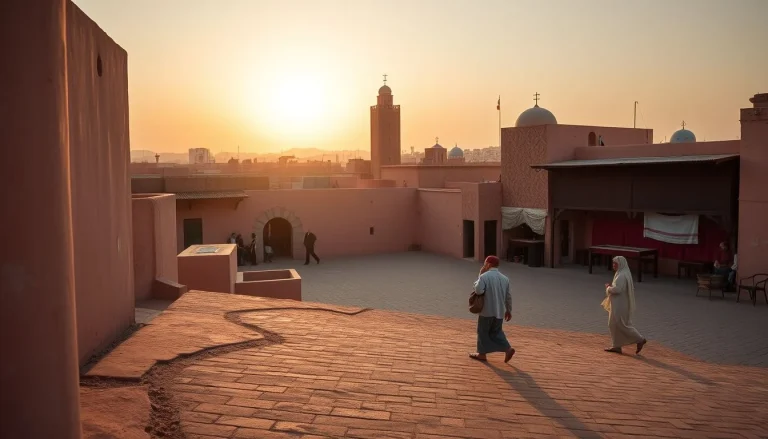
Chefchaouen’s blue-painted medina rises through the Rif Mountains in steep, uneven lanes that lead from Place Outa el Hammam towards Ras El Maa and the Spanish Mosque. The city has no airport or train station, so the final approach is by road—a practical detail that shapes where to stay, how much luggage to bring and whether a day trip from Tangier makes sense.
This Chefchaouen travel guide is for solo travellers planning a first visit: it explains the realistic arrival routes from Tangier and Tétouan, compares a social medina base with easier vehicle access outside it, and shows how to organise time for the blue streets, sunset viewpoint and Akchour. It also covers the trade-offs that matter alone, from porter assistance and shared transport to communal meals, group excursions and a flexible two- or three-day pace.
Quick answer: Chefchaouen is a small Rif Mountain city famous for its blue-painted medina, with key sights including Place Outa el Hammam, Ras El Maa and the Spanish Mosque. It has no airport or train station, so you arrive by road; from Tangier, the journey generally takes about two to three hours depending on traffic and transport mode.
Why visit Chefchaouen: the Blue Pearl in the Rif
The case for adding Chefchaouen is its pace as much as its appearance. In Morocco’s Rif Mountains, the “Blue Pearl” centres on a compact, blue-painted medina where wandering is the main activity rather than a route between distant sights, as the Moroccan National Tourist Office describes.
Use Place Outa el Hammam as your orientation point, then walk towards Ras El Maa and up to the Spanish Mosque for a wider view. The city also gives a solo traveller a manageable base for an Akchour and God’s Bridge excursion, with hostels, riads, communal meals and group outings offering easy ways to meet people without sacrificing independent time.
Set expectations before you arrive: the medina is steep and uneven, and road access is less straightforward than in Tangier or Fez. Light luggage matters, as does choosing accommodation that can arrange porter help. Chefchaouen suits travellers who enjoy walking, cafés and mountain scenery; it is less suitable if you need step-free access or a tightly timed transport connection.
Best time to visit: spring and early autumn for walking
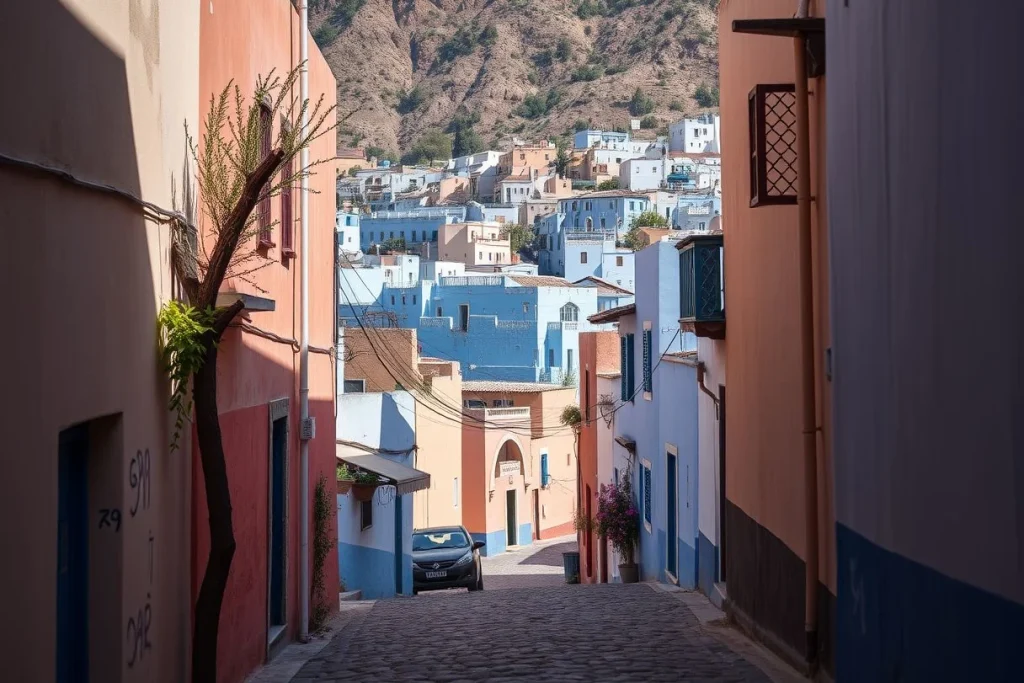
For most visitors, the best time to visit Chefchaouen is March to May or September to October. These shoulder seasons are generally the most comfortable for walking the blue medina and hiking in the Rif Mountains, without the hottest summer conditions. Climate data from Climate-Data.org describes hot, dry summers, cooler wetter winters and the greatest rainfall from November to March.
| Season | Weather | Crowds and hiking | Booking advice |
|---|---|---|---|
| March–May | Mild and increasingly warm | Good for medina walks and Akchour | Reserve popular riads ahead, especially around weekends |
| June–August | Hot and dry | Peak demand; walk early or late | Book sooner and check whether a solo-room supplement applies |
| September–October | Warm, often comfortable for walking | Good hiking window, with demand easing after summer | A flexible medina booking suits solo travellers |
| November–February | Cooler and wetter | Quieter, but mountain trails may be muddy | Choose accommodation with a practical indoor common area |
June, July, August and December can bring stronger demand, affecting room choice and the availability of single rooms. Winter rain can make Akchour and the route to God’s Bridge wet or inaccessible; check the forecast and current trail conditions before setting out. For safety and entry-related updates, consult the current Morocco travel advisory and local accommodation or tour providers shortly before departure.
How to get there: road connections from Tangier and Tetouan
Chefchaouen has no airport or train station: arrivals are by road. Most international visitors use Tangier Ibn Battouta Airport, the principal gateway for continuing to the Rif, while Tetouan/Sania Ramel can work when its available flights suit your route. From Tangier, allow roughly two to three hours to Chefchaouen; traffic, station changes and the transport you choose can extend that range.
| Estimated option | Journey time | Cost | Comfort and flexibility | Luggage |
|---|---|---|---|---|
| CTM or regional bus | About 2–3 hours | MAD 65–100 per seat | Scheduled and economical; least flexible | Usually manageable, but confirm the current baggage arrangements |
| Shared grand taxi | About 2–3 hours, depending on departure and traffic | MAD 65–100 per seat | Quicker to leave when seats fill; less personal space | Limited space; ask before accepting a seat with a large bag |
| Private transfer | About 2–3 hours, traffic permitting | Several hundred MAD per vehicle | Most comfortable and flexible; can stop at viewpoints | Easiest for luggage, but confirm the vehicle and medina drop-off |
Costs are estimated from August–September 2026 sampling reported by Tanger Horizon; fares vary by operator, date and passenger numbers.
Tangier has multiple transport hubs, so check the current departure point, timetable and fare with CTM, the regional bus operator or the taxi station rather than assuming the airport, rail station and bus terminal are interchangeable. A private vehicle must be quoted and confirmed in advance, including passenger capacity, luggage and whether the driver can reach your accommodation.
Do not depend on a same-day early bus from Chefchaouen for a morning flight from Tangier. Road delays and a transfer between the medina and the departure point leave little margin; when the connection is tight, spend the preceding night in Tangier. From the airport, a pre-arranged transfer is simpler than combining several unfamiliar road connections on arrival.
Neighbourhoods: medina, Outa el Hammam and the upper edges
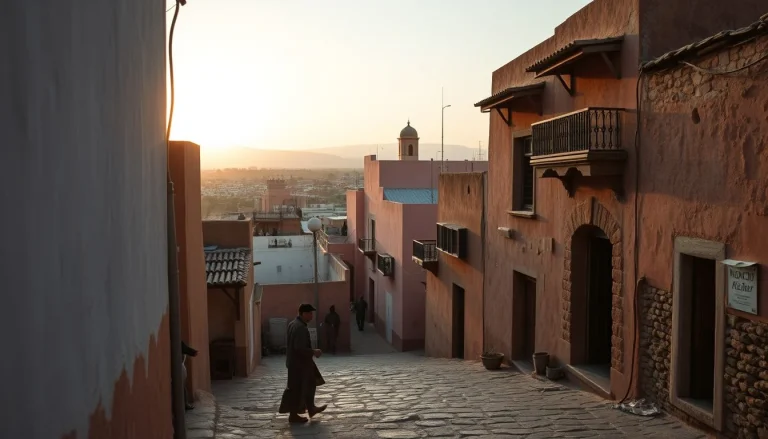
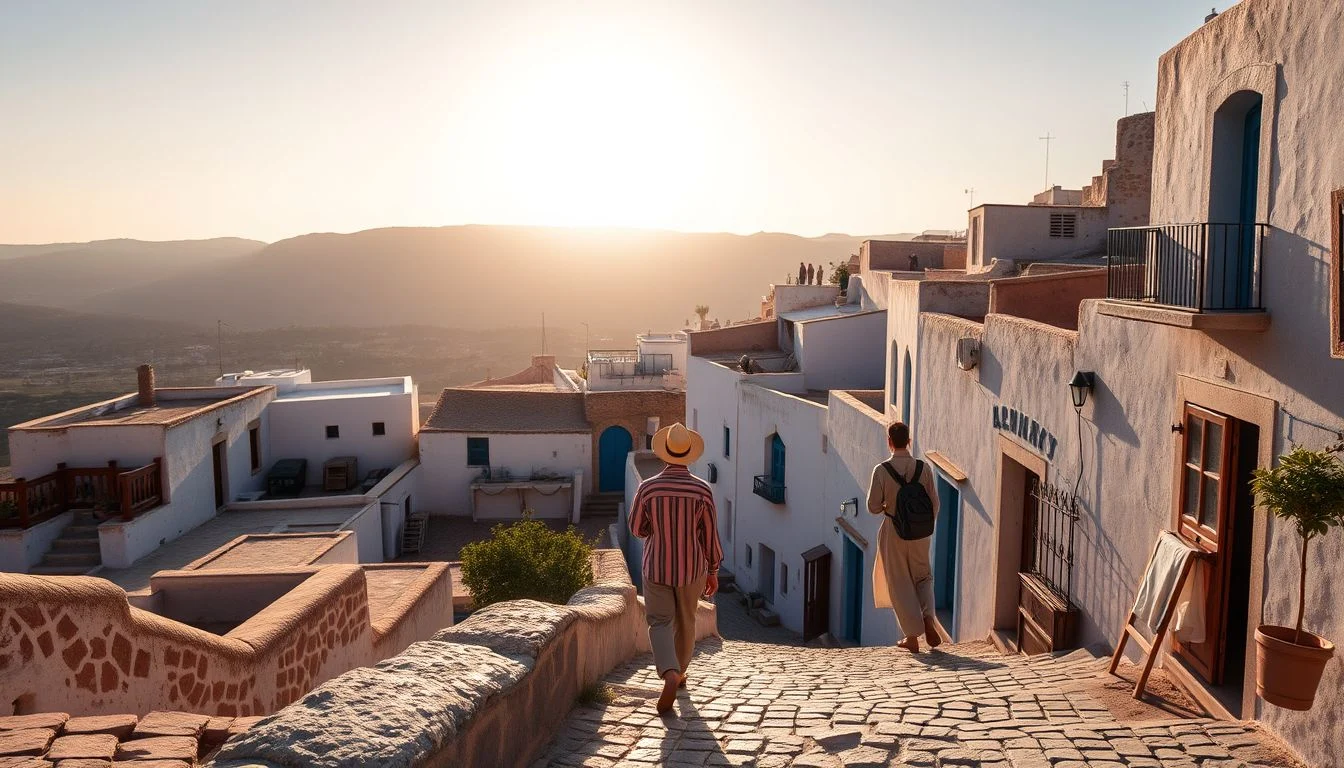
Think of Chefchaouen as a compact, sloping pedestrian zone rather than a city of separate districts. The blue-painted medina climbs around Place Outa el Hammam, the main orientation point for cafés, restaurants and lanes leading uphill. Streets are uneven, with steps in places, so a small backpack is easier than a wheeled suitcase.
Orientation, from centre outward:
- Place Outa el Hammam: the practical centre of the medina and the easiest point from which to start exploring.
- Ras El Maa: at the eastern edge, where the lanes meet the spring and the route out towards the surrounding hills.
- Spanish Mosque: above the medina’s edge, reached by an uphill walk for a broad sunset view.
- Outer and newer areas: less atmospheric, but generally simpler for a vehicle drop-off and larger properties.
That layout creates a clear choice. Staying near the central lanes puts communal cafés, craft shops and evening activity close at hand, but the final approach may involve slopes and steps. A base beside a vehicle-accessible road reduces the luggage problem and simplifies taxi or transfer handoffs, at the cost of walking into the medina. Ask accommodation staff exactly where a vehicle can stop: a map pin can look close while hiding a steep final climb. Small shops and museums may close at midday, so check individual hours before building a route around them.
Where to stay: social medina bases versus easier outer access
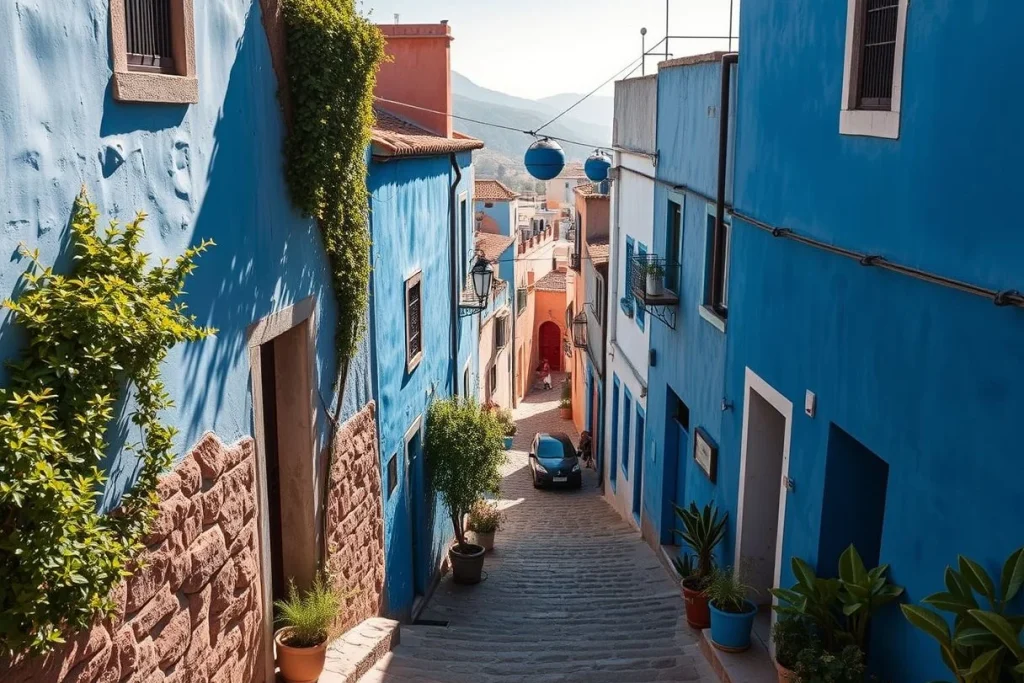
For a solo traveller, the most useful choice is often a social hostel in or just beside the medina. You’ll be close to Place Outa el Hammam and can ask about group walks, Akchour transport and communal meals rather than arranging every plan alone. The medina is pedestrian-oriented, steep and uneven in places, so arrive with a manageable bag and ask whether staff can arrange a porter from the nearest vehicle-accessible road.
A small riad suits a slower, more atmospheric stay. Choose one that offers a hosted dinner or shared breakfast: home-cooked meals create easy contact without the pressure of a large group tour. Confirm that the quoted room is genuinely private, not a bed in a shared room, and ask whether a single supplement applies. A riad near the medina’s centre saves walking time, but may involve stairs and a longer luggage handoff.
For flexible pacing or a late arrival, a quieter guesthouse on the outer edge can be the better base. Vehicle access makes taxis and transfers simpler, and you’ll have more room to retreat after a day on foot; the trade-off is a walk into the blue lanes. Ask for the walking time from the actual drop-off point, not just the map pin.
Before booking, ask about stairs, bathroom layout, heating in the cooler months, late check-in and luggage assistance. Prioritise recent guest comments about staff support, communal space and evening access. The Moroccan National Tourist Office describes the medina’s compact layout, but property listings and access arrangements change, so confirm these details directly before paying.
Things to do: blue lanes, viewpoints and Akchour

Once you have settled in, prioritise Chefchaouen’s compact sights before committing to a mountain day. The medina is steep and uneven, so comfortable footwear and a light day bag make a noticeable difference.
- Walk the blue medina. Start around Place Outa el Hammam and follow the lanes without trying to cover every turn. Early morning or late afternoon brings softer light and a calmer rhythm for photographs; it is also easier to pause and reorient before the lanes become busy.
- Pause at Ras El Maa. The spring sits at the eastern edge of the medina and makes a useful break between wandering and a longer walk. Continue only if you still have energy: the medina’s changes in level can be tiring, particularly in warm weather.
- Walk to the Spanish Mosque. Allow roughly 30–45 minutes for the uphill route and time your arrival for sunset. The viewpoint gives a broad panorama over the blue city and surrounding Rif Mountains. Take water, wear shoes with reliable grip and return before the lanes feel unfamiliar if you are travelling alone.
- Browse the craft shops. Look for woven textiles, woven goods and other local artisanal products around the medina. Bargain politely and compare a few pieces before buying; this is a better approach than treating the first quoted price as a fixed guide to value.
- Make Akchour a deliberate day trip. Reaching Akchour and God’s Bridge requires transport planning, a realistic hiking pace and enough water. A local guide or organised small-group excursion is the more confidence-building choice if you are not comfortable arranging mountain transport alone. Check the forecast and trail conditions before leaving: according to the CEJGSD trail research, routes can become wet and muddy in winter, with accessibility varying after rainfall.
For a wet or low-energy day, stay in town: wander the medina, revisit the craft shops, check museum opening times and reserve a riad meal. The Moroccan National Tourist Office notes that small shops and museums may close around midday and reopen later, so confirm current hours directly rather than building the day around an assumed schedule. A communal meal or group excursion can also give solo travellers an easy way to meet people without forcing a full hiking day.
What to eat: Moroccan classics around the medina
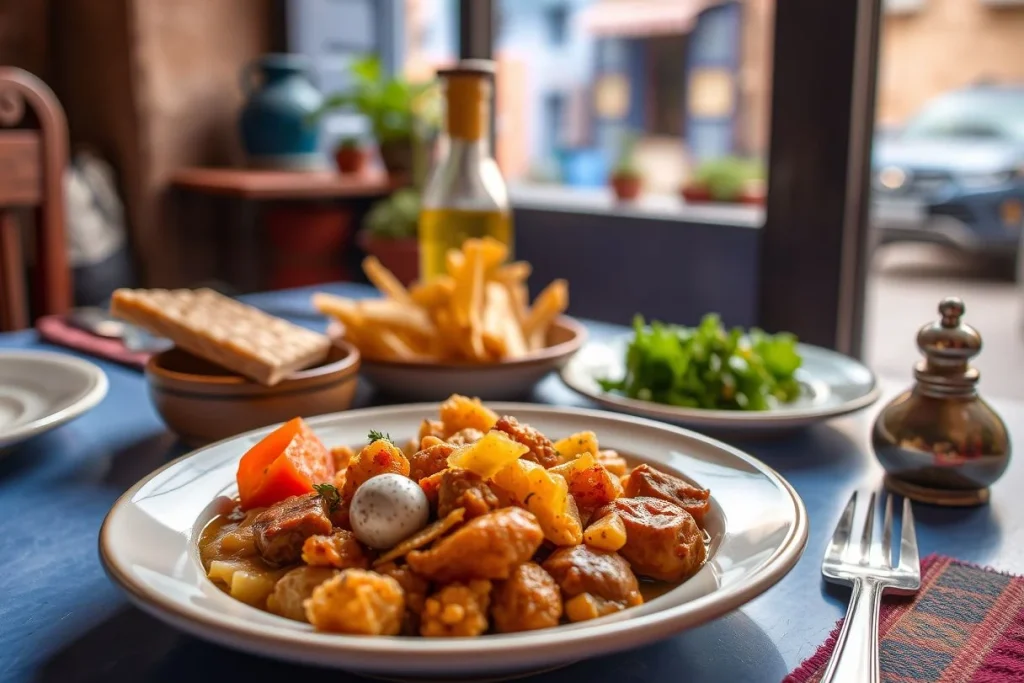
Food in Chefchaouen is easiest to explore around Place Outa el Hammam, where small medina cafés and family-run restaurants serve tagine, couscous, grilled kebabs, mint tea and fresh juice. The square is convenient for a first meal and for eating alone, while a side street usually offers a quieter table away from the main flow.
Ask whether couscous is available that day: it may be prepared for a particular service rather than kept continuously on the menu. It is also sensible to ask whether a dish is cooked to order and whether the restaurant accepts cards; carry some cash as a practical backup.
For a solo traveller, a pre-booked riad dinner can be more than a meal. Home-cooked food around a shared table creates an easy setting for conversation without the commitment of joining a full-day tour. Ask your accommodation to reserve a place, particularly if the dinner is hosted for a small group.
Ordering tip: One shared dish works well when you want to sample something unfamiliar, and sitting at a communal table can make dining alone feel natural. If you prefer your own space, choose a small table slightly away from the square and take your time over mint tea.
Fresh juice is a useful daytime choice, while grilled food suits an unhurried evening. Menus, payment methods and meal availability vary, so confirm before ordering rather than assuming every dish or card facility is available.
Getting around: walk the medina, taxi the roads
The medina is primarily pedestrian, but its lanes can be steep, uneven and awkward with a suitcase. Save your accommodation pin offline, ask your host for the nearest vehicle-accessible meeting point, and arrange porter help before arriving if you have heavy luggage.
| Option | Cost and convenience | Luggage and social value |
|---|---|---|
| Walking | No vehicle fare; best inside the compact medina | Light bags only; easy to meet people naturally |
| Petit taxi | Useful on accessible urban roads; confirm the fare locally | Suitable for a short transfer, not deep into the medina |
| Grand taxi | For intercity travel; shared fares and departure points vary | Practical for Tangier or Tétouan, with limited luggage space |
| Organised excursion | Convenient for Akchour; check the current itinerary and price | Best option for transport confidence and meeting other travellers |
Current sampling cited by Tanger Horizon in August–September 2026 places Tangier–Chefchaouen public transport at roughly MAD 65–100 per seat; check CTM, regional buses and grand taxis locally, as departure points and fares change. Taxis cannot take you deep into the medina, so agree the drop-off point, destination and fare before setting off.
Decline unsolicited guiding or transport offers politely and use your accommodation’s recommended meeting point. For current security guidance, consult your government’s Morocco advisory; the US State Department’s version was updated on 4 September 2026.
Travel costs in 2026: three daily budgets for one traveller
Chefchaouen can be inexpensive for a solo traveller, but the price rises quickly when you add a private room, guided hiking and private road transfers. The figures below are planning estimates rather than fixed tariffs.
Estimated costs
| Estimated daily budget (2026) | Per person | Basis |
|---|---|---|
| Budget | MAD 250–350 | Budget accommodation, inexpensive meals and local or public transport |
| Mid-range | MAD 900–1,300 | Mid-range riad, restaurant meals and a paid excursion or guided hike |
| Luxury | MAD 2,500–3,500+ | High-end accommodation, private transfers and private excursions |
| Tangier–Chefchaouen public transport | MAD 65–100 one way | One seat on a CTM or regional bus, or a shared grand taxi |
| Private Tangier–Chefchaouen transfer | Several hundred MAD per vehicle | One-way private vehicle; obtain a date-specific quote |
Daily estimates are based on a 2026 budget guide from Gotripzi. The transport figures reflect August–September 2026 sampling reported by Tanger Horizon; operators and fares can change.
These amounts exclude international flights, travel insurance, shopping and any single-room supplement. Season, room type, booking lead time, excursion style and vehicle capacity are the main price drivers. Check the accommodation’s single-occupancy rate and current CTM, regional-bus or transfer quote before booking.
| Item | Budget | Mid-range | Luxury |
|---|---|---|---|
| Budget daily spend | MAD 250–350 per person per day | — | — |
| Mid-range daily spend | — | MAD 900–1,300 per person per day | — |
| Luxury daily spend | — | — | MAD 2,500–3,500+ per person per day |
| Tangier–Chefchaouen public transport | MAD 65–100 per seat | — | — |
| Private Tangier–Chefchaouen transfer | — | Several hundred MAD per vehicle | — |
Estimated ranges based on the sources listed below. Prices change; check with providers before booking.
A flexible 2–3 day itinerary for first-time solo visitors
Two-day version
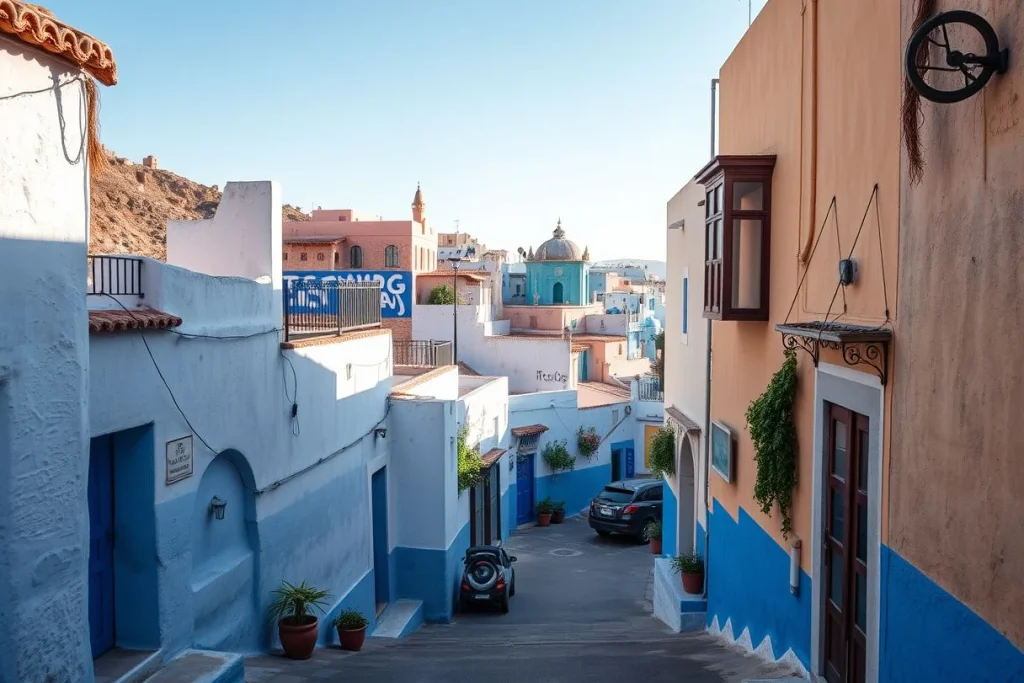
Arrive by midday, allowing roughly two to three hours from Tangier by road before allowing extra time for the final walk into the medina. Leave luggage at your accommodation, then take a slow orientation loop through the blue lanes around Place Outa el Hammam. The medina is steep and uneven, so this first walk is better for finding landmarks than covering ground.
Rest during the hottest part of the afternoon. Later, continue to Ras El Maa, or walk uphill to the Spanish Mosque for sunset if you still have energy. A communal dinner at your hostel or riad is a useful way to meet other solo travellers; small restaurants around Place Outa el Hammam offer an easier independent alternative.
Use day two for Akchour and God’s Bridge only when transport is arranged and trail conditions are suitable. After rain, the mountain paths can be wet and muddy, so check current conditions and do not force the excursion. If the forecast or transport is uncertain, spend the morning revisiting the medina, browse its woven goods, and keep the afternoon flexible.
Three-day version
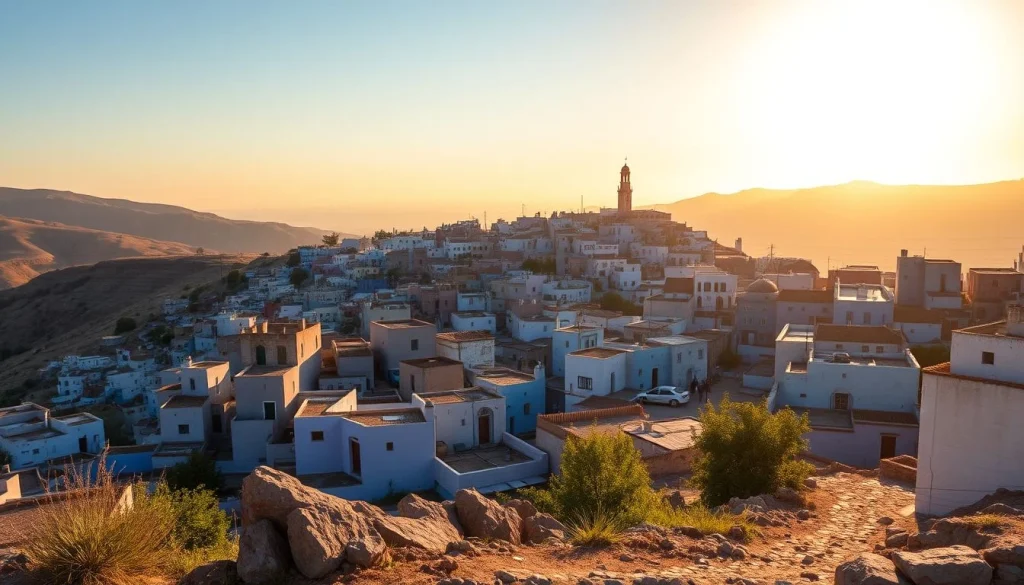
With three days, keep arrival day deliberately light: settle in, learn the route between your accommodation and Place Outa el Hammam, and take an early-evening walk to Ras El Maa. On day two, explore the blue streets in the cooler morning, rest after lunch, then choose the Spanish Mosque viewpoint or a hosted meal.
Reserve day three for Akchour and God’s Bridge, leaving a buffer before departure. Arrange the excursion through your accommodation or a reputable local operator, and check conditions after rainfall. If your onward journey includes a morning flight from Tangier, spend the final night in Tangier rather than relying on a same-day early departure from Chefchaouen.
Travel tips: arrive lightly, plan the handoffs and stay alert
- Pack light. The medina’s stepped, uneven lanes make wheeled luggage awkward, so use a small backpack or confirm porter and luggage-transfer arrangements with your accommodation before arrival.
- Save the handoff details offline. Download an offline map, the riad or hostel’s phone number, its exact meeting point and any road-transfer instructions; mobile coverage and directions can be less helpful once you leave the main road.
- Carry water and shoes with grip. The same uneven streets that slow luggage can make long walks tiring, while Akchour trails may become wet and muddy after rain.
- Check conditions before hiking. Confirm the weather, trail access and any local restrictions before setting out for Akchour or God’s Bridge, particularly in the wetter months; conditions can affect accessibility.
- Keep valuables discreet. Recheck your government’s current Morocco travel advisory, including terrorism and petty-crime guidance; the U.S. State Department’s advisory was updated on 4 September 2026, but your own government’s advice should take priority.
- Make your evening plan simple. Share your day’s route with someone at home and use transport recommended by your accommodation after dark rather than accepting an unfamiliar arrangement on the street.
- Confirm entry rules for your passport. Many Western passport holders may enter Morocco visa-free for limited tourist stays commonly up to 90 days, but nationality-specific eligibility, eVisa rules, permitted stay, fees and health-entry requirements change; check your consulate and Morocco’s official Accès-Maroc channels before booking.
- Travel considerately. Dress politely, ask before photographing people, and bargain calmly rather than treating negotiation as a confrontation; also check for current attraction closures, transport disruptions and seasonal restrictions before leaving.
Conclusion: choose the base that matches your luggage and pace
For most solo travellers, book two nights in a social hostel or welcoming riad near the medina. That gives you the blue lanes, Place Outa el Hammam and evening dining within walking reach, while leaving room to join a group excursion. Confirm the number of stairs and arrange luggage help before arrival; the medina is steep and uneven. Choose a vehicle-accessible base outside it if an easy drop-off matters more than atmosphere.
Stay three nights if Akchour, slower mornings or weather flexibility is part of the plan. Before paying, check official Morocco entry guidance and your health requirements, verify the road connection for your arrival day, then reserve a refundable room and ask the host to coordinate the final handoff from the bus or taxi.
Frequently asked questions
Can Chefchaouen be visited as a day trip from Tangier?
Yes, but it makes for a long road day. The journey from Tangier generally takes about two to three hours each way, depending on traffic, transport mode and station transfers, so you will have limited time in the medina. An overnight stay is more comfortable, especially if you are continuing to an early flight from Tangier; do not rely on a same-day early bus for that connection. Check current departures and fares with CTM, regional bus operators or grand-taxi providers before travelling. The journey estimate is reported by Tanger Horizon.
Is the walk to the Spanish Mosque suitable for an inexperienced hiker?
It is a reasonable first walk for someone comfortable with an uphill route: allow roughly 30–45 minutes to reach the Spanish Mosque viewpoint. It is not a substitute for a mountain hike, but the ascent still requires sensible footwear and a pace that suits you. For a solo traveller, go in daylight and check current weather before setting out. The mosque sits near the edge of the compact medina, whose lanes are steep and uneven in places, according to the Moroccan National Tourist Office and GoTripzi.
What should I do if I arrive before my medina accommodation is ready?
Contact the property before arrival and ask where it wants luggage left; medina access can involve steep, uneven lanes, and porter assistance may be useful. Keep valuables and travel documents with you rather than placing them in an unattended bag. If the room is not ready, use the waiting time for a light walk around Place Outa el Hammam or Ras El Maa. Small shops and museums may close around midday and reopen later, so check individual opening times with each venue, as advised by the Moroccan National Tourist Office.
Are Chefchaouen’s blue streets difficult to navigate without mobile data?
They can be confusing at first because the medina is pedestrian-oriented, with steep and uneven lanes, but the main layout is compact. Use Place Outa el Hammam as your central landmark, then orient yourself towards Ras El Maa or the Spanish Mosque at the medina’s edges. Ask your accommodation for written directions and the nearest vehicle-accessible meeting point before setting out with luggage. The Moroccan National Tourist Office describes the medina’s central layout, while GoTripzi notes the practical value of light luggage and porter assistance.
Can I join an Akchour excursion as a solo traveller?
Yes. A local guide or an organised day excursion is a practical way to visit Akchour and God’s Bridge without arranging every transport detail alone. Arrange transport in advance rather than assuming you can find a suitable connection at the last minute. Check trail conditions after rainfall: Akchour and surrounding mountain paths can become wet and muddy in winter, and accessibility varies with rainfall. The CEJGSD trail source and the supplied Moroccan travel guidance both support checking current conditions before departure.
Is Chefchaouen a good stop for someone travelling alone for the first time in Morocco?
It can be a confidence-building stop because the city is small, the principal sights are concentrated around a walkable medina, and hostels, riads and organised excursions can create opportunities to meet other travellers. The trade-off is that arrival is road-only and the medina’s slopes make luggage handoffs important. Before booking, check your government’s current Morocco travel advisory; the U.S. State Department advisory was updated on 4 September 2026. Also verify entry and health requirements for your nationality through official Moroccan channels before travel.