

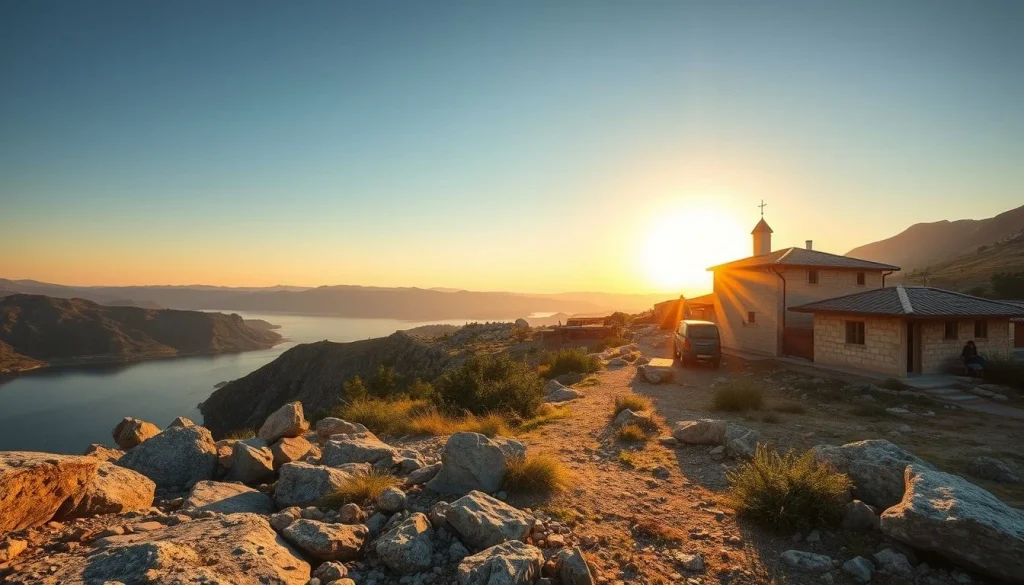
A remote eco-lodge can sit beside a trailhead yet depend on long transfers, backup generators, stored water and a wastewater system that matters more than its leaf-shaped logo. By contrast, a city-centre hotel may cut daily transport simply by connecting you to existing trains, buses and municipal infrastructure. The setting is part of the sustainability calculation, not proof of it.
This guide explains how to choose an eco hotel for an adventure trip without mistaking vague claims for evidence. It is written for travellers weighing trail access against transfer emissions, comfort against infrastructure, and independent routes against guided trips, with practical checks for permits, emergency access, water, energy, waste and community benefit. You’ll be able to compare an urban base, a peri-urban trail stay, a remote lodge and a protected-area basecamp before booking.
Quick answer: Verify a current certification and its audit scope, then look for dated evidence on energy, water, waste, carbon and community impact. For an adventure trip, also compare transport to the trail, permits, guide arrangements, emergency access and the property’s water, wastewater and power systems; an “eco” label or remote location alone is not proof of sustainability.
The quickest way to screen an eco-hotel claim
Start with the label, then test what it actually covers. Confirm the property’s current certification, scope, audit type and audit date; a self-reported scheme, membership badge or marketing phrase is not equivalent to independently audited certification. The word “eco” alone proves nothing.
Use the GSTC Hotel Standard as a reference point: the GSTC Industry Standard was reorganised into this dedicated hotel standard in 2025. Check whether the scheme is GSTC-recognized, or provides clear independent auditing, using the GSTC list of recognised standards.
Next, look for dated energy, water, waste and carbon evidence, plus community and biodiversity measures. HCMI can help compare a hotel’s operational carbon reporting, but the Sustainable Hospitality Alliance notes that it does not cover every lifecycle, water, waste or biodiversity impact. Finally, check transport to the trail, permits, guides and emergency access: a lower-impact building is not automatically a responsible adventure base.
Best areas to stay: four responsible bases for adventure trips
The right base depends on how much time you want to spend reaching the route each day, how independently you travel and what the landscape can support. A remote address may shorten the walk to a trailhead but lengthen the transfer, increase pressure on water and waste systems, and make an emergency evacuation harder.
| Area | Best for | Sustainability questions | Trade-offs |
|---|---|---|---|
| Urban core | Short active trips, public transport and light equipment loads | Is the hotel’s certification current and independently audited? Does it publish energy, water, waste or building-performance data? Can you reach the trail by train, bus or other shared transport? | Daily transfers may be longer, but existing public transport and municipal infrastructure can reduce the need for private vehicles and new services. |
| Peri-urban trail base | Hikers who want faster park access without giving up nearby services | Check connections to trailheads, guide availability, medical services, municipal water and sewage, and the property’s plan for peak-season demand. | A strong compromise for independent travellers, though a short vehicle transfer may still be necessary and services can be less frequent than in the centre. |
| Remote eco-lodge | Immersion, wildlife areas and multi-day routes with a flexible schedule | Ask how power is generated, water is stored and treated, wastewater is managed, rubbish leaves the site, and local residents benefit. Check shared-transfer options and biodiversity measures. | Remote infrastructure can be vulnerable to storms, shortages and breakdowns. A scenic lodge is not automatically lower-impact than a city hotel; the transfer may also create a larger footprint. |
| Protected-area lodge or adventure basecamp | Early starts, technical routes and itineraries requiring several days on the same trail system | Confirm current park permission, route requirements, guide arrangements, visitor-management plans and emergency access. Ask who handles evacuation and what communications and backup systems are available. | Being close to the route can save repeated transfers, but access may depend on permits, seasonal closures, operating dates, private vehicles, boats or shared shuttles. |
For a fit traveller carrying a light pack, an urban or peri-urban base often makes independent day routes simpler: public transport, food shops and medical services remain close, while the accommodation can still support lower-impact travel. It is less suitable when an early permit time, heavy technical equipment or a sequence of long days makes repeated transfers impractical.
A remote lodge becomes more defensible when it replaces several vehicle journeys, shares transfers and can show credible systems for renewable power, water, wastewater, waste and community benefit. For a difficult route, however, convenience must not outrank competence: verify whether guides are required, whether staff know the route, and how help reaches the property or trail in poor conditions.
The GSTC Hotel Standard places sustainability within a wider framework than energy-saving measures alone, including management and community considerations. UN Tourism also links sustainable development with transport and destination planning. Before booking, check the protected area’s official website or local authority for current permits, closures, trail conditions and access rules; also confirm the hotel’s operating calendar and transfer arrangements directly.
Accommodation by budget: what to compare at each level
Once the route, permits and transfer plan are clear, compare accommodation by what it can demonstrate at its price level—not by the word “eco”. There are no reliable destination rates here, so treat these as relative budget bands rather than nightly price promises; compare like with like, such as the cost per person or room per night, using current booking prices.
Budget: eco-hostel or community homestay
For independent adventure travellers, an eco-hostel or community homestay can keep costs down while placing you near local transport and guiding networks. Prioritise transparent local ownership, documented community benefits, refillable toiletries and a clearly dated certification or audit. Green Key includes hostels as well as hotels and campsites, but its presence should still be checked against the programme’s current criteria and certification status on the Green Key website. A cheap bed is not a responsible choice if it leaves you arranging long private transfers or bypassing required local guides.
Mid-range: certified boutique hotel or B&B

A certified eco-boutique, B&B or peri-urban property is often the practical middle ground: closer to trail access than a city-centre base, but still connected to municipal water, sewage, transport and medical services. Compare its linen and cleaning policy, local sourcing, energy use, waste handling and water management. Ask whether the property can arrange shared transfers to the trailhead, and whether guide partnerships comply with park rules.
Higher budget: luxury resort or remote lodge

Higher rates may support renewable-energy systems, water treatment, waste infrastructure, fair local employment and biodiversity measures, but price alone proves none of these. For a remote lodge, ask how water is stored, wastewater is treated, waste leaves the site and power is maintained during bad weather. The GSTC Hotel Standard is a useful reference for judging the breadth of those responsibilities, while permits, emergency access and evacuation arrangements remain essential to an adventure stay.
Finally, include the journey in the budget decision. The UN Tourism guidance supports lower-emission transport where practical; check whether a remote property’s shuttle can be shared before paying for an apparently inexpensive room that requires a high-impact private transfer.
How to choose: the evidence behind a genuinely responsible stay
Start with the certification, not the marketing copy

A credible eco hotel should be able to show a current certificate in the property’s exact name, its validity period, what the certificate covers, the audit or verification process, and the date of the latest assessment. Check that information on the certifier’s own website rather than treating an “eco” badge on a booking page as proof. The GSTC advises travellers to distinguish GSTC-recognized standards or independent auditing from self-reported schemes, national adaptations and membership badges without an independent audit.
The relevant reference for hotels is now the GSTC Hotel Standard: the GSTC Industry Standard was reorganised into this dedicated standard in 2025. A hotel saying that it follows GSTC principles is not the same as holding certification under a GSTC-recognized standard, so ask which certification body assessed it and when.
- Green Key: it covers hotels, hostels and campsites and publishes defined criteria cycles. Check the individual property’s listing, the current cycle and whether assessment is independent verification, rather than assuming the label alone answers every sustainability question.
- Green Globe: its standard addresses sustainable management, social and economic factors, cultural heritage and environmental themes. Confirm the property’s current status and certification scope; the label does not, by itself, quantify every impact of a hotel or its transport.
- LEED: the U.S. Green Building Council’s building standard can provide useful evidence about design and operational performance. It is primarily evidence about the building, not a complete assessment of local employment, biodiversity, food sourcing, wastewater or adventure operations.
Ask for numbers, boundaries and dates
After checking the label, look for dated energy and water figures, renewable-energy share, waste-diversion or disposal information, wastewater treatment, local procurement, staff benefits and community investment. A sustainability report should explain what the figures cover: the whole property or only guest rooms, one operating year or an estimate, and whether they were independently checked.
The Hotel Carbon Measurement Initiative is an industry methodology for calculating a hotel stay’s operational carbon footprint. It is useful comparative evidence, but it does not comprehensively measure lifecycle water, waste, embodied carbon or biodiversity. Treat an HCMI figure as one part of the assessment, not a complete hotel carbon footprint.
Be particularly cautious with “carbon neutral”. Before accepting the claim, request the emissions boundary, calculation methodology, reporting year, reduction plan and details of any offsets, including independent verification. One tree-planting contribution, a vague percentage reduction or a promise to purchase offsets later does not establish that the property has eliminated its environmental impact.
Use an adventure-travel screen

For a remote lodge or protected-area base, sustainability and route safety are inseparable. Ask how the property handles renewable power, backup power, water storage, wastewater and rubbish; then check whether it has the relevant park permissions, land agreements or operating permits. A low-impact building is not a responsible base if its waste leaves the protected area untreated or its access arrangements ignore visitor limits.
- Request the route grade, expected duration, turnaround guidance and current requirements for permits or guides.
- Ask who leads excursions, what guide partnerships exist and how independent hikers receive route information.
- Confirm communications, medical access and evacuation arrangements, including what happens if weather, wildfire or a failed transfer closes the route.
- Check practical gear arrangements only if they matter to the itinerary: drying space, secure storage and water-refill procedures should be described clearly rather than assumed.
- Ask whether transfers can be shared and compare the complete journey, not just the room’s sustainability claim.
Red flags worth acting on
Walk away, or ask for stronger evidence, when a property displays an undated badge, quotes unexplained percentages, focuses only on towel reuse, or presents a one-off planting project as net zero. Refusal to identify a sustainability lead, share basic documentation or explain the audit process is also meaningful information. The strongest choice is usually the hotel that can show modest, dated and clearly scoped evidence—even when its claims sound less polished.
Booking tips: timing, cancellation and trailhead trade-offs
Book around the route, not just the room. June, July, August or December may be peak season, but the relevant busy period depends on the destination’s climate, trail conditions, protected-area opening dates and the hotel’s operating calendar. Check the official tourism, park and weather sources before committing to dates.
Shoulder-season travel can reduce pressure on popular places and support more manageable hotel operations, as guidance from the One Planet network indicates. That only makes sense when trails are open, water is available, weather is suitable and local operators can run safely. A cheaper or quieter month is not a responsible choice if storms, wildfire, flooding or access restrictions make the route unrealistic.
Give cancellation terms the same attention as the sustainability policy. A flexible rate is worth considering for an exposed itinerary where severe weather, park closures, illness or transport disruption could cancel a trek. A non-refundable booking may suit a fixed plan, but only after checking the property’s operating dates and the permit conditions for your route.
Calculate the whole journey. A city-centre hotel may mean daily travel by existing train, bus or tram, while a remote lodge might place you closer to a trailhead but require a private vehicle, boat, flight or long shuttle. The UN Tourism context supports considering transport and destination pressure alongside the property itself. Ask whether transfers can be shared, and whether the lodge can arrange a permitted local guide rather than sending you independently into unfamiliar terrain.
Before paying, send the property a short written checklist:
- Can you provide the current certification link, audit date and exact scope?
- Which energy, water, waste and operational carbon data are dated and available?
- What are the current operating dates, transfer mode and exact location?
- Who is responsible for permits, and can you coordinate a licensed local guide?
- What are the emergency contact, communications and evacuation arrangements?
- What happens if the park closes, the route becomes inaccessible or the hotel stops operating?
Check live permit rules, closures, weather and trail conditions with the relevant park or local authority, not only with the hotel. A property that answers clearly—and puts its cancellation, access and evidence in writing—makes responsible hotel booking considerably easier.
Conclusion: choose the evidence-backed base that fits your route
Now reduce the choice to two or three properties that fit your route, then send each the same questions about certification, energy and water data, wastewater, waste handling, local benefits, guides, permits and emergency arrangements. Verify trail closures and permit requirements with the relevant park or local authority before you pay.
Choose the property that answers clearly, provides evidence within a defined scope and minimises unnecessary transfers. That may be a modest urban or peri-urban base rather than the most remote lodge: reliable public transport, municipal infrastructure and shorter access to the trail can outweigh impressive eco-branding. If you choose a remote stay, ask whether transfers can be shared and confirm its power, water, communications and evacuation plans. Book the evidence-backed base that makes your route safer and your overall journey lighter.
Frequently asked questions
Is Green Key a reliable eco-hotel label?
Green Key can be useful evidence, but the badge alone is not enough. The programme covers hotels, hostels and campsites and publishes defined criteria cycles, including its current criteria documentation. Before booking, check the property’s current listing, certification scope and audit or assessment method, then look for supporting information on energy, water, waste and community impact. Confirm details through Green Key and compare them with the guidance on recognised standards from the Global Sustainable Tourism Council.
What does GSTC certification mean for a hotel?
The GSTC Hotel Standard is the relevant hotel sustainability reference after the Industry Standard was reorganised into a dedicated hotel standard in 2025. A claim connected to GSTC is meaningful only when you confirm what is actually certified, which organisation performed the assessment, whether the certification is current and what the audit covers. The GSTC Hotel Standard provides the criteria; do not treat an unverified “GSTC-aligned” statement as equivalent to independently audited certification.
How can I check whether a hotel’s green claims are independently audited?
Ask the property for the certification name, certificate or public listing, audit type, audit date, certification scope and the organisation that carried out the assessment. Then check those details on the certifier’s own website or on the GSTC-recognised standards information. Some claims come from self-reported schemes, national adaptations or membership badges without independent audits, so “eco”, “green” or “sustainable” is not sufficient evidence. Useful supporting records include dated energy, water, waste and carbon data, plus verifiable operational practices.
Does a carbon-neutral hotel have no environmental impact?
No. Ask what the claim includes, the emissions boundary, the calculation method, the reduction measures and the treatment of offsets. The Hotel Carbon Measurement Initiative is an industry methodology for calculating a hotel stay’s operational carbon footprint, but it does not comprehensively measure lifecycle water, waste, embodied carbon or biodiversity impacts. The Sustainable Hospitality Alliance therefore presents HCMI as one carbon-reporting tool, not a complete assessment of a hotel’s environmental impact.
What should I ask an eco hotel before booking?
Request the current certification and its audit scope, then ask for recent energy, water, waste and operational carbon data. For a rural or protected-area stay, ask how the property supplies renewable energy, manages wastewater and waste, protects biodiversity and delivers local benefits. Adventure travellers should also confirm trail access, guide partnerships, permit compliance and any agreements with the protected area. Ask whether transfers can be shared, since a remote lodge’s access arrangements may materially change the trip’s footprint.
How do I assess a remote lodge’s emergency arrangements?
Ask for the property’s emergency plan in practical terms: backup power, water storage, communications, medical access and evacuation arrangements. Also confirm how staff coordinate with guides, protected-area authorities and local emergency services, and whether route permits or visitor-management rules affect access. Remote accommodation can face infrastructure vulnerabilities, so treat a beautiful location or sustainability badge as separate from operational readiness. Check current trail closures, permit requirements and local safety guidance with the relevant park or authority before travelling.