
Approximately 39% of Indian adults described themselves as vegetarian in Pew Research conducted in June and July 2021, helping explain why India remains a natural starting point for vegetarian food travel. The picture changes for vegans: ghee, paneer, milk, eggs and animal-derived stock can appear in dishes that are described as meat-free.
This guide helps food-focused vegetarian and vegan travellers choose destinations by three practical measures: local meat-free traditions, restaurant density in the exact city or neighbourhood, and dependable supermarket access. It compares useful starting points including India, Greece, Germany, Spain, Israel, Taiwan and the United Kingdom, then gives a planning system using current city-level searches, offline language support and supermarket backups. The aim is not to produce a misleading universal ranking of the easiest countries for vegetarian and vegan travel, but to help first-time plant-based travellers and people with strict ethical, allergy-related or medical requirements make a safer, more realistic choice.
Quick answer: The easiest destinations combine established meat-free traditions, a dense restaurant scene in the specific city and reliable supermarket access. Strong examples include India for vegetarian food, Greece, Germany, Spain, Israel—especially Tel Aviv—Taiwan and the United Kingdom, but vegans should check dairy, ghee, eggs, stocks, labels and current city-level listings before travelling.
The essentials: how to choose an easy destination

Use a three-part test when choosing a destination: how deeply meat-free food is rooted in local cooking, how many suitable restaurants exist in your exact city, and how easy it will be to buy reliable food from supermarkets. A country can perform well on one measure and poorly on another. A regional capital may offer dedicated vegan restaurants and plant milk, while a smaller island or rural area may depend on naturally vegan dishes and advance communication.
Vegetarian ease and vegan ease are not the same. India is a particularly strong choice for vegetarian travellers: Pew Research Center found that 39% of Indian adults described themselves as vegetarian in research conducted in June–July 2021, while 81% said they limit meat. Vegan travellers still need to ask about ghee, paneer, milk, yoghurt and cream; a dish described as vegetarian may contain several of them.
For international comparisons, treat rankings as a starting point rather than a verdict. The Vegan Society’s 2025 report and HappyCow’s published statistics help show where plant-based dining and retail are developing, but listings and restaurant status change. HappyCow’s 2025 city guide specifically illustrates why city-level research matters: national averages can conceal major differences between regions and even neighbouring towns.
Search your exact destination and neighbourhood on HappyCow shortly before booking, then check recent restaurant information and map the nearest supermarket backup. Greece, Germany, Spain, Israel, Taiwan and the United Kingdom provide useful starting points, but the right choice depends on whether you prioritise traditional vegetarian dishes, dedicated vegan menus, allergy control or dependable self-catering.
Seven strong starting points for plant-based food travel
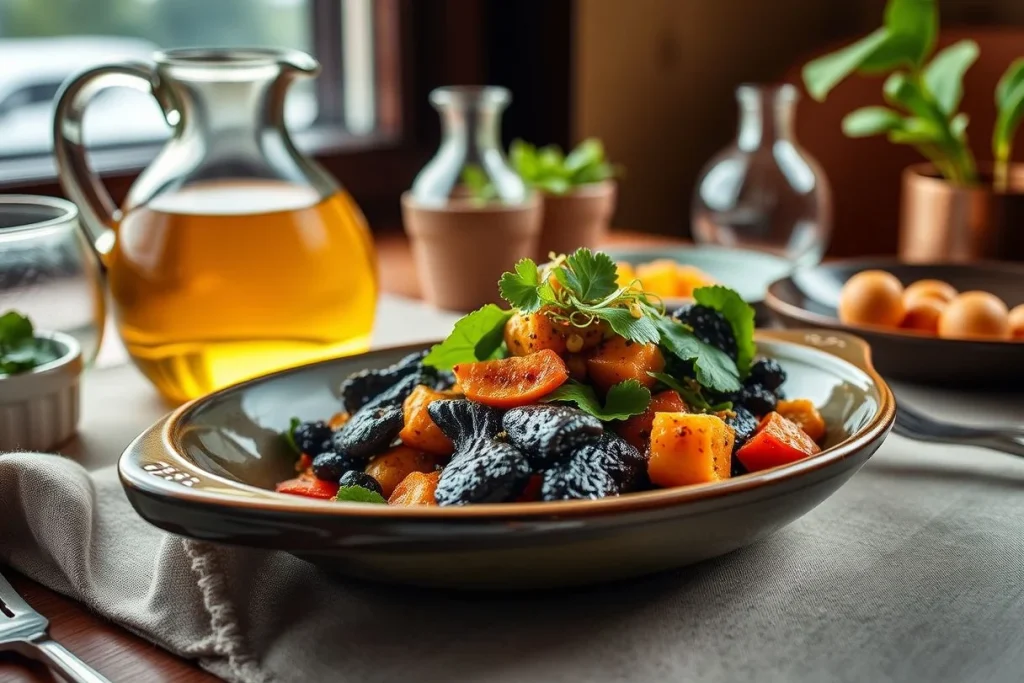
These destinations are useful starting points, not a definitive ranking. The Vegan Society’s 2025 analysis and HappyCow’s published statistics point to strong plant-based dining and retail access in several countries, while HappyCow’s city data shows why national labels can mislead. A country may be easy in its capital and much harder on a small island or in a rural region.
| Destination | Strongest use case | Foods and places to seek | Main caution |
|---|---|---|---|
| India | Vegetarian travellers who want food traditions rather than only specialist restaurants | South Indian thali, dosa and idli; vegetarian restaurants and regional markets | Vegetarian does not mean vegan: check ghee, paneer, milk, yoghurt, butter and dairy-based sweets |
| Greece | Travellers combining local dishes, markets and relaxed restaurant meals | Athens restaurants, Greek markets, vegetable dishes and island tavernas | Options vary considerably by island and town; confirm ingredients and seasonal availability |
| Germany | City breaks needing both dedicated vegan dining and supermarket backups | Urban vegan restaurants, plant milk and plant-based meat in major retail chains | Search the specific city and neighbourhood rather than assuming equal access nationwide |
| Spain | Food-focused trips where restaurant choice and supermarket access both matter | Growing vegan restaurant scenes, local markets and larger supermarkets | Availability is city-led; smaller destinations may require more self-catering |
| Israel | Vegan travellers prioritising a dense urban food scene | Tel Aviv, its market culture and dedicated vegan restaurants | Do not generalise Tel Aviv’s choice to every part of the country; check the exact area |
| Taiwan | Travellers interested in urban food culture and plant-based market eating | Taiwanese night markets, city restaurants and listings on vegan dining directories | Labels, stocks and sauces still need checking; meat-free terminology is not always equivalent to vegan |
| United Kingdom | First-time vegan travellers wanting broad restaurant and retail choice | City restaurants, supermarkets, plant milk and plant-based meat | Choice is strongest in particular cities, so check current listings before booking accommodation |
India deserves a careful distinction. Pew Research’s study conducted in June–July 2021 found that approximately 39% of Indian adults described themselves as vegetarian, while 81% said they limit meat. That helps explain why vegetarian food can be culturally routine, especially in dishes such as dosa, idli and South Indian thali; it does not mean the food is dairy-free. Ghee may be used for cooking or finishing, and paneer, milk and yoghurt are common ingredients.
Greece is particularly appealing for travellers who want to eat local food rather than rely on imported substitutes. Athens offers the widest planning base, while Greek markets and taverna menus can make vegetables, pulses and salads central to a meal. Greece appeared among the top 10 countries for vegan dining options in 2026 coverage from GTP Headlines, but that evidence should not be treated as a guarantee on every island.
Germany, Spain and the United Kingdom suit travellers who value dependable supermarket access alongside restaurants. Israel is best considered through Tel Aviv rather than as a blanket country recommendation. Taiwan is a strong choice for an urban food itinerary: recent HappyCow-based analysis identifies substantial vegan listings and plant-based choices in Taiwanese night markets, but sauces, broths and labels still require the same scrutiny as anywhere else.
For any of these countries, use the exact city and neighbourhood in HappyCow immediately before booking. Its 2025 city analysis is more useful for trip planning than a country ranking, because restaurant density, supermarket reach and regional cooking traditions can change sharply between destinations.
Choose by dietary need, city density and food style
Start with your dietary threshold, not a country ranking. A vegetarian who eats eggs and dairy can often choose from traditional dishes; a strict vegan needs confidence about milk, ghee, eggs, animal stock and shared cooking surfaces. A traveller with allergies or a medical requirement needs a third layer: clear ingredient communication, dependable labels and a backup meal.
For a broad vegetarian diet, India is a compelling choice. Pew Research Center reported that 39% of Indian adults described themselves as vegetarian in research conducted in June–July 2021, although “vegetarian” does not mean dairy-free. South Indian thali, dosa and idli may be meat-free, yet ghee, paneer, yoghurt and other dairy products can appear unless you ask specifically. India therefore scores high for cultural familiarity with vegetarian food, but less highly for effortless vegan ordering.
Strict vegans may prefer a restaurant-focused city break in Tel Aviv, London, Berlin or Taipei. These cities suit travellers who want several dedicated restaurants within a manageable urban area, rather than relying on one traditional dish in each town. The Vegan Society’s 2025 report compares vegan dining options using HappyCow data, but that evidence is most useful as a starting point, not a guarantee for the precise neighbourhood where you will stay. HappyCow’s statistics and city searches can help identify clusters of restaurants and shops.
Choose Greece when markets, vegetable-led cooking and tavernas matter more than dedicated vegan venues. It can work particularly well for travellers comfortable ordering beans, greens, salads and olive-oil-based dishes, but an island taverna may offer fewer reliable alternatives than central Athens. Germany, Spain and the United Kingdom are practical European choices for combining restaurants with supermarket basics such as plant milk and plant-based meat; check the exact city rather than assuming national consistency.
Give each candidate a simple score before booking: dedicated restaurants, traditional accidentally vegan dishes, supermarket access, language support and the concentration of options within one neighbourhood. For allergies or medical requirements, weight communication and cross-contamination controls more heavily than variety. The Vegan Society says its Vegan Passport provides dietary communication material in 78 languages; its travel page carried an April 2026 notice that the app was unavailable, so check its current status and keep a printed or offline alternative. Finally, review current HappyCow listings, user reports and opening status immediately before departure.
Tips in detail: a practical system for eating well abroad
- Search the exact city and neighbourhood on HappyCow. Country-level reputations can be misleading: a capital, university district or tourist centre may have far more choice than a rural area or small island. Start with the neighbourhoods on your itinerary, then read recent user reports and check each venue’s current opening status before relying on it. HappyCow’s published statistics are useful for understanding the wider directory, but they do not replace a local search.
- Save several restaurants along each day’s route. Keep one option near your accommodation, one close to the day’s main sight and another near a transport hub. This gives you flexibility when a venue’s hours, menu or location no longer suits the day, without turning every meal into a cross-city journey. For a food-focused trip, this also leaves room for a market lunch, a South Indian thali or an unplanned plate of vegetable dishes.
- Separate “vegetarian” from “vegan” before you order. Vegetarian food may still contain eggs, dairy, ghee, fish sauce, meat stock or animal fats. In India, for example, dosa and idli may be suitable starting points for a vegan meal, but ghee, paneer, milk and yoghurt need checking; a restaurant that understands vegetarian dining may not automatically understand vegan requirements. Write down the local words for “no dairy”, “no egg”, “no ghee”, “no fish sauce” and “no meat stock” before you travel.
- Prepare a translated dietary card for your strict requirements. State exactly what must be excluded, rather than relying on the single word “vegan”. Add a separate sentence explaining allergies, medical restrictions and whether shared pans, grills or utensils are unsafe. This distinction matters: someone avoiding animal products for ethical reasons may accept a shared fryer, while a traveller with an allergy may not. The Vegan Society’s Vegan Passport provides dietary communication material in 78 languages.
- Carry both printed and offline digital language support. Download your translation before leaving reliable internet access, and keep a paper version in your day bag and accommodation. The Vegan Society’s travel page carried an April 2026 notice that the Vegan Passport app was unavailable at that time, so do not make the app your only system; check the organisation’s current travel guidance before departure and retain an offline or printed alternative. A card is particularly useful in markets, small tavernas and places where menus are not written in a language you read.
- Build a supermarket fallback on arrival. Find a supermarket near your accommodation and identify bread, fruit, nuts, hummus, beans, plant milk and clearly labelled plant-based meat. This is not a substitute for local food: it is a practical buffer for an early arrival, a long transfer, a cancelled booking or a breakfast before a full day of sightseeing. Photograph or translate unfamiliar ingredient labels, especially when “vegetarian” products may contain dairy, egg or animal-derived stock.
- Plan breakfast and transport days first. Lunch and dinner often offer more choice in restaurant districts, while breakfast can depend on a hotel buffet, bakery or café with limited plant-based options. Secure a realistic breakfast plan, then pack food for ferry, rail or coach journeys where stops and menus are uncertain. On arrival, use this sequence: collect your luggage, buy a few fallback foods, check the nearest listed restaurants, then choose the first meal within easy reach of your accommodation rather than travelling hungry across the city.
- Ask cooking-class and food-tour providers precise questions before booking. Confirm whether the menu can be made vegan or vegetarian, and ask about dairy, eggs, ghee, fish sauce, meat stock, animal fats and shared equipment. “Plant-based” may describe only the main dish, not the sauce or tasting menu. Request the current menu in writing, explain allergy requirements separately and book only after the provider has answered clearly; this is especially important for classes built around regional specialities rather than adaptable dishes.
- Reserve tours and classes once the current menu is confirmed. A vegan food tour or cooking class can provide useful context and access to dishes you might not identify from a menu, but its suitability depends on the provider and the day’s programme. Check the latest menu, meeting point and dietary policy directly, then keep a nearby restaurant or supermarket option saved in case the activity does not meet your needs. This approach works well in food-focused cities such as Tel Aviv, Athens, Taipei or major German and Spanish cities, but the exact neighbourhood still determines convenience.
- Pack emergency snacks and your allergy information. Choose sealed foods that travel well, such as nuts or other personally suitable snacks, and carry the translated allergy card with medication or medical documentation where relevant. Travellers with allergies or medical dietary requirements should also follow professional travel-health advice. Emergency supplies are not a judgement on a destination’s food culture; they protect the first hours after arrival and the gaps between restaurants, markets and transport connections.
Use the system before departure, not only when a meal becomes difficult. For each day, mark the route, save several current options, identify a supermarket and note the phrases that matter for your diet. That small amount of preparation leaves more time to explore regional vegetarian cuisines while keeping the decisions that affect safety and trust firmly under your control.
Common mistakes to avoid when eating abroad
Country rankings are starting points, not guarantees. A vegan-friendly capital can have reliable restaurants while a nearby island, rural district or small town has very few choices. HappyCow’s city-level listings and 2025 city data are more useful than assuming every region matches the national picture; check the exact neighbourhood and current opening status before setting out.
Do not treat vegetarian as vegan. Vegetarian dishes may contain ghee, paneer, milk, yoghurt, eggs, butter or animal-derived stock. This matters particularly in India, where meat-free eating is widespread but dairy is central to many dishes. Ask specifically about each ingredient rather than relying on a menu heading or a translated word.
Do not trust one translated dish name. Recipes vary between restaurants, and a translation may not reveal stock, fish sauce, butter or cooking oil. Show a complete dietary instruction in the local language, then confirm the ingredients and preparation with the person taking the order. The Vegan Society’s Vegan Passport covers 78 languages, but its travel resources carried an April 2026 notice that the app was unavailable; keep a printed or offline digital alternative.
Do not rely on HappyCow alone. Listings and opening arrangements change. Use the app or website to find candidates, then check the restaurant’s current website or social channel where available, and keep a second option nearby. A food tour or cooking class also needs written confirmation that it can handle strict vegan requirements, allergies and substitutions—not merely offer vegetable dishes.
Arriving hungry without a backup creates avoidable pressure. Research supermarkets near your accommodation, learn where to find plant milk and packaged food, and carry emergency snacks for travel days. A kitchen-equipped stay can be especially useful outside major cities, but confirm dietary suitability before booking.
Markets are not automatically safe. Separate ingredients may share grills, fryers, utensils or serving surfaces, and sauces can contain animal products. Travellers with allergies or medical dietary requirements should carry precise translated instructions, explain cross-contamination risks, keep emergency food with them and follow professional travel-health advice. Do not assume a market vendor can safely adapt a dish simply because its main ingredient is vegetables.
Conclusion: start with a well-connected city, not a country ranking
Choose the destination by city, not by country ranking. For effortless vegan choice, shortlist an urban base such as Athens, Tel Aviv, Taipei, Berlin or London, where restaurant density and supermarket access are easier to check before booking. Then compare two cities on three points: current HappyCow listings, a supermarket near your accommodation, and at least two clearly suitable places to eat.
If vegetarian culinary variety matters most and you can manage careful dairy checks, India is a stronger starting point: plan around dishes such as dosa, idli and South Indian thali, while confirming ghee, paneer and milk. Before departure, save a translated dietary card and confirm one vegan cooking class or food tour directly with the organiser. That small amount of planning leaves room for markets and spontaneous meals without making every order a gamble.
Frequently asked questions
Which destination is easiest for a first-time vegan traveller?
There is no universal winner: the easiest choice combines city-level restaurant density, supermarket access and clear dietary communication. Germany, Spain, Greece and the United Kingdom all appear in recent Vegan Society and HappyCow analyses as having strong plant-based dining and retail availability. Choose a specific city, then check current listings on HappyCow rather than relying on a country ranking, as availability varies substantially between regions.
Can I eat safely at traditional markets and street-food stalls?
You can find useful plant-based choices in food markets, but a vegetarian-looking dish is not automatically vegan. Recent HappyCow-based analysis identifies Taiwan as having strong vegan listings and plant-based options in night-market settings, yet labels and ingredients still require checking. Ask about dairy, eggs, animal-derived stock and cross-contamination, and keep supermarket food or emergency snacks available when a stall cannot explain its ingredients.
How far ahead should I contact a hotel or restaurant about dietary needs?
The supplied research does not establish a universal notice period, so contact the hotel or restaurant before booking or as soon as your plans are fixed. Send a clear written explanation of whether you are vegetarian or vegan and mention allergies or medical requirements separately. Reconfirm directly before arrival, since restaurant listings and menus can change; use HappyCow for current city-level options rather than assuming every venue can accommodate you.
Are vegetarian cooking classes suitable for strict vegans?
Not automatically. A vegetarian class may use ghee, paneer, milk, eggs or other dairy, particularly when the cuisine is described as vegetarian rather than vegan. Ask the organiser to confirm the full ingredient list, shared equipment and cross-contamination arrangements before booking. In India, vegetarian food is culturally widespread—Pew Research reported that 39% of Indian adults described themselves as vegetarian—but that does not make traditional cooking classes vegan by default.
What should I do if a restaurant cannot understand my dietary restriction?
Do not rely on guesswork or on the word “vegetarian” if you need food without dairy, eggs, ghee, meat stock or cross-contamination. Show a translated explanation and ask staff to confirm the ingredients; The Vegan Society’s Vegan Passport provides dietary communication material in 78 languages. The Society’s travel resources carried an April 2026 notice that its app was unavailable, so check its current status and carry printed or digital phrasebook material as a fallback.
How can I balance local food experiences with a strict plant-based diet?
Plan local food around dishes and venues that can be verified as vegan, rather than treating every traditional vegetarian speciality as suitable. India can be especially rewarding for vegetarian travellers, while Greece offers vegetable dishes, markets and tavernas; in both cases, confirm dairy and ghee. Mix a vegan food tour or cooking class with supermarket shopping, and check the exact city and current listings on HappyCow before travelling.