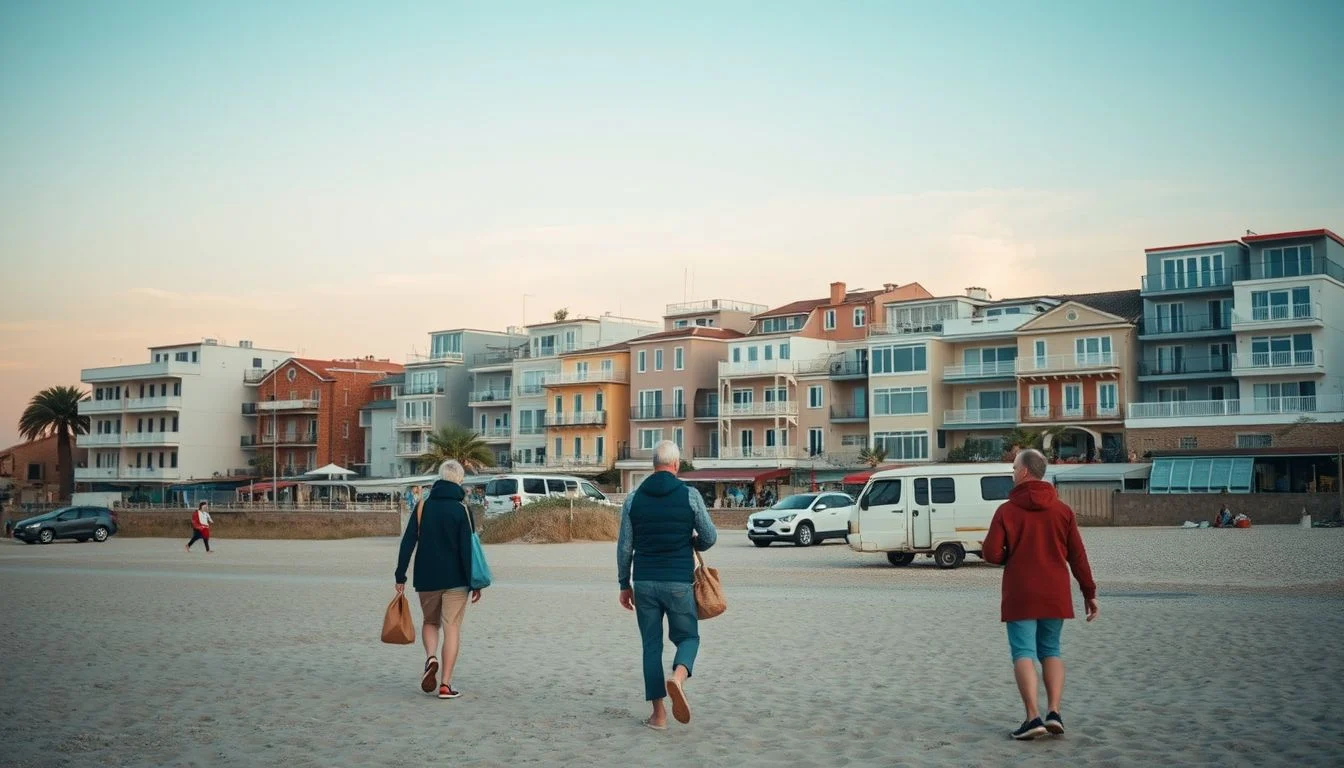
A beach access mat leading from a boardwalk to the sand can matter more to a family than a postcard view. Add a lifeguarded swim area, shade, toilets, nearby food and accommodation close enough for a midday nap, and the same stretch of coast becomes far easier to manage with a baby, stroller or tired preschooler.
Family beach holidays work best when the beach is tested against your children’s ages and your daily routine, not chosen for sand alone. This guide helps parents compare beaches, hotels and rentals by water safety, stroller access, nap-friendly distance, family rooms, kitchen facilities, transport and rainy-day options. It also covers suitable activities for babies through teenagers, practical sun and water precautions, and realistic 2026 costs for a week away.
Quick answer: A family-friendly beach combines a lifeguarded swim area, clear water-safety information, shade, toilets, nearby food and firm, stroller-friendly access. Choose accommodation close enough for naps and meals, then verify current lifeguard coverage, water advisories, access arrangements, transfer times and seasonal prices before booking.
Why a beach works for families: the practical suitability test
Once the sand looks appealing, test the beach as a daily base rather than a postcard. A lifeguarded swim area, visible flag system and clearly published swimming rules are more useful than water that merely looks calm. The CDC advises checking local conditions at oceans, lakes and rivers; rip currents, changing weather and temporary warnings can make a familiar beach unsuitable on a particular day.
- Water and supervision: Look for gently shelving water or a clearly monitored swimming zone, and confirm when lifeguards are on duty. “Calm” does not mean risk-free, so check the municipal or park authority’s current status before entering.
- Shade and practical facilities: Natural shade, rentable umbrellas, toilets, showers and a café or grocery shop nearby reduce the amount you must carry and make a midday retreat possible. Shade is particularly valuable for babies and toddlers; the American Academy of Pediatrics recommends combining shade, protective clothing and hats with appropriate sunscreen guidance.
- Access: A firm path, boardwalk or beach access mat—such as a Mobi-Mat or AccessMat—can make a pushchair manageable. Ask whether the mat reaches the water, whether it is installed for the current season and whether a beach wheelchair is available; these arrangements vary by beach and season.
- Breaks and meals: Choose a family room, adjoining rooms or a vacation rental with a kitchen according to your routine. A playground, splash pad or indoor attraction nearby gives older children a change of scene while a baby sleeps, though CDC reporting documents waterborne-disease outbreaks associated with splash pads, so check maintenance notices and closures.
- Location: A short transfer and accommodation within an easy walk or quick taxi ride of the shore matter more than a remote stretch of perfect sand. Being able to return for a nap, forgotten sun hat or simple lunch often determines whether the afternoon remains enjoyable.
Before paying a deposit, check the beach’s official municipal or park page for seasonal lifeguard coverage, access equipment, swimming restrictions and water-quality or harmful-algal-bloom advisories. The CDC’s guidance on harmful algal blooms also advises checking local warnings before swimming or collecting shellfish.
Things to do with kids: ideas for babies, toddlers, school-age children and teens
Babies: short, shaded visits

For a baby, the beach is mainly a change of scenery and a sensory outing, not a full day in the water. Plan a brief visit in the shade so your baby can feel the sand, hear the surf and watch older siblings, then return to your room for feeds, cooling down and a proper nap. The American Academy of Pediatrics recommends combining shade, protective clothing and a hat with appropriate sunscreen guidance, while avoiding the strongest sun where possible.
Keep paddling to a minimum. Stay within arm’s reach at all times. Drowning is a leading cause of death for children aged one to four, and the CDC advises close, constant supervision around water. A carrier may be easier than a stroller on loose sand; if a stroller is essential, confirm a firm boardwalk, beach access mat or another step-free route, and check whether the equipment is available on your dates.
Toddlers and preschoolers: simple routines and short water sessions
Young children usually get more from a bucket and scoop on damp sand than from a long swim. Choose a beach with toilets nearby and follow a repeatable routine: arrive with water and snacks, settle under shade, play on the sand, have a short water session and leave before tiredness turns into a struggle. Rock-pooling can work where it’s locally permitted, but check the tides, slippery surfaces and any rules against collecting wildlife.
Designate one adult as the water watcher. Don’t assume everyone is keeping an eye out. The CDC and the AAP both emphasise active adult supervision and appropriate life-jacket use for young or non-swimming children; a calm-looking shoreline isn’t a safety guarantee. A nearby playground can provide a useful change of scene, especially when the beach is windy or the sand becomes uncomfortable.
School-age children: supervised skill-building

Once children can follow instructions, add supervised swimming, treasure hunts, beach football or sand games. Simple nature walks can work too. Beginner board or kayak sessions may suit confident children, but confirm the operator’s minimum age, flotation equipment, instructor supervision and cancellation policy before booking. Conditions, tides and weather can change, so treat an advertised activity as an option rather than the day’s fixed centrepiece.
Aquariums and coastal nature centres make practical alternatives when the sun is strong or the water is rough. They give children something to anticipate after lunch without committing the family to another long beach session.
Teens: independence with clear boundaries

Teenagers may want longer swims, beach sports, snorkelling or a supervised boat excursion. Before they split from the adults, agree on the lifeguarded area, local swimming rules, meeting point and return time. Snorkelling and watersports should match their ability, the weather and the operator’s safety procedures; age alone doesn’t prove that a child can manage open water.
A nap-friendly day
A workable rhythm is a shaded morning beach visit, lunch and a nap back at the accommodation, followed by a late-afternoon return for sand play or swimming. Keep a rainy-day plan, such as an aquarium or covered play space, rather than relying on a splash pad alone. A CDC report documents waterborne-disease outbreaks linked to splash pads, so follow hygiene rules and local closure notices.
When to go: balance warm water, crowds, naps and price
Timing matters as much as the beach itself. June, July, August and December are commonly treated as peak months in family beach-holiday planning, but the pattern depends on the destination and hemisphere: December can mean midsummer in the south and winter in the north. School holidays usually bring higher prices and fuller beaches; flexible dates can make a shoulder-season trip calmer, though water may be cooler, rainfall less predictable, and lifeguard coverage or beach access mats may be seasonal.
For babies and toddlers, prioritise comfortable daytime temperatures, reliable shade and an easy retreat indoors over the longest possible beach hours. A short morning visit, indoor nap and late-afternoon return often work better than choosing the hottest month simply for warm water. Older children may tolerate a busier shoreline or cooler sea if swimming, sports and local activities are available, but check the destination’s current rainfall and water-temperature patterns before committing.
Before booking, confirm the destination-specific lifeguard dates, swim conditions, heat forecast, rainfall outlook and access arrangements with the local beach, park or tourism authority. The CDC’s guidance on oceans, lakes and rivers also recommends checking local conditions and warnings rather than assuming a familiar season guarantees safe swimming.
Where to stay: beachfront hotel, apartment or kitchen-equipped rental?
Match the accommodation to your family routine

For babies and nap-dependent toddlers, choose a beachfront hotel or a genuinely short, flat walk from the sand. Being able to return for a nap, forgotten snacks or a change of clothes matters more than having the widest choice of restaurants. A hotel can also suit families who value breakfast, housekeeping and a family room or suite over kitchen space.
Families with a baby, food allergies or early mealtimes will usually get more flexibility from an apartment or vacation rental with a kitchen. It gives you somewhere to prepare familiar food, store milk and fruit, and eat without waiting for restaurant service. A 2026 family-travel analysis estimates that cooking some meals in a rental may reduce weekly food spending by approximately $250–$400 compared with eating every meal out; treat that as planning guidance, not a guaranteed saving. Endless Travel Plans is the cited source for that estimate.
Choose the room layout for the ages travelling
A family room works well for younger children who need an early bedtime, while a suite or one-bedroom apartment gives parents a separate space after lights-out. With school-age children, adjoining rooms can provide more privacy without separating the family across different floors. Teenagers may prefer their own room, but keep the accommodation close enough for easy beach returns and shared meals.
Before paying a deposit, ask the property to confirm lift access, a cot and high chair, blackout curtains, air conditioning, laundry facilities and quiet hours. Check balcony safety, pool fencing, grocery access and whether beach equipment can be stored securely. A property described as “beachfront” may still require stairs, crossing a busy road or negotiating dunes, so inspect the actual walking route on the accommodation’s map or ask for a current description. For stroller users, ask specifically about a firm route to the sand and any beach access mats, Mobi-Mat, AccessMat or beach-wheelchair service; these arrangements can vary by beach and season, as guidance from Seaside Oregon notes.
Getting around: car, transfer, shuttle, public transport or walking
Once the walking route works on paper, decide whether your family needs wheels every day. A rental car suits spread-out beaches, supermarket runs, bulky beach gear and rainy-day flexibility, but parking, car seats and the effort of loading tired children can outweigh that freedom. A car-free base near the beach, shops and medical services is often easier for toddlers and babies, provided the route is genuinely walkable with a stroller.
Treat the airport transfer as part of the holiday, not an afterthought. After a flight, paying for a direct transfer may be worthwhile if it provides an appropriate child seat, space for luggage and a predictable arrival time; a cheaper shared vehicle can mean waiting and extra stops. Before booking, confirm the transfer duration, child-seat rules and whether your accommodation can receive bulky equipment.
Public buses, trams and ferries can work well in a compact resort, but check steps, lifts, waiting times, heat and stroller space. Taxis and ride-hailing are convenient for late returns or a beach change, yet child-seat provision and local rules vary. Bikes are useful for older children on separated paths, not for every family or every hill. Walking is simplest when shade, toilets and food are close; a boardwalk does not automatically mean a firm route all the way to the sand.
Check current routes, fares, parking restrictions, seasonal shuttles and stroller access with the transport operator or municipality. Beach access mats and firm paths may improve access, but availability changes by beach and season, as Seaside Oregon explains. If you hire a stroller or bike, arrange collection near your accommodation. Finally, avoid changing bases midweek: moving luggage, beach toys and sleeping children can erase the benefit of seeing another shoreline.
Health and safety with children: water, sun, food and illness basics
Water safety comes first
Drowning is a leading cause of death for children aged one to four. The CDC’s swim-safety guidance recommends constant, close adult supervision, and the American Academy of Pediatrics’ drowning-prevention policy emphasises age-appropriate water skills and life-jacket use for young or non-swimming children.
Assign one named adult as the water watcher, without relying on a phone or assuming that a lifeguard replaces supervision. Check the local flag system, swimming rules, rip-current warnings and lifeguard coverage before entering the water. A life jacket should suit the child and the activity; inflatables are not a substitute for supervision or water competency.
Sun, heat and food

Plan the beach around shade and cooler parts of the day rather than treating sunscreen as the only defence. The AAP guidance on ultraviolet radiation supports a combination of shade, protective clothing, wide-brimmed hats and age-appropriate sunscreen guidance. Babies need particularly careful protection: use shade and clothing, and ask a healthcare professional about suitable products and exposure.
Offer water regularly, keep children out of excessive heat, and bring familiar food that can be kept safely chilled. Wash hands before eating and after toileting; keep sand and shared toys away from food. Check the local authority’s current beach water-quality notices and any harmful-algal-bloom advisory before swimming or collecting shellfish, as the CDC explains that temporary warnings or closures can apply. Treat a splash pad as a backup only after checking its hygiene rules and current status: the CDC has reported waterborne-disease outbreaks associated with splash pads.
Travel health and the beach bag

For an international trip, review routine vaccinations and destination-specific advice early. The CDC Travelers’ Health advice for children notes that timing can matter for infants and children, so check with a travel clinic and the relevant authorities rather than relying on a generic schedule.
- Pack drinking water, shade, hats and protective clothing.
- Bring swim nappies, spare clothes and suitable footwear.
- Carry prescribed medication, basic first-aid supplies and emergency contacts.
Save the beach authority’s contact details and identify the nearest medical facility before the first swim.
Travel costs in 2026: realistic weekly ranges for four
For a family of four, use these figures as planning ranges rather than destination-specific quotes. The cited April 2026 market guidance assumes a one-week U.S. beach trip; your total will change with school-holiday dates, flight routes, accommodation taxes and the distance from home.
| Estimated weekly cost level | Typical total for four | What it generally covers |
|---|---|---|
| Budget | $1,500–$2,500 | Driving or budget transport, a motel or simple rental, cooking most meals and free public beaches |
| Mid-range | $2,500–$4,000 | More comfortable accommodation, regular restaurant meals and some paid activities |
| Luxury | $4,000–$6,000+ | Premium lodging and transport, excursions and frequent dining out |
Basis: per week for four people, in USD, using April 2026 market guidance from Endless Travel Plans. These are estimates, not live quotes.
A premium or long-haul beach holiday also starts at around $4,000–$6,000+, according to the same April 2026 market guidance, but the source does not provide budget or mid-range bands. Price live flights, accommodation and transfers for your exact dates before committing.
A vacation rental with a kitchen may reduce weekly food spending by approximately $250–$400 compared with eating every meal out, according to the cited 2026 family-travel analysis. Still allow for taxes, parking, beach equipment, cots, transfers, car seats, travel insurance, groceries and rainy-day activities. June, July, August and December can be peak periods depending on the destination, so check current prices before booking.
| Item | Budget | Mid-range | Luxury |
|---|---|---|---|
| Week-long U.S. beach trip for a family of four | $1,500–$2,500 | $2,500–$4,000 | $4,000–$6,000+ |
| Week-long premium or long-haul beach trip for a family of four | — | — | $4,000–$6,000+ |
Estimated ranges based on the sources listed below. Prices change; check with providers before booking.
Conclusion: choose the beach that makes your family’s day easier
Choose the beach around your youngest child’s needs: a short transfer, shade, toilets, firm access, supervised swimming and food close by. Stay near enough to return for naps and meals, and choose a family room or kitchen-equipped rental that keeps the day flexible. The most famous beach is not automatically the most usable.
Before paying, verify five details with the beach authority and accommodation: current lifeguard coverage; water-quality and harmful-algal-bloom advisories; stroller access, including any beach access mats; the real transfer time; and the exact family-room or kitchen setup. If those answers fit your family’s routine, you have a stronger choice than a destination selected from photographs alone.
Frequently asked questions
How can I tell whether a beach is genuinely stroller-friendly?
Look beyond photographs: check for a firm boardwalk or beach access mats such as Mobi-Mat or AccessMat, and confirm how far the route continues towards the water. Beach-wheelchair programmes can also indicate practical access, but availability may vary by beach and season. Check the current municipal or park page before travelling, as recommended by Seaside Oregon and local access guidance.
What is the easiest way to protect a baby from too much sun and heat?
Make shade and protective clothing the foundation: use a shaded setup, dress the baby in covering clothing and a hat, and follow age-appropriate sunscreen guidance. Plan beach time away from the strongest sun where feasible rather than relying on sunscreen alone. The American Academy of Pediatrics recommends combining these measures for children’s sun protection.
Should we book one family room or adjoining hotel rooms?
Choose a family room when keeping everyone together and simplifying naps matters most; it can also reduce the need to move between spaces during the day. Adjoining rooms suit families with older children who need more sleeping space or a quieter adult area, but confirm the connection and room configuration directly with the hotel. Prioritise a layout that supports sleep, meals and quick returns from the beach.
How do we manage a beach day around a toddler’s nap?
Treat the nap as the fixed point: choose accommodation close enough for a straightforward return, visit the beach during the toddler’s more settled part of the day, and leave before tiredness turns into a safety problem. A shaded rest area can help, but it should not replace a proper sleep space or close supervision near water. Keeping the plan short is usually more practical than stretching a single beach session.
What are the best non-beach activities when the weather turns bad?
Before booking, identify indoor facilities at the accommodation and nearby family options, so rain does not force a long transfer with tired children. A splash pad may be a useful backup in suitable weather, but it is not risk-free: the CDC reports waterborne-disease outbreaks associated with splash pads and advises attention to hygiene, maintenance and closures. Check the local operator’s current notices.
When should children wear a life jacket at the beach?
Young children and anyone who cannot swim confidently should use an appropriate life jacket in situations where they could enter open water, including near the shoreline, on boats or around water activities. A life jacket does not replace a designated water watcher or constant, close adult supervision. The American Academy of Pediatrics’ 2026 policy emphasises age-tailored guidance, supervision and life-jacket use.