
At a street-food market, the useful details are often in plain sight: a hot grill, covered ingredients, separate utensils and a queue that keeps the pans moving. Those signals do not guarantee safety, but they help you judge how food is handled before choosing what to eat.
This food travel guide is for food-focused travellers who want local dishes, markets and dining customs without treating authenticity and caution as opposites. It gives first-time and experienced travellers a repeatable way to find reputable vendors, decide when freshly cooked food is the sensible choice, manage water, allergies and dietary needs, and plan food tours or cooking classes. You will also find practical trade-offs for travellers who are pregnant, immunocompromised, older or managing a chronic illness, plus guidance on checking current destination advice before departure.
Quick answer: You can eat authentically and reduce risk by checking current destination health advice, choosing vendors with visible hygiene and steady turnover, preferring thoroughly cooked food when conditions are uncertain, and using safe water and ice. Street food does not need to be avoided automatically, but travellers with allergies, pregnancy, immunocompromise, older age or chronic illness should take additional precautions and seek appropriate professional advice.
The essentials for eating authentically and safely
Authentic eating and sensible caution are compatible. The useful test is not whether a dish looks rustic, fashionable or expensive, but what happened to it before it reached your plate: how ingredients were washed, stored, handled, cooked and served. The World Health Organization’s Five Keys to Safer Food provide a compact framework: keep clean, separate raw and cooked food, cook thoroughly, keep food at safe temperatures, and use safe water and raw materials.
The five-minute decision at any stall or restaurant
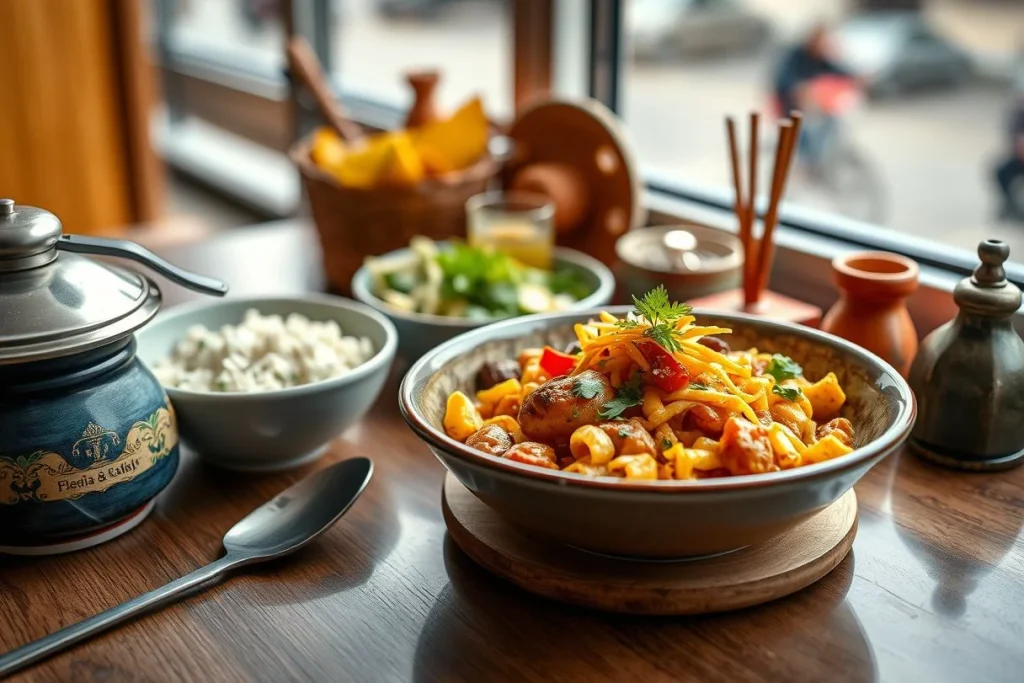
- Check the destination advice first. Before your food-focused trip, consult the CDC Travelers’ Health food and water guidance, the destination’s current public-health information and the official tourism authority. Water safety, outbreaks and common local risks vary, so a rule that makes sense in one city may not apply in the next.
- Watch the preparation, not just the queue. Look for a clean working area, covered ingredients and a clear separation between raw meat, seafood or eggs and cooked food. Visible cooking is helpful because it lets you see whether the food is handled carefully, but it is not a guarantee of safety.
- Choose thoroughly cooked food when conditions are uncertain. Food cooked to order and served hot is generally easier to assess than a raw garnish, lukewarm dish or tray that has been sitting out. A busy vendor with steady local turnover can be a useful signal that prepared food is not being held for long; still check storage, utensils, water and handling rather than treating popularity as proof.
- Confirm water, ice and ingredients. If local tap water is not considered safe, use bottled or properly treated water. Ice can carry the same risk when its source is unknown, and raw produce may also have been washed with unsafe water. For allergies, ask specifically about ingredients and shared pans, boards, oil and utensils; a translated allergy card improves communication but cannot remove the risk of cross-contact.
- Stop when the chain becomes unclear. If you cannot establish what an ingredient is, how it was stored or whether the water is safe, choose another dish or return later. One missed snack is a small trade-off for protecting several days of a food-focused itinerary.
Street food is a risk assessment, not a category to ban
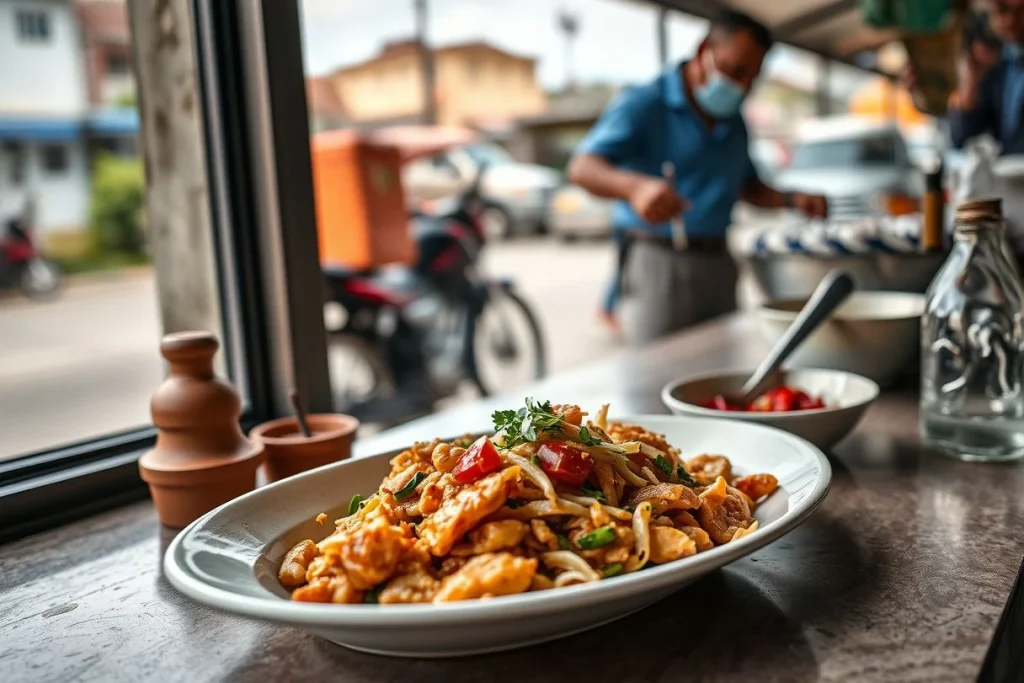
Public-health guidance does not require blanket avoidance of street food. The WHO’s guidance on street-food vending emphasises practical controls—clean handling, safe water, thorough cooking and appropriate temperatures—rather than judging food solely by where it is sold. A covered wok at a busy market may offer clearer reassurance than an attractive dish sitting uncovered in a quiet display, but neither setting should be accepted without looking at the full handling chain.
Apply the same questions in a market, café, restaurant or hotel buffet. At Bangkok’s Yaowarat Road or Chiang Mai’s Warorot Market, also known as Kad Luang, the point is not simply to follow the largest crowd. Observe how vendors manage raw and cooked ingredients, whether food is replenished in small amounts, and how customers queue and collect dishes. Market customs and seasonal availability change, so check current local information before building a route around a particular stall or trading area.
Use a more conservative threshold when health risks are higher
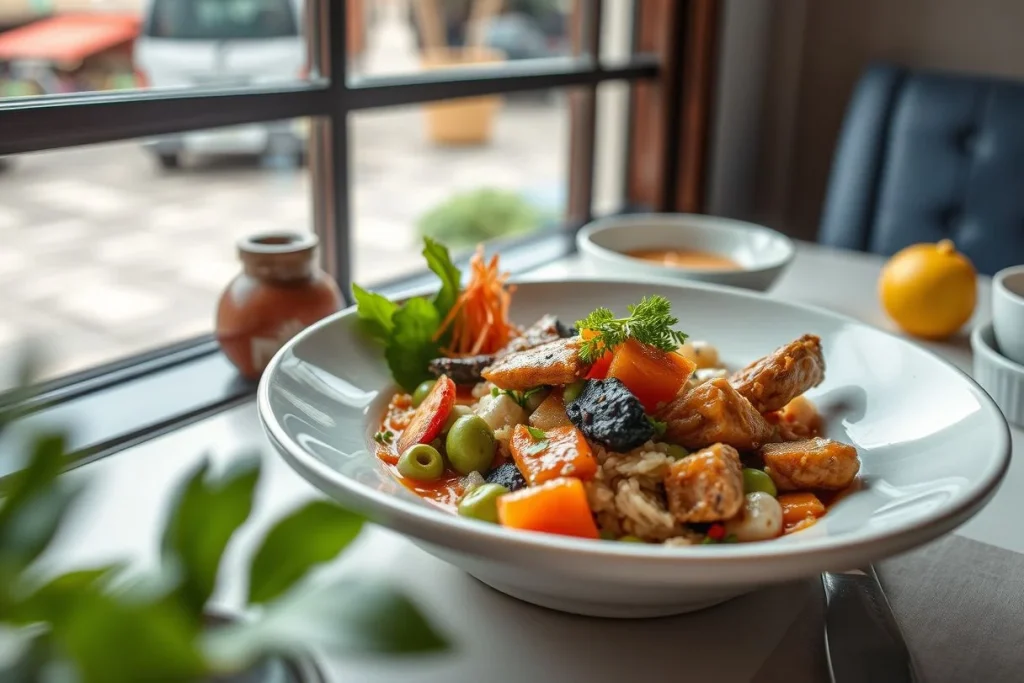
People who are pregnant or immunocompromised, as well as older travellers and those managing chronic illness, may face more serious consequences from foodborne illness. The CDC Yellow Book’s food and water precautions advises higher-risk travellers to take additional care and consider avoiding raw or undercooked foods. Discuss destination-specific precautions with a clinician or travel-health service before departure rather than relying on general street-food rules.
If illness does occur, seek current medical guidance for the destination. The CDC Yellow Book notes that oral rehydration is important when diarrhoea causes fluid loss, and that severe or prolonged symptoms warrant medical care; treatment, including any antibiotics, should be guided by a qualified professional rather than self-prescribed from a generic packing list.
Plan around food culture, not just famous dishes
Plan around food culture, not just famous dishes
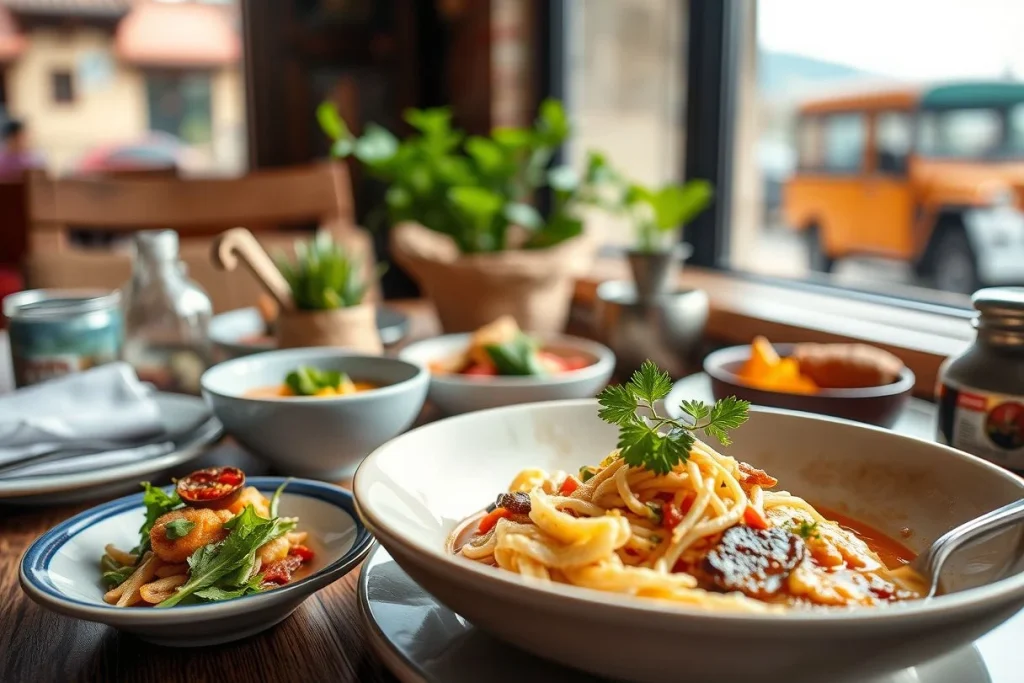
A food-focused trip works better when you plan around where and how people eat, not only around a checklist of famous dishes. Before choosing restaurants, find out which neighbourhoods are associated with particular cuisines, when markets are most active, which ingredients are seasonal, and whether a meal is traditionally eaten at breakfast, midday or late at night. This gives you a route with context rather than a succession of disconnected bookings.
Research local dining etiquette alongside dishes. In one destination, sharing several plates may be the norm; in another, a particular condiment, utensil or seating arrangement carries its own convention. Local tourism sources, recent restaurant information and current market listings can help, but conditions change. Check them again for closures, accessibility, weather disruption and seasonal availability before setting out.
Use markets as a window into local eating
Yaowarat Road in Bangkok Chinatown is a useful example of how a food neighbourhood can shape an evening: research the area’s Cantonese-Thai traditions, note which dishes appeal to you, then leave room to observe how stalls are arranged and how local diners order. A market visit is not simply a hunt for the longest queue. Look at preparation, turnover and the separation of raw and cooked ingredients, applying the WHO’s Five Keys to Safer Food while remaining open to unfamiliar flavours.
For a different perspective, Warorot Market, also known as Kad Luang, in Chiang Mai, can be researched as a place to encounter northern Thai ingredients, prepared foods and everyday market customs. Do not assume that every stall, product or operating pattern described in a guide will still be present. Verify current details locally, and treat seasonal produce as part of the destination’s food calendar rather than an item guaranteed on every visit.
| Food setting | What it offers | Best use | Trade-off |
|---|---|---|---|
| Local market | Discovery and seasonal ingredients | Seeing what people buy and eat | Noise, crowds and less predictable seating |
| Neighbourhood restaurant | Local dishes in a more settled setting | A focused meal with time to observe etiquette | Menus and ordering may be difficult without language support |
| Street-food stall | Direct access to everyday food culture | Trying one dish freshly prepared | Limited control over ingredients and cross-contact |
| Food tour | Context, translation and several tastings | A first orientation in an unfamiliar city | Fixed route and group pace |
| Cooking class | Hands-on learning and ingredient knowledge | Understanding techniques you can recognise later | Less spontaneous than eating independently |
A food tour or cooking class can be particularly valuable on the first full day: it may explain dishes, customs and ordering habits that make later meals easier. Check recent reviews, the operator’s current details and how dietary requirements are handled; listings for food tours in Vietnam, including Ho Chi Minh City, change over time.
Keep the itinerary flexible. Plan one principal food objective each day, add a nearby backup meal, and leave space for heat, tiredness or an unexpectedly good market stop. Travellers managing allergies or health conditions should favour settings where ingredients and preparation can be explained clearly, even when that means choosing context and confidence over the most improvised stall.
Food travel planning: research, pack, and prepare before departure
Good food travel planning starts before the first market visit. Check the destination page on CDC Travelers’ Health, the CDC Yellow Book, the World Health Organization’s travel-health guidance, and the destination’s public-health authority. Look specifically for food and water advisories, reported outbreaks, health recommendations, and any consultation or vaccination advice relevant to your itinerary.
Water deserves its own check. Untreated tap water and ice from an unknown source can contribute to travellers’ diarrhoea, so use bottled or properly treated water when local safety is uncertain, as advised by CDC Travelers’ Health. Confirm whether hotel filtration, restaurant ice, refill stations and washed raw produce are covered by local guidance rather than assuming that a smart-looking venue has safe water.
Build a practical pre-trip checklist
Research the places you intend to eat, not just the dishes you want to try. Check current market hours, seasonal closures, local weather, transport disruptions and accessibility through official tourism, market or transport channels. This matters at places such as Bangkok’s Yaowarat Road or Chiang Mai’s Warorot Market, also known as Kad Luang: the point is to arrive with enough time and energy to observe the market rather than forcing a rushed visit after a long transfer.
June, July, August and December are useful prompts to recheck conditions because they are common travel and publishing periods, not universal recommendations for any destination. Seasonal produce, rain, heat, market schedules and transport can change the food experience considerably. Verify current information shortly before departure and again if your route changes.
| Dietary need | Clarify before leaving | Safer planning choice |
|---|---|---|
| Allergy | Ingredient names, translation and cross-contact risk | Carry a translated allergy card and choose operators who can explain ingredients and preparation |
| Intolerance | Whether small amounts or shared equipment cause problems | Prepare a precise explanation rather than relying on a broad label such as “dairy-free” |
| Medical diet | Required ingredients, portions and medication timing | Discuss the trip with an appropriate clinician before departure |
| Vegetarian or vegan diet | Broths, sauces, fish sauce, lard and cooking fats | Translate the exact restriction and confirm preparation, not only the dish name |
| Religious restriction | Prohibited ingredients, certification and preparation customs | Identify suitable restaurants or food-tour operators in advance |
An allergy card improves communication but cannot remove cross-contact risk. If a vendor cannot explain the ingredients, cooking surface or shared utensils clearly, choose a different meal; this is especially important for travellers with severe allergies. A reputable restaurant, food tour or cooking class should be able to discuss ingredients without treating your restriction as an inconvenience.
Pack for delays and uncertainty
Useful items include a translated allergy card, prescribed medication, hand sanitiser or wipes where appropriate, and sealed snacks for a delayed train, flight or late arrival. Take a reusable bottle only when you know it can be refilled safely. Oral rehydration supplies may be sensible if a clinician or current health guidance advises them; the CDC Yellow Book guidance on travellers’ diarrhoea identifies oral rehydration as important for fluid loss. Seek medical care if diarrhoea is severe or prolonged, rather than trying to manage every situation with supplies from your bag.
Vet food tours and cooking classes
Food tours and cooking classes can be practical orientation tools, not just entertainment: they may explain local dishes, dining customs and how ingredients move through markets and kitchens. Before booking, read recent reviews and confirm the operator, group size, walking demands, cancellation terms, ingredient transparency, kitchen hygiene and ability to accommodate allergies. Check whether the itinerary includes raw or undercooked foods, shared preparation surfaces or tasting stops that do not suit your needs.
Look for a small-group format when you need questions answered or dietary adjustments made, but do not assume that a small group guarantees safety. Verify the operator through its current website or established booking platform, and contact it directly about restrictions before paying. A local SIM or eSIM can also make it easier to reach an operator, translate an ingredient list and check a last-minute market or transport change once you arrive.
Tips in detail: a safer method for eating like a local
- Start with current destination advice. Before choosing restaurants or markets, check the CDC Travelers’ Health pages, WHO travel guidance and the destination’s public-health authority for water safety, outbreaks and food-related precautions. Conditions vary between countries, cities and even seasons, so advice from a previous trip—or from another neighbourhood—may no longer fit.
- Observe the stall before ordering. Look for clean hands or handwashing facilities, covered ingredients, controlled waste, clean utensils and a clear separation between raw and cooked food. These are practical applications of the WHO Five Keys to Safer Food: keep clean, separate raw and cooked food, cook thoroughly, keep food at safe temperatures, and use safe water and raw materials. The reason is simple: the preparation area tells you more than a polished sign or a long menu.
- Use queues as one signal, not a guarantee. A steady flow of local customers usually means ingredients and prepared food turn over quickly, reducing the chance that a cooked dish has been sitting for a long time. Still check whether food is protected, cooked properly and handled with clean utensils. A busy vendor can still have poor storage or cross-contact, so popularity should support—not replace—your other observations.
- Prefer food cooked to order when conditions are uncertain. Choose dishes that are cooked thoroughly in front of you and served hot, particularly at a stall where refrigeration or hot holding is difficult to judge. Fresh cooking reduces some risks, but reheating cannot correct every problem: contaminated water, raw ingredients, dirty surfaces or lengthy handling may have affected the food earlier.
- Apply the safe-water rule to more than drinking. When local water safety is uncertain, use bottled or properly treated water for drinking and consider the same standard for ice, brushing your teeth, drinks diluted with water and rinsing produce. The CDC notes that untreated tap water and ice from an unknown source can contribute to travelers’ diarrhea; check its food and water guidance alongside local advice. Do not assume an expensive restaurant or a clear-looking drink guarantees a safe water source.
- Make a decision about the dish, not just the venue. Ask what is raw, undercooked or added after cooking, including herbs, sauces, shellfish, eggs, dairy and spice pastes. Check whether those ingredients share a chopping board, pan or serving utensil with raw meat or seafood. This approach lets you enjoy a local speciality while choosing a safer version, rather than rejecting an entire market because one preparation is unsuitable.
- Be deliberate with raw produce. Prioritise fruit you can peel yourself, vegetables that are cooked, and salads or garnishes washed with a water source you trust. Treat produce that has been sitting uncovered, misted from an unknown supply or handled repeatedly as a higher-uncertainty choice. The CDC Yellow Book’s food and water precautions are especially relevant for travellers who are pregnant or immunocompromised, who may need to avoid raw or undercooked food more consistently.
- Prepare for allergies before you sit down. Carry a translated allergy card, learn the key words for your allergen, and show the card before ordering rather than relying on a rushed verbal exchange. Ask whether the dish contains the allergen and whether separate utensils, pans and preparation surfaces are used. A vendor’s reassurance cannot eliminate cross-contact risk; if ingredients or controls are unclear, choose a dish with a short, visible ingredient list or use a reputable operator that has confirmed its procedures.
- Find authenticity through local patterns. Look for regional dishes, seasonal menus, specialist stalls and meal times that attract local diners, rather than choosing solely from tourist branding or social-media photographs. Ask a hotel receptionist, market trader or cooking teacher what people eat in that neighbourhood, then compare the answer with current local listings. A small menu can be useful because it may indicate focused preparation, but it is not by itself proof of quality or safety.
- Use markets as places to observe before you eat. Yaowarat Road in Bangkok’s Chinatown and Warorot Market, also known as Kad Luang, in Chiang Mai illustrate how a food-focused visit can include shopping, preparation, etiquette and seasonal ingredients—not only a checklist of famous dishes. Watch where people queue, which stalls have turnover and how raw foods are stored. Confirm current hours, access and conditions through local tourism or market sources before travelling, since these details can change.
- Book a food tour when context will improve your choices. A small-group tour can be worthwhile on a first day, particularly when you do not speak the language, cannot identify ingredients or want help understanding local meal customs. Check recent reviews, the operator’s current website, group size, meeting arrangements and its response to allergies before paying; listings on established booking platforms can help you compare, but do not replace direct confirmation. A tour is less useful if its fixed menu cannot accommodate your health or dietary needs.
- Choose a cooking class for practical knowledge. The strongest classes explain ingredient names, market selection, preparation methods and dining etiquette, giving you a method you can use after the lesson. Ask in advance about kitchen hygiene, water sources, raw and cooked separation, class size and dietary accommodation. A class that promises a substitute but cannot explain cross-contact controls is a poor fit for a serious allergy.
- Build a food itinerary with breathing room. Plan one anchor meal or market visit each day, then leave space for a lighter dish, a queue, a changed plan or a period when you need to rest. Carry safe hydration options and avoid making every meal a reservation or tasting challenge. This pacing suits food-focused travellers because it leaves room to return to a promising neighbourhood without turning one uncertain meal into a full-day problem.
- Watch first and follow local dining etiquette. Notice whether diners share dishes, use hands, chopsticks or particular utensils, queue before ordering, remove shoes or eat at set times. Follow the lead of hosts and staff rather than assuming that familiar habits apply everywhere. If you are unsure about tipping, condiments or how to signal that you have finished, wait for a nearby diner or ask discreetly; respectful observation is usually more useful than a rigid rulebook.
- Have a plan if travelers’ diarrhea begins. Prioritise fluids and oral rehydration in line with current medical guidance, monitor how severe and prolonged the symptoms become, and consult a clinician when advised. The CDC Yellow Book guidance explains that oral rehydration helps manage fluid loss and that severe or prolonged illness warrants medical attention. Do not assume antibiotics are appropriate for everyone; ask a travel-health professional what is suitable for your circumstances.
- Use a more conservative standard for higher-risk travellers. Pregnancy, immunocompromise, older age, chronic illness and very young children can change the consequences of foodborne illness. Discuss destination-specific precautions with a qualified travel-health professional before departure, and consider avoiding raw or undercooked foods when advised. The aim is not to remove local food from the trip, but to select cooked dishes, trusted water and operators whose handling practices you can understand and verify.
Common mistakes to avoid when eating abroad
Replace simple rules with a quick assessment
Avoiding all street food. Street food is not automatically unsafe, and blanket avoidance can mean missing the everyday dishes that make a destination distinctive. The WHO says risk can be reduced through safer handling, thorough cooking, suitable water and better vendor practices; check the stall instead: is food cooked in front of you, are raw and cooked ingredients separated, and is prepared food protected from dust and handling? See the WHO guidance on street-food vending before departure.
Assuming a long queue guarantees safety. Steady local turnover is a useful sign because food is less likely to have been sitting for a long time, but popularity does not prove that water, storage or hand hygiene are sound. Watch the food being made, look for covered ingredients and clean utensils, and leave if cooked food is left at room temperature or raw and cooked items share the same surfaces.
Choosing the quiet stall solely because it looks cleaner. An empty counter may have excellent hygiene, but it can also indicate low turnover. Compare several signals rather than judging appearance alone: visible cooking, safe storage, separation of ingredients, clean handling and regular local customers.
Eating food that has been sitting out. A dish can look appetising and still have spent too long in unsafe conditions. Choose food cooked to order or kept properly hot, particularly when the stall cannot explain how prepared dishes are stored; this follows the WHO’s advice to keep food at safe temperatures and cook it thoroughly.
Confusing “fresh” with safe. Freshly chopped herbs, salad, fruit or juice may still have been washed with unsafe water or handled with contaminated utensils. When local water safety is uncertain, ask how produce was washed and prefer cooked ingredients; the CDC advises using bottled or properly treated water in such circumstances.
Accepting unknown ice or tap water. Ice may be made from the same untreated water you are trying to avoid. The CDC’s food and water advice warns that untreated tap water and ice from an unknown source can contribute to travellers’ diarrhoea, so ask about the source or choose sealed bottled water and drinks without ice. Check current destination-specific guidance, since local water conditions vary.
Relying on alcohol or chilli as protection. A beer, a spirit mixed into a drink or a very spicy sauce does not replace safe water, clean hands, separated ingredients or adequate cooking. Treat alcohol as a beverage and heat as flavour, not as a food-safety method; the WHO’s Five Keys are a more reliable checklist.
Avoid preventable planning and communication errors
Ordering without explaining an allergy. Pointing to a dish or saying “no nuts” may not communicate the risk of sauces, stock, garnishes or shared cooking oil. Use a translated allergy card, but explain the allergy before ordering and choose a restaurant, cooking class or tour that can clearly identify ingredients; even a card or vendor assurance cannot remove cross-contact risk.
Assuming a translated card guarantees safety. Translation helps with communication, not kitchen control. Confirm what the operator can actually prepare, ask about shared pans and utensils, and walk away when the answer is uncertain rather than treating a polite nod as confirmation.
Trying too many unfamiliar foods at once. A full day of new dishes makes it difficult to identify an ingredient that caused a reaction or stomach upset. Start with one or two unfamiliar items, keep notes if you have dietary restrictions, and leave room to return to a dish you understand and genuinely enjoy.
Booking a tour without checking the details. A food tour or cooking class can teach local dishes and dining customs, but the booking page may not answer practical questions. Read recent reviews, confirm group size, hygiene arrangements, walking demands and dietary accommodation, and verify the operator and meeting details before paying; a listing or review is not a substitute for asking about allergies.
Treating a famous market or dish as automatically authentic. Recognition brings useful context, but a well-known market can also be geared towards visitors, while an iconic dish may be adapted to broad tastes. Use the market to observe what local customers buy, when different foods appear and how vendors work, then ask a reputable local guide or hotel staff where residents eat that dish. Market hours, seasonal availability and local regulations can change, so confirm them with current local tourism information.
Ignoring local meal times and seasons. Arriving between meal periods can leave you judging a destination’s food by reheated or limited offerings. Research when the city’s main meal is eaten and which ingredients are seasonal; check current market information rather than assuming a stall, dish or produce will be available year-round.
Overpacking a rigid food itinerary. A schedule that assigns every meal to a distant market leaves no margin for queues, weather, changing appetite or a disappointing dish. Anchor each day with one planned food stop and keep nearby alternatives, so a missed market does not turn into rushed eating or a poor hygiene decision.
Self-treating severe or prolonged diarrhoea without advice. Focus first on replacing lost fluids with oral rehydration, but do not rely on guesswork when symptoms are severe or continue. The CDC Yellow Book’s travellers’ diarrhoea guidance recommends consulting current health advice and seeking medical care when appropriate; do not assume antibiotics are suitable for everyone.
Using the same risk threshold for every traveller. Pregnancy, immunocompromise, older age and some chronic conditions can make foodborne illness more consequential. The CDC Yellow Book advises additional precautions for higher-risk travellers, including considering avoidance of raw or undercooked foods. Discuss personal limits with a qualified travel-health professional and check current WHO travel-health information and local public-health advice shortly before departure.
Conclusion: use curiosity with a simple safety check
Make your first food decision before you leave: choose one market, neighbourhood, dish, small-group food tour or cooking class to research properly rather than arriving with an unfiltered list of “must-try” foods. A guided first-day experience can be useful for learning local dishes, dining customs and how vendors handle ingredients, but check recent reviews, the operator’s current details and whether it can accommodate your dietary needs.
At each meal, use the same quick check: clean hands and surfaces, separate raw and cooked ingredients, cook food thoroughly, and use safe water and raw materials. That does not mean avoiding street food automatically. It means looking for visible preparation, covered food, separation between raw and cooked items, and steady turnover, then choosing freshly cooked dishes when conditions are uncertain.
Put a short vendor-and-dish checklist in your phone, along with your dietary requirements in the local language. Show it before ordering, repeat the restriction when food arrives, and remember that a translated card or verbal reassurance cannot remove cross-contact risk. Choose operators and dishes with clear ingredients when an allergy or medical condition makes uncertainty unacceptable.
Shortly before departure, check the CDC’s current food-and-water advice, destination health information, local water guidance, seasonal market updates and any relevant public-health notices. Save the official contact details for your destination, then book one carefully checked introductory experience—or simply save the checklist and begin with a busy, observable market stall. That small amount of preparation leaves room for curiosity without asking every meal to be a gamble.
Frequently asked questions
How far in advance should I book a food tour or cooking class?
There is no universal booking window: availability varies by destination, season and operator. Check the operator’s current details before travelling, then confirm the meeting point, language, group size, cancellation terms and how dietary needs are handled. Food tours and cooking classes can help with local dishes and dining customs, but the CDC-backed guidance is to check recent reviews and operator information before booking. Tripadvisor’s current Vietnam listings illustrate why details should be checked rather than assumed.
What is the best way to order food when I do not speak the local language?
Start with a dish whose ingredients and cooking method you can establish clearly, and choose a vendor or restaurant where food is cooked visibly and raw and cooked ingredients are kept separate. For allergies, carry a translated allergy card, but treat it as a communication aid rather than a guarantee against cross-contact. If staff cannot explain the ingredients or preparation, choose another dish or venue. The WHO’s Five Keys support using safe raw materials and thorough cooking.
Can I eat fresh fruit and salads while travelling?
Raw produce deserves more caution when the safety of water and handling is uncertain. The CDC advises checking destination-specific food and water guidance, while the CDC Yellow Book recommends that travellers at higher risk from foodborne illness, including pregnant or immunocompromised people, take additional precautions and consider avoiding raw foods. If conditions are unclear, choose thoroughly cooked food and use bottled or properly treated water, including for drinks and ice.
How can I try unfamiliar dishes without abandoning foods I know I tolerate?
Use a staged approach: keep one familiar, well-tolerated option available, then try an unfamiliar dish that is cooked thoroughly and prepared in front of you. This follows the WHO Five Keys—especially thorough cooking, safe temperatures and safe raw materials—without requiring you to avoid local food altogether. Busy vendors with steady turnover can be a useful signal, but also check cleanliness, covered food and separation of raw and cooked ingredients.
What should I do if a restaurant cannot clearly explain its ingredients?
Do not rely on reassurance when an ingredient matters for an allergy, pregnancy, chronic illness or other health concern. Ask for a dish with clear ingredients and straightforward preparation; if the staff still cannot explain what is in it or how it was handled, choose another venue. A translated allergy card may improve communication, but it cannot remove cross-contact risk. Higher-risk travellers should follow professional advice and take more conservative precautions.
How can I make a food-focused itinerary work for children or mixed-diet groups?
Build each day around a reliable meal as well as one or two exploratory stops, and favour venues where ingredients, cooking and water practices are easy to understand. Markets such as Bangkok’s Yaowarat Road and Chiang Mai’s Warorot Market can help you observe queues, turnover and local food culture before choosing what to eat. For food tours or cooking classes, check current operator details, recent reviews and whether dietary requirements can be accommodated before booking.