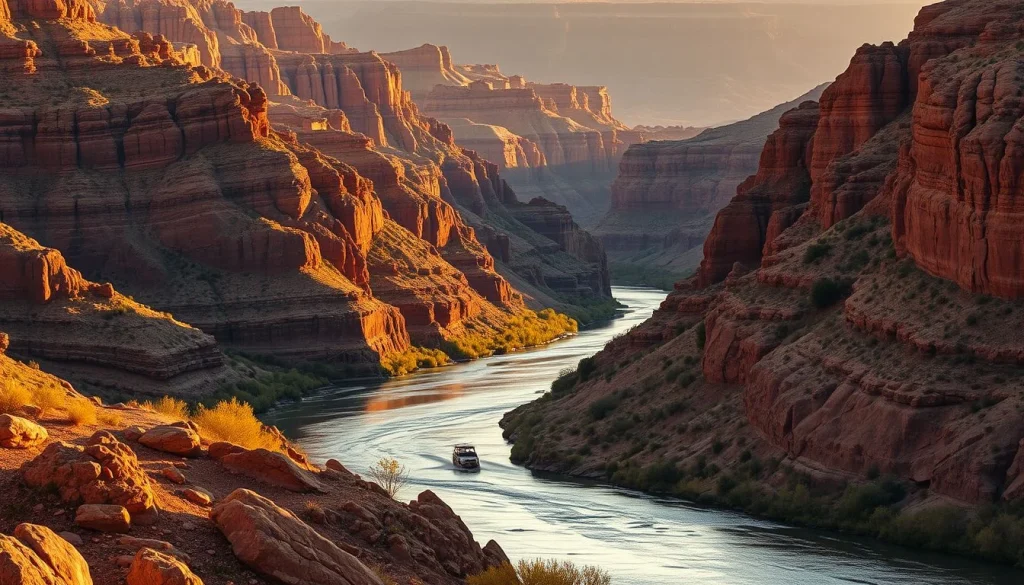
At Lees Ferry, the Colorado River narrows into the starting line for most Grand Canyon multi-day rafting trips, with the route eventually reaching takeouts such as Diamond Creek, Pearce Ferry or Lake Mead. The scale changes quickly: a motorized boat can cover the canyon in roughly six to eight days, while oar boats, dories and paddle rafts usually take about 12–18 days or more.
This guide is for adventure travellers deciding how much time, money and physical effort to commit. It explains the trade-offs between commercial and private trips, what Grand Canyon rafting permits involve, when heat and storms become a serious concern, and which costs sit outside the advertised fare. You’ll also find practical guidance on transport from Page or Las Vegas, river camping, equipment, fitness and the realities of travelling far from quick medical help.
Quick answer: Most trips launch at Lees Ferry and finish at Diamond Creek, Pearce Ferry or Lake Mead. A six- to eight-day motorized trip is the faster first-trip choice; longer full-canyon oar, dory and paddle expeditions take roughly 12–18+ days. Published 2025–2026 fares are about $3,700–$4,500 per person for typical motor trips and $5,500–$9,000 or more for longer full-canyon trips, while private journeys require a Grand Canyon River Permit Office permit and compliance with current NPS rules.
What to expect on a Grand Canyon multi-day rafting trip
Expect a wilderness journey rather than a continuous whitewater ride: long days on the Colorado River, rapids, exposed camps, canyon hikes and limited access to medical help. Heat, sun and changing temperatures can make an apparently calm day tiring, while remote stretches mean evacuation may be slow. The National Park Service advises travellers to plan for required medication, sun protection and adequate hydration.
Trip length changes the character of the experience. Shorter Diamond Creek itineraries run for approximately two to five days; full-canyon journeys take about 12–18 or more days, with motorized boats covering the route faster than oar, dory or paddle craft. The comparison below reflects the broad choices described by the National Park Service and specialist operator guidance from Rivers & Oceans.
| Boat type | Speed and duration | Physical participation | Best suited to |
|---|---|---|---|
| Motorized raft | Fastest; commonly 6–8 days for a major trip | Follow the crew, manage active days and hikes | First-time guests with limited time |
| Oar boat | Slower; commonly part of a 12–18+ day expedition | Long days, hikes and camp routines | Travellers who want more river time |
| Dory | Slower, full-canyon expedition pace | Moving-water comfort and active camp days | Experienced-adventure travellers seeking a smaller-scale feel |
| Paddle boat | Slower; commonly 12–18+ days for full-canyon routes | Most participatory option; follow detailed guide instructions | Fit travellers who want to be closely involved in the boat |
A first-time commercial guest does not need expert boating skills, but must tolerate moving water, listen carefully to guides and cope with long, active days. Private trips are a different proposition: they require experienced leadership, appropriate equipment and the stamina to manage navigation, camps, sanitation and emergencies without an outfitter.
Where Grand Canyon river trips start and finish
Most Grand Canyon multi-day rafting trips follow the Colorado River from Lees Ferry, near Page, Arizona, into Grand Canyon National Park. It is the standard put-in for full-canyon journeys and many shorter runs. From there, the river route can end at Diamond Creek, Pearce Ferry or, on selected longer itineraries, Lake Mead.
Diamond Creek is the most useful takeout to understand when comparing trips: it serves shorter two- to five-day runs as well as many full-canyon expeditions. Its access road and river conditions can affect transfers, so confirm the current arrangement with the operator rather than assuming a fixed schedule. Pearce Ferry and Lake Mead extend the journey downstream and may involve different transport logistics.
| Trip style | Approximate time | Likely takeout | Access considerations |
|---|---|---|---|
| Short lower-canyon run | 2–5 days | Diamond Creek | Check Diamond Creek road access and the operator’s transfer plan |
| Motorized full-canyon trip | About 6–8 days | Often Diamond Creek | Usually arranged around an outfitter shuttle or charter transfer |
| Oar, dory or paddle expedition | About 12–18+ days | Diamond Creek, Pearce Ferry or Lake Mead | Allow more time for the river journey and post-trip transport |
Glen Canyon Dam is a different starting point: commercial smooth-water floats begin in that area and suit travellers seeking a gentler river outing rather than a full whitewater descent. Lees Ferry smooth-water trips are generally listed from 1 March to 30 November by the National Park Service. The NPS publishes current launch, exchange and takeout calendars; check those alongside the operator’s itinerary before booking.
For logistics, outfitters may arrange a charter flight from Las Vegas to Page or a shuttle to Lees Ferry, while independent travellers can drive to Page and coordinate locally. The return journey from Diamond Creek, Pearce Ferry or Lake Mead is not an afterthought: confirm the takeout road, transfer timing and final overnight location before committing to a route.
Best time for a Grand Canyon river trip: seasons, heat and crowds
The main Grand Canyon river season runs roughly from March through November. The National Park Service notes that smooth-water trips from Lees Ferry operate from 1 March to 30 November, but conditions are not uniform across that window. River flow, canyon shade and water temperature can make the same itinerary feel very different from one departure to the next.
For most travellers, April–May and September–October offer the most practical balance. Daytime heat is generally less punishing than in midsummer, while the canyon still supports long days on the water and at riverside camps. These are not guaranteed mild-weather periods: expect strong sun, cool mornings or shaded canyon temperatures, and water that feels cold after a swim. The National Park Service advises treating the environment as remote wilderness, with heat exposure, dehydration and delayed medical evacuation all part of the planning equation.
July and August demand more tolerance for intense heat and sun. Summer monsoon thunderstorms can also bring sudden weather changes, so follow the operator’s or trip leader’s instructions rather than relying on a fixed forecast. September can still be hot, while October brings shorter days and greater temperature variation; pack for both exposed beaches and cold shade.
Commercial departures in popular periods may fill months to years ahead. Before choosing dates, check the current NPS launch, exchange and takeout calendars and each operator’s live schedule. The National Park Service specifically advises using the current river calendar rather than assuming that a recurring date, flow or takeout pattern will apply every year.
How to book: commercial outfitter or private permit expedition?
Book a commercial departure
For most first-time travellers, a commercial Grand Canyon rafting trip is the dependable route: the outfitter supplies boats, guides, camp equipment and river logistics, while you choose the pace and level of participation. Compare Western River Expeditions, Hatch River Expeditions, OARS and Wilderness River Adventures by boat type, trip length, launch and takeout, group size, what is included, transport arrangements, cancellation terms and gratuity guidance. Motorized boats cover the canyon faster; oar boats, dories and paddle boats generally take longer and offer a smaller-group, more hands-on wilderness experience, according to Rivers & Oceans.
Do not treat an operator’s marketing page as the final authority. Ask which company is operating the departure and confirm its current National Park Service Commercial Use Authorization and compliance with the applicable Commercial Operating Requirements; the NPS publishes the requirements and CUA information on its official pages. Check the operator’s current age, health, mobility and swimming or moving-water expectations rather than assuming one rule applies to every trip. You need not be an expert boater on a guided trip, but you should be comfortable following instructions and managing long, active days.
Apply for a private permit expedition

Private Grand Canyon rafting trips are not simply a matter of bringing your own raft to Lees Ferry. A noncommercial permit from the Grand Canyon River Permit Office is mandatory, and allocation uses an annual lottery, additional lotteries and some first-come opportunities. Availability is therefore uncertain rather than an alternative you can reliably arrange at short notice.
The permit holder or experienced trip leader must assemble a compliant raft and safety system, food, sanitation equipment, communications and a realistic emergency plan. Private trips must follow current NPS noncommercial regulations, including equipment, sanitation and aquatic invasive-species requirements; apply Clean, Drain, Dry and any required decontamination procedures before launching. This is a serious remote-wilderness undertaking, not an inexpensive version of a guided holiday.
- Start with the route: confirm Lees Ferry as the launch and Diamond Creek, Pearce Ferry or another approved takeout, then check the current NPS river calendar.
- Check access: ask who handles shuttles, launch transfers, Diamond Creek road access and post-trip transport; outfitters may arrange transfers or charter flights from Las Vegas to Page.
- Read the small print: verify inclusions, required personal gear, medical policies, cancellation terms, gratuities and insurance before paying.
- Recheck immediately before departure: confirm 2026–2027 permit windows, operator authorisation, launch and takeout conditions, AIS rules and contingency arrangements through the NPS and your outfitter.
Grand Canyon rafting trip cost: dated 2025–2026 estimates
Grand Canyon rafting trip cost depends first on river time and boat type. A short outing may look affordable but is not necessarily a multi-day expedition; compare the launch, takeout, nights on the river and included transport before treating fares as equivalent. The estimates below are per person in USD and reflect published examples available for 2024–2026.
Estimated costs
| Trip type | Budget | Mid-range | Luxury |
|---|---|---|---|
| Short motorized, smooth-water or hosted trip | $399–$600 | $600–$1,200 | Not stated |
| Typical 6–8-day motorized trip | About $3,700 | $3,700–$4,500 | About $4,500 |
| 12–18+ day full-canyon oar, dory or paddle expedition | About $5,500 | $5,800–$8,000 | $9,000+ |
Basis: approximate published per-person fares, with short-trip examples from Rivers & Oceans (2024–2026), typical motor trips from Hatch River Expeditions (2025–2026), and longer expedition comparisons from Life With Adrenaline (2025–2026). Short examples should not be read as the price of a full-canyon itinerary.
Build a separate allowance for pre- and post-trip hotels, meals outside the package, gratuities, travel insurance, personal equipment, park or permit costs and shuttles. A Western River Expeditions example lists a Las Vegas–Page charter flight add-on at $368 per person in 2026; check whether a current departure includes that transfer before booking.
Transport can materially change the final total, particularly when the itinerary ends at Diamond Creek, Pearce Ferry or Lake Mead rather than near your vehicle. Live fares, inclusions and cancellation terms change by operator and departure, so verify the current quote directly with the outfitter and check the National Park Service for applicable permit information before paying.
| Item | Budget | Mid-range | Luxury |
|---|---|---|---|
| Short motorized or smooth-water rafting trip | $399–$600 per person | $600–$1,200 per person | — |
| Typical 6–8-day motorized rafting trip | $3,700 per person | $3,700–$4,500 per person | $4,500 per person |
| Full-canyon oar, dory or paddle expedition | $5,500 per person | $5,800–$8,000 per person | $9,000+ per person |
| Example charter flight from Las Vegas to Page | $368 per person | — | — |
Estimated ranges based on the sources listed below. Prices change; check with providers before booking.
Practical packing, fitness and safety tips for the river
Before departure
- Plan for a wilderness day, not a resort schedule. Repeated long days, shore scrambling, hikes and carrying your personal kit are part of the workload. You don’t need to be an expert boater on a commercial trip, but you should be comfortable in moving water, able to follow instructions and fit enough for sustained activity; private expeditions require experienced leadership. Disclose medical or mobility concerns to the operator and confirm its current requirements before paying.
- Pack from the outfitter’s list, then protect the essentials. The useful core is quick-dry clothing, sturdy river footwear, sun protection, warm layers for cold evenings, required medication, a headlamp, a refillable water container, dry bags and camera protection. Bring less than you think you need, but keep medication and critical personal items accessible and dry. The operator’s list takes priority because equipment allowances differ.
- Recheck every transfer. Confirm how you will reach Page or the launch at Lees Ferry, whether a Las Vegas charter or shuttle is included, and how you will return from Diamond Creek, Pearce Ferry or Lake Mead. Leave contingency time after the takeout rather than booking a tight onward flight; road access and river schedules can change. The National Park Service publishes current launch, exchange and takeout calendars.
On the river
- Treat heat and sun as daily hazards. The canyon combines intense exposure, long days and remote medical support. Drink regularly, reapply sun protection and use your warm layer when temperatures fall after sunset; heat, dehydration and sunburn can undermine an otherwise manageable trip.
- Expect conditions to change quickly. Swift water, rapids and monsoon thunderstorms require attention even when the river looks calm. Wear the flotation equipment supplied by the crew, follow guide instructions immediately and tell guides early if you feel unwell. Emergency evacuation may be slow.
Environmental responsibility
- Clean, drain and dry private equipment. NPS and Arizona aquatic invasive species rules require applicable boats and gear to follow cleaning, draining, drying and decontamination procedures. Check the current noncommercial river regulations before bringing your own raft or support equipment.
- Carry only what you can manage. Private trips must meet current NPS requirements for equipment, sanitation and river conduct; review the Grand Canyon River Permit Office guidance rather than relying on an old packing list.
Which Grand Canyon river trip should you book?
For a first Grand Canyon expedition, limited holiday time or a preference for simpler logistics, choose a 6–8-day motorized trip. It covers substantial Colorado River country without committing to the two-plus weeks required by a slower boat.
Choose a 12–18+ day oar, dory or paddle trip if quiet camps, smaller groups and a deeper immersion matter more than speed. Reserve a private trip for an experienced river leader who can secure the permit, organise compliant equipment and manage remote logistics; it is not the easy-budget alternative.
Next, shortlist your boat type and route, then check the current National Park Service river calendar and Grand Canyon River Permit Office rules. Finally, request a complete quote that identifies transport, inclusions, exclusions, gratuities and medical or mobility requirements before paying a deposit.
Frequently asked questions
Can beginners join a full-canyon river trip, or should they start with a shorter route?
Beginners can join a commercial trip without being expert boaters, provided they are comfortable in moving water, follow guide instructions and can manage long days and hikes, according to the National Park Service. A full-canyon trip is still a serious commitment: it may last 12–18 or more days. If your fitness or whitewater confidence is uncertain, choose a shorter Diamond Creek itinerary or ask the outfitter to assess the route and boat type before booking. Source: National Park Service, “River Trips / Permits.”
How do I handle sleep, toilets and washing on a multi-day river expedition?
Multi-day trips use remote river camps, so expect simple wilderness arrangements rather than hotel facilities. Sleeping, toilet systems and washing procedures vary by operator and must fit current National Park Service sanitation rules. Ask for the exact camp routine, what personal items are supplied and what you must carry before departure. Private crews must provide their own compliant sanitation and equipment systems. Sources: National Park Service, “River Trips / Permits” and “Noncommercial River Trip Regulations.”
What happens if I become seasick or frightened in a rapid?
Tell the guide before the situation becomes difficult. Commercial trips are led by guides, and first-time travellers are expected to follow their instructions; you do not need to be an expert boater. Rapids, swift water, remote camps and slow emergency evacuation remain real risks, however, so disclose relevant health concerns and carry required medication. Ask the operator in advance how its boat handles illness, anxiety and a passenger who needs assistance. Source: National Park Service, “River Trips / Permits.”
Can children or travellers with mobility limitations join a commercial trip?
There is no single suitability rule that applies to every Grand Canyon commercial trip. Boat type, rapid exposure, long days, hikes, remote camps, heat and limited medical support can all affect feasibility. Contact the operator before paying and request its current age, health and mobility requirements for the specific departure. Do not assume that a shorter route or motorized boat removes every access challenge. Source: National Park Service, “River Trips / Permits.”
Should I arrive in Page or Las Vegas before the rafting departure?
That depends on the outfitter’s launch plan. Commercial operators may arrange a charter flight from Las Vegas to Page or shuttle transfers to the launch; travellers may also drive to Page and coordinate with the outfitter. Confirm the meeting point, transfer day, luggage limits and whether transport is included in the fare. Check the current operator itinerary rather than booking connecting travel around an assumed schedule. Source: Western River Expeditions, “The Ultimate Grand Canyon Vacation.”
How should I protect cameras, phones and other electronics on the river?
Treat electronics as vulnerable throughout the trip and confirm the operator’s current packing instructions before departure. Ask specifically about waterproof storage, charging and whether devices may be carried on the boat or kept in expedition luggage. The canyon combines moving water, remote camps, heat and long days, so bring only equipment you can protect and replace if necessary. Follow the outfitter’s guidance rather than relying on ordinary luggage or an untested case. Source: National Park Service, “River Trips / Permits.”