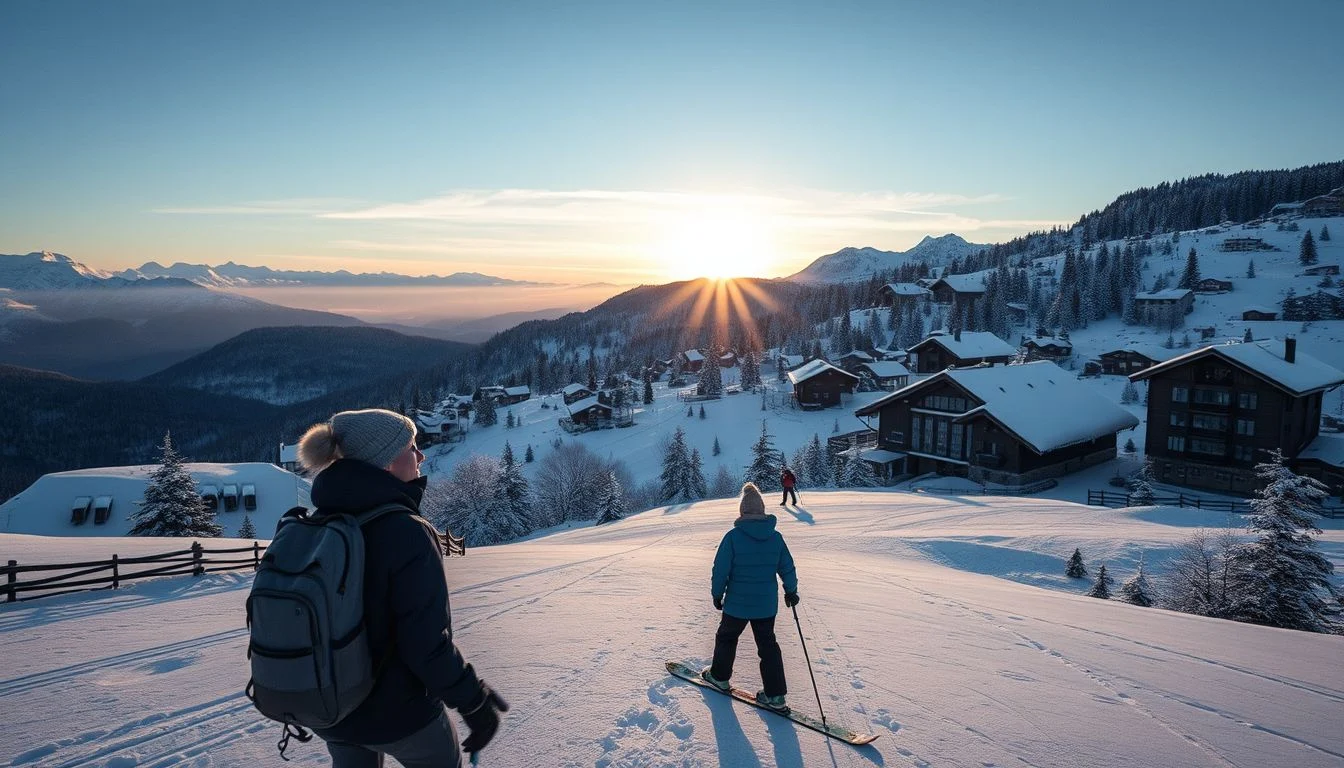
A typical ski-touring day can cover roughly 6–10 kilometres and several hundred to 1,500 or more metres of ascent, while an introductory ice-climbing session may keep you on a guided top-rope and dog sledding can provide a more accessible way into snowy landscapes. These are not interchangeable thrills: ski touring tests endurance, navigation and avalanche judgement; ice climbing adds ropework and technical movement; dog sledding offers scenic immersion with fewer sporting demands.
This guide is for fit beginners planning a first multi-activity trip, as well as experienced travellers comparing the Alps, Scandinavia, the Canadian Rockies and Alaska. For those searching for winter adventure ski touring ice climbing dog sledding, it sets out where each activity fits, how much effort and equipment it demands, when conditions are most dependable, and when independent travel is inappropriate. The practical recommendation is a progressive, guided three- to five-day itinerary, with local conditions, permits, operator standards and forecasts checked before booking.
Quick answer: For most fit beginners, combine dog sledding with a guided top-rope ice-climbing introduction and a conservative ski-touring day after avalanche preparation. Tromsø and the Lyngen Alps, Chamonix and the Alpine valleys, Banff and the Canadian Rockies, and Alaska offer strong frameworks, but snow, ice, operator dates, permits and avalanche conditions must be checked locally.
Why choose a three-part winter adventure?
The rhythm changes from one activity to the next. Skins grip beneath touring skis as a quiet slope rises towards a ridge; crampons scrape and ice tools bite into blue vertical ice; later, a team of sled dogs settles into its harnesses and carries you through a white landscape. That contrast is the appeal of a three-part winter adventure: each day asks for a different kind of attention.
Ski touring is the most physical and self-directed of the three. The reward comes from steady uphill effort, reading terrain and earning a descent away from the pistes. Ice climbing is shorter in distance but more technical, demanding movement, rope systems and disciplined decisions around changing ice. It is not simply a harder version of skiing; it is a high-consequence activity best approached on a guided top-rope introduction.
Dog sledding provides the gentlest entry point, with the landscape doing much of the travelling while you learn how a team works. Some outings also let guests help harness or drive the sled, but participation rules vary: operators may set age, weight, clothing or other limits, so check the practical information before booking.
For a fit beginner, the most useful progression is a guided three- to five-day trip: dog sledding first, a beginner ice-climbing session next, then a conservative ski-touring day after proper avalanche preparation. Tromsø and the Lyngen Alps, Chamonix and the Bernina region, the Canadian Rockies, and Alaska or Yukon can all frame such a trip, but no base reliably guarantees every activity in one visit. The right choice depends on which challenge you want to carry home: endurance, technique or a close view of winter working dogs.
Best places and routes for ski touring, ice climbing and dog sledding
Choose the destination around the activity you most want to develop. Chamonix and the Alpine valleys favour ski touring and hut-based progression; Tromsø makes the easiest three-part combination; Ouray is the clearest choice for a structured ice-climbing introduction. The table separates accessible instruction from objectives involving glaciers, ski mountaineering or multi-pitch climbing.
| Destination | Strongest activity | Suitable level | Usual winter window | Key caveat |
|---|---|---|---|---|
| Tromsø and the Lyngen Alps | Dog sledding with ski touring | Beginner to advanced | December–April | Operator calendars, snowpack and transport vary |
| Chamonix and the Alpine valleys | Ski touring and hut networks | Fit beginner with a guide to advanced | December–April | Glacier travel and alpine routes need specialist preparation |
| Bernina Range and Tour du Mont Blanc approaches | High-elevation touring | Advanced | Later winter to spring | Conditions, hut status and crevasse hazards can change quickly |
| Svalbard | Guided dog sledding and Arctic travel | Beginner to experienced | December–April | Wildlife, protected-area and tourism rules are particularly important |
| Talkeetna and Denali, Alaska | Mushing and large-scale glacier objectives | Introductory mushing to advanced mountaineering | December–May | Remote logistics and park commercial-use rules apply |
| Ouray Ice Park | Introductory and progressing ice climbing | Beginner to intermediate | Usually mid-winter to early spring | Check access and current ice before travelling |
| Banff and the Canadian Rockies | Ice climbing and ski touring | Guided beginner to advanced | December–April | Avalanche ratings and glacier objectives govern route choice |
| Mount Washington Valley and Pictured Rocks | Condition-dependent ice climbing | Beginner with instruction to experienced | Cold spells through winter | Warming can shorten the ice season and increase objective hazards |
The Tromsø–Lyngen pairing is the most practical choice for a first multi-activity trip: dog sledding supplies a lower-technicality day, while a local guide can match ski touring to the snowpack. One Tromsø operator listing ran from 1 December 2025 to 6 April 2026, a useful reminder that dates are operator-specific rather than guaranteed by the destination.
Reserve the Bernina Range, Denali and glacier-linked Chamonix objectives for parties with the relevant training. The UIAA notes that remote alpine objectives may involve transport logistics, glacier travel and crevasse-rescue preparation. For any Canadian route, read the Parks Canada avalanche guidance: HIGH or EXTREME danger is not a normal touring day, while CONSIDERABLE demands conservative terrain and disciplined group management.
Difficulty, fitness and safety: what each adventure demands
The useful dividing line is not excitement but consequence. Dog sledding is usually the most accessible introduction; ice climbing adds technical movement and exposure; ski touring combines sustained effort with route-finding, snow assessment and downhill skiing. Choose the sequence accordingly: start with mushing, take a guided top-rope clinic, then tour only after an avalanche briefing and a conservative weather window.
| Activity | Physical effort | Technical skill | Main hazards |
|---|---|---|---|
| Dog sledding | Lowest entry threshold, but cold exposure and long periods outdoors can be tiring. Drivers may need to stand, steer or help the dogs on longer experiences. | Usually low for passengers; a “musher for a day” format requires instruction, balance and attention to the team. | Cold injury, falls, changing weather and animal-handling risks. Check age, weight, clothing and participation limits with the operator. |
| Ice climbing | Short approaches can still be strenuous; swinging tools, front-pointing and holding body tension fatigue the arms and legs quickly. | A guided top-rope clinic can suit a first attempt. Leading, multi-pitch, mixed climbing, alpine routes and WI4 ice are different undertakings requiring established rope, protection and judgement skills. | Falls, failing ice, rockfall and rapid deterioration. The American Alpine Club documents ice climbing as a high-consequence activity; current ice and route information matters more than a published grade. |
| Ski touring | Highest combined commitment: uphill travel, transitions and a descent in variable snow. Typical examples run roughly 6–10 or more kilometres and several hundred to 1,500 or more metres of ascent, but route length and gain vary widely. | You need efficient uphill technique, competent off-piste skiing, navigation and the ability to make conservative decisions. Glacier objectives add crevasse-rescue preparation. | Avalanches, poor visibility, falls, exhaustion, crevasses and delayed rescue. A guide reduces the decision burden, not the objective risk. |
For ski touring, every member of the group needs an avalanche transceiver, probe and shovel, and must know how to use them. Avalanche Canada’s AvySavvy guidance stresses regular companion-rescue practice: carrying equipment without rehearsing is not a safety system.
Check the local forecast and danger rating before leaving, then match the route to the weakest member and the current conditions. Parks Canada guidance advises avoiding terrain when danger is HIGH or EXTREME; CONSIDERABLE calls for conservative terrain selection and strict group management. Agree a turnaround time, identify escape options, share a route plan and emergency contacts, and carry communications suitable for the area. Remote trips also warrant wilderness first-aid knowledge and a clear plan for a delayed rescue.
Ice conditions deserve the same restraint. Warming can shorten ice seasons and increase concerns about unstable ice or rockfall in some mid-latitude areas, so postpone a route when the guide reports deterioration rather than treating a booking as a guarantee. Dog-sled operators likewise publish practical participation rules; check them before paying, particularly if you need supplied winter clothing or cannot steer a sled.
Gear and preparation: pack light, rent intelligently
Build the kit around staying warm while moving, then add only the equipment required for the activity. A moisture-managing base layer, insulating mid-layer, waterproof outerwear, warm gloves with a spare pair, hat, eye protection, sunscreen, headlamp, water or a thermos, snacks, a small first-aid kit and a charged phone with backup power cover the common ground. Keep spare layers dry in a waterproof bag.
Ski touring kit
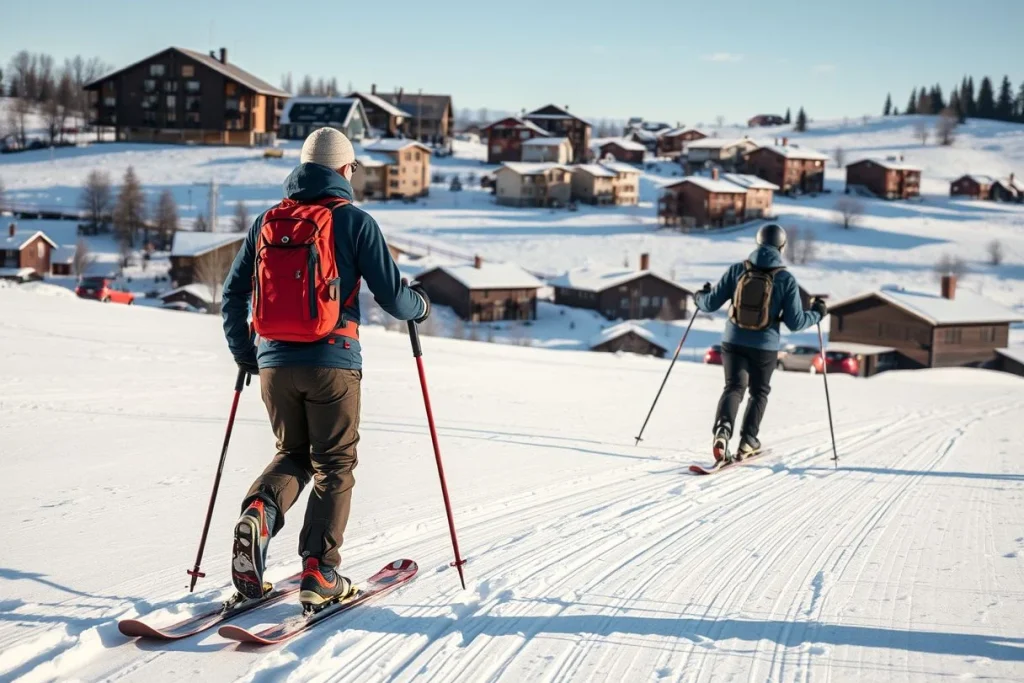
Touring requires skis or a splitboard, climbing skins, touring boots, poles and a repair kit, alongside navigation equipment. Every member of the group should carry an avalanche transceiver, probe and shovel, and know how to use them; Avalanche Canada’s AvySavvy guidance also stresses regular companion-rescue practice, not simply packing the equipment. Take an avalanche course before travelling, and practise with the beacon, probe and shovel before attempting a backcountry route.
Renting the ski setup and avalanche equipment can make sense for a first trip, provided a reputable shop or guide checks the fit and shows you the system. Remote objectives may add glacier-travel equipment and crevasse-rescue preparation, as well as transport logistics, so confirm the complete equipment list before leaving the valley.
Ice-climbing kit
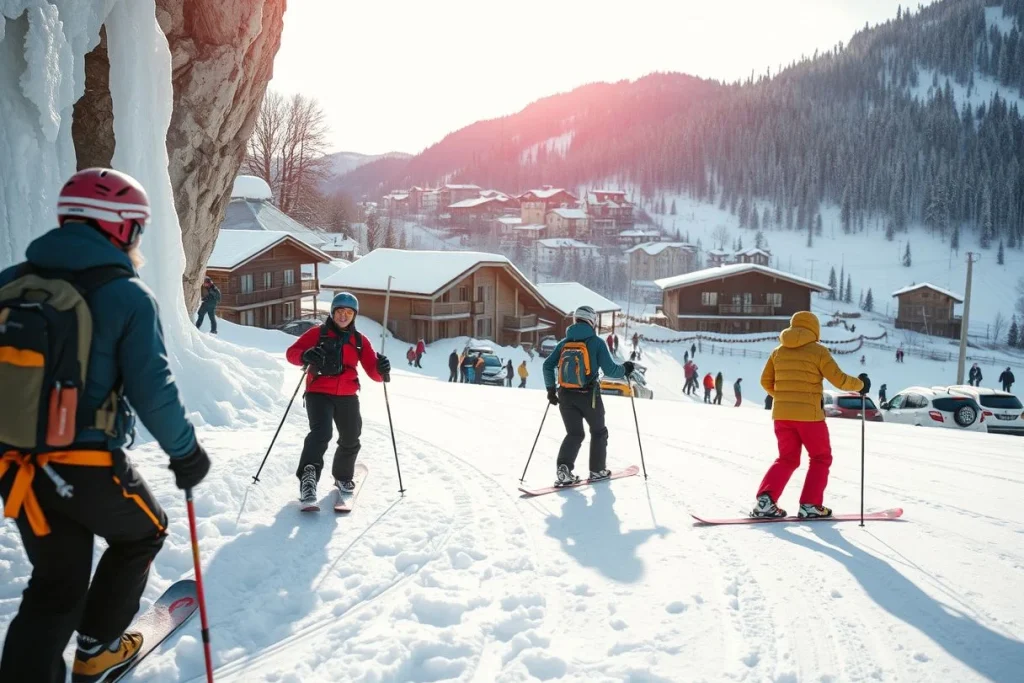
For a first clinic, let the guide select and supply the helmet, harness, crampons, ice axes, ropes and protection. Technical equipment is not a sensible first purchase before learning basic crampon movement, ice-tool technique and rope procedures. A guided top-rope introduction is a different proposition from leading, mixed climbing or a multi-pitch alpine route; the latter requires substantially more training and judgement.
Dog-sledding clothing
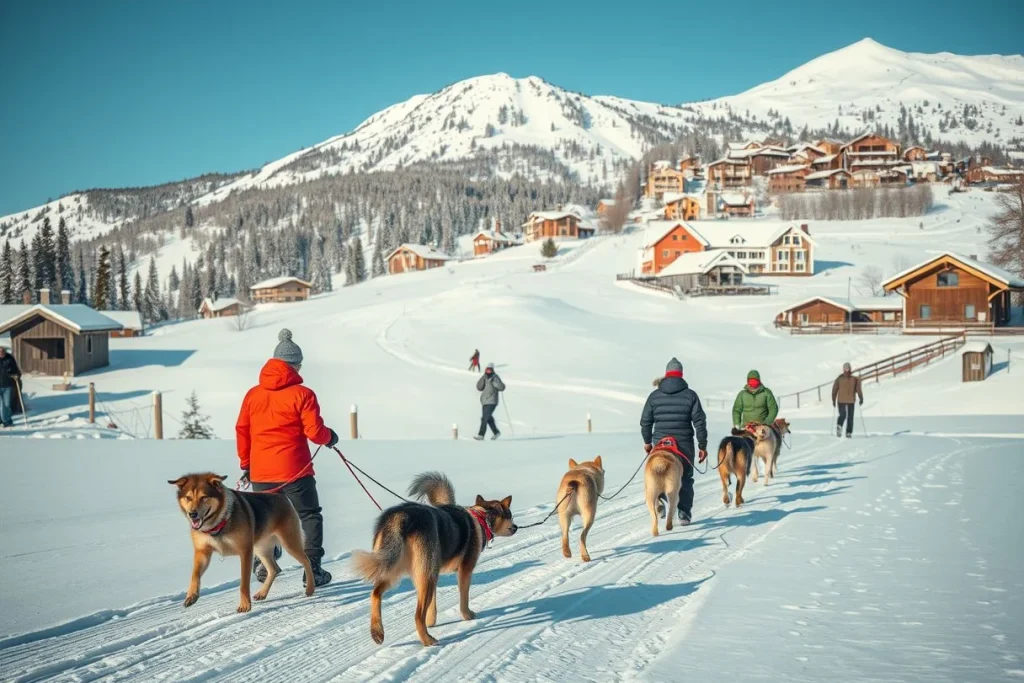
Ask the operator whether thermal suits, winter boots and mitts are included, rather than assuming ordinary ski clothing will be enough during a seated or slow-moving ride. Check age, weight and participation limits in the practical information before booking; some experiences also distinguish between steering a sled and riding as a passenger.
Preparation is straightforward but worthwhile: build aerobic fitness and tolerance for carrying a pack, practise downhill skiing before touring, and learn basic crampon and ice-tool technique with an instructor. For remote routes, add wilderness first-aid training and agree on communications, emergency contacts and a route plan with the guide.
Guided or independent? Match the format to the risk
The choice is less about preference than consequence. For a first winter adventure, book a guided combination: dog sledding for an accessible introduction, a top-rope ice-climbing session, then a conservative ski-touring day after an avalanche briefing. This keeps the three activities distinct without asking a newcomer to make independent decisions in avalanche or technical terrain.
| Format | Cost | Flexibility | Skills and safety margin | Logistics |
|---|---|---|---|---|
| Guided small group | Higher | Fixed route and pace | Best for beginners; local decisions and rescue planning are built in, but a guide does not remove objective risk | Often helps with equipment, transport and communications |
| Private guide | Highest | Most adaptable | Useful for a specific ability level, family group or technical objective | Can simplify shuttles, glacier logistics and route changes |
| Independent partners | Lower guide cost | Greatest, within conditions | Appropriate only for experienced partners with current avalanche education, route knowledge, rescue practice and conservative objectives | You arrange permits, forecasts, navigation, emergency plans and all transport |
Use a guide for first-time ski touring, all introductory ice climbing, glacier travel, avalanche terrain, Svalbard and remote Alaska or Denali objectives. Ice climbing is a high-consequence technical activity: the American Alpine Club’s incident guidance highlights the need for appropriate leader skills, reliable protection and conservative decisions as conditions deteriorate. For ski touring, check the local avalanche bulletin every day; Parks Canada advises avoiding areas rated HIGH or EXTREME, while CONSIDERABLE calls for conservative terrain and careful group management.
Before paying a deposit, ask the operator about the guide’s qualification, group ratio, planned terrain grade, rescue plan, emergency communications, equipment and transport. Confirm what happens if weather, avalanche conditions or unsafe ice cancel the objective, and whether the day is a top-rope introduction rather than leading, mixed or multi-pitch climbing.
Permits can change the equation. Protected areas may require commercial-use authorisation for guided activities or particular transport modes. Check the Denali National Park and Preserve rules, Svalbard tourism and wildlife guidance, Parks Canada requirements and local access restrictions directly before booking. Dog-sled operators may also set age, weight, clothing or participation limits, so read their practical information rather than assuming a standard excursion.
Best time to plan your winter adventure
There is no single best winter month for ski touring, ice climbing and dog sledding. For many northern-hemisphere destinations, plan around mid-December to mid-April, then adjust for altitude, latitude and the activity you value most. Snowpack, ice formation, daylight and operator calendars can change locally.
December to February: deep winter atmosphere
This is the strongest window for a classic northern winter: dark forests, dependable cold in many regions and dog-sledding in popular hubs. It also brings shorter daylight in Tromsø and other far-northern destinations, higher demand and less flexibility if an excursion is cancelled. A Tromsø listing on Visit Norway illustrates the point: its published season ran from 1 December 2025 to 6 April 2026, rather than operating year-round.
March and April: longer days, changing snow
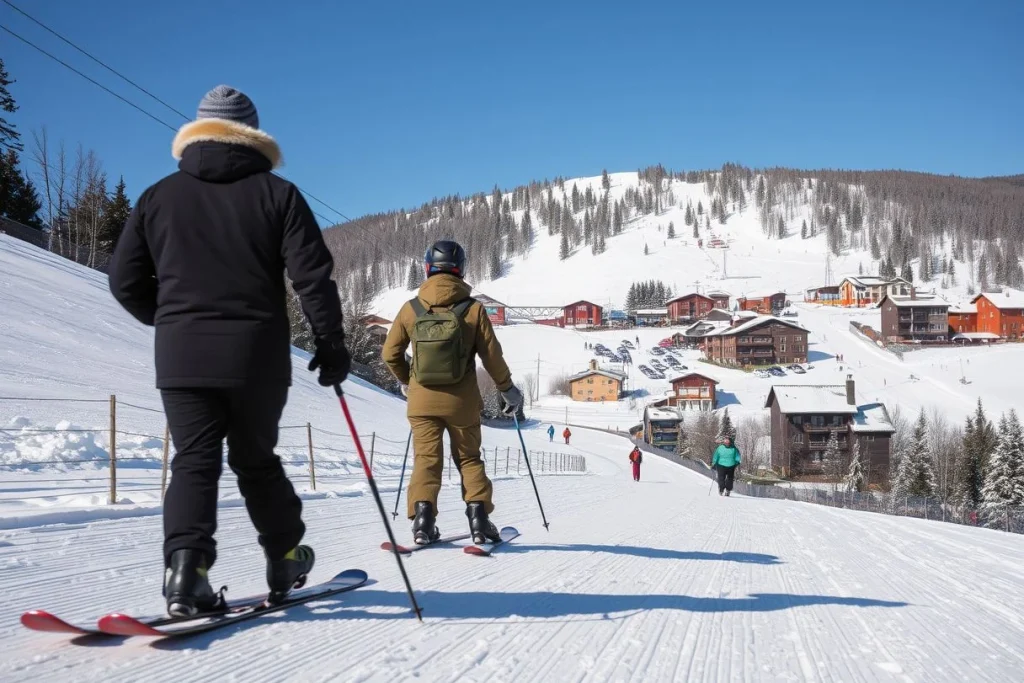
Choose this period for more usable daylight and, at suitable elevations, enjoyable spring ski touring. The Alps are commonly toured from December through April; Scandinavia often works through March or April, while Alaska and the Canadian Rockies may offer touring into May. Those are broad planning windows, not guarantees. Warming can weaken ice, increase rockfall concerns and alter avalanche conditions; climbing organisations have reported shorter or less reliable ice seasons in some mid-latitude areas.
When to book
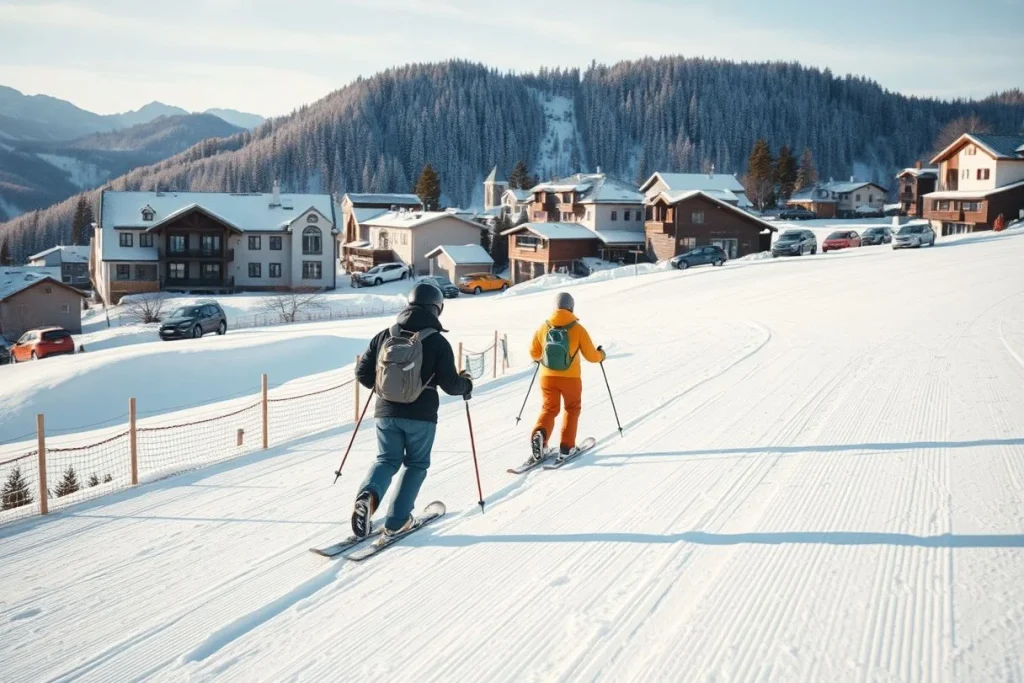
For a first multi-activity trip, late February through March can offer a practical compromise between winter conditions and daylight, provided local forecasts support it. December to February suits travellers prioritising dog sledding and deep-winter scenery; April is better for a high, guided ski-touring objective than for relying on low-elevation ice.
Before committing, check the destination’s live snow and ice reports, avalanche forecast, daylight, hut status, closures and operator calendar. Recheck them immediately before each activity. Iditarod- and Yukon-related mushing traditions add cultural context, but race dates, access and associated events should be verified with official organisers rather than assumed.
Travel costs: dated estimates for a winter adventure
Activity prices vary sharply by destination, guide ratio and what is included. The figures below are per person and are useful for comparing the three disciplines, not for pricing a complete holiday; accommodation, flights and transfers must be added separately.
Estimated costs
| Indicative USD estimates, research checked September 2026 | Budget | Mid-range | Luxury |
|---|---|---|---|
| Dog sledding | US$70–$150 for a short ride or half-day experience | US$150–$350 for a 3–4-hour guided experience | US$1,500–$5,000+ for a multi-day or private expedition |
| Guided ski touring | US$150–$300 for an introductory half-day or day, with basic rental | US$600–$1,500 for a three-day guided hut-to-hut or alpine itinerary | US$2,000–$10,000+ for private-guide, heli-assisted or remote-lodge trips |
| Ice climbing | US$75–$150 for a half-day introductory clinic | US$200–$450 for a full-day route or two-day clinic with equipment rental | US$1,000+ per person per day for a private alpine objective |
Dog-sled short-ride figures reflect Alaska listings collated by Alaska.org and checked in September 2026; the multi-day estimate comes from a 2024 operator document and needs rechecking for 2026–27. Ski-touring estimates are representative 2024–26 market ranges, while ice-climbing figures draw on representative 2023–25 guiding rates, including guidance discussed by the American Alpine Club.
Your final price is driven by guide-to-client ratio, equipment rental, meals, huts, transport, permits, insurance and weather-related changes. Ask for a current quote from the operator, check park authorities for commercial-use permits, and confirm the cancellation policy before booking. For a realistic trip budget, add those activity costs to lodging and regional transport rather than treating any row as an all-inclusive package.
| Item | Budget | Mid-range | Luxury |
|---|---|---|---|
| Dog sledding half-day or short ride | Approximately US$70–$150 per person | Approximately US$150–$350 per person for a 3–4-hour guided experience, depending on region and transport | Not supported by this source alone; use a separately dated private or multi-day operator quote |
| Dog-sled multi-day or private experience | Not supported | Not supported | Approximately US$1,500–$5,000+ per person for multi-day mushing expeditions or full-board packages |
| Guided ski touring | Approximately US$150–$300 per person for an introductory half-day or day with guide and basic rental | Approximately US$600–$1,500 per person for a 3-day guided hut-to-hut or alpine itinerary with some accommodation and meals | Approximately US$2,000–$10,000+ per person for private-guide, heli-assisted or remote-lodge-based trips |
| Ice-climbing clinic or guided route | Approximately US$75–$150 per person for a half-day introductory clinic | Approximately US$200–$450 per person for a full-day guided route or two-day clinic with equipment rental | US$1,000+ per person per day for private alpine objectives or big-mountain guided lines |
Estimated ranges based on the sources listed below. Prices change; check with providers before booking.
Conclusion: start with the right progression
For most fit beginners, book a progressive three- to five-day winter adventure rather than trying to master all three activities at once. Start with dog sledding for an accessible introduction to snow travel, add a guided top-rope ice-climbing session for technical novelty, and finish with a conservative ski-touring day only after avalanche instruction and an honest check of your downhill fitness.
Tromsø and the Lyngen Alps suit this sequence particularly well; Chamonix, Banff and Alaska make stronger choices when ski touring or alpine climbing is the main objective. Experienced travellers should choose the region around their strongest goal, then add the other activities only if snow, ice and operator calendars align.
Shortlist two regions now. Ask operators for current dates, inclusions, equipment, transfer arrangements and guide ratios; then check local forecasts, protected-area permits and cancellation terms before booking flights. If travelling between December and February, reserve the guide before accommodation, as popular winter dates require the least flexibility.
Frequently asked questions
Can I combine all three activities in one winter trip?
Yes, but plan them as different levels of commitment rather than three interchangeable excursions. Tromsø and the Lyngen Alps offer a practical combination of seasonal dog sledding and ski touring, while Chamonix, Banff and Alaska provide broader alpine options. For a first trip, place dog sledding on an easier day, take a guided top-rope ice-climbing introduction, then attempt ski touring only after avalanche preparation and a local conditions check.
What should I do if the weather or avalanche forecast changes after I arrive?
Treat the forecast as a decision tool, not an inconvenience. Parks Canada guidance recommends avoiding travel in areas rated HIGH or EXTREME; CONSIDERABLE requires conservative terrain choices and careful group management. Ask your guide or the local avalanche service to reassess the route, and be prepared to replace touring or climbing with a lower-risk activity when conditions, closures or ice quality deteriorate.
Is dog sledding physically demanding for passengers?
A short passenger ride is generally more accessible than ski touring or ice climbing, but the activity format varies. Some operators offer a ride or kennel visit, while others involve passengers in mushing; participation requirements can include age, weight, clothing or other limits. Read the operator’s practical information carefully, including what you will be expected to do and what clothing or transport is provided.
How do I assess whether a dog-sled operator treats its dogs responsibly?
Start with the operator’s published animal-welfare information and practical guidance, then ask specific questions before booking: how the dogs are housed, rested and checked, and what happens when a dog cannot work. Visit Norway listings show that operator information and participation conditions can differ, while Svalbard tourism guidance highlights the importance of following local rules. Do not book until the answers and policies are clear.
Can I try ice climbing if I have only indoor climbing experience?
Yes, an indoor climbing background can help with movement and comfort on a rope, but it does not qualify you to lead ice or choose an alpine route independently. Book a guided introductory clinic or top-rope session, and let the guide select terrain according to current ice conditions. Ice climbing remains a high-consequence activity requiring suitable leader skills, reliable protection and conservative decisions as conditions change.
What communications plan is sensible for a remote winter day?
Leave a written route plan with a trusted contact, including the group, intended route, return time and emergency contacts, and confirm how the plan will be updated if conditions change. Ask the guide or park authority about the area’s communications and rescue arrangements before setting out. Remote ski objectives may involve shuttles, glacier travel and crevasse-rescue preparation, so a mobile phone alone should not be treated as a complete plan.