A hawker-centre meal in Singapore is estimated at S$3–8 in 2026, making Maxwell Food Centre or Lau Pa Sat the natural starting point for a careful food budget. The bigger cost is usually the bed: dormitory hostel beds commonly list at S$23–40 a night, while a basic private room is around S$55–110.
This Singapore on a budget guide is for backpackers, dorm travellers and value-conscious first-time visitors choosing between shared accommodation and privacy. It sets out dated daily cost ranges, shows when public transport passes genuinely save money, and builds a low-cost plan around hawker centres, walkable neighbourhoods and free sights. The aim is not to cut every small pleasure, but to make clear where paying more helps—and where it does not.
Quick answer: In 2026, allow about S$35–90 per person per day with a dorm, hawker meals, public transport and limited activities, or S$90–150 with a basic private room. A S$50 day is possible with low-cost accommodation and mostly free sights; hawker meals are estimated at S$3–8 and MRT or bus trips at approximately S$0.80–2.80.
Singapore daily budget: realistic costs for dorms and private rooms
Use the room choice as the first line in your Singapore budget. A dorm-and-hawker trip can work at the lower end of the range, while a basic private room moves the daily allowance into a different bracket.
| Estimated costs: Singapore daily budget | ||
|---|---|---|
| Travel style | Per person per day | Includes |
| Dorm and hawker | S$35–90 | Dorm accommodation, two or three hawker meals, local transport and limited activities |
| Basic private room | S$90–150 | Private room, hawker meals, local transport and selected activities |
Basis and date: these are compiled 2026 estimates. The dorm range comes from Exploresg.net’s 2026 budget guide; the private-room range comes from Luxstay’s guide reviewed on 8 May 2026. Neither figure includes flights, shopping, nightlife or travel insurance.
The S$35 starting point is a constrained floor, not a guaranteed minimum. It assumes a low-end dorm, inexpensive hawker meals, mostly walking, public transport when needed and free sights; a dorm bed itself commonly lists at approximately S$23–40 per person per night in 2026 listings. At the comfortable end of the dorm range, you have more room for longer journeys, drinks or an occasional paid activity.
A S$50 day is therefore possible, but only with deliberate choices: stay in a lower-priced dorm, keep food to hawker centres, and build the day around places such as Marina Bay, Chinatown or the Singapore Botanic Gardens. A more relaxed day—with a higher-priced bed, extra MRT journeys or a paid attraction—belongs nearer the upper part of the dorm range. Hawker meals are estimated at S$3–8 each, while distance-based MRT and bus trips are approximately S$0.80–2.80 in 2026 reporting.
Private-room travellers should treat S$90–150 as a planning range rather than a promise. Basic one- or two-star rooms commonly list at approximately S$55–110 per room per night in 2026 listings, before the rest of the day’s spending. Check live accommodation and transport prices immediately before booking, since both vary by property, dates and current operator terms.
| Item | Budget | Mid-range | Luxury |
|---|---|---|---|
| Backpacker or dorm-and-hawker daily budget | S$35–90 per person per day | — | — |
| Budget private-room daily budget | S$90–150 per person per day | — | — |
| Dormitory hostel bed | S$23–40 | — | — |
| Budget private room | S$55–110 | — | — |
| Hawker-centre meal | S$3–8 | — | — |
| Daily hawker-food allowance | S$10–20 | — | — |
| MRT or bus single journey | Approximately S$0.80–2.80 | — | — |
| Singapore Tourist Pass | S$17 net for one day; S$24 net for two days; S$29 net for three days | — | — |
| Taxi from Changi Airport to central Singapore | Approximately S$20–35 | — | — |
Estimated ranges based on the sources listed below. Prices change; check with providers before booking.
When Singapore offers better value: peak dates, shoulder periods and weather
For better value, start with your dates rather than assuming Singapore has one cheap season. June, July, August and December are identified as higher-demand months in the brief, so accommodation rates can vary sharply around your exact dates. Shoulder-season travel may improve your choices, but it is not a guarantee of lower prices; compare several date combinations and check Singapore’s event calendar before booking.
Singapore is hot and humid year-round. Glide’s 2026 travel guide notes heavier showers during the northeast monsoon from November to March, with inter-monsoon conditions in parts of April, May and October. Rain is more than an inconvenience on a tight budget: it can turn a planned walking day into extra transport or an unplanned indoor attraction.
Choose accommodation with free cancellation where the rate difference is reasonable, then recheck the booking as your trip approaches. Build a wet-weather alternative around hawker centres, covered passages and museums only after checking current access and prices. Before departure, verify the forecast, event dates and live room rates; exact demand depends on the week, school holidays and major events.
Saving on accommodation: dorms, private rooms and cheaper neighbourhoods
Accommodation is usually the largest controllable cost in Singapore. In 2026 listings compiled by Pack Lightly, a dormitory bed is approximately S$23–40 per person per night, while a basic one- or two-star private room is approximately S$55–110 per room per night. The second figure is not per traveller: two people sharing could divide the room cost, although taxes, fees and the property’s occupancy rules still need checking.
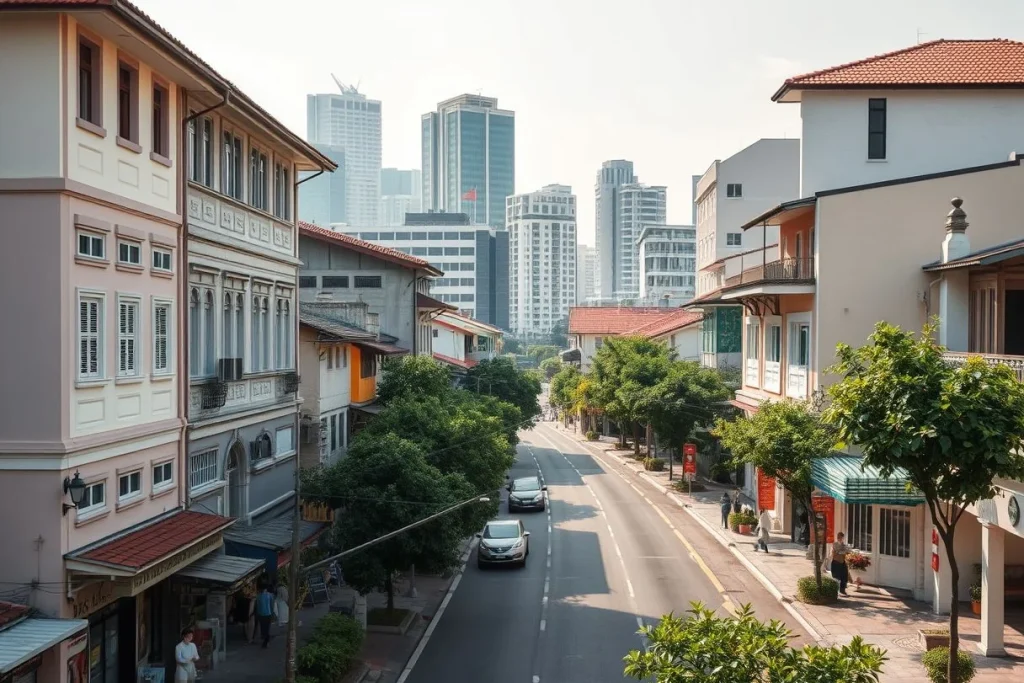
Choose the neighbourhood around your daily pattern rather than chasing the lowest headline rate. Lavender is a practical base for travellers who want straightforward public-transport connections and inexpensive food nearby, with less central atmosphere. Geylang can suit independent travellers focused on eating and value, but its character is busier and more local than the waterfront districts. Little India combines food access with a walkable cultural setting; Chinatown is convenient for central sightseeing and hawker meals, but centrality can affect rates. Kampong Glam works well for cafés, street life and an easy neighbourhood walk, though it may not be the quietest choice.
For a dorm, prioritise a locker, reliable air-conditioning and a late check-in policy. For a private room, check whether the bathroom is private and read recent reviews for noise and cleanliness rather than assuming a low star category explains everything. Compare the final price after taxes and fees, cancellation conditions and payment timing; a slightly less central property beside an MRT station can cost less without adding much travel friction.
These are listing snapshots, not fixed Singapore hostel prices. Recheck live inventory for your exact dates, particularly around school holidays, major events and the peak months identified in the preceding section. A cancellable booking can preserve flexibility, but confirm the deadline and refund conditions before relying on it.
Getting from Changi Airport to the city without overspending
From Changi Airport, compare the cost of public transport with the convenience of a ride-hailing service or taxi before leaving the terminal. A taxi to central Singapore is estimated at approximately S$20–35 per journey in 2026, depending on vehicle type and surcharges, according to Pack Lightly’s 2026 budget guide. That can absorb much of a tightly planned daily budget, particularly for a solo traveller.
Public transport is usually the value option when your arrival time, luggage and accommodation check-in allow it, but do not assume the cheapest connection runs conveniently late at night. Check current airport transport options, operating hours and taxi surcharges with Changi Airport and the relevant official transport operators before travelling.
For a late arrival, compare the transfer price with one night in a basic private room, and weigh both against the risk of missing the last practical connection. Confirm your accommodation’s late check-in policy before choosing the cheapest route; a modestly more expensive transfer may be cheaper than losing a prepaid room.
Saving on transport: MRT, buses and the Singapore Tourist Pass
For most visitors, Singapore public transport is the budget default: distance-based MRT and bus journeys are typically approximately S$0.80–2.80 per trip, according to 2026 reporting from SingaporeMRTMaps. The saving comes from planning by neighbourhood, not from crossing the island for every sight.
Choose the payment method that matches your day
| Option | Best for | Budget decision |
|---|---|---|
| Pay-as-you-go | Walkable days with a few rides | Usually the sensible starting point when you expect fewer than about six journeys |
| SimplyGo or EZ-Link | Travellers who prefer a stored-value or transport card | Check current purchase, top-up and usage rules with LTA or TransitLink |
| Singapore Tourist Pass | Heavy-travel days across several areas | Potentially worthwhile at approximately six or more rides in one day |
Fare and product guidance checked against 2026 reporting; confirm live terms with Singapore’s Land Transport Authority or TransitLink before travelling.
The Singapore Tourist Pass is commonly reported at net prices of S$17 for one day, S$24 for two days and S$29 for three days, assuming the standard card’s refundable S$10 deposit is returned. SingaporeTickets.Guide reports these 2026 figures, but verify the current gross price, deposit, eligibility, purchase points and return locations before buying. Return the standard pass according to the operator’s current terms or the deposit may not be refunded.
Use the pass for a day that combines distant stops, repeated changes and a return journey. It is poor value on a compact itinerary centred on Marina Bay, Chinatown or Kampong Glam, where walking can replace several rides; 2026 guidance from SGHere places the rough break-even point at about six public-transport journeys in a day.
Check whether your current contactless bank card can be used directly, and compare that arrangement with SimplyGo or EZ-Link before tapping in. Payment acceptance, card compatibility and fare rules can change, so use current LTA or TransitLink guidance rather than relying on an older blog or assuming every foreign card will work.
Plan days in clusters: combine Marina Bay and the Merlion with the Esplanade, then walk where practical; reserve another route for Chinatown and nearby sights, and a separate one for Kampong Glam. Buses can be useful for scenic, cross-neighbourhood connections, while taxis are best treated as an occasional convenience for late nights, groups or situations where airport luggage makes public transport impractical.
Eating well for less: hawker centres, markets and drink savings
Eating well for less: hawker centres, markets and drink savings
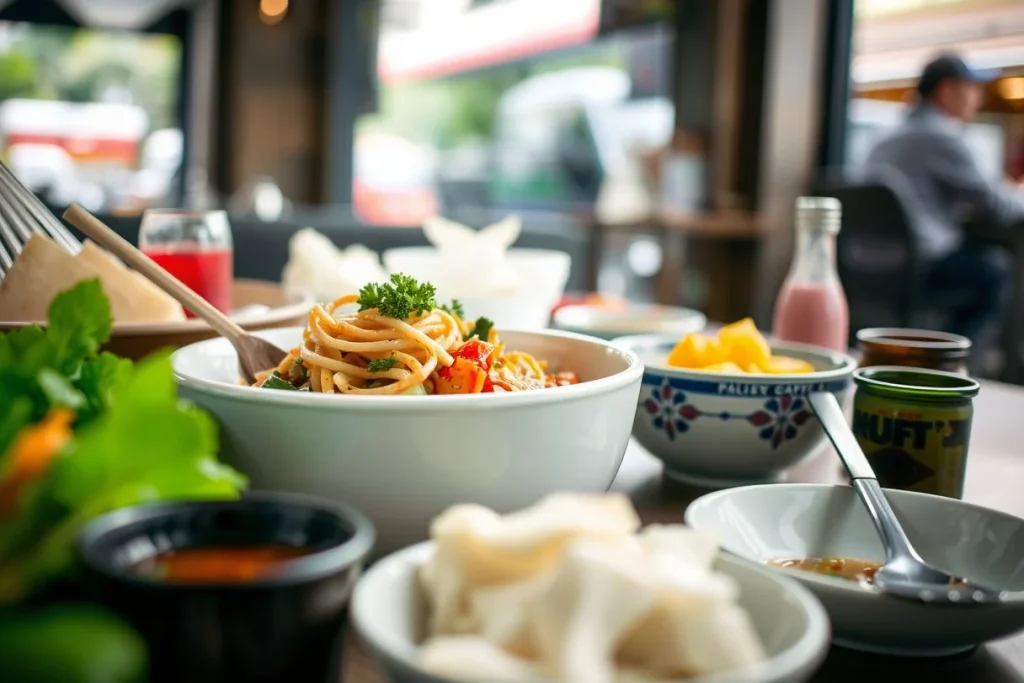
Plan on S$3–8 per hawker-centre meal, or roughly S$10–20 per person per day for two or three meals. These are compiled 2026 estimates from Best in Singapore, not an official national average. Treat S$10 as a practical lower allowance, not a guaranteed food minimum. Hawker centres bring multiple stalls together around a shared eating area, so you can compare dishes while keeping your Singapore budget visible.
Maxwell Food Centre makes sense if you’re already around Chinatown; Lau Pa Sat is a central option near Marina Bay. That convenience can save a detour. Still, don’t assume every Lau Pa Sat stall is equally cheap: compare displayed menus before ordering. The 2026 estimate cited by Best in Singapore covers hawker-centre meals generally, not every stall or dish.
Food-focused travellers can go farther to Old Airport Road Food Centre or Adam Road Food Centre. The journey adds transport and time, so the saving only makes sense when the food stop fits your route rather than becoming a special cross-city excursion. At any centre, a queue may point to a popular stall, but it doesn’t guarantee quality, value or suitability for dietary needs.
Make most meals hawker-centre meals, then choose one paid restaurant meal selectively instead of eating at restaurants by default. That keeps the allowance predictable. Ask stall staff about ingredients and preparation if you have allergies or dietary restrictions, and check the total before ordering. Prices change, so recheck menus on arrival; according to Best in Singapore, the estimate was current for 2026.
Free and cheap things to do in Singapore
Start with a free Marina Bay walk
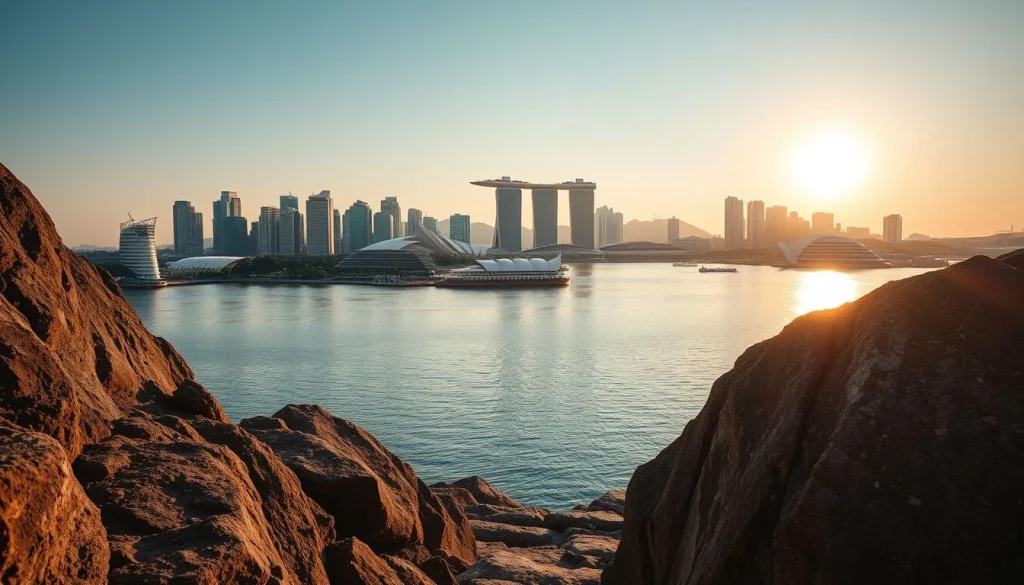
Build a sightseeing day around the Marina Bay promenade, Merlion Park, the exterior of the Esplanade and the Civic District. These landmarks can be linked on foot without an attraction ticket, making the route a strong choice when your Singapore daily budget is tight. Continue to Gardens by the Bay for the Supertree Grove light-and-music show, described as free in 2026 coverage by Trip.com; the conservatories and other Gardens attractions are separate paid experiences.
Choose one garden or neighbourhood cluster
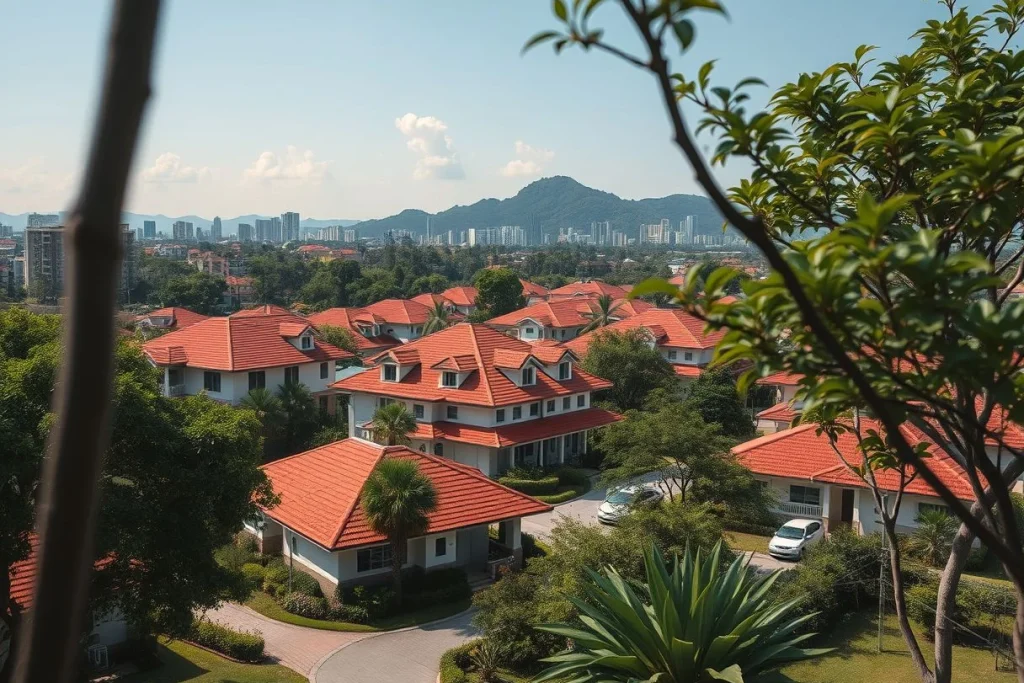
The Singapore Botanic Gardens offers a free general garden visit, according to ExploreSG’s 2026 budget guide. The National Orchid Garden and special exhibitions may charge separately, so check the garden’s official visitor information before setting out.
For a more urban day, walk through Chinatown, Little India or Kampong Glam. Each supplies architecture, shopfronts and street life without a sightseeing ticket, and you can finish near public transport rather than paying for a taxi between districts. Trip.com’s 2026 coverage also identifies these neighbourhood walks as free or low-cost options.
Use Sentosa selectively
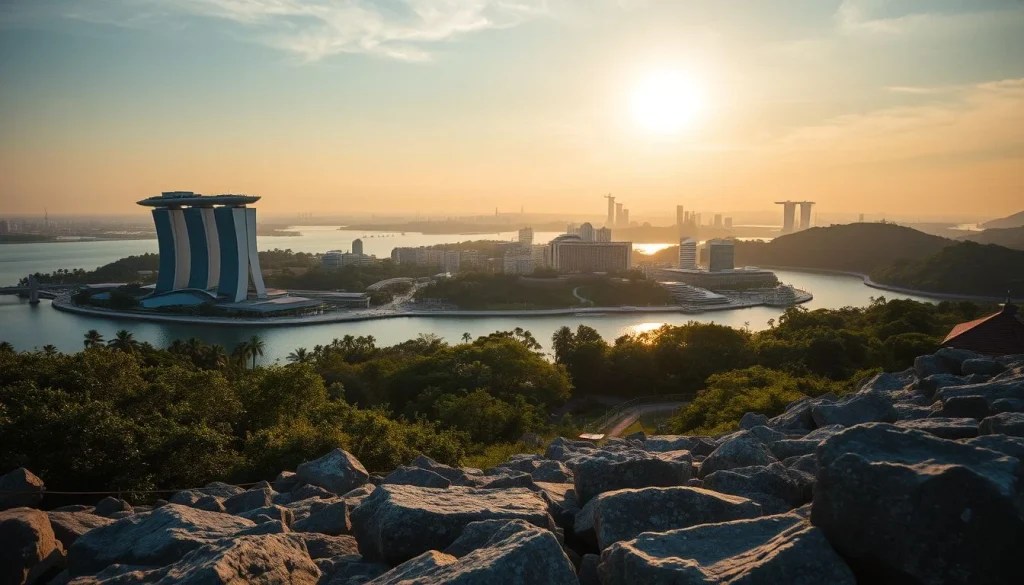
The Sentosa Boardwalk provides free on-foot access to the island, according to ExploreSG’s 2026 guide. Treat Sentosa as a walk and waterfront outing unless a particular paid attraction is the reason for your visit; island activities and admissions are not included in that free access.
A practical no-ticket day is Marina Bay in the daytime, the Supertree Grove show later, then Chinatown, Little India or Kampong Glam on another day. Pay for one attraction only when it adds something you specifically want, and verify show times, closures, access conditions and current admission charges on the relevant official websites before travelling.
Travel tips that protect your Singapore budget
- Return the Tourist Pass. The commonly reported 2026 net prices assume the standard pass’s refundable S$10 deposit is returned. Keep the card until you have followed the current operator’s return procedure; otherwise that deposit becomes an avoidable loss. Check the latest terms with the Singapore Tourist Pass operator before buying.
- Separate free areas from paid attractions. A free outdoor visit does not make every adjoining attraction free: conservatories, special exhibitions and areas such as the National Orchid Garden may charge separately. Confirm access and admission on each attraction’s official website.
- Inspect the room details, not only the nightly rate. Before booking, check for air-conditioning, a usable locker, late check-in arrangements and the property’s location near an MRT or bus stop. A cheaper room can cost more in time, transport or replacement plans if these basics are unclear.
- Do not default to taxis. Short journeys are often better handled by walking, the MRT or a bus; the 2026 estimate for a taxi from Changi Airport to central Singapore is approximately S$20–35, with vehicle type and surcharges affecting the total.
- Build in weather breaks. Singapore is hot and humid year-round, with heavier showers associated with the northeast monsoon from November to March. Carry water, use shade, pack a compact rain layer and check the forecast before committing to a long outdoor walk.
- Keep a small cash reserve. Use a currently accepted card or contactless method where confirmed, but retain some Singapore dollars for hawker-centre contingencies. Check current payment guidance rather than assuming every stall accepts cards.
- Verify rules before departure. Check official Singapore government guidance for current laws, fines, transport restrictions and chewing-gum rules; travel blogs can be outdated.
Before publication or departure: recheck live accommodation, food, transport-pass, fare and airport-transfer information, plus attraction charges and official rules. Prices and operating terms can change after the 2026 estimates above.
The practical verdict: choose your room first, then build around free sights
Use S$35–90 per person per day as a planning framework for a dorm-based Singapore trip, or S$90–150 for a basic private room—not as a guaranteed minimum. These are 2026 estimates from ExploreSG and a private-room guide reviewed on 8 May 2026, and your dates can shift the accommodation total substantially.
Price the room first, then build the itinerary around hawker meals, public transport, free sights and only one or two paid highlights. That approach protects your budget without reducing Singapore to a checklist of no-cost activities. Before booking, recheck live room rates, MRT fares, Singapore Tourist Pass terms, attraction access and Changi transfer prices with the relevant official operators, including any refundable deposit conditions.
Frequently asked questions
Which neighbourhood is best for a first-time budget traveller in Singapore?
Chinatown is a practical first base for a budget itinerary because it combines a walkable neighbourhood route with Maxwell Food Centre and access to central sights. Little India and Kampong Glam are strong alternatives if you prioritise cultural walks and low-cost food. Compare current room rates before booking: dorm beds are commonly estimated at S$23–40 per night in 2026 listings, according to Pack Lightly’s 2026 guide.
How many days do I need to see Singapore without rushing?
The cited sources do not establish a fixed number of days. Plan by grouping nearby, free areas rather than crossing the city repeatedly: Marina Bay, Merlion Park and the Esplanade can form one walk, while Chinatown, Little India and Kampong Glam each work as neighbourhood visits. Add Singapore Botanic Gardens separately, and check current access details before fixing your itinerary.
Can I combine free attractions with a beach day on Sentosa?
Yes. The Sentosa Boardwalk provides a free walking route onto the island, so it can anchor a low-cost day before you choose whether to pay for any island attractions. The cited guidance does not confirm current charges or conditions for every beach or activity, so check Sentosa’s official information before travelling. Keep the return journey and any paid extras separate from your free-sightseeing budget.
What should I pack for walking around Singapore in the heat and rain?
Pack lightweight clothing, comfortable walking shoes, sun protection and a compact rain layer or umbrella. Singapore is hot and humid year-round, while heavier showers are associated with the northeast monsoon from November to March; inter-monsoon showers can also occur in parts of April, May and October, according to Glide’s travel-cost guide. Check current weather guidance before long outdoor walks.
Are Singapore hawker centres suitable for solo travellers?
Yes: a solo traveller can keep meals flexible by ordering one dish at a time, with a typical hawker-centre meal estimated at S$3–8 in 2026. Maxwell Food Centre, Lau Pa Sat, Old Airport Road Food Centre and Adam Road Food Centre are useful named options, although stall prices vary. The estimate comes from Best in Singapore and is a compiled guide figure, not an official national average.
Which sights are worth paying for if most of my itinerary is free?
Choose one paid experience that adds something different to the free walks. The Gardens by the Bay conservatories are the clearest contrast to the free Supertree Grove light-and-music show; the National Orchid Garden is another option alongside the free Singapore Botanic Gardens. Current admission charges can change, so check the official Gardens by the Bay and Botanic Gardens websites before deciding.