At Jewel Changi Airport, Singapore’s Rain Vortex is free to view; Canopy Park above it is ticketed. That contrast captures Singapore on a budget: some of the city’s most memorable stops cost nothing, while a single paid attraction or poorly timed hotel booking can change the day’s total quickly.
For budget-conscious first-time visitors, backpackers and independent travellers, the useful question is not simply how much Singapore costs, but which trade-offs preserve convenience. Three dated 2026 spending plans show what goes on accommodation, hawker food, public transport and attractions, then compare dorms with private rooms, ordinary MRT fares with the Singapore Tourist Pass, and free walks with paid highlights. You’ll also find practical ways to keep a S$50 day achievable, including where to eat cheaply and when peak demand in June, July, August, December or around Formula 1 can undermine an otherwise careful plan.
Quick answer: In 2026, Singapore costs about S$35–55 per person per day for a dorm, hawker meals and mainly free attractions. A modest plan costs about S$55–95, while comfort-on-a-budget travel costs S$95–120 or more; S$50 a day is possible, but leaves little room for paid attractions or expensive accommodation.
Singapore daily budget: three dated spending plans for 2026
Singapore on a budget is realistic, but the accommodation choice sets the floor. The estimates below are per person per day and use 2026 price checks; accommodation figures inside the plans are not directly comparable with room rates, which are quoted per room.
| Estimated plan | Estimated daily cost | What the plan assumes |
|---|---|---|
| Shoestring | S$35–55 | Dorm bed, hawker meals and mainly free attractions, based on 2026 guides from exploresg.net |
| Modest | S$55–95 | Budget private room or inexpensive hotel, low-cost meals and one paid attraction, based on 2026 estimates from Singapore Spirit |
| Comfort-on-a-budget | S$95–120+ | Three-star hotel or well-located private room, restaurant meals and some paid attractions, based on 2026 estimates from Singapore Spirit |
Basis: estimated per-person daily costs, using 2026 price checks and guides; the figures exclude international flights, travel insurance, shopping, nightlife and visa-related costs.
For the shoestring plan, a hostel dorm commonly lists at around S$25–50 per person per night in 2026, according to Brokepackr’s 2026 listings. That leaves a tight remainder for meals, transport and activities. A private room or two- to three-star hotel is around S$70–160 per room per night in 2026, according to 2026 hotel price checks compiled by SMU Global Summer Programme; divide that room cost between travellers only if the room’s occupancy rules allow it.
Food is easiest to control. A hawker-centre dish is approximately S$4–8, based on 2024–2026 reporting and 2026 checks from JNP Travel, while a hawker-focused day is estimated at S$15–25 and a mixed day at S$25–45 by Singapore East’s 2026 breakdown. Stalls set their own prices, so treat these as planning ranges rather than a guaranteed tariff.
Public transport keeps sightseeing manageable: adult distance-based MRT and bus fares run from S$1.28 to approximately S$2.57 per journey under the fare table effective 27 December 2025, as reported by SingaporeCity360 and checked in 2026. S$50 a day is therefore possible, particularly for a solo traveller in a dorm who eats at hawker centres and builds days around free sights. It leaves little room for paid experiences, private accommodation or costly transport choices, so check live room rates for exact dates before booking.
| Item | Budget | Mid-range | Luxury |
|---|---|---|---|
| Shoestring/backpacker daily budget | S$35–55 per person per day | — | — |
| Modest budget daily spend | — | S$55–95 per person per day | — |
| Comfort-on-a-budget daily spend | — | — | S$95–120+ per person per day |
| Hostel dorm bed | S$25–50 | — | — |
| Budget private room or 2–3-star hotel | S$70–100 | S$100–160 | — |
| Hawker-centre meal | S$4–8 | — | — |
| Hawker-focused daily food budget | S$15–25 | — | — |
| Mixed daily food budget | — | S$25–45 | — |
| Adult MRT or bus distance-based fare | S$1.28 | Around S$1.90 for a typical cross-town journey | Up to approximately S$2.57 for the longest journeys |
| Singapore Tourist Pass | S$17 for 1 day | S$24 for 2 days | S$29 for 3 days |
Estimated ranges based on the sources listed below. Prices change; check with providers before booking.
Saving on accommodation: cheaper areas, room types and booking tactics
Accommodation is the largest lever in a Singapore budget. A hostel dorm bed commonly lists at around S$25–50 per person per night, based on Brokepackr’s 2026 listings. A budget private room or 2–3-star hotel is approximately S$70–160 per room per night, based on 2026 hotel price checks compiled in the GSP 2026 brochure; location, dates and demand can move the rate considerably.
For a solo traveller, the dorm is usually the clearest saving. Two people sharing a private room would spend roughly S$35–80 each, calculated from that 2026 room range, so a basic private room can compete with two upper-range dorm beds when privacy matters. The trade-off is convenience: a central room may cost more but reduce the time and effort needed to reach Chinatown, Marina Bay or Little India.
Price-check Lavender, Geylang, Little India, Bugis and Tanjong Pagar rather than assuming one neighbourhood is always cheapest. Compare the room’s walking time to the nearest MRT station, air conditioning, luggage storage, recent reviews and cancellation terms. A low headline rate is less useful if the room is poorly suited to Singapore’s heat or the booking cannot be changed.
Dates matter more than a small difference between districts. June, July, August and December are identified as higher-demand months for this brief, while public holidays, conferences and the Formula 1 Singapore Grand Prix can push rates higher. Test weekday dates and periods outside those peaks, then recheck the exact rate and cancellation conditions before booking; hotel prices change frequently.
For the lowest total, reserve a dorm and build the itinerary around free sights. If you are travelling as a pair, compare two dorm beds with one private room at the same dates rather than assuming dorms win automatically.
Saving on transport: MRT, buses and the pass decision
For Singapore on a budget, make the MRT and public buses your default. Under the distance-based fare table effective 27 December 2025, an adult journey costs approximately S$1.28 for a short trip, around S$1.90 for a typical cross-town journey and up to about S$2.57 for the longest journeys, according to SingaporeCity360’s 2026 transport guide. A few rides a day will usually cost less than a transport pass.
Use SimplyGo or contactless payment if your card and device are accepted, but check the current eligible-card conditions with LTA or SimplyGo before departure. An EZ-Link card can suit travellers who prefer a dedicated transport card; confirm its current price, deposit or card conditions, top-up arrangements and refund rules through SimplyGo. Avoid buying either option until you know how you will pay for airport travel and your first day’s journeys.
The Singapore Tourist Pass is most useful for a sightseeing-heavy day with repeated bus and MRT trips. Its 2026 published prices are S$17 for one day, S$24 for two days and S$29 for three days, with unlimited eligible public-transport rides for the pass duration, according to Traveloka’s 2026 guide. At around S$1.90 per typical journey, you would need roughly nine rides in one day to match the one-day price; even using the longest fare, it takes about seven rides. Estimate your actual trips first, and check the pass’s current eligibility and operating rules before buying.
Plan by neighbourhood rather than crossing the city repeatedly. Chinatown, the Marina Bay promenade, Merlion Park and Gardens by the Bay can often be arranged as one central sightseeing day, with walking replacing some rides where practical. This keeps the transport budget low without turning every day into a long-distance commute.
At Changi Airport, check the route and late-night MRT or bus availability before relying on public transport after a late arrival. If services do not fit your landing time, compare an airport transfer with a taxi or other approved option before travelling; the cheapest choice depends on the hour, luggage and number of passengers.
Eating well for less: hawker centres, markets and smart meal planning
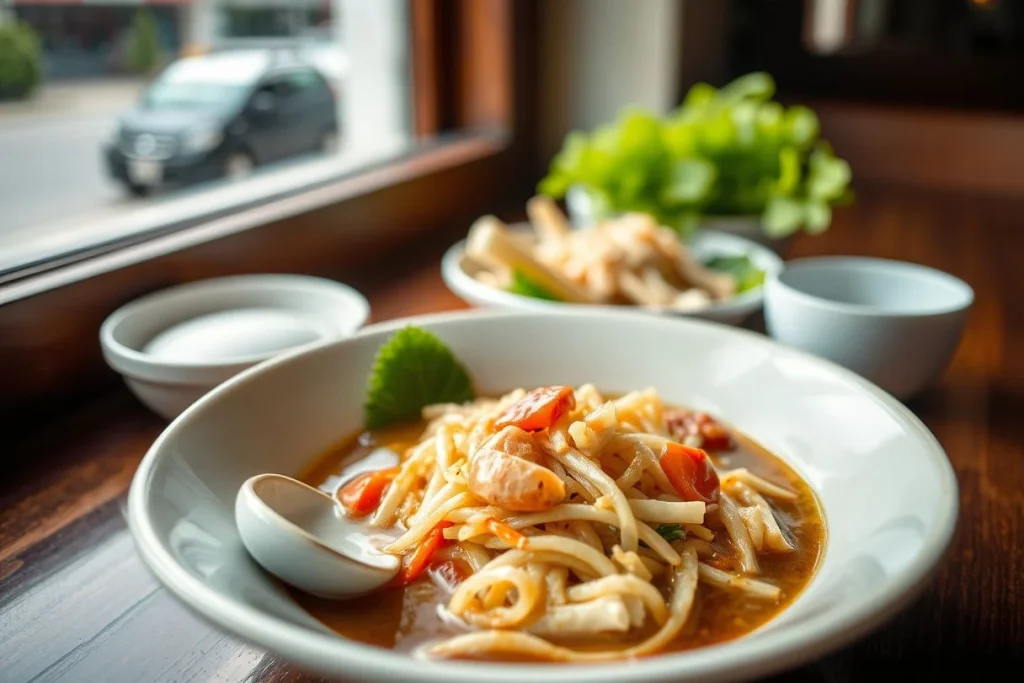
Food is the easiest part of Singapore on a budget to control without eating badly. Set aside an estimated S$15–25 per person per day for mainly hawker meals, or S$25–45 for a mixed plan with an inexpensive restaurant meal or coffee, based on 2026 food-cost breakdowns from SingaporeEast. A typical hawker dish is estimated at S$4–8 in 2024–2026 reporting and 2026 checks, but that is a guide, not a fixed tariff.
Start with places that combine sightseeing and lunch. Chinatown Complex works well alongside a walk through Chinatown; Maxwell Food Centre is convenient for central sights; and Tiong Bahru Market pairs naturally with a neighbourhood wander. Lau Pa Sat is useful when you are already in the financial district, but convenience does not guarantee the lowest bill: compare individual stall menus before ordering rather than assuming every central food centre is cheaper.
Build the day around one substantial hawker meal, then keep the other meals simple. Breakfast from a hawker stall can protect the budget, while water rather than repeated bought drinks leaves more room for a dish you actually want to try. Budget separately for coffee, bottled drinks, desserts and restaurant meals, since these extras can quietly push a hawker-focused allowance towards the mixed S$25–45 range.
Prices vary by stall, and Singapore’s hawker centres do not operate under a universal S$3-meal rule: stalls set their own prices, as reporting on the sector by laws.sg explains. Look at the displayed menu, check portion size and compare nearby stalls before joining a queue. On arrival, confirm each stall’s opening days and whether its dishes suit your dietary needs; a market’s reputation does not mean every counter serves every day or caters to every restriction.
Free and cheap things to do in Singapore: build your itinerary around them
Start with the Marina Bay loop
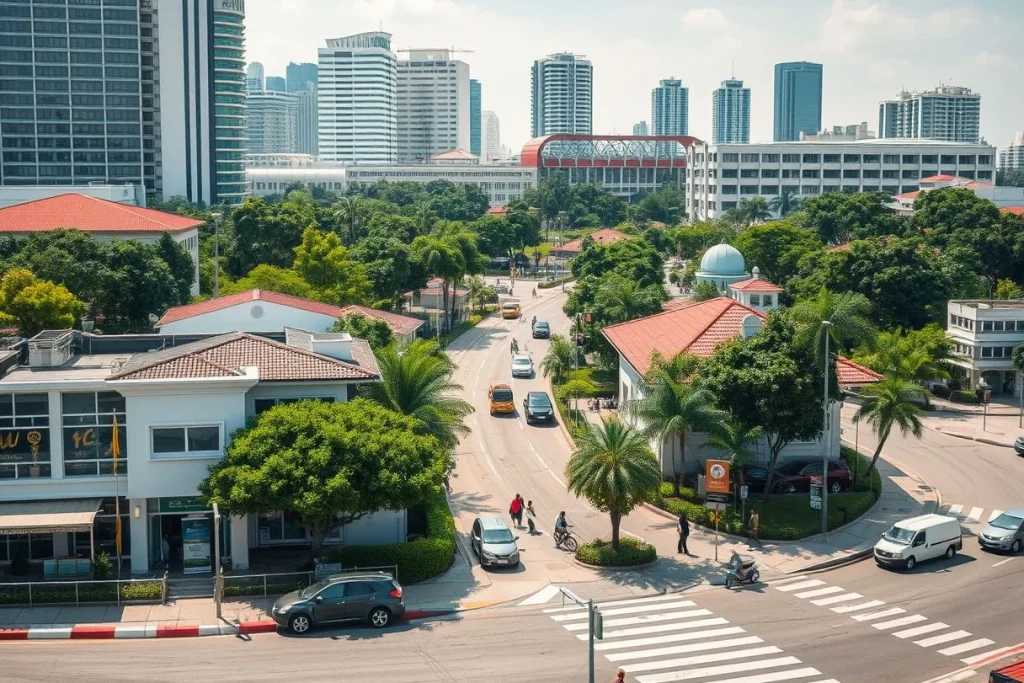
Marina Bay is the easiest free sightseeing cluster to build around. Walk the Marina Bay promenade to Merlion Park, then continue towards Gardens by the Bay for the outdoor Supertree Grove and an evening Garden Rhapsody. You’ll get skyline views, waterfront photographs and a night-time light show without making a paid attraction the centre of the day.
Keep one distinction clear: the Supertree Grove is the free outdoor experience, while the Gardens by the Bay conservatories are separate ticketed attractions. If heat or rain arrives, shorten the walk. Use an indoor stop rather than forcing a long afternoon outdoors.
Pair neighbourhood walks with local food
Chinatown works particularly well as a low-cost half-day: explore the streets, then eat at Maxwell Food Centre or Chinatown Complex. On another day, continue to Little India or Kampong Glam, using the neighbourhoods themselves as the sightseeing instead of paying for several attractions.
For a budget traveller, transport and food can be the only planned expenses, while each area offers a distinct streetscape. There’s also room to stop when the humidity becomes uncomfortable, rather than paying for an attraction simply to escape the weather.
Use nature for a full, free day
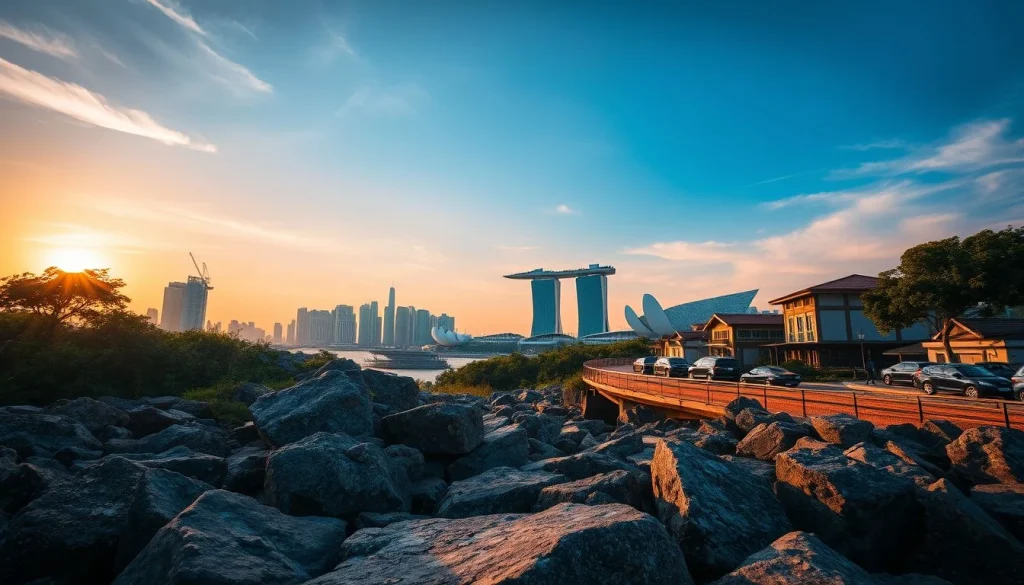
Singapore Botanic Gardens offers free general entry and can fill several hours at a gentle pace. The National Orchid Garden is separately ticketed, so decide in advance whether that add-on matters to you. For more walking, choose the Southern Ridges for greenery and views, MacRitchie Reservoir for a nature-focused outing, or East Coast Park for waterfront walking and cycling.
These outdoor plans call for water, sun protection and shaded breaks. Before setting out, check current access and opening arrangements for Botanic Gardens areas, MacRitchie Reservoir, the Southern Ridges and East Coast Park; conditions and access can change.
Save Jewel for a suitable layover
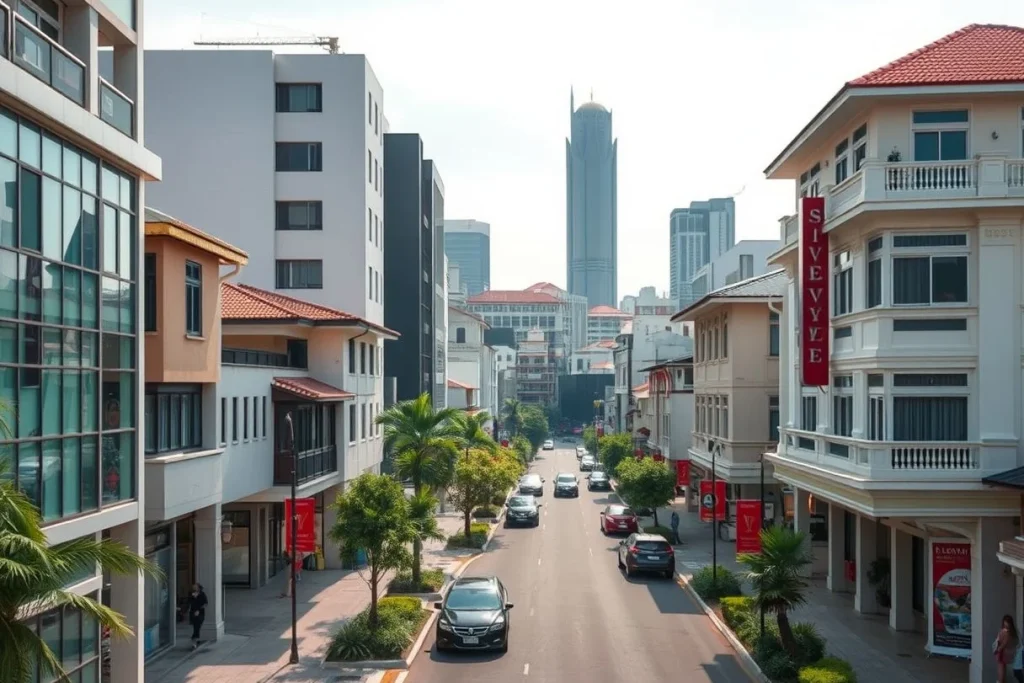
At Jewel Changi Airport, the Rain Vortex can be viewed free of charge, according to SingaporeCity360’s Changi Airport guide. Canopy Park and its add-ons require tickets, so don’t assume the whole complex is free. It works as a layover plan, but check current access arrangements and allow enough time for your onward journey rather than turning it into a rushed city excursion.
Travel tips that prevent avoidable costs and mistakes
A carefully controlled Singapore budget can still unravel through a late arrival, a peak-date room rate or a small assumption about transport. Run this checklist before departure:
- Check entry rules for your nationality. Visa and entry requirements vary, so confirm the current position with Singapore’s Immigration & Checkpoints Authority or your embassy rather than relying on a general travel guide.
- Recheck transport details close to departure. Confirm current MRT and bus fares, SimplyGo and EZ-Link conditions, and Singapore Tourist Pass prices and eligible services through LTA or SimplyGo. The published fare information used for this guide reflects a fare table effective from 27 December 2025.
- Check every attraction separately. Ticketing and access arrangements can change, particularly for add-ons and promotions. The Rain Vortex at Jewel Changi Airport is free to view, while Canopy Park requires a ticket, according to SingaporeCity360’s guide; verify current details with the attraction before travelling.
- Pack for heat and sudden showers. Carry water, sun protection, breathable clothing and comfortable shoes. Plan shaded or indoor breaks, and keep a rain alternative for long outdoor walks such as the Southern Ridges or East Coast Park.
- Price your dates, not an average. Recheck accommodation around public holidays, conferences and Formula 1, plus the higher-demand months of June, July, August and December. A headline budget may not cover those dates.
- Plan your airport arrival. If you land late at Changi Airport, check the current availability of MRT, buses and other transfers rather than assuming public transport operates at every hour. The airport’s official information is the sensible final check.
- Keep a small buffer. Carry a backup payment method and note whether displayed prices include all charges. Reserve room for drinks, luggage storage or an occasional taxi instead of spending the daily allowance to the last dollar.
The best-value plan for most travellers
For a disciplined solo backpacker, choose the S$35–55 per-person daily plan: a dorm, hawker meals and free sights can keep Singapore on a budget realistic, according to ExploreSG’s 2026 cost guide. It suits travellers willing to walk, share facilities and skip most ticketed attractions. If you want a private room and one paid experience, allow S$55–95 per day, the range reported by Singapore Spirit’s 2026 cost guide.
Before booking, check accommodation rates for your exact dates, particularly in June, July, August, December and around major events. Mark three free-sight clusters—such as Marina Bay, Chinatown and the Botanic Gardens—then estimate your daily MRT or bus rides. Set aside a small food and weather buffer rather than spending the allowance exactly. Finally, recheck current transport fares and pass terms with Singapore City 360, and confirm entry requirements with Singapore’s Immigration & Checkpoints Authority before departure.
Frequently asked questions
How many days do I need in Singapore for a first visit?
The supplied cost guides do not establish a fixed number of days for a first visit. For Singapore on a budget, plan around free areas and outdoor sights—Marina Bay promenade, Merlion Park, Gardens by the Bay’s Supertree Grove, Chinatown, Little India and Singapore Botanic Gardens—then add paid attractions only if they fit your daily allowance. Check current access arrangements before setting your itinerary.
Can I use a debit or credit card at Singapore’s hawker centres?
Payment methods vary by stall, and the supplied sources do not confirm card acceptance across Singapore’s hawker centres. Do not assume that every stall accepts a debit or credit card; check at the stall before ordering and keep an alternative payment method available. Prices also vary because individual hawker stalls set their own prices, rather than following a universal fixed meal price, according to laws.sg’s Hansard report.
What should I pack for Singapore’s heat, humidity and sudden rain?
Singapore is hot and humid year-round, with sudden showers possible. Pack light clothing, sun protection and something suitable for rain, and plan shaded or indoor breaks rather than scheduling every hour outdoors. The supplied safety guidance also recommends carrying water and checking access arrangements for outdoor sites and nature walks before travelling.
What can I do in Singapore if it rains all day?
Use the weather as a reason to shift towards indoor or covered stops, while checking current opening arrangements before setting out. Jewel Changi Airport’s Rain Vortex is free to view, although Canopy Park and its add-ons require tickets, according to SingaporeCity360. You can also build a food-focused day around Chinatown Complex, Maxwell Food Centre or Lau Pa Sat, then return to outdoor sights when conditions improve.
Are Singapore’s hawker centres suitable for vegetarians?
The supplied sources do not provide a reliable list of vegetarian stalls or confirm that every hawker centre has dedicated vegetarian options. Ask each stall about ingredients before ordering, especially where broths, sauces or cooking fats may not be obvious. Chinatown Complex, Maxwell Food Centre, Tiong Bahru Market and Lau Pa Sat offer several places to compare, but stall menus and prices can change.
Is Singapore a practical destination for solo backpackers?
The 2026 budget guides put a shoestring trip at approximately S$35–55 per person per day when it combines a dorm bed, hawker meals and mainly free attractions. Singapore’s MRT and bus fares are distance-based, ranging from approximately S$1.28 to about S$2.57 under the fare table effective 27 December 2025, making a free-sights-and-public-transport plan workable. Confirm current fares with LTA or SimplyGo, and check entry requirements with Singapore’s Immigration u0026amp; Checkpoints Authority before travel.