
This article contains affiliate links. If you book through one of our links, we may earn a commission at no additional cost to you.
In the Marrakech Medina, a riad may sit behind an unmarked door on a narrow lane where cars cannot reach it, yet be only a walk from the souks and Jemaa el-Fna. That contrast defines where to stay in Marrakech: traditional courtyards and rooftop views come with crowded alleys, luggage logistics and occasional evening noise.
This guide is for couples choosing between an atmospheric riad and the convenience of a modern hotel. It compares the Medina, Kasbah and Mellah, Gueliz, Hivernage, Palmeraie and Sidi Ghanem by character, walkability, dining, privacy and access, so you can decide whether shared discovery, easy taxis, luxury facilities or resort-style seclusion matters most. It also covers how to choose a well-reviewed riad, arrange arrival when vehicles stop short, and weigh live accommodation prices before booking.
Quick answer: For most couples, choose a well-reviewed riad on a quieter Medina lane, close enough to walk to the souks and Jemaa el-Fna while retaining traditional architecture and rooftop atmosphere. Gueliz suits cafés and easier taxi access, Hivernage suits luxury hotels, spas and nightlife, and Palmeraie suits private, resort-style seclusion.
Marrakech’s accommodation areas at a glance
The useful mental map runs from the historic centre outward. The official Visit Marrakech area guide divides accommodation between the Medina around the souks and Jemaa el-Fna, the southern Kasbah and Mellah, modern Gueliz, hotel-led Hivernage, the resort-oriented Palmeraie and design-focused Sidi Ghanem.
For orientation, Koutoubia Mosque marks the western edge of the old city, while Jardin Majorelle and the Yves Saint Laurent Museum help place Gueliz to the north-west. El Badi Palace is a useful southern reference point for the Kasbah and Mellah. These landmarks are close on a map, but not always in practice: Medina lanes are largely pedestrian, and a vehicle may stop some way from your door.
| Area | Atmosphere and accommodation | Walkability and evenings | Main drawback |
|---|---|---|---|
| Medina | Historic, intimate; traditional riads | Best for souks, Jemaa el-Fna and rooftop dinners | Narrow lanes, noise and awkward luggage access |
| Kasbah/Mellah | Old-city character near southern monuments | Walkable for history and quieter evening wandering | Fewer immediate high-end dining choices |
| Gueliz | Modern streets, cafés and contemporary hotels | Easy for restaurants, shopping and taxis | Less traditional, with fewer classic riads |
| Hivernage | Polished hotel district with pools and spas | Strong for restaurants, nightlife and relaxed evenings | Higher prices and a more resort-like feel |
| Palmeraie | Private resorts, villas and golf surroundings | Good for staying on property rather than walking out | More dependent on taxis or transfers |
| Sidi Ghanem | Converted warehouses, ateliers and design-led stays | Best for browsing contemporary Moroccan craft | Industrial setting and limited traditional accommodation |
Inside the Medina, ask your property for its exact arrival point, luggage help and a meet-and-greet. Many riads offer this because vehicles cannot reach every entrance, as noted by Marrakech Riads & Tours. That small logistical detail can matter more than a few minutes of map distance when arriving as a couple with bags.
The best Marrakech neighbourhoods, compared honestly
The right base depends on how much of Marrakech you want to experience on foot after dark. The historic districts offer atmosphere and traditional architecture; the newer quarters make taxis, luggage and restaurant-hopping simpler. For couples, that trade-off affects the feel of every evening.
Medina
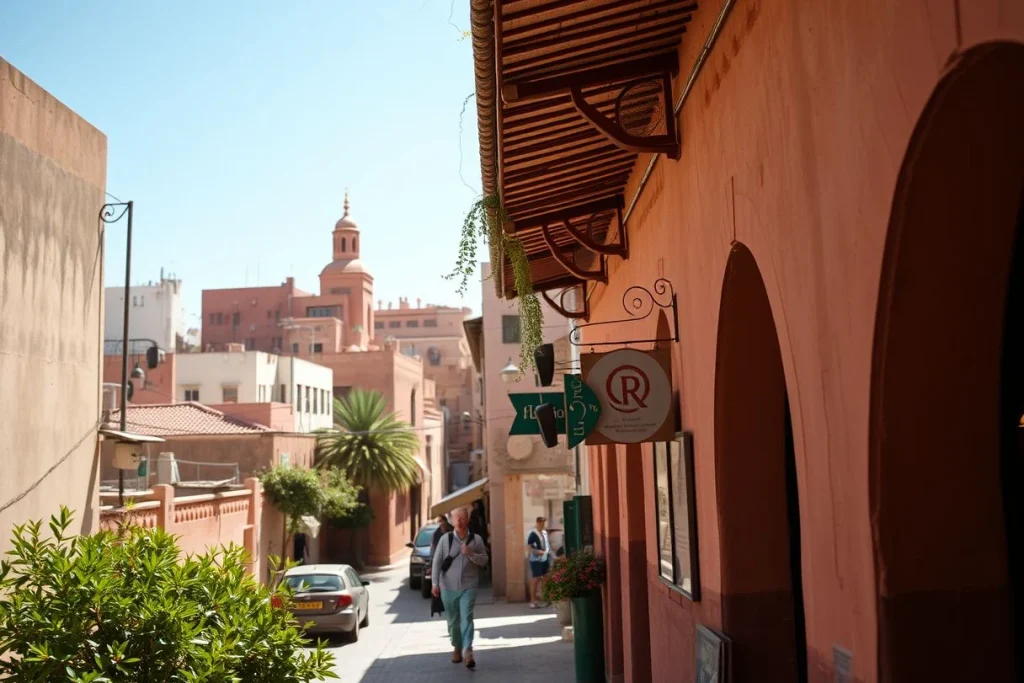
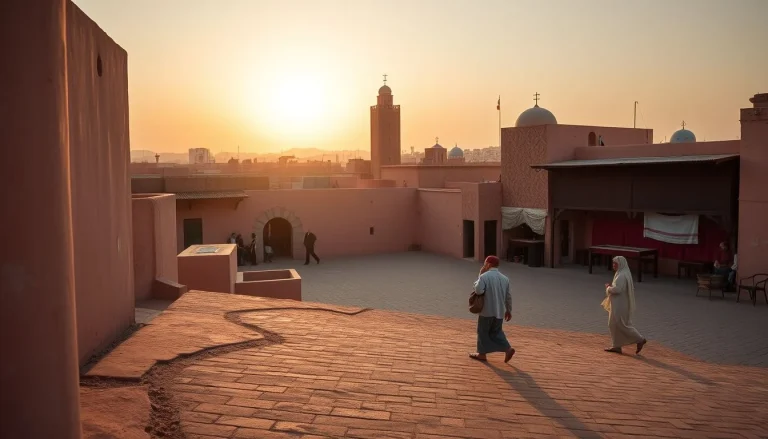
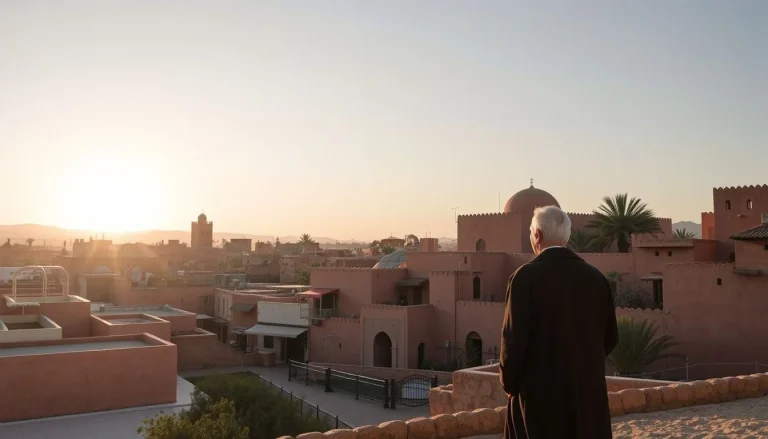
Character and nearby: The Medina is Marrakech’s historic core, centred on the souks and Jemaa el-Fna, with most of the city’s traditional riads. Its lanes lead towards sights such as the Koutoubia Mosque, while a riad rooftop can provide a quiet place to pause above the movement below.
Pros: This is the strongest choice for a first visit and for couples who want courtyard architecture, rooftop breakfasts, atmospheric walks and an easy connection to the city’s traditional life. You can build an evening around the souks and Jemaa el-Fna without arranging transport for every outing.
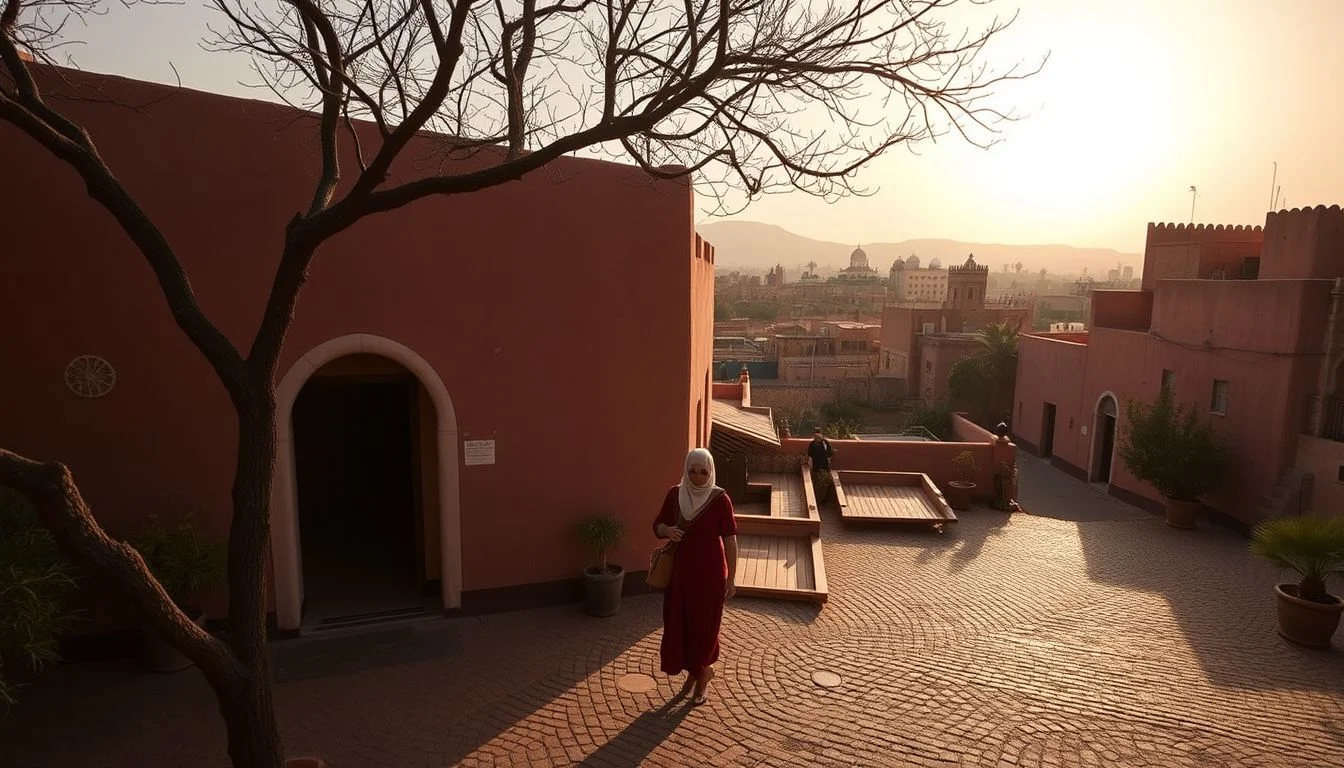
Cons: Many lanes are narrow, crowded and pedestrian-only. Vehicles cannot reach numerous riads, so arrival may involve walking with luggage from a designated drop-off point. Street noise varies considerably: a property near a busy route or square will feel different from one on a quieter residential lane.
Best for: First-time visitors, traditional architecture and couples who value atmosphere over effortless access. Search for a well-reviewed riad with clear arrival instructions, luggage assistance, a staffed reception arrangement and recent comments about noise.
Kasbah and Mellah
Character and nearby: Kasbah and Mellah occupy the southern part of the old city, close to El Badi Palace and other historic monuments. The atmosphere is generally more focused on old-city neighbourhood life than on the central spectacle of Jemaa el-Fna.
Pros: This suits history-minded couples who want a traditional base with a slightly calmer starting point for exploring the southern monuments. Riads here can offer the same courtyard intimacy as those deeper in the Medina, often with a useful sense of separation from the busiest souk routes.
Cons: There are fewer immediate high-end dining choices than in the hotel districts, and the same narrow-lane and vehicle-access issues apply. A map may show a short distance to an attraction, but the practical route can still involve uneven paving, crowds and limited evening orientation.
Best for: Couples prioritising El Badi Palace, historic atmosphere and a quieter old-city setting. Look for a riad near a clearly named gate or meeting point rather than choosing solely by straight-line distance.
Gueliz
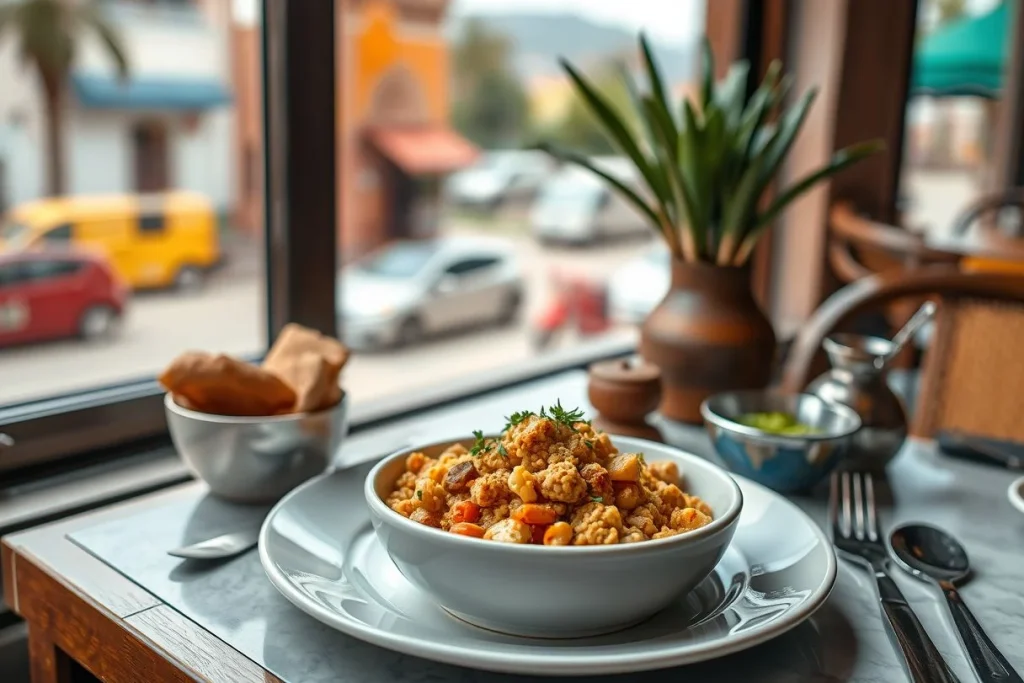
Character and nearby: Gueliz is the modern Ville Nouvelle, shaped by broad streets, cafés, shopping and contemporary city conveniences. It is a natural base for couples who want to move between restaurants, galleries and shops without navigating the Medina’s tight lanes.
Pros: Taxis are easier to find and reach accommodation more directly, while the wider streets are more manageable with larger bags. The area also works well for a relaxed café morning or a dinner-led itinerary, with less need to plan every movement around old-city access.
Cons: Gueliz has a less traditional atmosphere and fewer classic riads. Accommodation is more likely to be a contemporary hotel or apartment-style property, so it gives up some of the courtyard character that makes Marrakech feel distinctive.
Best for: Couples who prefer modern restaurants, cafés, shopping and straightforward transport. Choose it over the Medina if convenience matters more than stepping directly into historic surroundings each time you leave your room.
Hivernage
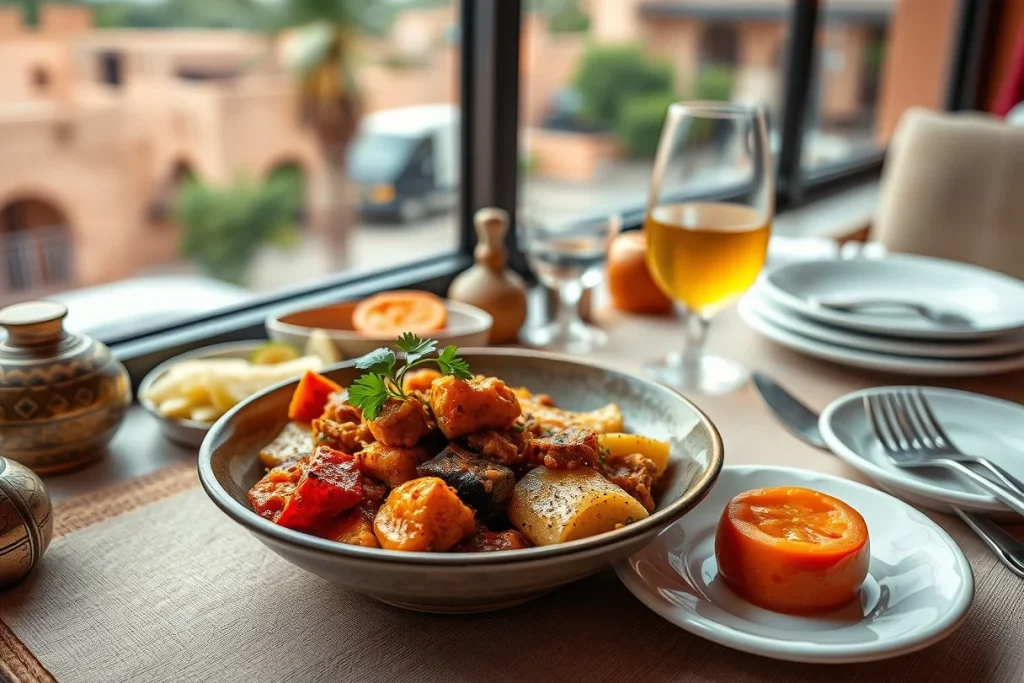
Character and nearby: Hivernage is a hotel-focused district near Gueliz and the Medina, associated with luxury hotels, restaurants, nightlife and cultural venues. Its polished setting makes it a natural choice for a stay built around pool time, spa appointments and scenic dinners.
Pros: Larger hotels generally make arrival, luggage handling and in-house downtime simpler than a small riad can. Couples also gain more space for a slow afternoon and an evening setting that feels calmer and more private than the central Medina.
Cons: Rates are typically higher, and the district can feel resort-like rather than distinctly Marrakchi. The premium is worth considering if you will use the pool, spa, service and dining facilities; it is harder to justify if you plan to spend most days and evenings walking the old city.
Best for: Couples seeking luxury hotels, nightlife, pools and a polished romantic base. Compare what is included in the stay and check current hotel rates directly before booking, as accommodation prices and facilities can change.
Palmeraie
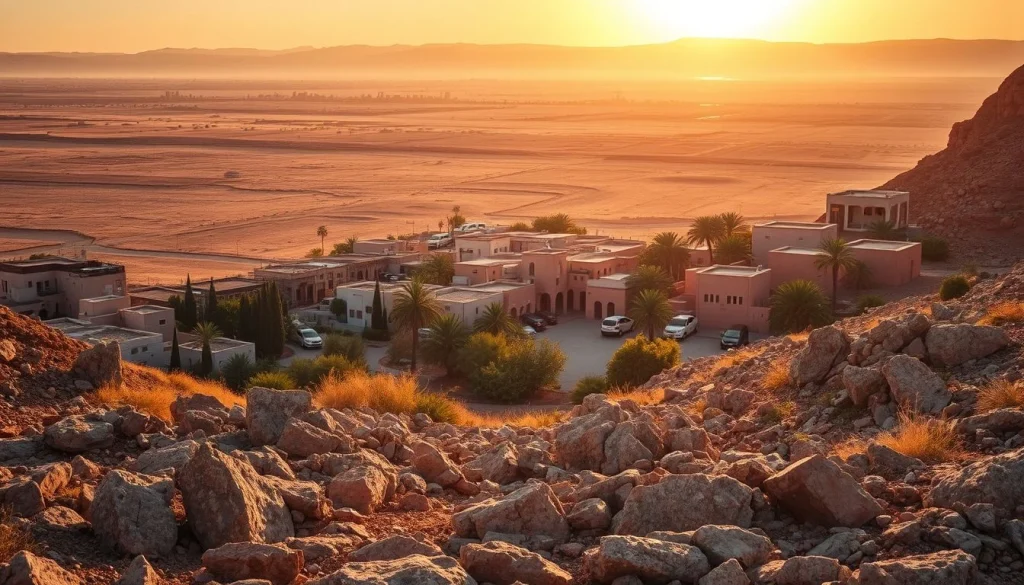
Character and nearby: Northeast of the dense centre, Palmeraie is a palm-grove area dominated by resorts, villas and golf facilities. Its appeal is space and seclusion rather than spontaneous access to souks or central restaurants.
Pros: Private villas, pools and resort services suit honeymoon-style trips where the accommodation is part of the holiday. It is a better setting for unhurried mornings and private downtime than for stepping out to explore on foot.
Cons: The Medina is not the natural extension of an evening here. Couples should expect to rely on taxis, pre-arranged transfers or a car, adding planning and travel time to dinners and sightseeing.
Best for: Privacy, resort facilities, golf and a deliberately secluded stay. It is a poor match for a first visit centred on walkable historic evenings.
Sidi Ghanem
Character and nearby: Sidi Ghanem is an industrial and design-oriented district of converted warehouses, ateliers, showrooms and contemporary accommodation. It offers a different view of Marrakech, centred on Moroccan craft, interiors and creative businesses rather than palaces and souks.
Pros: Design-focused couples can browse workshops and showrooms, then return to a quieter, more contemporary base. The area may appeal to repeat visitors who have already covered the historic centre.
Cons: Its industrial setting, limited traditional accommodation and dependence on taxis make it less convenient for a first trip. Historic evening walks require a separate journey, so it lacks the easy rhythm of staying near Jemaa el-Fna.
Best for: Design-led short stays or repeat visitors, not couples choosing Marrakech primarily for classic riads and old-city atmosphere.
| Area | Romance and atmosphere | Evening access | Practical trade-off |
|---|---|---|---|
| Medina | Strongest traditional setting | Best for walking to souks and Jemaa el-Fna | Narrow lanes, variable noise and limited vehicle access |
| Kasbah/Mellah | Historic and comparatively calm | Good for southern monuments | Fewer immediate high-end dining choices |
| Gueliz | Modern rather than traditional | Strong for cafés and restaurants | Fewer classic riads |
| Hivernage | Polished, private and hotel-led | Good for restaurants and nightlife | Higher rates and a resort-like feel |
| Palmeraie | Most secluded | Transport needed for central evenings | Distance and transfer dependence |
| Sidi Ghanem | Contemporary and design-focused | Limited walkable historic nightlife | Industrial setting and taxi reliance |
For traditional architecture, choose the Medina; for the easiest first-visit compromise, choose a quiet Medina lane or Kasbah riad with a confirmed meeting point. Gueliz wins on everyday convenience, Hivernage on hotel luxury and nightlife, Palmeraie on privacy, and Sidi Ghanem on design. The official Visit Marrakech area guide is a useful map reference, but confirm the property’s current arrival procedure and location before paying.
Which Marrakech base suits your kind of trip?
That comparison becomes simpler when you start with how you want your evenings to feel. For most couples, the strongest default is a well-reviewed riad on a quieter Medina lane: traditional architecture, rooftop space, and walkable access to the souks and Jemaa el-Fna, without placing you directly beside the busiest routes. The Medina is Marrakech’s historic core and contains most of the city’s traditional riads, according to the official Visit Marrakech area guide.
Choose this for a first visit or a romantic city break built around wandering, long lunches and returning to a courtyard at midday. The compromise is practical rather than atmospheric: Medina lanes are largely pedestrian, so luggage may need to be carried from a vehicle-accessible meeting point. Confirm the riad’s arrival instructions before booking; many properties offer a meet-and-greet or transfer because cars cannot reach the door.
| Choose this base if… | Best fit | Accept this compromise… |
|---|---|---|
| You want history, rooftops and walkable sightseeing | Quiet Medina lane | Narrow, busy streets and awkward luggage access |
| You want cafés, modern restaurants and simple taxi access | Gueliz | Less traditional atmosphere and fewer classic riads |
| You want a polished hotel, spa, pool and evening dining | Hivernage | Higher prices and a more resort-like feel |
| You want privacy, a villa-style stay or a pool-focused retreat | Palmeraie | More reliance on taxis or transfers for Medina evenings |
| You care about contemporary craft, galleries and interiors | Sidi Ghanem | Industrial surroundings and limited traditional riad choice |
Medina or Gueliz?
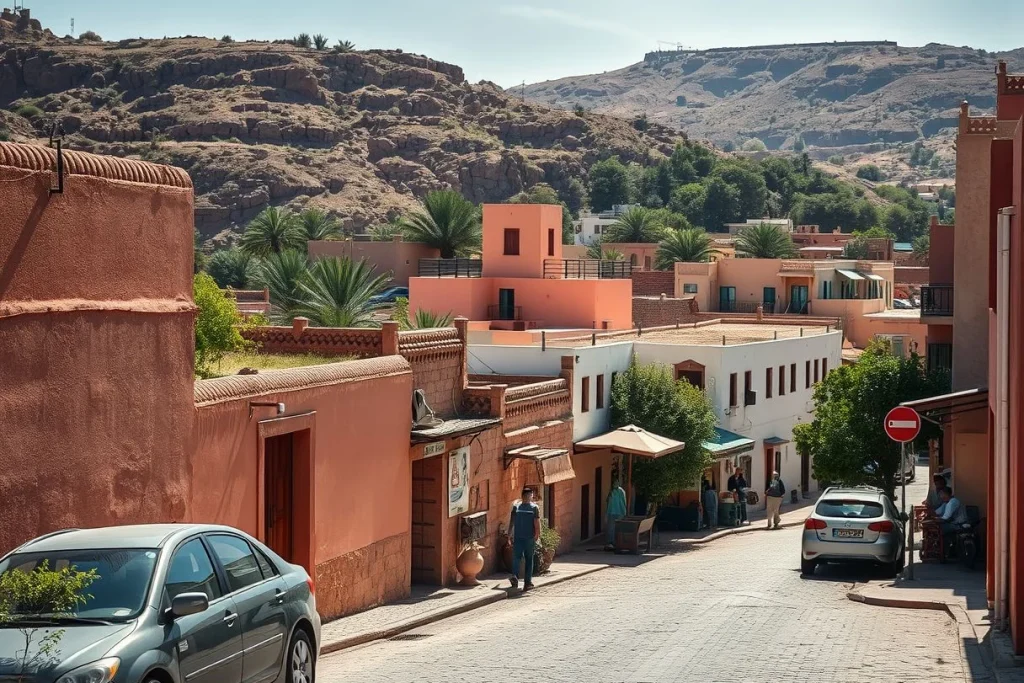
For couples deciding between Marrakech Medina or Gueliz, the choice is atmosphere versus ease. Select the Medina when your ideal day runs from the souks to Jemaa el-Fna, with a rooftop sunset and a short walk back to an intimate courtyard. Select Gueliz when broad streets, cafés, shopping and contemporary restaurants matter more than old-city immersion; its modern Ville Nouvelle setting also makes taxi arrivals and departures more straightforward.
Gueliz is particularly sensible for a couple travelling with substantial luggage, preferring predictable vehicle access, or planning several restaurant-led evenings beyond the old city. It is less convincing if the stay itself is meant to provide the romance: accommodation there is more likely to feel like a contemporary city hotel or boutique property than a traditional riad.
When Hivernage or Palmeraie makes sense
Hivernage is worth the higher price when the hotel is part of the trip rather than simply a place to sleep. Its concentration of luxury hotels, restaurants, nightlife and cultural venues suits couples who want a pool, spa, polished service and easy evenings without navigating Medina lanes. It is the better choice for a short luxury or anniversary weekend, but less so for travellers who want to step straight into historic Marrakech.
Palmeraie suits honeymoon-style privacy: the area is northeast of the dense centre and is dominated by resorts, villas and golf facilities. Book it when seclusion and time at the property outweigh spontaneous Medina wandering. If you expect to visit Jemaa el-Fna, the souks or the Koutoubia Mosque most days, its resort-oriented setting can feel too disconnected; plan for taxis, transfers or a car rather than assuming you can walk into town.
Design-conscious couples should consider Sidi Ghanem for converted warehouses, ateliers, showrooms and contemporary accommodation. It works best as a quieter, short stay centred on Moroccan design and craft shopping, not as a base for late-night walks through the historic centre. Accommodation prices fluctuate by season, property and booking channel; recent 2026 guides place some Medina riads below about US$80 per night, while boutique and luxury options rise considerably, so check live rates before committing.
How to choose a romantic riad in Marrakech
A riad’s appeal is architectural: rooms open onto an inward-facing courtyard, often with a rooftop terrace where a late breakfast or sunset drink feels removed from the Medina outside. For a couple, though, the practical details matter just as much. Check whether the room has a private bathroom, reliable air conditioning or heating, useful soundproofing and a quiet position away from the entrance, courtyard, kitchen or rooftop stairs.
Decide which shared features you will genuinely use. A plunge pool can be welcome after a hot afternoon, while a rooftop is more valuable if you expect to spend evenings at the property. Ask about breakfast timing if you plan early excursions, and confirm whether reception is staffed when you expect to arrive. A small, atmospheric riad may suit a couple seeking privacy, but a larger property with on-site staff can be the calmer choice for a late arrival or a first visit.
Read recent reviews for information photographs cannot show: street or courtyard noise, damp smells, cleanliness, water pressure, room temperature and how clearly staff communicate before arrival. Treat repeated comments about difficult directions or inconsistent assistance as a practical warning, not a minor inconvenience. Accommodation policies, renovation status and availability can change, so recheck the property’s current information before booking.
A riad is not automatically safe or convenient. The Medina is largely pedestrian, and narrow lanes mean vehicles cannot reach many properties, according to Marrakech.me. Before paying a deposit, ask for the nearest vehicle-accessible meeting point, whether someone will meet you, how luggage will be carried and what happens if your flight arrives after reception hours. Many riads offer meet-and-greet or transfer arrangements for precisely this reason, as Marrakech Riads & Tours notes.
For a romantic stay, prioritise a well-reviewed private room, a quiet location and clear arrival instructions over an elaborate photograph or an unusually low rate. Confirm every detail directly with the property, then save the directions offline before leaving Marrakech Menara Airport.
Getting around Marrakech from your accommodation
Walking in and around the Medina
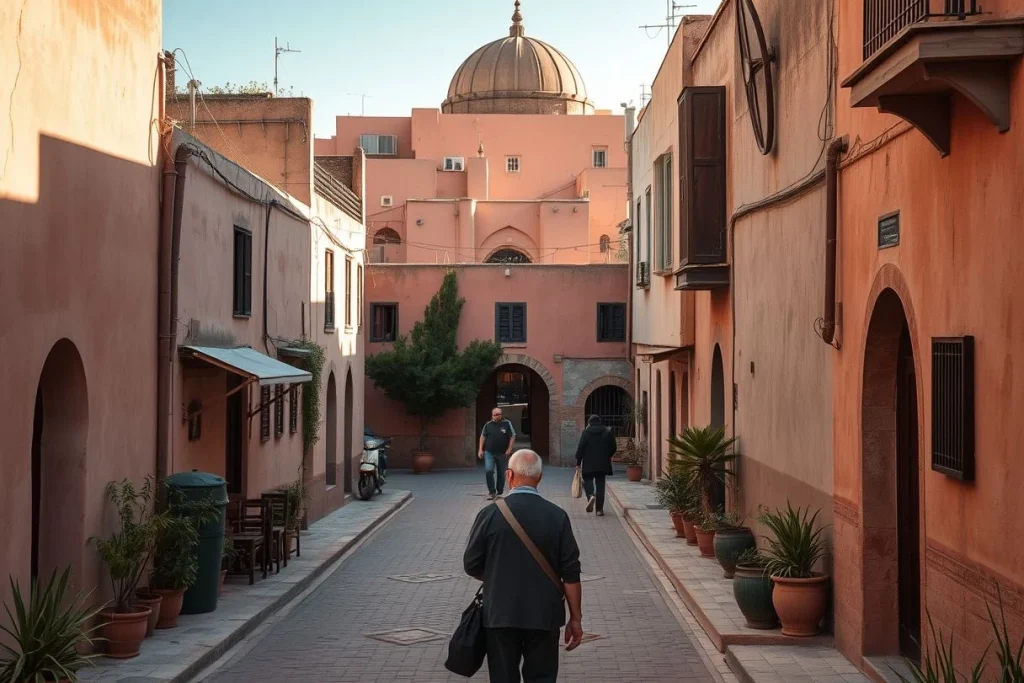
For couples staying in the Medina, walking is usually the simplest way to reach the souks, Jemaa el-Fna and nearby historic sights. The old city is largely pedestrian, and narrow lanes mean vehicles cannot reach many riads, as Marrakech.me explains.
That atmosphere is part of the appeal, but allow extra time for crowded passages, uneven surfaces, heat and occasional confusion at junctions. Pack light for a Medina stay, wear comfortable shoes and avoid assuming that a taxi can deliver you to the door. After dinner, follow the route saved by your riad rather than relying on a phone signal or vague directions.
Taxis for longer cross-city journeys
Petit taxis are intended for city journeys, while grand taxis generally serve fixed routes and longer or regional trips. Petit taxis are metered in principle, according to a Marrakech transport guide published by techinnovate.co.uk; confirm the current fare and operating practice before setting off, since arrangements can change.
From Gueliz or Hivernage, taxis are a practical choice for evenings in the Medina when you do not want to walk back. Hivernage is also convenient for couples dividing their time between restaurants, nightlife and the old city. Palmeraie and Sidi Ghanem require more planning: their resort or industrial settings make a taxi, pre-arranged transfer or car more useful than spontaneous walking, particularly after dark.
Arriving at a Medina riad
A riad-arranged transfer can remove much of the first-arrival stress, especially from Marrakech Menara Airport. Many properties use a meet-and-greet service because vehicles often stop at a gate or access point rather than outside the accommodation, a point also noted by Marrakech Riads & Tours.
Before travelling, ask for the exact vehicle-accessible meeting point, the driver’s name and phone number, and whether someone will carry luggage through the final lanes. Confirm whether the driver can reach the property itself, rather than simply the neighbourhood. This is particularly worthwhile for couples arriving late or carrying larger cases.
Small habits that make transport easier
- Save the riad’s pin, address and phone number offline; Medina addresses can be difficult to explain verbally.
- Carry the property’s directions when leaving for dinner, and ask staff to mark the nearest recognisable landmark.
- Keep valuables secured and stay aware of your surroundings; official Moroccan travel advice highlights petty crime and occasional violent incidents, updated 15 September 2026.
- For Gueliz, Hivernage or Sidi Ghanem, ask the accommodation to confirm the pickup point and current taxi practice before departure.
What couples may spend on Marrakech accommodation
Accommodation prices in Marrakech are best treated as planning bands, not promises. Recent 2026 guides place Medina riads across a wide range, with the final rate shaped by season, room type, booking channel, cancellation terms and whether breakfast or transfers are included.
| Estimated nightly level | Broad guide for two people |
|---|---|
| Budget | Under about US$80 |
| Mid-range | About US$100–US$300 |
| Luxury | Above the mid-range band; verify live rates |
Basis: approximate price indications per night, drawn from MoroccoMag’s 2026 guide and current for September 2026; rates vary by season, property and booking channel.
A smaller riad on a quiet Medina lane may offer the strongest atmosphere for the money, while a larger boutique property with a pool, rooftop or high service level costs more. Hivernage’s luxury hotels and Palmeraie’s villas and resort properties can also carry a premium for pools, privacy and space; luxury Medina palaces sit at the top end.
Before booking, compare the total rather than the headline rate. Check breakfast, taxes, airport transfer, cancellation terms and any minimum-stay requirement, then confirm the live price directly with the property or booking platform—especially before June, July, August or December travel.
The best base for most couples
For most couples, choose a well-reviewed riad on a quieter lane in the Marrakech Medina. It gives you traditional architecture, rooftop atmosphere and walkable evenings around the souks and Jemaa el-Fna; the Medina’s historic character and concentration of riads are noted by Visit Marrakech. Choose Gueliz for easier taxi access and contemporary dining, Hivernage for polished hotels, spas and nightlife, or Palmeraie for privacy and resort facilities.
Shortlist three properties, read the newest reviews, inspect the map and confirm vehicle access, reception hours and arrival support before paying. Ask specifically where a taxi can drop you and whether the riad provides meet-and-greet assistance; check current entry requirements for your nationality with GOV.UK Foreign travel advice, updated 15 September 2026.
Frequently asked questions
How many nights should couples spend in Marrakech?
There is no reliable, one-size-fits-all number in the available destination guidance. Choose the length of stay around the area you select: a Medina riad suits time spent walking between the souks and Jemaa el-Fna, while Palmeraie accommodation makes more sense when privacy and resort time are central. Check the property’s current availability and policies before booking.
Is it better to book breakfast or dinner at a riad?
The available sources do not establish a general advantage for breakfast or dinner, and arrangements differ between properties. Ask the riad what is included, whether meals need advance reservation, and what time they are served. This is particularly important for a romantic stay, since choosing a property for its rooftop atmosphere does not confirm that it offers dinner.
Which Marrakech neighbourhood has the best sunset views?
The Medina is the clearest choice if rooftop atmosphere matters: traditional riads are concentrated there, and the area is associated with rooftop views. The available sources do not rank individual rooftops or confirm sunset visibility from particular properties, so check recent property information and ask whether the terrace has an unobstructed view before booking.
Can couples combine a Medina riad with a hotel stay elsewhere?
Yes, this is a practical way to pair two different sides of Marrakech, provided you allow time to move luggage between properties. A Medina riad offers traditional architecture and walkable access to the souks, while Hivernage offers luxury hotels, restaurants and nightlife; Palmeraie is more suitable for resort-style privacy. Confirm transfer arrangements with both properties.
What should couples pack for walking around the old city?
Plan for regular walking: the Medina is largely pedestrian, with narrow lanes that vehicles cannot reach. Pack items that make walking and carrying belongings manageable, and keep valuables secure. The GOV.UK Foreign travel advice for Morocco, updated 15 September 2026, highlights petty crime and advises visitors to remain aware of their surroundings.
How far in advance should I book a popular riad?
The available sources do not support a fixed booking window. Rates, availability, renovation status, restaurant hours and riad policies can change, so check live information before committing; recent 2026 guidance also notes that Medina prices vary by season, property and booking channel. Ask the riad to confirm arrival instructions, reception arrangements and luggage assistance at the time of booking.