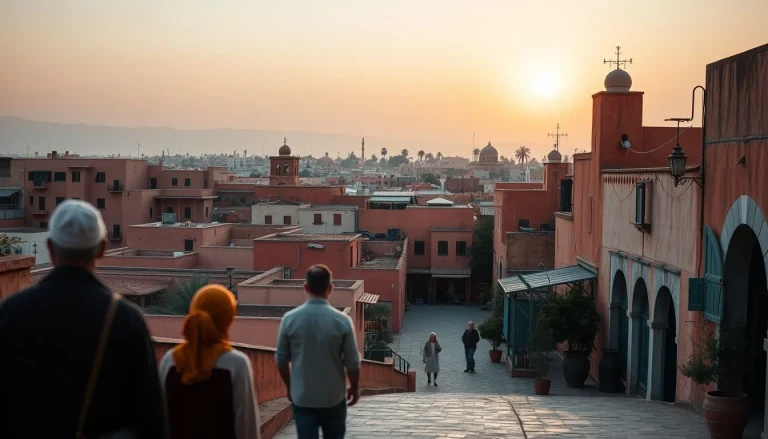
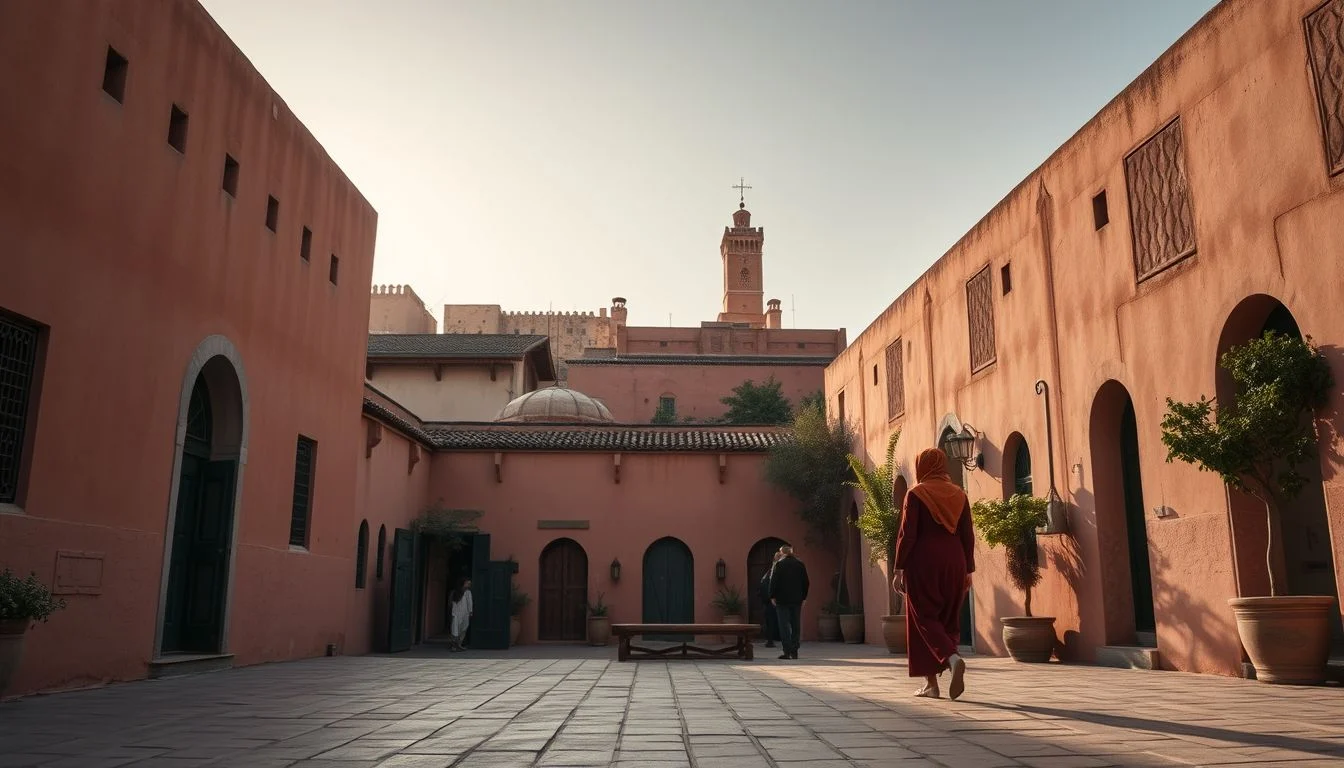
A Marrakech riad is a Moroccan house built around an inward-facing courtyard or garden, now commonly restored as a small guesthouse or boutique hotel. That private centre gives a stay a different rhythm from a conventional hotel, but the experience depends heavily on where the property sits: a Medina riad may place Jemaa el-Fna and the souks within walking reach, while a retreat in Palmeraie trades convenience for space and quiet.
This guide is for couples choosing among the best riads in Marrakech, with attention to shared dinners, atmospheric neighbourhoods, downtime and the practical details that can shape a stay. It compares Medina areas including Mouassine, Kasbah and Mellah with Gueliz, Hivernage and Palmeraie, then explains what different budgets buy, how to assess terraces, plunge pools and hammams, and what to confirm about access, transfers, stairs, cancellation and opening status before booking.
Quick answer: For most couples, the Medina—especially Mouassine, Kasbah or Mellah—is the best choice for courtyard architecture, atmospheric lanes and walkable access to sights. Choose Gueliz or Hivernage for easier taxi access and modern restaurants, or Palmeraie for a quieter garden retreat; indicative 2025–2026 rates range from MAD 250–700 for budget stays, MAD 700–2,000 for mid-range riads and MAD 2,000+ for luxury rooms per night, subject to dates and inclusions.
What a riad is—and why couples choose one
A riad is traditionally a Moroccan house arranged around an inward-facing courtyard or garden. In Marrakech, the word usually describes a restored courtyard home operating as a small guesthouse or boutique hotel, rather than a single standardised hotel category; the Moroccan National Tourist Office provides the broader cultural context.
For couples, the appeal is the contrast between the busy streets outside and a quiet interior: zellij tilework, shaded seating, Moroccan mint tea and a courtyard that gives you somewhere to pause between outings. Some properties add a rooftop terrace for an evening drink, a plunge pool or a hammam, but these are features to verify rather than assumptions.
The trade-off is practical. Historic buildings may have stairs, narrow passages and little street frontage, with rooms reached through the courtyard rather than a conventional hotel corridor. A riad can therefore suit couples who value atmosphere and shared downtime more than lift access, a large lobby or a car arriving at the door. Check the property’s access details before booking.
Where to stay in Marrakech: Medina, Gueliz, Hivernage or Palmeraie
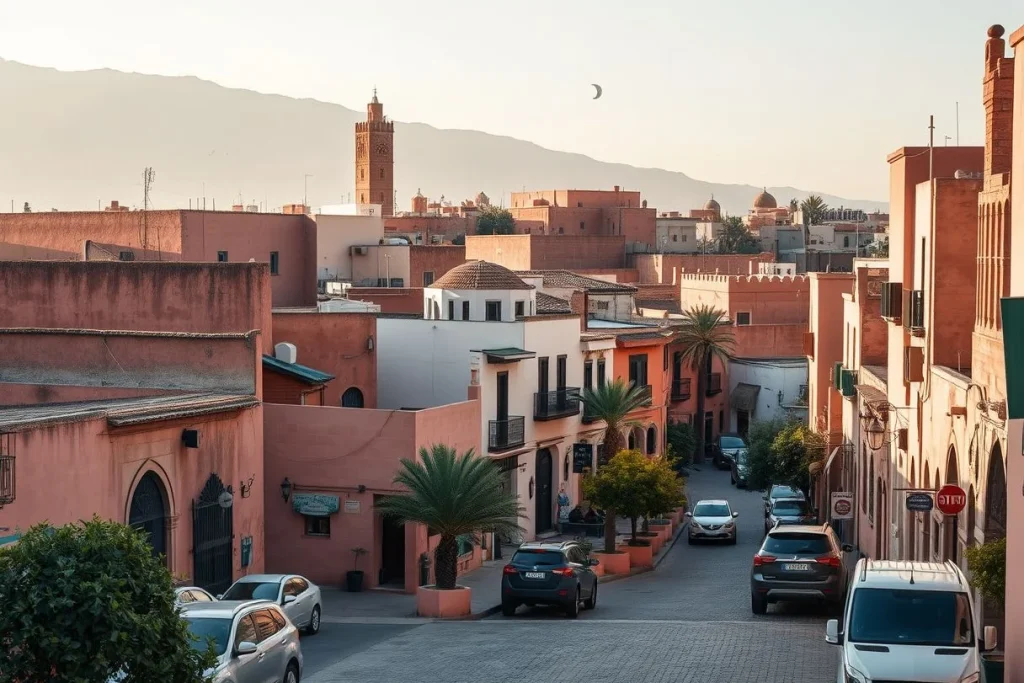
For most couples, the Medina is the right starting point for the best riads in Marrakech: it puts courtyard architecture, the souks and Jemaa el-Fna within walking range. Choose Mouassine for central atmosphere, Kasbah or Mellah for a slower historic stay, and look beyond the old city if easy vehicle access matters more than traditional character. Neighbourhood boundaries overlap in local usage, so judge a property by its actual access point as well as its advertised area.
Medina areas compared
| Area | Best for couples | Atmosphere and walkability | Arrival and access trade-off | Likely stay type |
|---|---|---|---|---|
| Medina overall | A first Marrakech visit and classic riad architecture | Atmospheric lanes, souks and walking access to Jemaa el-Fna | Many derbs are too narrow for cars; expect a walk from a vehicle drop-off point | Traditional riad or small boutique guesthouse |
| Mouassine | Shared wandering, crafts and a central base | Atmospheric and central, with access to craftspeople and major Medina sights | Busy lanes and orientation can be less straightforward than a broad modern street | Atmospheric riad with a boutique feel |
| Kasbah and Mellah | Quieter historic pacing | Walkable to Bahia Palace and El Badi Palace, with a more measured southern-Medina feel | Still subject to narrow lanes and a final walk with luggage | Historic riad suited to downtime between visits |
| Gueliz (Ville Nouvelle) | Modern restaurants, cafés, shopping and simpler taxi access | Broad streets and a contemporary city rhythm rather than old-city immersion | More predictable vehicle access, but less of the traditional riad setting | Modern boutique hotel or guesthouse |
| Hivernage | Upscale hotels, leafy avenues and nightlife | More polished and spacious, with convenient access to city-centre dining | Vehicle access is generally more straightforward than in the Medina | Upscale hotel or resort-style stay |
| Palmeraie | Privacy, gardens and retreat-style downtime | Removed from the Medina’s bustle and better suited to staying in than walking between sights | Plan to rely on a driver or taxis for Marrakech visits | Garden retreat or private-pool property |
Which Marrakech area suits your stay?
Choose Mouassine if the point of the trip is to step out after breakfast and find tiled courtyards, craft workshops and the Medina’s evening atmosphere without giving up a central base. It is particularly well suited to couples who want dinner and sunset walks to begin on foot, provided both of you are comfortable returning through narrow, busy lanes after dark.
Choose Kasbah or Mellah when you want the historic setting but a gentler rhythm. Their position near Bahia Palace and El Badi Palace makes them a sensible choice for couples who plan a palace visit, a long lunch and time back at the riad rather than a packed schedule. The lanes remain part of the experience, and a car will not normally reach the door of a Medina property.
Choose Gueliz or Hivernage when comfort on arrival, broad streets and contemporary dining matter more than courtyard architecture. These areas reduce the friction of taxi journeys and suit couples who expect to combine Marrakech with day trips or late dinners, although the immediate surroundings feel less like the old city. Hivernage leans towards upscale hotels and nightlife; Gueliz is the more useful choice for cafés, restaurants and shopping.
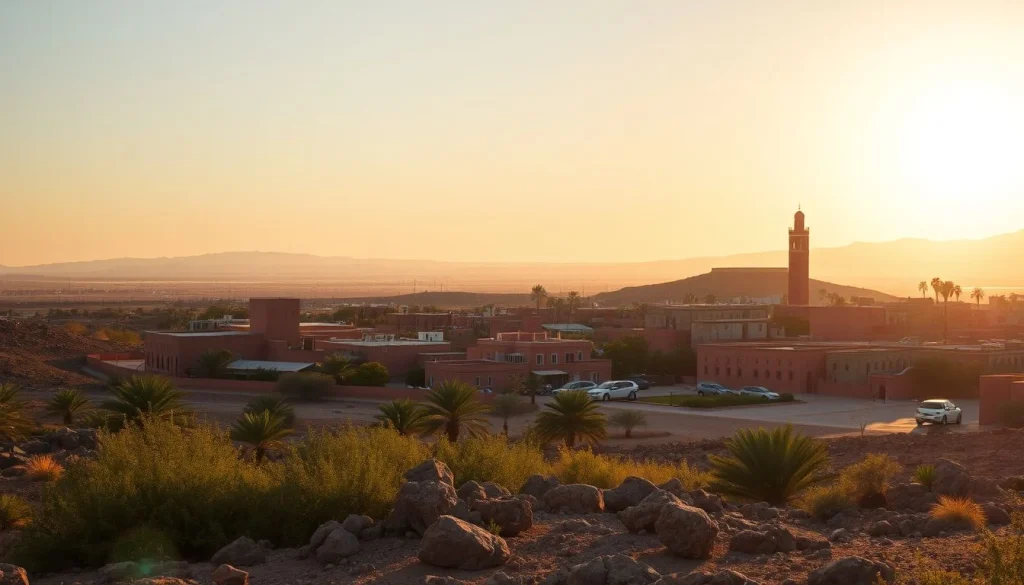
Choose Palmeraie only if the accommodation itself is a main part of the holiday. Its gardens and private-pool retreats create space for unhurried mornings and longer afternoons together, but it is a poor fit for couples who want to explore the Medina spontaneously on foot. Confirm the property’s transfer arrangements before booking, as Marrakech Menara Airport (RAK), the Medina and Palmeraie require different arrival logistics.
Before paying a deposit, ask the property for its exact meeting point, current opening status and access arrangements. Some riads may close for private renovation or during Ramadan, and quoted rates may or may not include breakfast, dinner, airport transfer or hammam access; CityGuide’s 2026 riad guide recommends confirming these inclusions directly. The riad’s written directions are more useful than a neighbourhood label when your evening plan ends away from the main street.
Accommodation by budget: what your nightly spend can mean
For couples, the right budget is less about a fixed star rating than the balance between location, atmosphere and private downtime. A modest riad can put you in the Medina’s evening lanes, while a higher-priced stay may buy more space, quieter shared areas or services such as a hammam and dinner. Treat the ranges below as indicative, not official averages.
| Estimated stay type | Indicative cost per room per night | What it may prioritise |
|---|---|---|
| Budget riad or basic guesthouse | MAD 250–700 | Central location, a simple courtyard and essential accommodation |
| Mid-range riad | MAD 700–2,000 | A balance of design, service and shared spaces |
| Luxury or exceptional riad | MAD 2,000+ | More space or privacy, with possible dining, hammam or pool facilities |
Basis: approximate MAD rates per room per night from 2025–2026 guide data, market summaries and rate snapshots, including low-season or date-dependent indications. CityGuide’s 2026 riad guide and other market sources note that spring and autumn rates can be roughly 30–50% higher than lower-season rates; check your exact dates.
At the budget end, prioritise the address and arrival instructions over decorative extras. This can suit a couple planning to spend most of the day exploring Jemaa el-Fna, the souks and historic palaces, but check whether the room is quiet enough for an unhurried morning and whether stairs will be comfortable with luggage.
Mid-range is often the practical compromise for a romantic stay: enough character for the courtyard experience, alongside more polished common areas or attentive service. Do not assume that a higher rate guarantees a plunge pool, rooftop terrace or private bathroom; confirm the specific room category and facilities before paying.
Luxury pricing may reflect privacy, larger rooms, a carefully run kitchen, hammam treatments or pool access, but the value depends on how much time you will spend at the riad. Compare the total rather than the headline rate: breakfast, dinner, airport transfer, hammam access, taxes and cancellation conditions may be charged separately. Check the property’s direct terms and the booking platform’s live price before committing.
When to book for comfortable weather and better choice
For the most comfortable sightseeing conditions, plan around March–May or September–November. These periods are generally favourable for walking through the Medina, visiting Bahia Palace and El Badi Palace, and returning to your riad for an unhurried afternoon. Summer can bring significant heat, so couples should check current weather guidance before booking long days outdoors.
Demand does not always follow the simplest seasonal pattern. The accommodation research supplied for this guide identifies June, July, August and December as peak months, while market summaries report that spring and autumn riad rates can be roughly 30–50% higher than lower-season prices, depending on the property and dates. Compare flexible dates, but treat these figures as indicative rather than guaranteed rates.
Christmas and New Year, festival periods and popular autumn weekends deserve earlier planning, particularly if you want a small riad with a rooftop terrace or a quiet courtyard. Before paying, confirm the property’s current opening status, especially if your dates overlap Ramadan, a national holiday or a private renovation; CityGuide’s riad guidance also advises checking operating arrangements. Recheck live weather, rates, cancellation terms and holiday policies with the riad or booking platform.
Arriving at your riad from Marrakech Menara Airport
Arriving at Marrakech Menara Airport (RAK) is straightforward only if your accommodation has given you precise instructions. Arrange a private transfer, taxi or other approved service in advance, and confirm the exact meeting point and price with the riad; RAK is the city’s main airport, according to Tourism Marrakech. A driver may not be able to take you directly to the door of a Medina property.
Many Medina derbs are too narrow for cars. Expect to be dropped at an accessible street or parking point, then walk with your luggage to the riad. This is particularly important around Mouassine, the souks and the lanes near Jemaa el-Fna. Ask whether a petite taxi or grand taxi is appropriate for the journey, but let the property confirm the practical arrangement rather than assuming either offers door-to-door access.
- Request a map pin, a written meeting point and the riad’s local telephone number.
- Confirm whether someone will meet you and whether a porter can carry bags from the vehicle drop-off.
- For a late arrival, agree the arrival procedure and after-hours contact before departure.
- Check what the quoted transfer price includes, rather than assuming it covers porter help.
These arrangements matter less in Gueliz and Hivernage, where broad streets make vehicle access more predictable, and in Palmeraie, where stays are generally reached by car or taxi. If you want the Medina’s atmosphere but are travelling with heavy luggage, prioritise a riad near an accessible edge street and book meet-and-greet assistance in writing. The property’s instructions should take precedence over a generic airport map.
How to choose a riad: the criteria that matter in Marrakech
Start with the exact location, not the pin on the map

In the Medina, a riad’s listed neighbourhood is only the beginning. Ask for the nearest vehicle-accessible street, the walking time and whether the route includes uneven paving, steps or busy souk lanes. A property close to Jemaa el-Fna may suit couples who want to return on foot after dinner, but restaurants, rooftop venues and late-moving foot traffic can also mean more noise. Mouassine, Kasbah and Mellah can offer a calmer historic setting, though the most secluded lane is not always the easiest to find after dark.
Request the arrival directions and a map pin directly from the property, then check whether the room is courtyard-facing or located near the entrance, kitchen, terrace or stairs. Those details affect privacy and sleep more than a polished photograph suggests. In Gueliz or Hivernage, broader streets and modern restaurants may be a better fit if downtime and simple taxi access matter more than an old-city atmosphere.
Check the outdoor spaces and services you will actually use
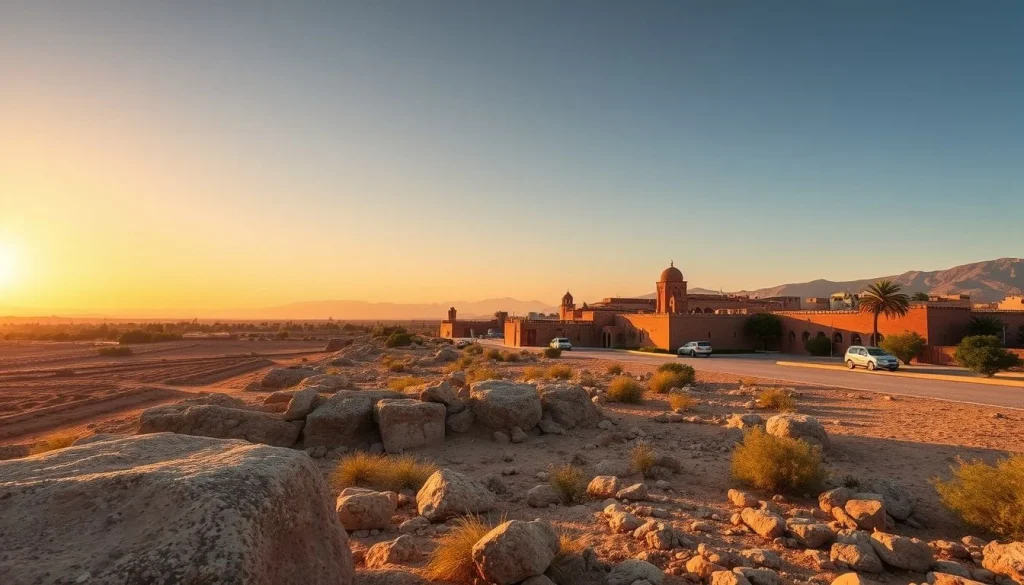
A rooftop terrace is valuable for a morning tea or a sunset drink only if it has usable shade, seating and a view; ask what is available rather than inferring it from images. Likewise, a plunge pool is a cooling courtyard feature, not necessarily a full swimming pool. Confirm its size, seasonal availability and whether it is shared. A hammam may be inside the riad, arranged elsewhere or available only by appointment, so ask who provides the treatment and what the quoted rate includes.
For couples, dinner on a terrace can make staying in worthwhile after a long day, but compare the menu, serving times and inclusions before relying on it. Most riads commonly include breakfast, while dinner, airport transfers and hammam access may be extra; CityGuide’s 2026 riad guide recommends confirming these services against the quoted rate. Also check air-conditioning and heating for your dates, Wi-Fi in the room rather than only in the courtyard, and whether staff can communicate in a language you both use.
Match the scale and layout to your preferred kind of stay
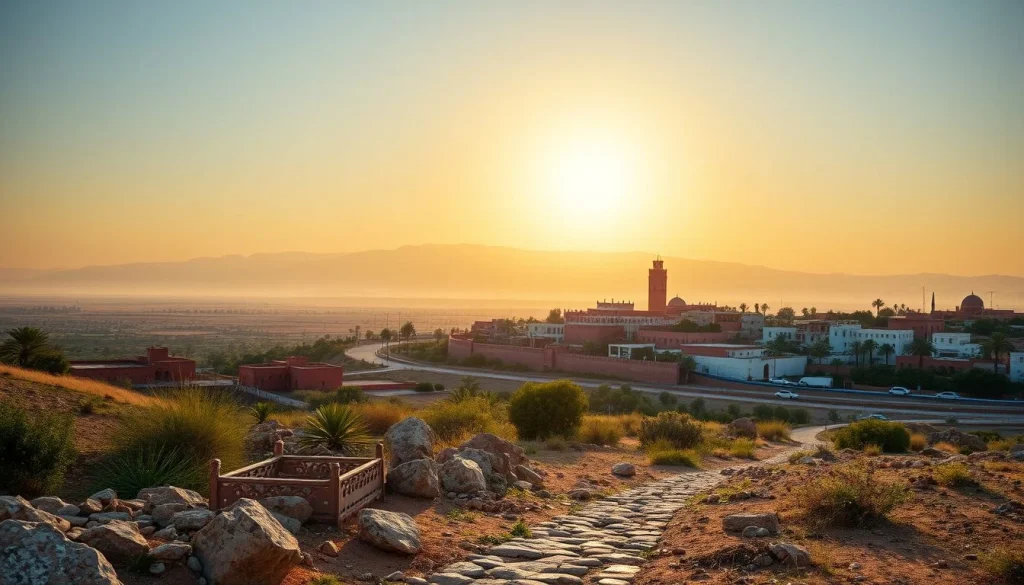
A small guesthouse can feel intimate, with a quieter rhythm and fewer rooms, while a larger boutique hotel may offer more structured service and shared facilities. Neither format guarantees privacy: ask how many rooms open onto the courtyard, whether private dining is possible and how late common areas remain in use. This is the practical balance for romantic accommodation in Marrakech—choose walkability and a scenic dinner terrace if you expect to spend evenings out, but prioritise room location, shade and quiet if the riad itself is part of the retreat.
Ask specific accessibility questions
Historic riads may have entrance steps, narrow passages, several staircases and no lift. Before paying, ask for the room’s floor, the number and width of steps, bathroom layout, shower access and the route from the drop-off point; request luggage assistance in writing. Do not treat “accessible” or a ground-floor photograph as proof that the entire route is suitable. The property is the only reliable source for its current layout and assistance arrangements.
Finally, distinguish verified facilities from marketing language: ask the riad to confirm the terrace, pool, hammam, heating, air-conditioning and dining arrangements in a written message. Properties can close for private renovation or during Ramadan, according to CityGuide’s 2026 guide, so confirm that the riad is operating for your dates before relying on any description.
Booking tips: timing, cancellation and location trade-offs
Book around the experience you want, but keep the reservation flexible until the riad has confirmed its practical details. Spring and autumn are generally popular sightseeing periods, and market summaries report that riad rates can be roughly 30–50% higher than lower-season levels, depending on the property and dates. June to August and December can also be busy; Christmas, New Year and festival periods deserve especially early checking. For current seasonal guidance, see the CityGuide 2026 riad guide.
Compare like with like. Check that the quoted room rate states whether breakfast, dinner, airport transfer, taxes and hammam services are included; breakfast is common, but inclusions vary. A flexible or refundable rate is useful if your flight plans may change, while a non-refundable booking only makes sense once the property has confirmed its operating arrangements and your arrival details.
Read the cancellation deadline, no-show rule, prepayment requirement and date-change terms before paying. Also look for wording about private renovation, Ramadan or holiday closures. Some riads may temporarily close, so contact the property directly before committing to a non-refundable stay and ask it to confirm that it will operate throughout your dates.
Location changes the arrival experience. A central Medina riad gives you atmospheric lanes and walking access to the souks, but many derbs are too narrow for cars: expect to walk from an accessible street or parking point with luggage. Gueliz and Hivernage generally make vehicle arrival simpler, while Palmeraie offers more of a retreat but means relying more on taxis or a driver.
Send one written checklist before booking:
- Is the riad open on every date, including Ramadan or public holidays?
- What is the exact map location and nearest vehicle drop-off point?
- Will someone meet you, carry luggage and guide you from the drop-off?
- What are the check-in hours and late-arrival arrangements?
- Are there stairs, narrow passages or any access limitations?
- Which meals, transfers and wellness services are included in the quoted rate?
Keep the reply with your booking confirmation. It gives you a clear record of the agreed price, inclusions and arrival plan, especially when the riad’s entrance is not reachable by car.
The right Marrakech stay depends on the experience you want
For most couples, start with Mouassine or another central Medina area. You’ll have the strongest sense of Marrakech’s courtyard architecture and can walk to Jemaa el-Fna, the souks and nearby restaurants, while still returning to a quieter interior at the end of the day.
Choose Kasbah or Mellah if you want a more relaxed historic base near Bahia Palace and El Badi Palace. Gueliz or Hivernage makes more sense when straightforward taxi access, modern restaurants and city comforts matter more than old-city atmosphere. Choose Palmeraie for a retreat with more space and downtime, accepting greater reliance on drivers or taxis.
Now shortlist two or three properties in your preferred area. Before paying, confirm the walking access, stairs, likely noise, outdoor space, included services, current opening status and cancellation terms directly with each riad. Ask the property to confirm your arrival meeting point and transfer arrangements in writing.
Frequently asked questions
What is the difference between a riad and a dar in Marrakech?
The supplied Moroccan National Tourist Office guidance defines a riad as a Moroccan house arranged around an inward-facing courtyard or garden; in Marrakech, the term commonly describes a restored courtyard guesthouse or boutique hotel. The cited sources do not establish a consistent distinction between a riad and a dar, so treat both labels cautiously and check the property’s own description, layout and services before booking.
Can couples request a private dinner or special occasion arrangement at a riad?
Possibly, but it should be arranged directly with the property rather than assumed from the word “riad”. Most riads commonly include breakfast, while dinner and other services may or may not be included; CityGuide’s 2026 riad guide recommends confirming inclusions. Ask in writing whether a private dinner, celebration setup, dietary request or late meal is available, and whether it carries an additional charge.
Are rooftop terraces comfortable during Marrakech’s cooler months?
The supplied sources do not provide reliable temperatures or guarantee that a particular rooftop terrace is usable in every season. A terrace may be an important part of a couple’s stay, but confirm its availability, seating, shade or heating arrangements directly with the riad. For current seasonal conditions, check up-to-date official or local weather information before travelling.
Can I arrange a late check-in if my flight arrives after midnight?
Do not assume that a riad has a staffed reception throughout the night. Some properties may close for private renovation or during Ramadan, and travellers are advised to confirm current operating arrangements before booking, according to the cited 2026 riad guidance. Contact the riad before arrival with your flight details and obtain written confirmation of late check-in, key collection and any airport meet-and-greet procedure.
How do I find a riad with reliable Wi-Fi for a longer stay?
The supplied sources do not verify Wi-Fi quality or coverage at individual riads, so online descriptions alone are not enough for a longer stay. Ask the property to confirm that Wi-Fi is available in your room, not only in the courtyard or reception area, and whether it can support your specific needs. Request the answer in writing alongside the cancellation terms.
What should I pack for a courtyard room and rooftop evenings?
The available sources do not provide a dependable packing list or seasonal temperature guidance. Check the forecast for your dates and ask the riad whether the room or rooftop has any arrangements that affect what you need to bring. Also plan for arrival on foot: many Medina lanes are too narrow for cars, so luggage may need to be carried from an accessible street or parking point; confirm porter help in advance.