The short answer: match your climbing trip to the season
Choose according to when you can travel, the style you climb and the level of commitment you want. Kalymnos and El Chorro suit spring or autumn sport climbing, pairing limestone routes with established local guiding; Kalymnos is the more approachable choice for beginners. Kalymnos’s climbing information places its main seasons around March–May and September–November, while Rockfax’s El Chorro guide favours the cooler months.
Desert climbing in Red Rock Canyon and Joshua Tree works best in autumn, winter and spring, although winter mornings can be cold and summer heat may be unsuitable. Railay’s drier November–April period suits tropical limestone better than the monsoon season. Yosemite favours spring and autumn; Patagonia’s Fitz Roy area is a December–February objective for experienced alpinists, not a casual extension to a beginner holiday.
That distinction defines the shortlist. Relaxed crag trips sit alongside demanding trad, big-wall and alpine objectives, each with different requirements for guiding, fitness, equipment and contingency days.
The short answer: match your climbing trip to the season
The right answer depends on the season you can travel, the style you climb and how much commitment you want. Kalymnos and El Chorro are strong choices for spring or autumn sport climbing: both combine limestone routes with established local guiding, while Kalymnos is particularly approachable for beginners. Kalymnos’s climbing information places its main seasons around March–May and September–November; Rockfax’s El Chorro guide favours the cooler months.
For desert climbing, Red Rock Canyon and Joshua Tree suit autumn, winter and spring, though winter mornings can be cold and summer heat may be unsuitable. Railay’s drier November–April period is better for tropical limestone than the monsoon season. Yosemite generally favours spring and autumn, while Patagonia’s Fitz Roy area is a December–February objective for experienced alpinists, not a casual extension to a beginner holiday.
That distinction shapes the shortlist: relaxed crag trips sit alongside demanding trad, big-wall and alpine objectives, with different needs for guiding, fitness, equipment and contingency days.
How these were chosen: a transparent climbing-trip shortlist
This shortlist is organised around a practical question: when does each destination make the most sense for the type of climbing you want to do? Seasonal reliability comes first, followed by rock quality and route-style variety, from bolted limestone and short trad routes to multi-pitch granite and alpine spires.
We also weighed grade range, beginner suitability, approach length, transport, accommodation, local climbing schools and the difference between hiring a guide and climbing independently. Access rules matter too: Yosemite’s National Park Service guidance stresses local ethics and the fact that fixed gear is not maintained by the park, while Red Rock’s commercial guiding is subject to Bureau of Land Management guest-permit procedures. These are planning constraints, not footnotes.
The destinations were then checked against established guidebook and climbing-community coverage, including National Park Service climbing information, Rockfax’s El Chorro logistics guide and regional destination material for Kalymnos and Railay. Seasonal windows are treated as useful planning guides rather than guarantees: El Chorro’s summer heat, Railay’s monsoon conditions and Patagonia’s short weather windows can all change the practical answer.
This is an editorial curation, not a report of personal visits or hands-on route testing. A destination may rank highly for a beginner booking a guided sport-climbing day and poorly for an experienced climber seeking remote, self-sufficient adventure. Before booking, check current park or regional notices, closures, permit requirements, guide credentials and recent route information.
The list: seven destinations matched to their best climbing seasons
1. Kalymnos, Greece — best spring or autumn sport-climbing escape
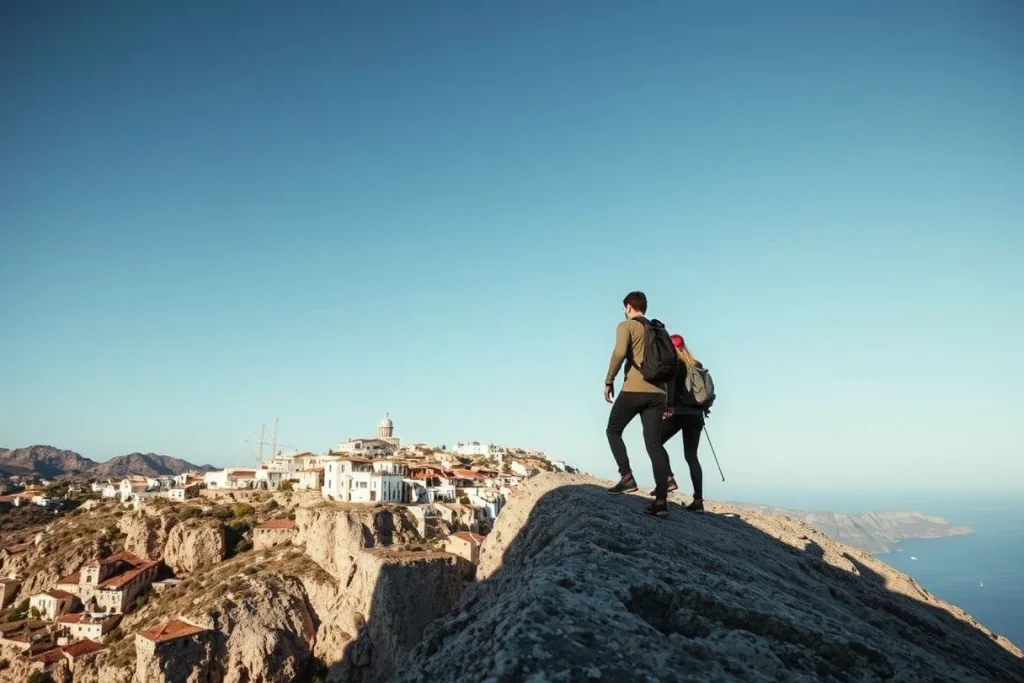
Kalymnos is the strongest all-round choice for a first international climbing holiday or a low-logistics sport-climbing trip. Its Mediterranean limestone is extensively bolted, with short approaches, beginner-friendly sectors and enough variety for independent climbers to keep progressing. The primary seasons are approximately March to May and September to November, when conditions are generally more suitable than the hotter summer months.
Base yourself around Massouri for the densest climbing community and easy access to local guide schools; Pothia is the island’s main port and a practical arrival point. Most visitors reach Kalymnos via Kos and a ferry connection, then use local vehicle hire to move between sectors. A guide is sensible for a first day, unfamiliar limestone movement or anyone travelling without a complete rack and rope system. Indicative guided introductory days in Mediterranean destinations such as Kalymnos cost around €40–€120 per person per day, based on 2024–2026 guide-market information; confirm the current rate, group size, guide credentials and equipment inclusions directly with the operator.
Independent climbers should bring or arrange a current guidebook, helmet and personal equipment, then check recent route and bolt information locally. The trade-off is that Kalymnos feels accessible without being effortless: heat, exposure, route-finding and the quality of fixed protection still require judgement.
2. Red Rock Canyon, Nevada — best autumn, winter or spring desert base
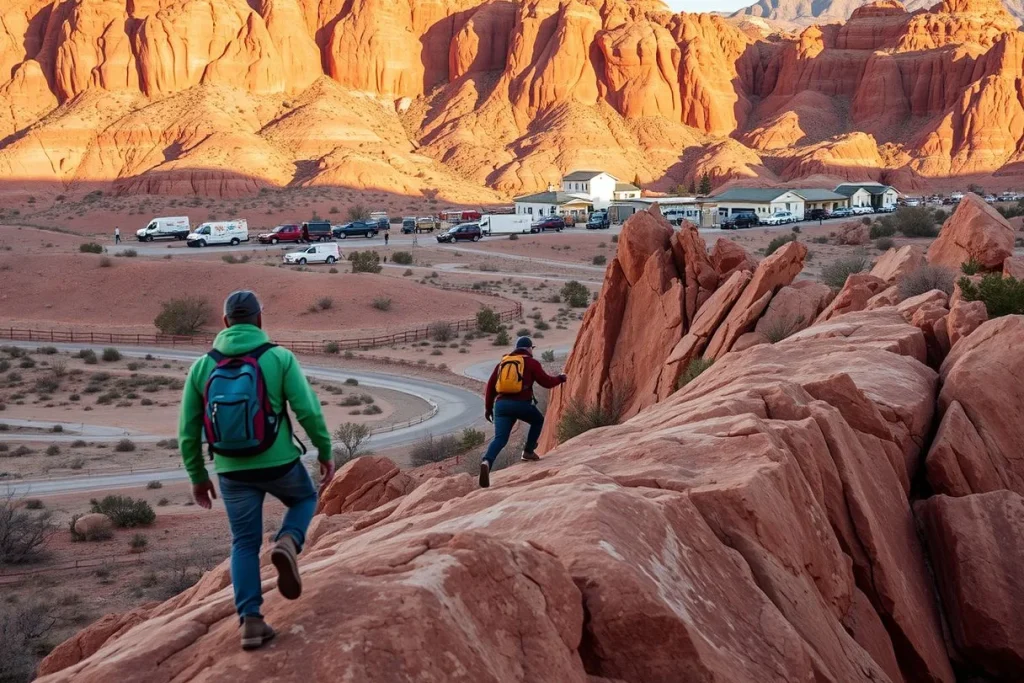
Red Rock Canyon National Conservation Area, close to Las Vegas, combines desert sandstone sport climbing with substantial trad and multi-pitch potential. It suits a mixed-ability group particularly well: beginners can book instruction, while experienced climbers can build a trip around longer routes and self-sufficient objectives. Autumn, winter and spring are generally the most comfortable seasons; summer heat can be unsuitable, while winter mornings may begin cold.
Las Vegas makes access and accommodation logistics relatively straightforward, but convenience should not be confused with low commitment. Desert sun, route length, loose rock and changing temperatures can turn a short-looking day into a demanding one. Carry enough water, protect against exposure and choose objectives that leave a generous margin for retreat.
Independent climbers need current route information and a clear understanding of sandstone conditions. If you book a commercial guide, verify that the operator complies with the Bureau of Land Management’s current Guest Special Recreation Permit procedures; the BLM’s permit announcement explains why this check matters. A guide is especially useful for visitors moving from single-pitch sport climbing into desert trad or multi-pitch terrain.
3. El Chorro and Ardales, Spain — best cool-season European crag
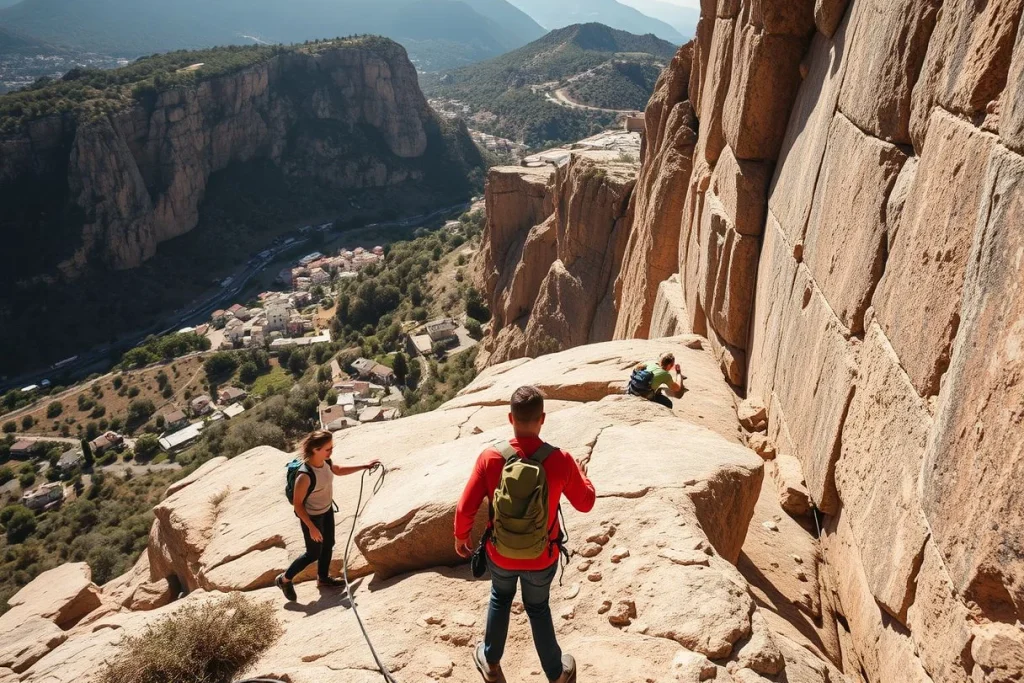
For a route-dense European climbing trip, choose El Chorro and Ardales near Málaga. The area offers extensive limestone, long sport routes and varied grades, so a capable beginner can start with instruction while stronger climbers have room to move towards longer, more committing lines. Autumn, winter and spring are generally the most comfortable periods; summer heat can make sustained climbing unpleasant and reduce the margin for error.
Málaga provides the obvious international gateway, with El Chorro and Ardales forming a practical base for a dedicated crag holiday. Local guiding is useful for learning the area’s limestone, selecting routes that match your experience and understanding longer-route logistics. Independent climbers should use a current guidebook and ask locally about access, rock condition and route closures rather than relying on old online descriptions.
Environmental regulations determine where climbing is permitted around El Chorro. Check current regional access rules before travelling, particularly if your itinerary includes sectors beyond the familiar main areas. This is a better fit for climbers who want varied sport climbing and occasional longer routes, not for anyone seeking a high-altitude or remote alpine objective.
4. Joshua Tree, California — best winter trad and crack destination
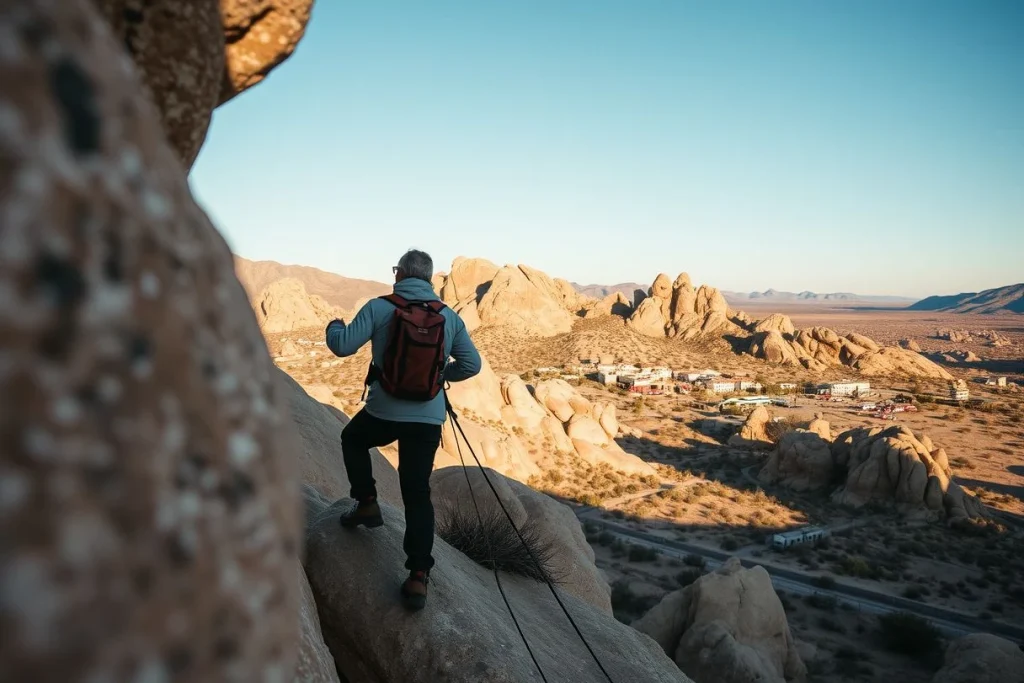
Joshua Tree National Park is a desert monzonite specialist’s destination, known for cracks, short trad routes, bouldering and a high-desert setting. Its main climbing season is approximately October through April, when temperatures are generally more manageable than in summer. The compact-looking routes can still demand precise footwork, crack technique and comfort placing protection; this is not automatically an easy beginner destination.
Joshua Tree rewards independent climbers who can read a guidebook, carry a rack appropriate to the route and make conservative decisions about protection and retreat. A certified guide is the safer starting point for newcomers to trad climbing, particularly those used to bolted limestone. Commercial guides operating inside the park require permission, and the National Park Service does not maintain bolts or other fixed gear, so inspect protection rather than assuming it is current.
Bring a current guidebook, navigation basics, helmet and a plan for water and changing desert temperatures. Check NPS notices and recent local route information before climbing. The attraction is self-reliant desert climbing; the cost is that route-finding and protection responsibility sit much more heavily with the climber.
5. Railay and Tonsai, Thailand — best dry-season beginner beach-climbing trip
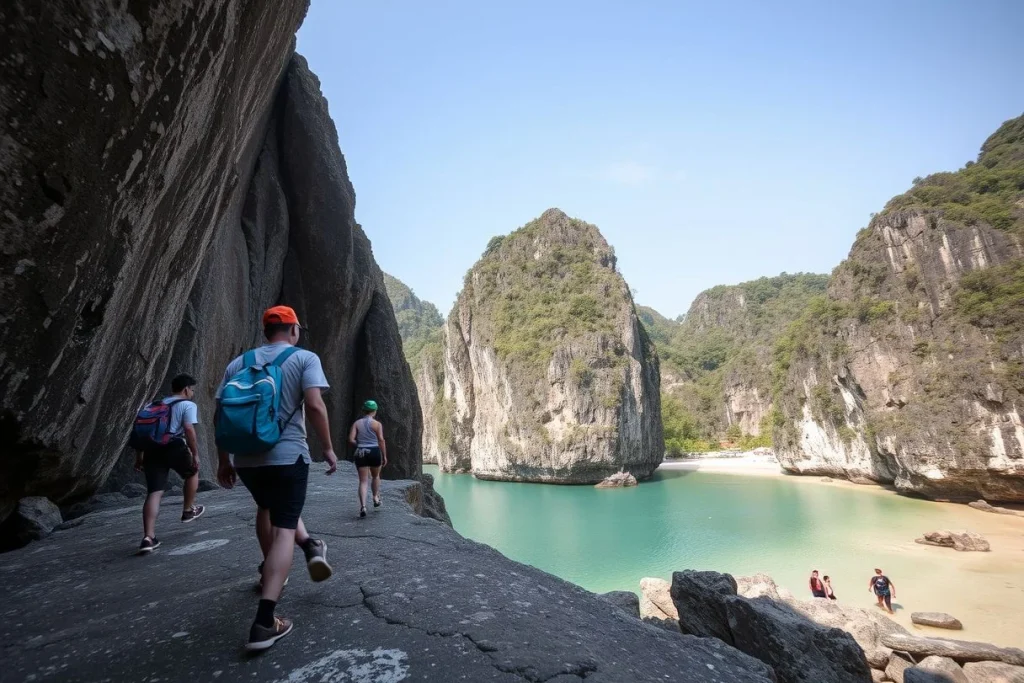
Railay and Tonsai pair tropical limestone climbing with a beach-based holiday. The drier season is approximately November through April, when short approaches, local climbing schools and available rental equipment make guided introductory days straightforward to arrange. This is the most approachable pick for a first taste of outdoor climbing, especially for travellers who want instruction without committing an entire trip to technical climbing.
Access is by boat from Ao Nang or Krabi, so pack day-sized essentials and plan around transfers rather than arriving with an expedition load. A local course is worthwhile for beginners because guides can manage equipment, select suitable limestone routes and explain movement above the water and beach approaches. Experienced sport climbers may prefer independent days after checking current route information and the condition of fixed protection.
Monsoon weather changes the calculation: wet rock can become slippery, and rain may limit both climbing and boat access. Confirm sea conditions, local access and operator credentials before setting out. Guided courses are commonly available, but the tropical setting does not remove the need for a helmet, sound belay practice and sensible decisions about rock and weather.
6. Yosemite National Park, California — best spring or autumn big-wall and trad objective
Yosemite is the choice for advanced climbers planning granite trad, multi-pitch climbing or an objective on El Capitan. The valley’s most practical climbing windows are generally spring and autumn, although conditions vary and climbing occurs year-round. Its scale and route commitment place it firmly beyond beginner rock climbing holidays.
Yosemite suits climbers with established trad systems, efficient rope management, big-wall fitness and the ability to retreat or wait out changing conditions. A certified guide can be appropriate when the objective exceeds your experience, but a guide does not replace preparation for long approaches, exposure or complex descent logistics. Independent parties should study current NPS guidance, local hazards and the Yosemite Climber’s Credo.
The NPS does not maintain fixed gear, so inspect bolts and other protection and carry the knowledge and equipment needed for the route. Check park notices, closures and current climbing ethics before departure. Yosemite is exceptional for commitment and granite technique, not a sensible place to learn basic outdoor belaying on an ambitious wall.
7. El Chaltén and Fitz Roy, Patagonia — best December-to-February alpine objective
El Chaltén and the Fitz Roy group are for experienced alpinists, not a first multi-pitch trip. The area’s remote granite spires, high-consequence routes and volatile weather make technical ability only one part of the requirement. Patagonia’s main alpine season is approximately December through February, when longer weather windows are more likely, but plans must remain flexible.
Expect wind, short usable weather windows, demanding approaches and limited rescue margin. A certified alpine guide is appropriate for climbers who lack the required route, glacier or weather-planning experience; independent parties need robust navigation, communication, retreat and emergency plans. Allow extra contingency days rather than treating a fixed itinerary as realistic.
Logistics commonly involve flying to El Calafate and continuing to El Chaltén. Guides and refugio logistics should be arranged many months ahead for the December-to-February peak season. Check current weather guidance, access conditions and route information before committing: Fitz Roy rewards patience and experience, but it offers little tolerance for an underprepared team.
At a glance: season, style, skill level and trip logistics
Fitz Roy sits at one end of the commitment scale; Kalymnos and Railay sit at the other. The comparison below separates seasonal fit from technical level, because a destination with easy access can still contain serious routes. Seasons are approximate: check current weather, closures, permits and access notices before booking.
| Destination | Strongest season | Rock and route style | Beginner suitability | Trip character and base | Guide or independent? | Principal caution |
|---|---|---|---|---|---|---|
| Kalymnos | Spring and autumn | Bolted limestone; short approaches and mixed grades | Beginner-friendly | Route-dense sport holiday; Massouri and Pothia | Either; local schools suit first-timers | Check ferry connections, local access and heat |
| Red Rock Canyon | Autumn, winter and spring | Sandstone sport and trad; multi-pitch options | Intermediate, with guiding | Desert base near Las Vegas | Independent for experienced climbers; commercial guides need current BLM compliance | Summer heat and cold winter mornings |
| El Chorro | Autumn, winter and spring | Limestone sport climbing, including long routes | Beginner-friendly to intermediate | Crag-focused stay around Ardales and Málaga | Either; verify regional climbing restrictions | Summer heat and changing access rules |
| Joshua Tree | October–April | Monzonite cracks, short trad routes and bouldering | Intermediate; beginners should use a permitted guide | Self-sufficient high-desert trip | Independent only with sound route-finding and gear skills | NPS does not maintain bolts; check fixed gear and closures |
| Railay and Tonsai | November–April | Tropical limestone; short approaches and sea cliffs | Beginner-friendly | Beach trip based around Railay, Tonsai or Ao Nang | Guided courses are the practical choice for novices | Monsoon rain makes rock slippery and boat access less reliable |
| Yosemite | Spring and autumn | Granite trad, multi-pitch routes and El Capitan big walls | Advanced to expert | High-commitment valley objective | Independent only with advanced systems; certified support suits major objectives | NPS does not maintain fixed gear; follow the Yosemite Climber’s Credo |
| El Chaltén and Fitz Roy | December–February | Remote granite-spire and alpine climbing | Expert/high-commitment | Weather-dependent alpine trip via El Calafate | Experienced independent teams or certified alpine guides | Wind, short weather windows and remote rescue logistics |
Estimated guiding signal: Mediterranean introductory days are around €40–€120 per person, based on indicative 2024–2026 guide-market information cited by Visit Kalymnos; Railay is described as comparable, but no exact rate is supplied. Patagonia multi-day guided objectives typically cost thousands of USD or EUR, based on indicative 2025–2026 operator information. Confirm group size, equipment, guide credentials and inclusions directly with the operator.
How to choose: the right crag, wall or alpine objective for your trip
Choose by experience and objective
For a first guided climbing holiday, start with Kalymnos, Railay or El Chorro. Kalymnos combines bolted limestone, short approaches and mixed-grade sectors; Railay and Tonsai add tropical scenery and local climbing schools; El Chorro offers extensive limestone and longer sport routes near Málaga. A suitable course should state the guide’s qualification, group size, equipment included, weather policy, rescue plan and insurance expectations before you pay. Beginners should choose instruction that builds belaying, movement and route-reading skills rather than simply providing a top-rope day.
Independent sport climbers have the clearest choice between Kalymnos, El Chorro and Red Rock. Kalymnos suits a route-dense Mediterranean trip reached via Kos and ferry connections, with local vehicle hire useful for moving between areas. El Chorro is a strong cool-season option for varied grades and longer limestone routes. Red Rock adds desert sandstone and both sport and trad climbing, but summer heat can be unsuitable and commercial guiding is subject to Bureau of Land Management guest-permit procedures.
Choose Joshua Tree, Red Rock or Yosemite for trad and crack climbing. Joshua Tree is the most focused short-route and crack destination, with a high-desert setting and bouldering alongside traditional climbing. Red Rock gives a broader desert mix and larger objectives close to Las Vegas. Yosemite is a different proposition: its granite multi-pitch routes and El Capitan demand sound protection skills, efficient systems, fitness and the judgement to manage commitment. It is not an appropriate first independent climbing trip.
Match commitment to your margin
Big-wall and alpine climbers should separate Yosemite from El Chaltén and Fitz Roy. Yosemite rewards advanced multi-pitch teams with a defined granite objective; Fitz Roy is a remote, weather-dependent alpine undertaking for experienced climbers who can read conditions, move efficiently and retreat safely. Certified guide support is sensible for beginners and for high-commitment objectives, but a guide cannot remove the need for suitable fitness or realistic weather planning.
For a lower-cost crag trip, self-guided climbing can reduce guide fees, but transport, accommodation, guidebooks, equipment and local access still shape the total. Indicative 2024–2026 guide-market information places Mediterranean introductory guiding at around €40–€120 per person per day; Railay is described as comparable, although operators must confirm current rates. Patagonia guided objectives typically run into thousands of USD or EUR because they involve several days and substantial logistics.
Book around uncertainty
Reserve Patagonia guides and refugio logistics many months ahead for the December–February peak, then allow extra days after the journey through El Calafate to El Chaltén. Weather contingency matters there more than squeezing in another sightseeing stop. For crag trips, keep the itinerary flexible enough to switch sectors when heat, rain or wet rock changes the plan.
Use Mountain Project, 27Crags and Rockfax to compare grades, approaches and route styles, not as substitutes for current local information. Bring personal climbing shoes and a well-fitted harness if you have reliable kit; renting the rest can simplify flights, but confirm standards and inclusions with the operator. A low headline price is less important than current guide credentials, rescue coverage and an insurance policy that matches the climbing you intend to do.
Before you book: access, permits, gear and safety checks
Before paying a deposit, check the land manager’s current access notice for the exact crag, not just the destination’s general climbing reputation. For Yosemite, read National Park Service guidance and the Yosemite Climber’s Credo; for Red Rock Canyon, confirm that a commercial operator is compliant with the Bureau of Land Management’s current Guest Special Recreation Permit procedures. In Joshua Tree, commercial guides require permission, and the NPS does not maintain bolts or other fixed gear.
- Confirm closures and local restrictions. El Chorro’s regional environmental rules determine where climbing is permitted, while parks and conservation areas can change access by season, weather or rockfall. Ask a current local guide service and check official notices immediately before setting out.
- Check the route’s present condition. Bolts and fixed gear are not automatically inspected or maintained by the park. Compare recent information from local guides with the latest editions of Rockfax, Mountain Project or 27Crags; do not rely on old crowd-sourced beta alone.
- Build transport slack into the plan. Recheck road conditions and park access in the American West, ferry schedules between Kos and Kalymnos, and boat transfers from Ao Nang or Krabi to Railay. In Railay, wet limestone can be slippery during the monsoon, so do not treat a booked boat or climbing day as guaranteed.
- Pack for the exposure, not the postcard. Desert climbers need a serious sun-and-water plan and a realistic retreat margin. Patagonia demands weather flexibility; Yosemite and Fitz Roy require skills and equipment appropriate to high-commitment objectives.
- Make insurance specific. Confirm that your policy covers climbing at the planned grade, guided or independent activity, evacuation and rescue. Leave contingency days for weather, especially in remote Patagonia, and verify guide credentials, rescue arrangements and rental-equipment standards before booking.
Conclusion: choose the season first, then secure the right objective
For the broadest choice of seasons and ability levels, make Kalymnos your starting point: its bolted limestone, short approaches and local guide infrastructure suit beginners taking a course as well as independent sport climbers. Choose El Chorro for cool-season limestone, Red Rock Canyon or Joshua Tree for desert sport, trad and crack climbing, and Yosemite only when your multi-pitch and big-wall skills match the commitment. Fitz Roy is an advanced alpine objective, not a progression holiday.
Next, select one seasonal window and check current access, closures and weather with the relevant park, land manager or local authority. Then contact a properly credentialed guide—or reserve transport, accommodation and other logistics—before booking non-refundable travel. For Yosemite, begin with the National Park Service climbing guidance; for Patagonia, arrange guides and refugio logistics many months ahead.
Frequently asked questions
How many days should I allow for weather delays on a climbing trip?
There is no reliable universal number: the right buffer depends on the objective and season. Patagonia needs particular caution because wind, short weather windows and remote logistics can disrupt plans; the supplied guidance recommends extra travel days and arranging guides and refugio logistics many months ahead for December–February. For any destination, ask the guide or local climbing service how much contingency is sensible before booking transport home. See Patagonline’s Patagonia planning guidance.
What equipment can I usually rent at an international climbing destination?
Rental arrangements vary by destination and operator, so confirm inclusions before paying. Railay and Tonsai have local climbing schools, daily courses and rental gear, while Kalymnos has local guide-school infrastructure; these are the clearest fits for travellers who do not want to transport a complete climbing kit. Ask specifically what is supplied, what condition checks are made and what personal equipment you must bring. Railay access is by boat, so keep daypack-sized essentials with you.
How do I check whether routes, bolts or fixed gear are currently safe and open?
Start with current park, conservation-area or regional access notices, then check a local guide service and the latest specialist guidebook for route closures and conditions. Do not assume fixed gear is maintained by the land manager: the National Park Service says it does not maintain fixed gear in Yosemite, and Joshua Tree’s NPS guidance says it does not maintain bolts. In Red Rock, also verify current access and commercial-guide requirements with the Bureau of Land Management. See the NPS Yosemite climbing guidance and NPS Joshua Tree climbing guidance.
Which guidebook or route app is most useful for planning unfamiliar crags?
Use a current local guidebook or route source alongside official access notices; no single app is identified as authoritative for all seven destinations. Mountain Project, 27Crags and Rockfax are useful names to investigate, but crowd-sourced route information should not replace current local advice, especially where bolts, closures or environmental rules may change. For El Chorro, check the regional regulations as well as the route guide, since climbing is restricted in some areas.
What insurance should I look for before booking a climbing holiday?
The supplied destination guidance does not specify a standard insurance product or policy wording, so check this directly with an insurer and your guide. Ask whether the policy covers the exact activity and location, guided climbing, rescue or evacuation, equipment and cancellations caused by weather or access disruption. For high-commitment alpine objectives such as Fitz Roy, also confirm the guide’s rescue arrangements and the policy’s exclusions before paying a deposit.
Can I combine a climbing trip with hiking, beaches or other non-climbing activities?
Yes, but the best combinations differ by destination. Railay and Tonsai naturally suit a beach-based trip, with boat access from Ao Nang or Krabi and short approaches; El Chorro is near Málaga and Ardales, making it practical to build in non-climbing time. Kalymnos also works well as a relaxed island trip, while Patagonia’s remote setting and weather-dependent objectives demand more flexibility. Keep rest and weather days available rather than filling every day with another activity.