
This article contains affiliate links. If you book through one of our links, we may earn a commission at no additional cost to you.
At around 2,400–2,500 m, a hiking plan needs to account for more than trail distance and gradient: the sleeping altitude itself becomes a safety decision. This guide explains how to acclimatise to altitude safely, with practical rules for staged ascent, rest days and recognising when a planned summit should be abandoned.
Written for hikers and trekkers above roughly 2,400 m who need clear decisions rather than specialist medical knowledge, it focuses on the details that matter on route: how quickly to gain sleeping altitude, why a climb-high, sleep-low pattern can help, and which symptoms mean stop, descend or seek urgent care. It also separates prevention from emergency treatment, including the limited role of medication, oxygen and portable hyperbaric chambers.
Quick answer: Begin planning acclimatisation above approximately 2,400–2,500 m, then limit sleeping-altitude gains to about 300–500 m a day above 2,500 m, with an acclimatisation or rest day for every 600–1,000 m gained. Stop ascending if a headache appears with another symptom; progressive illness, ataxia, confusion or breathlessness at rest require immediate descent and urgent medical care.
How to acclimatise safely: the essentials
Safety rule: Altitude illness risk rises above approximately 2,400–2,500 m (8,000–8,200 ft). Above about 2,500 m, plan to raise your sleeping altitude by roughly 300–500 m per day and add an acclimatisation or rest day for every 600–1,000 m gained. These figures come from the Wilderness Medical Society’s 2024 clinical practice guidance.
That schedule is a planning ceiling, not a target to force. If a headache is accompanied by nausea, dizziness, unusual fatigue or poor sleep, stop ascending. Progressive or moderate-to-severe symptoms call for descent and medical care; ataxia—poor coordination or an unsteady walk—confusion, or breathlessness at rest are emergency signs requiring immediate descent. The Cleveland Clinic’s overview of altitude sickness lists these common early symptoms and the more serious warning signs.
Build acclimatisation into the route
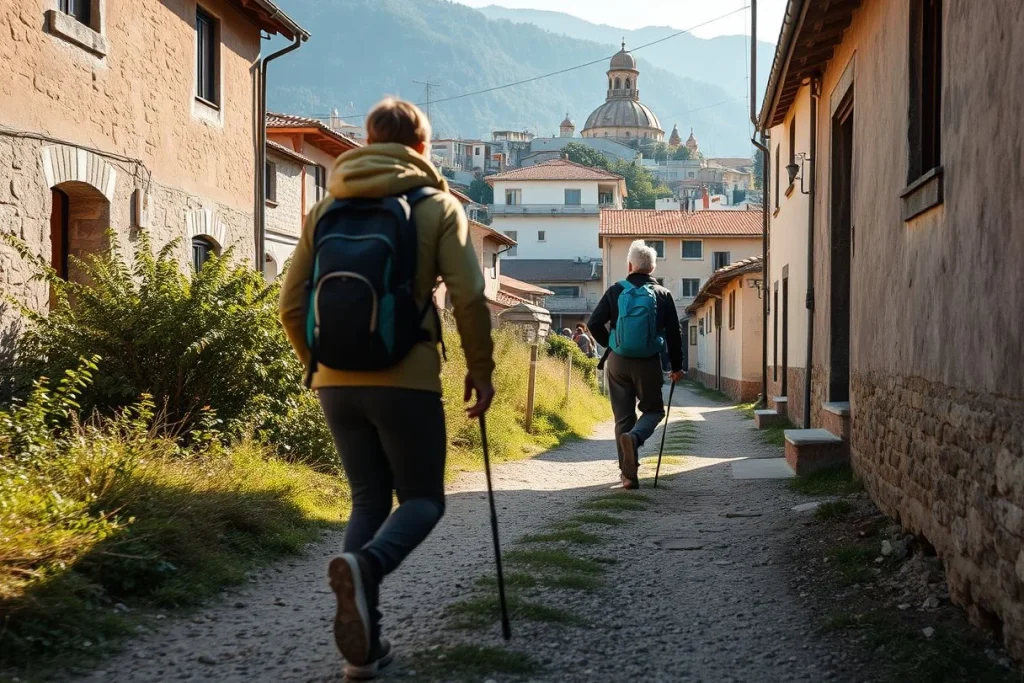
Start the acclimatisation plan before the trail begins. Where the journey allows, use a staged approach: spend nights at intermediate elevations rather than flying or driving directly from low altitude to a high sleeping altitude. A route that lets you climb high during the day and sleep lower can also be easier to tolerate than an itinerary with a large jump in sleeping altitude, according to the CDC Yellow Book guidance.
Mark rest days against sleeping altitude, not simply against the number of walking days. After each 600–1,000 m of sleeping-altitude gain, allow an acclimatisation day before another substantial increase. Keep the itinerary flexible enough to remain at the same elevation or descend if symptoms appear; a fixed summit date should never outweigh a deteriorating hiker.
Know what treatment can and cannot do
Prevention is gradual ascent and sensible pacing. Medicines prescribed for altitude illness may help in particular circumstances, but they do not make rapid ascent safe and do not replace descent when significant illness develops. Supplemental oxygen or a portable hyperbaric chamber such as a Gamow bag can temporarily support a seriously ill person if descent is delayed, but the guidance stresses that these require suitable equipment and trained use.
Think of descent as the decisive treatment, not the final option after every other measure fails. Oxygen, medication and a Gamow bag may buy time; they must not become a reason to remain at altitude while evacuation arrangements are made.
Fitness is not protection
Strong cardiovascular fitness can help you walk efficiently, but it does not reliably predict who will tolerate altitude. Previous altitude response and the speed of ascent are more useful when shaping an acclimatisation plan. Before departure, check the destination’s current weather, trail closures, rescue contacts, evacuation times and insurance exclusions with the relevant national park service, local mountain rescue organisation and official travel sources.
Tips in detail: build a safer high-altitude hiking plan
Build the plan around sleeping altitude
- Identify the highest place you will sleep. Start active acclimatisation planning once the route reaches approximately 2,400–2,500 m, where the risk of altitude illness rises. Sleeping altitude matters more than a brief daytime high point, so mark every hut, campsite or lodge on the itinerary before judging whether the schedule is realistic. The CDC’s high-altitude travel guidance is a useful starting point, but the route’s national park service or rescue organisation should confirm local access and evacuation arrangements.
- Limit each day’s sleeping-altitude gain above 2,500 m. Use approximately 300–500 m as the daily ceiling, rather than treating a long, strong hiking day as permission to sleep much higher. This is a planning limit, not a guarantee: a slower schedule may be appropriate after a rapid arrival, a previous episode of altitude illness or an unusually demanding route. The 2024 update to the Wilderness Medical Society Clinical Practice Guidelines also recommends an acclimatisation or rest day for every 600–1,000 m gained.
- Use rest days as real acclimatisation days. Spend the night at the same elevation, and if conditions and your symptoms allow, walk higher during the day before returning to sleep lower. This “climb high, sleep low” pattern gives the body exposure without adding the full daytime high point to its sleeping-altitude gain. Keep the excursion easy; a rest day is not the time for an aggressive summit push or a remote route with no straightforward way back.
| Planning stage | Sleeping altitude | Daytime high point | Next sleeping altitude | Escape and communication |
|---|---|---|---|---|
| Arrival or transfer | Choose an intermediate elevation where possible | Keep activity gentle | Do not make a large jump simply to match the itinerary | Confirm transport, local rescue and a working contact method |
| Acclimatisation day | Sleep at the same elevation | Short climb higher, then return | Move on only if symptoms are absent or clearly improving | Mark the quickest descent route before leaving camp or hut |
| Move higher | Gain approximately 300–500 m above 2,500 m | Allow for terrain and weather, not just distance | Record the new sleeping elevation | Tell a guide or group member the turn-around and descent plan |
| Illness or delayed evacuation | Do not gain altitude | Only move if descending or reaching help | Descend as soon as possible | Contact local mountain rescue, national park services or the expedition operator |
For an independent hiker, this table belongs in the route plan alongside maps, water points and alternative exits. A guided group should ask the leader how sleeping-altitude gains, rest days and emergency descent decisions are set before departure. On a hut or camping trip, check that the proposed rest day has a safe low route and that bad weather will not leave the group committed to a high camp.
- Stage the journey instead of flying or driving directly to a high trailhead. Where the route permits, spend nights at intermediate elevations and add an easy day before demanding hiking. The CDC Yellow Book advises gradual exposure and describes staged travel as preferable to arriving from low altitude at a high sleeping elevation. A fly-and-hike plan can leave no margin to recognise symptoms before the itinerary becomes remote, so treat it as a higher-risk design that needs medical advice and a conservative fallback.
- Make a symptom check part of every morning and evening. Ask whether there is a headache, nausea, dizziness, unusual fatigue or poor sleep, and compare the answer with the previous check rather than relying on fitness or enthusiasm. These are common early symptoms of acute mountain sickness (AMS). Hydration and carbohydrate intake support ordinary hiking needs, but neither reliably prevents altitude illness; being very fit does not reliably predict altitude tolerance either.
- Stop ascending when a headache is joined by another symptom. Remain at the same sleeping altitude, rest and reassess rather than pushing on to keep the schedule. A headache with nausea, dizziness, fatigue or poor sleep warrants caution; symptoms that are progressive or moderate to severe require descent and medical care, according to the Wilderness Medical Society guidance. Do not let a pre-booked hut, summit window or group timetable override that decision.
- Learn the difference between AMS, HACE and HAPE. AMS commonly begins with headache plus symptoms such as nausea, dizziness, fatigue or poor sleep. Ataxia—unsteady walking—or confusion may indicate high-altitude cerebral edema (HACE), while worsening breathlessness or cough may indicate high-altitude pulmonary edema (HAPE). Breathlessness at rest, confusion or ataxia is an emergency: start immediate descent and seek urgent medical care, because descent is the primary lifesaving action.
- Discuss acetazolamide before the trip, not at the trailhead. Acetazolamide, commonly known as Diamox, can help prevent AMS and speed acclimatisation when gradual ascent is impractical, but it does not make rapid ascent safe and is not a substitute for descent. A travel-medicine clinician should review whether it is suitable, including medical history, allergies and other medicines; this guide does not provide a personal dose. If significant illness develops, medication must not become a reason to remain high.
- Keep emergency medicines in their proper role. Dexamethasone may temporarily improve AMS or HACE symptoms, but it does not create acclimatisation and should be treated as a bridge to descent or evacuation. Nifedipine may be used in HAPE treatment under appropriate medical guidance, while oxygen and descent remain the primary emergency measures. Follow a clinician-reviewed plan and do not assume that carrying a medicine removes the need for a rapid exit.
- Prepare for a descent that cannot happen immediately. Carry or arrange access to supplemental oxygen or a portable hyperbaric chamber such as a Gamow bag only where the equipment, trained users and local protocol make that realistic. These measures can temporarily support someone with severe altitude illness when descent is delayed; they do not replace descent. Before departure, record local mountain rescue and national park contacts, evacuation providers, insurance exclusions, communication options and at least one lower route alternative. If you are alone, share the itinerary and check-in times; if guided, ask who makes the evacuation call and how the group will communicate if separated.
A pulse oximeter can add a trend to the daily record, but it cannot diagnose acclimatisation or overrule symptoms. Readings vary with cold, movement and device limitations, so a normal number must not reassure a hiker who is confused, unsteady or short of breath at rest. Symptom progression and the ability to descend safely matter more than a single measurement.
Common mistakes to avoid on a high-altitude trek
Small planning errors can become serious
Progressive symptoms, ataxia, confusion or breathlessness at rest override the itinerary. Stop the ascent and arrange immediate descent and urgent medical care. The Wilderness Medical Society’s 2024 guidance identifies descent as the primary lifesaving action; oxygen, medication or a portable hyperbaric chamber can support a seriously ill hiker only while descent or evacuation is being organised.
- Ascending with a headache plus nausea or dizziness. This is not a normal adjustment to push through. Headache combined with another symptom of acute mountain sickness means stopping the ascent; worsening or moderate-to-severe symptoms require descent and medical care, according to the Wilderness Medical Society’s 2024 Clinical Practice Guidelines.
- Turning a rest day into another hard ascent. A day that is labelled “rest” but involves a strenuous climb to a much higher sleeping altitude may defeat the purpose of the schedule. Above approximately 2,500 m, keep sleeping-altitude gains to about 300–500 m per day and plan an acclimatisation day for every 600–1,000 m gained.
- Gaining sleeping altitude too quickly. A direct flight or drive from low altitude to a high trailhead leaves little margin for acclimatisation. The CDC Yellow Book recommends staged travel where possible: sleep at intermediate elevations and use “climb high, sleep low” patterns rather than treating a rapid arrival as a normal start.
- Assuming fitness provides protection. Strong lungs and legs can help with the physical work, but fitness does not reliably predict tolerance to altitude. Previous altitude response and the rate of ascent are more useful planning considerations.
- Using hydration, avoiding alcohol or a pulse oximeter as proof of safety. Sensible drinking and avoiding alcohol may be part of a careful routine, but neither confirms acclimatisation. A pulse oximeter can support a trend, not replace symptom assessment or clinical judgement.
- Taking altitude medication without medical advice. Acetazolamide can help prevent acute mountain sickness when gradual ascent is impractical, but it does not make rapid ascent safe. Dexamethasone can temporarily treat symptoms, while nifedipine may be used in high-altitude pulmonary oedema; these medicines require advice from a travel-medicine clinician and never replace descent.
- Waiting until illness is severe. Do not wait for confusion, unsteadiness or breathlessness at rest before acting. Oxygen and a Gamow bag can temporarily support a patient when descent is delayed, but require suitable equipment and trained use; they are not substitutes for evacuation.
- Following a fixed summit timetable after conditions change. Illness, storms, route closures or delayed rescue can make yesterday’s plan unsafe. Before departure, check the destination’s official weather and access updates, local mountain-rescue contacts, evacuation arrangements and insurance exclusions, since these vary by route and no destination-specific system can be assumed.
Conclusion: plan the ascent, and be ready to turn back
Before booking a high-altitude trek, turn the route into a written acclimatisation plan. Mark every sleeping-altitude gain, keep increases above 2,500 m to about 300–500 m a day, and add a rest or acclimatisation day for each 600–1,000 m gained, following the Wilderness Medical Society guidelines.
Also record each possible descent route, local mountain-rescue contact and evacuation option. Check the destination’s official weather forecasts, trail closures, access conditions and rescue arrangements before departure, particularly during its peak travel months; confirm that your travel insurance covers high-altitude trekking and evacuation. If gradual ascent is impractical, discuss acetazolamide with a travel-medicine clinician rather than treating it as permission for a rapid ascent. Most importantly, stop climbing when symptoms worsen: early descent is safer than trying to preserve a timetable.
Frequently asked questions
How long does it take to acclimatise to altitude?
There is no single timetable that suits every hiker. Above approximately 2,500 m, plan to raise sleeping altitude by only about 300–500 m per day and include an acclimatisation or rest day for every 600–1,000 m gained. Spend nights at intermediate elevations where possible, and use a climb-high, sleep-low pattern. Your previous response to altitude and the ascent rate matter more than fitness. Source: Wilderness Medical Society Clinical Practice Guidelines, 2024 Update; CDC Yellow Book.
Does being physically fit protect me from altitude sickness?
No. Physical fitness does not reliably predict how your body will respond to altitude. A fit hiker can still develop acute mountain sickness if sleeping altitude rises too quickly, while previous altitude response and a gradual ascent are more useful planning considerations. Treat headache, nausea, dizziness, fatigue or poor sleep as symptoms to monitor rather than assuming strong conditioning makes ascent safe. Source: Wilderness Medical Society Clinical Practice Guidelines, 2024 Update; Cleveland Clinic.
Can a pulse oximeter tell me whether I am acclimatising properly?
A pulse oximeter should not be used as a stand-alone test of acclimatisation. The supplied clinical guidance emphasises symptoms and clinical judgement: headache with another altitude-illness symptom means you should stop ascending, while ataxia, confusion or breathlessness at rest require immediate descent. If you carry one, treat its readings as supporting information, not permission to continue. Source: Wilderness Medical Society Clinical Practice Guidelines, 2024 Update.
Is it safe to drink alcohol at altitude?
The supplied sources do not establish a safe amount of alcohol at altitude, so do not use alcohol as part of an acclimatisation plan or as a way to judge your condition. Above approximately 2,400–2,500 m, prioritise a gradual sleeping-altitude increase and pay attention to symptoms such as headache, nausea, dizziness, fatigue and poor sleep. Ask a travel-medicine clinician for advice specific to your route and medicines. Source: CDC Travelers’ Health; Cleveland Clinic.
Do children or pregnant travellers need special altitude advice?
Yes—children and pregnant travellers should seek individual medical advice before travelling to high altitude rather than relying on a generic acclimatisation schedule. The supplied guidance also flags chronic heart or lung disease and previous severe altitude illness for pre-travel consultation. Ask a travel-medicine clinician to review the planned sleeping altitudes, ascent rate, evacuation arrangements and any medicines before booking the trek.
What should I do if descent or evacuation is delayed?
Treat delayed descent as an emergency, not as a reason to continue the itinerary. Supplemental oxygen or a portable hyperbaric chamber such as a Gamow bag can temporarily support someone with severe altitude illness, but they require suitable equipment and trained use. Dexamethasone may temporarily treat AMS or HACE symptoms, while nifedipine may be used for HAPE; these measures do not replace descent or urgent medical care. Source: Wilderness Medical Society Clinical Practice Guidelines, 2024 Update; AAFP.