This article contains affiliate links. If you book through one of our links, we may earn a commission at no additional cost to you.
At 4,167 metres, Mount Toubkal rises above the High Atlas as North Africa’s highest peak, reached by a trail that climbs from Imlil through Aroumd or Aremd and Sidi Chamharouch to the high mountain refuge. The standard Mount Toubkal hike is non-technical from late spring to autumn, but it is still a serious ascent: the approach to Refuge du Toubkal takes around four to five hours and gains roughly 1,400–1,500 metres.
This guide is for fit hikers planning a first 4,000-metre summit, particularly travellers combining Marrakech with a guided Atlas Mountains trek. It helps you choose between the efficient two-day itinerary and a slower three- or four-day plan, judge the effort honestly, prepare for altitude and changing conditions, and understand what a guide, refuge booking and winter equipment involve. It also separates summer trekking from the snow and ice conditions of November to April, when Toubkal becomes a mountaineering objective rather than a straightforward hike.
Quick answer: For most fit first-time hikers, choose a guided two-day summer or autumn ascent from Imlil via Aroumd/Aremd, Sidi Chamharouch and Refuge du Toubkal; allow three to four days if you want more acclimatisation and weather flexibility. A certified guide agréé is required on the Imlil–Toubkal trail, while no separately verified national Toubkal permit fee should be assumed.
Why climb Mount Toubkal?
At approximately 4,167 m, Jebel Toubkal is the highest peak in North Africa and the Atlas range. Its appeal is the abrupt change of scale: Marrakech’s medina and warm plains give way to High Atlas valleys, terraced villages and a stark, rocky summit environment above the tree line. Morocco Escape’s 2026 route guide places the mountain’s standard approach through Imlil, Aroumd or Aremd, and Sidi Chamharouch before the high refuges.
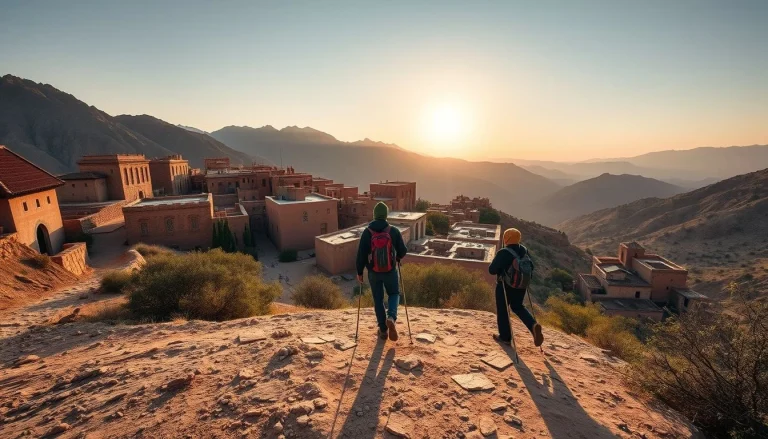
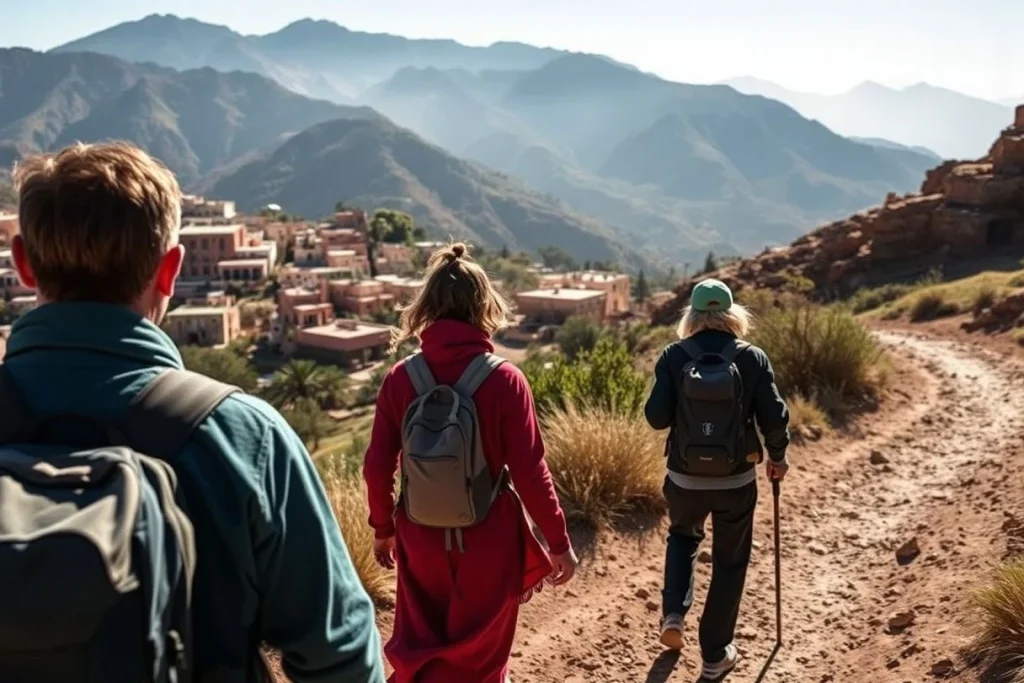
The experience is as much about the changing landscape as the summit photograph. The trail follows cultivated valley slopes, passes the rest point and cultural landmark of Sidi Chamharouch, then enters a more austere world of scree, exposed rock and thin air. Ask before photographing people or homes, and treat villages as lived-in communities rather than scenery.
A summit start before dawn can bring the clearest light, but it also means cold, fatigue and a long return. The usual overnight-refuge plan keeps the effort demanding without turning the trip into a race; a three- or four-day version leaves more room for acclimatisation and a weather delay. A one-day attempt is possible for very fit, acclimatised hikers, but Riad Jnane Imlil reports that it may require 12–14 hours and around 2,400 m of combined ascent and descent.
From November through April, snow and ice can change the same mountain into a winter mountaineering objective, requiring different skills, equipment and judgement—not simply a colder version of a summer trek.
Best Toubkal routes and itineraries by difficulty and season
For most hikers, the clearest choice is the standard southern approach from Imlil: a direct, well-established route with a refuge overnight and a manageable way to divide the height gain. The route is generally non-technical from late spring through autumn, but the itinerary still demands long days, careful pacing and a guide agréé.
| Option | Duration | Route | Effort | Best season | Equipment |
|---|---|---|---|---|---|
| Standard southern ascent | 2 days | Imlil–Aroumd/Aremd–Sidi Chamharouch–Refuge du Toubkal–summit | Strenuous; around 8–10 hours moving on day two | Late spring to autumn | Summer trekking kit, warm layers and headtorch |
| Slower summit itinerary | 3–4 days | Standard route with an acclimatisation day or a longer valley approach | More gradual and flexible | Late spring to autumn | Summer trekking kit; extra layers for a longer stay |
| Winter Toubkal | 2–4 days | Standard approach and summit route, adapted to snow and ice | Mountaineering objective | November–April | Snow and ice equipment, plus a winter-competent guide |
| Longer alternative | Several days | Oukaimeden northern approach or Tizi n’Oussem side routes | More route-planning and navigation commitment | Experienced trekkers in suitable conditions | Self-sufficient trekking kit and current route information |
The standard approach leaves Imlil and passes through Aroumd, also written Aremd, before continuing up the valley to Sidi Chamharouch. From there, the trail climbs to Refuge du Toubkal in roughly four to five hours, gaining about 1,400–1,500 metres. This timing and elevation gain are also reported by Morocco-Escape; expect a sustained uphill walk rather than technical climbing in dry conditions.
Sidi Chamharouch is a useful rest point and a cultural landmark, not just a waypoint. Dress and behave respectfully, and ask before photographing residents or people working there. The final overnight base is Refuge du Toubkal, at approximately 3,207 metres; Refuge Les Mouflons is another named refuge option in the high valley, so confirm exactly where your package places you before booking.
The summit day
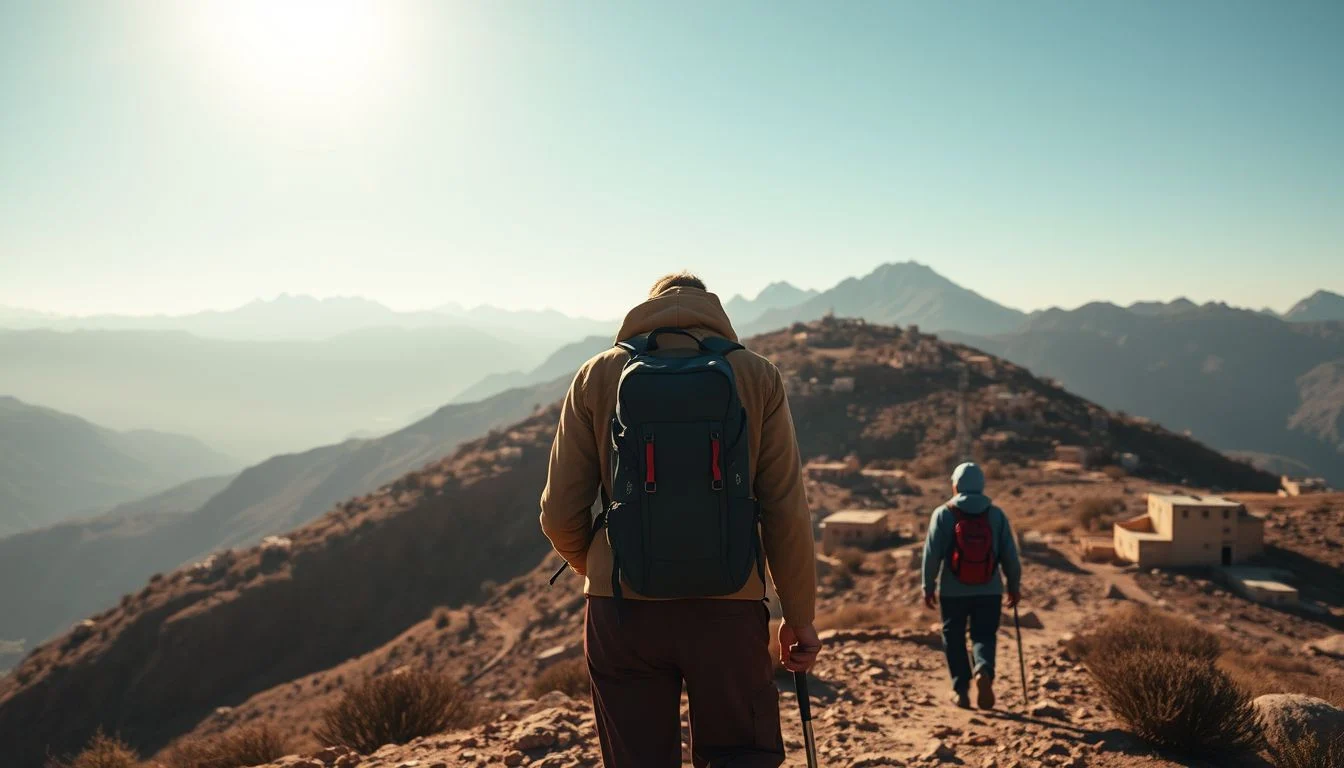
From the refuge, allow about three to four hours to reach the summit and two to three hours to descend. A pre-dawn start is practical: it leaves more margin for changing weather and gets the steep upper section out of the hottest part of the day. The route rises towards the summit col, then continues along a ridge over loose, uneven terrain; poles are useful, but they do not remove the need for deliberate footwork.
The usual two-day plan reaches the refuge on day one, then combines the summit with the return to Imlil on day two. That second day can total roughly eight to 10 hours of moving time, including approximately 960 metres from the refuge to the summit, so it suits hikers who already handle long mountain days rather than travellers judging the route by its non-technical label.
When a longer route makes sense
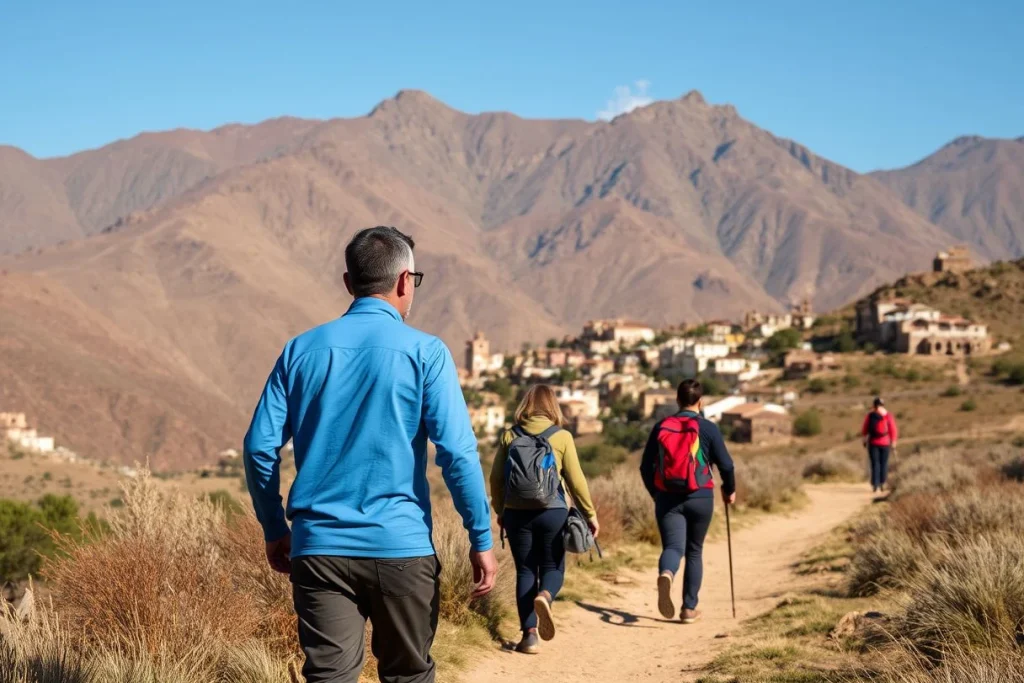
A three- or four-day Mount Toubkal trek is the better decision if you want an acclimatisation walk around Imlil or Aremd, more room for poor weather, or a less compressed summit day. It also gives a guide more flexibility to adjust the plan instead of forcing the summit into a fixed two-day schedule.
Oukaimeden’s northern approach and extensions towards Tizi n’Oussem offer alternatives to the direct southern route, but they are less-used and need current route planning, transport arrangements and condition checks. Do not treat them as interchangeable shortcuts.
From November through April, snow and ice can cover the same route. Altura Expeditions describes this as a winter mountaineering objective: book a winter-competent guide and confirm current snow, ice, avalanche and cornice conditions rather than relying on summer timings. Refuge booking and seasonal arrangements must also be checked directly; the CAF Maroc document covers winter 2025–2026, not necessarily the season you plan to travel.
Mount Toubkal difficulty, fitness and safety
What makes the Mount Toubkal hike difficult?
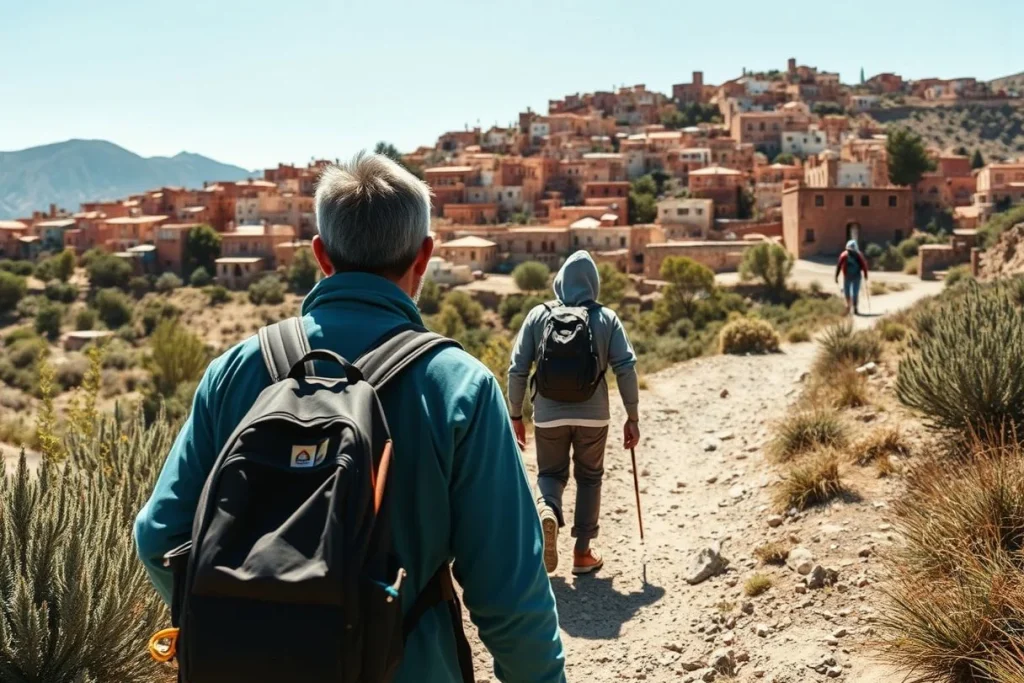
In dry late-spring to autumn conditions, the standard Mount Toubkal hike is generally non-technical rather than an easy walk. The challenge is sustained climbing on uneven, loose ground, altitude and a long summit day. From Imlil, the approach to Refuge du Toubkal takes about 4–5 hours and gains roughly 1,400–1,500 metres; from the refuge, the summit ascent takes 3–4 hours, followed by 2–3 hours descending, according to morocco-escape.com.
A typical two-day itinerary can involve 8–10 hours of moving on the second day. Prepare by becoming comfortable with consecutive days of steep hiking, preferably carrying a daypack over uneven terrain. That is a practical benchmark, not medical clearance: strong fitness does not prevent altitude illness.
Altitude and pacing
At approximately 4,167 metres, Toubkal exposes hikers to acute mountain sickness. Ascend conservatively, keep your pace conversational, drink regularly and allow an extra acclimatisation day if your itinerary permits. Headache, nausea, unusual fatigue or worsening breathlessness should be taken seriously; if symptoms worsen, stop ascending and descend, following your guide’s advice. The altitude risk and conservative ascent guidance are also highlighted by morocco-escape.com.
Hazards and a sensible turn-around plan
Heat can sap strength on the lower approach, while wind, cold, storms and poor visibility can affect the summit ridge. Loose rock creates slip and rockfall risks, and conditions that are straightforward when dry can become hazardous with snow or ice. Set a turn-around time before leaving the refuge, use a headlamp for the early start, and stay close enough for regular buddy checks. Let a certified guide make the weather decision rather than treating the summit as compulsory.
Share your route and return plan with your accommodation or operator, and carry travel insurance that explicitly covers mountain rescue and evacuation. Response capacity can be limited, so do not assume help will arrive quickly; check the policy wording before departure and save current local and operator emergency contacts.
Winter safety
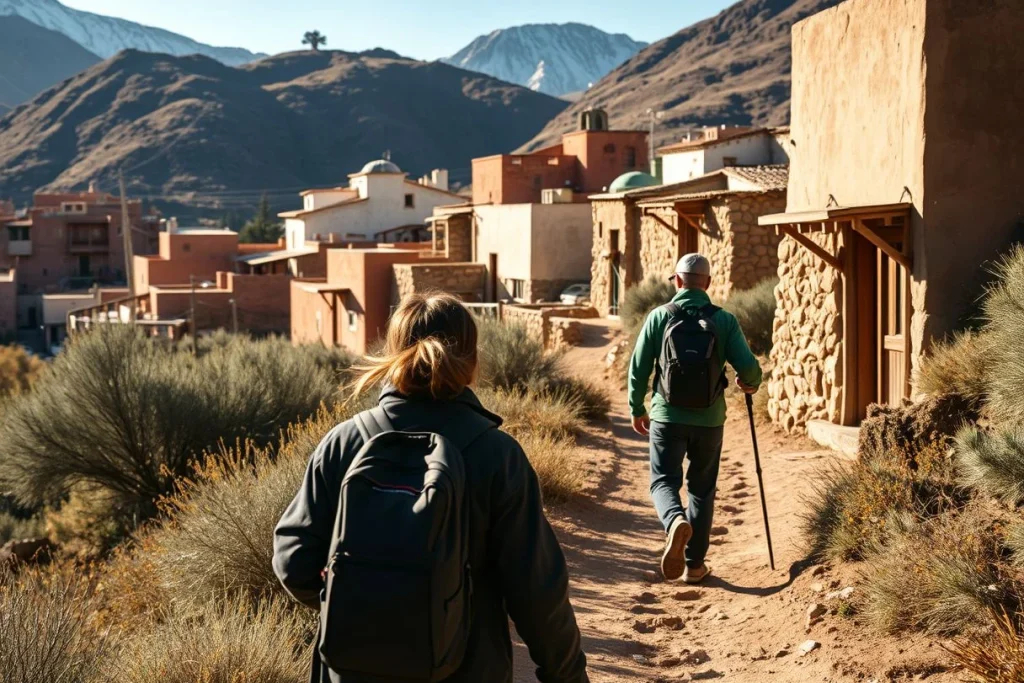
From roughly November through April, snow and ice can turn the standard route into a winter mountaineering objective requiring appropriate equipment and a winter-competent guide, as Altura Expeditions explains. Confirm current snow, ice, avalanche and cornice conditions immediately before setting out. Do not apply dry-season timings or technique to a December climb.
Toubkal trekking gear: what to bring or rent
Pack for several climates, not one. Marrakech and Imlil may feel mild, while the 4,167-metre summit and exposed approach to Refuge du Toubkal can be cold, windy and snowy outside the dry-season window. The standard route from Imlil through Aroumd or Aremd and Sidi Chamharouch is non-technical in late spring through autumn, but conditions can change quickly higher up.
Essentials for the dry-season trek

- Wear broken-in hiking boots with a firm sole; loose, rocky descents are tiring, and poles can improve balance and reduce strain.
- Use layers: a moisture-managing base layer, fleece or light insulated jacket, waterproof shell and waterproof trousers. Add a warm hat, sun hat and gloves.
- Carry two to three litres of water capacity, snacks, high-SPF sunscreen, sunglasses and lip balm. Sun exposure remains strong at altitude even when the air feels cool.
- Take a headlamp, power bank, offline map or GPS track, basic first-aid and blister supplies, plus personal medication. Keep essential items in your daypack even if a mule carries larger baggage.
- Bring a sleeping bag or liner only after confirming what Refuge du Toubkal or your operator currently provides. The refuge’s arrangements and tariffs are seasonal, and the available information covers winter 2025–2026 rather than every future season.
Optional comfort items include earplugs, lightweight sandals for the refuge and a small sit mat. Avoid relying on rental boots, poles or sleeping bags without checking fit, cleanliness and condition in person; bring footwear you have already tested.
Winter-specific equipment
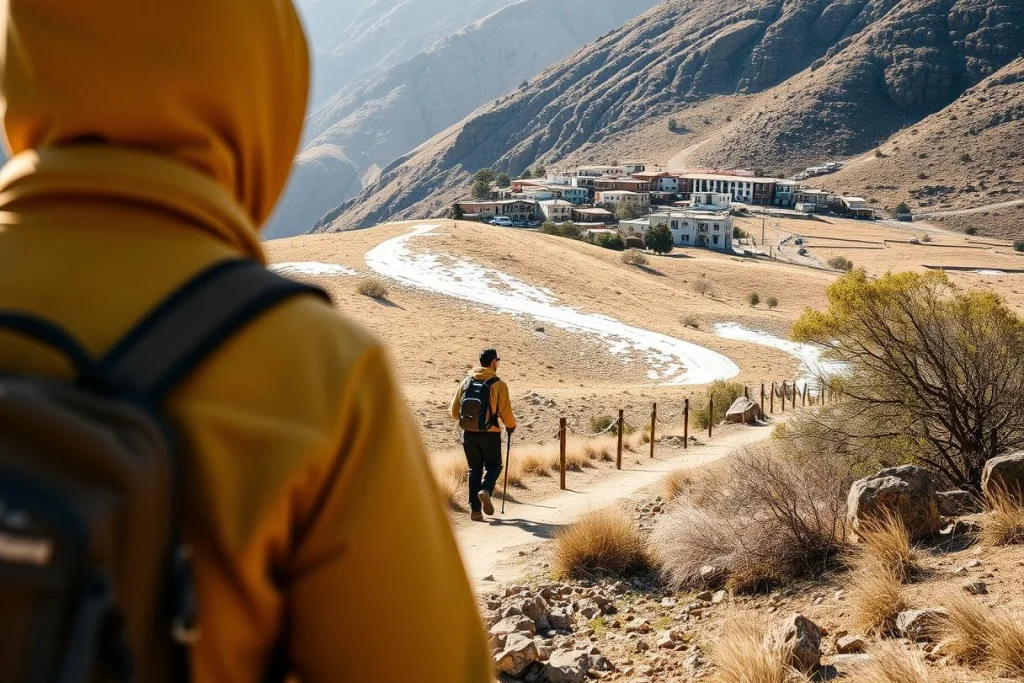
For a winter Toubkal climb, ask a winter-competent guide to assess the route and kit. Crampons, an ice axe, helmet where appropriate, warmer waterproof clothing and winter navigation equipment may be required; do not assume summer rentals are suitable. Confirm the avalanche, ice and cornice outlook before departure, and check that your insurance covers winter mountaineering and mountain rescue.
Guided or independent: guides, checkpoints and Toubkal permits
The safety-critical point is simple: a certified mountain guide, or guide agréé, is required on the Imlil–Toubkal trail, and hikers may be checked at checkpoints. Before setting out, ask to see the guide’s card and agrément number, then confirm that the credentials remain valid for your travel year. This requirement is reported by officialguides.com; rules and enforcement should still be rechecked locally before departure.
Booking a guide does more than satisfy the rule. A good Toubkal guide can adjust your pace on the 1,400–1,500-metre ascent from Imlil to Refuge du Toubkal, manage navigation and local logistics, judge changing conditions, and communicate with the refuge or transport providers. Independent planning may give you more control over dates and spending, but it does not remove the guide requirement; you would still need to arrange an agréé guide for the route.
Do not confuse this with a separately priced national Toubkal permit. No independently verified national Toubkal permit fee was found in the available research. Treat the guide, refuge, food, transport, porter or mule support, and any park-related charge as separate possible inclusions, and ask the operator to itemise them rather than accepting a vague “permit” charge. Refuge du Toubkal has seasonal booking arrangements and tariffs; the CAF Maroc document currently cited covers winter 2025–2026, so check the refuge’s current availability and terms for your dates.
If you request quotes from AtlasMountainsHike, Morocco-Escape, Altura Expeditions or GoMoroccoTrek, ask for the exact itinerary, group size, guide credentials, refuge booking, meals, luggage or mule arrangements, Marrakech–Imlil transfers, cancellation terms and emergency procedure. For a November–April ascent, also ask specifically about winter competence, snow and ice equipment, and the guide’s approach to avalanche and cornice conditions. Confirm insurance for mountain rescue and evacuation, and recheck every operator’s credentials and the applicable rules before paying a deposit.
Best time to hike Toubkal: weather, crowds and conditions
Choose your season carefully

For a non-technical Mount Toubkal hike, the most reliable planning windows are late spring and early autumn, particularly April to June and September to October. Conditions still vary between the valleys and the 4,167-metre summit, so treat these as broad windows rather than a promise of dry, snow-free ground. Altura Expeditions also distinguishes the snow season from the easier trekking months, with November to April requiring winter equipment and appropriate mountaineering experience.
| Season | Trail and weather | Crowds and planning | Kit and flexibility |
|---|---|---|---|
| April–June | Good non-technical window, though lingering snow is possible higher up and conditions can change with altitude. | Demand rises towards June; reserve the refuge and guide ahead. | Layered clothing, sun protection and waterproofs; retain a weather buffer. |
| July–August | Generally drier and potentially stable at altitude, but valley approaches can be hot. | Peak-demand months; refuge availability matters more on the standard route. | Start early, carry enough water and allow flexibility if heat slows the approach. |
| September–October | Cooler walking conditions, with an increasing chance of unsettled weather later in autumn. | Often a sensible compromise, but book popular dates rather than assuming space. | Warm layers and rain protection; keep an alternative summit day. |
| November–April | Snow and ice can turn the standard trail into a winter mountaineering route. | December is a winter objective, not a standard trekking holiday. | Crampons, ice axe and winter skills may be required; use a winter-competent guide. |
Summer is not automatically quiet high on the mountain: June, July and August are peak-demand months, so confirm Refuge du Toubkal’s current booking arrangements well before departure. The CAF Maroc document covers winter tariffs from 1 November 2025 to 30 April 2026, not every future season, so check the refuge directly for current dates and availability.
Shortly before setting out, ask your guide to review the forecast, snowpack, avalanche risk and cornice conditions for your exact route. A three- or four-day itinerary is particularly valuable in spring, autumn and winter because it gives weather and acclimatisation more room than a compressed two-day ascent.
Getting from Marrakech to Imlil and where to stay
Plan the approach around Imlil, the main trailhead for the Mount Toubkal hike. From Marrakech, the drive takes approximately 1–1.5 hours; private transfers and taxis are commonly used, but allow extra road time after severe weather and check current conditions before setting out.
For a typical itinerary, sleep in Marrakech before the transfer, then spend the night before the climb in Imlil or nearby Aremd. Local guesthouses provide the simplest base; Kasbah du Toubkal is another option, subject to current availability and its published arrangements. The walking route normally begins in Imlil, passes through Aroumd (also written Aremd) and Sidi Chamharouch, then continues towards Refuge du Toubkal.
Ask your accommodation or operator in advance where the vehicle will meet you, whether luggage can be stored securely during the trek, and what is included in the transfer. Keep cash for local purchases, and confirm with your guide where food and water stops are available rather than assuming every stop will be open. A post-trek night in Marrakech is sensible if your return transfer, onward flight or long-distance journey cannot absorb delays.
Transport arrangements and road access can change, so verify the route shortly before travel. Morocco’s entry requirements are nationality-specific; GOV.UK Foreign travel advice, updated 15 September 2026, advises checking the rules for your passport before departure.
How much does a Toubkal trek cost in 2026?
Mount Toubkal prices vary less by the mountain itself than by what the quotation includes: guide, refuge, meals, Marrakech–Imlil transport, mule or porter support, accommodation and extra acclimatisation days. The ranges below are not like-for-like packages.
Estimated costs
| Option | Budget | Mid-range | Luxury |
|---|---|---|---|
| Simple local guided two-day summit package | MAD 1,500–2,500 per person | Not separately supported | Not separately supported |
| Multi-day small-group operator package | Several hundred GBP or USD per person | Several hundred GBP or USD per person | Not separately supported |
| Private high-end guided expedition | Not separately supported | Several hundred GBP/EUR per person | Low thousands GBP/EUR per person |
Basis: 2026 operator estimates and listings; private expedition figures are from a 2026–2027 price brochure. Confirm inclusions and live exchange rates before booking.
The MAD 1,500–2,500 figure for a local two-day trek was advertised by Morocco Escape in 2026, but guide, refuge, food, transfers and porter services vary. Small-group listings from Atlas Mountains Hike describe three- to five-day packages in the several-hundred-pound-or-dollar range. Kasbah du Toubkal’s 2026–2027 brochure places private high-end trips from several hundred GBP/EUR into the low thousands, depending on accommodation, transport, support and itinerary.
Ask for a written quotation showing group size, guide credentials, refuge booking, meals, transfers, luggage or mule arrangements, equipment rental, tips, insurance and the policy for weather delays or an extra night. Flights, Marrakech accommodation, rescue cover and contingency nights are commonly separate. Refuge du Toubkal has seasonal tariffs and booking arrangements; the CAF Maroc document covers 1 November 2025 to 30 April 2026, so check the current tariff and availability for your dates. No separately verified national Toubkal permit fee was found; do not pay one described as mandatory without confirmation from an official Moroccan source.
| Item | Budget | Mid-range | Luxury |
|---|---|---|---|
| Simple local guided two-day summit package | MAD 1,500-2,500 per person | Not separately supported | Not separately supported |
| Multi-day small-group operator package | Several hundred GBP or USD per person | Several hundred GBP or USD per person | Not separately supported |
| Private high-end guided expedition | Not separately supported | Several hundred GBP/EUR per person | Low thousands GBP/EUR per person |
Estimated ranges based on the sources listed below. Prices change; check with providers before booking.
The best plan for most first-time Toubkal hikers
For most fit first-time hikers, book a guided three-day Mount Toubkal trek in April–June or September–October. The extra day makes the ascent from Imlil less compressed, leaves more room for acclimatisation and gives your guide flexibility if weather disrupts the summit plan. The standard two-day itinerary is feasible, but its summit day can involve 8–10 hours of moving time.
Choose your dates, then verify the guide’s current guide agréé credentials and confirm Refuge du Toubkal availability, meals, transfers and porterage in writing. Check the forecast and mountain conditions shortly before departure, arrange insurance covering mountain rescue, and pack for the actual season. Treat November–April as a separate winter mountaineering objective: go only with suitable snow equipment, relevant skills and a winter-competent guide.
Frequently asked questions
What happens if bad weather prevents the summit attempt?
The summit should be treated as optional if snow, ice or unstable weather makes the route unsuitable. Ask your guide to assess conditions and agree a fallback before setting out; a three- or four-day itinerary gives more weather flexibility than the compressed two-day plan. Winter conditions require a winter-competent guide and suitable equipment, according to Altura Expeditions.
Are there toilets, showers or charging facilities at Refuge du Toubkal?
The supplied sources confirm that Refuge du Toubkal has seasonal tariffs and booking arrangements, but they do not verify its current toilets, showers or charging facilities. Check the refuge directly or ask your operator for the facilities available on your dates. The CAF Maroc tariff document covers winter 2025–2026 only, so do not assume those arrangements apply later.
Can a mule carry my overnight bag on the approach?
The supplied research does not confirm mule availability, weight limits or whether a mule can reach every section of the approach. Ask your guide or operator to arrange this in advance and confirm what is included in the quotation. The standard route passes from Imlil through Aroumd or Aremd and Sidi Chamharouch before reaching the high refuges.
Should I spend a night in Imlil before starting the trek?
It is a sensible option if you are arriving from Marrakech and want a less rushed start, although the sources do not prescribe an overnight stay. Imlil is the main trailhead, approximately 1–1.5 hours by road from Marrakech. Extra time around Imlil or Aremd can also support a slower acclimatisation plan before gaining refuge altitude.
Is there mobile-phone coverage along the Toubkal route?
The supplied sources do not verify mobile-phone coverage on the Imlil–Toubkal trail, at Sidi Chamharouch or around Refuge du Toubkal. Do not rely on a phone as your only safety plan: confirm communication arrangements with your guide, carry the required navigation and emergency equipment, and check current conditions before departure.
Can I combine the trek with other High Atlas valleys or a Marrakech stay?
Yes, the itinerary can be extended beyond the direct summit route, with Tizi n’Oussem identified as a possible side-route option subject to route planning and seasonal conditions. Marrakech also combines naturally with the trek: Imlil is around 1–1.5 hours from the city by road. Confirm road conditions, transfer timing and any additional valley logistics before booking.