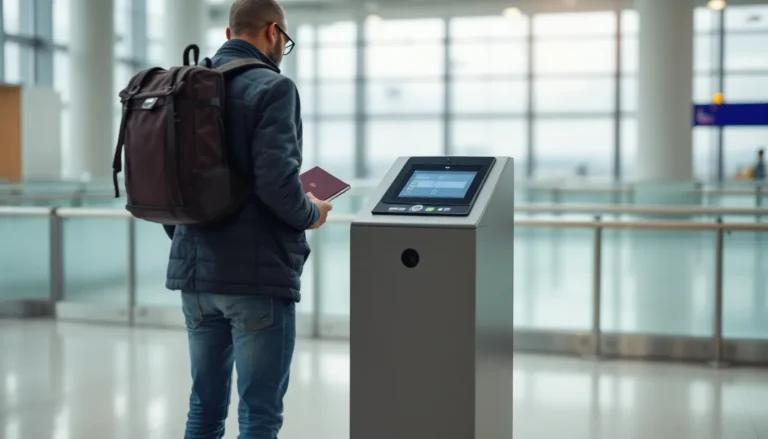

At a card terminal abroad, the cheaper-looking button can be the one that converts the bill into your home currency before your card network gets a say. That offer is Dynamic Currency Conversion (DCC), and accepting it can add a variable markup; a foreign purchase may also carry a fee from your card issuer, while an ATM withdrawal can add both a bank charge and an operator surcharge.
This guide is for budget-conscious international travellers, particularly people using U.S.-issued cards, who want a simple system for how to avoid card fees abroad without carrying all their money in cash. It explains what to select at terminals and ATMs, when a debit card makes more sense than a credit card, how much local cash to keep for markets and small vendors, and why a backup card matters when a payment is declined. The aim is not to choose cash or cards forever, but to use each for the transactions where it costs and exposes you least.
Quick answer: Use a card with no foreign-transaction fee for purchases, a debit card for planned ATM withdrawals, and keep a separate backup card plus a small amount of local cash. When offered your home currency, decline Dynamic Currency Conversion and choose local currency; before confirming, check both the issuer fee and the ATM operator surcharge.
The essentials: four rules that prevent most overseas card fees
Most travellers can avoid the largest overseas card charges with a simple four-part system:
- At every terminal or ATM, choose the local currency. Decline the option to pay in U.S. dollars or another home currency. That rejects Dynamic Currency Conversion (DCC) and leaves the exchange calculation to your card network or issuer.
- Use a card with no foreign-transaction fee for purchases. These fees range from 0% to about 3% on U.S.-issued credit cards, according to NerdWallet’s May 2026 comparison. Check your own card agreement rather than relying on the card’s travel branding.
- Use a debit card for planned cash withdrawals. A cash withdrawal can trigger both the local ATM operator’s fee and your bank’s overseas withdrawal fee, so check both before confirming. Some banks waive or refund these charges, but the conditions are account-specific.
- Carry a small local-cash reserve and a separate backup card. Cash remains useful for transport, markets and small vendors, while a second card protects you from a decline, loss or network outage.
The reason this works is that an overseas payment can contain three separate costs: the card network’s currency conversion, your issuer’s foreign-transaction fee, and a merchant or ATM surcharge. You may avoid the issuer fee and still pay more if a terminal quietly converts the purchase into dollars.
DCC is the warning sign to recognise. It allows a merchant or ATM to convert the transaction into your home currency instead of processing it in the local currency. Recent reporting commonly places the markup around 3%–12%, although the figure varies by merchant and ATM operator and is not a universal rate. Visa’s guidance says the amount, exchange rate and opt-in should be disclosed, but screens can still make the home-currency choice prominent; read the options before tapping “accept”.
For a budget trip, compare eligible no-foreign-transaction-fee cards before departure, and confirm the debit card’s foreign ATM fee, exchange-rate policy and refund rules in the issuer’s current terms. If applying for a new card, Visa suggests allowing three to six months for setup and credit-limit arrangements.
The three charges hiding behind a foreign card transaction
The useful distinction is that “the exchange rate” is not one single charge. A foreign transaction can pass through the card network’s conversion, your issuer’s fee and an extra charge from the merchant or ATM. The total cost depends on which of those three layers applies.
| Possible charge | Who sets it | When it appears | How to reduce it |
|---|---|---|---|
| Network currency conversion | Visa or Mastercard | When the transaction is processed in local currency and converted to your billing currency | Check the network and issuer exchange-rate policy; decline any separate home-currency conversion offered at checkout |
| Foreign-transaction fee | Your card issuer | Usually on an overseas purchase, if the account’s terms include one | Use a card with no foreign-transaction fee; NerdWallet’s May 2026 comparison puts common credit-card fees at 0%–3% |
| Merchant or ATM surcharge | The shop, payment provider or ATM operator | At the terminal or before an ATM withdrawal is confirmed | Use another ATM or payment method when the surcharge is clearly disclosed and high |
The network conversion is not automatically an extra fee: it is the rate used to turn, for example, a local-currency purchase into a U.S.-dollar statement amount. The problem is often Dynamic Currency Conversion (DCC), which lets a merchant or ATM convert the amount into your home currency immediately. Visa and Mastercard guidance describes disclosure and an opt-in process, but screens may still make the home-currency option more prominent. Choose local currency so your card issuer or network handles the conversion.
DCC markups are commonly reported at about 3%–12%, according to 2024–2026 reporting, but that is a variable range rather than a universal rate. A terminal showing a dollar amount is not proof that the price is favourable; look for wording such as “accept conversion”, “continue in USD” or “decline conversion”.
ATMs can stack costs. The Consumer Financial Protection Bureau’s Regulation E commentary, published through the Federal Reserve, identifies the ATM operator fee, your bank’s overseas-withdrawal fee and the currency-conversion spread as separate possibilities. As an illustrative 2024–2026 range, the operator fee may be about $2–$5 per withdrawal and sometimes $10 or more at airports or tourist sites; your bank may charge $0–$5 or 1%–3%, depending on the account.
A “no foreign-transaction-fee” card does not necessarily waive ATM fees, annual fees or DCC markups. Some banks refund foreign ATM fees or use international partner networks, but eligibility and refund procedures are issuer-specific. Recheck the current fee schedule, exchange-rate policy and refund rules before each major trip.
Tips in detail: a transaction-by-transaction system
The practical answer to how to avoid card fees abroad is to assign each payment method a job. Use a card with no foreign-transaction fee for purchases, a debit card for planned cash withdrawals, a separate backup card, and a small local-cash reserve. At every terminal or ATM, choose the local currency rather than your home currency.
- Audit every card before departure. Check the foreign-purchase fee, overseas ATM fee, exchange-rate policy, daily withdrawal limit and any fee-refund conditions in the current account terms. A card advertised as having no foreign-transaction fee may still charge for cash withdrawals, and fee refunds or international ATM partnerships are account-specific; the U.S. Department of State’s money guidance also recommends checking your bank’s arrangements before travelling. Keep a screenshot or downloaded copy of the relevant fee page.
- Use a no-foreign-transaction-fee credit card for purchases. NerdWallet’s May 2026 guidance shows that foreign-transaction fees commonly range from 0% to about 3%, depending on the issuer and product. The 0% rate is not automatic: confirm that it applies to your specific card, and remember that it does not remove a merchant’s surcharge or Dynamic Currency Conversion markup.
- Reserve your debit card for ATM withdrawals. Before leaving, check whether the bank refunds foreign ATM fees or belongs to an international ATM partner network. This separation makes the cost easier to monitor and avoids using a credit card for cash, which may be treated differently under the issuer’s terms. The bank’s fee schedule, not the card logo alone, determines the result.
- Decline Dynamic Currency Conversion every time you recognise it. DCC is the option for a merchant or ATM to convert the transaction into your home currency instead of leaving it in the local currency, as Visa explains. Select “pay in local currency”, “without conversion” or the equivalent wording. A familiar dollar or euro total is not evidence of a good rate: reported DCC markups are commonly around 3%–12%, but they vary by merchant and ATM operator and are not a universal regulated figure.
- Read the DCC screen before pressing confirm. Visa materials say a DCC offer should disclose the transaction amounts, conversion rate and your choice to opt in, although the presentation can still be confusing and may show the home-currency amount first. If the cashier selects the option or the ATM appears to accept it automatically, cancel or go back and choose local currency. Do not let speed at a checkout turn an optional conversion into a charge.
- Check the ATM fee before approving the withdrawal. An overseas withdrawal can involve the ATM operator’s fee, your bank’s fee and a currency-conversion spread, according to Federal Reserve commentary on Regulation E. If the machine displays a surcharge that seems excessive, cancel and try a bank-operated ATM instead. Prefer machines inside banks or in well-lit locations, cover the keypad and inspect the slot for anything unusual.
- Withdraw fewer, planned amounts rather than many small amounts. A per-withdrawal operator fee can make repeated small withdrawals expensive. Plan enough for immediate needs and the next practical stretch of the trip, while staying within your bank’s daily limit and avoiding a large cash holding. Never assume that a fee-free debit account also waives every local ATM surcharge.
- Do not make an airport exchange desk your default. Airport and tourist-zone currency exchange can be convenient, but the rate and commission vary, so there is no universal “best” counter. If you need cash on arrival, use a modest amount for transport or another immediate necessity, then compare the options available in the destination rather than exchanging the entire trip budget at the first desk.
- Keep a small local-cash reserve. Transport, markets and small vendors may prefer or require cash, even when larger shops accept cards. Carry enough for the first practical expenses and a short fallback, but not the full holiday budget. Store the reserve separately from your wallet so that one lost or stolen item does not remove every payment option.
- Split the wallet into four parts. The main setup recommended in Visa’s travel guidance is a no-foreign-transaction-fee credit card for purchases, a debit card for withdrawals, a separate backup card and emergency cash. Keep the backup physically apart from the primary card, and do not store both cards in the same phone case or day bag. This protects a budget trip from a decline, loss, fraud alert or network outage.
- Test the cards and PINs before travelling. Make sure contactless and chip payments work, learn the PIN rules for each card and confirm that you know the issuer’s process for overseas transactions. Some terminals or cash machines may require a PIN even when contactless payment is common at home. At a shop, the quick checklist is: check the total, choose local currency, reject DCC and save the receipt when the amount matters.
- Prepare the account controls offline. Save the issuer’s international phone number, freeze-and-unfreeze instructions and fraud-alert settings somewhere accessible without mobile data. Turn on transaction notifications if your account offers them. If a card is declined, do not repeatedly retry the same transaction: check whether the card is frozen, contact the issuer through its official number and use the backup method while the issue is resolved.
For an ATM, use this sequence: choose a bank or well-lit machine, inspect the fee and exchange choice, select local currency, decline DCC, cover the keypad, collect the card and receipt, then check the account alert. For the trip itself, complete the fee audit, test both cards, record the emergency numbers, separate the backup card and carry a small local-cash reserve.
If you are applying for a new travel card, allow three to six months for account setup and any credit-limit arrangements, as Visa advises. That leaves time to read the final terms rather than discovering at the airport that a card has an annual fee, an overseas cash restriction or a different conversion policy from the one you expected.
Cash or card when travelling: choose by transaction, not ideology
Cash or card is not a destination-wide choice. Use the payment method that fits the transaction, while keeping a second option available: a card with no foreign-transaction fee for purchases, a debit card for planned withdrawals, a separate backup card and a small local-currency reserve. Cash remains useful for transport, markets and small vendors, where card acceptance can vary, as the U.S. Department of State’s Exchange Programs guidance notes.
| Situation | Usually practical | Main fee risk | Backup |
|---|---|---|---|
| Hotels and larger shops | Card, paid in local currency | Foreign-transaction fee or Dynamic Currency Conversion | Second card; cash if the terminal is offline |
| Public transport and taxis | Local cash unless the system clearly accepts cards | Small repeated withdrawals or a card surcharge | Card for a larger, reputable operator |
| Markets and small vendors | Small local-currency notes | Unfavourable merchant conversion or no card facility | Card where the vendor offers a secure terminal |
| Emergencies | Whichever method still works | Urgent, repeated ATM withdrawals | Separate card and emergency cash reserve |
| Rural or low-connectivity locations | Planned local cash | Limited ATMs and unreliable card authorisation | Keep the card for larger purchases |
A planned withdrawal can be more economical than several small ones because an overseas withdrawal may combine an ATM operator fee, an issuer fee and a conversion spread, according to the Federal Reserve’s commentary on Regulation E. It is not automatically cheaper than exchanging cash before departure: compare your bank’s terms, the ATM’s displayed fee and the exchange rate available through an established exchange service.
For a budget traveller arriving late, carry enough local cash for the first transport fare and a simple meal, rather than exchanging a large amount at the airport. Once settled, check which nearby ATM is suitable and how local businesses actually take payment. Keep the reserve modest, separate from your everyday wallet, and use the card in local currency when the terminal offers a choice; Visa explains that declining DCC leaves conversion to the issuer or card network.
Common mistakes to avoid abroad
- Accepting the home-currency amount because it is easier to read. This can activate Dynamic Currency Conversion (DCC), with the merchant or ATM setting the exchange rate; choose the local currency instead. DCC practices and disclosures vary, although Visa materials describe disclosure of the amount, rate and opt-in. Recheck current Visa rules and Mastercard guidance before travelling.
- Assuming a no-foreign-transaction-fee card has no ATM costs. An overseas withdrawal can still involve the ATM operator, your bank and the exchange-rate spread; check the debit account’s fee schedule and any refund conditions first.
- Using a credit card to get cash without checking its treatment. The withdrawal may be handled as a cash advance rather than a purchase, so confirm the issuer’s fees, interest and repayment terms before relying on it.
- Choosing the first airport or tourist-site ATM. It may display a separate operator surcharge; read the confirmation screen and cancel if the fee is unacceptable, then use a suitable bank ATM instead.
- Making many small withdrawals. A per-transaction fee can be charged each time; plan a sensible withdrawal while keeping the amount modest and secure.
- Relying on one card or one payment network. A decline, lost card, fraud alert or network outage can leave you stranded, so carry a separate backup card and keep it apart from the everyday wallet.
- Keeping every card and all cash together. One theft or misplaced bag then removes every payment option; split cards and emergency cash between secure locations.
- Using an unfamiliar ATM without checking it. Inspect the machine, cover the keypad while entering the PIN and prefer an ATM inside a bank or in a well-lit location.
- Ignoring alerts or unfamiliar transactions. Review notifications and account activity, and contact the issuer promptly if a card is lost, compromised or used unexpectedly.
- Assuming every merchant accepts cards. Some transport providers, markets and small vendors still prefer or require cash, so keep a small local-currency reserve rather than depending entirely on contactless payment.
- Assuming a travel notification is always required. Issuer processes differ; check your bank’s current instructions before departure and follow its preferred method.
Conclusion: build a four-part travel wallet before you leave
Build a four-part travel wallet: a primary credit card with no foreign-transaction fee for purchases, a debit card for planned ATM withdrawals, a separate backup card, and a small reserve of local cash. This setup follows Visa’s travel-card guidance, while the U.S. Department of State also recommends carrying cash for immediate needs such as transport, markets and small vendors.
At every terminal or ATM, choose the local currency rather than your home currency. That declines Dynamic Currency Conversion (DCC), leaving conversion to your issuer or network; review any displayed surcharge before confirming. Visa explains how DCC works and what the choice means.
- Read both card agreements for foreign-transaction fees, overseas ATM charges, exchange-rate terms and fee refunds.
- Make a test purchase or withdrawal plan: know which card you’ll use, your PIN, and where you can access cash.
- Save issuer emergency contacts, then divide the cards and cash between your wallet and luggage.
Check these terms and current DCC practices immediately before departure, since issuer policies and payment procedures can change.
Frequently asked questions
What should I do if my card is declined overseas?
Do not rely on a single card. Use the separate backup card in your travel wallet, then contact the issuer through its official support channel to check the reason for the decline and confirm whether overseas use is enabled. Keep a small local-cash reserve for immediate transport, markets and small vendors while the issue is resolved. Check both cards’ foreign-transaction and ATM terms before travelling; fees and approval rules vary by issuer. Visa’s travel-card guidance supports carrying a backup payment method.
Is it safe to use a credit card for a cash withdrawal abroad?
A credit card can be used for an overseas cash withdrawal, but it may trigger the ATM operator’s fee, your issuer’s fee and a currency-conversion spread. A debit card is generally the more suitable card for planned withdrawals in a practical travel wallet, while a no-foreign-transaction-fee credit card is better reserved for purchases. Check your issuer’s current cash-advance, foreign-ATM and exchange-rate terms before using credit for cash. The Federal Reserve’s Regulation E commentary explains that overseas ATM withdrawals can involve multiple charges.
How much local cash should I carry on a typical travel day?
Carry a small amount of local currency for immediate needs rather than converting your entire travel budget into cash. Transport, markets and small vendors may prefer or require cash, while cards can handle many other purchases. The right amount depends on the destination, your planned activities and how readily you can reach a suitable ATM, so check local guidance and your itinerary. Keep the reserve separate from your main wallet, and avoid carrying more cash than you can afford to lose. The U.S. Department of State’s money guidance recommends having local cash for such situations.
Should I tell my card issuer that I am travelling?
Ask each issuer whether it wants or recommends a travel notification, and follow its current instructions rather than assuming the policy. Before departure, verify that overseas purchases and ATM withdrawals are enabled, confirm the issuer’s support contact, and review foreign-transaction, ATM and exchange-rate terms. Policies differ between card providers and accounts, so the issuer’s official app, website or customer-service channel is the reliable source. Carry a separate backup card in case the primary card is declined, lost or blocked.
How can I protect my card details and PIN while travelling?
Cover the keypad whenever you enter your PIN, and prefer ATMs inside banks or in well-lit locations. Do not let another person handle your card or distract you during a transaction; if a terminal or ATM offers to convert the payment into your home currency, review the choice carefully and generally select local currency instead. Keep your backup card separate from your main wallet and retain a small emergency cash reserve. Visa explains that Dynamic Currency Conversion changes a local-currency transaction into the cardholder’s home currency.
When should I apply for a new card before an international trip?
For a major trip, apply three to six months before departure. That gives time for the account to be set up and for any credit-limit arrangements to be made, according to Visa’s travel-card guidance. Before relying on the card, confirm its foreign-transaction fee, overseas ATM terms, exchange-rate margin and support contacts. Do not travel with only the new card: take a separate backup card and a small local-cash reserve as well. Visa’s guidance on travel cards and foreign transactions sets out this preparation window.