This article contains affiliate links. If you book through one of our links, we may earn a commission at no additional cost to you.
At Taghazout, Anchor Point breaks to the right and is associated with experienced surfers; farther south, Legzira’s famous main arch has stood collapsed since September 2016. Those two facts capture the range of the best beaches in Morocco: powerful Atlantic surf, wind-shaped lagoons, calm Mediterranean swimming and coastlines where the scenery demands more care than a towel and sandals.
This guide is for adventure travellers choosing between surf camps, independent road trips, kitesurfing bases, lagoon days and rugged coastal walks. It weighs conditions, access, fitness, equipment and safety rather than ranking beaches by appearance alone, so you can decide between an easy base in Agadir, a quieter route through Mirleft and Sidi Ifni, or the considerable logistics of reaching Dakhla. Current bathing-water quality, lifeguard cover, road conditions, flights and operator availability should be checked locally before travel.
Quick answer: Choose Taghazout for experienced surfing, Essaouira for accessible wind sports, Oualidia for calm lagoon days and families, Legzira for dramatic coastal scenery, and Dakhla for committed kitesurfers. Saïdia suits warm summer swimming, while Agadir is the easiest resort base and airport gateway.
Which Moroccan beach fits your adventure?
Morocco’s coast is not one beach holiday. The Atlantic rewards travellers who come for swell, wind and long coastal drives; the northeast Mediterranean is a more comfortable bet for warm summer swimming and resort infrastructure. The choice becomes clearer when the activity leads: Taghazout is the specialist surf base, Essaouira makes wind sports relatively approachable, and Oualidia’s sheltered lagoon suits families, birdwatchers and unhurried days on the water.
For scenery, choose the red cliffs and exposed shore around Legzira. For a committed kitesurfing trip, accept Dakhla’s remote logistics in exchange for its lagoon setting. Agadir is the practical fallback when airport access, accommodation choice and an easy base matter more than wilderness.
How these beaches were chosen
This is a researched editorial selection, not a hands-on test or a universal ranking. The aim is to match each coast to a particular kind of trip: a serious surf session, a wind-sports base, a calm lagoon day, a rugged walk, a family resort or a longer road adventure.
Each beach was assessed for its surf or wind-sport character, swimming practicality, scenery, access, road-trip value, accommodation and services, seasonality, required skill and safety trade-offs. That produces deliberate contrasts rather than a beauty contest: exposed Atlantic breaks sit alongside sheltered water in Oualidia and the warmer Mediterranean setting of Saïdia, described by the Moroccan National Tourist Office as a developed beach destination.
Season matters. Atlantic surf is generally strongest from autumn through spring, while summer is more favourable for warmer, calmer Mediterranean swimming in Saïdia. Remote places such as Legzira, Mirleft, Sidi Kaouki and Dakhla may require a longer transfer, rental car, local taxi, 4×4 or organised operator, according to Morocco Escape.
Conditions change locally, so check current swell and wind forecasts, bathing-water quality, lifeguard cover, flights, road conditions and operator safety standards before setting out. National lifeguard hours and beach-facility details are not verified consistently; consult the relevant municipality or local provider.
The list: nine beaches for nine kinds of adventure
Taghazout: best for serious surf
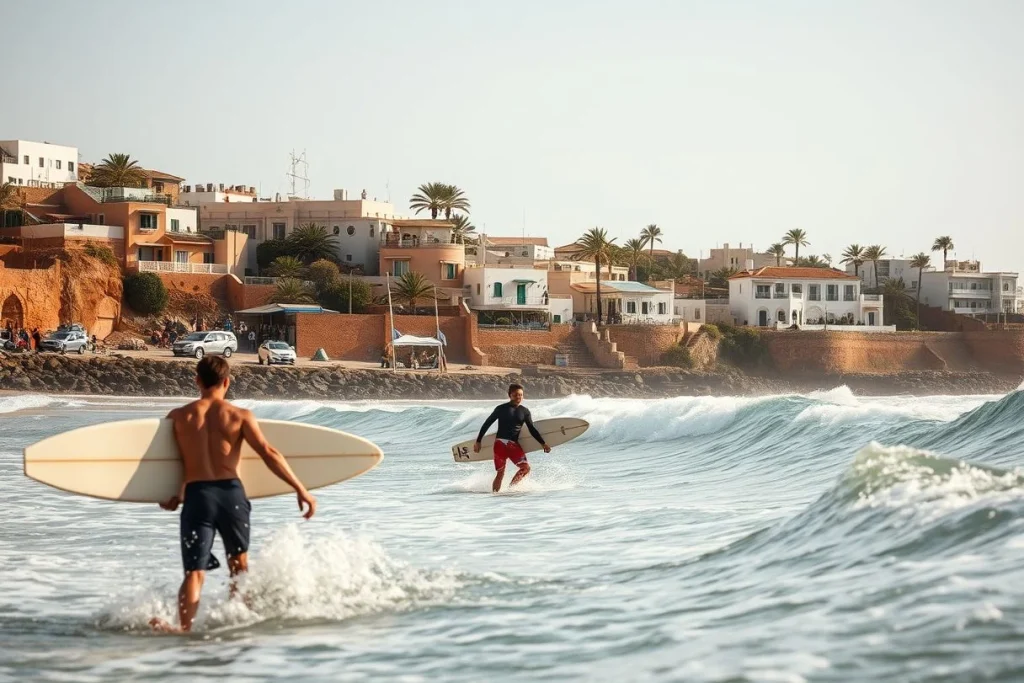
Standout: Taghazout is the specialist surf choice, with Anchor Point and nearby point breaks forming the draw. Best for: intermediate and advanced surfers. Anchor Point is a right-hand point break associated with experienced surfers; it should not be treated as an unsupervised beginner break when conditions are large, according to Taghazout.io.
Plan: Base yourself in Taghazout or nearby Agadir, and use a surf camp or qualified local guide if the swell exceeds your ability. Atlantic surf is generally strongest from autumn through spring, so bring a suitable wetsuit in the cooler season. The compromise is straightforward: excellent surf focus, but less dependable relaxed swimming.
Essaouira: best for accessible wind sports
Standout: Essaouira combines a broad Atlantic beach with a medina base and relatively simple onward travel from Marrakech by road or coach. Best for: first-time wind-sport travellers, independent adventurers and anyone who wants cafés and culture alongside the water.
Plan: The wind makes Essaouira more compelling for kitesurfing and windsurfing than for a still-water beach day. Arrange lessons with a qualified operator and verify wind, equipment availability and current safety standards before booking. It is easier to reach than the remote southern beaches, but the exposed conditions are not ideal for unstructured swimming.
Oualidia: best for calm lagoon days
Standout: Oualidia’s sheltered lagoon is the strongest calm-water pick in this list. Oyster farming and birdwatching add a local character that exposed surf beaches lack, as National Geographic describes. Best for: families, slower itineraries, lagoon outings and travellers who prefer scenery to powerful Atlantic breaks.
Plan: Focus on the lagoon rather than expecting a surf destination, and check current water conditions and boat arrangements locally. Seafood, particularly oysters, is part of the destination’s identity. The trade-off is that this is a quieter, more contained experience than a long open-coast adventure.
Legzira: best for dramatic coastal walks
Standout: Legzira remains a striking photography and landscape stop for its red sandstone cliffs and surviving coastal formations. Best for: fit road-trippers, photographers and walkers comfortable with uneven sand, exposed terrain and limited services.
Plan: The famous main arch collapsed on 23 September 2016; do not plan a visit around photographing that arch. The Guardian reported the collapse, and the warning is simple: never climb or stand beneath unstable cliffs or rock formations. Reach Legzira as part of a southern Atlantic route, allowing more planning than for Agadir or Essaouira.
Sidi Kaouki: best for lower-crowd surf
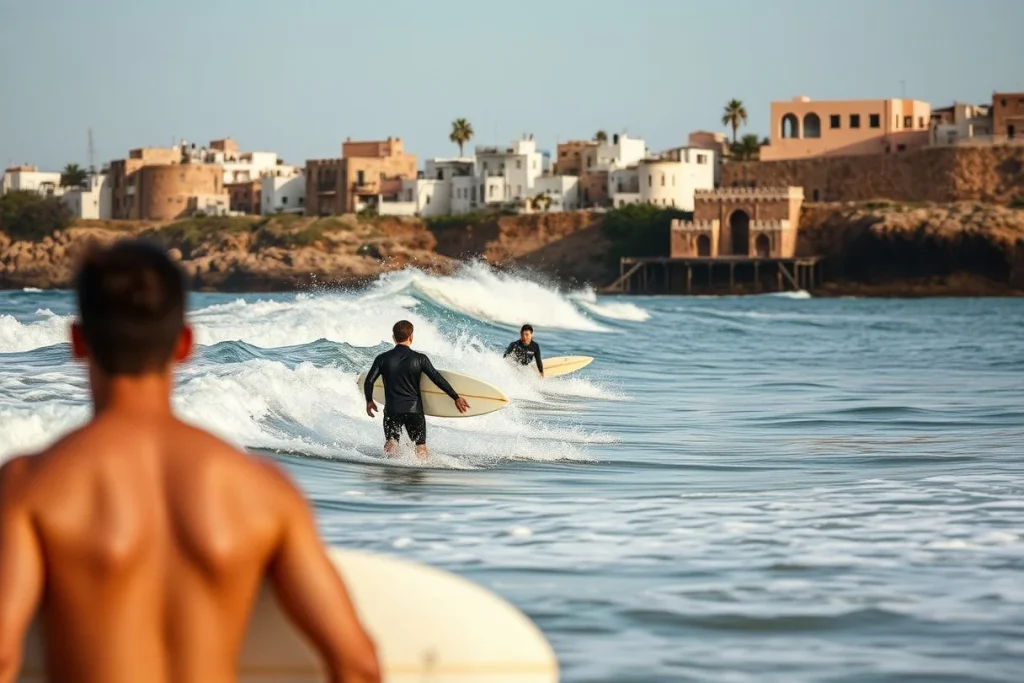
Standout: Sidi Kaouki offers a long sandy beach and a more self-sufficient surf setting south of Essaouira. Best for: beginner and intermediate surfers when conditions are appropriate, plus travellers seeking a quieter base than the main resort towns.
Plan: The approach from Essaouira can involve a taxi or minibus, while staying beyond the town requires more preparation for food, equipment and changing conditions. Atlantic surf is generally more reliable from autumn to spring; beginners should take local instruction rather than enter unfamiliar water alone. Its lower-key feel is also its compromise.
Agadir: best for the easiest beach base
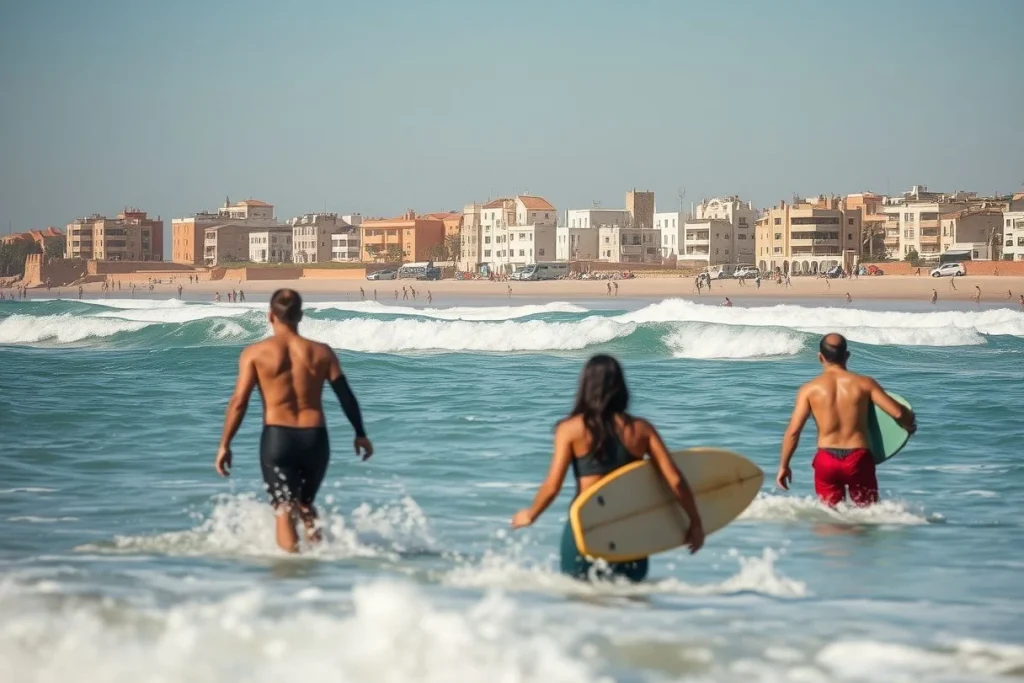
Standout: Agadir offers the most convenient combination of a long sandy bay, promenade, accommodation choice and airport access. Best for: short breaks, families and travellers using Agadir-Al Massira Airport as a base for Taghazout, Mirleft or Legzira.
Plan: Choose Agadir for services and easy logistics, not wilderness. Check current bathing-water information and local lifeguard cover with municipal sources before swimming; these details vary and are not consistently verified nationally. It is the practical hub, but less atmospheric for a remote-coast road trip.
Mirleft: best for quiet coves and road trips
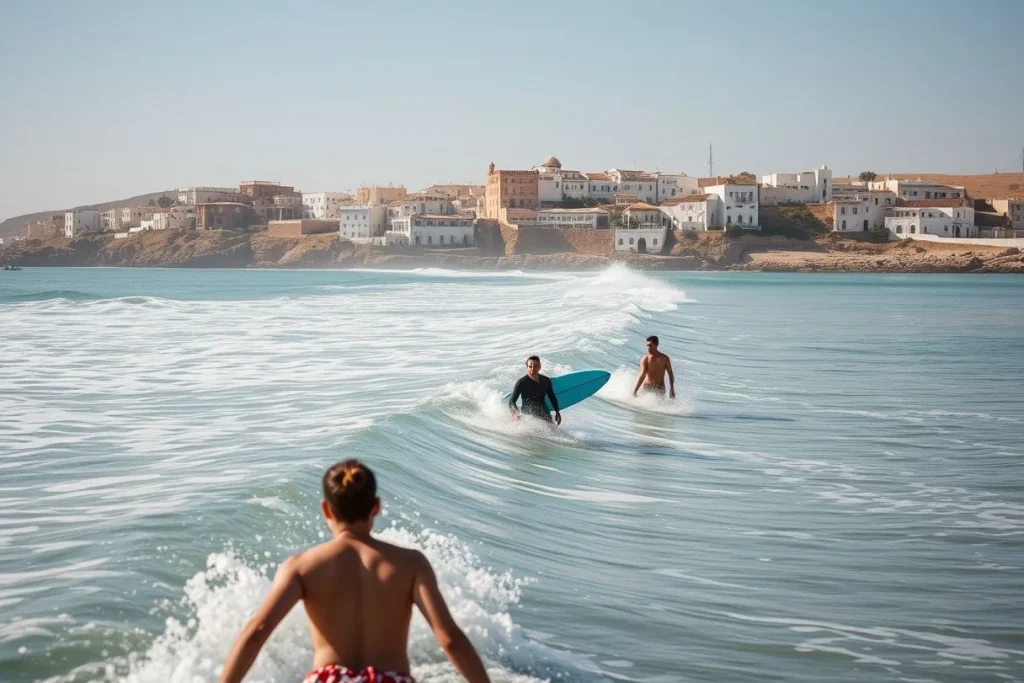
Standout: Mirleft brings together small coves, low-key surf possibilities and rugged scenery south of Agadir and Sidi Ifni. Best for: independent road-trippers who want several coastal stops rather than one organised resort.
Plan: A rental car, local taxi or guide is useful, particularly when linking beaches and viewpoints. Expect uneven terrain and longer transfers, and carry water, sun protection and footwear suited to rough ground. Mirleft rewards flexibility, but it is a weaker choice for travellers who need predictable services at the water’s edge.
Saïdia: best for warm summer swimming
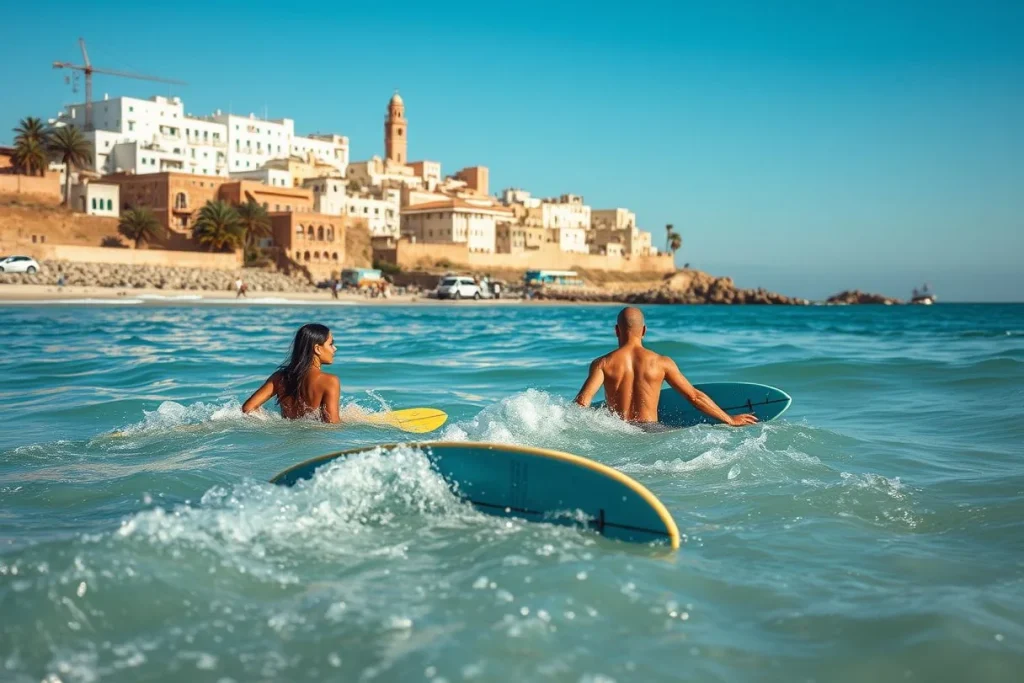
Standout: Saïdia is a developed Mediterranean resort with approximately 6 km of beach and substantial hotel capacity; a UN Tourism report cites about 31,059 beds within the development. Best for: families and conventional summer beach holidays, especially those prioritising resort infrastructure over surf.
Plan: Its Mediterranean setting generally brings warmer, calmer summer conditions than Morocco’s Atlantic coast. Check current bathing-water quality, local warnings and lifeguard provision before entering the sea. Saïdia is reached from the Oujda, Nador or wider northeast travel area, but live flight and transfer options need checking; it is not a remote surf base.
Dakhla: best for committed kitesurfers
Standout: Dakhla’s El Argoub lagoon is associated with flat-water kitesurfing and wind sports. Best for: experienced kitesurfers and travellers willing to build a trip around one specialist activity.
Plan: Treat Dakhla as a planned sports destination: verify flights, transfers, wind forecasts, equipment and the safety standards of specialist operators for your dates. Its far-southern location creates more logistical commitment than Essaouira or Taghazout. For non-kiters, the long journey is harder to justify unless the lagoon landscape and remote setting are central to the trip.
At a glance: surf, swimming, access and effort
Use this as a planning shortlist rather than a safety ranking: Atlantic beaches favour surf and wind sports, while northeastern Mediterranean and sheltered lagoon destinations are more practical for calm summer swimming. Access labels describe the commitment of the trip, not road quality on a particular day.
| Destination | Best for | Water character | Typical ability | Access | Useful base | Strongest season or note | Main drawback |
|---|---|---|---|---|---|---|---|
| Taghazout | Specialist surfing | Exposed Atlantic breaks | Intermediate–advanced | Moderate | Agadir | Autumn–spring surf | Anchor Point is not for unsupervised beginners in larger conditions |
| Essaouira | Wind sports | Windy Atlantic | Beginner–advanced | Easy | Essaouira | Wind-dependent | Less appealing for relaxed swimming |
| Oualidia | Families and birdwatching | Sheltered lagoon | Low to moderate | Moderate | Oualidia | Calm-water days | Not an exposed-surf destination |
| Legzira | Photography and walks | Open Atlantic coast | Walkers with sure footing | Committed | Sidi Ifni or Mirleft | Check tides and conditions | Unstable cliffs; the main arch collapsed in 2016 |
| Sidi Kaouki | Lower-crowd surf | Sandy beach break | Beginner–intermediate | Moderate | Essaouira | Autumn–spring generally stronger | Fewer services outside town |
| Agadir | Easy resort base | Managed sandy bay | All abilities | Easy | Agadir | Year-round base; check swimming conditions | More developed, less remote |
| Mirleft | Quiet coves and road trips | Rugged Atlantic | Moderate | Committed | Mirleft | Road-trip destination | Uneven terrain and longer transfers |
| Saïdia | Summer family swimming | Calmer Mediterranean | Low to moderate | Easy to moderate | Saïdia | Summer warmth | Resort feel, limited surf identity |
| Dakhla | Committed kitesurfing | Flat-water lagoon | Intermediate–advanced | Committed | Dakhla | Wind varies; check dates | Flights, transfers and operators require planning |
Swimming conditions, lifeguard cover, bathing-water quality, roads, flights and equipment availability vary. Check municipal or official sources and operators before departure; GOV.UK’s Morocco advice was updated on 15 September 2026.
How to choose by traveller type, season and budget
Serious surfers: choose Taghazout if the trip is built around point breaks and you already read changing Atlantic conditions. Anchor Point is a right-hand break associated with experienced surfers, so it is not a sensible unsupervised beginner target when swell increases. Sidi Kaouki is the more forgiving base for improving surfers when conditions are suitable; a surf camp or qualified local guide is worth the trade-off in cost for coaching, equipment and a daily spot decision.
Beginners: prioritise a lesson and smaller conditions over a famous break. Essaouira is easier to organise independently and works particularly well for wind sports, but its wind can make relaxed swimming less appealing. Ask the school about the day’s forecast, instruction ratio, equipment condition and where it will take beginners rather than assuming any beach is safe.
Families and calm-water travellers: start with Oualidia, Agadir or Saïdia. Oualidia’s sheltered lagoon, oyster farming and birdwatching favour slow days and short outings; Agadir offers the simplest resort base and services; Saïdia has the warmer, calmer Mediterranean setting and developed resort infrastructure. None should be treated as universally safe for swimming: check current bathing-water information and lifeguard cover with municipal or official sources.
Photographers and walkers: choose Legzira for red sandstone cliffs and unusual coastal shapes, or Mirleft for a looser sequence of coves and road-trip stops. Both demand more self-sufficiency than Agadir: wear shoes suited to uneven ground, carry water and sun protection, and keep clear of cliff edges and unstable rock. Legzira’s main arch collapsed on 23 September 2016, so do not climb or stand beneath remaining formations.
Wind-sport specialists: Essaouira is the practical choice when access and independent planning matter; Dakhla is for committed kitesurfers prepared for a remote far-southern lagoon, variable flights and specialist transfers. For budgets, the easiest route is a resort or coach-based stay, the middle ground is an independent coastal base with local transport, and the higher-logistics option is a specialist Dakhla trip. Check current road, flight and operator details before booking; remote beaches may require a rental car, local taxi, 4×4 or organised operator.
When to go: surf swells, summer swimming and lagoon wind
Plan around the activity, not a single national beach season. Morocco’s Atlantic surf is generally strongest from autumn through spring, when cooler water means a wetsuit is sensible. Summer can still suit beginners at more sheltered or gentle breaks, but swell and wind need checking close to departure.
For swimming, Saïdia is the clearest summer choice: its Mediterranean coast is warmer and calmer, and the resort infrastructure is designed for conventional beach holidays. June, July and August are prominent travel months, but they are not automatically the best months for Atlantic surf. December can be a stronger bet for experienced surfers seeking winter swell.
Oualidia works when the priority is a slower lagoon day rather than open-ocean surf. Its sheltered water, oyster-farming landscape and birdwatching appeal suit relaxed exploration, although boat activity, bathing-water quality and any local warnings should be checked before entering the water.
Dakhla can support kitesurfing for much of the year, but wind strength, specialist-operator availability and flights vary by date. Confirm all three before committing to the far-southern journey. Likewise, check organisers’ current listings rather than relying on past event calendars: Taghazout Surf Expo materials record an event held from 24 to 27 October 2024, not a standing annual date.
Getting there and building a coastal route
Getting there and building a coastal route
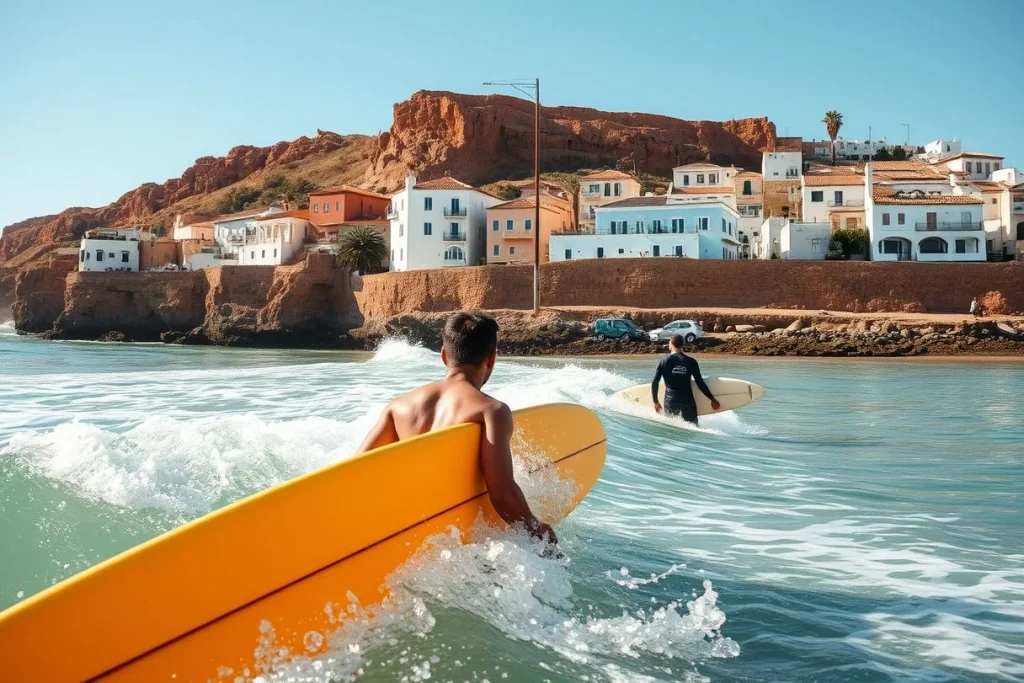
For Morocco’s southern Atlantic coast, Agadir-Al Massira Airport is the most useful starting point. From here, Agadir, Taghazout, Mirleft and Legzira fit into one broad coastal plan, with road connections continuing south. Agadir works for a short beach break; on a longer trip, continue towards Mirleft and Legzira rather than treating them as quick excursions.
Atlantic itineraries can also begin in Marrakech or Casablanca and continue by road. Essaouira is an uncomplicated independent base from Marrakech, reached by road or coach, while Sidi Kaouki is accessible from Essaouira by taxi or minibus. The beach is close enough for a focused outing, but an overnight stay gives you more flexibility when surf or photography conditions shift.
Longer transfers and fewer convenient connections are part of the route to Mirleft and Legzira. A rental car lets you stop at coves and viewpoints, but check current road conditions, vehicle suitability and service gaps before setting out. Some remote approaches may suit a 4×4; it isn’t automatically needed for every route. If unfamiliar roads are a concern, use a local taxi or organised operator instead.
Guided coastal transfers and surf shuttles take care of break-finding, equipment and changing road conditions. Independent driving gives you more privacy and control. It also demands realistic route planning, rather than a string of map pins.
Dakhla is a separate far-southern trip, not a casual addition to an Agadir or Essaouira circuit. Before booking, check current flights, onward transfers and specialist-operator availability with airlines, airports and providers.
Safety, fitness and gear for Morocco’s coast
Morocco’s coast rewards self-sufficiency, but exposed beaches are not casual terrain. Uneven sand, cliffs, strong surf and remote stretches demand secure footing, enough water and a realistic fitness level; on longer walks, carry offline maps and avoid relying on a phone signal.
- Pack for changing conditions: take a rash vest or wetsuit suited to the season, reef-safe sun protection, more water than you expect to need, secure footwear, a dry bag, basic first aid, a charged phone and a spare battery.
- Check the sea locally: no Moroccan beach is universally safe for swimming. Before entering, confirm current bathing-water quality, tides, currents, local warnings and lifeguard cover with the municipality or beach authorities; cover and conditions vary.
- Treat Legzira’s cliffs as unstable: its main arch collapsed on 23 September 2016, and remaining rock formations should not be climbed or approached from below, as reported by The Guardian.
- Choose instruction carefully: use reputable, qualified surf or kitesurf instructors, check equipment condition and ask how they handle changing conditions. Independent sessions are a poor trade-off when the break or wind exceeds your ability.
- Protect the wider trip: read current advice on crime, scams, protests, terrorism and methanol poisoning, and arrange travel insurance covering your activities. GOV.UK’s Morocco advice, updated 15 September 2026, is a useful starting point; also check your own government’s guidance.
Conclusion: choose the coast that matches your challenge
Choose the destination that matches the challenge you can handle, not the photograph you like most. Experienced surfers should make Taghazout the priority; Oualidia is the more practical choice for calm lagoon days and families, while Saïdia suits a conventional warm summer resort. For accessible wind sports, choose Essaouira. Build a scenic Atlantic road trip around Legzira or Mirleft, accepting longer transfers and rougher terrain. Dakhla earns its remote logistics only when kitesurfing is the central purpose.
Next, choose one coastal region rather than trying to cover Morocco’s entire shoreline. For your dates, verify transport, accommodation, local conditions and operator credentials, then shape the route around your actual ability. That approach leaves room for the coast to be an adventure without turning every beach day into an avoidable gamble.
Frequently asked questions
Is Taghazout suitable for beginner surfers?
Taghazout can suit beginners at appropriate, sheltered spots and in suitable conditions, especially with a surf camp or qualified local guide. Anchor Point is different: it is a right-hand point break associated with experienced surfers, and should not be treated as an unsupervised beginner break when conditions are larger. Check the day’s surf forecast and operator advice before entering the water; Atlantic surf is generally strongest from autumn through spring. (Anchor Point guidance: taghazout.io.)
Can I swim safely at Morocco’s beaches?
No beach should be described as universally safe. Atlantic beaches can have stronger surf, while Oualidia’s lagoon and Saïdia’s Mediterranean coast are more suitable for calm-water swimming, depending on current conditions. Lifeguard hours, beach facilities and bathing-water status vary by municipality and were not verified nationally, so check local warnings and official municipal information before swimming. GOV.UK’s Morocco advice, updated 15 September 2026, also recommends checking current safety guidance.
How do I get to Legzira Beach and Mirleft?
Agadir is the practical southern hub, with Agadir-Al Massira Airport and road connections towards Mirleft and Legzira. Both destinations generally involve longer road transfers; depending on conditions and the exact beach, plan on a rental car, local taxi, 4×4 or organised operator rather than assuming a simple public-transport connection. Check current road conditions and transfer availability before setting out. Remote-coast access guidance is reported by Morocco Escape.
Is Dakhla worth the extra journey for kitesurfing?
Dakhla is worth considering if flat-water kitesurfing and wind sports are the main purpose of the trip, rather than a convenient beach stop. Its far-southern lagoon setting brings remote logistics: verify flights, transfers, wind conditions and specialist-operator availability for your dates before booking. It is a poor fit for a short, flexible Atlantic road trip or travellers who prioritise easy independent access. (Morocco Escape describes Dakhla as a remote lagoon destination.)
Which Moroccan beaches are easiest to reach without a car?
Essaouira is among the more straightforward choices for an independent trip: the beach is beside the medina, and the town has a comparatively easy road or coach connection from Marrakech. Agadir is another practical base because it has an international airport, a long urban beach and a wide range of accommodation and services. Sidi Kaouki, Mirleft, Legzira and Dakhla generally demand more planning by taxi, longer road transfer or organised operator.
What should I pack for a Morocco beach and surf trip?
Bring secure footwear for uneven sand, exposed coastal paths and cliff areas, plus enough drinking water and sun protection for remote walks. Surf travellers should plan appropriate equipment for the season and conditions; the cooler Atlantic surf season may require a wetsuit. For Legzira, leave climbing plans out entirely: its main arch collapsed on 23 September 2016, and remaining cliffs and rock formations can be unstable. Check local surf, wind, bathing-water and operator information before travelling.