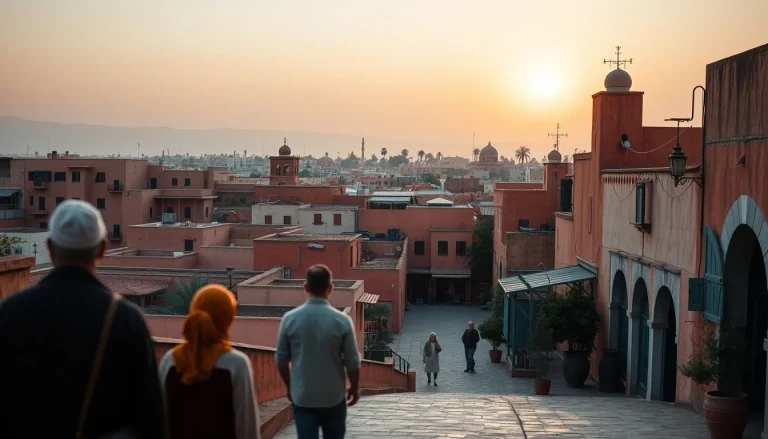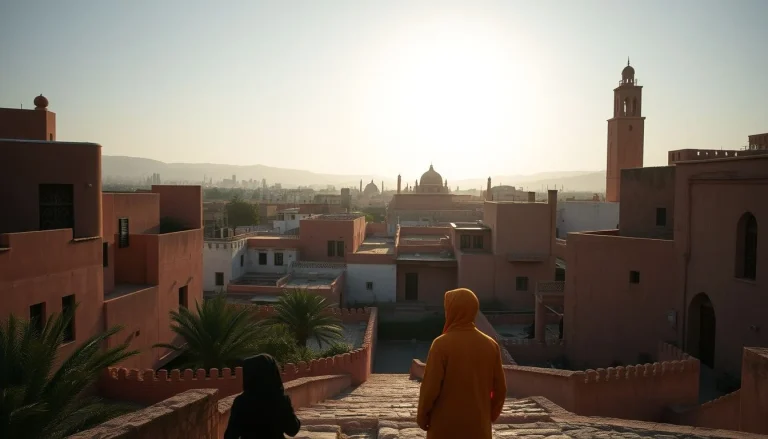
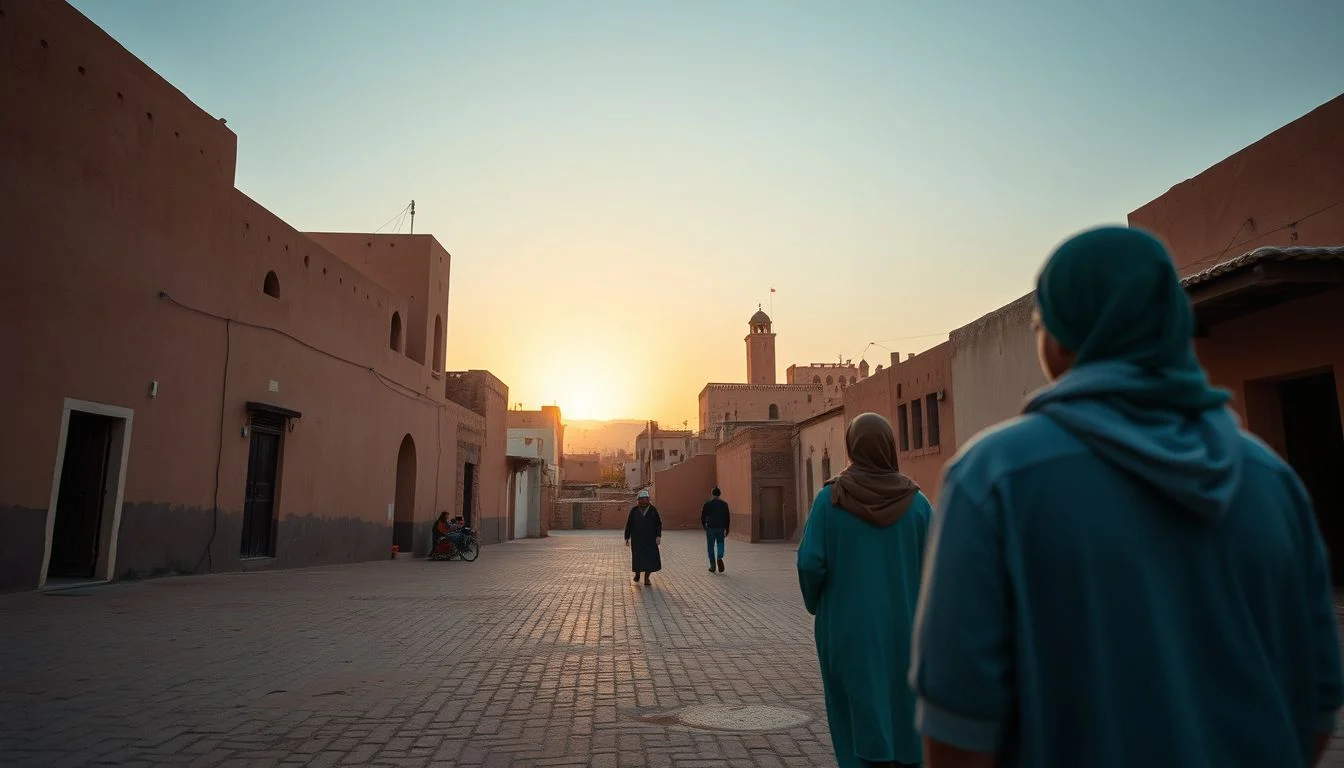
Erg Chebbi is a 22-kilometre field of Saharan dunes near Merzouga, with the highest ridges reaching about 150 metres. Reaching it from Marrakech, however, means roughly 8–10 hours of driving each way, usually split across two travel days—not a quick excursion between city sightseeing and dinner.
That contrast defines the choice facing adventure travellers comparing desert tours from Marrakech. This guide helps you weigh a nearby Agafay outing against the longer routes to Zagora, Merzouga and Erg Chigaga, then assess driving hours, heat, walking and camel transfers, vehicle standards, group size and remote-area planning. It is written for travellers who want a genuine route rather than a polished itinerary that hides the demanding parts.
Quick answer: Choose Agafay for a one-day rocky-desert experience, Zagora for a shorter overland route, Merzouga and Erg Chebbi for classic tall dunes, or Erg Chigaga for a more remote 4×4 expedition. A Marrakech–Merzouga journey normally takes two travel days, while Zagora commonly takes around 6–8 hours and Erg Chigaga requires a further off-road journey from M’Hamid.
Types of desert trips from Marrakech—and who they suit
Once the landscape is clear, the choice becomes more practical: how much time can you spend in a vehicle, and do you want dunes, rock, or a genuinely remote off-road route? The following comparison is a useful first filter for desert tours from Marrakech.
| Destination | Realistic minimum | Landscape | Travel burden | Best suited to |
|---|---|---|---|---|
| Agafay Desert | One day | Rocky, stony desert | About 40–60 minutes from Marrakech | First-time visitors with limited time |
| Zagora and the Draa Valley | Overnight itinerary | Dry valley landscapes and smaller dunes | About 350–370 km; commonly 6–8 hours | Travellers who want a shorter overland route |
| Merzouga and Erg Chebbi | Two travel days for the journey | Tall Sahara dunes | About 8–10 hours of driving each way | Travellers seeking the classic camel-and-camp experience |
| Erg Chigaga | Multi-day expedition | Remote dunes beyond M’Hamid | 8–10 or more hours to M’Hamid, then about 60 km of piste by 4×4 | Experienced adventure travellers |
| Aït Benhaddou–Dades or Todra–Merzouga circuit | Multi-day circuit | High Atlas, ksar, gorges and dunes | Long overland days, but the route is part of the trip | Travellers who dislike treating transfers as dead time |
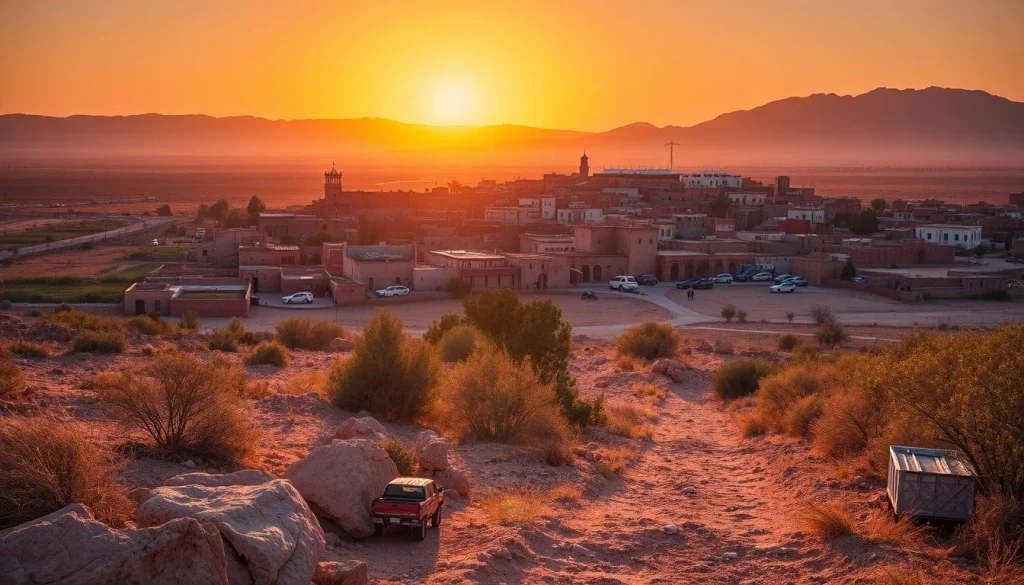
Agafay is the straightforward choice for a day trip from Marrakech. It can provide sunset, a camel activity or quad biking without the long Sahara transfer, but it is a rocky or stony desert rather than a tall-dune landscape. Choose it for atmosphere and convenience, not if your priority is walking among large sand dunes.
Zagora offers a more substantial overland journey through the Draa Valley. The Marrakech–Zagora route is approximately 350–370 kilometres and commonly takes around 6–8 hours, depending on stops and weather, according to Visit Agafay Desert’s 2026 route guide. It suits travellers with limited time who accept that its dunes differ from Erg Chebbi.
For the recognisable Sahara scene, continue to Merzouga and Erg Chebbi. The dune field is about 22 kilometres long, with dunes reaching approximately 150 metres, but a Marrakech–Merzouga journey normally involves two travel days and roughly 8–10 hours of driving one way, as described by Guided Trips Morocco. This is a better fit for travellers who can tolerate long road days and want the reward of a classic camp-and-camel route.
Erg Chigaga is the more serious choice. From M’Hamid El Ghizlane, the route continues for about 60 kilometres over piste by 4×4; the wider journey from Marrakech commonly takes 8–10 hours or more door to door, according to Morocco Escape. Book it as an expedition, not a quick excursion, and check the vehicle, spare tyre, communications and evacuation plan before committing.
Tours worth considering: match the format to the experience
Start with the experience, not the label
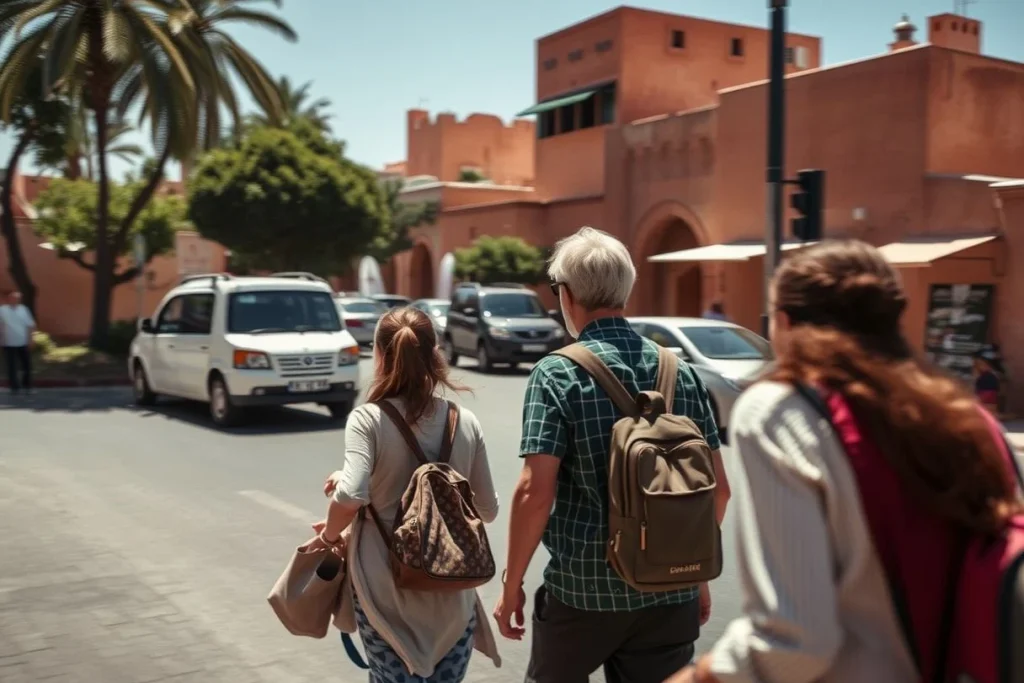
An Agafay day trip suits travellers who want a desert-shaped landscape without sacrificing a night in Marrakech. The area is roughly 40–60 minutes from the city and is rocky and stony, not a Sahara dune field; check that the itinerary includes the activity you actually want, such as a camel transfer, quad ride or sunset stop, rather than assuming “desert camp” means sand dunes. Get Morocco Vacation describes Agafay as a same-day alternative to the longer Sahara transfer.
Zagora and the Draa Valley are the practical middle ground: a shorter overland route and a different, smaller-dune landscape from Erg Chebbi. Before booking, check how much time is spent travelling, how long you are actually on the dunes and whether the overnight camp is fixed or seasonal. An itinerary that lists a sunset camel ride should state its approximate duration and camp location, not simply promise a “Sahara experience”.
Choose the route that earns its driving time

For tall dunes and the classic Marrakech to Merzouga itinerary, look for a circuit that uses the journey well, with stops such as Aït Benhaddou, Ouarzazate, the Dades Valley or Todra Gorge. Erg Chebbi is a dune field about 22 kilometres long, with dunes reaching approximately 150 metres; the scale is different from Zagora, but getting there is a serious overland commitment. A sunset camel transfer to a Merzouga-area camp commonly takes around 45–90 minutes, depending on the camp’s location, according to Travel Inside Morocco.
For Erg Chigaga, treat the format as an off-road expedition rather than a standard camp night. The operator should name the 4×4 capability, driver’s relevant experience, spare tyre, communications method and emergency or evacuation procedure. Ask whether larger luggage remains in the vehicle: camel transfers generally take only a small overnight bag, according to Travel Inside Morocco.
Compare the vehicle and group, not just the itinerary
A private multi-day 4×4 loop is worth considering if you need flexible photo stops, a slower pace or a genuinely private room; verify each inclusion rather than assuming “private tour” guarantees a higher vehicle or camp standard. A small-group departure can reduce the cost of the transfer while keeping the vehicle manageable. Published small-group 4×4 descriptions commonly state capacity of six to eight travellers, whereas budget vans may be larger, so ask for the maximum—not an average—group size.
Finally, confirm daily driving hours, pickup and drop-off points, camp type, meal arrangements and luggage handling in writing. No general tourist permit is normally required for Merzouga or Zagora, but access notices may apply where routes cross private or conservation land; check with the operator and relevant local authorities before departure.
When to go: heat, cold and mountain-pass conditions

For active desert travel, March–April and October–November are generally the most comfortable windows. Daytime conditions are usually more manageable for walking and camel transfers, while the main drawback is variability: check the forecast for each stop rather than relying on Marrakech weather. These months suit travellers planning time outside the vehicle, particularly on a longer Merzouga or Erg Chigaga itinerary.
June–August demands a more conservative plan. A Merzouga climate summary from Merzouga Desert Package reports average July highs of approximately 38–41°C; that is a useful warning, not a guarantee for your dates. Long daytime walks, dune ascents and multi-day trekking can become a serious exertion in this heat, so consider early starts, frequent water breaks and a camp itinerary that keeps the hardest activity away from the afternoon. If you have a medical condition affected by heat, ask your clinician before booking.
December–February can be pleasant in the sun but cold after sunset, especially in an open camp. Pack layers rather than relying on a single heavy jacket: a warm mid-layer, windproof outer layer, covered trousers, a hat and a sleeping layer are more practical than summer clothing alone. Confirm what bedding and shelter the camp provides, particularly if your trip includes a sunset camel transfer and a night outdoors.
Routes from Marrakech towards Ouarzazate, the Dades Valley and Merzouga cross the Tizi n’Tichka pass. Winter weather or a temporary road closure there can alter a departure, delay arrival or require a changed itinerary, so ask the operator how it handles disruption before paying. Check the latest forecast, road and closure information with the relevant Moroccan authorities and your tour operator shortly before departure. Also review your own government’s advice: GOV.UK’s Morocco travel advice, updated 30 September 2026, warns travellers about terrorism, street crime, protests and scams. Treat conditions as changeable, not as a promise attached to a season.
What the overland routes really involve
The eastern route is a sequence of mountain roads, valleys and long desert transfers, not one uninterrupted scenic drive. From Marrakech, it typically crosses the Tizi n’Tichka pass towards Ouarzazate, with possible stops at Aït Benhaddou before continuing through the Dades Valley or Todra Gorge. From there, the road runs towards Errachidia and Rissani, then Merzouga and the Erg Chebbi dunes.
Allow two travel days to reach Merzouga. Route information from Guided Trips Morocco puts the Marrakech–Merzouga drive at roughly 8–10 hours one way, so a same-day excursion is not realistic. The reward is the scale of Erg Chebbi: the dune field is about 22 kilometres long, with dunes reaching approximately 150 metres, but the transfer leaves limited time for walking unless the itinerary includes an extra night.
A typical illustrative structure might be: day one, Marrakech to Aït Benhaddou and Ouarzazate; day two, onward through the Dades Valley or Todra Gorge to Merzouga; day three, a sunrise walk or camel transfer, then time around the dunes; and day four, the return journey or continuation elsewhere. This is a planning model, not an operator promise. Check how many hours are actually spent driving, where rest stops fall and whether the return is broken up.
The southern route is shorter but still substantial. Marrakech to Zagora is approximately 350–370 kilometres and commonly takes around 6–8 hours, depending on stops and weather, according to route information from Visit Agafay Desert. The road follows the Draa Valley, making Zagora a practical choice when Merzouga would consume too much of the trip, though its desert landscape differs from Erg Chebbi.
Erg Chigaga demands another level of logistics. The wider Marrakech–M’Hamid journey can take 8–10 or more hours door to door, followed by roughly 60 kilometres of piste by 4×4 to the dunes, as described by Morocco Escape. Treat that off-road section as a separate expedition rather than a short camp transfer.
At Merzouga, a sunset camel transfer commonly takes around 45–90 minutes, depending on the camp’s location. Long vehicle days and camel motion can combine unpleasantly, so carry water, motion-sickness medication if suitable for you, and a light layer; ask whether larger luggage remains in the vehicle while you take only a small overnight bag to camp.
Guided tour or independent travel? The honest trade-offs
Guided tours: less independence, more practical support

For a first visit, a guided desert tour usually earns its place by removing the hardest logistics: long route-finding, driving fatigue, changing road conditions and the handover from vehicle to camel or 4×4. That matters on the Marrakech–Merzouga route, where the journey is normally split across two travel days and involves around 8–10 hours of driving each way, rather than a realistic same-day excursion. A guide can also make local stops and camp arrangements easier to navigate, although the quality of the vehicle, driver and guiding varies between operators.
A private trip buys control rather than a guaranteed higher standard. You may be able to adjust photo stops, walking pace and overnight choices, but “private” does not automatically mean a newer 4×4, a more experienced driver or better emergency equipment. A shared vehicle can reduce the transport burden per traveller and suit people who prefer company; small-group private 4×4 tours commonly list around six to eight passengers, while budget vans may be larger, according to Guided Trips Morocco. Ask for the maximum group size in writing.
Independent travel: freedom with more moving parts
Independent travel suits experienced self-drivers who have extra time, can tolerate timetable changes and are comfortable making their own safety decisions in remote terrain. CTM or Supratours buses and grand taxis can form part of a route through major towns, but connections may require additional overnight stops; check live schedules and fares directly before committing. This approach gives you more choice over hotels and stops, but less control once you need a remote piste, a camel-camp transfer or an unexpected roadside repair.
A guided vehicle is especially useful for Erg Chigaga, where the final approach from M’Hamid involves roughly 60 kilometres of piste. Independent travellers should not treat that section as an ordinary road transfer: confirm access, navigation, communications and recovery arrangements locally. For ordinary tourist visits to Merzouga or Zagora, no general permit is normally required, but access notices may apply where routes cross private or conservation land, so check locally before setting out.
Safety, luggage and access
Use current official advice alongside the operator’s plan. GOV.UK’s Morocco travel advice, updated 30 September 2026, warns of terrorism, street crime, protests and scams; it is not a substitute for asking who is responsible if a vehicle breaks down or a passenger becomes ill. Mobile coverage can be intermittent or absent in remote dunes, so ask how the guide communicates and summons help.
Independent or guided, accessibility needs direct confirmation. Sand, uneven ground, camels and off-road vehicles can make camps unsuitable for travellers with serious mobility limitations. Camel transfers generally take only a small overnight bag, so establish where larger luggage stays before departure.
Booking tips: check the vehicle, group and cancellation terms
Before you pay
- Get the maximum group size in writing. Small-group private 4×4 tours may describe capacity of six to eight travellers, while budget vans can carry more; “small group” is not precise enough. Ask how many passengers will share your vehicle on your dates.
- Check the vehicle, not just the itinerary. Confirm the model, passenger capacity, air conditioning, seat allocation and luggage space, particularly if the route includes long days on the road. Ask whether the same vehicle covers the whole journey or whether you change vehicles en route.
- Pin down the timings. Request the pickup and drop-off points, daily departure times and expected driving hours. Also check whether your accommodation is accessible by vehicle: some medina hotels have meeting points outside restricted streets, which can leave you carrying bags farther than expected.
- Clarify who is responsible for what. The driver may not be the walking guide or the person leading the camel transfer. Ask which parts are guided, who handles camp arrival and what emergency contact remains available after the vehicle leaves.
- Inspect the camp description carefully. Confirm whether it is fixed, seasonal or mobile; whether your tent has a private bathroom; and how far it sits from the dunes. A camp with bright communal lighting may suit social evenings but weaken the stargazing experience. At Merzouga, a sunset camel transfer commonly takes around 45–90 minutes, depending on the camp’s location, according to Travel Inside Morocco.
- Ask about luggage before arriving with a full suitcase. Camel transfers usually take only a small overnight bag. Confirm whether larger luggage stays in the vehicle or is transported separately, and what you can access during the night.
- Read the actual booking terms. Check cancellation and refund deadlines, weather-disruption and road-closure provisions, and any fuel surcharge on the specific booking page. Do not rely on a general promise that the operator is flexible.
Extra checks for Erg Chigaga

Erg Chigaga is an off-road trip, not simply a longer camel excursion. Before booking, ask for the 4×4’s spare-tyre arrangements, the driver’s experience on the piste, the communication method when mobile coverage fails, emergency contacts and the evacuation procedure. Treat vague answers as a reason to choose another itinerary.
Finally, review the GOV.UK Morocco travel advice, updated 30 September 2026, alongside your own government’s advice. Check the forecast and current road conditions, including the Tizi n’Tichka route where relevant, immediately before departure; heat, winter cold and disruption can change the comfort and timing of a desert tour.
Conclusion: choose the landscape you can reach responsibly
Choose the landscape you can reach without turning the trip into an endurance test. If time is the priority, an Agafay Desert tour from Marrakech is the sensible choice: it offers a nearby rocky-desert setting, sunset activities and no long Sahara transfer, but it does not deliver tall dunes.
Choose Zagora when you want a shorter overland route and are happy with smaller dunes and the Draa Valley. For a first classic Sahara experience, choose Merzouga and Erg Chebbi: the dune field reaches approximately 150 metres in places, but the journey normally takes two travel days, with around 8–10 hours of driving each way. Erg Chigaga is for travellers who actively want remoteness and off-road travel; reaching it from M’Hamid involves roughly 60 kilometres of piste in a 4×4.
Do not choose by dune photographs alone. Compare the realistic driving time, heat tolerance, walking and camel-transfer demands, maximum group size, vehicle standard, camp location, luggage arrangements, communications plan and weather-disruption terms. For active travel, March–April and October–November are generally more comfortable; Merzouga’s average July highs are approximately 38–41°C, so summer trekking needs particular caution.
Your next step is practical: shortlist two or three itineraries that fit your time and fitness, then request any missing details in writing. Before paying, recheck the forecast, Tizi n’Tichka or other route conditions, and current official travel advice. Choose the operator whose answers are precise—not merely the itinerary with the most dramatic dunes.
Frequently asked questions
Can I see the Sahara on a one-night trip from Marrakech?
A one-night itinerary can take you to a nearby desert setting, especially Agafay, but it is not a realistic way to reach the classic dunes of Merzouga. The Marrakech–Merzouga journey is normally divided across two travel days and involves approximately 8–10 hours of driving each way, according to Guided Trips Morocco. Zagora is closer, but the drive still commonly takes around 6–8 hours, depending on stops and weather.
Is Agafay a genuine Sahara desert experience?
Agafay offers a genuine desert-style outing close to Marrakech, with a rocky or stony landscape suitable for sunset, camel and quad activities. It is not the Sahara’s tall-dune environment: Agafay is approximately 40–60 minutes from Marrakech, while Erg Chebbi near Merzouga is a major dune field. Choose Agafay for limited time, not as a substitute if seeing large Sahara dunes is your main aim.
Will my phone work during a remote desert camp stay?
Do not plan on continuous mobile coverage in remote dune areas. Coverage can be intermittent or absent, particularly on the more isolated routes, so ask the operator how the driver or camp communicates in an emergency before booking. For Erg Chigaga, confirm the 4×4’s communications arrangements and emergency or evacuation plan; GOV.UK’s Morocco travel advice, updated 30 September 2026, should also be checked before departure.
What happens to my main luggage during a camel transfer?
Camel transfers generally accommodate only a small overnight bag. Larger luggage may remain in the vehicle or be transported separately, but this varies by camp and itinerary, so obtain a clear answer from the operator before departure. Also ask whether the camp is fixed, seasonal or mobile, and pack anything needed overnight—such as medication, warm layers and a head torch—in the small bag you carry.
Do I need a permit to visit Merzouga or Zagora?
No general tourist permit is normally required for visits to Merzouga or Zagora, according to Go2Morocco. Access notices may apply where a route crosses private or conservation land, so an independent traveller should check locally and ask the operator to confirm the route. Requirements can change; verify current access information before setting out rather than relying only on an old itinerary.
Are these trips suitable for solo travellers and women travelling alone?
Solo travellers and women travelling alone should choose the operator and format carefully rather than assuming every desert trip offers the same support. Confirm the group size, named meeting point, vehicle, driver, camp arrangements, luggage plan and emergency communications, and share the itinerary with someone at home. GOV.UK’s Morocco travel advice, updated 30 September 2026, warns of terrorism, street crime including knife attacks, protests and scams; check it and your own government’s current advice before travel.