Mallorca’s Port de Pollença and Alcúdia draw spring training riders, while the Dolomites depend on pass openings that vary by year and location. Those contrasts explain why the best time for a cycling trip in Europe is not one universal month: a warm southern road itinerary, a river route and a high Alpine crossing each have different seasonal limits.
This route-by-route guide is for cyclists choosing between self-guided riding and supported tours, with the practical details that shape the decision: weather, traffic, crowds, operating services, bike hire, luggage transfers and transport with bikes. It points recreational riders towards manageable shoulder-season routes, while helping performance-oriented cyclists match training destinations, mountain passes and organised events to the dates when they are most likely to work.
Quick answer: For most cyclists, the strongest windows are April to mid-June and September to mid-October, when riding conditions, crowds and operating services are generally well balanced. Choose mid-June to early September for many Alpine routes; southern Spain, the Costa Blanca and Mallorca are particularly suited to spring and autumn riding.
Why go in the shoulder seasons: better riding conditions with fewer pressures
That broad rule works because shoulder-season riding gives most cyclists a workable compromise: April to mid-June brings lengthening daylight and reopening route services, while September to mid-October often retains warm riding conditions without the full pressure of high summer. Neither window is guaranteed; spring can turn cool or wet, and autumn brings shorter daylight and a greater need for a weather contingency. The Met Office’s climate summaries and cycling guidance are useful checks before fixing a route.
Summer is not automatically the wrong choice. July and August can suit riders targeting high Alpine passes, where access is generally more reliable from around mid-June to early September, although each pass has its own opening and closure dates. Elsewhere, expect more competition for beds and hire bikes: EuroVelo monitoring records the highest absolute cycling traffic in the third quarter, with the second quarter also busy.
| Consideration | Spring: April to mid-June | Autumn: September to mid-October |
|---|---|---|
| Weather and daylight | Daylight improves, but conditions can change quickly; pack layers and wet-weather protection. | Often favourable for riding, but daylight shortens and unsettled weather can arrive sooner. |
| Traffic and crowds | Generally lighter than July and August, though popular training areas can be busy. | Often quieter, particularly in late September, but event weekends can reverse that. |
| Services | Check that accommodation, cafés, hire shops and mountain transport have reopened. | Confirm closing dates and reduced timetables before relying on cafés, ferries or buses. |
| Surfaces and route choice | Lowerland paved routes are the safer seasonal default; higher roads need local checks. | Lowerland routes remain practical; mountain weather and early snow require flexibility. |
| Best suited to | Training camps, recreational touring and riders who value increasing daylight. | Long-distance touring and riders seeking warm conditions with less summer pressure. |
July and August can still be the sensible choice for a high-mountain itinerary, but they usually trade easier pass access for heat, traffic and booking pressure. For a performance-focused trip, that may be worthwhile; for a relaxed self-guided tour, May, June or September is often easier to manage.
Winter is a specialist option rather than the default for a multi-day European cycling holiday. Shorter days, wet or icy surfaces and reduced transport and hospitality services can make the logistics more demanding. EuroVelo advises checking the year-specific timetable for trains, ferries and mountain buses that carry bikes, while the Met Office recommends route-specific winter preparation.
Where to go: European cycling destinations at their best by season
Match the route to your riding season
The best European cycling destinations depend as much on terrain and services as on the calendar. For most recreational riders, April to mid-June and September to mid-October are the most versatile windows. Summer brings the highest absolute cycling traffic on EuroVelo routes, according to the network’s usage barometer, so accommodation and bike hire can face more pressure then.
| Route profile | Best window | Terrain and service profile | Main risk | Best fit |
|---|---|---|---|---|
| Southern Spain and Costa Blanca | Spring and autumn | Warmer riding; hubs such as Alicante and Calpe; local hire and route services to check | Traffic, heat outside the shoulder seasons and seasonal rental availability | Recreational riders and e-bike users seeking a longer warm season |
| Mallorca | Spring and late September | Road-training base around Port de Pollença and Alcúdia; strong premium-bike market | Training-week demand and tighter bike and accommodation supply | Performance riders, supported tours and road-bike hire |
| Danube Cycle Path and Rhine Cycle Route | May, June and September | Lowerland, town-linked riding with comparatively straightforward logistics and services | Changeable shoulder-season weather and reduced transport frequency outside peak season | Self-guided riders wanting easier planning and regular resupply |
| Dolomites and Alpe-Adria | Mid-June to early September | Mountain riding; pass access and local services vary by road and year | Snow, rapidly changing weather, traffic and event-related access restrictions | Experienced climbers and supported trips with contingency planning |
| Valdres and Mjølkevegen | Published guided season: 23 June–10 September 2026 | Northern mountain and gravel riding; operator-led seasonal services | Weather, surface conditions and limited transport outside the operating window | Gravel riders and cyclists comfortable with a more remote, seasonal itinerary |
The table’s seasonal guidance is based on EuroVelo, SykkelValdres and route-specific cycling sources; check each operator and road authority for the year of travel.
Warm-weather riding in the south
Southern Spain, Andalucia and the Costa Blanca are strong choices for cycling in spring and autumn, when riders can seek warmth without committing to the hottest part of summer. Alicante and Calpe work as practical illustrative hubs, but they are not interchangeable: check the intended roads for traffic, gradients, surfaces, water and rest stops before booking accommodation.
Bike hire is a useful reason to choose a hub rather than a point-to-point itinerary, particularly for e-bike users or anyone flying without a bike. Bikes Costa Blanca advises reserving premium road bikes and e-bikes around four to eight weeks ahead in an ordinary shoulder season, and further ahead for popular training periods; confirm local shop opening dates and fleet availability directly.
Mallorca deserves its own decision. Spring is established as a road-training season around Port de Pollença and Alcúdia, making it suitable for performance-oriented riders and supported tours, but that popularity constrains premium bikes and accommodation during busy training weeks. Late September can retain warm riding conditions with fewer riders, according to Velovie, and is the more relaxed choice for a self-guided holiday.
Lowerland routes for simpler logistics

The Danube Cycle Path and Rhine Cycle Route suit cyclists who prioritise manageable conditions, towns and service access over sustained climbing. EuroVelo identifies May, June and September as particularly strong months for both corridors. Their town-linked character can make luggage-transfer or self-guided itineraries easier to arrange, while still leaving room to choose shorter daily stages and regular stops.
Do not assume every train, ferry or bike-carrying bus follows a summer timetable. EuroVelo recommends checking the operator’s timetable for the specific year and route, especially if your plan depends on a connection or a return journey with bikes.
When mountain routes make sense
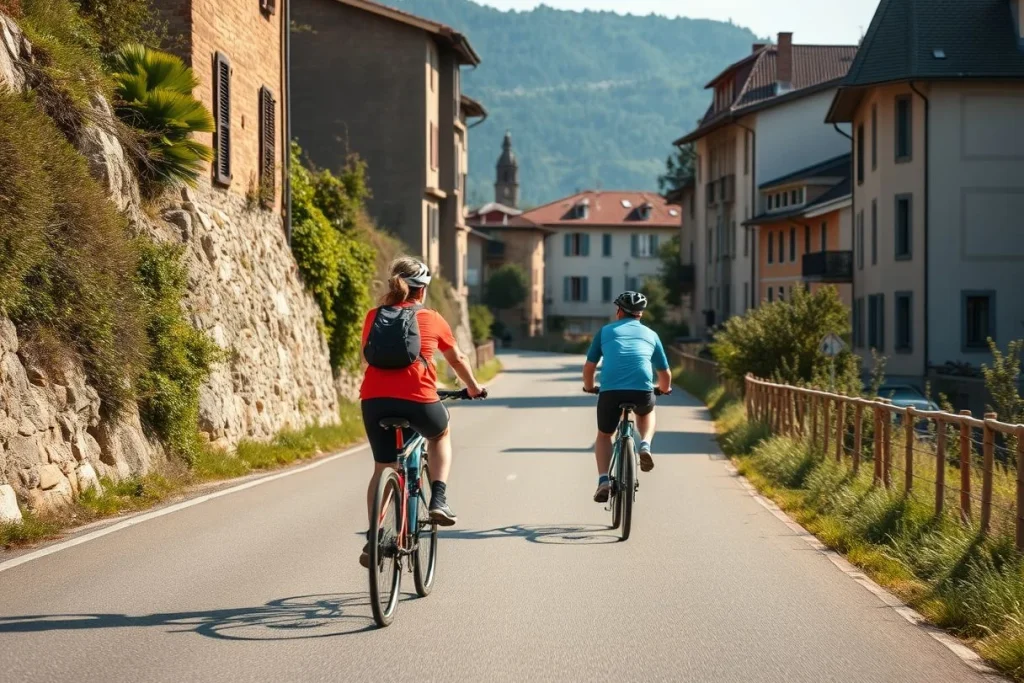
The Dolomites and Alpe-Adria are generally most reliable from around mid-June to early September, but there is no universal Alpine opening date. Passes open and close according to the individual road and the year, so verify conditions with the relevant road authority or route operator before committing to a self-guided itinerary.
For riders choosing elevation over convenience, a supported tour can reduce the consequences of a weather change through planned transfers and mechanical help; it cannot remove the need for layers, repair equipment and a fallback plan. Valdres and the Mjølkevegen offer a different northern option: SykkelValdres publishes a guided cycling season of 23 June to 10 September 2026, a useful illustration of how precisely seasonal gravel routes must be checked.
Events and festivals that can change your cycling dates
European cycling events can change a route’s practical appeal even when you are not taking part. Road access may be managed temporarily, traffic can be heavier, and nearby accommodation and premium bike hire may be under pressure. The dates below are 2026 listings; refresh them for the next publication cycle before committing to transport or accommodation.
Dolomites Bike Day — 20 June 2026. This date falls near the start of the more reliable Alpine cycling window, so it can overlap with plans for the Dolomites or Alpe-Adria. Check the 2026 Dolomiti Superski event listing and the relevant local road authority for access arrangements; do not assume that an entire route will be closed.
Maratona dles Dolomites–Enel — Sunday 5 July 2026. The official Maratona dles Dolomites–Enel site lists the event for this date. Expect stronger demand for accommodation, event-package places and bike hire around the course, alongside possible changes to local road access and traffic management. The event’s 2026 packages were offered from October 2025, so riders planning to participate or stay close to the start should work several months ahead.
Sellaronda Bike Day — 12 September 2026. This late-summer listing, also shown by Dolomiti Superski, can affect plans for the Sellaronda area just as autumn riding begins. Before booking, compare the official event information with local road notices and accommodation inventory. Ask a hire shop about fleet availability rather than assuming a suitable road bike or e-bike will remain available.
Planning and booking: secure bikes, beds and transport for your dates
Once the dates are chosen, book in this order: route, transport, bike, then accommodation and support services. That sequence matters on popular spring training routes and around major events, when a room may still be available but the right-sized road bike, e-bike or luggage transfer is not.
A practical booking timeline
Start with the route and its operating season. For high Alpine passes, the dependable window is generally around mid-June to early September, but opening and closure dates vary by pass and year. Check the relevant road authority or route operator rather than relying on a universal date. In Valdres, for example, the published guided Mjølkevegen season runs from 23 June to 10 September 2026, according to SykkelValdres.
Next, verify every link in the journey: trains, ferries, mountain buses and airport transfers. EuroVelo advises checking the exact operator timetable because services carrying bicycles can run less frequently outside the main season. Confirm whether a reservation is required, how the bike must be carried, and what happens if bad weather closes a pass or interrupts a connection.
Reserve premium bike hire around four to eight weeks ahead for an ordinary shoulder-season trip. Allow three to six months or more for popular Mallorca training weeks, event dates and other periods when demand concentrates. This guidance is also reflected by Costa Blanca rental information. Ask for the frame size, pedals, rack or pannier provision, collection hours, insurance terms and repair arrangements in writing; late-season fleets are not guaranteed to operate at full strength.
Accommodation lead times follow the calendar rather than a fixed rule. A quiet self-guided week on the Danube or Rhine may be easier to arrange than a Dolomites weekend, but event demand changes the calculation. The official Maratona dles Dolomites FAQ states that its 2026 packages were offered from October 2025, while major organised events and Gran Fondos can require four to nine months of planning.
Bike, tour style and support
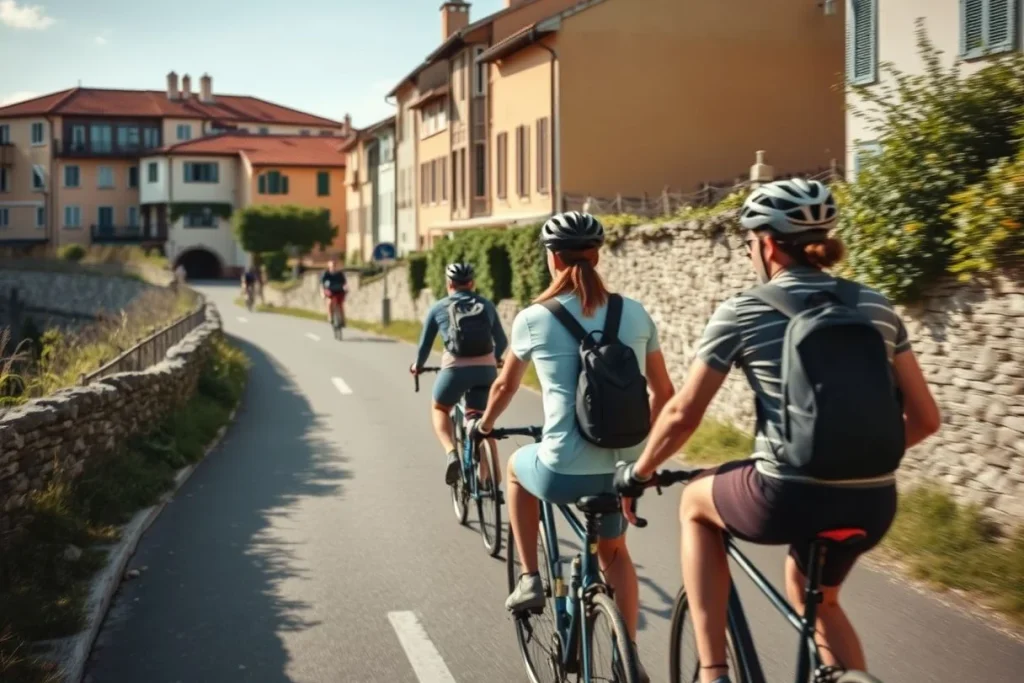
Bring your own bike when familiar fit, gearing and contact points matter more than simple logistics. Hiring is easier for travellers flying with limited luggage and gives access to local advice, but confirm the exact model, adjustment service and replacement policy before paying. A bike box or shipping service may also add handling time and transport restrictions, so check the airline and transfer company directly.
Self-guided riding suits cyclists comfortable with navigation, roadside repairs and changing a plan when weather or a closed service intervenes. A luggage-transfer holiday can keep the riding flexible while removing the daily burden of panniers. Supported tours, such as the types of trips offered by Exodus, Skedaddle and Macs Adventure, are worth comparing when you want a guide, vehicle backup, mechanical help or structured pacing; check what is actually included rather than assuming every operator provides the same level of support.
Final checks before departure
- Recheck Alpine weather, pass notices and route surfaces shortly before riding. Mountain conditions can change quickly, and spring or autumn weather is not guaranteed.
- Carry layers, a repair kit, lights and a charged phone, and keep a realistic daylight-based alternative for shorter autumn days.
- Confirm local traffic rules, helmet requirements and current traffic advisories for every country on the route.
- Save emergency contacts and identify repair shops, food stops and accommodation with late-arrival arrangements before leaving each morning.
- Check that hotels, hire shops, ferries and mountain buses are open for your dates; shoulder-season services are not universally available.
For current conditions, consult the relevant operator and road authority, the official event page, and a recognised weather service such as the Met Office before setting out. EuroVelo’s planning guidance is a useful starting point, but the final answer comes from the specific route, date and transport providers you intend to use.
Conclusion: choose your riding profile, then book the right window
For most cyclists, choose the spring shoulder from April to mid-June or the autumn shoulder from September to mid-October. These windows usually offer the most useful balance of rideable conditions, fewer crowds and functioning route services. If Alpine passes are the priority, shift the plan to mid-June through early September, then confirm each pass’s current opening status; for warmth, southern Spain or Mallorca is the safer seasonal choice.
Turn that decision into a bookable trip in three steps: first, match your terrain and riding style to a region—an event or training block for performance riders, or a self-guided, town-linked corridor such as the Danube or Rhine for recreational cyclists. Next, check official route, event and train or ferry information. Finally, reserve accommodation and bike hire within the appropriate lead time, allowing extra margin for popular training weeks and organised events.
Frequently asked questions
What should I pack for changeable spring or autumn cycling weather?
Pack adaptable layers rather than relying on a guaranteed forecast: a warm layer, rain protection and clothing that can be adjusted during the day. Carry repair equipment and have a contingency plan for rapidly changing Alpine weather. Spring and autumn are recommended shoulder seasons, not promises of stable conditions; check the Met Office’s seasonal guidance and the relevant route forecast before departure.
How do I choose between a road, gravel or mixed-surface European route?
Start with the published surface information for the exact route, then match it to your bike, tyres and experience rather than assuming that a named trail is entirely paved. This is particularly important on northern mountain routes such as Mjølkevegen, where the operator’s seasonal information should be checked. For a first self-guided trip, the Danube Cycle Path and Rhine Cycle Route offer route-linked towns and services; confirm current details with EuroVelo and the local route operator.
Can I combine cycling with rest days and sightseeing on a multi-day route?
Yes, and river corridors are a practical place to plan it: the Danube and Rhine routes connect with towns and route services, with May, June and September identified as strong riding months. Build rest days around places where accommodation and transport are operating, rather than assuming every stop is open year-round. Check ferry, train and bus timetables that carry bikes before fixing the itinerary, as services can be less frequent outside the main season.
What should I do if an Alpine pass or mountain road is still closed?
Do not treat a published seasonal window as a universal opening date. High Alpine and mountain-pass routes are generally more reliable from around mid-June to early September, but opening and closure dates vary by year and location. Check the relevant road authority or route operator immediately before travelling, and keep a lower route or an extra rest day as a contingency; SykkelValdres illustrates why northern mountain routes need operator-specific checks.
How can I reduce traffic exposure on popular European cycling routes?
Plan in the shoulder seasons, especially April to mid-June or September to mid-October, when the overall recommendation balances riding conditions, services and lighter crowds. EuroVelo monitoring shows the highest absolute cycling traffic in the third quarter, so July and August can bring more riders and greater pressure on accommodation and bike hire. Also check event calendars: Dolomites dates can affect local access, traffic and road use, and the official event pages should be checked before booking.
What level of fitness is useful for a supported cycling holiday?
Choose the route and support format around the riding you can comfortably repeat, rather than assuming that luggage transfer or a support vehicle removes the physical demands. Ask the operator for the route’s current surface, daily distance and elevation information, and check what assistance is actually included. A supported trip can suit performance-focused riders as well as recreational cyclists, but Alpine, northern mountain and mixed-surface itineraries require more careful preparation than town-linked river routes.