
On an Emirates A380, first class can mean a private suite, turndown service and access to the A380 Shower Spa—features that have no direct equivalent in most business-class cabins. On many full-service airlines, however, long-haul business class now provides a lie-flat seat, direct aisle access, premium dining and enough space to work or sleep, narrowing the practical gap.
This guide to business class vs first class is for executives, frequent flyers and managers weighing a company-funded ticket against personal spending. It focuses on the decisions that affect a work trip: sleep, privacy, productivity, lounge access, airport efficiency and the extra fare. The aircraft and route matter more than the cabin label, so check the exact seat, Wi-Fi, lounge and ground-service inclusions before booking.
Quick answer: For most long-haul business trips, business class is worth the cost because lie-flat sleep, workspace, priority services and lounge access usually cover the practical needs. First class is worth the premium when the specific flight adds meaningful privacy or service—such as an enclosed suite, exceptional bedding, a shower spa or chauffeur service—and that benefit justifies the fare difference.
At a glance: business class or first class?
The useful distinction is not the cabin name but the product on your exact aircraft. For most long-haul business trips, business class delivers the essentials: a lie-flat seat, a workable personal space, lounge access and priority airport handling. First class earns its premium when it adds privacy or services you will genuinely use, rather than simply a more elaborate meal.
| Test | Business class | First class | Practical verdict |
|---|---|---|---|
| Lie-flat sleep | Common on long-haul aircraft | Usually more space and bedding | Business is sufficient for most overnight work trips |
| Direct aisle access | Available on many modern layouts | Usually standard, but check the seat map | Check the configuration, not just the fare name |
| Workspace | Strong for laptop work, with fewer interruptions than economy | More personal space and privacy | Business usually wins on value |
| Privacy | Varies from an open seat to a suite-style design | May include an enclosed private suite | First matters for confidential work or undisturbed rest |
| Dining | Premium meals and drinks | More elaborate service on some carriers | A secondary reason to upgrade |
| Lounge access | Business or premium lounge, subject to airline and airport rules | Dedicated first-class lounge may be available | Verify the departure airport |
| Priority airport services | Often includes priority check-in, boarding and baggage | Often includes similar or enhanced handling | Benefits are route-specific |
| Wi-Fi | Depends on aircraft and carrier | Not automatically better | Check connectivity before booking |
| Chauffeur service | Available on selected routes and carriers | Available on selected routes and carriers | Useful for meetings, but never assume it is included |
| Award availability | Often a practical upgrade target | Scarcer and more restricted on some programmes | Check inventory and fare-class rules |
| Typical value | Best balance of sleep, productivity and cost | Best for privacy and distinctive service | Pay for a specific benefit, not status alone |
Modern long-haul business class has narrowed the comfort gap with first class through lie-flat seats, direct aisle access and premium dining, as United’s long-haul product information illustrates. First class remains less widely offered and can be a materially different experience: Emirates describes private suites, turndown service and enhanced bedding on applicable aircraft, while its A380 can include a shower spa.
Ground services also need scrutiny. Airlines may offer chauffeur or car-transfer services to eligible passengers on selected routes, and priority security or baggage handling is not universal. Delta’s separate Delta One and Delta First names underline the problem: the label can describe different products by route. Before paying, confirm the aircraft, seat map, lounge, Wi-Fi, transfer and upgrade rules on the airline’s official site.
Head-to-head: five tests that determine premium-cabin value
Sleep and arrival readiness

For an overnight long-haul flight, the first question is simple: can you sleep without losing the next working day? Many full-service airlines now offer long-haul business class with lie-flat seats and direct aisle access. United, for example, has described these features as part of its long-haul business-class development, narrowing the practical comfort gap with first class.
First class can add more personal space, greater separation from the aisle and enhanced bedding on applicable aircraft. Emirates describes private suites, turndown service and upgraded bedding in its first-class offering, but these features depend on the aircraft and route rather than the ticket label alone. Check the airline’s cabin information before assuming the advertised first-class product will operate.
Decision rule: choose business class when a lie-flat seat is enough to protect your sleep and meeting schedule. Choose first class when an enclosed or more private space would materially improve your ability to rest, particularly on a very long overnight sector.
Working and connectivity

Business class is usually designed around useful work rather than isolation: a lie-flat seat, a personal power supply where fitted, a tray or table for a laptop and easier access to the aisle. That combination is often sufficient for reviewing documents, answering messages and preparing for a meeting. A quieter first-class cabin and more generous personal space can make concentrated work more comfortable, but they do not automatically make it more productive.
Wi-Fi is the important qualification. Premium-cabin status does not guarantee faster or more reliable connectivity, and the experience can vary by carrier, aircraft and route. Check the airline’s current aircraft-specific Wi-Fi information and any access or data limits before choosing first class for an important video call.
Decision rule: choose business class when your priority is a practical workspace and dependable rest. Choose first class for privacy during sensitive preparation or calls only after confirming the aircraft’s connectivity; the cabin upgrade cannot compensate for weak onboard internet.
Airport efficiency

Both cabins commonly come with priority airport services, which may include dedicated check-in, priority boarding and priority baggage handling. Delta’s Sky Priority programme illustrates how these benefits are grouped, but the exact inclusions remain airline- and route-specific. They can shorten the routine parts of the airport experience, especially for a traveller moving directly from a meeting to a flight.
Do not treat priority services as a promise of faster immigration or customs processing. Security arrangements, fast-track lanes and arrival formalities differ by airport, and premium tickets do not establish a universal shortcut. Verify the services shown for your departure airport and ticket before relying on them for a tight schedule.
Decision rule: choose business class when priority check-in, boarding and baggage handling solve the main airport problem. First class is justified here only if the specific route adds a ground service you will genuinely use, rather than simply because the cabin carries a higher name.
Lounge and ground experience
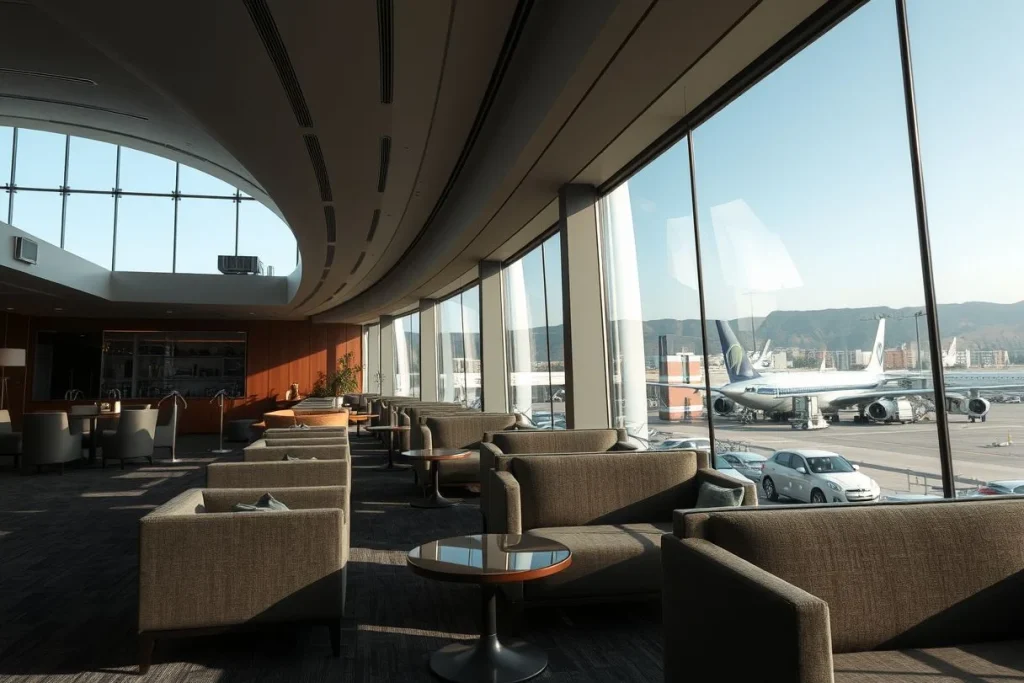
Business-class passengers generally use business or premium lounges; first-class passengers may qualify for a dedicated first-class lounge. The difference can matter when you need a quiet place to work, shower or make a call between a city-centre meeting and departure, but access depends on the airline, airport and ticket. Delta’s Delta One Lounge information is a useful reminder that lounge access is tied to a specific product and location, not simply to the word “premium”.
Chauffeur, meet-and-greet and car-transfer services are also selective. Emirates advertises chauffeur service on eligible routes, while other airlines may offer no comparable transfer or may restrict it by fare and airport. Confirm the service for both ends of the journey and allow for normal local traffic; neither cabin guarantees a faster arrival through immigration.
Decision rule: choose business class when a standard premium lounge and priority handling cover your needs. Choose first class when a dedicated lounge or included transfer materially improves a complex airport connection or protects valuable meeting time.
Service, food and privacy

First class is most distinct when the aircraft offers a genuinely different private environment. Emirates A380 First Class is a clear example: its product information highlights private suites, and the A380 may include the Shower Spa. These are memorable features, but they are not universal first-class benefits; first class is available on a smaller set of carriers and may not operate on every flight.
Business class can still provide premium dining and attentive service, while the gap in food and personal attention varies sharply between airlines. Product names can mislead: Delta uses Delta One for one premium long-haul product and Delta First for a different offering, reinforcing the need to compare the actual aircraft and seat map.
Decision rule: choose business class when the meal, service and privacy are functional parts of a work trip. Choose first class when a private suite, distinctive service or shower facility is the specific reason for paying more—not merely for a broader version of the same lie-flat seat.
Which cabin is right for you? Recommendations by traveller type
Frequent long-haul road warrior
Verdict: choose business class. For repeated overnight flights, the useful combination is a lie-flat seat, direct aisle access, a workable surface, lounge access and priority airport handling. Many full-service airlines now offer these business-class benefits on long-haul aircraft, narrowing the practical gap with first class; United, for example, has described lie-flat business seating as part of its premium-cabin investment, while exact features still depend on the aircraft and route.
First class can make sense when the fare difference is modest on a particular itinerary or when an upgrade uses miles efficiently. It is not automatically the better choice when its main addition is a larger seat, a more elaborate meal or extra ceremony. For a manager choosing with company funds, business can still be the more responsible option if it solves the sleep and productivity problem without paying for benefits the itinerary will not use.
Executive who must arrive rested and needs privacy
Verdict: consider first class, but only for a specific aircraft and service. If the flight offers an enclosed suite, stronger bedding, turn-down service or a genuinely quieter personal space, first class can protect the final hours before a meeting. Emirates describes private suites, turn-down service and enhanced bedding on applicable aircraft, and its A380 First Class includes access to the onboard Shower Spa; these are product-specific features, not guarantees attached to every first-class ticket.
Ground services may strengthen the case. Some carriers provide chauffeur or car-transfer services to eligible passengers on selected routes, but eligibility and city coverage must be checked before booking. A first-class label alone does not confirm a suite, transfer, shower or even the same service on the return flight.
Cost-conscious manager paying personally
Verdict: compare premium economy first, then target business class. Premium economy may preserve some extra space and a more manageable working environment without paying for a premium cabin that is unnecessary on a daytime sector. If the choice is specifically business class or first class, look for a business-class sale, a flexible fare that fits the company policy, or an award seat rather than paying full-fare first.
Do not assume that a first-class fare has a predictable premium over business. Industry reporting from IdeaWorksCompany documents continuing premium-cabin monetisation but does not establish a universal price multiplier. Compare the actual fare conditions, change rules and mileage requirements for the route.
Occasional leisure splurger
Verdict: choose first class only when one feature is the point of the trip. An enclosed suite, shower facility or chauffeur service can justify the upgrade for a milestone journey. Without that specific reason, modern business class usually supplies the sleep and lounge access that matter most on a long flight, leaving first class as an expensive version of benefits you may barely notice.
Short-haul traveller
Verdict: prefer business class or a targeted priority upgrade. On short sectors, first class may be a limited recliner or a blocked-middle-seat product rather than a private suite or lie-flat bed. Business-class naming also varies: Delta, for example, uses “Delta One” for one premium product and “Delta First” for another, reflecting different long-haul and domestic offerings. Check the seat map and aircraft before paying for the label.
Quick decision checklist

- Is the flight overnight or daytime, and will a meeting begin within 12 hours of landing?
- How many sectors are involved, and will the premium seat apply to every one?
- What will the employer reimburse, and what personal amount is acceptable?
- Does the aircraft provide the promised seat, suite, bedding and privacy?
- Are fare flexibility and cancellation terms more valuable than the cabin upgrade?
- Is award availability confirmed in the relevant programme, rather than merely advertised?
- Will lounge, chauffeur, fast-track or transfer benefits apply at both airports?
Check the airline’s current product page, seat map and fare conditions before booking. Lounge and priority rules vary by carrier and airport; Delta’s own Sky Priority and Delta One information illustrates why an advertised premium benefit must be matched to the ticket and route.
Travel costs: compare the real premium on your route
There is no reliable universal price multiplier for business class versus first class. The supplied research does not include comparable live round-trip fares, so a budget, mid-range and luxury price table would create false precision. Do not use an average premium as your benchmark: compare the same route, dates, aircraft, fare conditions and number of sectors in the airline’s booking system.
How to compare the real premium
Start with two like-for-like itineraries: the same departure and arrival airports, travel dates, baggage allowance, change conditions and connection pattern. Record the total price per person, including taxes, then subtract the business-class fare from the first-class fare. Check the seat map before treating either fare as a meaningful upgrade; business and first products vary by carrier and aircraft, and a cabin label alone does not establish privacy or seat quality, according to Emirates’ cabin information.
Divide the extra fare by the number of flight sectors, or by the hours in which you expect to sleep or work privately. This simple value test is useful for an executive on a long overnight sector: a private suite may justify a high premium if it protects a full night’s sleep before a meeting. It is harder to justify on a short sector, a daytime flight or a route where first class is a limited recliner rather than a substantial privacy upgrade.
What changes the price
June, July, August and December can produce different results because demand and corporate travel patterns affect the fare on particular dates. Compare several departure days where possible, but do not assume that a peak-month fare or a discounted-looking business fare predicts the price of first class. Industry reporting from IdeaWorksCompany documents premium-cabin monetisation but does not establish a current business-to-first price ratio.
First class may not operate on every sector, even when the airline sells a first-class itinerary elsewhere on the journey. Emirates’ A380 first class, for example, is a specific aircraft product rather than a guarantee across the network; its described features include private suites and enhanced service. Confirm the operating aircraft, cabin map and connection sectors immediately before paying.
Check points and upgrades separately
Cash fares are only one comparison. Search the airline’s current award and upgrade rules through SkyMiles, MileagePlus, Avios and KrisFlyer, checking whether the business fare class is eligible, whether first-class award inventory exists and whether an upgrade requires a particular fare bucket. These conditions and availability change, so verify them directly with the relevant programme on 23 September 2026 or on the day of booking.
Also price the ground benefits rather than assuming they are included. Business and first-class passengers often receive priority airport services, while some carriers offer chauffeur or car-transfer services only on selected routes. Dedicated first-class lounges and business lounges likewise depend on the airline, airport and ticket; Delta’s Delta One Lounge information illustrates why lounge access must be checked for the exact itinerary.
Conclusion: choose the cabin that fixes your biggest travel problem
For most long-haul business trips, book business class. A lie-flat seat, workable space, priority airport services and lounge access usually solve the problems that matter most when you have a meeting soon after landing. The cabin is generally the more practical choice for reliable sleep, connectivity and premium-cabin value.
Choose first class only when the exact itinerary delivers a benefit you will use: an enclosed suite, greater privacy, enhanced bedding and turndown service, or a distinctive feature such as the Emirates A380 Shower Spa. Selected routes may also include chauffeur service, but Emirates and other carriers limit such services by route and eligibility. First class is worth it when that privacy or arrival-rest advantage matters more than the additional fare or miles.
Before paying or transferring miles, check the operating aircraft, seat map and cabin layout—not just the booking label. Confirm Wi-Fi, lounge access, fare conditions, upgrade and award rules, and eligibility for any chauffeur or airport-transfer service on the airline’s official site. If those checks reveal no meaningful first-class advantage, put the difference into a well-timed business-class fare instead.
Frequently asked questions
Is business class good enough for sleeping on a long-haul flight?
Usually, yes—provided the aircraft has a modern lie-flat seat. Many full-service airlines now offer long-haul business class with lie-flat seats and direct aisle access, which covers the main sleep benefit most business travellers need. Check the aircraft and seat map before booking, because the business-class label alone does not guarantee a particular seat or layout, as Emirates explains in its cabin information.
Which cabin is better for working in the air?
Business class is generally the more practical choice for work: it combines a more usable personal space with lie-flat sleep, priority airport services and a lower premium than first class. First class can be better for confidential calls or concentrated work when the aircraft provides an enclosed suite, but that advantage depends on the specific product. IdeaWorksCompany’s industry reporting supports treating business class as the value-focused option, rather than assuming the cabin name guarantees a particular workspace.
Do business and first class include lounge access?
Both cabins commonly include lounge access, but the lounge and eligibility rules differ by airline, airport, route and ticket type. First-class passengers may have access to dedicated first-class lounges, while business-class passengers generally use business or premium lounges. Delta, for example, publishes separate information for its Delta One Lounge, so check the operating carrier’s official lounge rules before relying on access.
Does first class offer better Wi-Fi than business class?
Not necessarily. The supplied airline information does not establish a universal Wi-Fi advantage for first class, and connectivity can depend on the aircraft and carrier rather than the cabin label. Check the operating airline’s current product page for the exact aircraft, Wi-Fi availability and conditions; a first-class ticket should not be treated as a guarantee of faster or more reliable service.
Can I use miles to upgrade from business class to first class?
Sometimes, but upgrade eligibility, fare-class restrictions, mileage requirements and award inventory vary by airline and programme. The supplied sources do not establish universal rules for Avios, SkyMiles, MileagePlus or KrisFlyer, so check the relevant programme and the operating carrier before buying a business-class fare with an upgrade in mind. Confirm that first-class award or upgrade space exists for your exact flight, not just on the route generally.
Is first class worth it for a short-haul flight?
Usually not, particularly when the aircraft offers a limited recliner or a blocked middle seat rather than a substantial privacy or sleep improvement. For a short flight, business class—or a targeted seat and priority-services upgrade—normally addresses airport efficiency without paying for long-haul-style first-class features. Choose first class only when the specific aircraft offers a meaningful benefit, such as an enclosed suite or distinctive ground service, and verify that product before booking.