


This article contains affiliate links. If you book through one of our links, we may earn a commission at no additional cost to you.
A Class 1, Class 2 or Class 3 e-bike can open up a different route—and a different set of trail rules—depending on the state, park or land manager. That matters on an e-bike holiday, where the bike itself is only one part of the decision: daily distance, gradients, charging, luggage, hotel changes and access to medical services can shape the trip just as much.
This comparison is for senior travellers choosing between a self-guided rental, a moderate guided tour, a premium guided itinerary and an e-bike holiday that combines gentle rides with non-cycling excursions. It focuses on comfortable pacing, step-through access, familiarisation rides, support vehicles, luggage transfers, rest days and e-bike travel insurance—so you can match the level of independence and reassurance to your cycling experience, budget and health-planning needs. Route access, battery plans and insurance exclusions still need checking for the exact operator and destination.
Quick answer: For many senior travellers, a moderate guided e-bike tour offers the best balance of manageable pacing, route support and day-to-day reassurance. Choose a premium guided itinerary for superior hotels, luggage handling and support vehicles; a self-guided rental for flexible short rides; or an e-bike holiday with non-cycling excursions if you want rest days and sightseeing.
At a glance: compare four e-bike holiday formats
“Senior-friendly” describes the route and support, not an age bracket. A short, flat ride from one base may suit an older rider better than a demanding multi-day itinerary, so confirm gradients, surfaces, rest stops and hotel access before booking.
| Format | Riding and hotels | Logistics and support | Flexibility and accessibility | Verdict |
|---|---|---|---|---|
| Self-guided local rental | One short ride or several easy outings; usually no hotel change. | You manage navigation, charging, breakdowns and getting the bike back. | Most flexible, but route choice, traffic, hills and trail rules are your responsibility. | Best for confident riders who want independence and can arrange help locally. |
| Moderate guided multi-day tour | Planned riding on a set itinerary; hotel changes vary, so ask for a hub-based option. | A guide can adjust pace and route; confirm support-vehicle, luggage and charging arrangements. | Good reassurance for riders returning to cycling, with less day-to-day decision-making. | Best all-round choice for many seniors. |
| Premium guided itinerary | Comfort-focused hotels and scheduled rides; some programmes minimise transfers. | Often built around luggage handling and support vehicles, but inclusions must be checked. | Least logistical effort, though the fixed itinerary may offer less spontaneous flexibility. | Best for comfort, privacy and reliable assistance when budget permits. |
| E-bike plus non-cycling excursions | Gentle rides alternate with sightseeing or rest days; a single base is often practical. | Less cycling pressure, but transport and activity access need checking. | Suited to mixed abilities, limited stamina or travellers wanting healthcare access nearby. | Best for a holiday where cycling is one element, not the daily commitment. |
Head-to-head: how the four formats differ in practice
Daily riding, gradients and navigation
The largest difference is not the motor but who manages the day. A self-guided rental, such as the short-stay model represented by Pedego listings on Tripadvisor, gives you control over start times, distance and stops. You must still choose a suitable surface, read the route, monitor the battery and decide what to do if traffic, weather or fatigue changes the plan.
On a moderate guided tour, the leader can adjust the pace, regroup at junctions and avoid a steep or crowded section when conditions require it. Premium operators go further: Backroads describes support vehicles and route flexibility in its 2026 active-travel material. That makes a longer day less committing, particularly when a rider can transfer to the vehicle rather than pushing through tiredness.
An e-bike can make hills more manageable, but it does not remove the need for balance, braking, mounting and road awareness. This matters for anyone returning to cycling after a long break. The SiFAr research on safer cycling in older age supports structured practice and familiarisation, so request a test ride and a quiet-area briefing rather than assuming that previous bicycle experience is enough.
Hotels, luggage and support
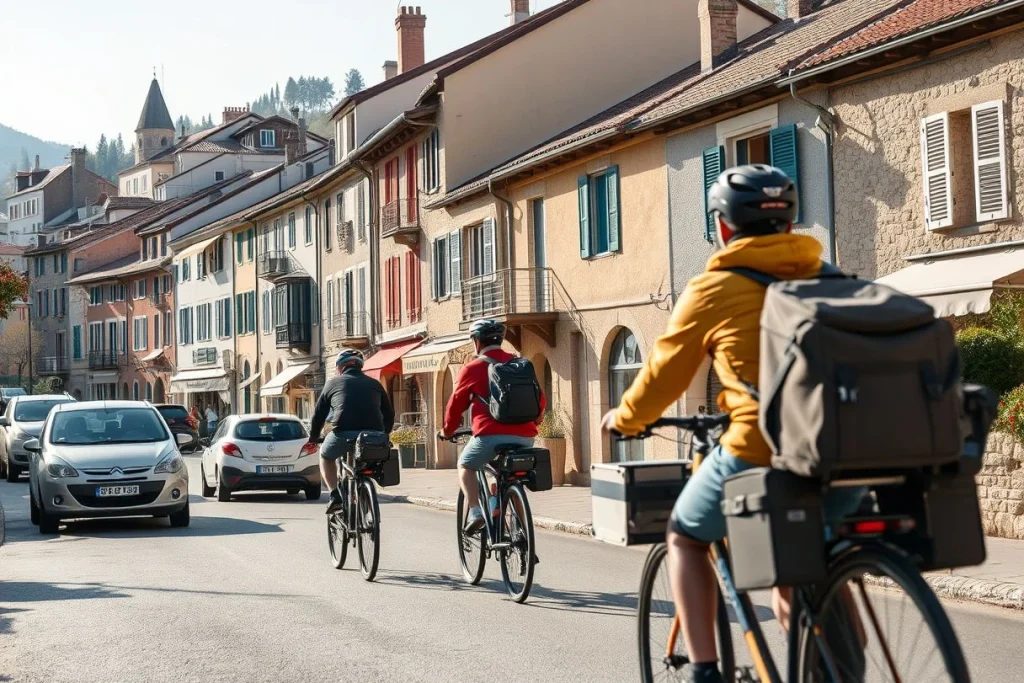
A self-guided rental usually leaves hotel changes, luggage and breakdown arrangements with the traveller. It works best for a short ride from one base, where a local shop is nearby and the route can be abandoned without disrupting a multi-day itinerary. For a longer hotel-to-hotel trip, ask specifically whether luggage is transferred each day, whether a spare bike or charger is available, and who collects a bike after a mechanical problem.
Moderate guided tours commonly reduce that administrative load, while a premium guided itinerary is the strongest option for luggage handling, support-vehicle access and comfortable hotels. Confirm the details in writing: “guided” does not by itself guarantee a vehicle, daily luggage transfer or a rider pick-up. A hub-based itinerary can be gentler still, since one hotel reduces packing and unpacking and makes access to a clinic or pharmacy easier to plan.
Charging, bike fit and route access
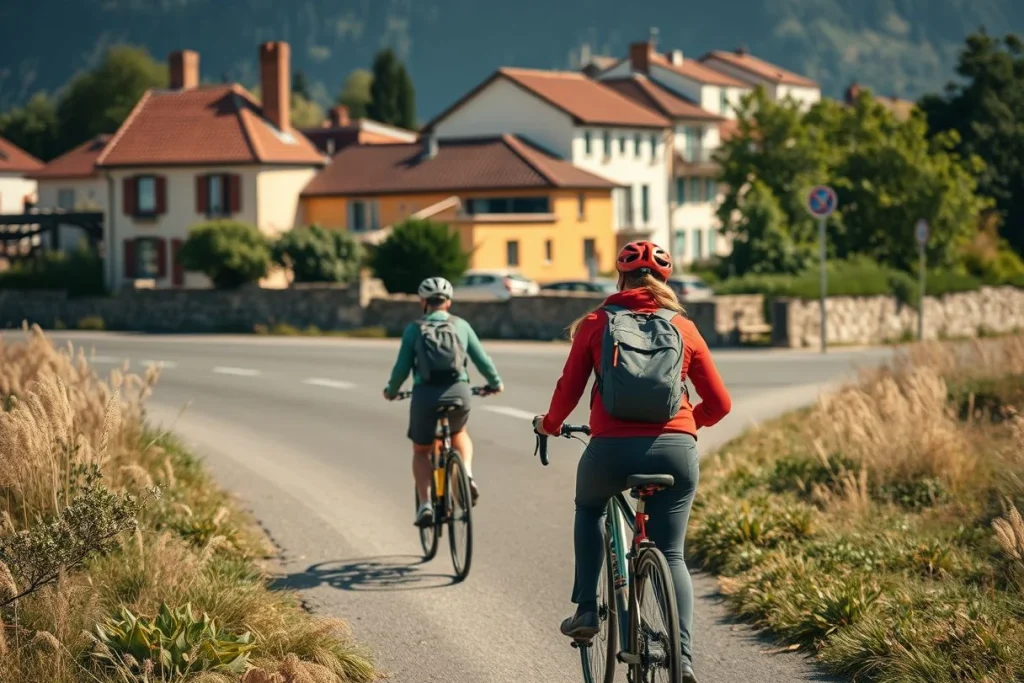
There is no reliable universal miles-per-charge figure. Battery range changes with the bike model and battery, assist setting, hills, surface, rider weight and weather. Ask for the exact model, the operator’s conservative range estimate for your route, charging points at lunch or overnight stops, and the procedure if the battery runs low; a sensible plan should not depend on using maximum assistance all day.
Request a step-through frame if lifting a leg over a high top tube is uncomfortable, and check saddle height, handlebar reach, brake levers and display readability during the fitting. Class 1, Class 2 and Class 3 labels are used in the United States, but they do not provide automatic access to every cycle path or park. The Washington Department of Natural Resources’ e-bike research notes that access depends on the relevant state, park and land manager. Check the exact bike class and trail rules before booking, especially for public land and national parks.
Health, traffic and flexibility
For older adults, an e-bike may make riding feel achievable enough to happen more often: one prospective study associated starting e-bike use with a substantial increase in biking frequency. A 2022 systematic review also found that e-cycling can raise heart rate and oxygen uptake above walking, although the evidence was limited and varied. Those findings support choosing an appropriate level of activity, not treating an e-bike tour as medical treatment.
For the greatest margin of comfort, favour protected or low-traffic routes, modest gradients, frequent rest points and a clear transfer option. Independent riders gain freedom but carry more responsibility; guided and premium formats exchange some spontaneity for route judgement, practical support and an easier response when the day does not go to plan.
Which format is right for you? Recommendations by traveller type
Choose by confidence, not age
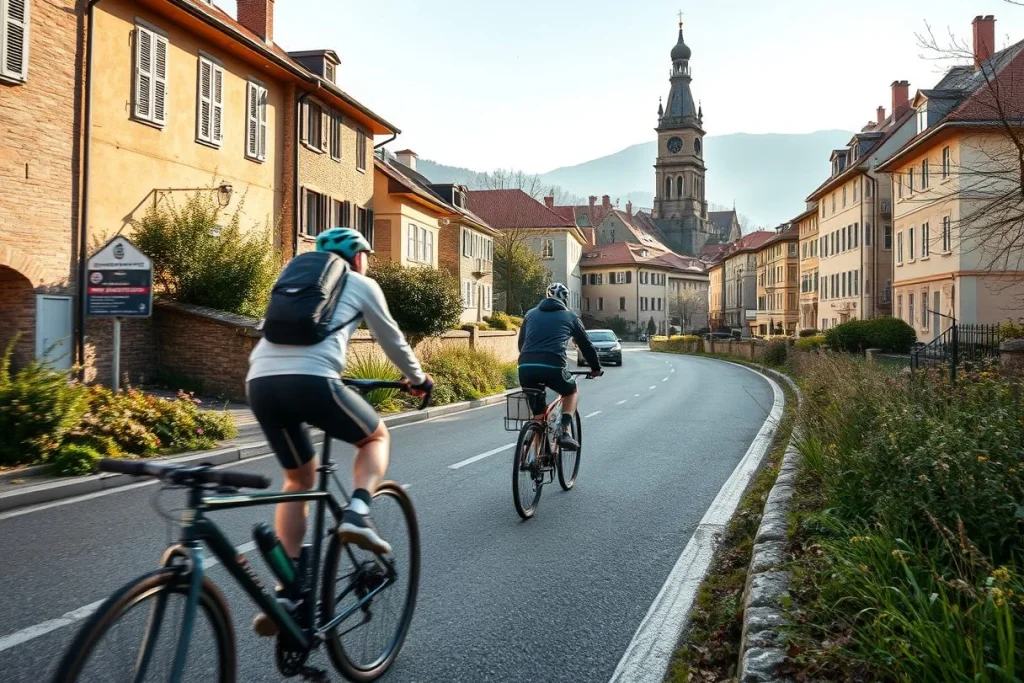
The right choice depends less on years than on recent cycling experience, comfort with logistics and how much support you want if energy or confidence dips. For many older adults, a moderate guided e-bike tour is the default recommendation: it combines a planned route and social company with a guide who can adjust the pace and help manage the day.
For the confident independent rider: self-guided local rental
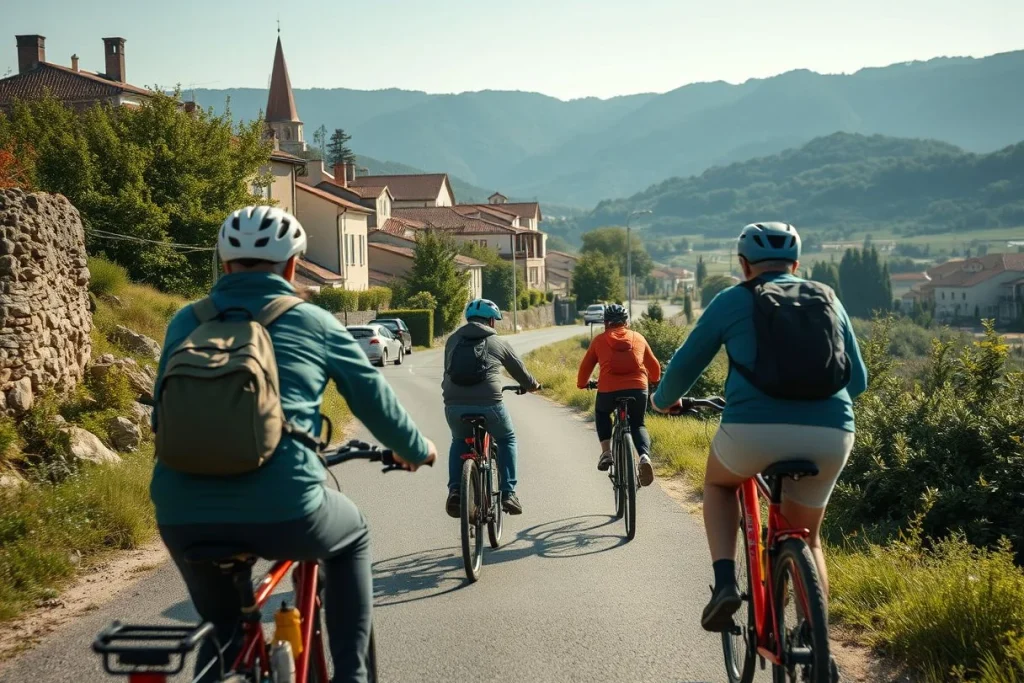
Verdict: choose this for a short, flexible break. A local e-bike rental suits someone who is comfortable navigating, stopping when needed and returning to the same accommodation each evening. It avoids a fixed group pace and makes it easy to choose a gentle morning ride rather than commit to several cycling days.
The trade-off is responsibility. The rider must handle navigation, charging, route changes and any mechanical problem. Prioritise a step-through bike, a quiet route with regular places to rest and a rental provider that offers a clear assistance plan. This format is less suitable if you have not cycled recently or want immediate help on unfamiliar roads.
For reassurance and companionship: moderate guided tour
Verdict: the strongest all-round option for many seniors. A guide can set a manageable pace, select easier alternatives and give newer riders practical support, while a small group adds encouragement without requiring you to organise every detail. Look for a hub-based itinerary or one with few hotel changes if packing and unpacking is tiring.
Ask for a familiarisation ride before the first full day and describe your normal activity level honestly. “Easy” should not be accepted as shorthand for flat: request the gradients, surfaces, traffic levels, daily riding time and rest arrangements. This format may feel too structured for a highly independent cyclist.
For comfort and minimal logistics: premium guided itinerary
Verdict: choose this when hotels and support matter more than price. Premium trips are designed for travellers who value comfortable accommodation, luggage handling and a support vehicle or transfer option. They are particularly practical when one rider wants reassurance, when carrying luggage is difficult or when the group needs a straightforward way to shorten a cycling day.
Confirm how many nights are spent in each hotel and whether non-riding transfers are possible. A premium label does not automatically mean gentle riding, so match the itinerary’s gradients and daily distance to your ability.
For mixed interests or a non-riding companion: cycling plus excursions
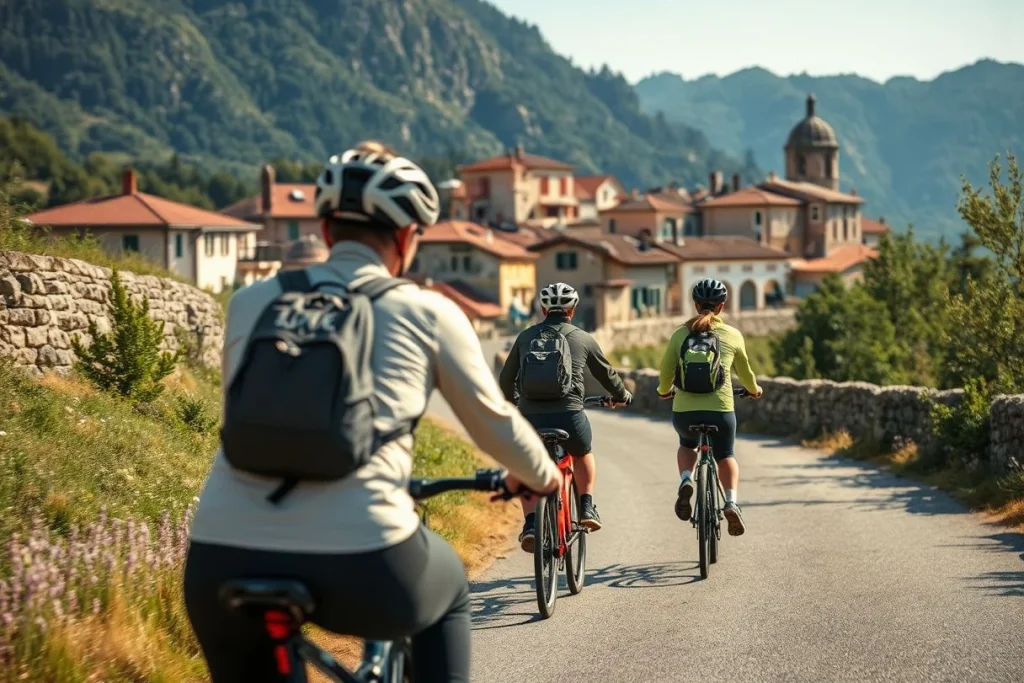
Verdict: choose this for rest days, sightseeing and different energy levels. Renting e-bikes alongside museum visits, scenic drives, boat trips or relaxed walks lets a couple participate together without cycling every day. It also suits someone returning to cycling after a long gap: begin with short rides and build confidence rather than treating the battery assistance as a substitute for practice.
For travellers who need proximity to healthcare, choose a town-based or hub-based stay rather than a remote hotel-to-hotel route. A non-riding companion should be able to join excursions and transfers independently, not be left with cycling logistics. Ask the operator to describe the nearest clinic or hospital and the plan for ending a ride early.
Before booking: route, bike, charging and insurance checks
A comfortable itinerary depends on details that are easy to overlook in a brochure. Before paying a deposit, ask the operator to confirm the following in writing:
- Bike fit and practice: request a step-through e-bike, adjustable saddle and handlebars, helmet, and a familiarisation ride on quiet roads. Structured training has been studied as a way to improve safer cycling among older adults, so do not treat previous bicycle experience as sufficient preparation; see the SiFAr research published via PMC.
- Charging: ask whether charging is available at every overnight stop and what happens if the battery is low. There is no dependable universal range per charge: the bike, battery, assist setting, terrain and rider factors all affect it, according to research summarised by the Washington Department of Natural Resources.
- Backup arrangements: confirm whether the tour carries a spare charger or battery, provides a support vehicle, transfers luggage, and has a clear emergency contact process. Ask whether you can shorten a riding day without losing transport or access to your luggage.
- Access rules: check the exact trail, park or public-land permission for the bike’s class. E-bike access differs by jurisdiction and land manager, and some public-land rules restrict e-mountain bikes on particular trails; verify with the relevant authority rather than relying on the operator’s general description.
- Insurance: obtain written confirmation that your policy covers medical costs, third-party liability, theft and damage, and ask specifically about motor-assisted vehicles. Home, renter and travel policies may exclude some e-bike claims, as the insurance guidance reviewed by Tempo explains.
- Flights and timing: lithium-ion battery transport rules vary, so check the airline’s current guidance before assuming you can fly with the battery. Also compare temperatures, crowd levels and operator availability for June, July, August or December; no peak month suits every destination.
Travel costs: 2026 budgets for four e-bike holiday formats
Costs vary most with the number of riding days, hotel standard and the amount of support included. The figures below are indicative 2026 estimates in USD; they cover the rental or tour itself, not flights, travel insurance, meals, gratuities or personal spending.
Estimated costs
| Format | Budget | Mid-range | Luxury |
|---|---|---|---|
| Self-guided local rental or short guided tour | $40–$120 per day | $25–$60 per hour for a short guided city tour | Not stated |
| Moderate guided multi-day tour | About $2,000 per person per week | $2,000–$4,000 per person per week | About $4,000 per person per week |
| Premium guided tour | Not stated | Not stated | From $5,999 per person for selected 6–7 day itineraries |
| E-bike rental plus non-cycling excursions | Check local rental and excursion prices | Check local rental and excursion prices | Check the operator’s package price |
Basis and date: indicative USD estimates for 2026. The local-rental figures are based on customer-facing Pedego examples reported by Tripadvisor; the multi-day range is reported by Pavlus Travel; and the premium starting price comes from Backroads’ 2026 programme.
Ask what the headline price includes before comparing operators. A single supplement, upgraded room, airport transfer, bike or theft insurance, non-cycling day and seasonal surcharge can all change the total. Recheck the operator’s live price, inclusions and availability before booking, particularly for departures in June, July, August or December.
| Item | Budget | Mid-range | Luxury |
|---|---|---|---|
| Self-guided local e-bike rental or short guided tour | $40-$120 per day | $25-$60 per hour for a short guided city tour | — |
| Moderate guided multi-day e-bike tour | $2,000 per person per week | $2,000-$4,000 per person per week | $4,000 per person per week |
| Premium guided e-bike tour | — | — | From $5,999 per person |
Estimated ranges based on the sources listed below. Prices change; check with providers before booking.
Conclusion: choose the support level that makes riding enjoyable
For many seniors, a moderate guided e-bike tour is the strongest all-round choice: it combines manageable pacing with route guidance and day-to-day reassurance. Choose a premium guided itinerary when comfortable hotels, luggage handling, support vehicles and minimal logistics matter more than price. A mixed cycling-and-excursion holiday suits travellers who want rest days and sightseeing, while a self-guided rental is best only if you are comfortable managing navigation, charging and contingencies.
Before booking, send the operator your preferred daily distance, gradient tolerance, maximum number of hotel changes, bike-fit requirements and medical-access needs. Request the exact route, support arrangements and insurance terms in writing, then confirm that the proposed itinerary matches your riding confidence rather than relying on the tour label alone.
Frequently asked questions
What happens if the e-bike battery runs out during a day ride?
There is no universal battery range: the Washington Department of Natural Resources notes that distance depends on the bike, battery, assist setting, terrain and rider factors. Before booking, ask for the exact model, a realistic charging plan and the operator’s breakdown procedure, including whether spare chargers, replacement batteries or a support vehicle are available. Do not rely on a mileage figure quoted without those details.
How can I tell whether a step-through e-bike will be stable enough for me?
Ask the operator for the exact bike model and arrange a familiarisation ride before committing to a full day. Practise mounting, stopping, starting on a slight incline, turning and using the controls at low assistance. The SiFAr research on safer cycling in older age supports structured practice rather than assuming previous cycling experience is enough. If the bike feels difficult to control during the test, request another model or a shorter route.
Do I need to have cycled recently before joining an electric-bike holiday?
Recent cycling experience should not be assumed, particularly for a multi-day itinerary. The SiFAr research examined structured training as a way to improve safer cycling among older adults, so choose an operator that includes a familiarisation session and allows route or pace adjustments. Begin with a short practice ride, then confirm that the planned gradients, traffic, surfaces and daily distances feel manageable before travelling.
Can I bring an e-bike on a train or plane to the tour starting point?
Check the current rules with the specific airline, railway and tour operator before making transport arrangements. Lithium-ion battery incidents are possible, and airline requirements vary, according to the cited SEC filing; carriers may apply their own rules to batteries and powered bicycles. Ask whether the operator can supply the bike locally instead. Do not assume that a Class 1, Class 2 or Class 3 label guarantees acceptance or route access.
What should a travel companion do if they do not want to cycle every day?
Choose an e-bike holiday that combines rental days with non-cycling excursions, rather than a programme built around riding every day. This format suits a companion who wants gentle cycling alongside sightseeing and rest days. Confirm in writing which activities are included, whether the companion can skip a ride without affecting transfers or luggage arrangements, and how much independent time the itinerary allows.
How do I check whether a route has reliable access to clinics or emergency services?
Ask the operator for the planned route, daily stopping points and the location of nearby clinics or emergency services before booking. Check the exact roads and trails with the relevant land manager, because e-bike access varies by state, park and jurisdiction; the Washington Department of Natural Resources also notes restrictions on some public-land trails. Confirm gradients, traffic, surfaces, mobile-coverage assumptions and the operator’s emergency and evacuation procedure.