This article contains affiliate links. If you book through one of our links, we may earn a commission at no additional cost to you.
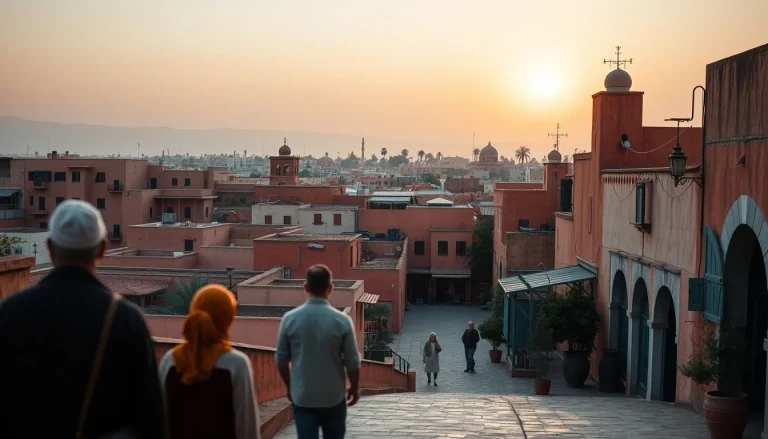
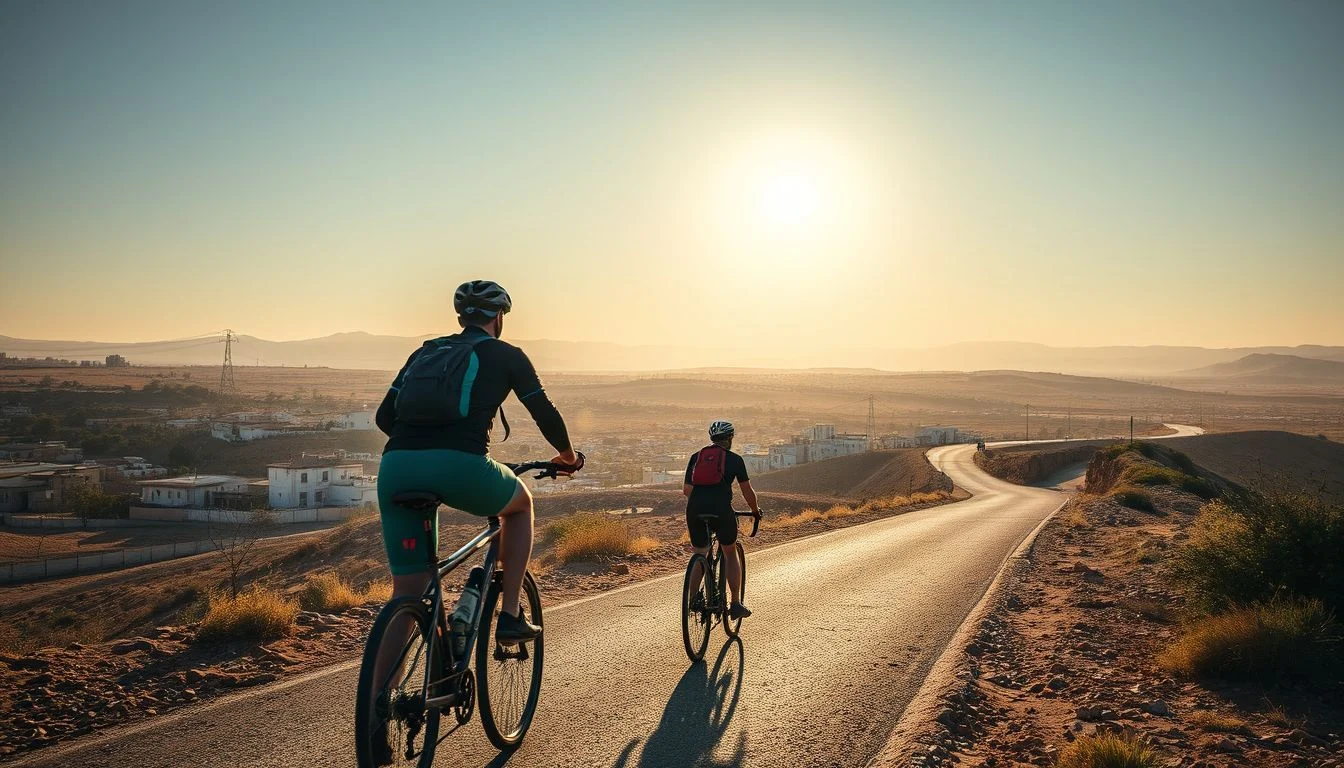
At approximately 2,260 metres, Tizi n’Tichka carries cyclists from Marrakech towards Ouarzazate on a paved High Atlas pass, with Aït Benhaddou offering a cultural stop beyond the climb. It is one of the clearest introductions to cycling in Morocco: serious ascent, exposed mountain roads and a route that links the city to the southern landscapes.
This guide is for road, gravel and mountain-bike riders deciding between Atlas passes, valley tracks and Anti-Atlas singletrack. It explains which routes fit different abilities and seasons, how to judge traffic, heat and remote sections, and when Marrakech makes more sense than Ouarzazate for bike hire, supplies and transfers. You’ll also find practical guidance on flying with a bicycle, e-bike restrictions, supported versus self-guided trips, food and water planning, and the equipment needed for routes where immediate assistance may be limited.
Quick answer: The principal riding windows are generally mid-March to May and September to November. Road cyclists can consider Tizi n’Tichka, Tizi n’Test, Dades Gorge and Todra Gorge, while gravel and MTB riders should look at the M’Goun valley, Jebel Sirwa and the Anti-Atlas around Tafraout; Marrakech is the stronger hub for bike hire, supplies and transfers.
Why choose Morocco for an Atlas cycling adventure?
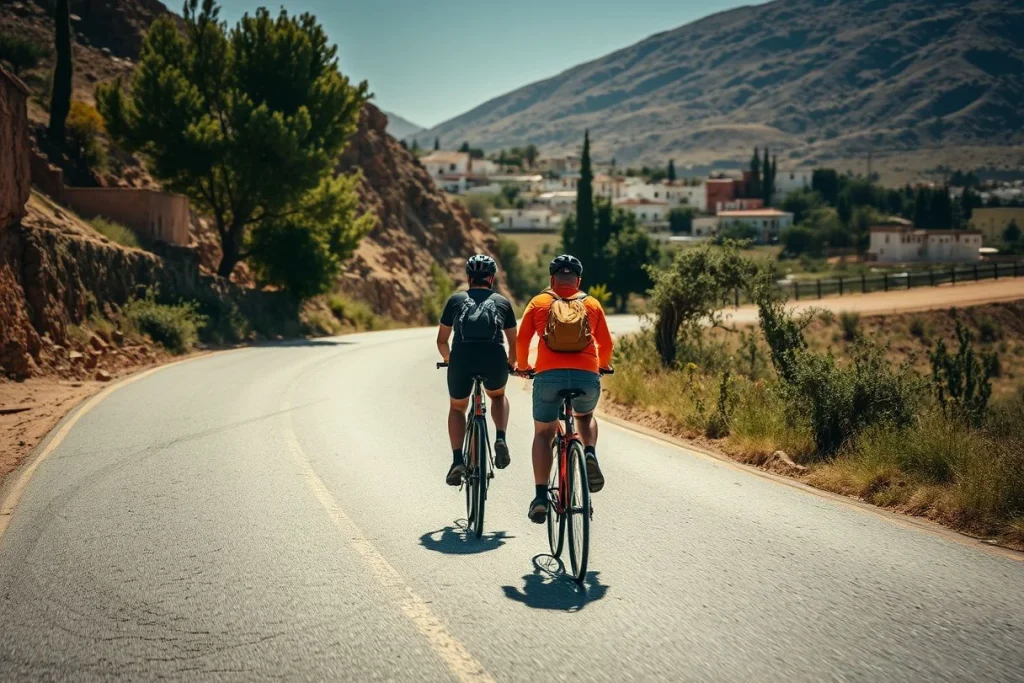
The appeal of cycling in Morocco is the change of rhythm within a single journey. A paved mountain pass can lead into a gravel valley, then to a canyon road and a village stay where dinner is tagine and the pause between stages is mint tea. A supported multi-day trip may also build in a cultural stop at Aït Benhaddou, alongside road riding, gravel and singletrack, as described by Refuge du Toubkal.
Road cyclists get the clearest line through the High Atlas: long climbs on paved passes, exposed descents and substantial days that reward steady pacing rather than sprint fitness. Gravel riders can link quieter valley roads and rougher tracks, but surfaces change quickly. Mountain bikers have a different brief altogether, with rocky singletrack, village paths and route-finding in places such as the M’Goun valley, Jebel Sirwa and the Anti-Atlas. The route collections at Bicycle Movement show how widely these ride styles vary.
Morocco also makes a demanding landscape comparatively practical to reach. Marrakech is the stronger base for bike hire, provisions and transfers, while Ouarzazate works as a useful southern gateway, according to MTBMorocco. That contrast suits riders who want real mountain terrain without committing every day to remote logistics; it suits less well those expecting continuous services, easy medical access or uniform road surfaces.
Best Morocco cycling routes by terrain, difficulty and season
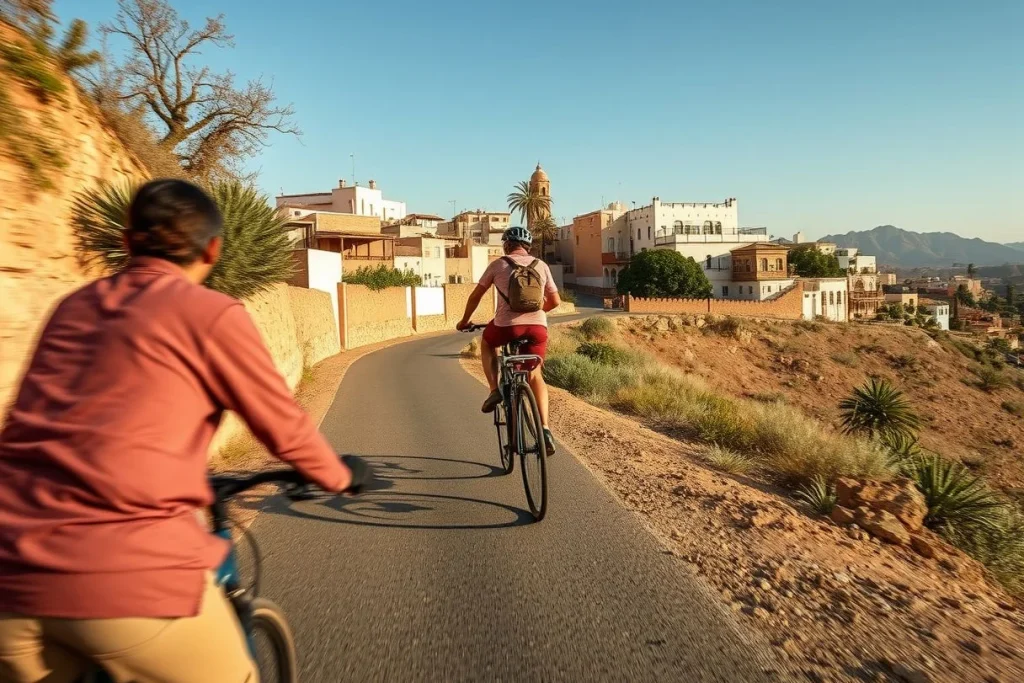
Morocco cycling routes are easiest to choose by surface first: paved passes for road bikes, mixed valley roads for gravel, and rough tracks or singletrack for mountain bikes. The main Atlas passes are generally paved, but secondary roads vary sharply in surface and technical difficulty, so treat any online route line as a starting point rather than a current itinerary.
| Route or area | Surface and riding character | Best for | Seasonal fit and logistics |
|---|---|---|---|
| Tizi n’Tichka–Aït Benhaddou–Ouarzazate | Paved mountain pass, sustained climbing and a dramatic descent; Tizi n’Tichka reaches approximately 2,260 metres. | Experienced road riders comfortable with a major climb and traffic-aware riding. | Strong choice in spring or autumn. A supported road itinerary makes the transfer, water and cultural stop at Aït Benhaddou easier to manage. |
| Tizi n’Test circuit | Remote, demanding paved-pass riding; published route collections include a circuit of about 283 km. | Strong road cyclists seeking long climbing days and fewer easy bail-out options. | Best when high-pass conditions are settled. Check current road status, weather and accommodation before committing. |
| Dades and Todra gorges | Scenic paved roads and valley loops through canyon landscapes. | Road riders and mixed-ability groups wanting memorable scenery with village accommodation. | A practical southern Atlas pairing in spring or autumn; confirm water stops and roadworks shortly before departure. |
| Marrakech–Imlil–Ouarzazate | Mixed surfaces linking foothills, villages and higher Atlas terrain. | Gravel riders comparing road and rougher valley riding. | Marrakech is the stronger base for supplies, bike hire and transfers; use current GPX tracks because surfaces can change. |
| M’Goun valley | Remote gravel and mountain-bike terrain, with village tracks and highland scenery. | Stronger gravel riders who can plan food, water and overnight stops carefully. | Better suited to a supported trip or a self-sufficient team than a first independent ride. |
| Jebel Sirwa | Technical, remote MTB terrain with navigation demands. | Experienced mountain bikers with reliable route-finding skills or a local guide. | Use a current route plan and verify access restrictions locally; protected or controlled areas may have specific rules. |
| Anti-Atlas around Tafraout | Rocky landscapes, climbing and singletrack. | Experienced MTB riders wanting a drier-season alternative to the High Atlas. | Useful in the cooler riding windows; plan more independently than on a Marrakech-based day ride. |
| Ourika Valley | Shorter foothill riding close to Marrakech. | Riders acclimatising or adding a lower-commitment day to a longer trip. | A convenient introduction before higher passes, with transfer and route conditions checked locally. |
| Essaouira coast | Lower-altitude coastal riding. | Riders who prefer a gentler alternative to mountain passes. | Cooler mornings and autumn are sensible choices; it is not a substitute for Atlas climbing. |
For a substantial road journey, published High Atlas collections range from an approximately 283-kilometre Tizi n’Test circuit to an approximately 620-kilometre traverse, but these figures describe route collections rather than a promise of easy, continuous riding. Bicycle Movement’s route collection and Komoot’s High Atlas guides can help with initial planning; download current GPX files and then confirm roadworks, accommodation and water stops within four weeks of departure.
Spring and autumn are the principal riding windows. Summer favours higher-elevation starts but can be punishing on southern approaches, while winter may bring snow to high passes; GuideMe’s 2026 seasonal overview supports checking conditions by region rather than choosing dates from a calendar alone. For first-time Atlas cyclists, Tizi n’Tichka with support, or the Dades–Todra valleys, offers a clearer route structure than Jebel Sirwa or the M’Goun valley.
Difficulty, fitness and safety on Atlas roads and trails
Difficulty, fitness and safety on Atlas roads and trails
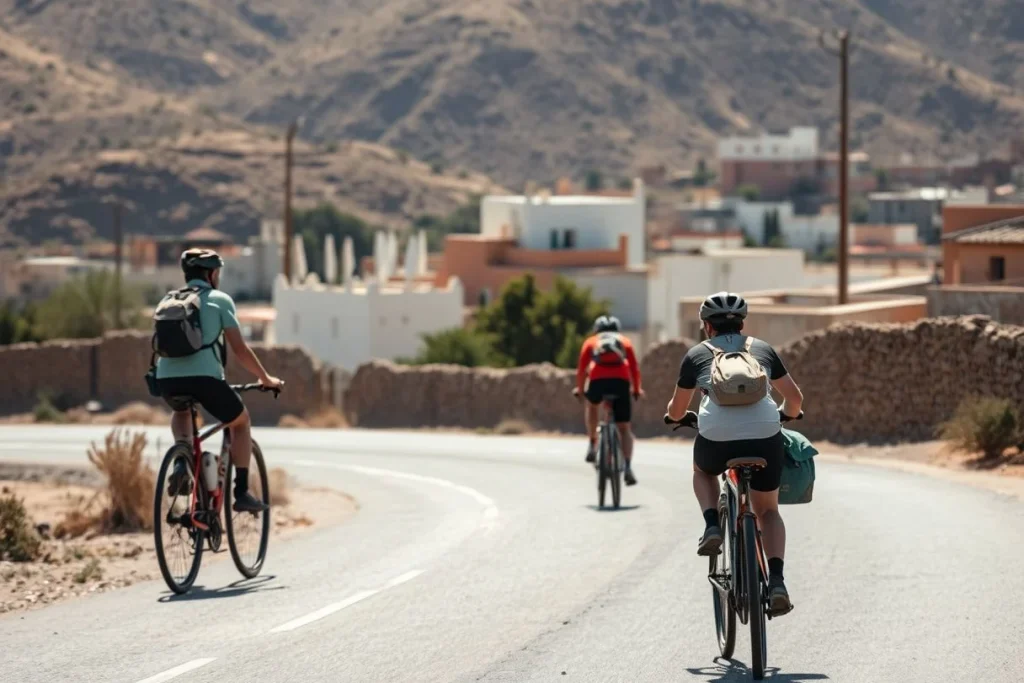
The effort accumulates on Atlas cycling routes: sustained climbing, long days at altitude and, on multi-day routes, limited recovery between stages. Heat becomes a serious factor on southern approaches, while remote valleys may have limited immediate medical support. A long weekend of road riding won’t automatically prepare you for several consecutive mountain days.
Riders who are comfortable with prolonged climbing and exposed descents can consider Tizi n’Tichka, the major paved pass between Marrakech and Ouarzazate, preferably with vehicle support. Tizi n’Test is more committing, suited to experienced cyclists looking for remote roads and long climbing days. The paved canyon roads through Dades and Todra are easier to plan logistically, but steady climbing and careful descending are still required.
Confidence on changing surfaces and enough self-sufficiency to manage delays are essential in the gravel valleys around M’Goun. Jebel Sirwa suits strong mountain bikers with reliable navigation or a local guide; its remoteness, rough ground and limited services make it a poor first Atlas ride. Main passes are generally paved, while secondary roads and singletrack vary considerably, as the route information from Bicycle Movement indicates.
On paved routes, descend conservatively, use front and rear lights, and wear high-visibility clothing. Heavy vehicles, narrow roads and unpredictable traffic call for defensive positioning rather than an assumption that drivers have seen you. Carry enough water for a delayed stage, a repair plan for punctures and drivetrain problems, and a charged phone. Avoid riding remote sections alone, and share your route and check-in times with someone outside the group.
Before departure, read the GOV.UK Morocco travel advice, updated 15 September 2026, including its guidance on road safety, protests and crime. Check official weather forecasts and local operators for snow, storms and closures, and confirm that insurance covers cycling, mountain rescue and evacuation. Protected or military areas can have route-specific restrictions, so verify access locally rather than assuming every track is open.
Gear and preparation for Atlas riding
Gear and preparation for Atlas riding
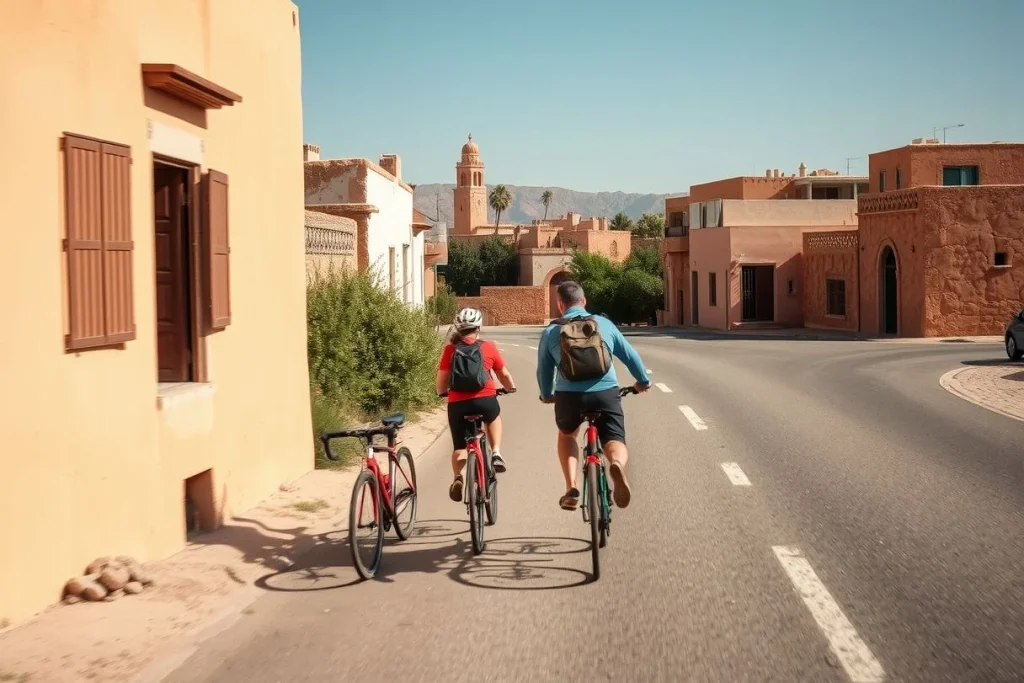
One day in the High Atlas can bring a cold high pass, strong sun on an exposed descent and heat in a southern valley. Sustained climbing, altitude and limited immediate medical support make preparation more important than keeping luggage minimal.
- Bike and clothing: Wear a helmet, gloves and padded shorts, with breathable riding layers and a warm layer or jacket for cold high passes. Sun protection matters too: take sunglasses, sunscreen and a cap or buff, along with high-visibility clothing and front and rear lights for paved roads and changing visibility.
- Navigation and power: Save the planned route to your phone for offline use, and carry a power bank and a charging cable suited to your devices. Download tracks before leaving coverage. The published route collections from Bicycle Movement show how varied Morocco’s road, gravel and singletrack options can be.
- Water and food: Carry enough water for the stage and pack electrolytes. Cafés, village shops, accommodation and resupply points depend on the route, so confirm the next reliable stop before leaving a valley or climbing a pass.
- Repairs: Bring spare tubes or tubeless plugs and sealant, tyre levers, a pump, a multi-tool, chain links, brake pads and a spare derailleur hanger. Remote routes may leave you far from a workshop, while a city rental shop may not carry the exact consumables or replacement parts your bike needs.
- Personal safety: Pack a compact first-aid kit and keep emergency contacts and insurance details accessible. The US State Department’s Morocco travel advisory notes the importance of appropriate insurance; check that your policy covers cycling, mountain rescue and evacuation.
Build fitness for sustained climbing rather than short, sharp efforts, and allow an acclimatisation ride before taking on a long pass. Before departure, check the bike’s fit, brakes, tyres and gearing. Agree in advance how luggage will move between overnight stops: on supported itineraries, confirm what the vehicle carries; on independent rides, plan each day around actual villages and accommodation.
Bike hire, Marrakech logistics and flying with your bicycle
Marrakech Menara Airport (RAK) is usually the more practical gateway for cycling in Morocco: it has the stronger network for bike hire, supplies and transfers. Ouarzazate Airport (OZZ) can shorten access to the southern High Atlas, Dades Gorge and Todra Gorge, but offers fewer options if a bike arrives damaged or a route changes. Check transfer vehicles can carry assembled or boxed bicycles before booking.
Hiring locally is simplest for riders who want to avoid airline handling and bulky luggage. Investigate Said Mountain Bike, MTBMorocco and Umnya, then confirm current availability, fleet condition, frame fit, component standards, route-specific tyres, deposit, insurance, delivery and replacement support. A familiar bike is preferable for unusual sizing, demanding passes or multi-day gravel; a rental can make sense when total airline fees and handling outweigh the hire cost.
If flying with your own bike, read the airline’s rules for the exact itinerary. Royal Air Maroc’s baggage guidance treats bicycles as sports or special equipment, not automatically as part of the standard free allowance. Confirm packaging, fees and size limits directly with the airline. E-bikes need separate checks: lithium-battery restrictions apply, and the battery may not be accepted in either checked or cabin baggage.
Guided or independent: choosing the right support level
For a first visit, local support is usually worth the extra cost and planning it removes. A guide can connect paved passes with gravel, village stays, canyon roads and cultural stops such as Aït Benhaddou; that matters when a route enters remote valleys with limited immediate medical support. The Refuge du Toubkal itinerary illustrates this mixed-terrain model.
| Option | Navigation and local knowledge | Vehicle and mechanical help | Flexibility, cost and responsibility |
|---|---|---|---|
| Guided group | Guide handles route finding, language and local decisions | Often available; confirm mechanic and luggage arrangements | Lower flexibility; shared pace and group cost; operator usually arranges accommodation and food |
| Private supported | Tailored route and closer local support | Best choice when a support vehicle or mechanic is essential | More expensive, but more flexible; confirm every inclusion and who books overnight stops |
| Self-guided | Rider carries current GPX, offline maps and route knowledge | No automatic backup; rider handles repairs, navigation and emergencies | Most flexible and potentially cheaper, but accommodation, food and daily distances are the rider’s responsibility |
Choose supported travel for a first Moroccan tour, remote M’Goun or Jebel Sirwa terrain, uncertain weather, or a lighter luggage load. Self-guided cycling can work for experienced navigators on mapped routes, provided you have repair skills, offline backups and conservative daily plans.
Research MTBMorocco, Said Mountain Bike, Umnya, Refuge du Toubkal and SpiceRoads as starting points, comparing inclusions rather than assuming identical service. No general bicycle permit requirement was identified for tourist riding, but protected, military or controlled areas may impose route-specific restrictions; check with the operator or local authority before departure.
When to ride: seasons, weather and route conditions
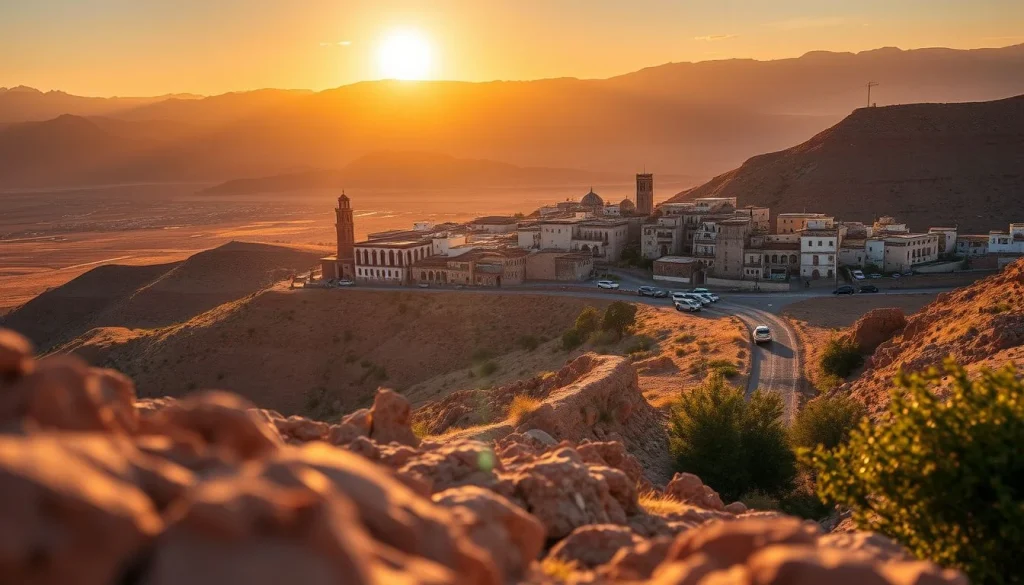
For most riders, the best windows for cycling in Morocco are mid-March to May and September to November. These months generally offer more manageable temperatures, while the risk of snow and disruption on high passes is lower. The seasonal guidance from GuideMe (2026) also cautions that winter can bring snow to the High Atlas and summer heat is strongest on lowland and desert approaches.
| Area | Best fit | Seasonal decision |
|---|---|---|
| High Atlas | Passes, village roads and mixed-surface traverses | Choose spring or autumn; winter snow can affect high routes. |
| Southern valleys | Dades Gorge, Todra Gorge and routes towards Ouarzazate | Spring and autumn are more comfortable; summer approaches can be severely hot. |
| Anti-Atlas | Rocky MTB terrain around Tafraout and Jebel Sirwa | Use the main riding windows and check heat, water and trail conditions before committing. |
| Atlantic coast | Lower-altitude rides around Essaouira | A useful cooler-weather alternative, particularly for autumn or morning rides. |
Summer is not automatically ruled out: higher elevations may work with early starts, but exposed climbs and the return to Marrakech or the desert can be punishing. June, July, August and December may be busy booking or visitor periods, yet that does not make them the strongest months for long days in the saddle. Build dates around the route, not the calendar’s peak.
Within four weeks of departure, check official forecasts for snow and storms, current pass closures and roadworks, and local operator reports. Reconfirm water stops and accommodation on remote valley and Anti-Atlas stages; conditions can change faster than a published route guide.
What a Morocco cycling trip costs in 2026
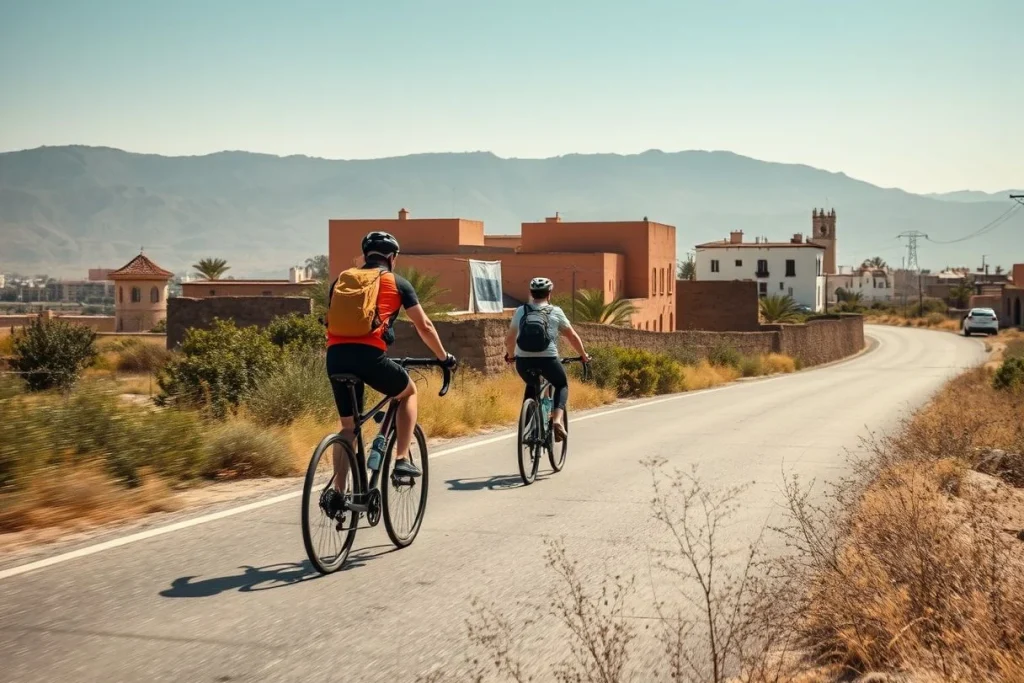
Morocco cycling costs vary mainly with how much of the logistics you hand to an operator. Hiring in Marrakech and arranging your own accommodation is the lower-cost route; a supported Atlas itinerary adds transfers, luggage handling, guiding and mechanical backup.
Estimated costs
| Cost item | Budget | Mid-range | Luxury |
|---|---|---|---|
| Hardtail bicycle rental in Marrakech | 250–350 MAD per bicycle per day | 350 MAD+ per day for higher-spec or longer-term hire | Premium gravel or full-suspension hire; quote required |
| Locally supported mountain-bike tour | From about 2,000 MAD per person for a basic 2–3-day package | Not separately published | Not separately published |
| Longer guided or fully supported trip | About €800 per person | About €800–€1,800 per person | €1,800+ per person |
Basis: Estimates crawled or reviewed in September 2026; verify the current quote before booking. Bicycle hire is per bicycle per day; tour figures are per person. The short-tour figures come from CityGuide, while longer-trip ranges are based on published operator and factsheet prices reviewed in 2026.
The final total is shaped by flights, bicycle baggage, airport or trailhead transfers, accommodation standard, meals, a guide, mechanic, luggage transport, tips, insurance and rest days. Royal Air Maroc treats bicycles as sports or special equipment, so check its current baggage rules and fees before booking; verify e-bike battery restrictions separately with the airline. For live availability and inclusions, request a dated quote from the operator and confirm remote-route accommodation and transfers before paying.
| Item | Budget | Mid-range | Luxury |
|---|---|---|---|
| Hardtail bicycle rental in Marrakech | 250–350 MAD per day | 350 MAD+ per day for a higher-spec or longer-term rental, subject to operator quote | Premium gravel or full-suspension hire; price not published in the cited source |
| Short locally supported mountain-bike tour | From about 2,000 MAD per person for a basic 2–3-day package | Not separately published | Not separately published |
| Longer guided or fully supported cycling trip | About €800 per person for the lower end of published multi-day international trips | About €800–€1,800 per person depending on duration and support | €1,800+ per person for higher-service or longer expeditions |
Estimated ranges based on the sources listed below. Prices change; check with providers before booking.
The best first step for your Atlas ride
For most first-time visitors, the most dependable choice is a supported spring or autumn itinerary. Road riders should start with a paved Tizi n’Tichka crossing towards Aït Benhaddou and Ouarzazate, or a canyon-based route through Dades and Todra; both offer clear objectives without requiring remote trail navigation. Experienced mountain bikers can choose a guided M’Goun valley, Jebel Sirwa or Anti-Atlas trip, where rougher surfaces and limited immediate support make local knowledge valuable.
Before booking, choose your riding style and dates, then request a current quote for the itinerary, rental bike and airport transfer. Confirm bicycle transport, e-bike battery rules and cycling, rescue and evacuation cover. Within the final weeks, recheck the forecast, pass and road conditions, water and accommodation stops, route restrictions, and Morocco’s entry requirements for your nationality.
Frequently asked questions
Can I cycle in Morocco without speaking Arabic or French?
You can plan a supported trip without speaking Arabic or French, but the supplied route sources do not establish how widely either language—or English—is spoken along rural stages. Marrakech is the stronger hub for rentals, supplies and transfers, while remote valleys require more preparation. Arrange key transfers and accommodation in advance, save addresses offline, and ask your operator about communication on each route.
Are there reliable mobile-phone signals in the Atlas Mountains?
No source supplied for this guide confirms reliable mobile coverage across the Atlas Mountains. Treat coverage as uncertain in remote valleys, on high passes and around mountain-bike routes: ask your operator or accommodation provider about the exact stages, and do not make an emergency plan that depends on a phone signal. Check current travel advice before departure; GOV.UK’s Morocco advice was updated on 15 September 2026.
How should I navigate rural routes if my phone battery fails?
Download route files before leaving coverage and carry a paper backup, a charged power bank and enough route information to identify the next village or accommodation. Bicycle Movement publishes free Morocco GPX routes, and Komoot lists High Atlas routes, but neither replaces checking current road conditions locally. On remote gravel or singletrack in the M’Goun valley or around Jebel Sirwa, a local guide or support vehicle is the safer choice.
Can I combine cycling with trekking or a visit to the Sahara?
Yes, this can be built into a wider itinerary, but the cycling and non-cycling sections should be planned as separate logistics. Umnya publishes an Atlas-and-Sahara cycling concept, while supported Atlas trips commonly combine riding with village stays, canyon landscapes and cultural stops such as Aït Benhaddou. Confirm transfers, route access and current conditions with the operator; protected or military areas may have local restrictions.
What type of accommodation is available between mountain stages?
Depending on the route, plans can include village stays, valley accommodation and mountain refuges. The supplied Atlas material specifically identifies village stays and canyon landscapes on supported trips, and Refuge du Toubkal publishes a multi-day mountain-bike itinerary. Do not assume food, water or rooms are available at every stop: reconfirm accommodation and water points within four weeks, particularly on remote valley and Anti-Atlas routes.
Is Morocco suitable for a first multi-day bike tour abroad?
It can be, but a first overseas multi-day tour is better matched to a supported or shorter route than to an independent crossing of the High Atlas. High Atlas riding may involve sustained climbing, altitude, heat and limited immediate medical support, according to travel.state.gov. Start with a lower-commitment option such as the Ourika Valley, or choose a supported itinerary with transfers, navigation and assistance, then build towards Tizi n’Tichka or remote gravel.