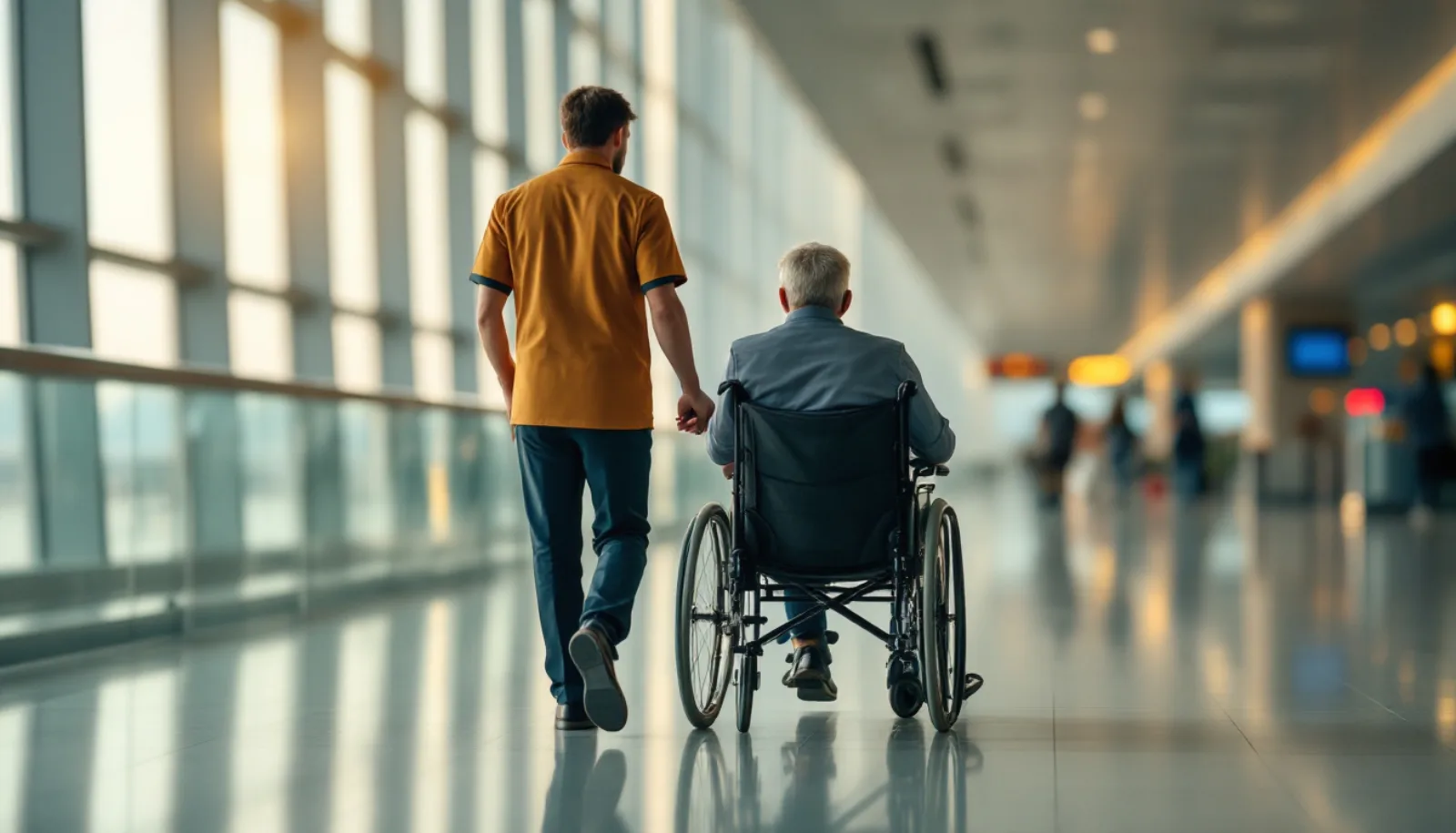
Assistance across Europe’s airports, stations and ferry terminals is free. It is also, in practice, something you have to ask for in advance — and the deadline isn’t the same for a plane, a train and a coach. Get that wrong and you don’t lose the right, but you do drop from a firm duty to a much vaguer one.
Here are the three numbers that matter: 48 hours before a flight, 24 hours before a train in most countries, and 36 hours before a long-distance coach. Everything else follows from booking inside those windows.
The right itself
Across air, rail, bus and ship travel in the EU, you have the right to free assistance at terminals and on board. You also can’t be refused transport because of disability or reduced mobility, except on grounds justified by safety — set out in national, international or EU law, or by the competent national authority — or because of how the vehicle or the infrastructure is built.
There’s a quieter right worth using at the point of sale. When you buy a ticket, the seller has to give you information about the journey in a format that’s accessible to you, along with information on the specific facilities available to you on board. If a booking page can’t tell you what’s actually on the aircraft or the carriage, ask, and ask before you pay.
Flying: 48 hours, and what’s carried free
On a flight the assistance is free of charge, and it covers the airport before and after your flight as well as the flight itself. In practice that means help with your luggage, help getting on and off the plane, and free transport of your recognised assistance dog, your medical equipment and two pieces of mobility equipment.
If someone is travelling with you to provide assistance, the airline should seat that person next to you whenever possible.
To get all of that, contact the airline, ticket seller or tour operator at least 48 hours before you travel. Say what kinds of assistance you need, name anyone travelling with you to help, and mention an assistance dog if you have one. They’ll also advise on your wheelchair or mobility device and, where relevant, its batteries — which is a conversation worth having early rather than at the gate.
Miss the 48 hours and you haven’t lost the right. The duty just softens: they must at least make all reasonable efforts to assist you so you can travel as planned. That’s a real obligation, but it’s a weaker one, and it’s the reason the phone call is worth making.
The gap nobody mentions
One limit catches people out more than any other, so it’s worth stating plainly: airlines don’t have to help with eating or taking medication during a flight.
If you need that kind of help on a long sector, the Commission’s own guidance is that you’ll need to ask another person to travel with you to provide it. That isn’t a detail to discover at 35,000 feet. It belongs in the decision about whether a direct eleven-hour flight or two shorter legs with a night in between is the better trip.
Trains: 24 hours, sometimes 36

Rail assistance is free too, and it’s broader than people expect: help getting on and off, help transferring to a connecting service you hold a ticket for, help on board including access to on-board services, and help at the station before and after the journey.
The notice period is 24 hours — but not everywhere. Some EU countries require requests to be made at least 36 hours in advance instead, and the Commission publishes the list of which ones. Check it for the country you’re departing from rather than assuming the shorter window.
There’s also a turn-up time. The railway company or station manager can ask you to arrive at a designated point in the station no more than one hour before departure or final check-in. If nobody told you when to arrive, present yourself at that point at least 30 minutes before departure, or before the time all passengers are asked to check in.
Operators can require you to travel accompanied, but only where that’s strictly necessary to comply with non-discriminatory access rules already in place — the design of the train or the station. Where that happens the companion travels free and, where possible, sits next to you. If you’re weighing rail against flying for a European trip, our comparison of trains, budget flights and buses covers the rest of the trade-off.
Coaches: 36 hours, and only on longer routes
Long-distance bus and coach travel carries the same free assistance, with one threshold to watch. The right applies where the scheduled distance of the service is 250 km or more — that’s the route’s distance, not the length of your own trip. A short hop on a long route still counts.
You get assistance at designated terminals and with getting on and off. The company must also let a person of your choice travel with you free of charge, where that resolves a safety concern that would otherwise stop you travelling. Give at least 36 hours’ notice.
Planning around the rules, not against them

- Book assistance when you book the ticket, not when you remember. One call does both legs of a return.
- Write down the reference you’re given. “I called” is harder to evidence than a booking number.
- Check the departure country’s rail notice period before assuming 24 hours.
- Count your mobility equipment. Two pieces travel free on a flight; a third is a conversation to have in advance.
- Decide early whether you need someone with you for eating or medication, because no airline will provide it.
- Allow for the turn-up time at stations, which can be an hour before departure.
If something does go wrong on the day, raise it immediately with the airport authorities, the airline, the station manager or the railway company. Not satisfied with the answer? The national enforcement body in the country where it happened is the next step. The same applies if your mobility equipment is lost or destroyed on a flight — report it before you leave the airport. For the money side of a disrupted journey, our guides to delayed and cancelled flight compensation and what travel insurance covers cover claims that run alongside this one.
Frequently asked questions
What happens if I forget to give notice?
You can still travel. If the airline, ticket seller or tour operator wasn’t told at least 48 hours ahead, they must at least make all reasonable efforts to assist you so you can travel as planned. The same “reasonable efforts” wording applies on the railways when the 24-hour notice was missed. It’s a weaker duty than the one you get by booking assistance, which is the whole reason to give notice.
Can an airline refuse to carry me?
Only on narrow grounds. You can’t be denied boarding because of disability or reduced mobility unless the aircraft or the aircraft door is physically too small, or safety regulations — national, international or EU — or a decision of the competent aviation safety authority prevent it. If the airline does refuse on those grounds, it may instead require you to travel with someone who can provide the assistance the safety rules call for. Note that the airline doesn’t have to carry that companion free of charge.
Will someone help me eat or take my medication on board?
No. The Commission is explicit that airlines don’t have to provide help with eating or taking medication during a flight. If you need that kind of help on a long flight, you need to ask someone to travel with you to provide it. This is the single most common surprise, and it’s worth planning around before you book.
Does my wheelchair travel free?
On a flight, the free transport covers your recognised assistance dog, medical equipment and two pieces of mobility equipment. Tell the airline about the wheelchair or mobility device when you request assistance — they’ll also advise on its batteries, which have their own handling rules.
Does a companion travel free on the train?
On the railways, yes, in the situation where one is required. Rail operators can require you to travel accompanied, but only where that’s strictly necessary to comply with non-discriminatory access rules already in place — the design of the train or the station, for instance. Where that applies, the person accompanying you is entitled to travel free of charge and, where possible, to be seated next to you.
What do I do if the assistance doesn't turn up?
Raise it on the spot with the airport authorities or the airline, or with the station manager or railway company. If their reply doesn’t satisfy you, take it to the national enforcement body in the country where the incident happened — not the country you live in.
Sources
Everything above comes from the European Commission’s Your Europe portal, read on 17 November 2026. Notice periods and national lists change — check before you book.
- EU passenger rights for people with disabilities or reduced mobility — Your Europe, European Commission
- Air passenger rights — Your Europe, European Commission
This explains published EU rules and isn’t legal advice. For your own journey, confirm with the carrier and, where needed, the national enforcement body.