
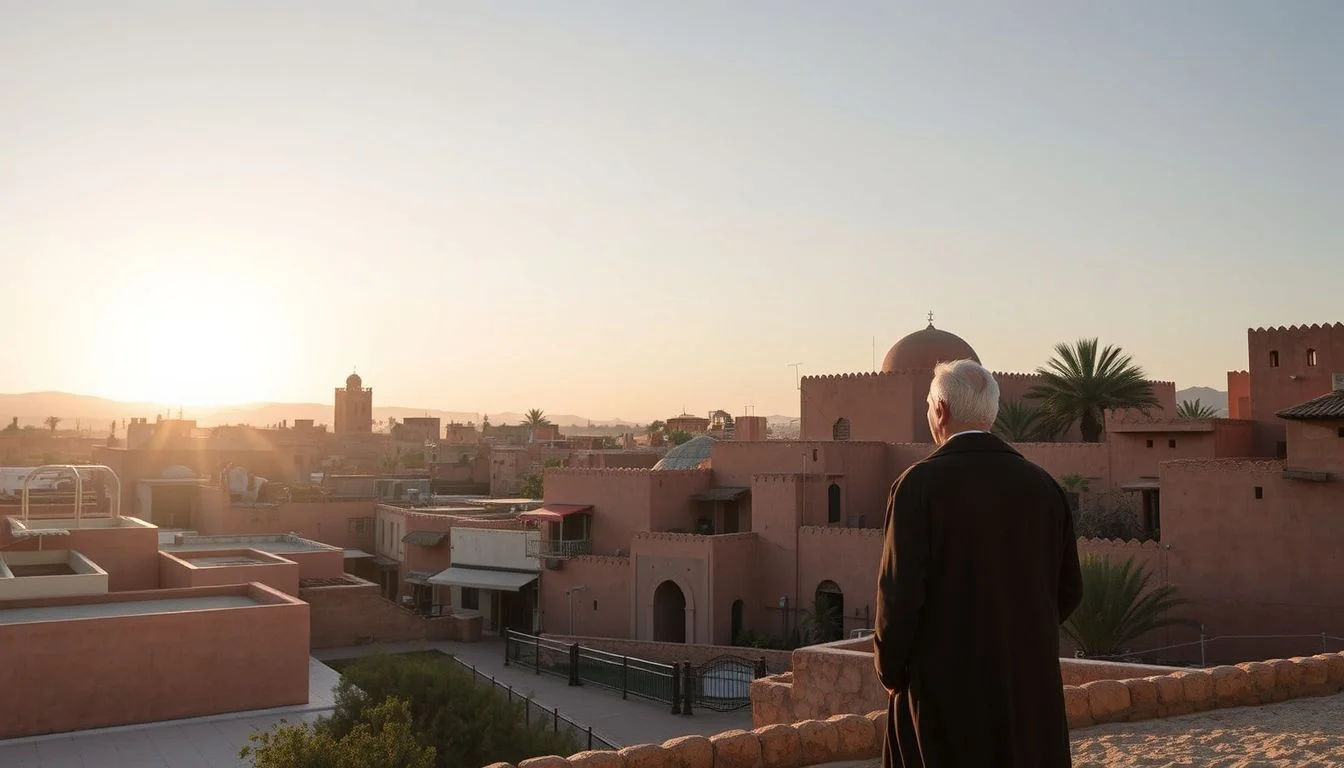

At dusk, Jemaa el-Fna shifts from a daytime landmark into Marrakech’s evening meeting place, with street food, performers and a steady flow towards the souks. It is the natural starting point for the best things to do in Marrakech, but the medina is only one part of a first visit: Bahia Palace and the Saadian Tombs bring the city’s history into focus, while Koutoubia’s exterior provides an easy orientation point.
This guide is for first-time visitors planning 48 hours to five days who want a practical shortlist rather than a random collection of Marrakech attractions. It explains which sights combine neatly, what to prebook, how to handle the airport and local transport, and where the trade-offs lie: the medina’s intensity, the timed-entry planning needed for Jardin Majorelle and the choice between a mountain escape, Essaouira or Ouzoud Falls. You’ll also find straightforward advice on cash, SIM cards, respectful behaviour and common scams.
Quick answer: Prioritise Jemaa el-Fna at dusk, the Marrakech medina and souks, Bahia Palace, the Saadian Tombs, Koutoubia’s exterior and the Jardin Majorelle–Yves Saint Laurent Museum combination. Add a hammam or rooftop terrace, then choose one full-day escape: the High Atlas and Imlil for mountain scenery, or Essaouira or Ouzoud Falls for a change of pace.
Quick overview: the right Marrakech experiences for every traveller
Use Marrakech as a set of walkable clusters rather than a checklist spread across the city. The medina, souks, Bahia Palace, Saadian Tombs, Koutoubia Mosque and Jemaa el-Fna belong in one history-and-atmosphere route; Jardin Majorelle and the Musée Yves Saint Laurent Marrakech make a separate garden-and-design outing.
| Traveller type | Prioritise | Best fit |
|---|---|---|
| First-time essentials | Jemaa el-Fna, the souks, Bahia Palace and Koutoubia’s exterior | A first full day, with an early evening return to the square |
| Culture and history | Bahia Palace, Saadian Tombs, El Badi Palace and the Kasbah | Visitors who prefer architecture and quieter historic spaces |
| Design and gardens | Jardin Majorelle, the Museum of Berber Arts and Musée Yves Saint Laurent Marrakech | A planned half-day outside the central medina |
| Relaxation | A traditional hammam followed by a rooftop café or sunset terrace | Anyone who wants a slower counterpoint to crowded lanes |
| Active travellers | Imlil and the High Atlas Mountains | A guided walking day, with suitable footwear and mountain layers |
| Extra-day visitors | Essaouira for the coast, or Ouzoud Falls for scenery | A five-day trip with time for a full-day excursion |
With 48 hours, stay close to the medina: combine the souks, Bahia Palace, Saadian Tombs and Koutoubia, then reserve one separate morning or afternoon for Jardin Majorelle and the Yves Saint Laurent Museum. Three days gives you room for a hammam, a rooftop pause and a less hurried second medina walk.
At five days, add one full-day escape rather than trying to fit in every attraction. Choose Imlil and the High Atlas for walking and mountain scenery; choose Essaouira for a coastal medina and wind-shaped atmosphere, or Ouzoud Falls for a nature-focused day. Spring and autumn are generally the most comfortable periods for walking, while high summer calls for shorter outdoor outings and careful hydration.
The best things to do in Marrakech: 10 experiences for a first visit
1. Jemaa el-Fna at dusk
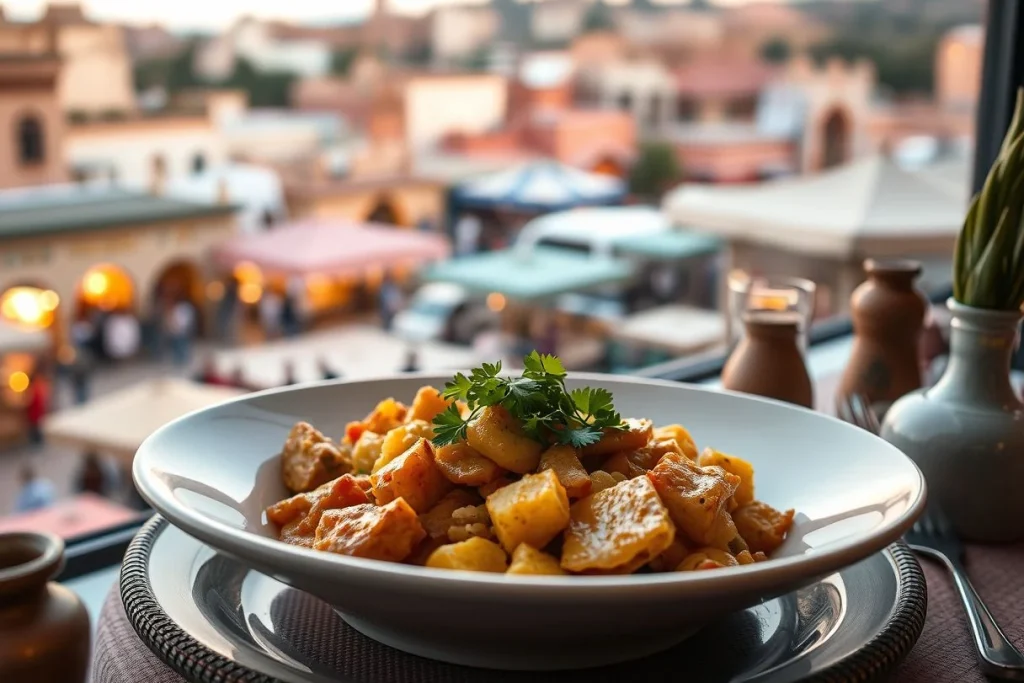
Begin with Marrakech’s most recognisable square as daylight softens and the food stalls become part of the scene. Jemaa el-Fna suits first-time visitors who want atmosphere without committing to a long tour: walk its edges, watch the changing crowd and choose a busy stall carefully if you want to eat.
Keep your phone and wallet secure. Government travel advice warns of petty crime in tourist areas, including theft, bogus guides and credit-card fraud. Ask before photographing people, performers or vendors, and treat unsolicited offers of help as a reason to keep moving rather than an invitation to follow.
2. Explore the Marrakech souks
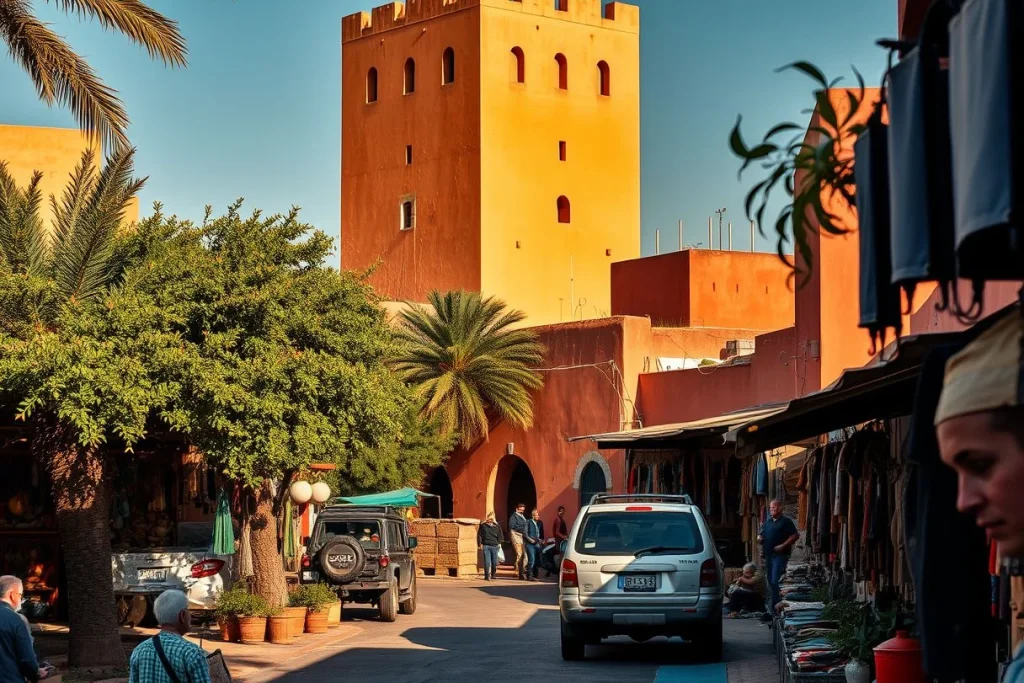
The souks are the practical introduction to Marrakech’s crafts: woven textiles, leather goods, metalwork, spices and lamps fill the covered lanes north of Jemaa el-Fna. Bargaining is part of the shopping culture, but the experience is more enjoyable when you have a clear idea of what you want and a maximum price in mind.
Getting turned around is common and manageable. Save your accommodation and a destination such as Jemaa el-Fna or the main souk entrance in an offline map; for a first visit, a licensed guide or a reputable medina walk can make the lanes less tiring. Don’t follow a stranger who insists that a route is closed, and agree any guide or delivery price before accepting help.
3. Bahia Palace
Bahia Palace is a compact medina visit built around courtyards, zellij tilework, carved cedar and richly decorated rooms. It is a strong choice for culture-focused travellers and for anyone who wants to see Moroccan craftsmanship without spending half a day at a single site.
Pair it with the southern medina, then continue towards the Kasbah rather than crossing the city for your next attraction. The palace’s 2026 listing gives foreign adults an admission price of approximately 100 MAD; verify the current fee and any temporary closure before setting out through the official visitor information.
4. Saadian Tombs
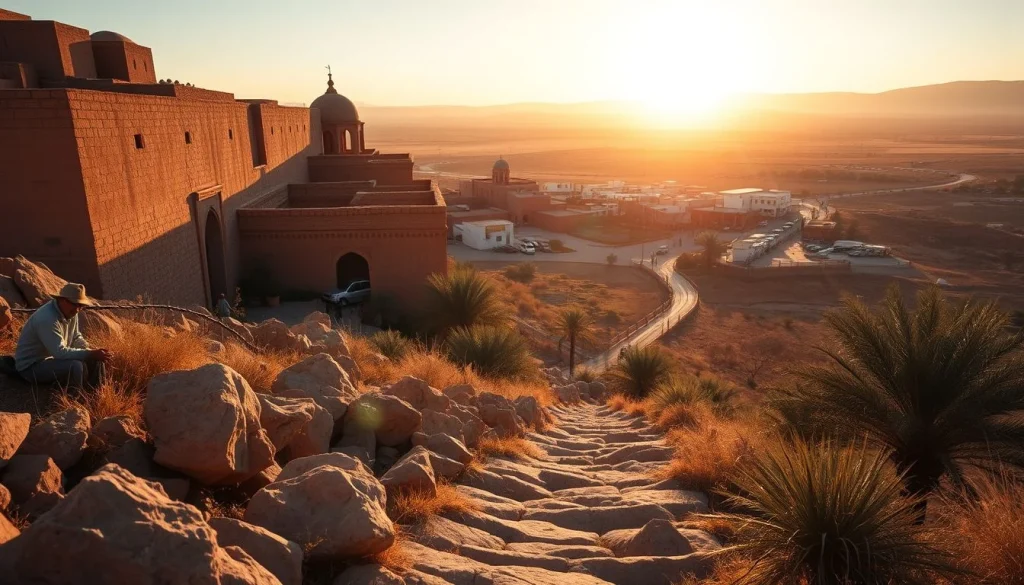
The Saadian Tombs bring history and fine detail into the same southern-medina route. Their tilework and enclosed setting make this a quieter counterpoint to the souks, particularly for visitors who prefer a focused historic site to a large museum.
Combine the tombs with Bahia Palace, the Kasbah and El Badi Palace, allowing time to walk between the sights at a measured pace. Go earlier in the day if you want to study the decoration without rushing; check locally for temporary closures before travelling, as heritage-site access can change.
5. Koutoubia Mosque and gardens
The Koutoubia Mosque is one of the easiest Marrakech landmarks to use as an orientation point: its minaret rises close to Jemaa el-Fna and the gardens provide a brief pause from the central streets. The exterior is free to view, making it useful for budget travellers and for a first walk through the city.
Non-Muslim visitors should treat Koutoubia as an exterior sight; the main prayer halls are not generally open to them. Dress respectfully and behave quietly around the religious site. Its position makes a natural link between Jemaa el-Fna, the central souks and the southern-medina attractions.
6. Jardin Majorelle, the Museum of Berber Arts and Musée Yves Saint Laurent Marrakech
For garden, design and fashion, this is Marrakech’s clearest combination. Jardin Majorelle offers a deliberate change from the medina’s dense lanes, while the Museum of Berber Arts and Musée Yves Saint Laurent Marrakech add context for visitors interested in Moroccan visual culture and modern fashion.
Plan this as a separate newer-city outing rather than trying to squeeze it between palace visits. Jardin Majorelle is listed as open daily at approximately 8am–6.30pm, with seasonal variations possible, according to the garden’s practical information; verify the official timetable, ticket availability and timed-entry rules before travelling. This is best for design-minded visitors and anyone needing a calmer morning, but it is less suitable as an unplanned drop-in.
7. A traditional hammam and spa
A hammam is a restorative choice after a day on foot, but “hammam” can mean two quite different experiences. A local public hammam is a more communal, traditional setting, while a private or hotel-affiliated spa usually offers a structured treatment with more privacy and clearer arrangements for first-time guests.
Choose the public option if cultural immersion matters more than comfort and you are happy to ask how the process works. Choose a private spa if you want an uncomplicated introduction, couples’ privacy or a treatment you can book in advance. Ask the venue what to bring, what the treatment includes and whether staff are licensed or professionally trained; this is one experience where clarity beforehand is worth more than choosing the cheapest option.
8. A rooftop café or sunset terrace
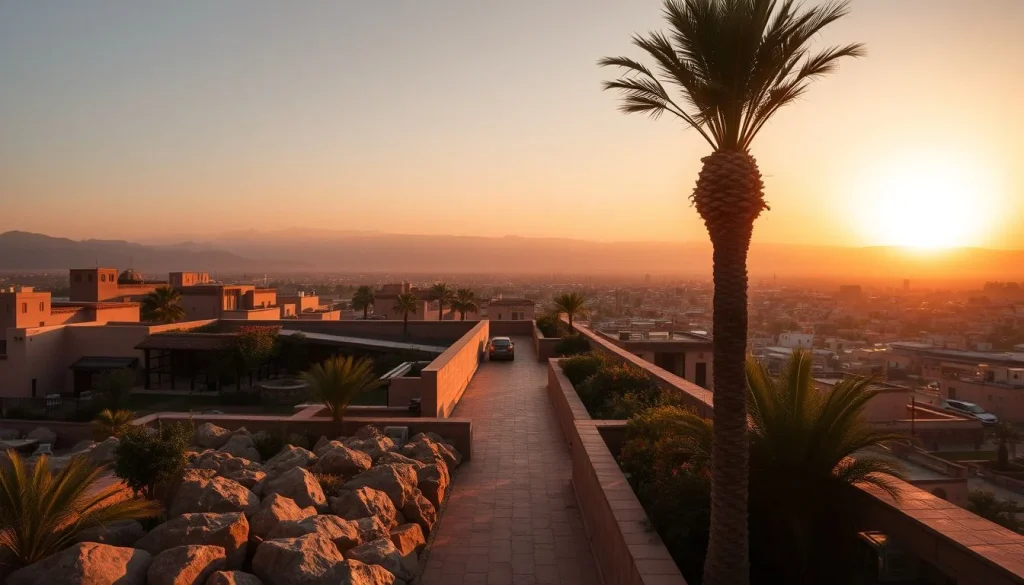
When the medina becomes tiring, take a slower view of it from a rooftop café or sunset terrace. Looking across the low roofs towards Jemaa el-Fna and the Koutoubia gives first-time visitors a useful sense of the city’s layout, while the pause suits couples, families and travellers who do not want another tightly scheduled attraction.
View-oriented venues commonly charge a premium, so choose one for the setting as much as the menu and check prices before ordering. Arrive before sunset if you want a table with a clear outlook, but don’t treat a terrace as a substitute for seeing the square at ground level: the two perspectives are distinctly different.
9. The High Atlas Mountains and Imlil
Imlil is the practical choice for an active day outside Marrakech, with guided walks and short treks in the High Atlas rather than an improvised independent excursion. The area also provides context for Mount Toubkal, but a day trip should be planned around your fitness and the route offered, not the prestige of the highest summit.
Mountain weather can change, conditions are colder than in Marrakech and exertion increases with altitude. Check the guide’s credentials, confirm what transport and meals are included, and verify insurance for walking or adventure activities. Organised Atlas or Imlil trips are approximately €25 per person for a day tour, or around €25–80 per person for group or private formats depending on inclusions, based on 2026 tour listings; ask the operator to confirm the live cost and itinerary.
10. Essaouira or Ouzoud Falls
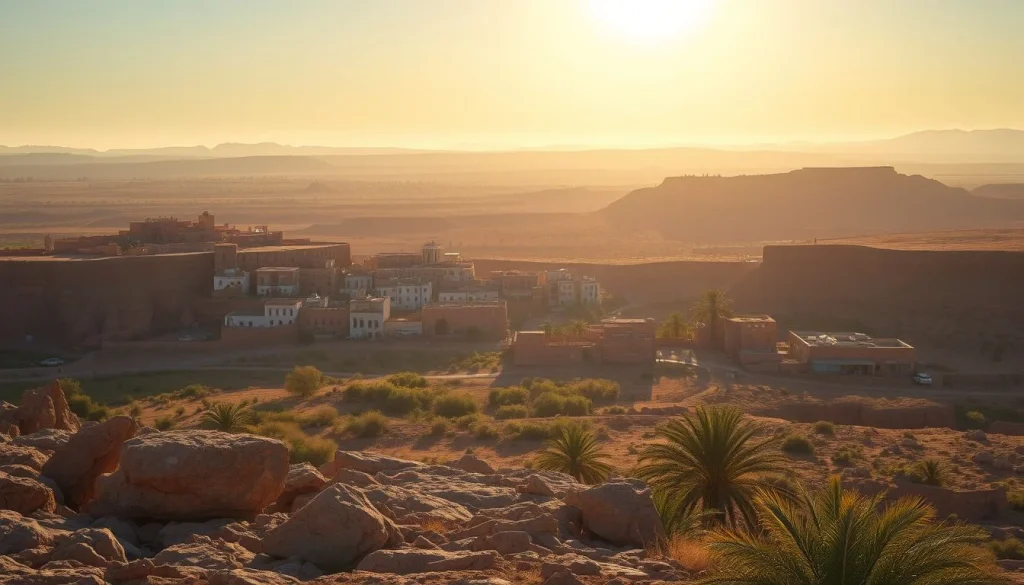
Use a full day for one of these Marrakech day trips, not both. Essaouira offers a coastal medina, a wind-sports atmosphere and seafood; it suits travellers seeking cooler-looking seascapes and a change from the inland city. Ouzoud Falls is the more nature-focused choice for a waterfall outing, although the day is centred on scenery rather than another historic quarter.
Organised Essaouira or Ouzoud Falls tours cost approximately €30 per person at the budget end and around €30–70 per person depending on transport and inclusions, based on 2026 tour listings. Confirm whether the price covers transport, a guide, meals and any local fees. Choose an established operator, especially for a long day on the road, and keep enough flexibility to return rested rather than adding another evening activity in Marrakech.
Planning tips: what to book, when to go and how to combine sights
Turn the shortlist into a simple route rather than trying to cross the city repeatedly. Spring and autumn are generally the most comfortable periods for Marrakech sightseeing. June, July and August can bring extreme heat, so schedule walking for early morning or late afternoon, carry water and protect yourself from direct sun. Winter days can be pleasant, but nights are colder; conditions are colder and more changeable in the High Atlas.
Build the trip around half-day clusters
For a 48-hour visit, use the first half-day to get oriented: start at Koutoubia Mosque and its gardens, continue to Jemaa el-Fna at dusk, then explore a manageable stretch of the souks. This keeps the first afternoon close to the central medina and gives you time to stop when the lanes become confusing or crowded.
Make the second half-day the Kasbah route: Bahia Palace, the Saadian Tombs and El Badi Palace fit naturally together. Allow pauses between sites rather than treating the medina as a checklist. Bahia Palace lists foreign adult admission at approximately 100 MAD in 2026, but confirm the current ticket information and any temporary closures before setting out.
Give the Jardin Majorelle, Museum of Berber Arts and Musée Yves Saint Laurent Marrakech their own morning. The garden is listed by its official site as open daily at approximately 8am–6.30pm, with possible seasonal changes, so check the current timetable and ticket availability before travelling. Timed entry is the sensible choice for this cluster, particularly if the garden and museum are central to your plans.
Prebook the experiences with limited flexibility
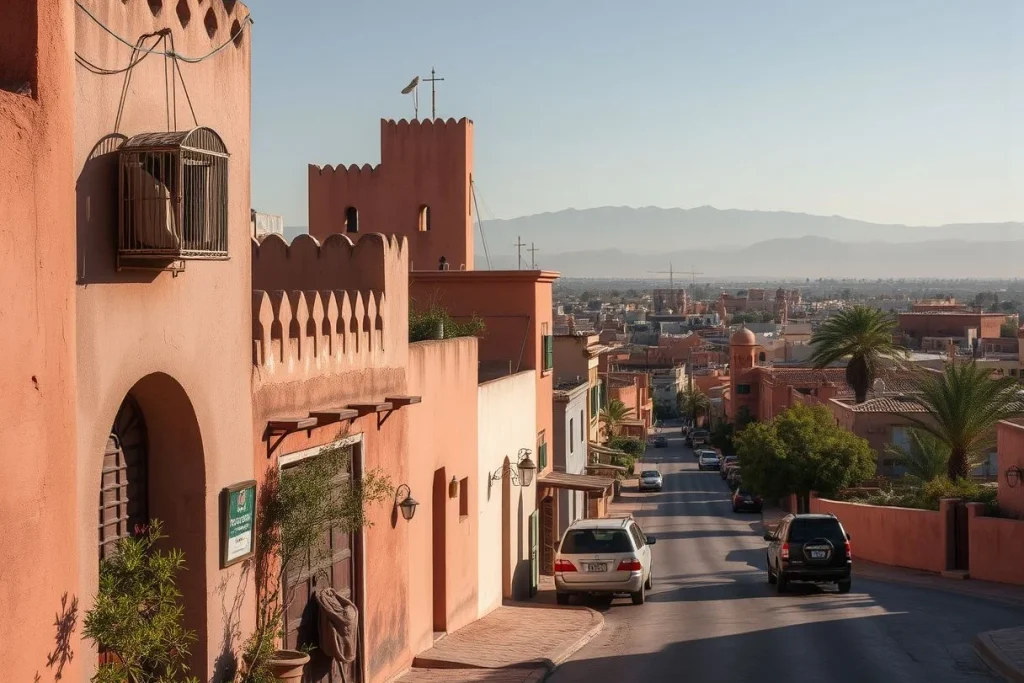
Reserve Jardin Majorelle and the Musée Yves Saint Laurent in advance, then book a popular private hammam, cooking class or food tour if you have a fixed day in mind. For the mountains, arrange a reputable guide rather than improvising a trek from Marrakech; confirm the route, transport, weather plan, fitness level, insurance and what the price includes. A rural walk near Imlil is not the same commitment as a Mount Toubkal ascent.
Keep one full day for an outing only if you are staying at least three nights. The High Atlas suits travellers who want mountain scenery and guided walking; Essaouira offers a coastal medina and wind-sports atmosphere, while Ouzoud Falls is the more nature-focused choice. Check the forecast, road conditions, operator inclusions and return timing, and do not add a late-night Marrakech activity after a long day on the road.
Use the weather to set the pace
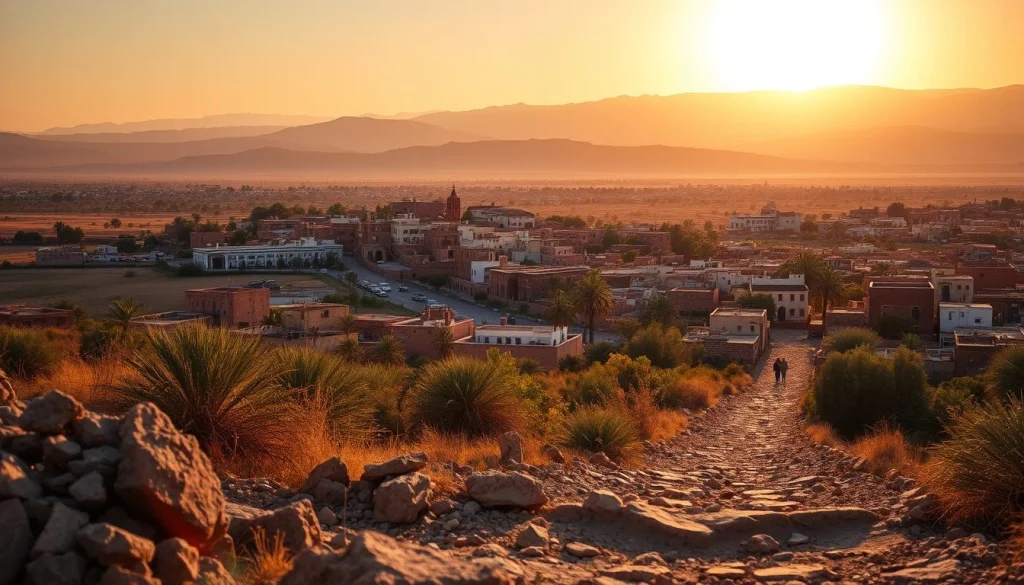
Put the souks, palaces and other exposed sightseeing on the cooler parts of the day, especially in high summer. A hammam or rooftop terrace works well at the end of a demanding medina walk: it replaces another timed attraction with recovery time. Rooftop views usually carry a premium, so choose one for the setting rather than expecting it to be the cheapest meal or drink.
Mountain plans need a separate weather check. Temperatures and conditions can change quickly at altitude, and a route that looks straightforward on a city itinerary may require proper footwear, water and a guide. Recheck current government travel advice before departure; GOV.UK’s Morocco advice, updated 15 September 2026, highlights petty crime and other security concerns in tourist areas.
Make arrival less stressful
- Check your nationality-specific entry rules and passport validity immediately before departure. GOV.UK notes that many nationalities can visit Morocco visa-free for up to 90 days, but this is not universal.
- Save your accommodation name, address and phone number offline. Ask the riad for the nearest medina drop-off point, since vehicles may not reach the final lane.
- Obtain Moroccan dirhams gradually rather than carrying all your spending money at once, and keep a small amount accessible for immediate essentials.
- Buy a tourist SIM from Maroc Telecom, Orange Morocco or Inwi if needed; passport identification is required for registration, according to MoroccoMag.
- Ask before photographing people, and dress respectfully around Koutoubia Mosque and in rural communities. Non-Muslim visitors should treat Koutoubia as an exterior sight and behave quietly around the religious site.
Markets are places to look, listen and negotiate, not to treat residents as photo props. Keep your route and accommodation details private, agree clearly on any paid help, and walk away from pressure. That small amount of preparation leaves the medina feeling navigable rather than demanding.
Getting around Marrakech: airport, medina and day-trip transport
Arriving from Marrakech-Menara Airport
Marrakech-Menara Airport is approximately 4–6 km from the city centre. For a budget arrival, the daytime ALSA bus No. 19 costs approximately 30 MAD one way per passenger, according to Marrakech airport information; as with any transport fare, check the current service and price before travelling.
The bus is economical but less convenient with large bags, especially if your accommodation is inside the medina. Petit taxis and grand taxis are also available. A prearranged transfer costs more, but it is the least confusing choice for a first arrival when a riad is down an unmarked lane: the driver can take you to the nearest accessible point, then explain the short walk.
Walking through the medina
Plan to explore the Marrakech medina on foot. Cars cannot use many narrow lanes, and even a taxi may stop at the edge of the pedestrian area rather than beside your accommodation. Save the riad’s location, entrance instructions and a nearby landmark offline before leaving the airport.
Walk at a measured pace and keep phones, wallets and day bags secure. Scooters, handcarts and porters can pass unexpectedly, particularly around the souks and Jemaa el-Fna. If someone offers to lead you to a site or claims a route is closed, decline calmly unless you have deliberately arranged a licensed guide.
Taxis between the medina and Gueliz
Use petit taxis for short city journeys, including between the medina, Gueliz and other central districts. Agree the fare or confirm that the meter will be used before setting off; if the price or destination is unclear, get out and choose another taxi. Avoid unlicensed vehicles and do not assume that a driver handling your card or payment terminal is acting correctly—watch the amount entered and keep your card in sight.
Gueliz is generally easier for road access and taxis than the medina, making it a practical base for travellers who prefer straightforward arrivals and departures. The medina is more atmospheric and better for walking between Marrakech attractions, but its lanes make luggage transfers and late-night navigation more demanding.
Reaching day trips and the railway station
For Imlil, the High Atlas, Essaouira and Ouzoud Falls, an organised vehicle usually removes the most logistical friction. Choose a reputable operator, confirm what transport, guide, meals and insurance include, and ask specifically about the walking involved in mountain excursions. Independent trips can be arranged, but they require more coordination than a first-time visitor may expect.
ONCF provides intercity rail connections from Marrakech towards Casablanca, Rabat and Fes. Check the current ONCF timetable and works notices before relying on a train connection, as schedules and services can change.
Simple transport habits that prevent problems
- Carry small notes and coins for short rides and small purchases, while keeping larger amounts separate.
- Show the driver the exact destination on a map, especially when travelling to a riad or hotel with a similar name.
- Keep your phone out of sight when crossing busy lanes and use it only after stepping aside.
- Report persistent pressure, theft or payment concerns through the appropriate local channels; GOV.UK travel advice updated 15 September 2026 warns that petty crime, bogus guides and card fraud affect tourist areas.
Conclusion: start with one medina route, then add your ideal escape
For a first visit, build your Marrakech itinerary around one compact medina route: start at Koutoubia’s exterior, continue through Jemaa el-Fna and the souks, then visit Bahia Palace. This gives you the city’s essential rhythm without spending the whole day crossing town.
For a second day, choose the experience that matches your interests. Add the Jardin Majorelle–Musée Yves Saint Laurent combination for design and gardens, a traditional hammam followed by a rooftop evening for a slower pace, or a guided High Atlas trip if mountain scenery matters more than another city sight. With five days, reserve one full-day escape to Imlil, Essaouira or Ouzoud Falls.
Your next step is practical: check official attraction availability, confirm any timed-entry requirements, and arrange airport transport before arrival. If choosing the mountains or a day trip, reserve a reputable guide or operator and confirm what is included. Save your two-day or five-day route offline, including your riad’s exact location.
Frequently asked questions
Can I explore Marrakech’s main sights without hiring a guide?
Yes, you can build a self-guided first visit around Jemaa el-Fna, Koutoubia’s exterior, the souks, Bahia Palace, the Saadian Tombs and the Kasbah. A guide is useful for navigating the medina, understanding the historic sites and reducing exposure to bogus-guide approaches; if you hire one, choose a licensed or reputable guide. GOV.UK travel advice warns of petty crime, bogus guides and credit-card fraud in tourist areas.
What should I wear when visiting Marrakech’s medina and religious sites?
Choose clothing that covers the shoulders and knees, particularly around Koutoubia Mosque and when visiting rural communities on a day trip. Koutoubia should be treated as an exterior sight for non-Muslim visitors, with respectful dress and behaviour around the religious site. Ask permission before photographing people, and dress for heat and sun during long medina walks.
Are Marrakech’s main attractions suitable for children?
Many of the central sights can work for families if you keep the day focused: combine one or two medina attractions with a garden, a rooftop stop or a slower break rather than attempting every site. The souks can be crowded and summer heat increases dehydration and sun-exposure risks. Check current access arrangements for each attraction, and choose a guided mountain activity only if its pace and conditions suit your children.
Is two days enough to experience Marrakech properly?
Two days is enough for a well-planned first taste, but not for every attraction and a full-day excursion. Use the first day for Jemaa el-Fna, the souks, Koutoubia, Bahia Palace and the Saadian Tombs; reserve the second for Jardin Majorelle, the Museum of Berber Arts and Musée Yves Saint Laurent Marrakech, with a hammam or rooftop terrace. Add more time for the High Atlas, Essaouira or Ouzoud Falls.
What is the best time of day to visit Jemaa el-Fna?
Visit in the late afternoon and stay into dusk: this gives you daylight for orientation, then the evening atmosphere, street food and people-watching that make the square a first-visit priority. Keep phones and wallets secure, be cautious around unsolicited offers and ask before photographing people. GOV.UK travel advice warns that petty crime is frequent in tourist areas, including theft and bogus-guide approaches.
Can I combine a day trip to Essaouira with the High Atlas Mountains?
It is better to choose one for a single day rather than combine them. Essaouira gives you a coastal medina and wind-sports atmosphere, while the High Atlas and Imlil suit scenery, guided walks and short treks; both are presented as separate day-trip choices. For an Atlas excursion, confirm the guide, transport, meals and insurance, and check mountain conditions before departure.
Sources
- Foreign travel advice: Morocco · Retrieved September 16, 2026
- Safety and security – Morocco travel advice – GOV.UK · Retrieved September 16, 2026
- e-services.minculture.gov.ma · Retrieved September 16, 2026
- Marrakesh Airport (RAK) | Marrakesh-Menara Airport · Retrieved September 16, 2026
- Tarif Palais Bahia 2026 — 100 MAD, gratuit avant 7 ans · Retrieved September 16, 2026
- Transports | Visit Marrakech Morocco – BAHJA SPIRIT | Guide Officiel pour Voyages, Activités et Événements · Retrieved September 16, 2026
- Jardin Majorelle – Site officiel Jardin Majorelle · Retrieved September 16, 2026
- Atlas Mountains Trekking & Toubkal Climb | Imlil Trek · Retrieved September 16, 2026
- Atlas Mountains Tours from Marrakech | Morocco Elite Guide · Retrieved September 16, 2026
- III. Practical Information · Retrieved September 16, 2026
- Palais de la Bahia Marrakech: prices, opening hours, visits | Immersi · Retrieved September 16, 2026
- Bahia Palace, Marrakech · Retrieved September 16, 2026
- Programme AL ATLAS “Fès > Marrakech” : · Retrieved September 16, 2026
- Marrakech Airport to City Centre: All Options | Marrakech Airport Guide · Retrieved September 16, 2026
- SIM Cards and Mobile Data in Morocco | MoroccoMag · Retrieved September 16, 2026
- Atlas Pathway Journeys | Atlas Mountains Guide in Imlil & Marrakech, Morocco · Retrieved September 16, 2026
- Entrance Fee & Pricing | Bahia Palace · Retrieved September 16, 2026
- Airport shuttle – Aéroport de Marrakech · Retrieved September 16, 2026
- MAR2024_URD_VA_LIVRE.indb · Retrieved September 16, 2026
- Bahia Palace Opening Hours – Official Times & Ticket Information · Retrieved September 16, 2026
- Bahia Palace Marrakech 2026 — Hours, Prices & Visitor Guide · Retrieved September 16, 2026
- Jemaa el-Fnaa · Retrieved September 16, 2026
- Hammam · Retrieved September 16, 2026
- Kutubiyya Mosque · Retrieved September 16, 2026
- Majorelle Garden · Retrieved September 16, 2026