
This article contains affiliate links. If you book through one of our links, we may earn a commission at no additional cost to you.
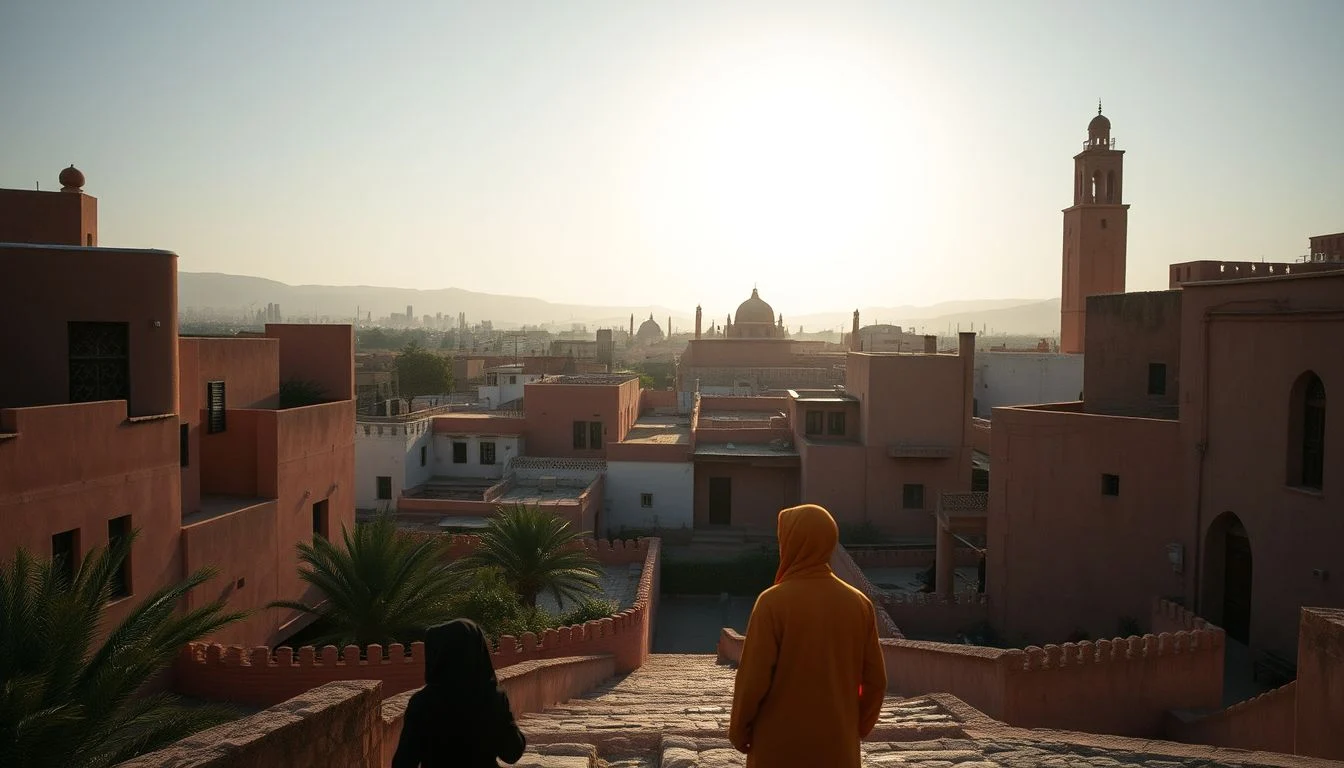
From Imlil, the High Atlas rises into a day of village paths and high plateaux, while Agafay’s bare rock begins less than an hour from Marrakech. The best day trips from Marrakech are not interchangeable: some deliver genuine walking, others trade trail time for waterfalls, Atlantic air or historic kasbahs.
This guide is for adventure travellers who want to choose by effort, road time and the quality of the experience rather than popularity alone. It ranks six Marrakech excursions, explains when a local guide or private vehicle earns its cost, and flags the routes—especially Mount Toubkal and Aït Benhaddou—that make more sense with an overnight stay.
Quick answer: Choose Imlil and the High Atlas for the strongest short hikes, Ourika Valley for an easier mountain day, and Ouzoud Falls for the most dramatic cascades. Essaouira brings a breezy Atlantic contrast, Agafay offers the closest stone-desert outing, and Aït Benhaddou is the most ambitious cultural drive; Mount Toubkal is generally a two-day trek, not a normal day trip.
Quick overview: choose by effort, scenery and travel style
Use this ranking to match the excursion to the day you want, not simply the view you hope to photograph. Imlil delivers the most genuine mountain adventure; Ourika is the easier introduction to the High Atlas; and Agafay keeps travel time short for an activity-led evening. The long drives to Ouzoud Falls and Aït Benhaddou are worthwhile only if you are comfortable sacrificing road time.
| Trip | Approximate road time | Physical effort | Strongest experience | Best suited to | Guide? |
|---|---|---|---|---|---|
| Imlil and the High Atlas | About 65–90 minutes each way by private transfer | Moderate to demanding, depending on the trail | Village paths, mountain air and high-altitude scenery | Fit hikers and adventurous solo travellers | Recommended for longer or less familiar routes |
| Ourika Valley and Setti Fatma | About 1–1.5 hours each way | Easy to moderate; rocky around the waterfalls | River valleys, villages and a short mountain hike | Moderate hikers and first-time mountain visitors | Useful for the waterfall route |
| Ouzoud Falls | About 2.5–3 hours each way | Moderate walking on uneven paths | Dramatic cascades and viewpoint photography | Photographers and nature-focused travellers | Optional, but helpful for local paths |
| Essaouira | About 2.5–3 hours each way | Low, unless adding a watersport | Atlantic wind, harbour, ramparts and a cooler medina | Coastal travellers and non-hikers | Not usually necessary |
| Agafay Desert | Around 30–45 minutes each way | Low to moderate, depending on activities | Sunset, camel riding or quad biking | Travellers with limited time | Use an established operator for activities |
| Aït Benhaddou and Ouarzazate | About 3–4 hours each way | Low at the ksar, but tiring overall | Earthen architecture, film landscapes and desert roads | Culture-focused travellers willing to accept a long day | Helpful for context; an overnight is better |
Agafay is a rocky or stone desert, not a Sahara landscape of large dunes, so choose it for convenience and activities rather than sand. Mount Toubkal is a separate proposition: summit itineraries are generally organised as two-day treks with a refuge overnight, while a day in Imlil means a shorter valley or plateau walk. Conditions can change quickly in the mountains and on exposed routes; check current weather and road information before leaving. For wider security context, consult the GOV.UK Morocco travel advice, updated 15 September 2026.
The best things to do: six excursions ranked by experience
1. Imlil and High Atlas short treks
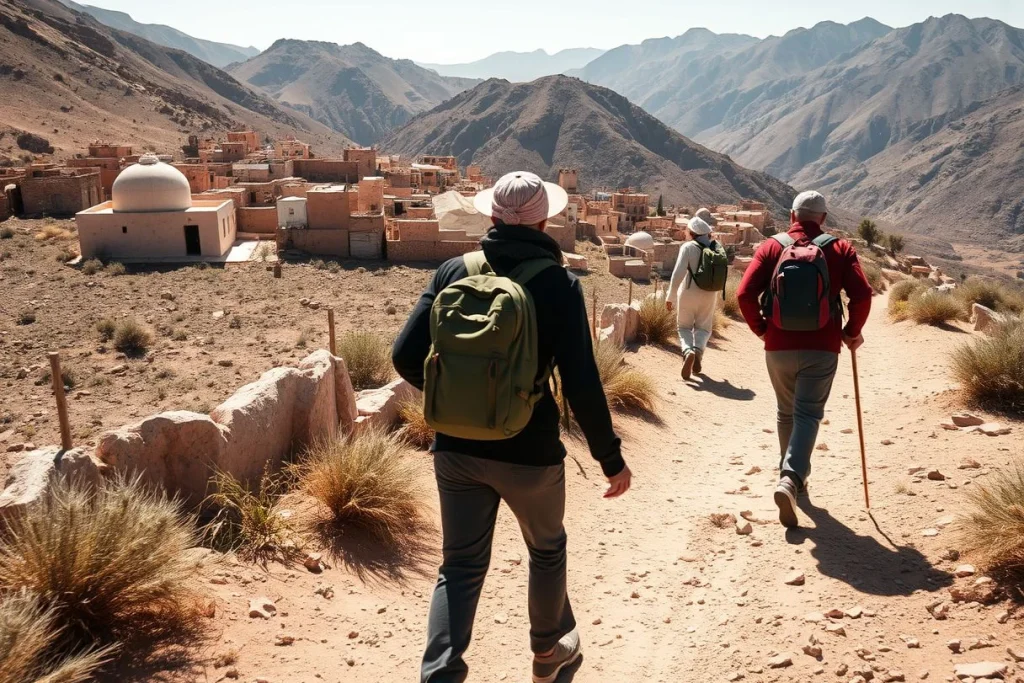
For a genuine hiking day, choose Imlil. The village sits beneath the High Atlas and gives you mountain scenery almost immediately: stone paths, terraced slopes, walnut trees and high plateaux rather than a scenic drive followed by a short stroll. From Marrakech, a private transfer usually takes around 65–90 minutes.
The day can be shaped around fitness. A shorter valley walk suits moderate hikers; stronger walkers can choose a more demanding route through mountain villages and towards higher ground. The terrain is uneven and exposed, with loose stones, steep sections and limited shade, so proper walking shoes, water, sun protection and a layer for changing weather matter.
A local Morocco mountain guide is worth the cost if you want route-finding, pacing and cultural context, particularly beyond the straightforward paths. Independent walking is possible only when you have a clear route, reliable weather information and suitable navigation skills. Check current trail conditions, guide requirements and any access arrangements locally before setting out; do not assume a tour description reflects conditions on the day.
Mount Toubkal is not the sensible target for this excursion. The Kasbah du Toubkal’s 2026–2027 information describes summit trips as generally organised over two days with a refuge overnight. Treat a day in Imlil as a rewarding short trek, not a disguised summit attempt. Typical guided Imlil valley walks are around 300–800 MAD per person in 2026, depending on transport, guide service and inclusions.
2. Ourika Valley and Setti Fatma waterfalls
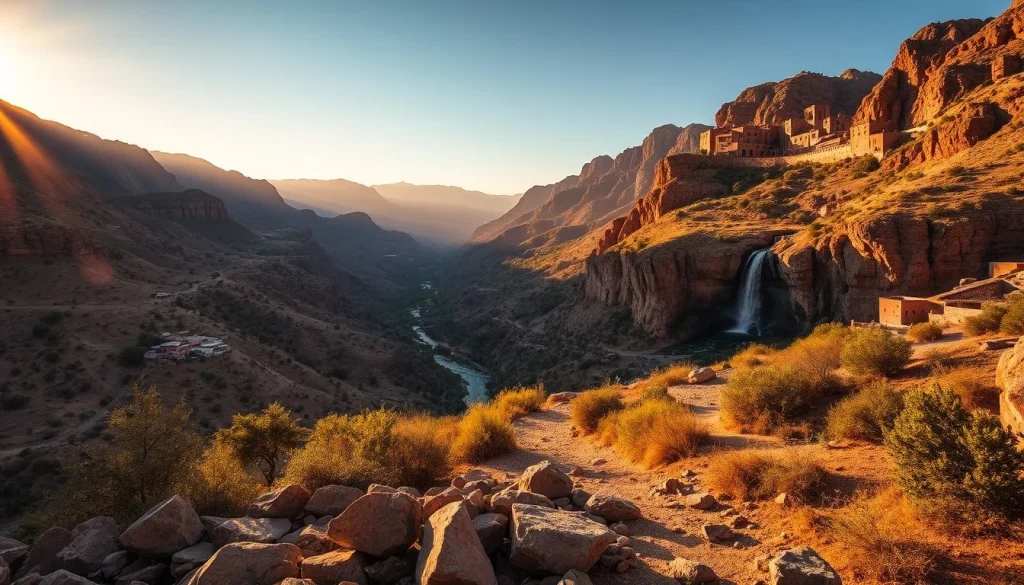
Ourika is the easier mountain introduction: the valley is approximately 60–75 km from Marrakech and usually takes about 1–1.5 hours by road. River cafés, Berber villages and the slopes of the High Atlas make it a good choice when you want mountain atmosphere without committing to a full hiking day in Imlil.
Setti Fatma’s waterfall walk is moderate but not polished. Expect rocky paths, uneven footing and sections where balance matters; rocks can be slippery, especially near the water. Go early if you want a quieter start, carry more water than the short distance suggests and allow time for heat, pauses and the return descent. Crowding can reduce the pleasure of the narrowest sections.
A guide helps with route-finding and local context, while a private driver gives you more control over stops in the valley. Shared trips are simpler and usually cheaper, but can impose a fixed pace and restaurant stop. Families with older children and moderate hikers should manage the walk more comfortably than anyone expecting a flat riverside promenade.
Spring is the strongest season for the waterfalls, when rain can make the cascades more impressive; summer heat increases the need for an early start and careful hydration. Uneven trails, steps and river crossings mean this is not a dependable wheelchair-accessible excursion.
3. Ouzoud Falls
Ouzoud Falls earns its place for scale and photography, not convenience. The drive from Marrakech generally takes approximately 2.5–3 hours each way, so this is a full-day road commitment. In return, you get viewpoints over the cascades, wooded surroundings and the option of approaching the water by boat where available.
Plan for several stops rather than a single viewpoint: the paths around the falls are uneven, and the descent and return climb add effort even if you are not attempting a serious hike. Spring can bring stronger water flow after rain, although conditions vary. Keep cameras and phones protected from spray, wear shoes with grip and treat wet rocks at the water’s edge as a genuine fall hazard.
Photographers and nature-focused travellers will find the long transfer easier to justify than travellers seeking a strenuous mountain route. A guided excursion removes much of the transport planning; a private vehicle gives more flexibility over viewpoints and departure time. Independent public-transport logistics require checking current connections locally, so confirm the day’s options before committing.
Do not combine Ouzoud with another distant attraction. The return road journey already dominates the day, and a rushed schedule leaves little room for the falls themselves. Pack food and water unless your confirmed trip includes them, and check live road and weather conditions before departure.
4. Essaouira
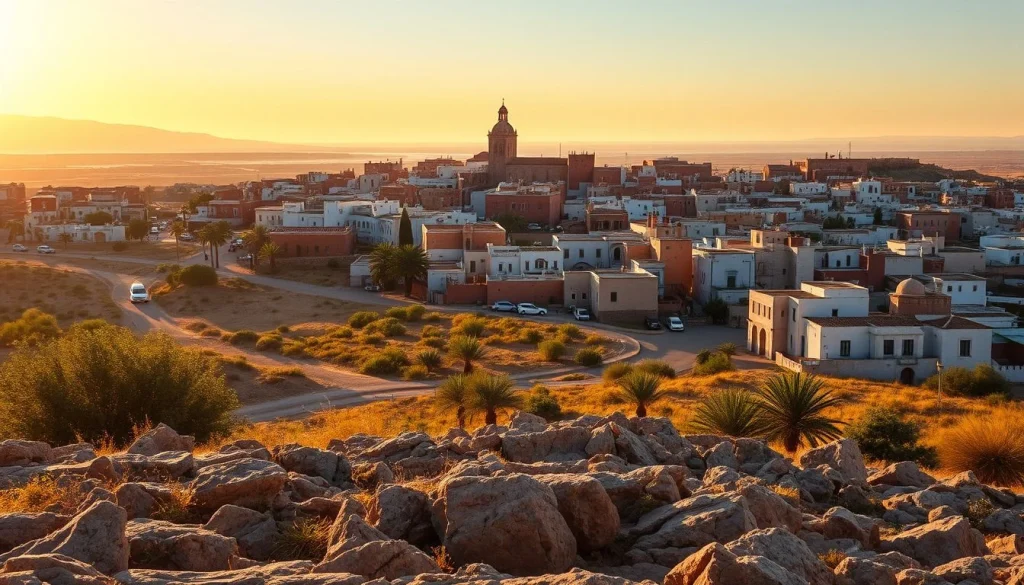
Essaouira is the strongest contrast to Marrakech’s inland heat and the best choice for travellers who want movement without a mountain trail. The Atlantic air, Mogador ramparts, fishing port, medina lanes, seafood and wind-sport scene create a day built around walking, sea views and changing weather rather than altitude.
The road journey takes roughly 2.5–3 hours each way. CTM and Supratours operate coach services between Marrakech and Essaouira, making an independent visit realistic for travellers comfortable with a fixed timetable. Check current departures, return times and fares directly with the operator before booking: the 2026 typical return coach range is approximately 70–150 MAD per person, varying by class and date.
A guided or private trip is better if you want commentary on the medina, flexible stops or door-to-door collection. The trade-off is less independence and, for a private vehicle, a higher total cost. Once in town, the main exertion is walking on uneven paving and around the ramparts; wind can make the seafront feel cool even when Marrakech is hot.
Choose Essaouira for Atlantic scenery, seafood and wind sports, not for a high-intensity adventure day. It also suits solo travellers who prefer a legible town environment, but anyone joining a watersport activity should check the operator’s equipment, instruction and insurance arrangements.
5. Agafay Desert
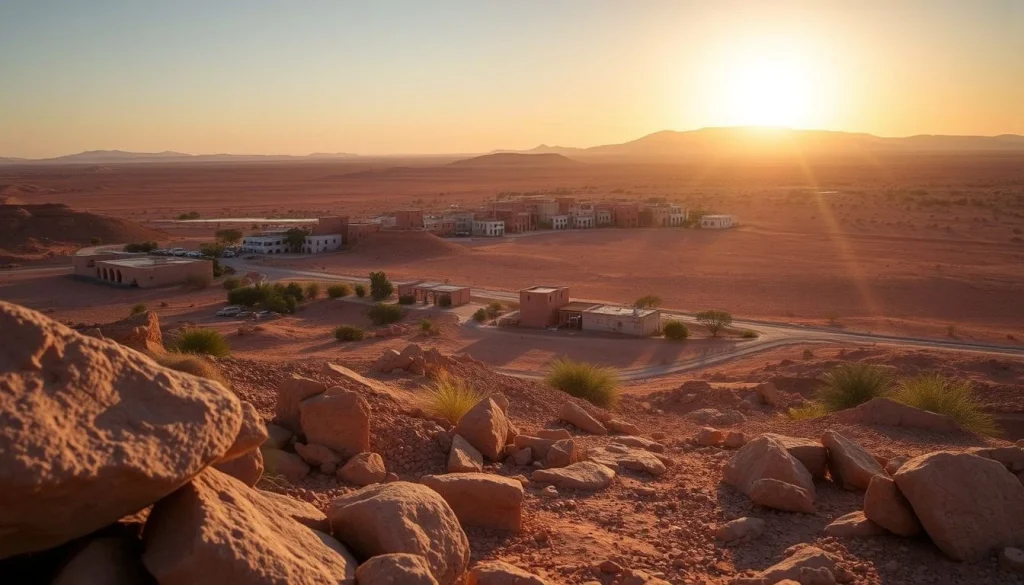
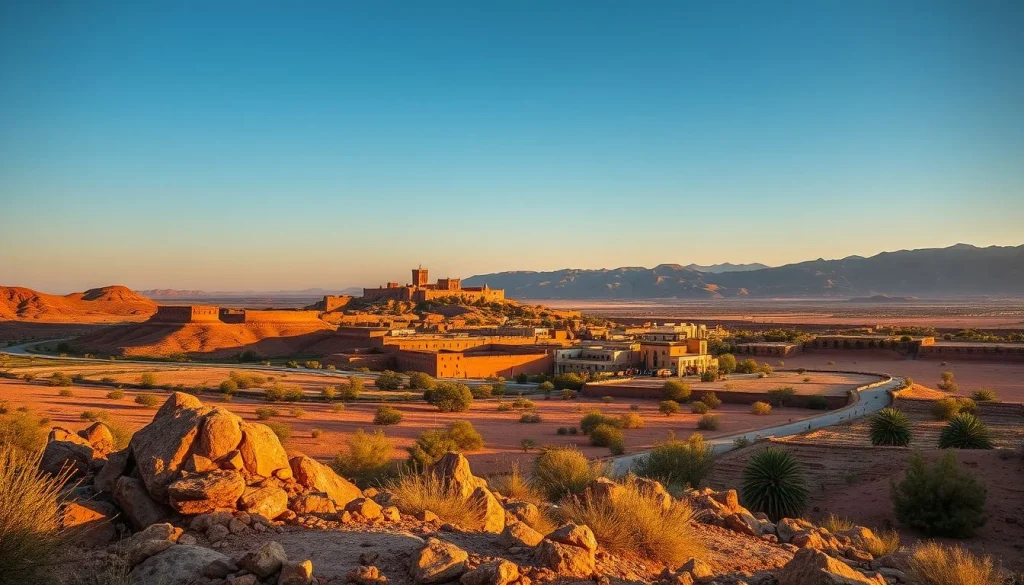
Agafay is the practical short-drive escape: approximately 30–45 minutes from Marrakech. Set expectations correctly. This is a rocky or stone desert, not a Sahara landscape of sweeping sand dunes, but its open hills and low light work well for sunset, a camel ride, quad biking or an outdoor dinner.
Packages commonly combine transfers with activities and sometimes dinner. Typical 2026 prices are around 400–800 MAD per person, with the lower end generally covering simpler combinations and the higher end reflecting upgraded activities or glamping. Confirm exactly what is included before paying: transport, meal, equipment, guide, activity duration and any transfers between the camp and activity area.
Quad biking adds speed and dust rather than technical desert riding. Use an operator that can confirm licensing, insurance, helmets and a proper safety briefing; do not trade those safeguards for a cheaper package. Camel rides are gentler but still involve sun exposure and an exposed riding position, so bring water, sunglasses and clothing that covers shoulders and legs.
Agafay suits travellers with limited time, mixed-ability groups and anyone who wants sunset without a long haul. It does not replace a Sahara trip for travellers specifically seeking large dunes. Sudden weather changes, heat and dehydration remain relevant even on a short outing.
6. Aït Benhaddou and Ouarzazate
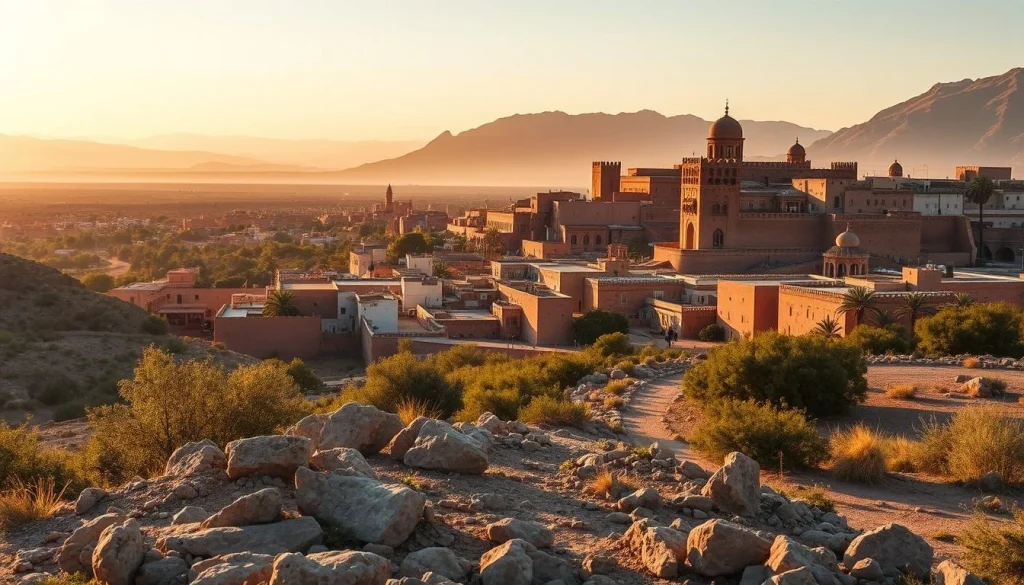
This is the most ambitious day trip and the one most likely to feel better as an overnight journey. Aït Benhaddou and Ouarzazate generally require around 3–4 hours of driving each way, often via the Tizi n’Tichka pass. The reward is a long change of landscape: mountain roads, arid valleys, earthen architecture, film history and Kasbah Taourirt.
Aït Benhaddou is a UNESCO World Heritage site, inscribed in 1987 according to the UNESCO World Heritage Centre. Its fortified earthen settlement is the cultural centrepiece, while Ouarzazate adds a broader kasbah and film-industry context. Allow time to walk on uneven ground and through stepped, narrow passages; the site is not a reliable wheelchair-accessible stop.
Choose a shared or basic guided trip only if you accept a tightly managed road day. A private vehicle allows earlier departures, photo stops and a less hurried pace, but the driving remains tiring. Typical 2026 guidance puts shared or basic guided day trips at roughly 400–900 MAD per person, while a private vehicle or guided excursion is approximately 1,000–2,400 MAD or more per vehicle; confirm whether fuel, guide services, meals and entrance fees are included.
Check Tizi n’Tichka road and weather conditions before travelling, especially in winter, when snow or closures can affect the route. Carry water, sun protection and layers, and be realistic about driver fatigue. Travellers who dislike long transfers should spend a night near Aït Benhaddou or Ouarzazate instead of forcing the entire circuit into one day.
Planning tips: when to go, what to book and what to combine
Choose the season before choosing the excursion
March to May and September to November are the strongest overall windows for the best day trips from Marrakech. Temperatures are more manageable on exposed Atlas trails, and spring rain can give the Ouzoud Falls their most impressive flow. Summer is hot around Marrakech, but higher-altitude walks from Imlil can remain workable with an early start; Essaouira is a cooler alternative thanks to its Atlantic position.
Winter needs more flexibility. Snow or closures can affect Mount Toubkal routes and the Tizi n’Tichka road towards Aït Benhaddou and Ouarzazate. June, July, August and December are peak travel months identified for this brief, so check current trail, road and operator conditions before committing to a fixed plan.
Match the booking style to the route
| Format | Best for | Trade-off |
|---|---|---|
| Shared day tour | Solo travellers and lower-cost Marrakech excursions | Less control over departure times, stops and walking pace |
| Private vehicle and guide | Hikers, photographers and small groups combining scenery with trail time | Higher cost, but more flexibility and less waiting |
| Independent travel | Confident travellers visiting Essaouira or planning a simple, self-directed day | You carry responsibility for tickets, navigation, weather decisions and the return journey |
For Imlil and the High Atlas, a local mountain guide is the sensible choice if you plan to leave the straightforward village paths, hike alone, or continue on terrain you do not know. A Mount Toubkal summit should not be squeezed into this itinerary: the Kasbah du Toubkal describes summit trips as two-day treks with an overnight refuge stay, while short walks from Imlil are a separate day-trip proposition.
Book the most time-sensitive elements first: a qualified mountain guide for a demanding hike, a suitable vehicle for remote routes, and a sunset activity in Agafay. Before paying, confirm the pickup point, guide, fuel, meals, entrance fees, return time and cancellation terms. For Agafay, check exactly whether camel riding or quad biking is included, and ask about operator licensing, helmets, insurance and the safety briefing rather than treating an activity package as a substitute for due diligence.
Start early, except when sunset is the point
Leave early for Imlil, Ourika, Ouzoud and both long-road excursions. This gives you more usable trail and sightseeing time and reduces the risk of turning the return into a late, tiring drive. Treat Essaouira as a dedicated day rather than adding another distant stop; the same applies to Aït Benhaddou and Ouarzazate, where an overnight stay is often more sensible than forcing the full route into one day.
Agafay works differently. A late departure can suit a sunset-focused plan, perhaps followed by an evening back in Marrakech, while Ourika can be paired realistically with a short valley walk and riverside meal. Do not combine two distant excursions simply because their map pins appear close enough.
Pack for changing conditions
- Carry more water than you expect to need, plus electrolytes, particularly for exposed mountain, waterfall and stone-desert routes.
- Bring sun protection, a hat and snacks; shade is inconsistent on trails and viewpoints.
- Wear sturdy shoes with grip, and add a warm layer and lightweight rain shell for altitude or sudden weather changes.
- Download offline maps, pack cash and carry a power bank; rural card acceptance and phone coverage can vary.
Check entry requirements for your nationality with the relevant Moroccan embassy or official government source before travelling. Also review the GOV.UK Morocco travel advice, updated 15 September 2026, which warns about occasional violent crime, scams and protests and advises continued vigilance. Recheck official road, mountain and operator updates shortly before departure.
Getting around: coaches, private vehicles and local mountain transport
Transport choice shapes the day as much as the destination. A shared tour is simple and usually economical, but fixed collection times and several pick-ups can shorten time on the trail. A private vehicle gives you control over stops and return time; it does not, by itself, provide mountain navigation or trekking expertise.
| Option | Best for | Advantages | Trade-offs |
|---|---|---|---|
| Shared day tour | Agafay, Ourika or Ouzoud | Simple booking and shared costs | Fixed schedule, multiple pick-ups and less time to linger |
| Private vehicle | Imlil, Ouzoud or Aït Benhaddou | Flexible departure, trailhead access and tailored stops | Higher total cost; driver may not be a hiking guide |
| CTM or Supratours coach | Essaouira | Predictable intercity transport without driving | Dependent on the published timetable and the onward walk or taxi |
| Taxi or collective taxi | Shorter local transfers | Useful for linking Marrakech with nearby transport points | Vehicle standards, luggage space and pricing need confirming beforehand |
| Local mountain transfer and guide | Imlil and High Atlas trailheads | Better local route knowledge and support on changing terrain | Must be arranged separately from the Marrakech transfer in some itineraries |
For Essaouira, CTM and Supratours operate coach services from Marrakech. The available 2026 return-fare basis is roughly MAD 70–150 per person, depending on class and date; verify the current timetable and fare directly with the operator before booking. The road journey is approximately 2.5–3 hours each way, so an early departure matters if you want time for the port, ramparts and medina rather than only a meal stop.
A private driver is the most practical choice for Imlil, Ourika, Ouzoud and Aït Benhaddou when you want an early start, several viewpoints or a precise trailhead. Imlil is typically around 65–90 minutes from Marrakech by private transfer, while Ourika Valley is usually about 1–1.5 hours away. Ouzoud takes approximately 2.5–3 hours each way, and Aït Benhaddou or Ouarzazate around 3–4 hours, making vehicle comfort and a realistic return plan important.
Clarify what “private transfer” includes: fuel, waiting time, guide, entrance fees, luggage and any change of vehicle near the trailhead. In Imlil, arrange in advance where the car stops and whether a local mountain guide is joining the walk. Independent navigation can become difficult once paths leave the village, particularly in poor visibility or after weather changes; a driver who knows the road is not necessarily qualified to lead a hike.
For every mountain or long-road excursion, use seat belts, protect valuables from view and avoid a rushed self-drive return after dark. Mountain roads are winding, and remote routes add road-fatigue exposure. Check current conditions at the Tizi n’Tichka pass before travelling to Aït Benhaddou or Ouarzazate, especially in winter. Vehicles may be adaptable for wheelchair users, but waterfall paths, mountain trails, viewpoints, steps and the uneven alleys of ksars are frequently inaccessible; confirm the exact route and vehicle rather than relying on a general accessibility label.
Conclusion: pick the day that matches your appetite for effort
Choose Imlil if the day should feel like a genuine mountain outing: it offers the most rewarding hiking without pretending that Mount Toubkal is a normal day trip. Pick Ourika Valley for moderate walking and mountain scenery, or Ouzoud Falls when the waterfalls justify a long day on the road.
Essaouira is the better reset for Atlantic air, port-side food and a slower change of scene. Agafay suits a short, activity-led escape, but remember that its rocky landscape is not the Sahara’s sand dunes. Reserve Aït Benhaddou for a strong cultural reason—and consider extending it overnight rather than compressing the long drive into one exhausting return journey.
Before leaving Marrakech, choose one route by effort and travel time, then check the current mountain weather and road status. Confirm what your booking includes, from fuel and meals to equipment and entrance fees, and arrange the appropriate mountain guide, private driver or coach in advance.
Frequently asked questions
Is a day trip to the Atlas Mountains suitable if I have little hiking experience?
Yes, if you choose a short walk from Imlil or the more accessible Ourika Valley rather than a summit attempt. Imlil is typically 65–90 minutes from Marrakech by private transfer, while Ourika Valley is about 1–1.5 hours by road. Mount Toubkal is a different proposition: summit trips are generally organised as two-day treks with an overnight refuge stay, not as ordinary day trips.
What is the difference between a Morocco mountain guide and a tour driver?
A driver is primarily responsible for the road transfer, while a mountain guide should lead the walking route and help you judge terrain, pace and changing conditions. They are not interchangeable roles, so ask exactly who will accompany you on foot and whether the quoted price includes both services. For an independent-looking itinerary, confirm the route, fitness level required and what happens if weather makes the planned walk unsuitable.
Can I swim at or near the waterfalls on a Marrakech excursion?
The information available here does not confirm swimming conditions at Setti Fatma or Ouzoud Falls, and water levels and local guidance can change. Treat any swim as conditional: ask your local guide or operator about the specific pool, currents, access and current restrictions before entering. Ouzoud is a long day, requiring roughly 2.5–3 hours of driving each way, so carry dry clothing rather than relying on an unconfirmed swim stop.
Is Essaouira windy enough for beginner kitesurfers and surfers?
Essaouira is the coastal choice among these excursions, but the supplied sources do not establish whether conditions will suit beginners on a particular day. Check the forecast and speak to a properly operating local school before booking instruction; do not assume that a windy-looking beach guarantees manageable waves or safe learning conditions. The journey from Marrakech is about 2.5–3 hours by road, so an overnight stay gives beginners more flexibility than a tight return itinerary.
What should I do if mountain weather changes during my excursion?
Tell the guide or driver immediately and follow the guide’s decision to shorten, change or abandon the walk. Exposed mountain routes can bring sudden weather changes, and winter conditions may affect higher routes and the Tizi n’Tichka pass. Check current mountain weather and trail information before leaving; if you are travelling independently, do not continue simply to preserve the itinerary.
Which of these excursions is most realistic for travellers with limited mobility?
No option can be described as reliably wheelchair accessible from the information supplied: mountain trails, waterfall viewpoints and historic ksar alleys may be uneven or include steps. A vehicle-based Agafay visit is the most practical starting point because it is only about 30–45 minutes from Marrakech and need not depend on a mountain or waterfall trail, but confirm vehicle access, surfaces and activity arrangements in writing. Ask the operator about the exact drop-off point and whether camel riding, quad biking or dinner areas can be reached without steps.