
This article contains affiliate links. If you book through one of our links, we may earn a commission at no additional cost to you.
The road from Marrakech to Merzouga covers about 560 km and takes roughly 9–10 hours of driving without extended stops, crossing the High Atlas before reaching the dunes of Erg Chebbi. That distance shapes every sensible 7-day Morocco itinerary: the Sahara cannot be an easy day trip from Marrakech, and the best version builds in an overnight near Aït Benhaddou or Ouarzazate.
This plan is for couples who want Marrakech evenings, a scenic mountain crossing and two nights around the desert without turning the week into one continuous transfer. It sets out what to book, how to pace the route, where to stay for atmosphere and privacy, and when Zagora may be a better choice than Merzouga. Expect long driving days, but also time for rooftop dinners, riad courtyards, a slower Atlas excursion and a properly timed desert camp stay.
Quick answer: Yes, you can combine Marrakech, the High Atlas and Erg Chebbi in seven days with three Marrakech nights, an overnight near Aït Benhaddou or Ouarzazate, two desert nights and a planned return to Marrakech. A one-day Sahara excursion is not realistic; Zagora is the shorter alternative, at about 350–360 km and 6–7 hours from Marrakech compared with Merzouga’s longer overland route.
Itinerary at a glance
This route gives the desert crossing enough space to feel like part of the journey rather than an exhausting transfer. The Marrakech–Merzouga road is about 560 km and takes roughly 9–10 hours of driving without extended stops, according to Morocco Desert Expeditions; the itinerary therefore stages it across several days.
| Day | Route | Overnight base | Main experience | Approximate driving time |
|---|---|---|---|---|
| 1 | Marrakech Menara Airport (RAK) to Marrakech | Marrakech Medina | Arrival, souk stroll and rooftop or riad dinner | 20–45 minutes to a Medina riad, traffic permitting |
| 2 | Marrakech | Marrakech Medina | Bahia Palace, Saadian Tombs, souks, Djemaa el-Fna and sunset | None planned |
| 3 | Marrakech to Imlil or the Ourika area and back | Marrakech Medina | High Atlas scenery and a slower shared day outdoors | Allow a full day; confirm the route with the driver |
| 4 | Marrakech via Tizi n’Tichka to Aït Benhaddou or Ouarzazate | Aït Benhaddou or Ouarzazate | Atlas crossing and late-afternoon kasbah visit | Long mountain-transfer day; check road conditions |
| 5 | Ouarzazate area to Merzouga | Erg Chebbi camp or Merzouga | Arrival, sunset camel excursion or camp transfer | Long staged desert-transfer day |
| 6 | Erg Chebbi | Erg Chebbi camp or Merzouga | Sunrise, quiet desert time and a second night near the dunes | Minimal local driving |
| 7 | Merzouga to Marrakech | Marrakech, if arrival allows | Planned long return journey and final atmospheric evening | Long travel day; confirm road and arrival conditions |
RAK is the practical airport for this plan; ONDA lists the airport’s travel-document information, while an arranged airport-to-Medina transfer generally takes around 20–45 minutes. Treat Day 7 as travel first and sightseeing second, with the final Marrakech dinner an option rather than a promise.
Before you go: bookings, entry checks and arrival logistics
Check entry requirements before booking
Start with your nationality, not a general Morocco visa guide. The official Accès-Maroc portal is the place to check visa eligibility and any digital travel-authorisation requirement before departure. Many EU, UK and US passport holders are commonly visa-exempt for short tourist stays, often up to 90 days, but eligibility is nationality-specific and should be confirmed for each passport.
Passport validity also deserves a careful check. GOV.UK guidance says a passport should be valid for at least three months after arrival, while some national authorities recommend six months; use your own embassy or foreign-ministry guidance if it sets a different threshold. Recheck these rules shortly before travel rather than relying on an older booking page.
Reserve the route in the right order
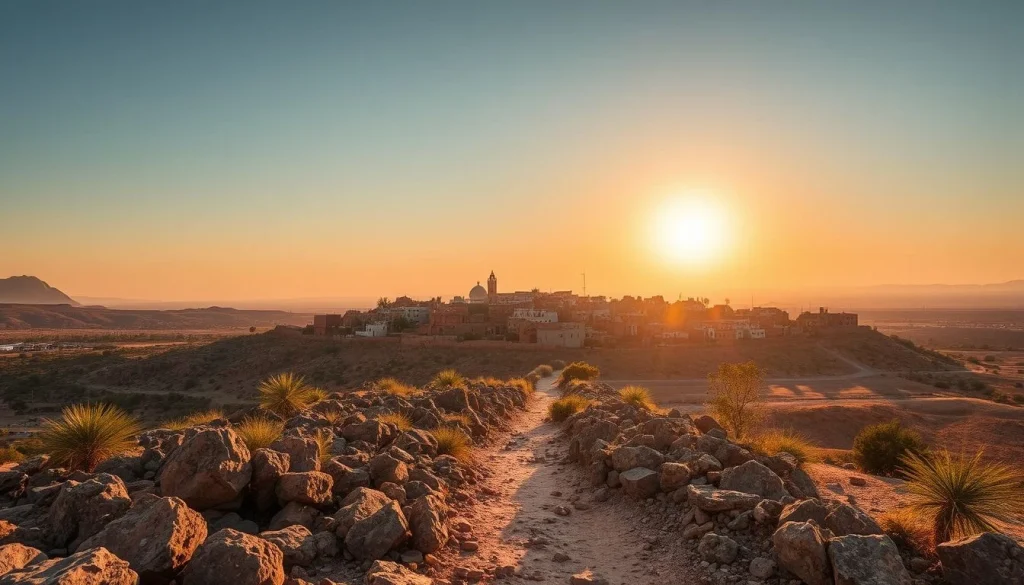
Book the first Marrakech riad, the desert operator, the Aït Benhaddou or Ouarzazate night, and the final Marrakech night before arriving. Erg Chebbi is a long overland commitment, so a confirmed staged route matters more than squeezing in another city. For couples, a private three-day Marrakech–Merzouga tour usually buys flexibility and time together, while a shared tour can reduce the price but may mean fixed stops and a larger group; advertised private tours were approximately €250–€600 or more per person in the July–September 2026 market snapshot, according to Visit Agafay Desert.
Ask for the full itinerary in writing. Confirm whether the quote covers a private or shared vehicle, accommodation standards, meals, fuel, a guide, camel excursion or four-wheel-drive camp transfer, luggage handling, insurance and cancellation terms. Also ask how the operator handles poor road conditions and what happens if a late arrival makes a planned sunset activity impossible.
Make arrival and departure simple
Marrakech Menara Airport (RAK) is the practical airport for this plan. Arrange the first transfer in advance and send the driver the riad’s exact meeting point: cars may not reach the accommodation itself in the Medina. ONDA publishes official passenger and travel-document information; keep the riad’s phone number, booking confirmation and an offline map available in case mobile data fails.
Carry some cash for small purchases and transport, and leave flight-day plans generous. GOV.UK Foreign travel advice, updated 15 September 2026, warns travellers to avoid demonstrations, protect valuables and remain alert to scams and crime. Pack regular medication in its original packaging with prescriptions, and avoid unlabelled alcoholic drinks because the same advice includes a methanol-poisoning warning.
Day by day: Marrakech, the Atlas and Erg Chebbi
Your 7-day Morocco itinerary begins gently in Marrakech. Keep the arrival day to the Medina, a short orientation walk and an unhurried dinner: the Atlas crossing and Erg Chebbi come later, and there is no advantage in starting the trip tired.
Morning
Arrive at Marrakech Menara Airport (RAK) and allow time for formalities, luggage and cash. An arranged transfer to a Medina riad generally takes around 20–45 minutes, depending on traffic, according to airport guidance from ONDA; confirm the meeting point with the riad before flying.
After check-in, leave the rest of the morning open. September can still be hot in Marrakech, so use the riad’s courtyard or rooftop for a drink, shower and a slower start rather than immediately tackling the souks. If your flight arrives late, skip sightseeing altogether and protect the evening.
Afternoon
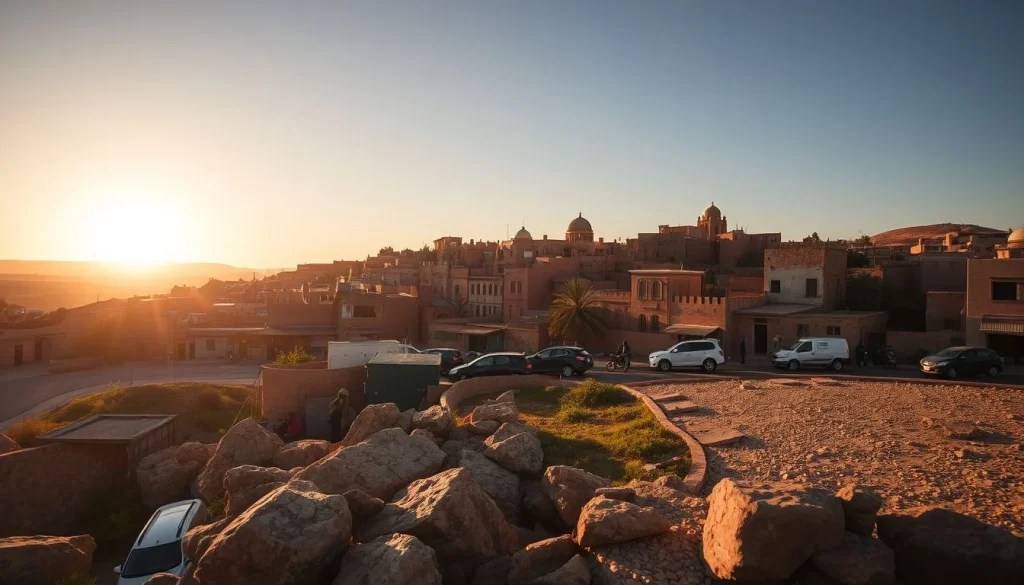
Once the heat softens, take a short, unstructured walk through the nearby Medina souks. Use this first outing to learn the pattern of the streets, locate the route back to your riad and get comfortable with the pace of Marrakech. Keep valuables secured and agree on a meeting point if you become separated in the narrow lanes.
Walk towards Djemaa el-Fna for the city’s first broad, atmospheric view. This is an orientation stop rather than a full sightseeing session; save Bahia Palace, the Saadian Tombs and the longer souk wander for Day 2. A mint tea on a terrace gives you a useful pause before the evening crowds build.
For couples, a Medina riad is the most atmospheric base if you value courtyards, rooftop breakfasts and the ability to return on foot. Choose Hivernage or Gueliz instead if you prefer wider streets, easier vehicle access and a quieter arrival after the airport. Check access and luggage arrangements in advance: many Medina streets are narrow or uneven.
Evening

Return to Djemaa el-Fna around sunset, when the square changes from a daytime meeting place into Marrakech’s busiest evening scene. Stay aware of your belongings, avoid unsolicited approaches and use a clearly agreed meeting point rather than trying to navigate by instinct.
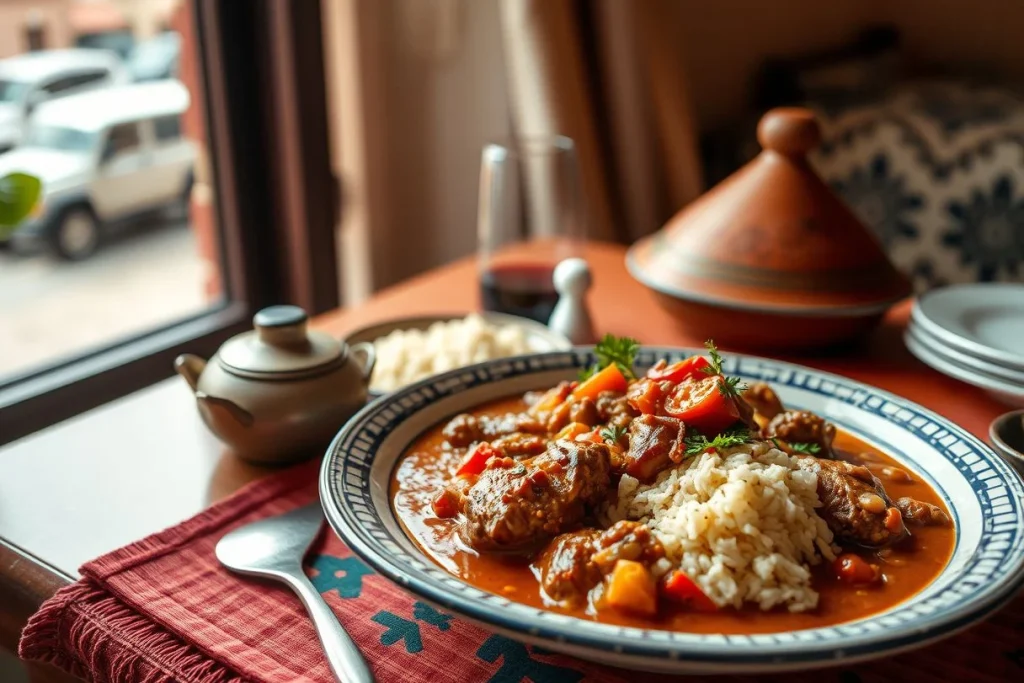
Keep dinner close to the riad or choose a rooftop with a view towards the square. Order a tagine, couscous, pastilla or a bowl of harira, followed by mint tea. The first night should feel social but not late; tomorrow’s city circuit is more enjoyable after a full night’s sleep.
GOV.UK Foreign travel advice, updated 15 September 2026, advises travellers to avoid demonstrations, protect valuables and remain alert to scams and crime. Recheck official advice before departure, and ask the riad to arrange a trusted taxi if you need to travel beyond the walkable Medina.
Where to eat
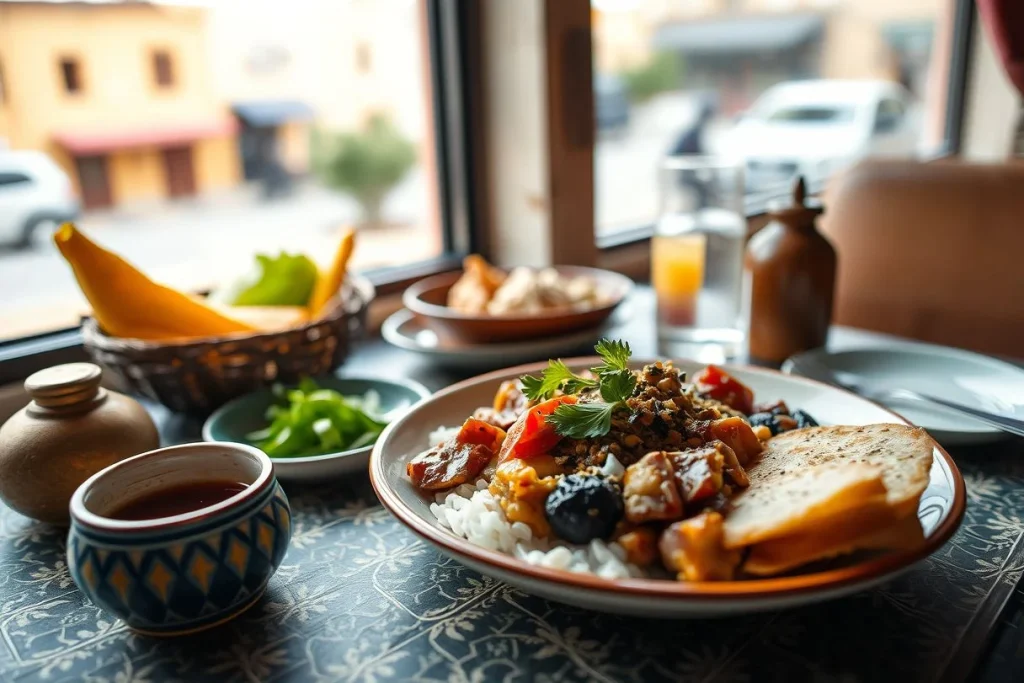
Stay with Moroccan food in the Medina on arrival: tagine is the easy shared choice, while pastilla suits a richer meal and harira works well if you want something lighter. Street food around Djemaa el-Fna can be inexpensive, but choose busy, well-presented stalls and make sure food is cooked thoroughly. For a quieter first dinner, ask your riad whether it serves meals; reserve ahead if required.
As a 2026 market snapshot, Marrakech meals range from around 20–60 MAD per person for a snack or street meal to approximately 80–200 MAD for a mid-range restaurant meal. Riad rates observed between June and September 2026 ranged roughly from €45 to €190 or more per night, depending on property size and season; check current rates directly before booking.
Getting around

Use an arranged airport transfer for the arrival, particularly if your riad is deep inside the Medina and your flight lands after dark. Vehicles usually stop at an accessible gate or meeting point, with the final section completed on foot. Ask for porter arrangements before arrival rather than accepting unsolicited help.
For the rest of the day, walk. The Medina is rewarding at a slow pace, but its lanes can be confusing and uneven, and vehicles, scooters and handcarts share limited space. Petit taxis are useful for Hivernage, Gueliz or other areas outside the Medina; agree the destination and fare practice before setting off. Avoid planning a cross-city excursion on arrival day.
Estimated time
| Activity | Suggested time |
|---|---|
| Airport formalities and transfer | Allow a flexible arrival block; the transfer itself is generally around 20–45 minutes |
| Check-in, shower and rest | Two to three hours |
| Orientation walk through the Medina | One to two hours |
| Tea and sunset around Djemaa el-Fna | One to two hours |
| Dinner | One and a half to two hours |
On a morning arrival, this leaves a comfortable afternoon without forcing a packed programme. On an evening arrival, reduce the plan to transfer, check-in and dinner near the riad. The day’s sightseeing should remain flexible because flight delays, airport queues and September heat are more important than fitting in one extra monument.
Optional extras
- For an early arrival: add a short walk towards the Koutoubia area, then return to the riad before the afternoon heat. Keep Bahia Palace and the Saadian Tombs for Day 2.
- For a quieter evening: stay inside the riad for dinner and use the rooftop after dark rather than spending a long time in Djemaa el-Fna.
- For a late or tiring arrival: skip the souks, eat near the accommodation and prepare a small day bag for tomorrow. Keep cash, medication and passports organised before bed.
Where to stay: the best bases and styles for couples
For this Morocco couples itinerary, book three Marrakech nights in the Medina, one night near Aït Benhaddou or Ouarzazate, and two nights around Erg Chebbi. That arrangement gives the desert crossing room to breathe instead of turning every day into a transfer.
| Base | Best for | Trade-off |
|---|---|---|
| Medina riad | A romantic first visit, rooftop breakfasts and walkable access to Djemaa el-Fna and the souks | Narrow, uneven lanes; vehicles may not reach the door |
| Hivernage | Couples wanting polished hotels, pools, restaurants and easier taxi access | Less atmospheric and less walkable than the old city |
| Gueliz | Light sleepers and couples who prefer modern dining, wider streets and transport convenience | More contemporary, with less traditional riad character |
| Palmeraie | Pool-focused stays, resort space and privacy | Fewer evening options within walking distance |
A Medina riad suits a couple who wants courtyards, tiled rooms and a quiet rooftop after the evening crowds thin. Before booking, ask about luggage access, air conditioning, winter heating and accessibility: many lanes are uneven, and a “near the square” address may still involve a walk from the vehicle drop-off. Riad rates observed in June–September 2026 ranged from roughly €45 to €190 or more per night, according to My Kasbah; check the live rate and inclusions for your dates.
For the crossing, choose a guesthouse or kasbah near Aït Benhaddou or Ouarzazate rather than forcing the Atlas and desert drive into one exhausting day. In Erg Chebbi, compare a basic, upgraded and luxury camp by asking specifically about private bathrooms, proper bedding, electricity, night-time heating, dune access and whether the final transfer is by 4×4, camel or both. Two desert nights are worth prioritising: the second morning creates time for sunrise, rest and a slower dinner instead of an immediate departure.
Travel costs: realistic 2026 ranges for two
For a couple, the main cost decision is not Marrakech itself but how you cross to Erg Chebbi. Shared tours keep the overland section relatively low-cost; a private vehicle buys flexibility, fewer roadside stops and a more comfortable pace. The figures below are market snapshots, not fixed fares.
Estimated costs
| Estimated item | Budget | Mid-range | Luxury |
|---|---|---|---|
| Marrakech accommodation for two, per night | 200–400 MAD | 500–1,400 MAD | From 1,800 MAD |
| Shared three-day Marrakech–Merzouga tour, per person | €80–€150 | €80–€150 | Not supported by the source |
| Private three-day Marrakech–Merzouga tour, per person | Not supported by the source | €250–€600 | €600+ |
| Marrakech food and local transport, per person per day | Not specified | 400–800 MAD | Not supported by the source |
| Marrakech food, per person | 20–60 MAD for a snack or street meal | 80–200 MAD for a mid-range restaurant meal | Not supported by the source |
Accommodation figures are based on a June–September 2026 market snapshot from My Kasbah. Tour figures reflect a July–September 2026 snapshot from Visit Agafay Desert; food and local-transport figures are a 2026 snapshot from Insider Marrakech. Prices can change with season, exchange rates, vehicle type, camp standard and booking lead time.
For a planning formula, calculate three Marrakech nights, one night near Aït Benhaddou or Ouarzazate and two desert nights, then add either the shared tour price for two people or the private-tour price for two. Check whether the desert quotation already includes camp accommodation, meals, camel or 4×4 transfers and return transport before adding those nights separately. The route night, flights, airport transfers, attraction entry fees, tips, alcohol and extra activities are not covered by these figures. Check live accommodation and operator prices before booking, and ask for a written list of inclusions.
| Item | Budget | Mid-range | Luxury |
|---|---|---|---|
| Marrakech accommodation for two | 200–400 MAD per night | 500–1,400 MAD per night | From 1,800 MAD per night |
| Shared three-day Marrakech–Merzouga desert tour | €80–€150 per person | €80–€150 per person | Not supported by this source |
| Private three-day Marrakech–Merzouga desert tour | Not supported by this source | €250–€600 per person | €600+ per person |
| Daily food and local transport in Marrakech | Not specified | 400–800 MAD per person per day | Not supported by this source |
| Marrakech meals | 20–60 MAD per person | 80–200 MAD per person | Not supported by this source |
Estimated ranges based on the sources listed below. Prices change; check with providers before booking.
Travel tips that make the route easier
A seven-day Morocco itinerary leaves little room for a missed connection or an uncomfortable vehicle. Use these checks to protect the time you have for Marrakech evenings and the desert.
- Confirm the overland route before paying a deposit. Ask specifically about Tizi n’Tichka conditions, desert-road delays, planned stops and the expected arrival time at Erg Chebbi. Recheck pass and road conditions shortly before departure, and confirm that your camp is available for both desert nights.
- Choose the operator, not just the headline price. Request the vehicle type, seat plan, insurance, driver arrangements and a written list of inclusions. Check recent independent reviews and ask whether the quote covers camp accommodation, meals, camel or 4WD transfers and the return journey; an ultra-cheap tour may reduce comfort or omit essentials.
- Build a buffer around your flight home. Day 7 is a long return to Marrakech, not a dependable sightseeing day. If your flight leaves that evening, consider sleeping near the airport or adding a night in Marrakech rather than relying on the desert transfer to run perfectly.
- Handle petit taxis deliberately. Agree the fare before setting off if the meter is not used, and keep valuables out of sight. For Medina walks and transfers, use official guides and taxis where appropriate; GOV.UK travel advice, updated 15 September 2026, warns about scams and petty and violent crime.
- Keep one evening deliberately empty. A rooftop dinner, mint tea or a quiet riad courtyard is a better use of a tired couple’s final Marrakech night than another tightly timed attraction. The Medina’s narrow, uneven streets also make it worth checking pushchair and luggage access with the riad in advance.
- Pack for two climates in one small bag. Take breathable layers for Marrakech, a warm layer for cold desert nights, a scarf, sun protection, closed shoes, a refillable water bottle, a power bank and a small overnight bag for the camp. Leave bulky luggage with the riad or tour operator only after confirming storage arrangements.
- Choose your desert transfer honestly. Camel rides can be uncomfortable, particularly on a long excursion. A 4WD transfer to camp may suit couples who value privacy, back comfort or more time at the dunes; ask the operator which option is included rather than assuming.
- Protect your health and follow current advice. Carry regular medicines in their original packaging with prescriptions, and avoid unlabelled alcoholic drinks: GOV.UK’s Morocco advice, updated 15 September 2026, includes a methanol-poisoning warning. Avoid demonstrations and check the latest official travel advice before leaving.
Conclusion: choose Erg Chebbi only if you accept the long overland days
This 7-day Morocco itinerary suits couples who want Marrakech’s evening atmosphere, a genuine High Atlas crossing and the larger dunes of Erg Chebbi—and who accept that Days 4, 5 and 7 are travel-heavy. The reward is variety: riad courtyards and souks give way to mountain roads, Aït Benhaddou and two nights beneath desert skies. It is not the right plan if relaxed afternoons matter more than reaching the far eastern Sahara.
For a slower week, choose Zagora, with its shorter approach from Marrakech, or Agafay for a desert-style night without the long overland crossing. Before booking, confirm entry requirements and seasonal road conditions, then request comparable quotes from one reputable shared operator and one private operator. Once the inclusions, vehicle, guide and camp standard are clear, reserve the Marrakech riads and desert camp around the route rather than trying to fit Erg Chebbi into a day trip.
Frequently asked questions
Is Merzouga or Zagora the better desert choice for a one-week Morocco trip?
Zagora is the more manageable choice if reducing road time matters: Marrakech to Zagora is approximately 350–360 km and takes about 6–7 hours of driving. Merzouga gives you the Erg Chebbi route, but Marrakech to Merzouga is about 560 km and roughly 9–10 hours without extended stops, so it needs a staged three-day crossing. For this itinerary, choose Merzouga for the landscape and accept the long transfers; choose Zagora for a less demanding week. Check current road conditions and tour schedules before booking.
Can we replace the Atlas day trip with more time in Marrakech?
Yes. The Atlas day is an optional pressure-release point rather than a requirement. Keeping a third Marrakech day allows a slower visit to the Medina souks, Bahia Palace, Saadian Tombs, Majorelle Garden or a long riad afternoon before the desert crossing. This suits couples who prefer atmosphere and downtime to another transfer. It does not shorten the Marrakech–Merzouga journey, which still requires a staged overland route.
What is a shared desert tour actually like for a couple?
A shared tour means travelling with other visitors rather than having the vehicle and schedule entirely to yourselves. Advertised shared three-day Marrakech–Merzouga tours were approximately €80–€150 per person in the July–September 2026 market snapshot, according to Visit Agafay Desert. Before paying, confirm the group size, vehicle standards, accommodation, meals, camel or camp transfers, and what is excluded. Check recent reviews and operator credentials, particularly when a price is unusually low.
Are camel rides at Erg Chebbi suitable for first-time visitors?
The supplied sources do not establish a general suitability rule for first-time visitors. Treat the camel excursion as optional and ask the operator about its duration, riding arrangements, alternatives and the timing of the desert-camp transfer. Layers are important because desert nights can be cold even when daytime temperatures are high, according to Climate-Data.org. Check seasonal heat before committing to a long ride, and choose an operator that explains the plan clearly.
What should we do if the Tizi n’Tichka road is delayed or closed?
Do not build the itinerary around an unverified crossing time. Ask the operator or driver to check current High Atlas road conditions before departure, then prioritise safe travel over reaching Aït Benhaddou or Ouarzazate on schedule. If the crossing is delayed, expect the staged route to change and confirm any revised accommodation directly. Official travel advice warns that local conditions can change; GOV.UK Foreign travel advice, updated 15 September 2026, should be checked alongside the operator’s road update.
Can we fly home directly from the desert instead of returning to Marrakech?
The supplied information does not confirm a practical flight option from Merzouga or the surrounding desert, so do not assume that the final return can be replaced by air travel. This itinerary therefore treats the journey back to Marrakech as a full travel day and uses Marrakech Menara Airport for departure. Check current airline schedules and official airport information with ONDA before booking; if no suitable connection exists, retain the final Marrakech night rather than risk an onward flight.