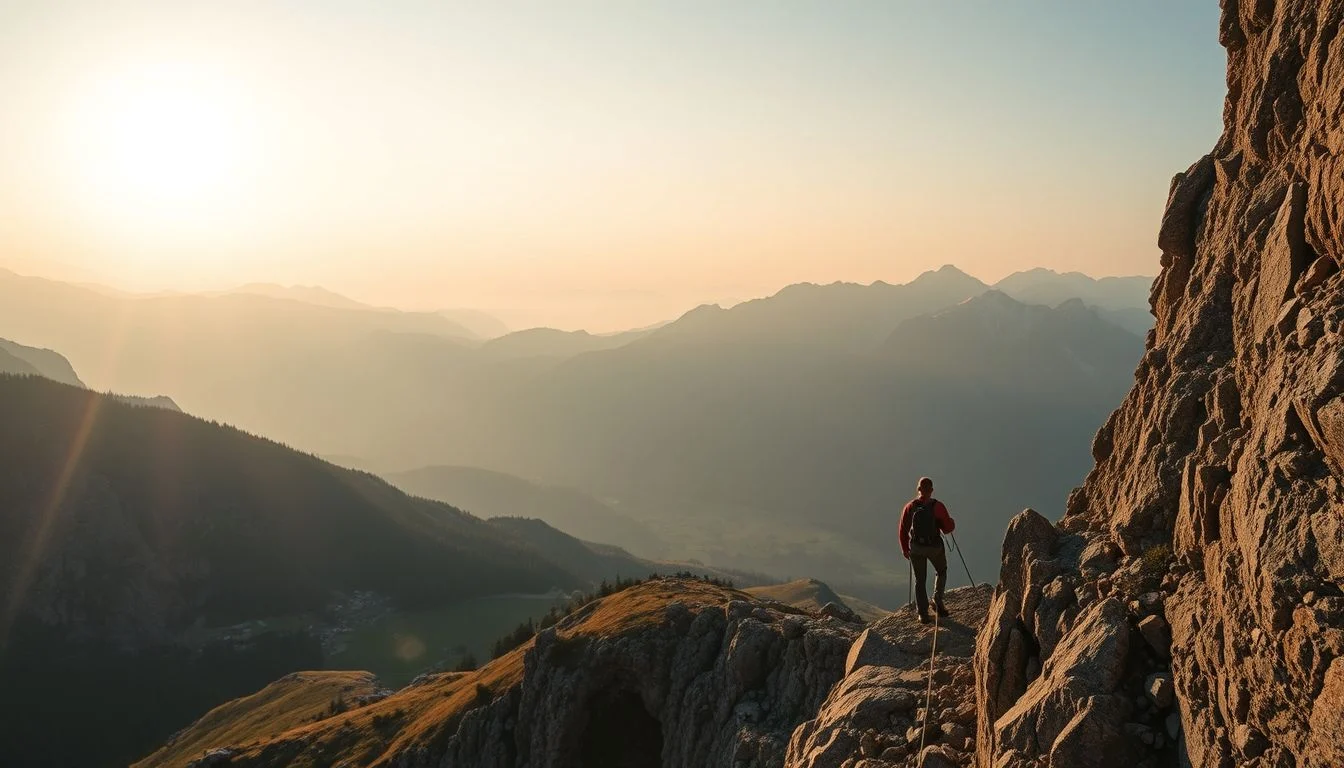
At Cinque Torri, steel cables, iron rungs and short ladders lead across the Dolomite rock towers that once formed a World War I front. This is the practical appeal of via ferrata for beginners in the Alps: you can experience exposed mountain terrain without setting up a conventional climbing rope, while still needing to manage height, route-finding, weather and your own movement carefully.
This guide is for adventure travellers attempting their first ferrata, whether you are comparing the Dolomites, the Austrian Alps or Switzerland. It will help you choose a forgiving starting area, understand what A and B grades leave out, decide when a guide is worth paying for, and plan the right equipment, season and budget. The emphasis is on a first outing rather than a dramatic summit: resort-accessible routes and short Klettersteig courses make better introductions than high-alpine objectives such as Marmolada.
Quick answer: Start with a short, accessible route in Cinque Torri, Dachstein, St. Johann in Tirol or Mürren–Gimmelwald, ideally with a guide or beginner Klettersteig course. Late June through September is generally the useful window for rock routes, but check snow, storms, route status, lifts and refuges; an A or B grade does not remove exposure or retreat hazards.
What to expect on your first Alpine via ferrata
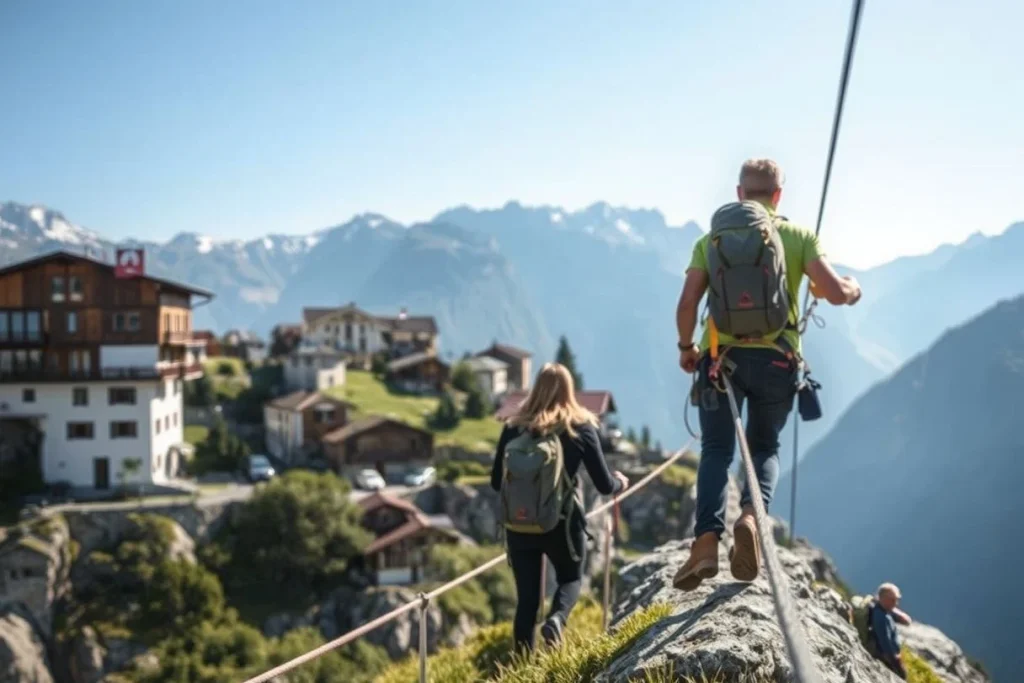
The first few metres usually feel more like climbing a steep staircase than technical rock climbing. A steel cable follows the line of the route, while rungs, pegs, ladders and occasional bridges help you cross slabs, gullies and exposed traverses. You clip both arms of the lanyard to the cable, moving one connector at a time past each anchor; the system is intended to limit the consequences of a fall, not to prevent one.
Your basic setup is a sit harness, a certified via-ferrata lanyard with an energy absorber and two type-K connectors, plus a climbing helmet. Equipment terminology may refer to EN 958 for via-ferrata energy absorbers, EN 12275 for connectors and UIAA recommendations. Those markings help identify appropriate equipment, but they do not replace a briefing on clipping technique, spacing or what to do at an anchor.
Continental grades commonly run from A, easy, through E, extremely difficult, as described by HutLists. An A or B route can still have a long approach, exposed footholds, awkward route-finding or no simple way down once you have committed. Ask about those details, not just the letter grade, before choosing an easy via ferrata route.
Expect a combination of uphill hiking, balance and repeated pulling on rungs, with enough upper-body endurance to hold yourself close to the rock when footholds are small. Severe vertigo, poor fitness or discomfort on exposed ladders and traverses are legitimate reasons to choose a short guided route—or not to climb that day. A helmet is essential: rockfall is a major hazard, including stones dislodged by people above, so keep it on beneath every equipped section.
Children and lighter participants need particular care. Many via-ferrata systems are tested with masses of approximately 40kg to 120kg; below about 40kg, check the lanyard manufacturer’s guidance and ask a qualified guide whether an alternative belay arrangement is required. A short Klettersteig course is a sensible first lesson because it lets you practise clipping and movement before exposure becomes the main challenge.
Where to start: the best beginner areas in the Alps
For a first via ferrata for beginners in the Alps, choose an area where the approach is manageable, equipment can be rented and a guide can adjust the day if the route feels too exposed. The Dolomites, Austrian Northern Limestone Alps and selected Swiss resort areas all offer that combination, but an area is not the same thing as a beginner route: confirm the exact grade, approach, descent and retreat options before setting out.
| Area | Base | Beginner suitability and access | Progression | Main caveat |
|---|---|---|---|---|
| Cinque Torri | Cortina d’Ampezzo | Compact historic routes in a concentrated Dolomite setting, with relatively straightforward access from the Cortina area. | Good for moving from a short, guided introduction towards longer World War I-era routes. | Check the individual route grade; proximity and scenery do not make every ferrata easy. |
| Tre Cime di Lavaredo | Misurina or Cortina | A scenic base with short tourist ferratas and access from the Misurina/Cortina side. | Useful for combining a conservative first outing with more ambitious routes later. | Treat it as a base, not a blanket beginner recommendation. Approaches and route conditions vary. |
| Lagazuoi and Falzarego | Cortina d’Ampezzo or Alta Badia | Historic World War I terrain with a choice of equipped routes and practical mountain access. | The range of grades allows a guide to match the day to your experience. | Some routes are more committing than their historic setting suggests; verify the exact descent and escape points. |
| Dachstein and Salzkammergut | Ramsau or the Salzkammergut | An Austrian option with short maintained Klettersteige, courses, rental support and guide infrastructure. | Strong choice for learning clipping technique before tackling longer routes. | High routes can depend on local access, conditions and cable-car or refuge operations. |
| Kitzbühel and St. Johann in Tirol | Kitzbühel or St. Johann in Tirol | Resort-adjacent terrain with rental and guiding infrastructure, making the first day easier to organise. | Suitable for building confidence through courses and progressively harder outings. | Resort convenience does not remove exposure, weather risk or the need to assess the route. |
| Mürren–Gimmelwald | Mürren | A short Bernese Oberland option with local guiding and equipment-rental possibilities. | Works well as a compact introduction before committing to a longer Alpine itinerary. | Confirm the exact route status, equipment arrangements and retreat plan locally. |
| Marmolada West Ridge and Punta Penia | Dolomites | Not a first-ferrata choice: this is glacier-adjacent, high-alpine terrain requiring current local information. | A later objective after experience with exposure, route-finding and changing mountain conditions. | Planning is especially condition-sensitive after the 3 July 2022 glacier collapse; professional guidance is particularly important for first-timers. |
Grades commonly run from A, easy, to E, extremely difficult, but the grade alone is not a safety label. As the HutLists guide explains, exposure, route length, approach and retreat matter just as much. An A or B route may still involve airy traverses, ladders, awkward footholds or a long descent; a shorter route with a clear escape can be a better first day than a scenic outing that commits you high on a ridge.
For the simplest logistics, choose St. Johann in Tirol, Kitzbühel, Dachstein or Cinque Torri and arrange a beginner course or guide through the local Alpine club, guide school or tourism office. Cortina d’Ampezzo and Alta Badia give access to several Dolomite sectors, while Ramsau, Mürren and Gimmelwald suit travellers who want a compact base. Alpenverein material recommends a short Klettersteig course or guided first route for inexperienced participants. Before travelling, check the official local mountain authority or lift operator for current closures, access, cable-car operation and refuge status; the UIAA notes that high-alpine approaches are often most reliably accessible from late June to mid-September, but local conditions decide the day.
When to go: the safest and least crowded window
For most rock routes, plan between late June and September. Late June can still bring snow or ice on the approach and cable, while late September means shorter days and a greater chance of freeze–thaw conditions. High-alpine and glacier-adjacent routes have narrower, more variable seasons: the UIAA notes that many such approaches are most reliably accessible from late June to mid-September, but local conditions decide whether a route is suitable.
Late August to early September is often the most useful compromise. July through mid-August generally brings the heaviest visitor numbers, whereas the later window can offer quieter trails without giving up the main summer access period. The Dolomites, particularly around Tre Cime di Lavaredo, Cinque Torri and Lagazuoi, can remain busy, and local summer festivals or lift-season calendars may affect accommodation demand and transport even after the busiest holiday weeks.
Keep your first outing flexible by at least a day. Before setting out, check the mountain forecast for thunderstorms and rapid warming, the latest snow and ice report, and the exact route status. Then confirm the operating dates of the relevant cable car and the opening of any refuge; these are not interchangeable with the season dates shown in a general resort brochure.
For a first trip, avoid fixing your plans around Marmolada or another glacier-adjacent objective. Ask a local guide, Alpine Club office or official mountain authority about current conditions, particularly after fresh snow, a warm spell or overnight freezing. A short, lower route gives you a safer weather alternative if the high mountains close in.
How to book or go independently: guide, gear and logistics
Choose the right level of support
For a first exposed route, a guide is the sensible choice. Book one if the grading system is unfamiliar, the group includes children or people of different abilities, or the route has limited retreat options. Alpine clubs and guide schools recommend a short Klettersteig course or guided first outing for inexperienced participants, rather than learning technique on a committing route, according to Alpenverein Österreich’s 2025 activity publication.
When comparing guides, ask for the exact route grade, exposure, approach and descent, maximum group size, equipment included, relevant guide certification, weather-cancellation policy and emergency plan. A local guide should also be able to switch to a lower route if snow, storms, wet rock or an icy cable makes the original plan unsuitable. This is particularly valuable in areas such as Cinque Torri, Dachstein, St. Johann in Tirol and Mürren–Gimmelwald, where beginner infrastructure is available.
Organise the day before you clip in
Confirm the route status, approach, descent and retreat points with the local guide office, Alpine Club or official mountain authority. Check cable-car operations and parking arrangements for the exact date, then leave a generous weather and route-finding buffer rather than planning the final lift down at the last possible moment. Share the route, expected return and emergency contact with someone not in the group.
Collect equipment early enough to inspect and fit it properly. The standard setup is a sit harness, a certified via-ferrata lanyard with an energy absorber and two type-K connectors, plus a climbing helmet; the helmet matters because rockfall can come from parties above, as the St. Johann in Tirol tourism authority explains in its via-ferrata guidance. Ask the rental shop to demonstrate every adjustment and check the manufacturer’s service life, inspection record and weight range. Many systems are tested for users from approximately 40kg, so anyone below that weight needs manufacturer or guide advice and may require an alternative belay arrangement.
If you go independently
Independent travel is reasonable only after hands-on instruction, with a competent partner, on a short, well-maintained route with clear retreat options. Before starting, practise clipping on easy ground with a guide: remain attached with both connectors, move them past anchors one at a time and never unclip both simultaneously. This is not a substitute for instruction, particularly on traverses, ladders or sections where a fall could load the cable system heavily.
Carry a charged phone, suitable clothing, water and a route description, and check rescue coverage before leaving. Consider alpine rescue insurance; standard travel insurance may not cover mountain rescue or via-ferrata activity. If conditions deteriorate, retreat while the route is still manageable—do not continue towards a summit simply because the cable remains in place.
Via ferrata costs: rental, guiding and a short Alpine trip
For a first trip, renting equipment and paying for a short guided outing is usually more flexible than buying a full kit or committing to a multi-day itinerary. The figures below are estimates available for 2024–2026; prices vary by country, season, group size, route and what is included.
| Estimated costs | Budget | Mid-range | Luxury |
|---|---|---|---|
| Kit rental, per person per day | €3.50–€9 through listed Alpine Club services | €10–€18 for broader or complete packages | €20–€40 at some private rental shops |
| New equipment | €200–€250 for a basic quality setup | €250–€350 for a higher-quality setup | Not stated by the source |
| Guided outing, per person | About €80–€150 for a simpler half-day | About €150–€350 for a longer or more technical trip | €230–€370 for published one-day Marmolada examples |
| Three-night, two-day Dolomites programme | €300–€600 | €600–€1,000 | €1,200+ |
Rental figures come from listed Alpine Club services and private-shop comparisons cited for 2024–2026. New-equipment estimates, cited for 2025–2026, refer to a kit including an energy-absorbing lanyard, harness and helmet; check the exact contents before buying. The guided-trip figures, also cited for 2025–2026, are per person and vary with duration, route and group size. Marmolada examples are not a general Alpine tariff.
The Dolomites programme estimate includes accommodation, guide fees where used, equipment, local transport and meals, but excludes international flights. Route fees, cable cars, refuges and accommodation booked separately are not universal costs. Check the official guide service, rental shop, lift operator and accommodation provider for live prices and inclusions before paying.
| Item | Budget | Mid-range | Luxury |
|---|---|---|---|
| Via ferrata kit rental | €3.50–€9 per day for a Klettersteig set through listed Alpine Club rental services | €10–€18 per day for broader or complete rental packages | €20–€40 per day at some private rental shops |
| New via ferrata equipment | €200–€250 for a basic quality personal setup | €250–€350 for a higher-quality setup | Not stated by the source |
| Guided via ferrata outing | Approximately €80–€150 per person for a simpler half-day resort-area outing | Approximately €150–€350 per person for a longer or more technical guided trip | €230–€370 per person for published one-day Marmolada examples, depending on group size |
| Three-night, two-day Dolomites via ferrata programme | €300–€600 per person | €600–€1,000 per person | €1,200+ per person |
Estimated ranges based on the sources listed below. Prices change; check with providers before booking.
Safety tips that prevent common first-timer mistakes
Keep the first outing conservative: an easy grade does not remove exposure, route-finding or retreat problems. Use this checklist before leaving the valley.
- Start early and leave a route plan. Tell someone your route, expected return and retreat points; carry navigation, a charged phone, a power bank and a headlamp in case the descent takes longer than planned.
- Pack for a mountain day, not a warm valley. Take enough water and food, warm and waterproof layers, and lightweight gloves for the cable. Conditions can change quickly, particularly on high-alpine approaches.
- Turn around for bad conditions. Wet rock, thunderstorms, rapid warming, an icy cable or unstable rock are valid reasons to abandon the route. If weather changes, stop at a safe point, stay away from exposed metal during lightning and follow the planned retreat if it remains safe; seek local rescue advice rather than improvising.
- Wear the right equipment correctly. The standard system is a sit harness, a certified via-ferrata lanyard with an energy absorber and two type-K connectors, plus a climbing helmet. A helmet matters from the approach through the descent where appropriate: rockfall, including stones dislodged by parties above, is a major hazard, according to St. Johann in Tirol’s via-ferrata guidance.
- Clip deliberately and keep communicating. Move one connector at a time at cable anchors, check that it has closed, and tell your partner before moving above or below them. Leave space beneath another party and never pull on loose-looking rock.
- Judge more than the grade. Continental grades commonly run from A, easy, to E, extremely difficult, but assess exposure, ladders, length, approach, descent and retreat options as well. Do not choose a route solely because it appears often in social-media videos.
- Be honest about your limits. Severe vertigo, limited upper-body strength, insufficient fitness or an inability to retreat can make an apparently easy route unsuitable. Many systems are tested for users of approximately 40–120kg; participants below about 40kg need manufacturer or guide advice and may require another belay arrangement.
- Check rescue arrangements before setting out. Confirm route status locally, consider alpine rescue insurance, and make sure you know how to contact help. A short course or guided first route is sensible for anyone unfamiliar with clipping, exposure or mountain retreat procedures.
The best first step: book a short, guided route
For a first outing, choose a short A- or B-graded route with resort access in Cinque Torri, Dachstein or St. Johann in Tirol. These areas make it easier to learn the rhythm of clipping and moving without committing to a high-alpine objective such as Marmolada, whose glacier context demands more experience and current local advice.
Set a date in late August or early September, then contact a certified local guide and ask for a beginner route matched to your fitness and height. Confirm that equipment is included, correctly fitted and suitable for your weight. Immediately before departure, recheck the weather, route status, lift operations and rescue cover. If storms, ice or unstable conditions appear, postpone rather than trying to force the itinerary.
Frequently asked questions
Can I try a via ferrata if I have never climbed before?
Yes, a via ferrata is designed around a fixed cable, rungs, pegs, ladders and bridges, so it does not require a conventional roped-climbing setup. Beginners should start with a short, lower-grade route and take a Klettersteig course or book a guide; Alpine clubs and guide schools recommend this approach for inexperienced participants, according to Alpenverein Austria. An A or B grade still involves exposure and requires suitable fitness and judgement.
What is the difference between a via ferrata and rock climbing?
Rock climbing normally relies on climbing technique and a conventional rope system managed by a belayer or climbing team. A via ferrata follows a permanently equipped line, with a steel cable and fixed aids helping you move through exposed terrain. You still need a sit harness, certified energy-absorbing lanyard and two type-K connectors, plus a helmet; this equipment does not remove the risks of falls, rockfall or changing mountain conditions.
How do I know whether my fear of heights will be manageable?
A beginner route can still put you on exposed ladders, traverses, bridges and ledges, so an A or B grade does not mean that the height will feel insignificant. Choose a short route with a guide, tell the guide about your concern and use a route with clear retreat options. Severe vertigo may make exposed via ferrata unsuitable; a guide can help assess the route, but cannot remove the exposure.
What should I practise before travelling to the Alps?
Practise wearing a sit harness, moving steadily on steep ground and transferring both lanyard connectors past cable anchors without unclipping both at once. A beginner Klettersteig course is the most useful preparation, particularly for learning how the energy absorber and type-K connectors work. Check that any rented or personal set is certified, within its manufacturer service life and correctly fitted; equipment guidance from AllEquipped covers these requirements.
Can I combine a via ferrata with a hiking holiday?
Yes. Areas such as Cinque Torri, Lagazuoi, Falzarego, Dachstein, Salzkammergut and the Bernese Oberland can suit a trip that mixes hiking with shorter equipped routes. Plan each outing separately: a via ferrata may involve an approach, exposed climbing and a descent, not just the time on the cable. For many high-alpine routes, reliable access is generally from late June to mid-September, but check snow, route status, lifts and refuges locally.
What happens if I cannot continue partway along a route?
This is why route length, exposure and retreat options matter as much as the grade. Before starting, identify where the route can be left or reversed and ask the guide or local Alpine club about current conditions; not every exposed section offers an easy retreat. If you become unable to continue, stop in a secure position, keep your equipment connected and follow the guide’s instructions or the local rescue procedure rather than improvising.