
This article contains affiliate links. If you book through one of our links, we may earn a commission at no additional cost to you.
A classic Namibia loop can cover approximately 1,500–2,500 km, linking Windhoek with the red dunes of Sossusvlei, the Atlantic coast, Damaraland, Etosha National Park and Waterberg. The distances look manageable on a map; gravel surfaces, fuel gaps, wildlife and gate times make a 10-day schedule considerably more demanding than the mileage suggests.
This Namibia self-drive road trip guide is for adventure travellers comfortable with long daytime drives, gravel roads, camping or simple lodges, and basic vehicle tasks such as changing a tyre. It will help you choose between a faster 10-day circuit and a more forgiving 14-day Namibia self-drive itinerary, decide when a 2WD is enough and when a camping-equipped 4×4 earns its cost, and plan each leg around realistic driving windows, road conditions and overnight stops.
Quick answer: Allow 10–14 days for Namibia’s classic approximately 1,500–2,500 km loop through Windhoek, Sossusvlei, the Atlantic coast, Damaraland, Etosha and Waterberg. A 2WD can reach the Sossusvlei 2WD car park, but a camping-equipped 4×4 gives more flexibility on gravel roads and remote detours; plan conservative daytime driving and verify current road, gate and accommodation conditions before departure.
Route overview: a realistic 10–14-day Namibia loop
The practical loop runs from Windhoek to Sesriem and Sossusvlei, then to Swakopmund or Walvis Bay, through Damaraland to Etosha National Park, south to Waterberg Plateau and back to Windhoek. Allow approximately 1,500–2,500 km: detours, internal Etosha game drives and the exact gravel-road route can change the total considerably. The route is best planned over 10–14 days rather than compressed into a sequence of transfers, as the route guidance from visitsossusvleinamibia.com notes.
| Leg | Realistic driving window | 10-day version | 14-day version |
|---|---|---|---|
| Windhoek–Sesriem | 5–7 hours; approximately 347–430 km | One night | One or two nights |
| Sesriem–Swakopmund or Walvis Bay | 4–4.5 hours; approximately 314–340 km | One night | Two nights |
| Coast–Damaraland | 5–7 hours, gravel-heavy | One night | Two nights |
| Damaraland–Etosha | 5–7 hours or more | Two nights | Three nights |
| Etosha–Waterberg | 3–5 hours | One night | Two nights |
| Waterberg–Windhoek | Plan around your departure | One night or return | One or two nights |
The 10-day Namibia self-drive itinerary works for confident drivers who accept long transfer days and limited slack. It gives less time for dawn-and-dusk wildlife drives, weather delays or a second look at places such as Deadvlei, Twyfelfontein and Etosha’s waterholes. Fourteen days is the stronger choice for an adventure traveller camping or using simple lodges: it leaves room to slow down, manage gravel-road fatigue and spend more than one night at the coast and in Damaraland.
This Namibia road trip suits first-time African self-drivers comfortable with gravel, basic tyre and vehicle checks, and stretches where fuel and supplies are widely spaced. It is a poor fit for a rushed schedule or any plan that depends on night driving. Namibia’s sealed highways sit alongside variable gravel roads; the Namibia Roads Authority guidance recommends a conservative speed of no more than 80 km/h on gravel.
Car hire and road conditions: choosing the right vehicle
Choose the vehicle for the roads you actually plan to drive
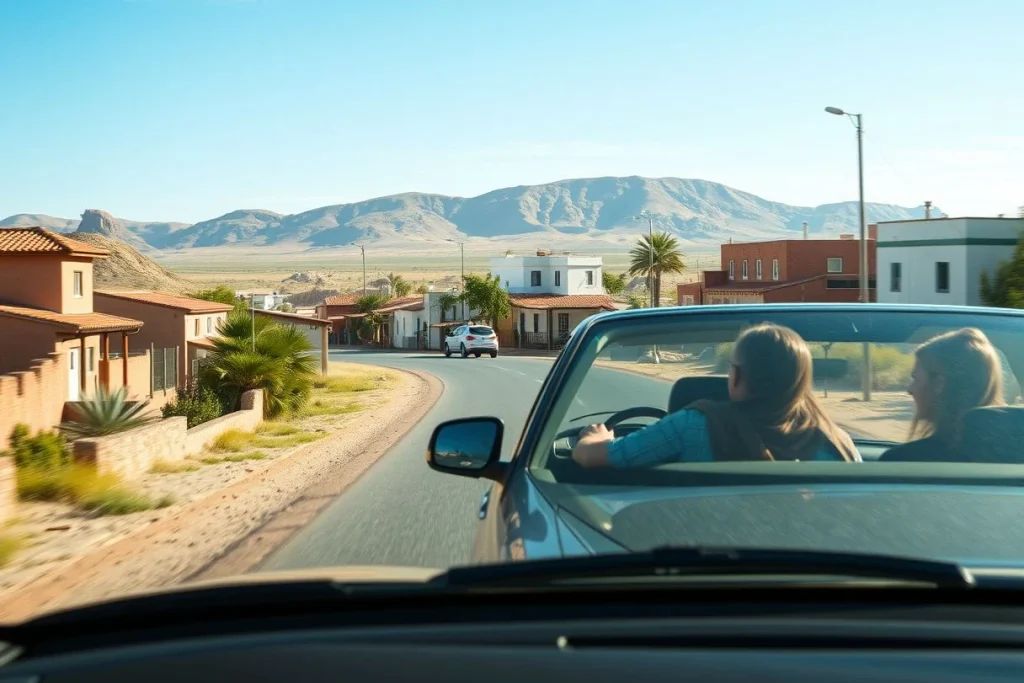
A 2WD is sufficient for the main road to Sesriem and the internal road to the 2WD car park at Sossusvlei. That makes it workable for a lodge-based desert itinerary, but it limits your margin on rougher gravel, remote detours and some less predictable conditions. A camping-equipped 4×4 is the more versatile choice for this Namibia self-drive road trip: it gives you greater freedom beyond the principal routes and supports a camping safari, at the cost of a larger vehicle, higher rental costs and more responsibility if something goes wrong.
Namibia combines sealed highways with an extensive gravel network. On gravel, reduce speed for corrugations, loose stones, blind rises and changing surfaces; the Namibia Roads Authority guidance recommends no more than 80 km/h as a conservative limit. Keep a generous following distance, especially behind another vehicle, because overtaking traffic can throw up dust that briefly removes your view. Windscreens and tyres are exposed to stone damage, so ask the rental company what spare-wheel, jack and puncture equipment is supplied, then practise using it before leaving Windhoek.
Fuel and basic supplies can be widely spaced outside larger towns. Confirm the vehicle’s range, refuel whenever a suitable town or park fuel point is available, and ask the rental company whether a reserve container is permitted. A 4×4 does not remove the need for sensible planning: check road conditions before remote Damaraland legs, particularly from November to April when rain can affect gravel roads.
Documents and rental checks
Carry your valid home driving licence and ask the rental company, before payment, whether it also requires an International Driving Permit. Requirements can depend on the licence country and rental terms, so check the company’s written conditions alongside current official guidance, such as the GOV.UK driving-abroad advice. The GOV.UK Foreign travel advice for Namibia, updated 15 September 2026, says passports should be valid for at least six months after arrival and have at least three blank pages; it also notes that visa-on-arrival and e-Visa arrangements have changed. Check the current rule for your nationality before booking and again before departure.
Read the insurance exclusions rather than assuming “fully insured” covers expedition-style driving. Get written answers on gravel-road use, tyres, windscreens, underbody damage, roof tents or racks, recovery costs and any border crossing. Confirm the excess, what evidence is needed after a breakdown, and whether a second driver must be named. At handover, photograph existing damage, inspect both spare tyres and have the staff explain the vehicle’s recovery points and tyre-pressure guidance.
Make daylight driving non-negotiable
Do not build this route around night arrivals or evening transfers. Unlit roads, animals, breakdown exposure and vehicle-crime risks make night driving a poor plan; GOV.UK Foreign travel advice specifically highlights these hazards. Set off early, allow time for gravel delays and stop before dark. In towns and at fuel stops, keep luggage out of sight and remain alert to petty theft and vehicle crime rather than treating a rental vehicle as secure storage.
Stop by stop: the road-trip itinerary from desert to Etosha
Build the Namibia self-drive road trip as a loop rather than a succession of long transfers: Windhoek, the Namib dunes, the Atlantic coast, Damaraland, Etosha National Park, Waterberg and back to Windhoek. The classic circuit covers roughly 1,500–2,500 km depending on detours, and is far more manageable in 14 days than in a rushed 10-day schedule.
Morning

Leg 1: Windhoek to Sesriem
Leave Windhoek early and aim for Sesriem, the gateway to Namib-Naukluft National Park. The drive is approximately 347–430 km and takes a realistic five to seven hours with fuel, food and gravel-road delays. Solitaire makes a practical pause before the final approach to the desert, but do not turn this into an excuse for a late arrival.
Sleep at Sesriem if Sossusvlei is a priority. A campsite gives the simplest early start, while a nearby lodge removes the work of setting up camp after a long drive. Staying inside or close to the gate also gives you more flexibility for Dune 45, Deadvlei, Big Daddy and Sesriem Canyon; check current gate arrangements and access rules before travelling.
Leg 2: Sesriem to Swakopmund or Walvis Bay
Allow approximately 4–4.5 hours for the 314–340 km journey to the coast. Swakopmund is the easier base for walking, cafés and a compact town centre. Walvis Bay suits travellers focused on the lagoon, marine activities or Sandwich Harbour, but activities and access conditions should be checked with current operators before booking.
A 2WD can manage the main road to Sesriem and the internal road to the Sossusvlei 2WD car park. For the wider Namibia road trip, however, a camping-equipped 4×4 is the more forgiving choice: it offers greater flexibility on gravel routes and remote detours, though it does not remove the need to drive slowly and read the surface.
Afternoon

Leg 3: The coast to Damaraland
Set aside five to seven hours for the coast-to-Damaraland transfer, with much of the route on gravel. This is a driving day, not a convenient morning excursion followed by a full afternoon of sightseeing. Refuel and restock in the last suitable town, carry drinking water and confirm current road conditions before taking secondary roads, particularly from November to April when rain can affect remote gravel routes.
Base the stop around Twyfelfontein, Brandberg or a lodge and campsite in the wider Damaraland region. Twyfelfontein works well for a cultural and archaeological focus; Brandberg adds a larger landscape and hiking dimension. Desert-adapted wildlife is possible, but independent sightings are unpredictable, so a guided outing can be worthwhile if wildlife is central to the stop.
Leg 4: Damaraland to Etosha National Park
Allow five to seven hours or more for the transfer to Etosha, depending on the route, road surface and stops. Entering through Andersson Gate and staying at Okaukuejo creates the clearest first Etosha plan. Alternatively, sleep outside the park if in-park accommodation is unavailable, accepting less time inside the reserve and a less flexible start to the next morning.
Okaukuejo, Halali and Namutoni are useful in-park bases, but Etosha is not a short transfer with animals along the roadside. Its internal distances require deliberate planning around camps, waterholes and gate hours. Check the official gate hours, camp availability and camp-to-camp driving times for your exact dates, then keep inside the vehicle near wildlife and follow park rules.
Leg 5: Etosha to Waterberg
Allow approximately three to five hours from Etosha to the Waterberg Plateau area. This is the right place to break the return journey rather than adding another anonymous roadside night. Waterberg changes the rhythm of the trip: trade waterholes and open salt-pan country for red rock, walking and a more active landscape.
Choose a short hike or a guided activity according to the heat, terrain and daylight. Carry water, wear sun protection and do not begin a demanding walk late in the day. The plateau is a landscape stop as much as a logistical one, so one night is useful; two gives the area room to breathe.
Leg 6: Waterberg to Windhoek
Use the final leg to return to Windhoek, with the overnight decision shaped by your departure from Hosea Kutako International Airport. Do not plan a long drive from Waterberg immediately before an international flight. An extra night in Windhoek is the safer choice when the departure is early, or when the previous day has involved slow gravel roads, a puncture or an unexpected delay.
Evening
Keep evenings simple after transfer days: set up camp before dark, inspect tyres and lights, and prepare water and clothing for the next morning. Night driving is a poor plan on this loop because roads are unlit and animals, breakdowns and vehicle crime create avoidable risks. The supplied road guidance recommends a conservative gravel speed of no more than 80 km/h; in practice, surface, visibility and tyre grip should dictate a slower pace.
For the ten-day version, reduce the coast and Damaraland to short stays and treat Waterberg as a single overnight break. The 14-day version is more comfortable: allow two nights around Sossusvlei, two on the coast, two in Damaraland and at least two in Etosha, with Waterberg and Windhoek protecting the return journey.
Where to eat

Plan around dependable stops rather than assuming every gravel junction has food. Use Windhoek and the coast to restock, take a substantial meal at a town or fuel stop before Damaraland, and carry water and practical snacks for the long transfers. Around Swakopmund and Walvis Bay, look for fresh seafood; at lodges and camps, expect straightforward regional meals that can be arranged around an early departure.
Camping travellers should shop before remote sections and confirm where the rental company permits reserve fuel. Fuel and basic supplies can be widely spaced, while park fuel points should be treated as useful opportunities rather than guaranteed solutions.
Getting around
A camping-equipped 4×4 is the most adaptable vehicle for this Namibia road trip, particularly if Damaraland detours, camping equipment and rougher gravel roads are part of the plan. A 2WD is sufficient for the main Sossusvlei access described above, but offers less margin and fewer route choices elsewhere. Before collecting the vehicle, confirm insurance and excess cover for gravel, tyres, windscreens, underbody damage and roof equipment.
Namibia combines sealed highways with a large gravel network. Ask the rental company for current road information, check the Namibia Roads Authority guidance and refuel in larger towns. Drivers should also confirm International Driving Permit requirements with the rental company and relevant official guidance before departure.
Estimated time
| Route | Realistic driving window | Recommended nights | Overnight choice |
|---|---|---|---|
| Windhoek–Sesriem | 5–7 hours | 1–2 | Sesriem campsite or nearby lodge |
| Sesriem–Swakopmund or Walvis Bay | 4–4.5 hours | 1–2 | Walkable Swakopmund or activity-focused Walvis Bay |
| Coast–Damaraland | 5–7 hours | 1–2 | Camp or lodge near Twyfelfontein or Brandberg |
| Damaraland–Etosha | 5–7 hours or more | 2–3 | Okaukuejo, Halali, Namutoni or a boundary lodge |
| Etosha–Waterberg | 3–5 hours | 1–2 | Waterberg camp or lodge |
| Waterberg–Windhoek | Allow a full return window | 1 if needed | Windhoek, especially before an early flight |
Beyond driving, allow time each day for fuel, tyre checks, meals, camp setup and heat-related pauses. The dry season from May to October generally gives clearer conditions and stronger waterhole viewing, while November to April brings greener scenery and fewer visitors but greater uncertainty on remote gravel roads.
Optional extras
- For stronger wildlife focus: give Etosha the extra night, prioritising waterholes and shorter internal loops over a long cross-park drive.
- For active travellers: add a second night at Waterberg or Brandberg for a properly timed hike, with water, sun protection and a current route check.
- For less driving: replace the full Damaraland transfer with a guided excursion from a fixed base, trading route independence for local road knowledge and wildlife tracking.
Best time to visit: dry-season wildlife or green-season solitude?
May to October: the clearest wildlife window
For an Etosha-focused Namibia self-drive road trip, choose the dry season from May to October, particularly June to October. Skies are generally clear, mornings can feel cold before the sun reaches the vehicle, and daytime conditions suit long drives and time at waterholes. As water becomes more concentrated, wildlife viewing is usually strongest around established water points, making this the most dependable season for a first Etosha self-drive.
Plan activities around the day rather than treating every transfer as flexible. Start desert walks and dune visits early, when heat is less demanding, and allow enough daylight for gravel-road legs and park driving. In Etosha, gate hours and camp-to-camp driving times shape each day, so check the current rules before fixing a route; Etosha’s internal distances are substantial, not a short add-on to a wider transfer. The park guidance from Etosha Park should be checked alongside the official park information.
November to April: greener scenery, looser plans

The rainy or green season brings greener landscapes and generally fewer visitors. It can make the desert edges more visually rewarding and suit travellers who value quieter camps over concentrated wildlife at waterholes. The trade-off is routing: rain may affect remote gravel roads, so keep the Damaraland section flexible and verify conditions close to departure with the Namibia Roads Authority or local operators.
Heat, sun exposure and changing road conditions make early starts useful in this season too. Do not assume a previously straightforward secondary road will remain so after rain, and avoid building a tight connection around a long gravel transfer.
How to choose your dates
June, July, August and December are identified as peak months. Book earlier for May–October, especially Sesriem and Namibia Wildlife Resorts camps, then confirm current tariffs, gate hours and availability for your exact dates. Check Namibia’s event calendar separately rather than planning around an event whose date may change.
Choose the dry season if wildlife is the priority. Choose November–April if greener scenery and lower visitor pressure matter more, and you can accept flexible routing after rain.
Travel costs in 2026: camping, mid-range and luxury budgets
Namibia is easiest to budget by separating the vehicle from accommodation and activities. The figures below are planning estimates in Namibian dollars (NAD), not live quotes; a two-person sharing arrangement usually gives the camping option its strongest value.
Estimated costs
| Estimated item | Budget | Mid-range | Luxury |
|---|---|---|---|
| Camping-equipped 4×4 rental, per vehicle per day | N$1,800 | N$2,325 | N$2,850 |
| Camping self-drive, per person per day | Approx. N$1,700 | Approx. N$1,700 | Not supported |
| Sesriem campsite, per person per night | N$670 | N$670 | N$670 |
| Okaukuejo campsite, per person per night | N$460 | N$510 | N$560 |
| Mid-range self-drive, per person per day | N$3,500 | N$4,750 | N$6,000+ |
| Luxury or private safari, per person per day | N$6,500+ | N$6,500+ | N$6,500+ |
Rental figures are published 2026 estimates from Namibia Adventures; model, season and inclusions vary. The approximately N$1,700 camping self-drive estimate is also a published 2026 figure from Desert Tracks for two people sharing, including the vehicle share, campsites, fuel and park fees. It is not a guaranteed all-in quote.
The Sesriem figure comes from the published Namibia Wildlife Resorts tariff example for 1 November 2025–31 October 2026, while Okaukuejo is listed at N$460–560 per person according to season, as reported by Safari Roamer and accessed in 2026. The mid-range estimate allows for a mix of camps and lodges, some guided activities and broader vehicle inclusions. The supplied figures do not support a luxury camping-equivalent daily rate, so treat that category as accommodation- and activity-led rather than a camping upgrade.
Your final total will move with the rental insurance excess, tyre and windscreen cover, fuel, park fees, food, lodge nights, guided excursions and detours. Before paying, check current vehicle quotes, fuel prices, Namibia Wildlife Resorts tariffs and availability, and park-entry charges for your exact 2026–2027 dates; these can change independently of the published estimates.
| Item | Budget | Mid-range | Luxury |
|---|---|---|---|
| Camping-equipped 4×4 rental | N$1,800 per vehicle per day | N$2,325 per vehicle per day | N$2,850 per vehicle per day |
| Sesriem campsite | N$670 per person per night | N$670 per person per night | N$670 per person per night |
| Okaukuejo campsite | N$460 per person per night | N$510 per person per night | N$560 per person per night |
| Camping self-drive trip | Approximately N$1,700 per person per day | Approximately N$1,700 per person per day | Not supported by this source |
| Mid-range self-drive trip | N$3,500 per person per day | N$4,750 per person per day | N$6,000+ per person per day |
| Luxury or private safari | N$6,500+ per person per day | N$6,500+ per person per day | N$6,500+ per person per day |
Estimated ranges based on the sources listed below. Prices change; check with providers before booking.
Travel tips that prevent expensive Namibia road-trip mistakes
- Settle entry and rental paperwork before departure. GOV.UK Foreign travel advice, updated 15 September 2026, says passports should be valid for at least six months after arrival and have at least three blank pages; visa-on-arrival and e-Visa arrangements can change, so check the rule for your nationality before booking. Ask the rental company and official IDP guidance whether an International Driving Permit is required, and get written confirmation of permissions, emergency contacts and cross-border restrictions.
- Read the insurance exclusions, not just the headline excess. Confirm cover for gravel-road damage, tyres, windscreens, underbody impacts, roof tents and recovery. Ask what happens after a breakdown and whether the rental company requires particular spare parts or prohibits driving on certain tracks; a cheap-looking 4×4 can become expensive after one damaged tyre or windscreen.
- Prepare every remote leg as if services will be delayed. Refuel in larger towns and suitable park fuel points, carry enough drinking water and food, and ask the rental company whether a fuel reserve is permitted. Download offline maps or obtain reliable navigation before leaving coverage; also check the Namibia Roads Authority and local operators for flooding, gravel conditions and maintenance.
- Inspect the vehicle each morning. Check tyre pressures, tread, wheel nuts, fluids and the spare before a long gravel drive. Practise changing a tyre while you still have daylight, and make sure the jack, compressor, wheel-brace and tools actually fit your vehicle. Drive below the road’s apparent limit on corrugations and loose gravel; supplied road guidance recommends no more than 80 km/h.
- Make daylight your safety margin. Avoid night driving: unlit roads, animals, fatigue, breakdowns and vehicle crime make a late arrival a poor trade-off. Start early, stop before concentration drops, and allow time for slow surfaces, animals and an unexpected tyre change. In Windhoek, towns and fuel stops, keep bags out of sight and lock the vehicle without becoming distracted.
- Pack for heat and self-reliance. Bring layered clothing for cold mornings, a hat, sunscreen, closed shoes, a headlamp, power bank, first-aid kit, binoculars, offline maps and a water capacity suited to long gaps between services. Add tyre tools and the spare parts recommended by your rental company; sun exposure and dehydration can undermine an otherwise manageable driving day.
- Respect park routines. Stay inside the vehicle near wildlife, obey camp and gate rules, and plan Etosha around current opening hours rather than one more waterhole. Check the official park or Namibia Wildlife Resorts information before travel, because gate times, tariffs and availability change.
- Choose guided travel if the logistics are the obstacle. Self-drive gives control, privacy and cost-sharing, but you take responsibility for navigation, vehicle recovery and reading wildlife behaviour. A guided circuit costs more but reduces route planning and can add interpretation and recovery support—useful if remote driving or changing gravel conditions feels like work rather than the point of the trip.
Conclusion: choose the 14-day loop if you can
For a first Namibia self-drive road trip, choose 14 days if you can. That extra time absorbs long gravel transfers, Etosha’s internal distances and the occasional weather or vehicle delay without turning every stop into a rushed overnight. The 10-day version works for experienced drivers who accept fewer nights at the coast, Damaraland or Waterberg and longer days behind the wheel.
Plan in this order: choose dates, reserve the camping-equipped 4×4, then secure the key Namibia Wildlife Resorts camps at Sesriem and in Etosha before adding optional excursions. Immediately before departure, recheck entry rules, rental insurance, Etosha gate hours, fuel availability and current gravel-road conditions with the relevant official sources. That final check matters most if your route includes remote Damaraland or falls in the rainy season.
Frequently asked questions
Do I need previous 4×4 experience for this route?
Not necessarily, but you should be comfortable driving on gravel, managing long daytime legs and handling basic vehicle tasks. Namibia combines sealed highways with extensive gravel roads, and the Roads Authority guidance recommends a conservative speed of no more than 80 km/h on variable gravel surfaces. A 2WD is sufficient for the main road to Sesriem and the Sossusvlei 2WD car park; a 4×4 mainly adds flexibility on remote routes and detours. Ask the rental company about a briefing and insurance exclusions before collecting the vehicle.
Can I see Etosha successfully without booking guided game drives?
Yes. Etosha can be planned as a self-drive around camps, waterholes and gate times, and substantial internal distances make route planning more important than booking a separate drive. The trade-off is that you handle navigation, timing and wildlife etiquette yourself, while a guide may improve interpretation and spotting. Check current gate hours, camp-to-camp driving times and park rules before each day, and remain inside the vehicle near wildlife. See the Etosha route guidance from EtoshaPark.com for planning details.
Should I carry one spare tyre or two?
The supplied route information does not establish a universal one- or two-spare-tyre rule. Gravel conditions vary, remote stretches can leave you far from assistance, and tyre damage is one of the insurance points that must be clarified. Ask the rental company exactly what spares, tools, compressor and roadside support are included, and confirm cover for tyres, windscreens and underbody damage before signing. Also ask whether carrying an additional spare is permitted and recommended for your planned detours.
How much luggage can a camping-equipped 4×4 realistically hold?
No sourced luggage-capacity figure is available, and the usable space depends on the vehicle model, roof tent, fridge, camping kit and number of passengers. Ask the rental company for the exact vehicle specification and a packed-load limit rather than booking by vehicle category alone. For a Namibia camping itinerary, plan compact, soft-sided luggage and leave room for water, food and fuel reserves where the company permits them; remote areas may have widely spaced supplies.
Is it worth adding a flight or scenic transfer to shorten the loop?
It can be worth considering if you have fewer than 10 days or want to reduce repeated long driving, but the supplied sources do not provide reliable flight routes, fares or transfer schedules. The classic loop is approximately 1,500–2,500 km and is best allowed 10–14 days, so shortening it changes the balance between desert, coast, Damaraland, Etosha and Waterberg. Compare current operator schedules and baggage rules, then check whether your vehicle contract allows a different return location.
Can I combine camping nights with comfortable lodge stays?
Yes. A mixed plan is specifically reflected in published 2026 mid-range self-drive estimates, which include a combination of camps and lodges, some guided activities and broader vehicle inclusions. Camping suits the adventure and can lower the overall accommodation level, while lodge nights provide a useful reset after gravel-heavy legs or before an early departure. Confirm current availability and tariffs directly with Namibia Wildlife Resorts or each lodge, especially for May–October, when demand is stronger.