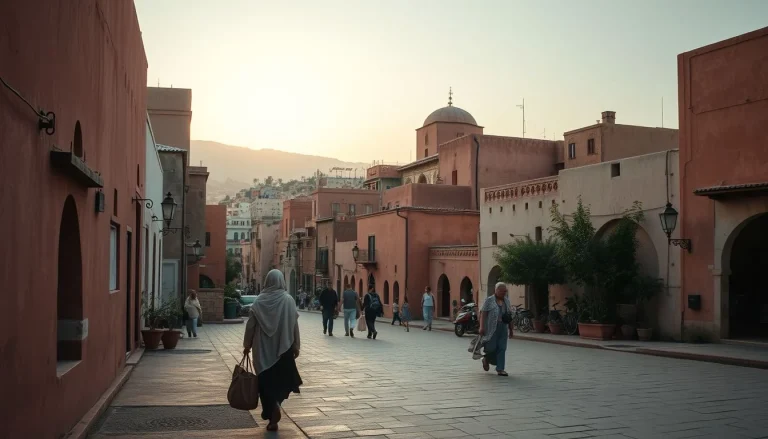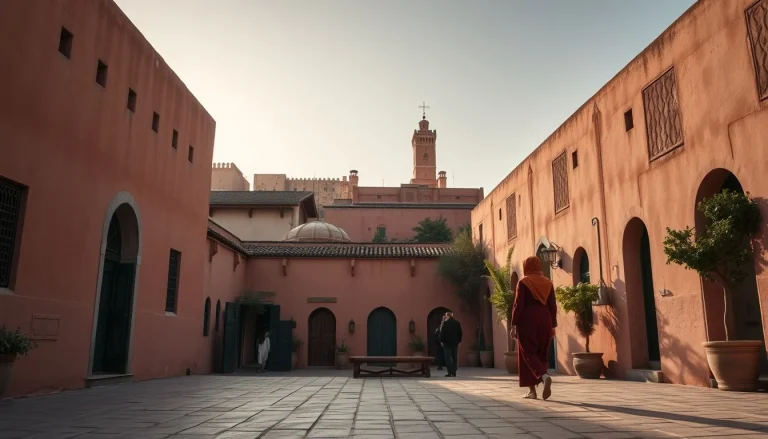
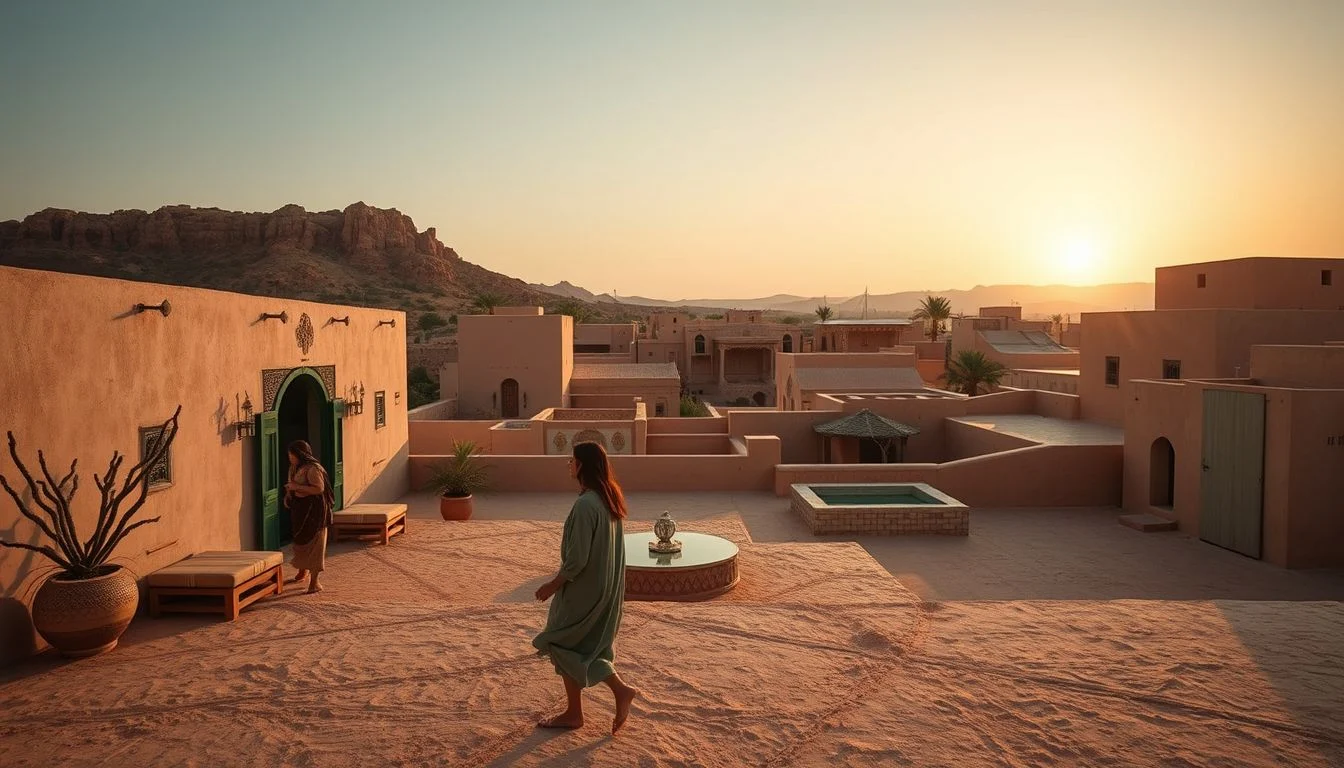
At Royal Mansour in Marrakech, the palace is arranged around individual riads rather than conventional hotel corridors. The distinction matters. For affluent travellers who value private guides, chauffeured transfers and time protected from logistical friction, luxury riads and desert camps in Morocco add privacy, discreet service and a carefully managed route between the medina, the High Atlas and the Sahara. The choice is less about collecting addresses than matching each stay to the journey.
This guide helps you decide between a private riad and a palace hotel, the more accessible dunes of Erg Chebbi near Merzouga and the greater remoteness of Erg Chigaga near M’Hamid, as well as independent arrangements and concierge-led planning. It sets out what to verify before booking: access and staffing, transfer times, dining reservations, camp connectivity, emergency arrangements and the practical limitations of historic buildings. March to May and September to November are the strongest windows for combining Marrakech, the High Atlas and the desert.
Quick answer: Luxury travel in Morocco is most valuable when it adds privacy, private guides, chauffeured transfers and carefully managed access to riads, medinas, mountains and the desert. Choose Erg Chebbi near Merzouga for a more accessible luxury-camp route, or Erg Chigaga near M’Hamid for a longer 4×4 approach and greater remoteness. March to May and September to November are the strongest windows for combining Marrakech, the High Atlas and the Sahara.
Why choose a luxury Morocco journey? What premium travel unlocks
Luxury travel in Morocco earns its keep by removing the small delays and awkward negotiations that can dilute a short itinerary. A private airport transfer, dedicated chauffeur and single point of contact keep the journey moving between Marrakech, the High Atlas and the Sahara, protecting time for rest instead of transport details. Hotels and specialist operators advertise private transfers, chauffeur services and chauffeured 4×4 arrangements for tailored itineraries.
In Marrakech, a private guide turns the medina’s crowded lanes into a more considered day. The route can be shaped around architecture and craft workshops, or focused on shopping, while the concierge manages meeting points and timing. Palace-hotel concierge teams also arrange private medina visits, shopping introductions, hammam rituals and spa treatments. When booking, specify that privacy, treatment preferences and an unhurried pace matter.
Once the road leaves the city, premium planning becomes particularly useful. Reaching a desert camp may involve a private 4×4, a meal outside the standard service pattern and a night organised around stargazing rather than a fixed group programme. Desert operators publish private en-suite tents, private dining, transfers and stargazing options, but inclusions differ. Request the full arrangement in writing before paying.
Continuity is the main advantage of this style of travel: the same organiser can coordinate a riad, mountain stop, camp transfer and return to the city, while leaving room to shorten a walk or linger over lunch. It’s less valuable if the main pleasure lies in independent improvisation or travelling on a tight budget. For spring and autumn, reserve premium accommodation, private transfers and speciality dining weeks to months ahead, according to Royal Mansour.
Exceptional stays in Morocco: private riads, palace hotels and desert camps
The next decision is not simply which hotel looks most polished. It is how much privacy you want, how close you need to be to the medina, and how much logistical effort you are willing to exchange for a more remote setting.
| Stay type | Best suited to | Privacy and access | What to verify |
|---|---|---|---|
| Private-use riad in the Marrakech medina | Families, groups and travellers wanting a house to themselves | Maximum residential privacy; excellent medina access, but vehicles may not reach the door | Exclusive use, room count, steps, porter assistance, staffing, dining and emergency access |
| Riad-by-riad palace: Royal Mansour | Travellers seeking individual accommodation with hotel-level service | Its documented concept is built around separate riads, with concierge support and access to the medina area | Which riad category suits your party, internal distances, buggy or porter arrangements and dining reservations |
| Palace hotel: La Mamounia | Those prioritising gardens, restaurants, spa facilities and a full-service base | More conventional hotel infrastructure and straightforward city access than a small historic riad | Room location, privacy around pools and gardens, restaurant availability and concierge-led arrangements |
| Palmeraie resort: Amanjena | Guests who prefer a quieter resort setting outside the medina | Greater separation from the old city; private transfers are important for medina visits | Transfer times, vehicle access, dining plans, pool privacy and accessibility across the grounds |
| Fes medina riad | Repeat Morocco visitors adding a more concentrated cultural stay | Atmospheric and close to the medina, but historic buildings commonly require careful access planning | Steps, narrow passages, porter support, room-by-room privacy and vehicle drop-off arrangements |
| Essaouira or Agadir coastal stay | Travellers wanting an Atlantic interval after inland heat or a desert circuit | Less suited to a Marrakech-medina itinerary, but useful as a cooler change of setting | Seasonal conditions, onward transfers, dining reservations and the exact level of privacy |
| Private en-suite desert camp | Guests who value solitude, private dining and a deliberately remote night | Erg Chebbi near Merzouga is the more accessible option; Erg Chigaga near M’Hamid requires a longer 4×4 approach and offers greater remoteness | Bathroom standard, heating, generator or solar power, Wi-Fi, lighting, emergency arrangements and transfer logistics |
For Marrakech, assess Royal Mansour, La Mamounia, Selman Marrakech and Amanjena by the kind of stay they provide rather than by a league table. Selman is relevant for its Chenot spa and equestrian identity; La Mamounia is a city-based dining and spa anchor; Amanjena suits a quieter Palmeraie base. A private riad can offer the greatest discretion, but its historic layout may be less practical for limited mobility than a palace hotel.
For the desert, investigate operators such as Desert Luxury Camp, Umnya Desert Camp and Erg Chigaga Luxury Desert Camp. Published offerings may include en-suite tents, private dining, transfers and stargazing, but every inclusion varies. Request the full specification in writing, including the number of tents and guests, whether the camp is exclusive-use, staff presence overnight, meal arrangements, charging, communications and the emergency plan.
Signature experiences: private guides, desert rituals and tailored days
Private time in Marrakech
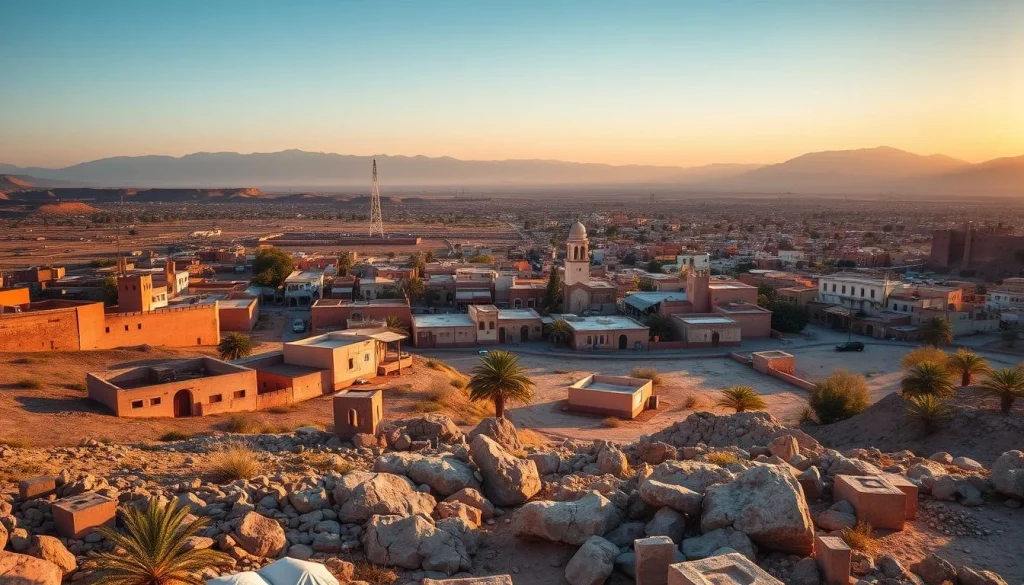
Begin with a private guided walk through the Marrakech medina, linking Koutoubia, Jemaa el-Fna and the artisan quarters at a pace set around your interests. A good guide should add context to the souks without turning the visit into a shopping circuit; ask in advance for the guide’s language, credentials, route and approach to introductions with craftspeople. Palace-hotel concierge teams can arrange private medina visits, shopping introductions and bespoke excursions, according to Royal Mansour.
A private hammam or spa ritual is worthwhile when privacy and timing matter more than fitting in another sight. Reserve directly through the riad or hotel, specify whether the treatment is fully private, and confirm the duration, treatment sequence, therapist arrangements and any medical or dietary requirements. This is also the point to ask about changing facilities and accessibility: historic properties can contain steps, narrow passages and uneven floors.
Mountains, dunes and the evening programme
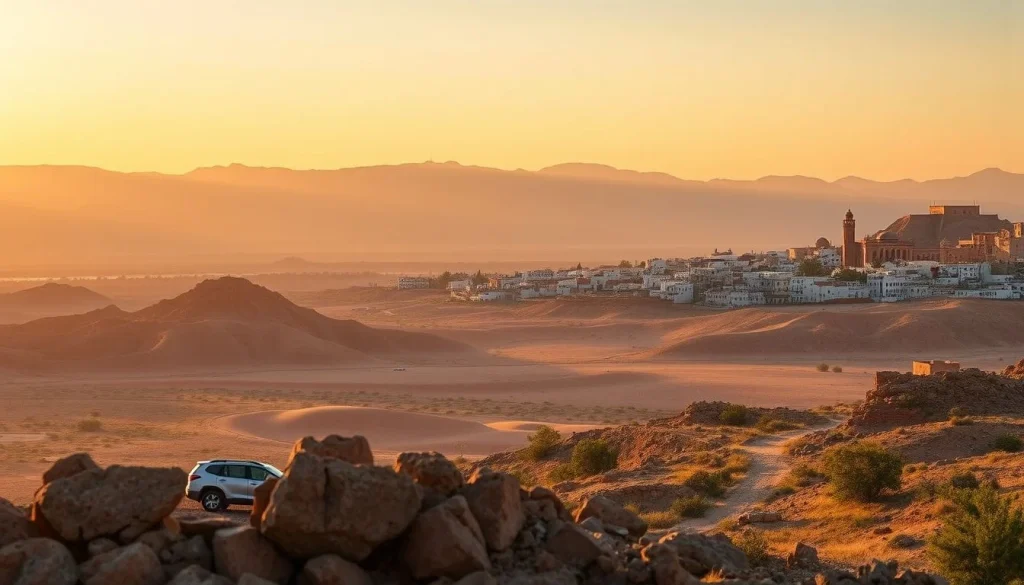
For the High Atlas, a chauffeur-driven day around Imlil or the Toubkal area keeps the logistics private while allowing the route to be adjusted for walking ability and weather. Confirm the vehicle type, driver hours, planned route, stops, guide arrangements and contingency if mountain roads or conditions change. Luxury hotels and specialist operators advertise chauffeur services and chauffeured 4×4 arrangements, but the exact vehicle and inclusions should be written into the booking.
In the desert, arrange a private 4×4 transfer and bivouac dinner rather than assuming these are included with the tent. Erg Chebbi near Merzouga is the more accessible option; Erg Chigaga, reached from M’Hamid by a longer 4×4 approach, suits travellers prioritising remoteness. Confirm the approach time, vehicle, private-tent arrangements, meal inclusions, staff presence and emergency procedure. Camps publish private dining and stargazing options, but equipment, lighting and connectivity vary by property, as Desert Luxury Camp illustrates.
Request a sunset photography or stargazing session with the guide’s availability, equipment and meeting point specified. Do not expect guaranteed stars or silence: moonlight, weather, nearby camps and camp lighting all affect the experience.
Air experiences: verify before committing
A private balloon, helicopter or other air experience can add a different view of Marrakech or the Atlas, but book only after the concierge or operator confirms the current licence and insurance. Ask for the weather cancellation policy, meeting arrangements, aircraft or balloon details and refund terms in writing; weather contingency matters more than a promised departure time.
Fine dining in Marrakech and beyond: where and how to reserve
The same written-confirmation discipline applies at the table. In Marrakech, La Mamounia is a useful dining anchor: its official site lists several restaurants and concierge-arranged experiences, making it possible to combine a formal meal with the ease of a palace-hotel base. Ask whether the preferred table is on a terrace, in a garden or indoors, and whether the menu is à la carte or a tasting menu before confirming.
For a more private evening, ask a riad or palace concierge to arrange dinner in a courtyard or on a rooftop rather than assuming that every property offers exclusive dining. Specify Moroccan specialities you want to try, dietary restrictions, alcohol service, dress expectations and whether a private setting is guaranteed. Confirm the cancellation terms as well: a bespoke menu, chef-led meal or reserved space may have different conditions from a standard restaurant booking.
Desert-camp dining needs the same level of detail. Luxury operators publish private dining, en-suite tents, transfers and stargazing, but inclusions vary by camp, according to Desert Luxury Camp. Before travelling, confirm whether dinner is private, where it will be served, what drinks and courses are included, how dietary needs are handled, and whether a 4×4 transfer from the arrival point is part of the arrangement. Ask about lighting if stargazing is central to the evening.
For a chef- or guide-led food experience in Marrakech, use the hotel concierge to coordinate the guide, transport and reservations rather than assembling each element separately. Speciality restaurants, private dining and desert camps should be reserved weeks to months ahead for spring and autumn, particularly around major events. Have the concierge reconfirm the menu, timing, transfers and cancellation policy shortly before arrival; restaurants and camps can change details even after the initial booking.
Best time to combine Marrakech, the High Atlas and the Sahara
For a combined Marrakech, High Atlas and Sahara journey, the strongest overall windows are March to May and September to November. These months usually offer the most workable balance between city sightseeing, mountain travel and time outdoors in the desert, although conditions change markedly between regions. Lonely Planet’s seasonal guidance also advises treating Morocco as several climates rather than one destination.
| Season | Climate and desert comfort | Crowd pressure | Booking lead time |
|---|---|---|---|
| March–May | Comfortable for medina walks and mountain touring; spring colour in the landscapes and generally favourable desert conditions. | Demand builds, particularly around popular travel periods. | Reserve premium riads, camps and private transfers weeks to months ahead. |
| June–August | Interior Morocco can be very hot. Desert activities and Atlas drives suit early starts, shade and a slower pace. | Often a less comfortable choice for intensive inland touring. | Check each property’s summer operating arrangements before committing. |
| September–November | Autumn warmth can suit Marrakech and the Sahara, with more manageable conditions than high summer. | Demand returns, especially for private accommodation. | Book weeks to months ahead for the best choice of camp and guide. |
| December–February | City days may be pleasant, but desert nights are cold; snow or disruption is possible in the High Atlas. | Conditions vary by route and holiday period. | Confirm mountain roads, heating and camp arrangements before arrival. |
June, July and August are workable for travellers who accept heat: schedule medina visits and desert walks early, then build in a private pool or spa afternoon. An Atlantic extension to Essaouira or Agadir can provide a cooler counterpoint to inland travel. For December and wider winter travel, ask the chauffeur or concierge to verify current High Atlas road and weather conditions, and confirm that the camp provides suitable night-time heating.
Events may influence both availability and atmosphere. The Fez Festival of World Sacred Music, Essaouira’s Gnaoua and World Music Festival and Mawazine in Rabat recur on calendars, but their dates vary; check the official organisers for the relevant travel year before booking. For spring and autumn, premium riads, exclusive-use accommodation, camps, private transfers and speciality dining merit early reservation.
How to structure a private Marrakech-and-Sahara itinerary
Once dates are fixed, build the route around the desert approach rather than treating the camp as a short add-on. A relaxed Marrakech-and-Sahara itinerary needs several days; adding the High Atlas or remote Erg Chigaga calls for more time still, so avoid scheduling a late arrival directly before a major transfer.
Two routes that work
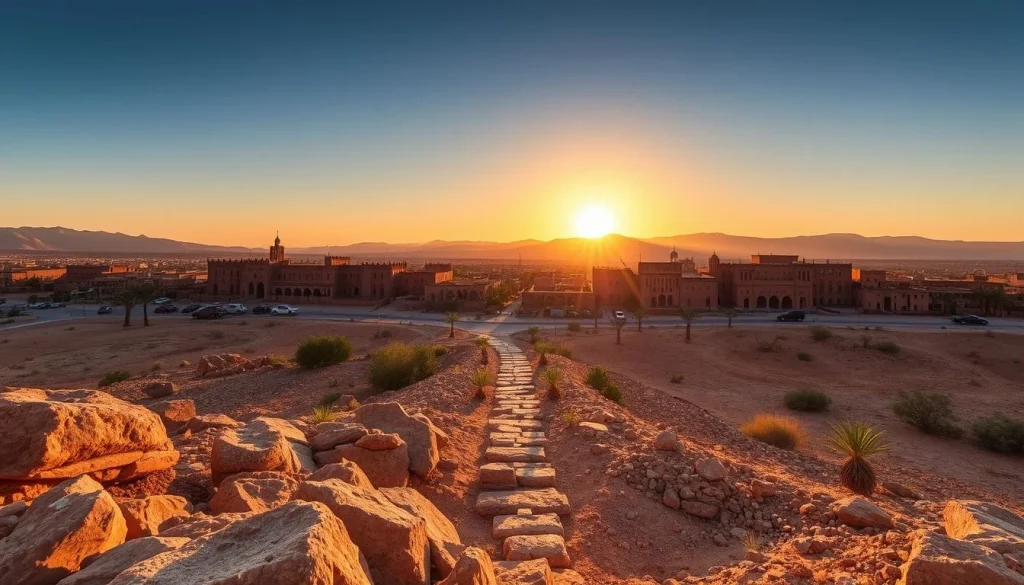
Marrakech, the High Atlas and Erg Chebbi: this is the smoother luxury circuit. Use Marrakech as the first base, add an Atlas stay or guided mountain day, then continue by private chauffeur towards Merzouga and a camp among the Erg Chebbi dunes. Erg Chebbi is the more accessible choice for a polished desert stay, with a simpler transfer pattern than Erg Chigaga. Luxury operators such as Desert Luxury Camp publish private-tent, transfer, dining and stargazing options, but the exact arrangement belongs in your booking confirmation.
Marrakech, the High Atlas and Erg Chigaga: choose this when solitude matters more than efficient routing. The camp near M’Hamid requires a longer 4×4 approach, making the journey part of the experience and the pacing especially important. Allow a proper overnight stop or an unhurried transfer day rather than trying to arrive, dine and stargaze on a compressed schedule.
Make the logistics feel seamless
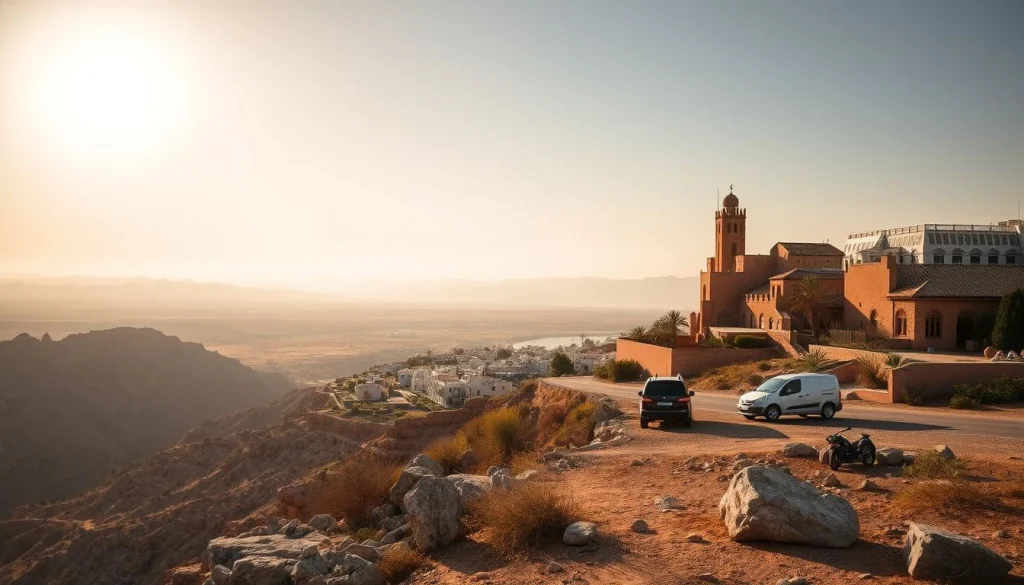
Arrange a private airport transfer and chauffeur from the outset; hotels and specialist operators advertise tailored chauffeur and chauffeured 4×4 services for Morocco itineraries. Ask who handles luggage at each changeover, where the chauffeur’s vehicle ends, when a 4×4 takes over, and whether rest stops can be adapted to your pace. A private guide can also make the medina and mountain days more fluid without filling every hour.
Keep the first and final days deliberately light. Before departure, have the hotel or operator reconfirm current road conditions, High Atlas weather, and the approach to Merzouga or M’Hamid; these can affect transfer plans. If the itinerary still feels crowded, add Essaouira or Agadir as a slower coastal extension, or Fes only when its medina justifies the additional movement.
Luxury booking checklist: what to verify before paying
Before you pay
Luxury proposals often combine accommodation, transport and experiences, so compare the hotel’s direct terms with the concierge’s full itinerary. Desert operators advertise private en-suite tents, transfers, dining and stargazing, but inclusions vary; keep every promise in writing. No authoritative national directory of desert-camp standards was identified, making direct verification essential.
| Question to ask | Why it matters | Who must confirm it |
|---|---|---|
| Which exact riad, room or tent is allocated? Is it exclusive use, and how private is it from other guests? | “Private” can mean a separate room rather than a whole riad or camp. | Property or camp, in the booking confirmation. |
| How are access and luggage handled? Ask about medina steps, narrow passages, vehicle access and porter arrangements. | Historic riads may not suit limited mobility, and cars cannot reach every medina entrance. | Riad manager and transfer provider. |
| Who is the guide and chauffeur? Confirm names or provider, languages, vehicle type, transfer duration and any 4×4 change for Merzouga or M’Hamid. | This exposes vague proposals and helps match the service to your expectations. | Concierge or operator; hotels advertise private chauffeur and 4×4 arrangements, but details need confirmation. |
| What is included at meals? Check beverages, dietary requests, private dining, picnic lunches and dinner location. | Camp and excursion menus may be less flexible than a palace-hotel restaurant. | Restaurant, riad or camp in writing. |
| What works after dark? Verify Wi-Fi, charging, backup power, heating, cooling, water, sanitation, fire procedures and emergency communication. | Connectivity and facilities vary between desert camps; some deliberately offer limited connection. | Camp management, not only the booking agent. |
| What happens if weather or roads disrupt the plan? Ask about Atlas snow, desert conditions, alternative routing, cancellation, insurance and deposit protection. | Remote transfers need a defined contingency rather than an informal promise. | Operator and insurer; retain their written terms. |
Also request the camp’s current staff-safety and emergency arrangements, and confirm accessibility requirements before paying. Reserve premium riads, exclusive-use stays, camps, private transfers and specialist dining weeks to months ahead for spring and autumn, then recheck all inclusions shortly before departure.
The right next step for a private Morocco escape
Start by choosing the accommodation model that suits your tolerance for transfer time. A private or palace-style Marrakech base paired with Erg Chebbi offers a smoother route into the dunes; choose Erg Chigaga instead when greater remoteness justifies the longer 4×4 approach. That decision will shape the rest of the itinerary more than adding another city stop.
Ask a specialist in private Morocco travel, or the properties themselves, for a written proposal covering the riad or camp, chauffeur-driven transfers and guide arrangements. Before placing a deposit, have privacy, access, dining, connectivity, electricity, emergency procedures and accessibility stated clearly, including what happens if weather or road conditions disrupt the desert transfer.
For a spring or autumn journey, begin this conversation weeks to months ahead. Compare the proposed pacing as carefully as the accommodation: the right luxury Morocco itinerary should make the desert feel considered, not compressed.
Frequently asked questions
Which is better for a luxury desert stay: Erg Chebbi or Erg Chigaga?
Choose Erg Chebbi, near Merzouga, if you want the more accessible route to a luxury camp and the tall dunes with less logistical friction. Erg Chigaga, near M’Hamid, suits travellers who value solitude over convenience: the approach involves a longer 4×4 transfer. In either location, confirm the private tent, en-suite facilities, meals, transfers, connectivity and emergency arrangements directly with the camp.
How many days should I allow for Marrakech, the High Atlas and the Sahara?
Allow several days for a relaxed Marrakech-and-Sahara journey, then add time if you want to include the High Atlas. Erg Chigaga needs more generous planning because of its remote 4×4 approach. The exact length should follow your preferred pace, transfer arrangements and whether you want private mountain, medina or desert experiences rather than a rapid route between bases.
Will a desert camp have Wi-Fi and reliable electricity?
Do not assume that every luxury desert camp provides continuous Wi-Fi or charging. Research supplied for this guide shows that some camps list Wi-Fi and charging facilities, while others present limited connectivity as part of the experience. Ask the selected camp to confirm current internet access, charging arrangements, lighting, backup power and what is available inside the individual tent before paying.
Are historic riads suitable for travellers with limited mobility?
They can be, but a historic riad should never be treated as automatically accessible. Traditional properties may contain steps, narrow passages and uneven surfaces, so request written details about the entrance, bedroom, bathroom, dining areas and any route between them. A palace hotel or purpose-designed resort may be easier to assess, but confirm the specific room and access arrangements directly with the property.
Can I arrange a private guide and chauffeur in Morocco?
Yes. Luxury hotels and specialist operators advertise private airport transfers, chauffeur services and chauffeured 4×4 arrangements for tailored Morocco itineraries. Palace-hotel concierge teams can also arrange private medina guides, shopping introductions, hammam rituals and bespoke excursions. Confirm the vehicle type, driver language, route, inclusions, waiting time and desert-transfer arrangements in writing.
How should I plan a luxury Morocco honeymoon or private celebration?
Build the trip around privacy and pacing rather than trying to cover every region: consider a private-use riad or palace stay in Marrakech, a chauffeured Atlas or desert journey, and a private en-suite camp with a dinner or stargazing arrangement. Desert operators publish private-dining and stargazing options, but inclusions vary, so confirm them directly. For spring and autumn, reserve premium accommodation, private transfers, camps and speciality dining weeks to months ahead, according to Royal Mansour’s planning guidance.