Two things changed at Europe’s borders, and most travel advice online still mixes them up. One of them is already in force and affects every non-EU visitor. The other has not started at all, despite a great deal of writing that says otherwise.
Here’s the short version, checked against the European Commission’s own pages on 17 November 2026: the Entry/Exit System (EES) has been fully operational since 10 April 2026, and it has replaced the passport stamp. ETIAS, the travel authorisation people often confuse it with, is not running, is not taking applications, and has no announced start date.
What the Entry/Exit System actually is
The EES is an automated register of non-EU nationals making short stays in 29 European countries. Rather than an officer inking a stamp into your passport, the system records your details electronically each time you cross an external border.
According to the Commission, it registers your name, your travel document data, biometric data — fingerprints and a captured facial image — and the date and place of each entry and exit. It also records refusals of entry.
It wasn’t switched on overnight. The Commission set 12 October 2025 as the launch date for a progressive start, and the system became fully operational on 10 April 2026.
What happens at the border now

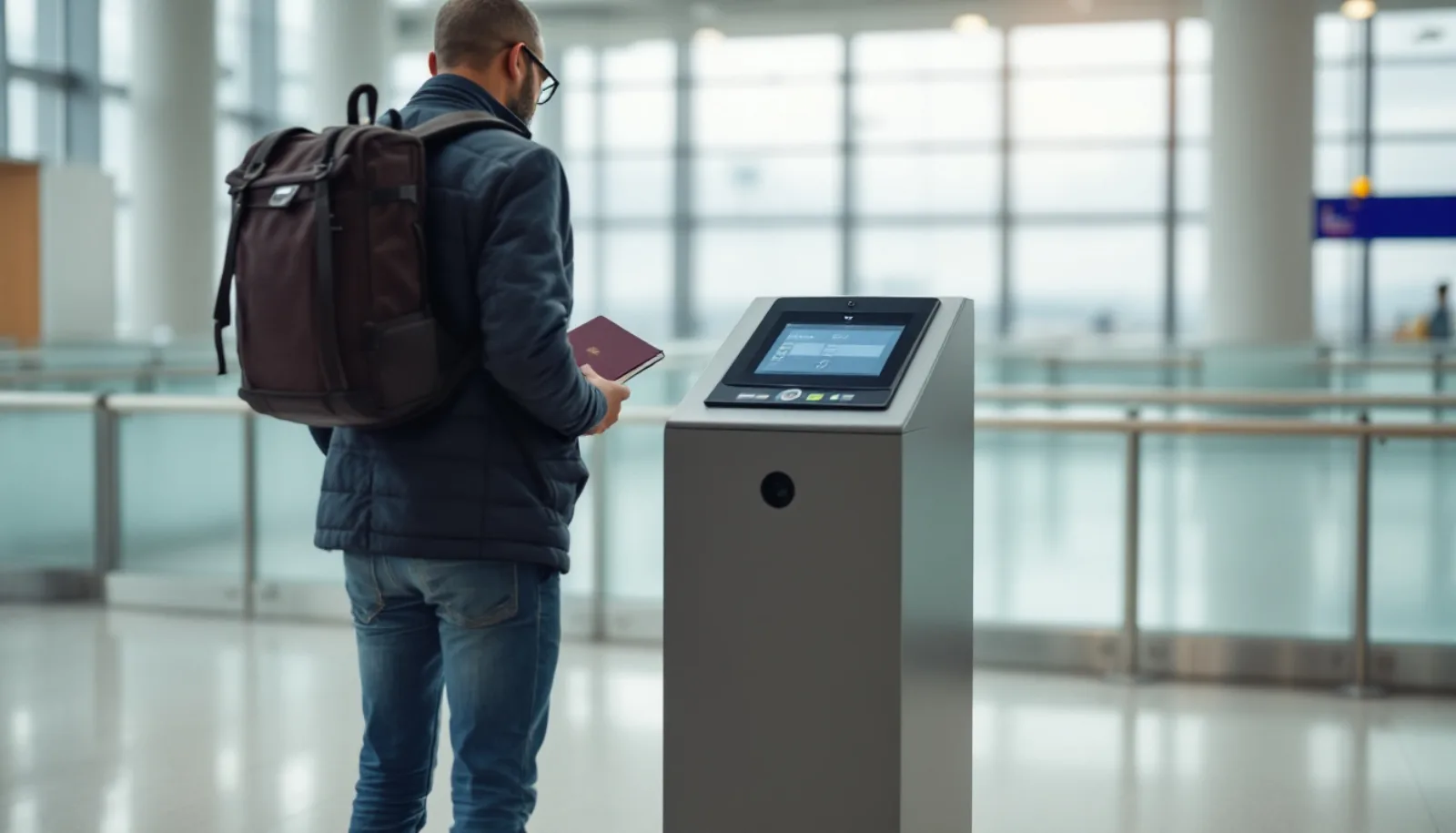
You don’t apply for anything in advance. The registration happens when you arrive. At the external border your passport details are recorded, your facial image and fingerprints are collected, and your entry and exit dates and locations are logged.
There is one way to save time: the Commission says you can pre-register your data within 72 hours before entering, using the official Travel to Europe mobile app. If you are travelling with children or older relatives, or landing at a large airport at a busy hour, that is worth doing the evening before you fly.
Plan for your first crossing after the change to take longer than you are used to. Biometric capture takes time that a stamp did not, and queues at the busiest airports reflect that.
Passport stamps are gone — and that matters more than it sounds
Since 10 April 2026 the EES replaces the stamping of passports, which lets the system detect overstayers automatically. The practical consequence is easy to miss: you no longer carry the evidence of your own travel dates.
For a single two-week holiday that’s irrelevant. If you visit Europe several times a year — for work, family or a long slow trip — the stamps were how you proved where you had been and when. Now the authoritative record sits in a database you cannot casually inspect.
So keep your own: boarding passes, booking confirmations and card statements covering each entry and exit. It costs nothing to file them in one folder, and it’s the only thing you’ll have if a count is ever disputed.
The 90/180 rule, in plain numbers
The short-stay limit itself hasn’t changed. You may stay up to 90 days within any 180-day period across the Schengen countries combined — not 90 days per country.
The part that catches people out is the word any. The 180-day window moves with you: on every day of your trip, look back 180 days and count the days you were inside the area. Three separate three-week trips in six months are fine. Two months in spring followed by six weeks in early summer isn’t.
Because the system now does this arithmetic automatically, an overstay that once passed unnoticed is far more likely to be flagged. If you are near the limit, count before you book, not at the gate.
Does any of this apply to you?
The two systems cover different groups, which is the root of most of the confusion:
- EES — applies to all non-EU nationals travelling for a short stay to the 29 Schengen countries, whether or not you need a visa. If you hold a Schengen visa, you are registered in the EES too.
- ETIAS — will apply only to travellers who are visa-free for Europe, covering 30 countries. If your nationality already requires a Schengen visa, ETIAS isn’t for you — you carry on applying for the visa as before.
If you’re unsure which category you fall into, start with our guide to passport and visa requirements, and check the rules for your own nationality with the consulate of the country you are entering.
ETIAS: still not live, and why that matters
This is the part worth being blunt about. The Commission’s ETIAS page states that the system “is currently not in operation and no applications for travel authorisations are collected at this point”, and that the EU will inform travellers of the specific start date several months before launch.
In April 2026 the Commission wrote that ETIAS was scheduled to start in the last quarter of 2026, with the exact date to be communicated later in the year. We are now inside that quarter and no date has been published on those pages.
So if a website invites you to apply for ETIAS today, it isn’t an official one. Nothing is being collected. When the system does open, apply only through the official channel, and be sceptical of any site charging a “service fee” on top.
What we do know about the eventual rules: the fee has been set at EUR 20, up from the EUR 7 originally planned, and it takes effect when ETIAS becomes operational. An approved authorisation is linked to your passport, with no need to print anything, and lasts three years or until the passport expires, whichever comes first. Most applications are expected to be approved within minutes, but approval is required before you board, so it’s not something to leave to the airport.
What to do before your next trip to Europe

- Check your passport’s expiry date early — an ETIAS authorisation will be tied to the passport you apply with, so renewing afterwards means applying again.
- Download the official Travel to Europe app if you want to pre-register your EES data in the 72 hours before arrival.
- Allow extra time at the border on your first crossing since the change, especially with children or anyone who needs assistance.
- Count your days against the 90/180 rule before booking, if you have been to Europe recently.
- Keep boarding passes and booking confirmations as your own record of entry and exit dates.
- Ignore any site offering ETIAS applications until the EU announces the launch.
Once the paperwork is settled, the rest of the planning is the ordinary kind: our Europe travel guide for first-time visitors covers routes and timing, getting around Europe compares trains, budget flights and buses, and and if a flight does go wrong, what you are owed for a delayed or cancelled flight explains the compensation rules.
Frequently asked questions
Do I need to apply for the EES before I travel?
No. The European Commission states plainly that for the EES you do not apply in advance. Your passport details, facial image and fingerprints are taken when you arrive at the border itself. You may optionally pre-register your data within 72 hours of entering, using the official Travel to Europe mobile app.
Is ETIAS live? Can I apply now?
No. As of 17 November 2026 the Commission’s own ETIAS page says the system “is currently not in operation and no applications for travel authorisations are collected at this point”. If a website offers to take your ETIAS application today, it cannot be an official one. The EU says it will announce the start date several months before launch.
Does the EES apply to me if I need a visa for Europe?
Yes. The EES changes border procedures for all non-EU nationals travelling for a short stay to the 29 Schengen countries, whether or not you hold a visa. ETIAS is different: it will apply only to travellers who are visa-free.
My passport will not be stamped. How do I prove how long I stayed?
Your entry and exit dates and locations are logged electronically instead. Because you don’t hold a stamped record yourself any more, keep your own evidence of travel dates — boarding passes, booking confirmations and card statements — particularly if you travel to Europe often and run close to the 90-day limit.
How long will ETIAS last once I have it?
The Commission says an approved authorisation will be linked to your passport and valid for three years, or until that passport expires, whichever comes first. Most applications are expected to be approved within minutes, but approval is required before you board.
Sources
Every factual claim above comes from the European Commission’s own pages, read on 17 November 2026. Border rules change: check these pages before you travel.
- Entry/Exit System (EES) — European Commission, Migration and Home Affairs
- European Travel Information and Authorisation System (ETIAS) — European Commission, Migration and Home Affairs
- Main differences between the EES and ETIAS: what travellers need to know (28 April 2026) — European Commission, Migration and Home Affairs
This article explains published rules; it is not legal or immigration advice. For a decision about your own trip, confirm with the authorities of the country you are entering.