Reflective warning triangles, a torch with spare batteries, a first-aid kit and a portable jump starter belong in the car before the first suitcase is loaded. That permanent kit is the foundation of a family road trip packing list: it stays with the vehicle, while a separate trip bag carries the items your family will use during the journey.
This guide is for families travelling with babies, toddlers, school-age children or teenagers who need less clutter and faster access to the essentials. It helps you decide what belongs in the roadside-access zone, how to organise clothing and entertainment by age, and what to adjust for naps, short stops, rainy delays and changing weather. It also keeps child restraints, medicines and basic car preparation ahead of convenience: children should travel in age- and size-appropriate restraints, with current requirements checked against the relevant transport authority before departure.
Quick answer: Pack in two layers: keep a permanent vehicle emergency kit with warning equipment, lighting, first aid, jump-start equipment, tools, water and power supplies, then prepare a trip-specific family bag 48 hours before departure. Add age-appropriate restraints, clothing, medicines, snacks, wipes, comfort items and offline entertainment, keeping adult essentials within reach and adapting supplies to the season and route.
The two-layer system: permanent car kit plus trip bag

The distinction matters. The car kit is a standing safety layer, while the family bag changes with the children, season and route. Keep the first permanently in the vehicle. Prepare the second 48 hours before departure, when you can check medicines, clothing sizes, weather and planned stops.
| Keep in the car | Load before leaving |
|---|---|
|
|
AAA lists reflective warning equipment, lighting, first aid, jump-start equipment and basic tools among the core supplies for a vehicle emergency kit. FEMA also recommends vehicle emergency supplies such as water, extra warm clothing and a power bank. Adapt this layer to the route. Hot-weather travel calls for additional water and sun protection, while winter routes may require more warm clothing and blankets.
Build a roadside access zone
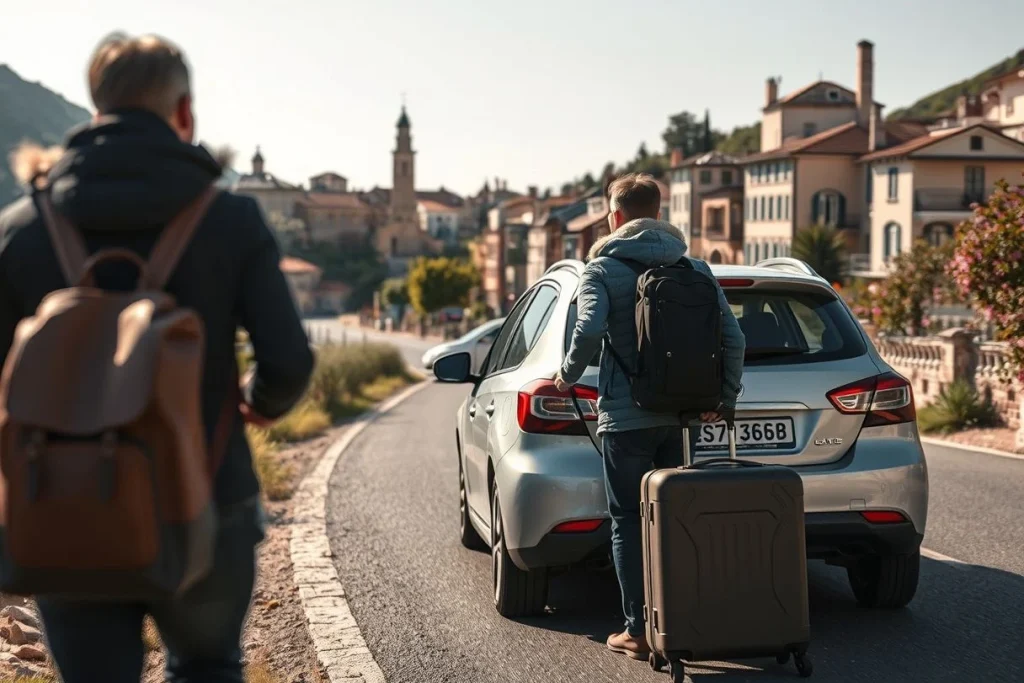
Don’t bury useful items beneath the suitcases. Put first aid, medicines, water, snacks, wipes, chargers and warning equipment in one clearly marked bag or organiser. An adult should be able to reach it without unloading the vehicle. Packing cubes can separate each child’s clothes and keep the trip bag orderly. Older children can carry headphones, reading or other entertainment in a small personal daypack, rather than adding another loose pile to the car.
For a baby, the accessible bag should hold nappies, wipes, feeding supplies, a comfort item and at least one spare outfit. A toddler’s version adds spill-proof snacks, a travel potty if needed, motion-sickness supplies and a short-stop activity. School-age children can manage a small daypack with a water bottle, snack, spare layer and compact entertainment. Teenagers need little more than a personal device bag, headphones, chargers and offline options; shared medicines and emergency supplies should stay with an adult.
Check that every child is travelling in an age- and size-appropriate restraint. The American Academy of Pediatrics says children aged 12 and under are generally safest properly buckled in the rear seat. The CDC Yellow Book advises appropriate safety features and restraints. Check current requirements with the relevant transport authority for every jurisdiction on your route.
A jump starter, tools and tire equipment are useful backups. They aren’t substitutes for roadside assistance or professional help. If the car stops in an unsafe place, prioritise the family’s safety and contact the assistance provider rather than attempting repairs beside traffic.
Before packing: make the car road-trip ready
Before deciding how much luggage to bring, give the vehicle its own checklist. AAA recommends checking tyre condition and pressure, fluids, battery, belts, lights, and the heating and air-conditioning systems before a long journey. Confirm that the spare tyre is present and usable, or that approved tyre-repair equipment is available, and plan fuel or charging stops for stretches where services are limited.
- Check the emergency equipment: make sure the permanent car kit includes reflective triangles or road flares, a torch with spare batteries, jumper cables or a portable jump starter, basic tools and first aid. FEMA also recommends vehicle water, extra warm clothing and a power bank.
- Check the route: review official weather and transport updates for closures, flooding, snow, ice, extreme heat and mountain conditions. Note remote sections, likely fuel or charging access and any point where mobile coverage may be unreliable; adjust water, clothing and communication plans accordingly.
- Check the children’s restraints: confirm every child has an age- and size-appropriate car seat or booster, fitted according to its instructions. The American Academy of Pediatrics says children aged 12 and under are generally safest properly buckled in the rear seat. Requirements differ by jurisdiction, so check the current rules with the relevant state DMV or transport authority for every part of the route.
- Check what you can safely handle: a jump starter, jack or tyre-repair tool is not self-explanatory. Read the equipment instructions before departure, and do not work beside moving traffic or in an unsafe location; use roadside assistance or professional help instead.
Do this inspection before loading the family bag. It leaves the accessible cabin space for nappies, snacks, medicines and comfort items, rather than emergency equipment buried under luggage.
Packing list by category: clothing, gear, documents and tech
Clothing, gear, documents and tech
Use the trip bag for items that travel with the family, then divide it by access priority. A small car bag should sit within an adult’s reach; the rest can go in a boot or luggage compartment. Snacks, wipes, medicines and entertainment are easier to manage when they are not mixed with overnight clothing, and packing cubes can keep each family member’s gear separate, as REI’s family travel guidance suggests.
| Category | Pack in the trip bag | Keep within reach |
|---|---|---|
| Clothing | One outfit per travel day, plus an extra outfit for each child; sleepwear, layered clothing, comfortable shoes and weather protection. | One child’s spare outfit, warm layer or sun protection, depending on the route and season. |
| Family gear | Nappies, wipes, feeding supplies, spill-proof containers, comfort items, rubbish bags, a stroller and a travel potty if needed. | Wipes, nappies, tissues, snacks, water bottles, rubbish bags and the item that helps a tired child settle. |
| Documents and health | Driving documents, accommodation details, insurance information, health records and prescriptions in their original containers. | Child-specific dosing information, allergy medication where relevant and a compact first-aid supply. |
| Tech and entertainment | Chargers, power bank, headphones, devices, offline maps, downloaded entertainment, books and compact non-screen activities. | One charging option, headphones and a small activity pouch for delays or rainy stops. |
Keep medicines in their original containers and carry child-specific dosing information. The CDC Yellow Book also recommends planning for children’s health needs when travelling; check its current guidance and speak with the child’s clinician about prescriptions or conditions that need individual advice.
Adjust the checklist by age
- Baby or infant: Start with a correctly fitted, age- and size-appropriate child restraint, then add nappies, wipes, feeding supplies, spare clothes and a familiar comfort item. Keep the nap setup simple: a clean layer, the usual sleep cue and supplies for the next stop, rather than a large collection of toys.
- Toddler: Add a travel potty if needed, motion-sickness supplies discussed with a clinician, spill-proof snacks, two changes of clothes and short-stop activities such as stickers, picture books or a small drawing pad.
- School-age child: Give each child a small daypack with a water bottle, snacks, a spare layer and personal entertainment. This keeps loose items contained and gives the child responsibility without putting first-aid supplies or medicines in their care.
- Teenager: Allow a compact personal bag for headphones, a device, charger, reading or downloaded entertainment. Keep shared medicines, documents, power supplies and emergency items in the adults’ accessible car bag instead.
Safety and access before the luggage goes in
Every child must use a restraint appropriate to their age and size, fitted and used according to the manufacturer’s instructions. The American Academy of Pediatrics says children aged 12 and under are generally safest properly buckled in the rear seat; the CDC Yellow Book likewise stresses seat belts and appropriate safety features. Check current requirements with the relevant state DMV or transport authority, since rules differ by jurisdiction, and never allow a child to ride unrestrained or in a pickup bed.
Take a compact stroller only when it will genuinely help at stops or accommodation. Before leaving, confirm that the folded stroller fits without blocking access to the roadside kit or reducing the driver’s view. A large stroller can become dead weight on a short-transfer itinerary, while a compact travel stroller is useful for naps, terminals and walks where a child cannot manage the whole distance.
Finally, keep water and power supplies accessible rather than buried under suitcases. FEMA advises adapting vehicle emergency supplies to conditions: add warm clothing and blankets for cold travel, or extra water and sun protection for hot-weather routes. That leaves the family bag ready for the next stop and the car kit available if the journey is unexpectedly delayed.
Climate and cultural considerations for the route

Once the car kit is set, tailor the trip bag to the route rather than packing for every possible forecast. Use a layered clothing system: a light base layer, a warmer mid-layer and weather protection that can be added or removed during fuel stops and sightseeing. Pack one outfit per travel day, plus a spare for each child; keep sleepwear and comfortable shoes together so an arrival after nap time does not require unpacking the whole car.
For hot-weather driving, add sun hats, breathable layers, sun protection and more drinking water than the family normally carries between stops. Plan cooling breaks in air-conditioned cafés, visitor centres or accommodation instead of relying on shaded outdoor stops. In cold conditions, keep warm layers, gloves and blankets accessible—not in luggage under the boot—and consider traction equipment where snow or ice makes it relevant. FEMA recommends adapting vehicle emergency supplies to the season; its guidance includes water, extra warm clothing and a power bank. Check official weather and transport sources before leaving, particularly for extreme heat, winter storms, high-altitude routes, closures and isolated roads.
Climate should shape the day’s rhythm too. A baby or toddler may sleep more reliably through a short transfer followed by a heated or air-conditioned rest stop than through a long, exposed outing. Keep a rainy-day plan—such as an indoor museum, library, family attraction or accommodation play space—and pack compact offline activities so a weather delay does not depend on mobile coverage.
Local expectations belong on the checklist. Before visiting religious sites, research modesty requirements, head coverings, footwear rules and whether children need clothing that covers shoulders or knees. A travel stroller may suit smooth pavements but become awkward on cobblestones, stairs or narrow paths; confirm the route and choose a carrier or compact alternative when necessary. If the destination’s dress or access rules are unclear, check the official site of each attraction before departure.
What to leave at home: common family packing mistakes
A lighter car is easier to organise and safer for children. Use this final filter before loading: keep items that support safety, health, sleep or a necessary change of plan; reduce duplicates; leave behind anything unlikely to be used.
| Keep | Reduce | Leave at home |
|---|---|---|
| One spare outfit per child, layered clothing, sleepwear, comfortable shoes and weather protection. Keep first aid, medicines, snacks, wipes and entertainment in the accessible car bag. | Toiletries, books, toys and devices. Give each child a small, age-appropriate selection rather than a full collection; choose compact activities that work offline for rainy delays. | Every child’s entire wardrobe, duplicate toiletries, full-size toys, excessive books and nonessential kitchen or camping equipment. |
| Seasonal emergency supplies: extra water and sun protection for hot routes, or warm layers and blankets for cold travel. | A cooler, if regular stops make a large one unnecessary. Pack only the food and drinks needed between planned breaks. | Loose objects that could become projectiles, especially heavy luggage placed beside children or items that block access to emergency equipment. |
Medicines deserve a stricter test than toys. Take only what the family needs, keep prescriptions in their original containers and bring child-specific dosing information and allergy medicine where relevant, as advised by the CDC Yellow Book. Don’t add an unfamiliar medicine for the first time during the journey; check with a clinician or pharmacist instead.
Entertainment should be compact rather than a pile of devices: headphones, downloaded audio or films, a small notebook, cards and one quiet toy per younger child usually take less space and remain useful when mobile coverage fails. Store these in each child’s daypack, not loose on the seat.
Finally, don’t bury the car emergency kit under luggage. AAA’s recommended basics include warning equipment, a flashlight, jump-start equipment, tools and first aid; a jump starter still requires safe handling and does not replace roadside assistance. Children must always travel in an appropriate restraint or seat belt, never in a pickup bed, and neither children nor medicines should be left in a hot parked car.
Conclusion: pack accessibly, then check the car
Make the two-layer system your default: keep one labelled emergency kit permanently in the vehicle, and prepare one accessible family bag 48 hours before departure. Store the family bag where an adult can reach snacks, wipes, medicines, chargers and comfort items without unloading luggage.
Give each child an age-appropriate personal bag: a compact baby or toddler pouch, a small daypack for school-age children, or a slim device-and-reading bag for teenagers. Before loading, confirm every child’s restraint setup, check the forecast and route conditions, and pack the relevant warm layers, blankets, water or sun protection. Finish with a vehicle inspection covering fluids, tyres, battery, belts and heating or air-conditioning, as AAA recommends. Then keep roadside assistance details accessible and load the car in access order, not simply by size.
Frequently asked questions
How far in advance should I pack for a family road trip?
Prepare the trip-specific family bag around 48 hours before departure, then do a final check shortly before leaving. This gives you time to wash comfort items, charge devices, confirm medicines and add weather-specific layers without packing the permanent vehicle kit from scratch. Keep prescription medicines in their original containers, with child-specific dosing information and allergy medication where relevant, as advised by the CDC Yellow Book.
Where should the car emergency kit go during the journey?
Keep the permanent car emergency kit in an accessible part of the vehicle, rather than beneath luggage that must be removed at the roadside. Adults should be able to reach first aid, water, lighting, warning equipment, jump-start equipment, tools and power supplies quickly. AAA identifies reflective triangles or flares, a flashlight, jumper cables or a portable starter, a basic tool kit and first aid as core supplies; FEMA also recommends water, warm clothing and a power bank.
How can I make naps easier in the car?
Keep familiar comfort items, sleepwear and a spare layer in the accessible family bag instead of burying them in a suitcase. Organise the trip around your child’s usual rhythm where practical, and avoid changing the restraint setup for comfort: children should remain in age- and size-appropriate restraints. The American Academy of Pediatrics says children aged 12 and under are generally safest properly buckled in the rear seat.
What is the best way to handle snacks and drinks with young children?
Use one dedicated car bag for snacks, wipes and drinks, positioned where an adult can hand items back without unloading the vehicle. Choose spill-proof snacks for toddlers and keep water available as part of the vehicle’s basic supplies; FEMA includes water in its recommended emergency vehicle kit. Pack modest quantities and restock at planned stops rather than filling the cabin with loose packets.
Can each child bring their own entertainment bag?
Yes. Give school-age children a small daypack containing a water bottle, snacks, a spare layer and personal entertainment, while keeping shared medicines, first aid and emergency supplies in the adult-accessible car bag. REI recommends a small daypack for older children as a way to build responsibility and contain personal items. Teenagers can use a compact bag for headphones, devices, chargers, reading or offline entertainment.
How do I prepare for a rainy or unexpectedly delayed stop?
Pack compact, non-screen activities and offline entertainment so a delay does not depend on outdoor space or mobile coverage. Add weather protection and layered clothing to the trip bag, and adjust the permanent kit for the season: FEMA recommends extra warm clothing and blankets for cold travel, while hot-weather journeys need additional water and sun protection. Check official local weather and transport sources before departure for route-specific conditions.