Nairobi National Park puts a wildlife-focused start within easy reach of Kenya’s main international gateway, while the Masai Mara opens into the classic savanna route and its July–October Great Migration window. Farther south, Amboseli pairs elephant sightings with views towards Mount Kilimanjaro; in the north, Samburu, Shaba and Laikipia trade straightforward logistics for quieter, more specialised wilderness.
This Kenya safari guide is for first-time adventure travellers deciding how much driving, walking, remoteness and planning they actually want. It compares accessible game-drive circuits with multi-park itineraries, walking and fly-in safaris, then sets out the fitness, gear and safety considerations behind each choice. The practical question is not simply which park looks most appealing, but whether your budget should cover a shared vehicle, a private 4×4, conservation fees, domestic flights or a guided stay in a private conservancy.
Quick answer: In 2026, expect around US$150–250 per person per day for a budget shared safari, US$300–600 for a private mid-range safari, or US$700–2,500+ for luxury, fly-in or conservancy travel, on a land-only basis. A five-day Nairobi–Masai Mara itinerary is commonly estimated at US$1,800–3,500 per person; July–October is the usual Migration window, but demand and prices are higher.
Why Kenya is worth the safari commitment
Why Kenya is worth the safari commitment
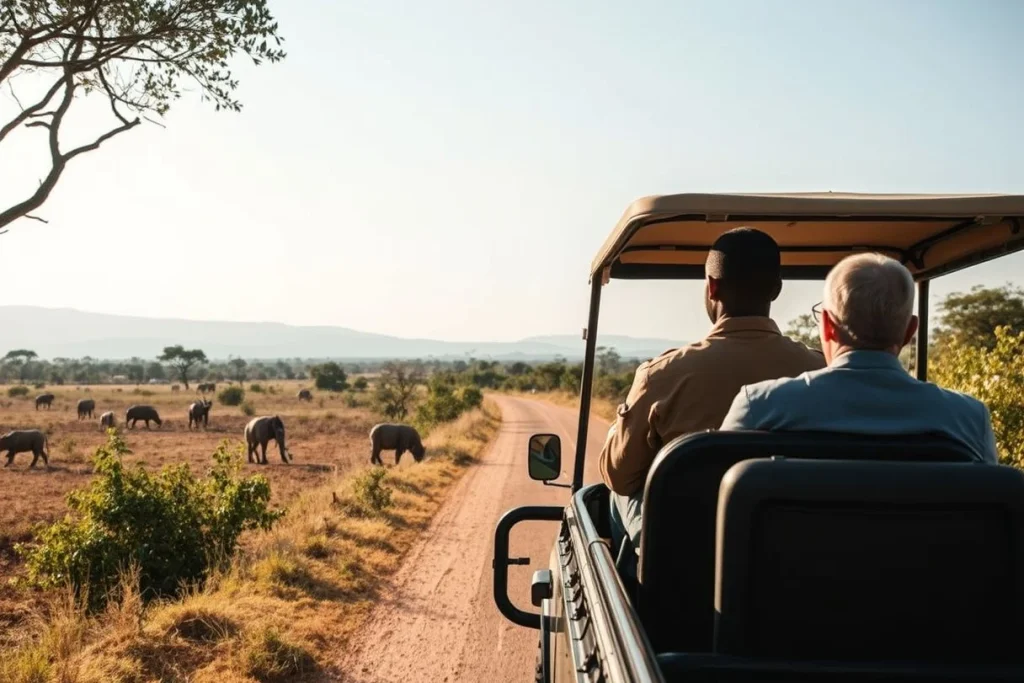
Kenya’s appeal lies in the change of scale within a single trip. At dawn, an elephant herd can move through Amboseli with Mount Kilimanjaro behind it; later, a game drive in the Masai Mara may end with lions crossing open grassland. No sighting is guaranteed, and no safari can promise the Big Five or a Great Migration river crossing, but the possibility is grounded in remarkably varied habitats.
A first safari is relatively easy to shape here. Nairobi National Park puts wildlife close to the international gateway at Jomo Kenyatta International Airport, so a short itinerary can begin without a long transfer. Classic circuits connect the Mara with Lake Nakuru and Amboseli, while Tsavo East and Tsavo West bring red-earth landscapes and longer, wilder-feeling drives.
Further north, Samburu and Shaba shift the scenery towards Kenya’s more remote landscapes. Laikipia and the Solio conservancies add walking, rhino conservation and smaller-scale camps, while Chyulu Hills suits travellers who want wilderness on foot rather than hours in a vehicle. Fly-in camps cut road time, at a higher cost.
That leaves three sensible ways to approach Kenya: an accessible, low-effort game-drive circuit; a multi-park route that trades slower travel for variety; or a remote walking and fly-in adventure requiring more preparation. The right choice depends less on how many parks you can tick off than on how much time you want to spend driving, walking and waiting quietly for the landscape to change.
Best Kenya safari routes by time, terrain and wildlife
Choose the route around the experience you want, not the number of pins you can place on a map. Kenya’s main circuits work well by road, while remote conservancies and northern parks may call for a 4×4 or a domestic flight from Nairobi; Jomo Kenyatta International Airport is the usual international gateway, with flights serving safari airstrips in the Mara and Amboseli.
| Route and highlights | Ideal length | Effort and logistics | Seasonal strengths | Best for |
|---|---|---|---|---|
| Nairobi National Park and Lake Nakuru | 3–4 days | Accessible road circuit; compact wildlife areas | Year-round planning flexibility; Nakuru suits birding and rhino viewing | First-timers, short stays and travellers with limited time |
| Amboseli, with optional Lake Naivasha or Hell’s Gate | 3–5 days | Road-based; add a boat trip or active outing | Dry periods suit wildlife viewing; clear conditions can frame Mount Kilimanjaro | Elephants, landscapes and a break from continuous game drives |
| Nakuru and Masai Mara National Reserve | 5–7 days | Classic road itinerary or fly into a Mara airstrip | July–October is the usual Great Migration window, though crossings follow rainfall | Classic savanna wildlife and a first Kenya safari |
| Tsavo East and Tsavo West | 5–7 days | Longer drives across expansive terrain; a 4×4 is important on remote routes | Dry-season travel generally makes road logistics easier | Red-earth scenery, scale and fewer tightly packed stops |
| Samburu, Shaba, Laikipia or Solio | 7–10 days | More remote logistics; private conservancies may require operator liaison | Dry-season access is often simpler; green-season travel needs current road checks | Specialist wildlife, rhino conservation, walking and smaller-scale camps |
| Chyulu Hills | 2–4 days as an addition | Guided wilderness walking rather than a standard drive circuit | Confirm trail and road conditions before travelling | Active travellers seeking a more remote walking experience |
The most efficient first itinerary is three or four days around Nairobi and Lake Nakuru. Nairobi National Park provides the easiest short safari option close to the capital, while Lake Nakuru adds compact birding and rhino-focused viewing; check the current Kenya Wildlife Service information before committing to entry arrangements.
With five to seven days, combine Nakuru with the Masai Mara. This is the route for open savanna, big wildlife variety and, between July and October, the possibility of seeing the Great Migration. River crossings are not scheduled events: rainfall controls the movement, so plan for wildlife rather than a guaranteed crossing.
Seven to 10 days allows a deliberate choice. Add Amboseli for elephants and views towards Mount Kilimanjaro, or choose Samburu and Shaba for a more remote northern landscape. Laikipia and the Solio conservancies are better suited to travellers who value walking, rhino conservation and community-led experiences over a conventional park loop. Chyulu Hills offers a still more active, guided wilderness option.
Before booking, confirm current road conditions, seasonal closures and airstrip access. Heavy rains can make remote routes difficult or impassable. Self-drive access also varies: some conservancies and reserves do not accept independent vehicles, while others require advance permits or operator liaison. Check the relevant reserve, conservancy or KWS channel rather than assuming that a route shown on a map is open to independent drivers.
Difficulty, fitness and safety: what safari days are really like
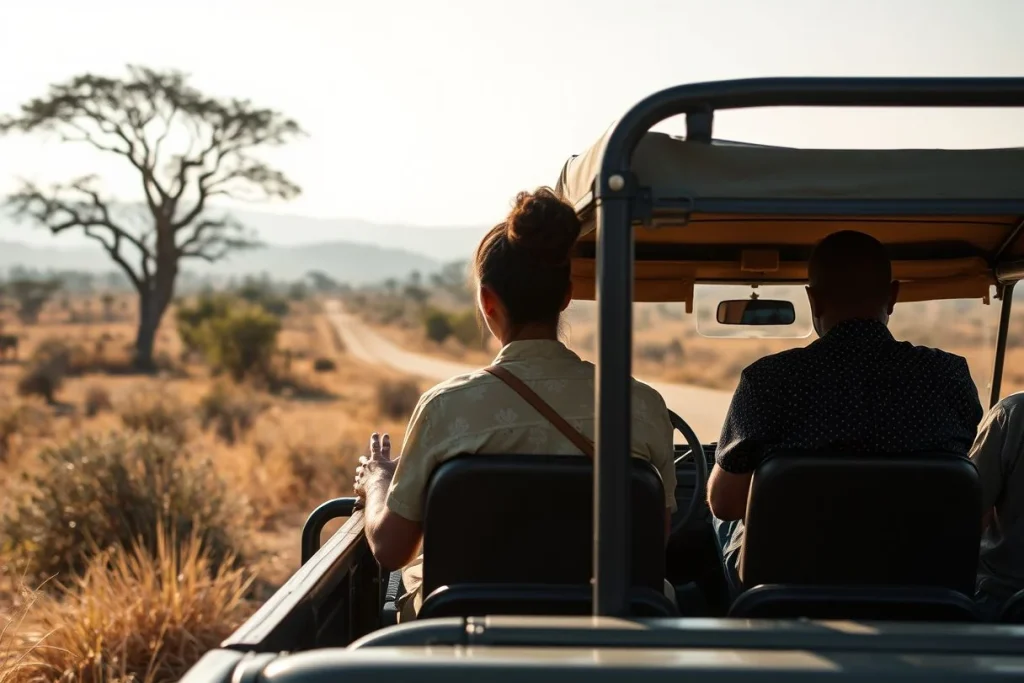
A Kenya safari is usually low-effort physically, but it is not always comfortable. Game drives involve early starts, long periods seated in a vehicle, uneven tracks, heat and dust. The main challenge is often road fatigue rather than fitness, particularly on longer routes to Tsavo, Samburu or remote conservancies.
Walking safaris require more stamina and concentration. Wear closed, supportive footwear, keep a steady pace and follow the guide’s instructions without exception; wildlife encounters are managed through distance, positioning and quiet movement. Multi-day mobile camping adds longer walking days and less predictable comfort. Mount Kenya is a separate undertaking: altitude, acclimatisation and specialist guide support matter, so it should not be treated as an extension of an ordinary game-drive itinerary.
Wildlife rules are non-negotiable. Remain in the vehicle unless your guide and the park or conservancy rules explicitly permit you to get out; never approach, feed or call animals. At camp, follow the property’s security procedure, keep valuables discreet and ask staff before walking after dark. Do not travel at night on major highways, especially between parks, and allow extra caution when demonstrations or other disruptions may affect transport.
Health preparation deserves the same attention as route planning. Malaria risk exists in many lowland and coastal safari areas, according to the CDC’s Kenya traveller guidance; ask a travel-health professional about prophylaxis and mosquito-bite prevention. Yellow-fever documentation can be required when arriving from a country with transmission risk, and advice depends on your itinerary. Check the current GOV.UK Kenya advice (updated 15 September 2026) and the US State Department advisory for terrorism, violent crime and demonstrations before departure.
For remote conservancies and fly-in camps, choose travel insurance that includes medical evacuation. Confirm the cover’s limits and exclusions: distance from medical facilities can make evacuation a practical necessity, not an optional upgrade.
Kenya safari packing list and preparation checklist
Kenya safari packing list and preparation checklist
Pack for changing temperatures rather than expedition conditions. Game drives are generally low-effort, but early departures can feel cold before the sun reaches the vehicle, while afternoons are bright and dusty.
- Clothing: Choose lightweight, neutral-coloured layers, a warm fleece for dawn, a rain layer, a sun hat and sunglasses. Comfortable closed shoes are enough for ordinary game drives; sturdier footwear is more useful for walking safaris.
- Wildlife viewing: Bring binoculars and a camera with spare batteries or memory cards. A reusable water bottle, sunscreen, headlamp, chargers and a power bank are practical for camps where electricity may be limited or available only at set times.
- Luggage: Use soft-sided luggage, particularly if your itinerary includes a small aircraft. Baggage limits vary by aircraft and operator, so confirm the permitted weight and dimensions before packing rather than arriving with a rigid case.
- Camp supplies: Ask what your lodge provides. Many established lodges can supply some toiletries or lighting, while mobile camps may offer fewer extras; take a compact headlamp and personal essentials regardless.
- Documents: Carry your passport, travel-insurance details, emergency contacts and copies of bookings, stored separately and offline. Most nationalities must arrange Kenya entry authorisation online in advance; check the current rule for your passport through GOV.UK’s Kenya advice, updated 15 September 2026, and the official Kenya eCitizen system.
- Health: Yellow-fever proof may be required when arriving from a country with transmission risk; guidance depends on your itinerary and medical circumstances, according to the CDC. Malaria risk exists in many lowland and coastal safari areas, so consult a travel-health professional about prevention and use mosquito-bite protection.
Before departure, save paper and digital copies of key documents, then ask the operator about charging, laundry, water refills, road conditions and any park-specific equipment. Requirements can differ sharply between a lodge-based Masai Mara trip and a remote mobile camp.
Guided or independent: choosing the right safari format
For a first Kenya safari, a guided trip usually earns its premium through access and judgement rather than luxury alone. A driver-guide brings tracking knowledge, park etiquette and local context, while also absorbing the daily logistics of routes, fuel, vehicle recovery and entry systems. That resilience matters most beyond the straightforward circuits and in remote conservancies.
| Safari format | Cost control | Wildlife spotting | Navigation and comfort | Flexibility, safety and access |
|---|---|---|---|---|
| Private guided safari | Least predictable, but costs are shared only within your party | Strong: a guide can track signs, communicate sightings and position the vehicle appropriately | Most comfortable; the operator handles route planning and rough-road decisions | Best for first-timers, families and remote areas; access to conservancies is arranged in advance |
| Shared group safari | Usually the easiest way to limit the daily cost | Good, though the group follows a shared schedule and vehicle | Less privacy and flexibility, with logistics handled for you | A practical choice for a classic circuit; confirm group size, vehicle type and included activities |
| Self-drive | More control over vehicle and accommodation choices, but fuel, recovery and entry costs remain yours | Dependent on your route knowledge, patience and ability to read tracks without disturbing animals | Requires navigation, fuel planning, a suitable 4×4 and confidence on rough roads | Maximum independence, but higher responsibility; some parks and conservancies restrict independent visitors |
Self-drive can suit an experienced overland traveller on an accessible route such as Nairobi–Amboseli or Nairobi–Nakuru. Plan fuel stops, recovery arrangements and backup navigation before leaving town, and check the vehicle’s suitability for the chosen roads. Some safari areas use time-limited entry tickets rather than unrestricted access, so confirm the applicable system with Kenya Wildlife Service before arrival.
Do not assume that a self-drive booking reaches every reserve. The Maasai Mara reserve and county system sits separately from KWS administration, while private conservancies add their own levies and access rules; some require prior operator liaison or permits and may not accept self-drive at all. Ask for these layers in writing before paying.
If road transfers feel excessive, Safarilink, Jambojet and AirKenya may connect Nairobi with safari airstrips serving areas such as the Mara and Amboseli. Check routes, schedules and baggage rules for your dates. For current concerns about demonstrations, violent crime and terrorism, review the GOV.UK Kenya travel advice, updated 15 September 2026, and ask your operator how it handles route changes.
Best time to visit Kenya for wildlife, weather and value
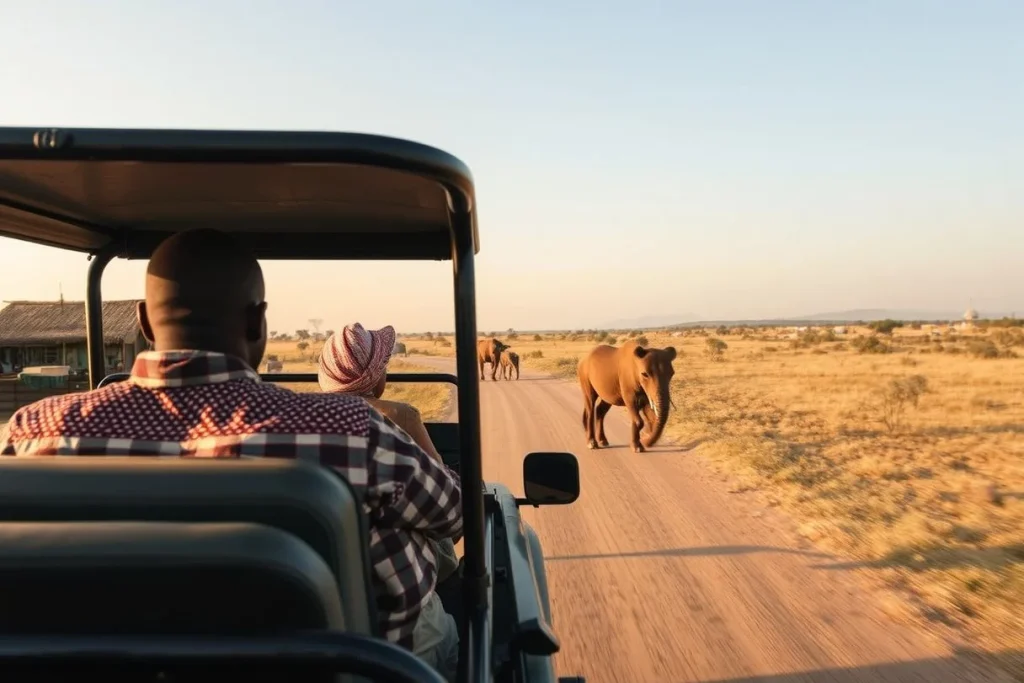
There is no single best time for a Kenya safari. Choose your dates according to what matters most: dry roads and easier wildlife viewing, the Great Migration, greener scenery, or lower-season value.
June to October: This is the main dry-season window. Vegetation is generally less dense, wildlife can be easier to spot around remaining water, and roads are usually more manageable than during the long rains. The Masai Mara’s Great Migration is generally seen between July and October, but river crossings depend on rainfall and vary from year to year; a crossing cannot be guaranteed by choosing a particular week. June, July and August are also among Kenya’s peak travel months, so demand and prices rise.
January to March: Choose this period for green landscapes, birding and the possibility of seeing newborn wildlife, with fewer visitors than during the migration peak. It suits travellers who care more about an unhurried safari and photographic light than about witnessing a specific migration event. Conditions still vary by region, so ask about recent rainfall and road access when booking.
March to May: The long rains can bring lower prices and vivid scenery, but heavy rain may make remote tracks difficult or temporarily impassable. This is a better fit for flexible travellers who accept changed routes, slower transfers and occasional weather interruptions than for a first-time visitor with fixed wildlife priorities.
October to December: Short rains are variable. They can reward visitors with birding, fresh vegetation and newborn wildlife, although showers may affect road conditions. December is a peak travel month, so do not assume that a green-season date automatically means low demand.
A practical choice: For a first safari and easier logistics, lean towards the dry season outside the busiest migration weeks. For the classic migration atmosphere, target July to October but treat river crossings as luck rather than a schedule. For greener scenery and better-value possibilities, consider January to March, or the short and long rains if your plans can bend.
Before paying a deposit, check current rainfall forecasts, migration updates, road conditions, seasonal closures and park or conservancy fees. Recheck travel advisories too; the GOV.UK Kenya travel advice, updated 15 September 2026, notes that demonstrations can disrupt transport.
Kenya safari cost in 2026: budget, mid-range and luxury estimates
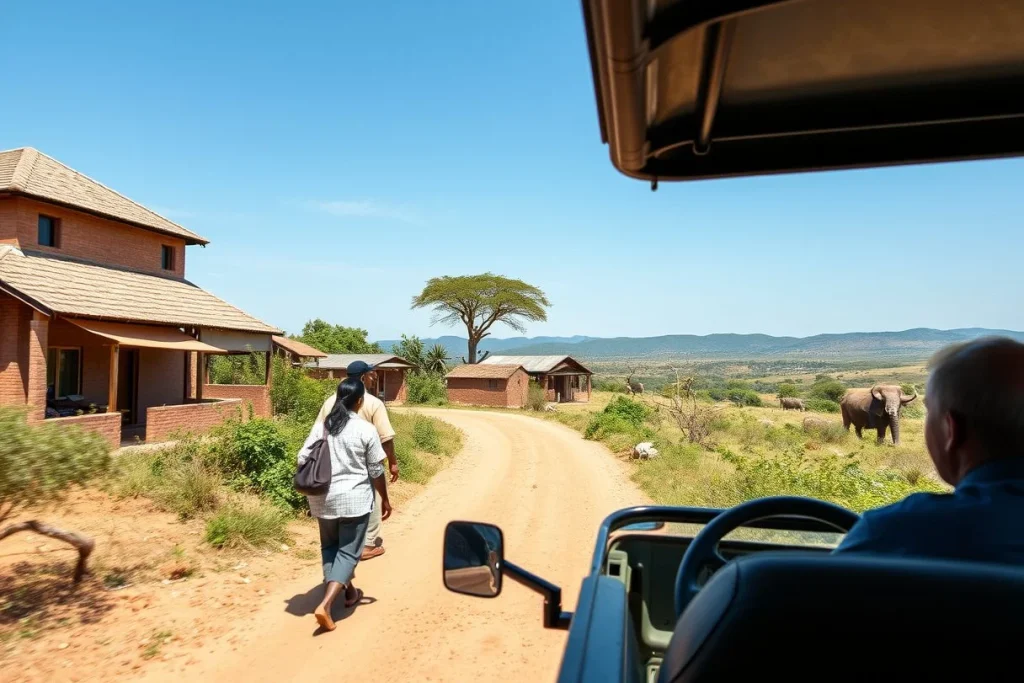
Kenya safari cost varies most sharply with the vehicle, accommodation and access model rather than with the number of animals you hope to see. The following 2026 market estimates are useful for planning, but they are not all-in prices: they are land-only figures and should be treated as a starting point for an itemised quotation.
| Estimated 2026 safari style | Land-only estimate | Basis |
|---|---|---|
| Budget group camping or shared lodge safari | US$150–250 per person per day | Shared arrangements; inclusions vary |
| Private mid-range safari | US$300–600 per person per day | Usually a private vehicle and comfortable lodges |
| Luxury, fly-in or conservancy safari | US$700–2,500+ per person per day | High-end camps and flights; top conservancy camps may exceed this range |
| Five-day Nairobi–Masai Mara itinerary | US$1,800–3,500 per person total | Example mid-range land itinerary |
These ranges are based on 2026 market references from White Horse Safaris, Imara Africa Safaris, Uncompromised Travel and BestKenya. Confirm the exact inclusions before comparing quotes: a lower daily rate may simply exclude charges that another operator has built in.
The largest price differences come from accommodation and vehicle arrangements. A shared safari spreads the cost of a vehicle and guide across several travellers; a private 4×4 gives you more control over departure times and wildlife stops but costs more, particularly for one or two people. Remote conservancies, fly-in camps and northern routes such as Samburu or Laikipia also carry higher logistics costs than a road-based circuit from Nairobi.
Season matters. July to October is the usual Great Migration window in the Masai Mara, and demand, accommodation rates and some conservancy charges are higher then. Domestic flights, road transfers, the number of nights inside parks, single supplements, meals, drinks, laundry and specialist activities can all move the final total well beyond a daily headline figure.
Check what the quotation includes
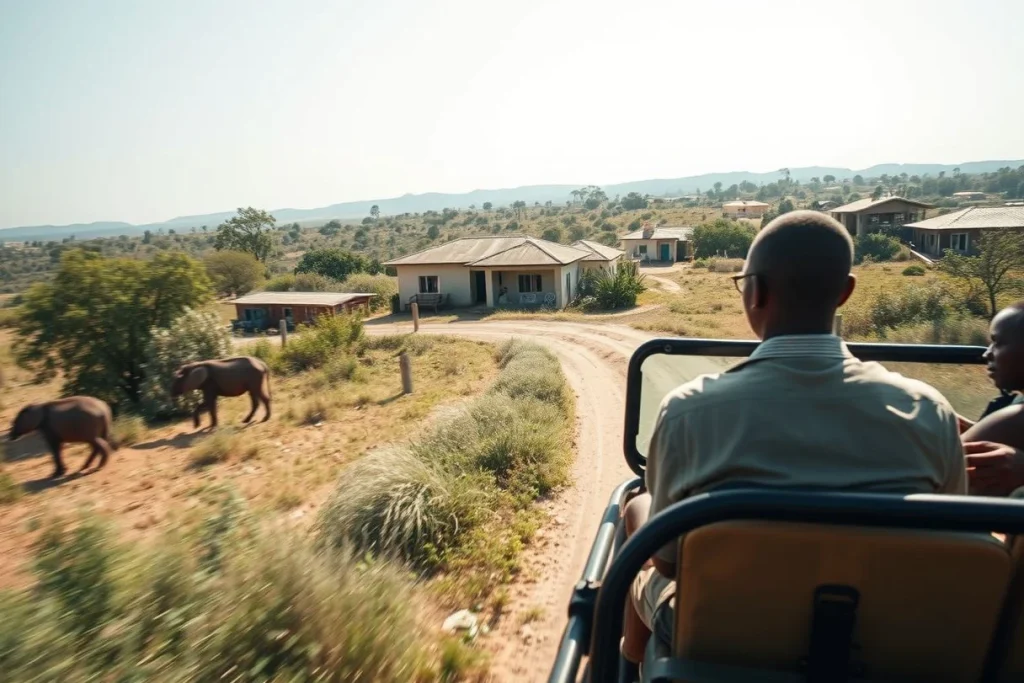
- Park and conservation fees: Kenya Wildlife Service revised its conservation and entry fee structure effective 1 October 2025, with charges varying by park category and visitor nationality; check the current schedule on KWS.
- Mara charges: Masai Mara reserve or county fees are separate from KWS fees, while conservancies may add their own levies and peak-season surcharges.
- Vehicle costs: Ask whether the quote includes the 4×4, fuel, driver-guide, vehicle fees and transfers between Nairobi, lodges and airstrips.
- Activities: Walking safaris, boat trips, cultural visits and conservation activities may be charged separately.
- Entry-ticket validity: Some areas use time-limited tickets covering a defined period rather than unrestricted access, so ask how a late arrival or split game drive is handled.
- Flights and extras: Confirm domestic flights, airstrip transfers, baggage limits, taxes, travel insurance, visas or entry authorisation, tips and drinks.
Request the quote in USD with your travel dates, nationality category, parks or conservancies, accommodation level and number of travellers clearly stated. Ask for cancellation terms and the payment system used for fees. Before paying a deposit, cross-check current KWS charges through its official eCitizen booking system, then verify Mara and conservancy charges with the operator. The figures above are planning estimates as of 2026, not guaranteed live prices.
| Item | Budget | Mid-range | Luxury |
|---|---|---|---|
| Budget group camping or shared lodge safari | US$150–250 | — | — |
| Private mid-range safari | — | US$300–600 | — |
| Luxury, fly-in, or conservancy safari | — | — | US$700–2,500+ |
| Five-day mid-range Nairobi and Masai Mara itinerary | — | US$1,800–3,500 per person total | — |
Estimated ranges based on the sources listed below. Prices change; check with providers before booking.
The best first step: match your route to your appetite for adventure
For a first Kenya safari, choose a five-day Nairobi–Lake Nakuru–Masai Mara route. It keeps transfers manageable while combining Nairobi National Park’s accessibility, Nakuru’s rhino and birdlife, and the Mara’s classic savanna wildlife. It is the clearest starting point for travellers who want variety without committing to remote logistics.
Add Amboseli if elephants and Mount Kilimanjaro views matter more than a compact itinerary. For walking, conservation and lower-density wilderness, choose Laikipia, a private conservancy or Chyulu Hills instead; these options generally require more planning and a larger budget than a conventional game-drive circuit.
Request at least two itemised quotes for identical dates and the same route. Before paying a deposit, verify entry and health requirements, current safety advice, park and conservancy fees, and road conditions, then confirm exactly which charges the operator includes.
Frequently asked questions
Will I need Kenya entry authorisation for my passport?
Most nationalities must apply for Kenya entry authorisation online before departure through the Kenya eCitizen or eVisa system. The rule depends on your passport, so check the current requirement and application process on the official Kenya government system before booking or travelling. GOV.UK Foreign travel advice, updated 15 September 2026, also advises checking entry requirements before travel.
Which health checks should I arrange before travelling to Kenya?
Arrange a travel-health consultation well before departure. Yellow fever vaccination advice depends on your itinerary, and Kenya requires proof for travellers arriving from countries where yellow fever transmission risk exists. Malaria risk is present in many lowland and coastal safari areas, so ask a clinician about suitable prophylaxis and mosquito-bite prevention. Check the CDC Kenya travel-health guidance and current official advice.
How many nights should a first safari itinerary include?
There is no single required length: the right number of nights depends on how many parks you want to connect and whether you travel by road or domestic flight. A five-day Nairobi–Masai Mara land itinerary is used as a 2026 market example, but adding several parks means more time in transit. For a short trip, Nairobi National Park offers the most accessible safari option; confirm the route with an operator.
Can I combine a Kenya safari with a beach holiday?
Yes, the logistics can be combined, but the itinerary needs checking against your chosen safari area and transport. Jomo Kenyatta International Airport is Kenya’s main international gateway, and domestic flights connect Nairobi with safari airstrips serving destinations including the Mara and Amboseli. Build in sensible transfer time rather than assuming a same-day connection will work, and check current flight schedules with the airline or operator before booking.
What is the practical difference between the Masai Mara reserve and its conservancies?
Treat them as separate products when comparing itineraries and prices. Masai Mara reserve, county and conservancy charges are separate from Kenya Wildlife Service fees, and conservancies may add seasonal surcharges during peak migration months. Some conservancies and reserves do not accept self-drive visitors or require advance operator liaison and permits, so confirm access, fees and vehicle rules before paying a deposit.
What happens if rain disrupts roads or changes the wildlife experience?
Heavy rain can make remote routes difficult or, in some cases, impassable; northern parks and remote conservancies may require a suitable 4×4. Rain also affects wildlife timing: the Great Migration is generally seen in the Masai Mara from July to October, but river crossings vary with rainfall. Check road conditions, seasonal closures and migration updates before departure, and keep the itinerary flexible where possible.