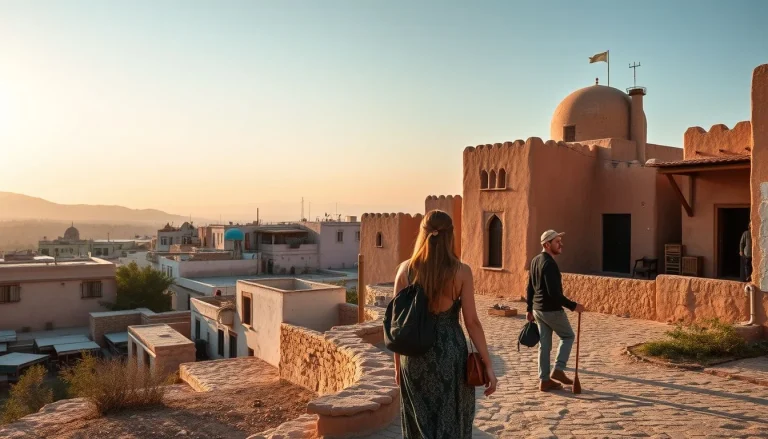

A solo itinerary can put a walking tour in the morning, a communal hostel dinner at night and a quiet afternoon in between—without requiring you to spend the whole trip with strangers. That flexibility is the practical advantage of meeting people while travelling solo: you can choose structured contact when you want company and keep your own pace when you do not.
This guide is for first-time solo travellers and independent visitors who want more social contact without surrendering control. It explains how to choose between dormitories, private rooms and hotels; which tours, classes and shared meals create natural conversations; how single supplements affect group trips; and how to meet people in ways that remain compatible with official safety advice. It also sets out dated cost indications, first-night planning and the checks to make with travel-health and foreign-office sources before departure.
Quick answer: The most reliable ways to meet people while travelling solo are staying in a social hostel, joining a walking or food tour, taking a class, attending a communal dinner or booking a small-group trip. Choose organised or public settings, check current official safety guidance, share your plans with someone you trust and keep enough time to travel independently.
Why solo travel can make meeting people easier
Travelling alone removes the need to negotiate every decision. You can spend a morning in a museum, change your plans after lunch or take a quiet evening when your energy runs low, then join people for one organised activity. Research cited by Intrepid Travel describes this flexible pace alongside built-in social opportunities through group tours, hostels and classes.
Being alone also gives others an easy conversation opener. A question about your route, a recommendation for dinner or an invitation to join a walking tour feels more natural when you are already travelling independently. You do not need to turn every exchange into a friendship; a shared meal or useful conversation can be enough.
Choose settings where conversation has a clear structure. A hostel common room, communal dinner, cooking class, language exchange, food tour or small-group adventure tour gives you something to discuss besides introductions. Hostelworld’s Social Pass, for example, is marketed as a way to connect with nearby travellers and social activities.
This approach suits first-time solo travellers because it avoids the pressure of entering an unfamiliar social scene with no plan. Independent travellers can use the same formats selectively: join a walking tour on arrival, share dinner, then continue alone the next day. Confidence usually comes from repeating small actions—saying hello to a dorm-mate, asking a guide a question and accepting one low-pressure invitation—rather than waiting for instant friendships.
Solo travel safety: meet people without giving up control
Keep socialising in places you can leave easily

Meeting people while travelling solo does not require treating every new acquaintance as a risk. It does require keeping control of the setting. Choose a walking tour, café, hostel common room or organised class for a first meeting; avoid accepting an invitation to an isolated address or an unfamiliar location where you cannot arrange your own way home.
Before joining an activity, check the destination’s current foreign-office or embassy advice, including area-specific warnings, protest or unrest guidance and local emergency numbers. The U.S. Department of State recommends country-guidance checks, situational awareness and contingency planning, while the UK Foreign, Commonwealth & Development Office provides separate advice on solo and independent travel. These pages are starting points, not substitutes for the relevant destination authority’s latest information.
Tell a trusted contact where you are going, who is organising the activity and when you expect to return. A short message before an evening event and another when you are back is enough; keep your phone charged and decide your route home before you leave. Use the destination’s established taxi, ride-hailing or public-transport options where appropriate, and do not let a new group determine your transport, accommodation or next stop.
Set boundaries without making the evening awkward

Meet new people in public or organised venues, keep your passport and payment cards secure, and limit alcohol enough to make clear decisions. You can leave without explaining: “I’m heading back now” is a complete plan. If someone pressures you to drink, share personal information, change venues or hand over your phone, treat that as a reason to leave rather than a social problem to solve.
Check travel insurance for medical treatment, evacuation, theft and trip interruption, plus any adventure activities you intend to book. Policy exclusions can matter more when you are alone, so read the wording before departure rather than assuming a standard policy covers everything; the U.S. Department of State’s travel guidance also highlights these areas.
Prepare for health as well as personal safety
The World Health Organization’s vaccination guidance should be checked for destination-specific recommendations. Where possible, consult a travel clinic 4–8 weeks before departure so there is time for medical advice and vaccination schedules; requirements vary by destination and nationality, so confirm current rules with the relevant health or government authority.
U.S. travellers can consider enrolling in the Smart Traveler Enrollment Program for embassy alerts and emergency contact assistance. Other nationalities should look for their own government’s equivalent service. These habits distinguish destination-specific precautions from universal ones: stay informed, keep someone updated and preserve an independent route home.
How to meet people travelling alone: tours, hostels and activities
Choose the right level of interaction

The most reliable way to meet people while travelling solo is to choose an activity with a shared focus. A walking tour gives you an easy opening line; a cooking class or language exchange gives you a reason to keep talking; a small-group trip creates repeated contact over several days. You can leave after one activity, so socialising does not have to dictate the whole itinerary.
| Format | Best for | Commitment | Cost exposure | Practical safety check |
|---|---|---|---|---|
| Walking or food tour | A first conversation and local orientation | Low; usually a single outing | Paid activity; compare inclusions and cancellation terms | Choose a clearly described route and a public meeting point |
| Cooking class or language exchange | Travellers who prefer a shared interest | Low to medium | Check what equipment, food or drinks are included | Use an established venue and confirm the end time and return route |
| Hostel dinner or organised event | Informal conversation without booking a full tour | Low; join or leave on your own schedule | Dorm beds are indicated at roughly US$10–US$40 a night in many destinations, but rates vary by city, season and date, according to Hostelworld material | Check the event arrangement, venue and how you will get back |
| Small-group adventure tour | Travellers wanting a ready-made social circle | High; shared transport and a fixed itinerary | Check inclusions, optional activities and single-room charges | Read the itinerary, group size, free-time provisions and operator terms |
Match the group to your travel style

For a gentle start, book a daytime walking or food tour with a manageable group size and enough free time afterwards. Look at recent written reviews, the itinerary, what is included, the meeting point and the expected age mix rather than choosing on the title alone. A class is often better than a bar-based event if you want conversation without late-night pressure.
For more sustained company, compare small-group operators such as Intrepid Travel and G Adventures as examples, not automatic endorsements. Intrepid markets small-group trips; G Adventures commonly matches solo travellers for twin-share accommodation on applicable departures. G Adventures says most trips do not carry a mandatory single supplement, although private rooms and particular departures may cost extra, so check the exact booking terms in writing.
Hostel events and communal dinners can work when you want a spontaneous option. Hostelworld currently markets its Social Pass as a way to connect with nearby travellers and activities, but platform features, participating venues and event arrangements can change. Verify the current details before relying on one for your first evening.
Make the first approach easy

You do not need an ingenious introduction. Try, “Is this seat free?” or “What’s your next stop after here?” At a tour or dinner, add, “I’m travelling on my own and looking for somewhere casual tomorrow—have you found anything good?” If the conversation feels forced, thank them and return to your plan; the aim is a useful connection, not an obligation to spend the rest of the trip together.
Where to stay alone: match the accommodation to your social style
Your first few nights set the tone. For a first-time solo traveller, a private room in a social hostel is often the most balanced choice: you get a door you can close, while reception, shared areas and organised events create natural opportunities to talk. Hostelworld’s Social Pass is one example of a platform promoting connections with nearby travellers and social activities, but check what is actually available at your destination before relying on it.
Choose a smaller dorm if you are a sociable, budget-conscious traveller who sleeps reasonably well. Look for lockers, controlled access and a common room with organised events rather than choosing on price alone. Light sleepers should book a private room, either in a social hostel or a guesthouse; this preserves the option of joining a communal dinner without making every night a test of endurance.
A hotel suits travellers who want reliable privacy, predictable sleep and maximum independence. It is less naturally social, so pair it with a walking tour, food tour or class booked outside the property. An apartment-style stay offers space and self-catering, but usually fewer built-in introductions; it works best when you already have a clear itinerary and are comfortable creating your own social plans.
For the first night, a central, well-connected location can simplify the journey from the airport or station and reduce the amount of navigation you need to do while tired. That does not make an area universally safe: read the latest destination advice and assess the neighbourhood’s feel in daylight before booking.
- Read recent reviews for noise, reception arrangements, lockers, access control and the quality of shared spaces.
- Check whether events are genuinely organised, how often they run and whether attendance requires a separate booking; facilities and social programmes change.
- Confirm the route from the airport or station, nearby public transport and how you will return after an evening out.
- Check the cancellation terms and book a private room for the first night if uncertainty is likely to undermine your confidence.
Verify current facilities, reviews and event details on the accommodation’s own listing before paying. The right choice is the one that gives you enough privacy to recover, with a practical social setting you can enter when you choose.
Solo travel costs: budget, mid-range and luxury estimates
Solo travel costs vary sharply by destination, season and how much privacy you want. The figures below are indicative rather than global price bands: compare the destination, dates, exchange rate, transport and inclusions before booking.
Estimated costs
| Estimated travel style | Accommodation or daily guide | What the estimate covers |
|---|---|---|
| Budget | US$10–US$40 per night | Dorm bed in many destinations |
| Mid-range | US$60–US$200 per person per day | Private-room or mid-range accommodation, mixed transport and paid activities |
| Luxury | US$300 or more per person per day | Private guided trips, boutique accommodation, fine dining and/or domestic flights |
Basis and date: the budget dorm indication comes from Hostelworld pricing research crawled within the research week noted in the source material; the mid-range estimate is from a 2022 Intrepid Travel source; the luxury indication reflects reporting dated 17 September 2026. Verify live rates for your destination and dates.
The main solo-specific extra is privacy. A private room can move a trip from the budget range towards mid-range, while a single supplement may apply to an organised tour, cabin or room that cannot be shared. G Adventures says most of its trips do not have a mandatory single supplement, but private rooms and particular departures may cost more; check the exact booking terms in writing. Intrepid Travel’s small-group prices should likewise be read alongside what is included.
Allow separately for airport transfers, meals, paid walking or food tours, classes, travel insurance and last-minute transport. June, July, August and December can bring sharper changes in availability and rates, depending on the destination. Check the accommodation provider, tour operator and transport company for current prices before paying, especially if your plan depends on a private room or a fixed departure.
| Item | Budget | Mid-range | Luxury |
|---|---|---|---|
| Hostel dormitory / budget solo travel | Approximately US$10–US$40 per night for a dorm bed in many destinations | Not supported as a separate mid-range figure by this source | Not supported by this source |
| Mid-range solo travel | Not supported as a separate budget figure by this source | Approximately US$60–US$200 per person per day for many destinations, depending on inclusions and destination | Not supported as a separate luxury figure by this source |
| Luxury solo travel | Not supported as a separate budget figure by this source | Not supported as a separate mid-range figure by this source | US$300 or more per person per day can be reached easily, with private rooms, guides and single supplements adding further cost |
Estimated ranges based on the sources listed below. Prices change; check with providers before booking.
Practical solo travel social tips that prevent common mistakes
- Make the first 72 hours deliberately simple. Confirm how you will reach your accommodation and check in, then book the first night or two in advance. Save the property’s address offline, along with an offline map and the local emergency number, so arrival does not depend on mobile data.
- Schedule one social activity for daytime. A walking tour, food tour, cooking class or language exchange gives you a natural conversation starter without committing the whole trip. Leave the rest of the day open; you can add another activity after you know your energy, budget and surroundings.
- Use a trusted contact as a quiet safety net. Send someone your accommodation details, broad itinerary and the name of any organised tour. Agree when you will check in, particularly before an evening out or a day trip.
- Carry a backup way to pay. Keep a second card or another payment method separately from your main wallet, and store copies of important documents securely. This prevents a lost wallet from turning a social evening into an urgent logistics problem.
- Read the booking terms before choosing a group tour. Compare the single-supplement policy, twin-share matching arrangements, private-room upgrade, cancellation terms and inclusions. G Adventures says most trips do not require a mandatory single supplement, but private rooms and particular departures may cost extra; confirm the exact terms with the operator in writing.
- Decline invitations without overexplaining. “Thanks, but I’m keeping tonight quiet” or “I’ll meet you at the public venue tomorrow” is enough. You do not need to share your accommodation, change your route or accept a second meeting simply because someone was friendly.
- Meet new acquaintances repeatedly in public settings. Choose the hostel common room, a café, a museum meeting point or an organised event, and arrange your own way home. Preserve your independent transport and accommodation plans rather than handing over control of the itinerary.
- Check official requirements before departure. Entry and transport rules depend on your nationality and destination; health advice can also change. The World Health Organization’s travel-health guidance is a starting point, and consulting a travel clinic four to eight weeks before departure allows time for vaccinations and medical advice. Check the relevant government source and tour operator again before travelling.
A low-stress way to start travelling solo
Start with a manageable three-part plan: book a social hostel, reserve one daytime group activity, and leave the rest of your first few days flexible. Choose a hostel with a private room if you want conversation without sacrificing sleep, or a dormitory if shared space feels comfortable. A walking tour, food tour or cooking class gives you a natural setting for meeting people without committing to a full group itinerary.
Before paying, check the latest government travel advice, destination health guidance and the accommodation’s current security arrangements. Compare live cancellation terms, transport options and any single-room or single-supplement charges with the hostel or tour operator. Book only the first few nights and one activity; once you have settled in, you can decide whether to extend your stay, join another group or continue independently.
Frequently asked questions
How do I start a conversation with someone I have just met while travelling?
Choose a setting with a natural shared subject, such as a walking tour, food tour, cooking class, language exchange or communal hostel dinner. Start with the activity or destination rather than personal questions, then see if the other person wants to continue talking. Group activities are useful because conversation can develop gradually, without requiring either person to make an awkward approach from nowhere.
What should I do if I no longer feel comfortable with a new travel acquaintance?
End the interaction and move to a public or organised setting, such as a hostel reception area or an activity with other participants. Do not share more personal information or change your plans to accommodate someone else. The U.S. Department of State advises travellers to maintain situational awareness and prepare contingency arrangements; check the relevant official travel advisory and local emergency guidance if the concern becomes serious.
Can I meet people while travelling if I am introverted or shy?
Yes. Choose structured formats where the activity supplies the opening conversation: a small-group tour, walking tour, food tour, class or organised hostel event. You do not need to turn every meeting into a friendship; one short conversation over a communal dinner can be enough. A social hostel can provide contact with other travellers while still allowing you to retreat to a private room or your own plans.
Is it better to join a group activity on my first day?
It can be a low-pressure way to meet people while travelling solo, particularly if you choose a short walking tour, food tour or class rather than committing to a long itinerary. Keep the first day flexible enough for arrival delays, rest and practical tasks. Check the operator’s current details and the destination’s official safety guidance before booking, since arrangements vary by place and date.
How can I keep in touch with people I meet without sharing too much personal information?
Use a communication method that does not reveal details you prefer to keep private, and share only the information needed to arrange a future meeting. Avoid disclosing your accommodation details, full itinerary or documents. If you meet again, choose a public or organised setting and tell a trusted contact your plans. U.S. travellers can use the Smart Traveler Enrollment Program for embassy alerts and emergency contact support, according to the programme information cited by TripIt.
What should I pack or prepare differently for a social solo trip?
Prepare a simple first-day plan, including your accommodation details, transport arrangements and a way to contact someone you trust. Carry the information needed for insurance and emergencies, and check that your policy covers medical care, evacuation, theft, trip interruption and any planned adventure activities. For international travel, consult WHO vaccination and travel-health guidance and, where possible, a travel clinic 4–8 weeks before departure.