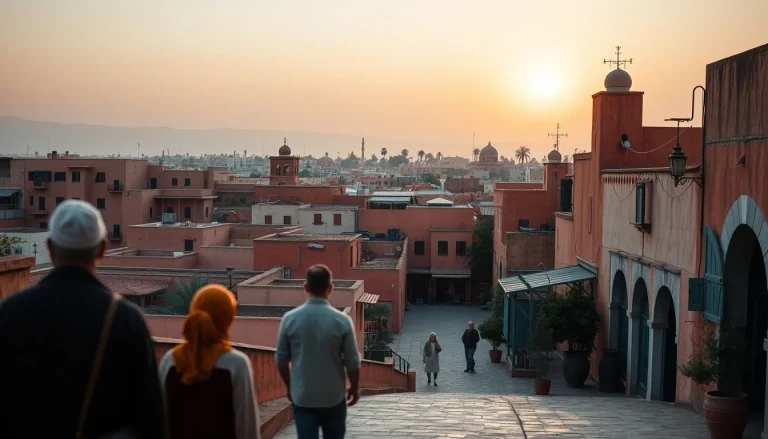
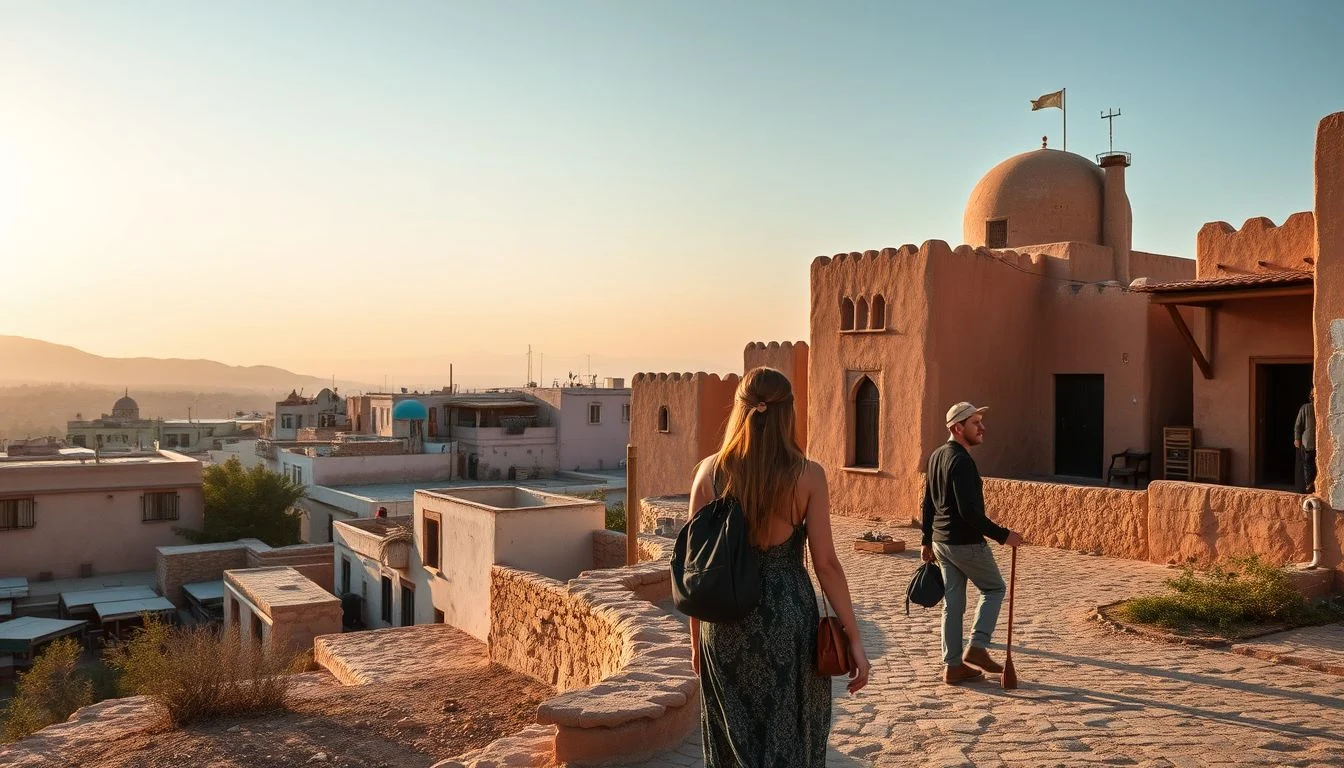
ONCF trains link Casablanca, Rabat, Meknes, Fes and Tangier, while buses, shared taxis and organised transfers open routes beyond the rail network. That combination gives solo travel in Morocco a useful balance: you can move independently between major cities, then join a desert excursion, mountain trip or coastal stay when the logistics become more demanding.
This guide is for first-time and moderately experienced solo travellers, including women, who want to judge the right level of independence before booking. It explains where to base yourself, how to meet people without giving up flexibility, what official advice says about theft, scams, demonstrations and terrorism, and where private rooms or desert tours may add a single supplement. You’ll also find practical planning ranges, transport decisions and arrival advice for medinas, where narrow, uneven alleys make clear directions especially valuable.
Quick answer: Solo travel in Morocco can work well for confident travellers who plan carefully. Allow about $30–60 a day for budget travel, $80–150 for mid-range and $200–400+ for luxury, excluding international flights; check current entry rules, health guidance and official safety advice before booking.
Why Morocco suits solo travellers

Morocco works well for solo travel because one trip can combine historic medinas, the Atlantic coast, High Atlas landscapes and Sahara gateways without committing to one style of holiday. You can spend a few days setting your own rhythm in Marrakech, slow down beside the sea in Essaouira, then join a guided excursion when the route becomes more complex.
For a car-free itinerary, Morocco’s official tourism information identifies trains, buses, shared taxis and organised transfers as the main links between destinations. ONCF rail services are particularly useful for urban routes including Casablanca, Rabat and Fes; buses and shared taxis extend the network beyond the railway. That makes a first trip easier to shape in stages, although Merzouga and other desert gateways require more planning than Rabat or Marrakech.
The contrasts are practical as well as visual: Fes offers dense historic lanes, Marrakech combines the medina with the more spacious Gueliz and Hivernage districts, and Essaouira gives you an Atlantic base. Merzouga is better treated as a planned desert stop than an improvised detour, especially if you want to reach Erg Chebbi.
Social contact does not have to mean surrendering independence. Riads, hostels and small hotels often have communal rooms, rooftops or shared meals, according to Visit Morocco. Book a food, walking or city tour for one day, then keep the following day free; this suits travellers who want company in measured doses rather than a fixed group itinerary.
Safety for solo travellers in Morocco: what to know
Is Morocco safe for solo travellers? It is neither uniformly safe nor uniformly dangerous. The UK Foreign, Commonwealth & Development Office (FCDO), in advice updated 30 September 2026, and the U.S. Department of State, in its Morocco advisory dated 4 September 2026, warn about petty theft, scams, occasional violent incidents and an ongoing terrorism threat. Treat that as a reason for sensible planning, not a reason to abandon the trip.
Keep your passport, phone, cards and cash secure, and carry copies of your passport and insurance details separately. Pre-book accommodation and save its address offline; narrow, uneven medina alleys can make arrival confusing, so ask your riad or hotel for clear directions and consider an arranged transfer or staff escort. Share your itinerary with someone at home, use reputable transport and accommodation, and follow local instructions if conditions change.
Medinas, demonstrations and solo women
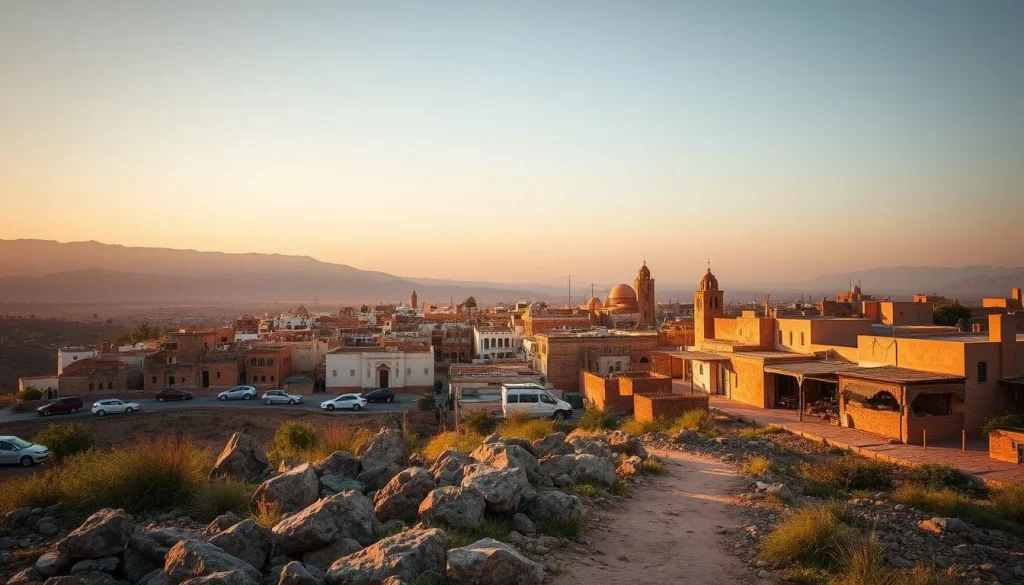
In Marrakech, Fes and other medinas, respond firmly to unsolicited help and use an official or accommodation-recommended guide rather than following a tout. Avoid demonstrations and isolated areas after dark, and stay alert around crowded places. The FCDO specifically provides guidance on demonstrations, theft, scams and personal security; its advice should take priority over generic travel tips.
For solo female travel in Morocco, these precautions are particularly useful: choose accommodation with a clear reputation and staffed reception, arrange your first transfer, and avoid walking alone in quiet areas at night. Harassment can occur, but individual experiences vary; do not assume that a central street, busy square or organised tour guarantees a trouble-free experience. Modest clothing is recommended in conservative or rural settings and at religious sites. Ask permission before photographing people, and remain respectful when haggling.
Health precautions
The CDC does not identify universally required routine vaccines specifically for Morocco, but recommends being up to date with routine immunisations, following food-and-water hygiene advice and considering suitable medical insurance. Carry insurance with medical and cancellation cover, including support for lost documents, and check what exclusions apply to activities such as trekking or desert travel.
Heat and dehydration deserve extra attention in summer, especially inland, in the High Atlas and around the Sahara. Carry water, pace walks through the hottest part of the day and seek medical advice if you become unwell.
Before departure, recheck the FCDO Morocco advice, the U.S. State Department advisory, CDC health guidance and Moroccan local or tourism authorities. Security and health advice can change after you have planned the route.
How to meet people while travelling alone

Solo travel in Morocco does not have to mean travelling alone every hour. The easiest social base is a hostel with a dorm, common room or organised dinner; you can spend the day independently, then join conversation without arranging an entire itinerary around new acquaintances. Riads and small hotels can work similarly when they offer a communal rooftop, shared meal or hosted activity, as the Moroccan tourism office notes.
For a more structured introduction, book a guided walk through the Medina of Fes or Marrakech, a food tour, or a cooking class. These give you a defined group, a local host and a natural reason to talk, without the commitment of a multi-day tour. Ask the operator in advance about the group size, inclusions, meeting point and cancellation terms.
Along the coast, a surf lesson in Taghazout or Essaouira is an easy fit for solo travellers: the activity creates contact without requiring constant conversation. A one- or two-night High Atlas or desert trip can do the same on a larger scale while leaving the rest of your Morocco itinerary flexible. Check whether accommodation is shared, private or subject to a single supplement; solo travellers may pay extra for private rooms, vehicles and some small-group or safari-style tours, with the amount varying by operator and season.
Use established accommodation staff, the official tourism channels and clearly identified operators when booking. A person who approaches you in a medina is not automatically a legitimate guide: agree the service and price before accepting help, and ask your riad or hostel to recommend a registered or established option. Visit Morocco is a useful starting point for official destination information.
Where to stay alone: choosing Moroccan cities and accommodation
Choose your base by the kind of independence you want. Marrakech gives the widest choice: a riad in the medina puts you close to the atmosphere and communal hospitality, while Gueliz offers easier access to modern amenities. Hivernage suits travellers who prefer a more polished hotel setting. Medina alleys can be narrow and uneven, so confirm the walking route from the vehicle drop-off before booking.
Fes is more immersive than straightforward. Staying in the Medina of Fes works well if you want historic surroundings and staff who can arrange arrival guidance; a hotel outside the medina is easier if you value simpler navigation and a quieter base. Casablanca is a practical urban stop, while Rabat is the calmer choice for combining transport links with museums, historic areas and a less intense city rhythm. ONCF rail services connect Casablanca, Rabat and Fes, among other major urban routes.
On the Atlantic coast, Essaouira suits a solo traveller who wants a relaxed setting and guesthouses where communal spaces make conversation easy. Choose Agadir or Taghazout for beach time, surf and organised activities rather than medina wandering. Merzouga and Zagora are logistics-led choices: for the Sahara and Erg Chebbi, the quality of the organised trip, vehicle arrangements and camp booking matters more than the immediate neighbourhood.
| Accommodation | Social contact | Privacy and navigation | Solo cost consideration |
|---|---|---|---|
| Hostel | High, particularly through shared areas and activities | Lower privacy; usually a simpler arrival than a remote riad | Shared rooms can reduce the cost of travelling alone |
| Riad | Often includes communal rooms, rooftops or shared meals | Atmospheric but medina access may be confusing | Private rooms may carry a solo premium |
| Small hotel | Moderate; ask about communal dining or local activities | Often the easiest balance of directions and privacy | Private rooms are priced individually |
| Higher-end hotel | Lower spontaneous contact, but organised excursions may be available | Most predictable for arrival and facilities | Private vehicles and some tours may add a single supplement |
Pre-book your first night, request written directions and ask whether the property can arrange a transfer or staff escort from the drop-off point. Before confirming a desert stay or private tour, ask specifically about single supplements: these vary by operator, accommodation and season.
When to go: comfortable seasons and peak periods

For most solo travellers, spring and autumn are the most comfortable seasons for sightseeing in Morocco. Temperatures are generally easier to manage in the medinas of Marrakech and Fes, on Atlantic walks in Essaouira, and during longer days in the High Atlas than in the hottest part of summer.
June, July, August and December are identified as peak travel periods in the planning brief. Expect more competition for popular accommodation and tours, so solo travellers should book key stays earlier and check single-supplement terms before committing. Summer deserves particular care inland, in the High Atlas and around Sahara gateways such as Merzouga and Zagora: heat and dehydration can make exposed walks and long excursions uncomfortable.
Dates around religious holidays and local events can also affect demand and seasonal operations. Before booking, check current forecasts, transport arrangements and tour or attraction operating details with the Moroccan National Tourist Office and the relevant provider. Build flexible rest time into a solo itinerary rather than scheduling every transfer at midday.
Getting around Morocco without a car
Morocco is manageable without a car if you combine ONCF trains with intercity buses, regional buses and grand taxis. Rail services link Casablanca, Rabat, Meknes, Fes and Tangier; buses and shared taxis extend the network to places the railway does not reach, according to the Moroccan National Tourist Office’s official travel information. Check current schedules, departure stations and ticket arrangements before setting out, as transport practices can change.
For longer or more remote legs, consider a domestic flight, organised transfer or small-group tour rather than trying to piece together every connection. The approach is particularly practical for the High Atlas and Sahara gateways such as Merzouga or Zagora, where a planned transfer can remove uncertainty around regional connections and luggage.
Your first arrival deserves its own plan. If your accommodation is inside a pedestrian medina, pre-arrange a transfer from Mohammed V International Airport or another airport, confirm the exact vehicle drop-off point, save the riad’s phone number and directions offline, and ask staff whether a porter or escort should meet you. Medina alleys may be narrow and uneven, and a car often cannot reach the door.
Use the same sequence for late arrivals: keep the property’s instructions accessible, do not rely on finding the entrance unaided, and clarify where a taxi should leave you. Airport arrangements, taxi practices and access restrictions vary, so confirm them with the accommodation shortly before travel.
Morocco travel costs for solo travellers: dated planning ranges
Once your route is workable, the next decision is how much comfort to buy. For solo travel in Morocco, the daily budget rises most noticeably when you want a private room, private transport or an organised desert trip rather than shared services.
| Estimated daily budget | Typical planning basis | 2026 benchmark |
|---|---|---|
| Budget | Low-cost accommodation, inexpensive food and public transport | $30–60 per person; about $34 according to BudgetYourTrip, updated 14 August 2026 |
| Mid-range | Private riad room or three-star hotel, restaurants, taxis or occasional private transfers, and paid guided day trips | $80–150 per person; about $88 at mid-year 2026 |
| Luxury | High-end accommodation, private drivers, premium tours and upgraded desert or flight options | $200–400+ per person; about $238 in 2026 |
These are planning ranges per person per day, exclude international flights and are not fixed prices. The mid-range benchmark is reported by Morocco Tips for mid-2026; the luxury benchmark comes from Tilila Travel for 2026. Seasonal demand, room type and how far ahead you book can shift live rates, so check the property, tour operator or transport provider before paying.
Solo travellers should also ask specifically about supplements. A private room, vehicle, desert camp or safari-style and small-group tour may cost more when there is no second person to share it; the amount varies by operator, accommodation and season. Compare the total solo price, not only the advertised per-person rate, and confirm what meals, transfers and guides include.
| Item | Budget | Mid-range | Luxury |
|---|---|---|---|
| Budget solo travel | $30–60 per person per day | — | — |
| Mid-range solo travel | — | $80–150 per person per day | — |
| Luxury solo travel | — | — | $200–400+ per person per day |
Estimated ranges based on the sources listed below. Prices change; check with providers before booking.
Practical Morocco travel tips for going alone
Use this checklist to remove the small uncertainties that make a first solo trip feel harder than it needs to be:
- Pre-book your first night. Ask the accommodation for written arrival directions, including the nearest accessible street; medina alleys can be narrow and uneven, so arrange a transfer or staff escort if you arrive after dark or are staying deep inside the old city.
- Keep an offline document pack. Save your passport details, insurance policy, booking confirmations, transport information and important contacts on your phone, and carry copies separately from the originals.
- Carry both cash and a card. Payment practices vary, so check with each accommodation, tour operator and transport provider before departure; keep only the day’s spending money readily accessible.
- Set the taxi terms before moving. Agree the destination and fare or meter arrangement before the journey begins, and decline unsolicited guides or services whose price is unclear. If someone offers to “help” you find a riad, contact the property directly instead.
- Haggle courteously and photograph thoughtfully. Ask before photographing people, remain respectful around religious sites, and treat bargaining as a clear negotiation rather than a confrontation. Modest clothing is particularly appropriate in conservative or rural areas and at religious sites, according to VisitMorocco.
- Leave space between destinations. Build buffer time around long transfers instead of stacking cities back-to-back; a flexible Morocco itinerary gives you room for delayed transport, heat and the occasional day when navigating alone takes longer.
- Plan for heat and stomach upsets. Carry water, sun protection and light layers in inland areas, the High Atlas and the Sahara, especially in hot seasons. Follow the CDC’s current food-and-water hygiene advice, review routine immunisations and buy suitable travel insurance before leaving.
- Check entry rules for your passport. Many UK, U.S. and EU passport holders may be visa-free for up to 90 days, but eligibility and conditions differ by nationality. GOV.UK’s Morocco advice, updated 30 September 2026, says UK passports should be valid for at least three months after arrival; confirm your own requirements with Moroccan consular guidance and VisitMorocco, then recheck the CDC and current official travel advice.
Conclusion: start small, then build your Morocco itinerary
Make your first Morocco solo trip manageable: pair Marrakech with Essaouira for a straightforward city-and-coast introduction, or choose Rabat and Fes for a more measured cultural route. Add a guided High Atlas or Sahara experience only if you want the logistics and company handled for part of the journey. You do not have to choose between complete independence and an all-inclusive tour: combine a social hostel or riad, public transport and one or two organised days. Your next step is practical—check current official advice and entry rules, reserve a refundable first night, and confirm how the property handles arrival from the airport, especially if the accommodation is inside a medina.
Frequently asked questions
Do I need to book a desert tour before arriving in Morocco?
Not necessarily: the available guidance does not establish a universal advance-booking requirement for tours to Merzouga, Erg Chebbi or Zagora. If you want a particular camp, departure date or shared arrangement, check the operator’s current terms before travelling. Confirm what is included, whether transport is shared or private, and whether a solo-traveller supplement applies; costs and conditions vary by operator, accommodation and season, according to Morocco-Tips (accessed for 2026 planning).
Can I travel between Moroccan cities without hiring a car?
Yes. ONCF rail services and intercity buses connect major urban routes including Casablanca, Rabat, Meknes, Fes and Tangier; buses and grand taxis cover additional regional journeys, according to VisitMorocco. Flights or organised transfers can also connect destinations such as the High Atlas and Sahara gateways. Check current timetables and airport or taxi arrangements before departure, as operational details can change.
What should solo female travellers wear in Morocco?
Choose modest clothing, particularly in conservative or rural areas and when visiting religious sites. Covering shoulders and knees is a practical way to respect local expectations, although the appropriate choice can vary by place. VisitMorocco’s guidance also recommends asking before photographing people and remaining respectful when haggling. These are cultural considerations, not a guarantee about individual experiences; solo female travellers should also check the latest GOV.UK Foreign travel advice, updated 30 September 2026.
Is bottled water necessary throughout a Morocco trip?
The supplied CDC guidance does not say that bottled water is universally necessary throughout Morocco. It does advise travellers to follow food-and-water hygiene guidance and keep routine immunisations up to date. Because water conditions and personal health needs can differ, check the CDC’s Morocco advice before departure and ask accommodation staff or a clinician about local precautions rather than assuming tap water is suitable everywhere.
How can I avoid paying a single supplement on a desert tour?
Ask the operator for a shared departure and confirm in writing how rooms, vehicles and camp accommodation are allocated. Solo travellers may otherwise pay extra for a private room, private vehicle or some small-group and safari-style tours; the supplement varies by operator, accommodation and season, according to Morocco-Tips. A shared tour can reduce the extra charge, but do not assume it removes it—request the solo price and cancellation terms before booking.
Which documents and bookings should I arrange before travelling alone?
Check your nationality’s visa and permitted-stay rules with Moroccan consular guidance and official tourism information; many UK, U.S. and EU passport holders may enter visa-free for up to 90 days, but eligibility varies. GOV.UK says UK passports should be valid for at least three months after arrival, while other nationalities must verify their own requirement. Pre-book your first accommodation, obtain clear medina arrival directions, and consider an arranged airport transfer or riad escort. Arrange suitable travel insurance, keep copies of passport documents, and check current official safety and health advice before departure.