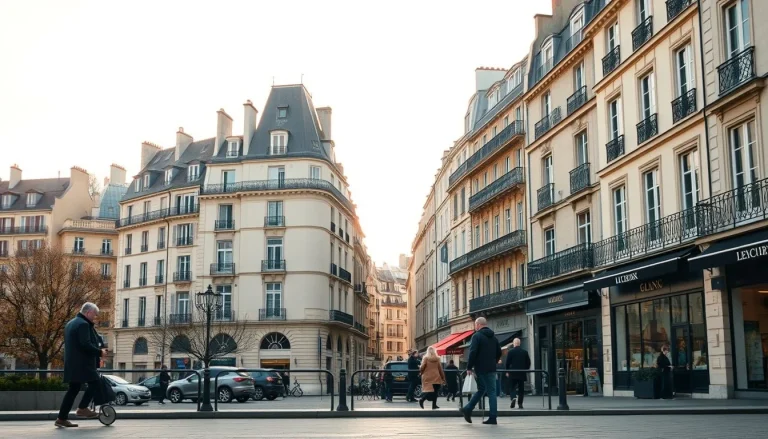

Paris’s 20 arrondissements curl clockwise from the 1st at the city’s centre, while the Seine separates the Right Bank from the Left Bank. That geography matters when deciding where to stay in Paris: a room near the Louvre creates a different trip from one above a café in Saint-Germain-des-Prés or beneath Montmartre’s Sacré-Cœur.
For couples, the right base is less about claiming one arrondissement as universally best and more about matching your evenings to your priorities. This guide compares walkability, atmosphere, sightseeing access, hotel value, nightlife and the practical cost of hills, crowds or longer Metro journeys, so you can choose between Saint-Germain, Le Marais, the 7th, the 1st, Canal Saint-Martin, Batignolles and Montmartre with clear trade-offs. It is written for two people who want scenic dinners, unhurried walks, boutique-style accommodation and enough local quiet to make room for downtime.
Quick answer: Saint-Germain-des-Prés and Le Marais offer the strongest balance of walkable sights, atmospheric cafés, romantic evening walks and boutique-style stays for most couples. Choose the 7th for Eiffel Tower and Champ-de-Mars access, the 1st for first-time sightseeing, or Montmartre for hilltop views and village character if you are comfortable with hills and crowds.
Overview map of Paris: how the city divides
Before choosing a hotel, picture Paris as a compact centre crossed by the Seine. The river separates the Left Bank (Rive Gauche) from the Right Bank (Rive Droite), while 20 arrondissements form a clockwise spiral out from the 1st arrondissement at the centre. The official Paris map is useful for seeing how quickly the central districts give way to quieter residential areas.
For a first visit, the practical visitor sweet spot is the 1st–7th arrondissements, including parts of the 3rd–6th. Here, the Seine, major gardens, museums, cafés and evening walks are usually close enough to reach on foot. The trade-off is straightforward: central locations tend to bring higher hotel prices and more tourist activity. Moving farther out can give you more local atmosphere or value, but you will spend longer reaching headline sights.
| Area on the map | Where it sits | Useful orientation |
|---|---|---|
| Louvre and Tuileries | 1st, central Right Bank | Museum and sightseeing core |
| Le Marais | 3rd–4th, Right Bank | Historic lanes, cafés and boutiques |
| Saint-Germain | 6th, Left Bank | Classic cafés and Jardin du Luxembourg |
| Eiffel Tower | 7th, Left Bank | Champ-de-Mars and landmark views |
| Montmartre | 18th, north | Hilltop streets and Sacré-Cœur |
| Canal Saint-Martin and Batignolles | 10th–11th and 17th | More local evenings, farther from the core |
For couples, the key choice is not simply Left Bank versus Right Bank. It is deciding how much sightseeing convenience to trade for local evening energy, quieter downtime or a potentially better-value base.
Paris neighbourhoods compared: character, pros, cons and who they suit
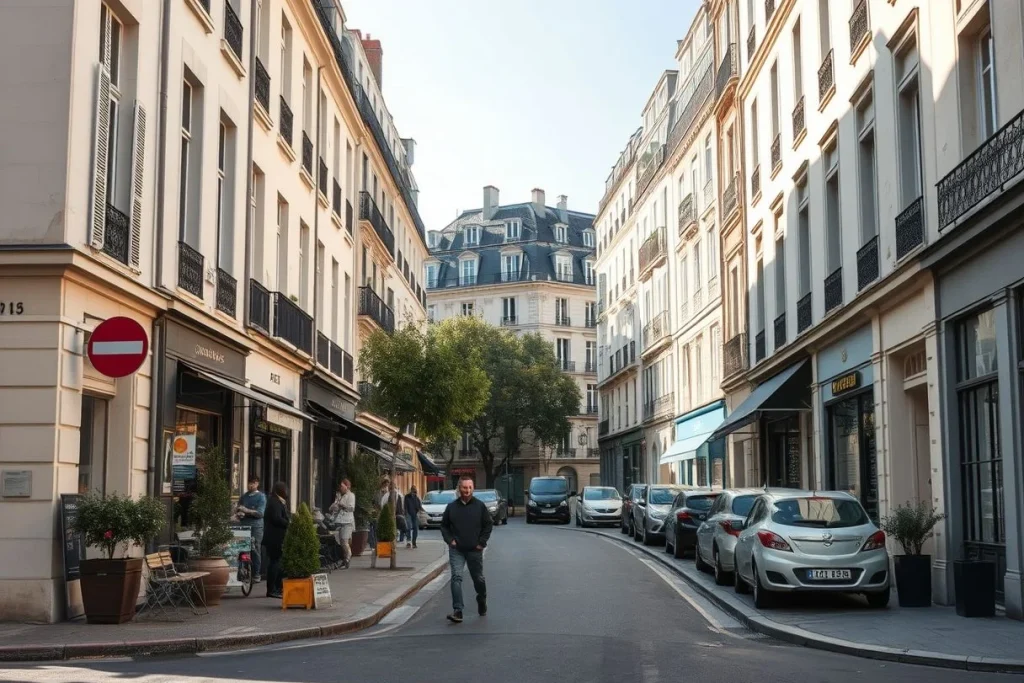
That trade-off becomes clearer at street level. Two hotels in the same arrondissement can feel entirely different: a quiet residential lane may be a good base for an evening stroll, while a nearby station, tourist artery or nightlife strip can be noisy and crowded. Use the comparison below to narrow the map before comparing individual hotels.
| Area | Atmosphere | Walkability | Evening mood | Sightseeing access | Value tendency | Main compromise |
|---|---|---|---|---|---|---|
| 1st arrondissement | Museum-led, historic | Excellent for central sights | Elegant but quieter late | Louvre and Tuileries on foot | Usually expensive | Tourist crowds |
| Le Marais, 3rd–4th | Historic, stylish, sociable | Excellent | Cafés, dining and LGBTQ+ nightlife | Strong for central Paris | Generally expensive | Crowds and compact hotel rooms |
| Latin Quarter, 5th | Bookish, youthful, informal | Very good on the Left Bank | Lively in places, quieter elsewhere | Seine and central Left Bank | Can offer more choice | Touristy main arteries |
| Saint-Germain-des-Prés, 6th | Classic and polished | Excellent | Romantic, restrained | Jardin du Luxembourg and Left Bank sights | Usually expensive | Subdued nightlife |
| 7th arrondissement | Leafy, residential, refined | Very good around the tower | Calm after dinner | Eiffel Tower and Champ-de-Mars | Usually expensive | Few late-night options |
| Opéra, Grands Boulevards and Bourse, 2nd–9th | Commercial, theatrical, central | Very good | Grand cafés, theatres and shopping | Strong transport connections | Mixed hotel choice | Traffic and less local character |
| Canal Saint-Martin, 10th–11th | Local, creative, energetic | Good locally | Terraces and lively nights | Longer to headline sights | Often better than the centre | Station-area bustle |
| Batignolles, 17th | Residential and café-led | Good within the neighbourhood | Relaxed and local | Less convenient for the core | Often better than central districts | Longer journeys |
| Montmartre, 18th | Hilltop, artistic, village-like | Good if you accept hills | Atmospheric, especially around sunset | Less central | Varies by street and hotel | Stairs, slopes and crowds |
These value tendencies are broad comparisons, not hotel quotes. The 1st, 6th, 7th and Marais generally cost more than the 10th, 11th and 17th; exact prices depend on the property, dates and season.
Central Paris for sightseeing and first visits
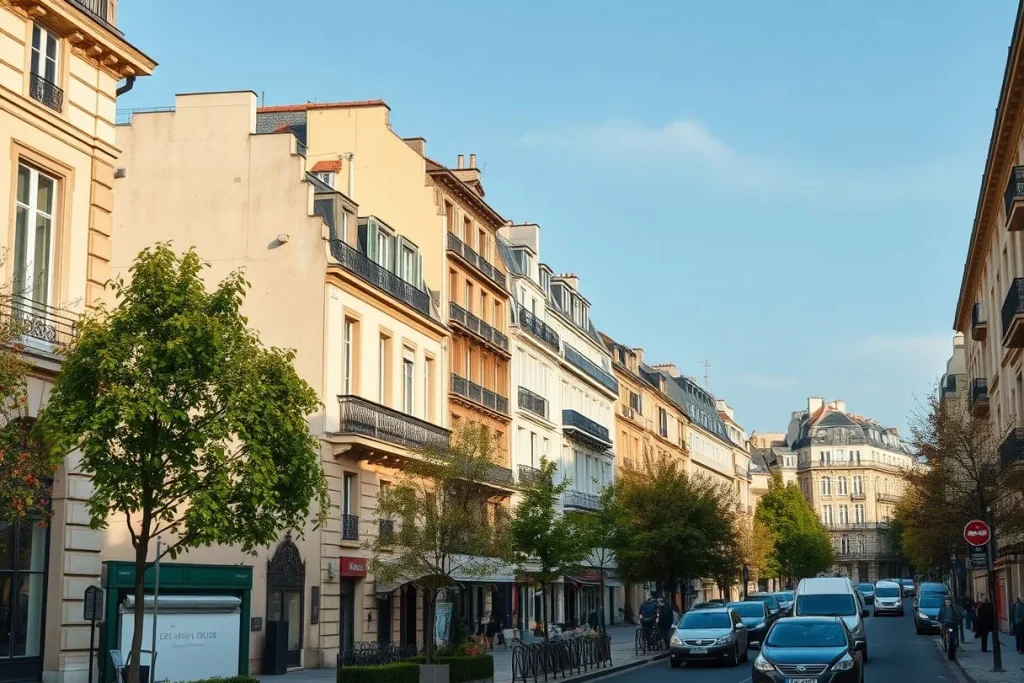
The 1st arrondissement is the practical choice for a first visit built around the Louvre, the Tuileries Garden and the central sightseeing core. It makes it easy to return to the room between museum time and dinner, but the area is touristy and usually expensive. Streets can feel surprisingly quiet once the day-trippers have gone, so choose it for convenience rather than a strongly local evening scene.
Le Marais, spread across the 3rd and 4th, is more rewarding after dark: historic streets lead to boutiques, cafés, intimate restaurants and LGBTQ+ nightlife. It suits couples who want to wander without planning every stop. The trade-offs are higher prices, busy lanes and hotel stock that can mean small rooms, stairs or limited accessibility; check the building and lift details before booking.
The Latin Quarter in the 5th is a good fit for bookshops, cafés and an informal Left Bank atmosphere, with access to the Seine and central sights. It is less polished than Saint-Germain, and its main tourist arteries can be noisy. Look beyond those busier streets if a room facing a calm lane and slow mornings matter more than being beside the liveliest pavement.
Left Bank romance and Eiffel Tower access
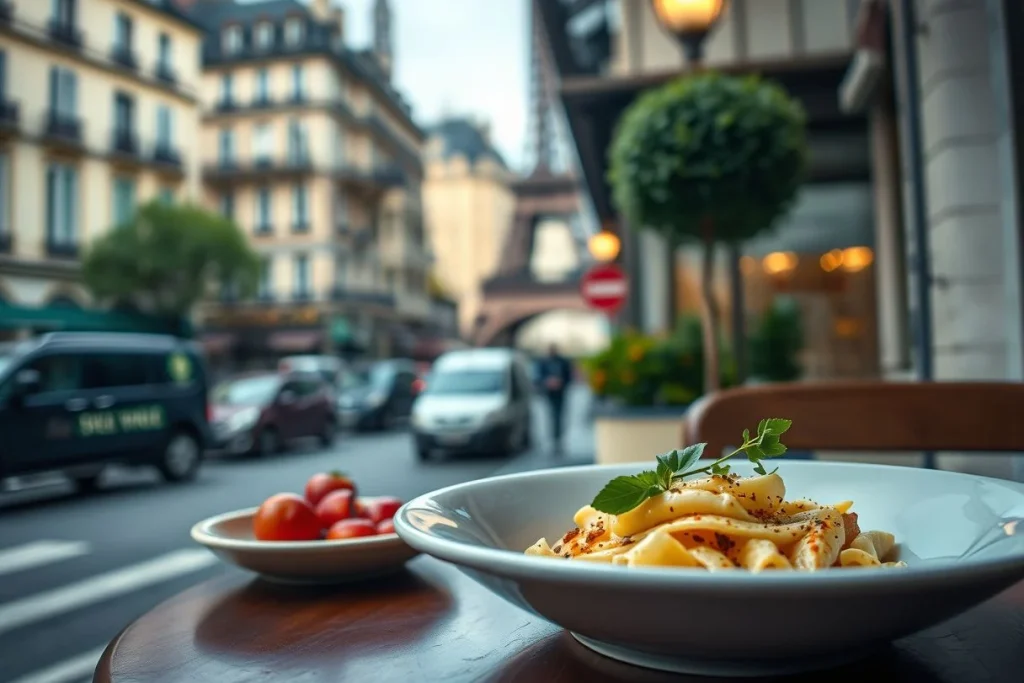
Saint-Germain-des-Prés is the strongest all-round romantic base for many couples. Classic cafés such as Café de Flore and Les Deux Magots, the Jardin du Luxembourg and the neighbourhood’s elegant streets support an unhurried rhythm: a long coffee, a garden walk and dinner without crossing the city. It is generally expensive and nightlife is subdued, which is an advantage for couples wanting sleep rather than late bars.
The 7th arrondissement prioritises landmark views over nightlife. The Eiffel Tower, Champ-de-Mars and Rue Cler are close, and leafy streets make a late walk feel calmer than the major tourist corridors. Hotels tend to be expensive, while the neighbourhood can become quiet after dinner; choose it for tower access, a picnic and an early night, not for a dense choice of evening venues.
Transport-friendly and more local bases
Opéra, Grands Boulevards and Bourse, across the 2nd and 9th, work well for couples who want theatres, shopping, grand cafés and covered passages, with transport links in several directions. This is a useful compromise when one partner prioritises sightseeing and the other prefers restaurants and city energy. The atmosphere is more commercial in places, and traffic can take the edge off a quiet morning.
Canal Saint-Martin and parts of the 10th and 11th offer canal walks, terraces and livelier local evenings. They can provide a better-value base than the central arrondissements, but the Louvre, Eiffel Tower and other headline sights require longer journeys. Stay away from the immediate station environment if you want a calmer arrival and departure; Gare du Nord and Gare de l’Est bring useful connections but also heavy footfall.
Batignolles in the 17th suits couples who would rather live around restaurants and cafés than landmarks. It has a more residential rhythm and can make downtime feel like part of the trip, but you will trade some sightseeing convenience for that local atmosphere. It is a better choice for a longer stay or a return visit than for a tightly packed first weekend.
Montmartre brings winding streets, hilltop views and the village-like setting around Sacré-Cœur. Sunrise or sunset walks can be especially atmospheric, but the Sacré-Cœur and Place du Tertre area can be extremely crowded, while cobbles, stairs and steep streets affect both comfort and access. Couples with mobility concerns should verify the hotel route, lift and entrance carefully; those who prefer flat, effortless walks may find the romance comes with too much work.
Across Paris, calm residential blocks can sit close to crowded sites or nightlife strips, so avoid judging an entire arrondissement by its label. Petty theft and pickpocketing are the practical concerns around major stations, crowded attractions and busy Metro routes; keep phones and bags secure, particularly when moving through the city at night. The area comparisons above draw on neighbourhood guidance from ParisTourism.org and safety-area guidance from Paris Local.
Best area for you: recommendations by couple travel style
For most couples: start with Saint-Germain or Le Marais

For a first search on where to stay in Paris, begin with Saint-Germain-des-Prés or Le Marais. The 6th arrondissement gives you classic cafés, the Jardin du Luxembourg, bookshops and an unhurried Left Bank atmosphere; Le Marais, spread across parts of the 3rd and 4th, brings historic streets, boutiques, cafés and more evening energy. Both make it easy to build days around walking, long lunches and an atmospheric dinner rather than repeated Metro journeys.
| Choose this area if… | Think twice if… |
|---|---|
| Saint-Germain-des-Prés: you want classic cafés, gardens, intimate dinners and slow afternoons. | You want late-night energy or a lower-cost base; central 6th-arrondissement accommodation generally trends expensive and nightlife is subdued. |
| Le Marais: you prefer boutiques, historic lanes, dining and lively evening walks. | You need a larger, quieter room or easy step-free access; hotel stock can be small, and popular streets are crowded. |
| 7th arrondissement: the Eiffel Tower, Champ-de-Mars and leafy evening walks matter most. | You want a busy night after dinner; the area is expensive and comparatively quiet once restaurants close. |
| 1st arrondissement: this is your first Paris visit and the Louvre and Tuileries are priorities. | You want a local neighbourhood feel; the sightseeing core is touristy and tends to cost more. |
These patterns reflect the neighbourhood guidance compiled by ParisTourism.org; they are starting points, not rules. A hotel on a calm side street can feel very different from one beside a major tourist route, so inspect the exact address, nearby Metro entrance and likely nighttime noise before booking.
Match the base to your couple style
- First-time sightseeing: choose the 1st for the shortest route to the Louvre and Tuileries, or Saint-Germain if you want sightseeing balanced with cafés and the Jardin du Luxembourg. The 1st is more convenient; the 6th is more atmospheric.
- Classic romance and downtime: Saint-Germain is the clearest fit, with the café tradition around Café de Flore and Les Deux Magots and easy garden walks. Pick the 7th instead if an Eiffel Tower view or a Champ-de-Mars picnic is central to the trip.
- Boutiques, dinners and later evenings: Le Marais has the strongest combination of shopping, restaurants and LGBTQ+ nightlife. It suits couples who want to step out for an unplanned drink, though its busiest lanes may not deliver quiet.
- Better value without losing atmosphere: look at Canal Saint-Martin, the 10th and 11th, or Batignolles in the 17th. These areas generally trend less expensive than the central 1st, 6th, 7th and Marais, but expect longer journeys to headline sights and more station-area bustle in parts of the 10th.
- Village mood and sunset scenery: Montmartre offers winding streets, hilltop views and a distinctive village atmosphere around Sacré-Cœur. It is a romantic choice for couples happy with steep streets, stairs and crowds near Place du Tertre, but a poor fit for mobility concerns or minimal daily transport.
- Theatre, shopping and connections: Opéra, Grands Boulevards and Bourse suit couples who want grand cafés, covered passages and a practical base across the 2nd and 9th. The trade-off is a more commercial, traffic-heavy setting than Saint-Germain or the Marais.
For the gentlest pace, prioritise a quiet street in Saint-Germain or the 7th. For more spontaneous evenings, choose Le Marais or Canal Saint-Martin. If a Eurostar arrival tempts you towards Gare du Nord, treat the station as a transport advantage rather than an automatic neighbourhood recommendation: compare the immediate street and evening atmosphere with the experience you want from the rest of the stay.
When to book your Paris neighbourhood
Timing affects which Paris neighbourhood works for a couple. June, July, August and December typically bring peak demand, so check live availability and prices for your exact dates, especially if you want a small boutique property in Saint-Germain-des-Prés, Le Marais or the 7th arrondissement. ParisTourism’s 2026 neighbourhood guide also notes that central districts generally cost more; no reliable room rate can be assumed without searching your dates.
April to June and September to October are generally pleasant periods for walking and may bring thinner crowds, although conditions and demand vary. These months make it easier to find a quiet, well-located room without widening the search too far from the centre.
For peak dates, book earlier and keep a second-choice area ready. If the 6th, 7th or Marais is full or priced beyond your comfort, compare Opéra, the 10th or 11th, and Batignolles in the 17th. Each changes the atmosphere and walking distances, but can preserve the couple-focused priorities of good dinners, local evenings and time to linger.
Getting around Paris: transport choices and trade-offs
Walking, Metro and buses

For couples staying in the 1st–7th arrondissements, walking is often the most rewarding way to move between plans. A route along the Seine, across Île de la Cité or through the Tuileries can turn a short transfer into part of the day, with no need to coordinate platforms or tickets. The trade-off is time: use the Metro when you are crossing several neighbourhoods or want to protect an evening reservation.
The Metro is the practical choice for fast movement within Paris, while the RER is designed for longer journeys beyond the central network. Choose accommodation near a useful station rather than relying on the arrondissement number alone: a hotel in the 9th or 10th with a direct Metro connection may be more convenient than one technically closer to a sight but poorly connected. RATP describes the Metro, RER, buses, taxis and Vélib’ as complementary ways to travel around Paris.
Buses suit travellers who prefer to see the streets as they move, although traffic can make journey times less predictable. Vélib’ works well for confident cyclists exploring the Canal Saint-Martin or quieter outer neighbourhoods, but it is not the simplest option with luggage or on unfamiliar, busy roads. Taxis and ride-hailing cost more than public transport but earn their place after a late arrival, a long dinner or when two suitcases make stairs and station changes tiresome.
Tickets and late journeys
Paper t+ ticket carnets have been phased out for sale. Before travelling, check the RATP, Bonjour RATP and Île-de-France Mobilités guidance for the current Navigo Easy and mobile-ticket options; ticket rules can change. Metro and RER hours vary by line and day. The research gives a typical Metro window of roughly 5.30am to 12.30am, with later service on some lines or weekends, while Noctilien night buses operate overnight. Check the specific line when planning a late return.
From the airports
From Charles de Gaulle, the RER B serves central Paris; journey times are described in the research as approximately 35–50 minutes, depending on your destination. That can be efficient for a couple travelling light, but a taxi or pre-arranged transfer is more comfortable with luggage or a late landing. Check the current airport and RATP information before departure, since connections and works can alter the practical choice.
Orly connections include Orlyval linked with RER or Metro services, alongside other airport options; verify the current route with Paris Aéroport. Do not assume Roissybus is running: Le Parisien reported its removal or reconfiguration during 2025–2026, so check the latest airport information. Around Gare du Nord and Gare de l’Est, allow for station bustle and keep phones and bags secure, particularly during crowded transfers.
Paris hotel value: what location usually changes
Location changes what you receive for your accommodation budget in Paris. The 1st, 6th, 7th and Le Marais generally trend more expensive than the 10th, 11th and 17th, according to ParisTourism.org’s neighbourhood guide; exact prices depend more on the property, your dates and the season than on the arrondissement label alone.
Paying more for a central base can buy back time: you may walk to dinner, return easily for a rest and spend less of the day underground. A less central stay in Batignolles, the 10th or the 11th may offer a more local evening atmosphere or better space, but allow for longer journeys to headline sights. Compare flexible dates and check live rates rather than relying on an arrondissement-wide estimate, especially for June, July, August and December.
Before booking, confirm the practical value of the room: lift access, air conditioning, street noise, room size, late check-in and cancellation terms. Look at the walk from the nearest Metro station as well as the map pin; a seemingly convenient address can feel less useful with luggage or after dinner.
Conclusion: choose the Paris base that matches your evenings
For most couples, Saint-Germain-des-Prés is the strongest all-round choice: cafés, the Jardin du Luxembourg, elegant walks and a slower rhythm make it easy to balance sightseeing with downtime. Choose Le Marais if you want more boutiques, intimate restaurants and livelier evenings, or the 7th arrondissement if Eiffel Tower access and quiet nights matter most.
Make Montmartre a deliberate choice for hilltop views and village character, Batignolles for a more local restaurant-and-café base, and Canal Saint-Martin for canal walks and evening energy outside the central visitor core. Your next step is practical: shortlist two neighbourhoods, inspect the exact hotel street and nearest transport stop, then compare live availability for your dates.
Frequently asked questions
Is it worth changing hotels during a short couples’ trip to Paris?
Usually not. Paris’s central arrondissements already make it possible to combine sightseeing, cafés and evening walks from one base, while changing hotels costs time and interrupts an unhurried pace. Choose one neighbourhood that matches your evenings; consider moving only if you specifically want to contrast a central area such as Saint-Germain or Le Marais with hilltop Montmartre.
How far ahead should we book a boutique hotel in a popular arrondissement?
The supplied research gives no reliable booking window, and exact availability and prices vary by property, date and season. Check live availability for your dates, particularly for stays in June, July, August or December, when demand is generally higher. Saint-Germain-des-Prés, the 7th, the 1st and Le Marais are among the areas where central location and boutique-style accommodation can command more.
Can couples enjoy Montmartre without feeling cut off from central Paris?
Yes, provided you are happy to trade some transport time for hilltop views, winding streets and a village-like atmosphere. Montmartre is less central than the 1st–7th arrondissements, and the terrain includes hills, stairs and cobbles; the Sacré-Cœur and Place du Tertre area can also be extremely crowded. Stay away from the busiest hilltop streets if you want quieter evenings, and verify route and hotel accessibility if mobility is a concern.
What should we check before booking an old Parisian apartment or hotel?
Check the exact street and the room’s access rather than judging by arrondissement alone. In Le Marais, some accommodation can be small or potentially inaccessible, while Montmartre requires particular attention to hills, stairs and cobbled routes. Also confirm the property’s current room details, noise position and arrival arrangements directly with the accommodation, since the neighbourhood guides do not establish these for individual properties.
Which neighbourhood is best for a balcony, terrace or especially atmospheric room?
No neighbourhood guarantees a balcony or terrace, so search the individual property listing and obtain written confirmation of the exact room before booking. For atmosphere, the 7th suits couples prioritising leafy streets and Eiffel Tower or Champ-de-Mars access; Montmartre offers hilltop views, while Le Marais brings historic streets, cafés and evening life. These choices involve trade-offs: the 7th is quieter after dinner, and Montmartre is hilly and crowded around its main sights.
How can we choose between a lively street and a quieter side street?
Base the decision on your evenings. Canal Saint-Martin and parts of the 10th and 11th offer terraces, canal walks and livelier nights, while Saint-Germain-des-Prés and the 7th provide a slower, more subdued atmosphere. Major stations, crowded tourist areas and nightlife strips have more bustle and petty-theft or pickpocketing concerns, so check the precise block and the route back to the hotel rather than relying only on the arrondissement name.