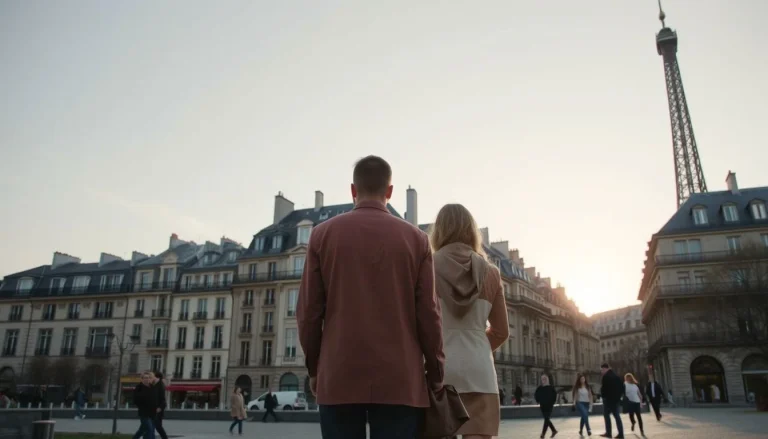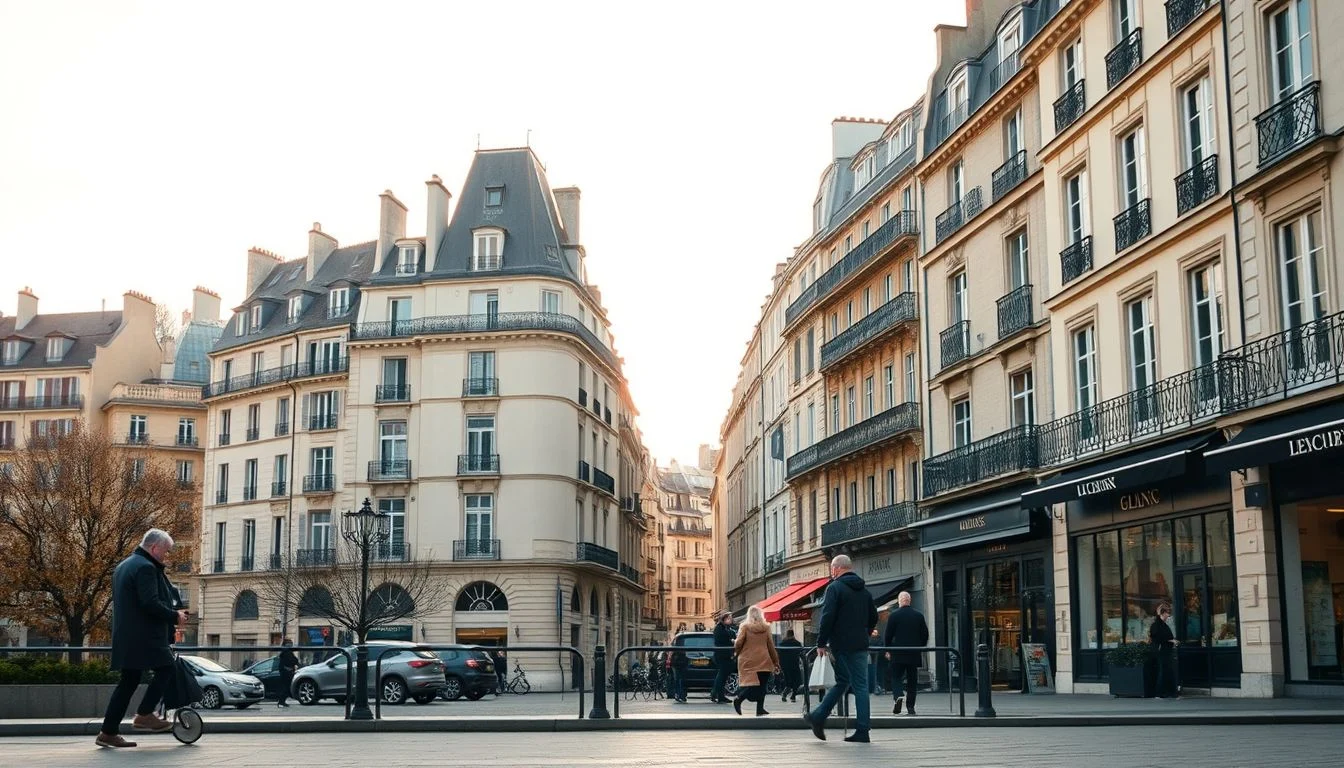
Paris’s 20 arrondissements curl clockwise from the 1st at the city’s centre, divided by the Seine into the Rive Droite and Rive Gauche. That geography puts the Louvre, Saint-Germain-des-Prés, Le Marais and the Eiffel Tower within a compact central area, but each base creates a different kind of couple’s stay: café-lined and literary, lively and fashionable, landmark-focused or hilltop and atmospheric.
Knowing where to stay in Paris means choosing the streets you want to wander after dinner, not simply the monument nearest your hotel. This guide compares Paris neighbourhoods by mood, walkability, transport, nightlife, hotel value and trade-offs, so couples can match an arrondissement to their pace and priorities. Saint-Germain and Le Marais deliver the easiest romantic evenings but usually cost more; the 7th keeps the Eiffel Tower close, while Montmartre brings Sacré-Cœur sunsets with heavier tourist traffic. For quieter streets or better value, the Latin Quarter, Batignolles and selected outer districts deserve a closer look.
Quick answer: Saint-Germain-des-Prés is the best all-round base for couples seeking classic cafés, boutique stays, romantic restaurants and walkable evenings. Choose Le Marais for medieval streets and galleries, the 7th for Eiffel Tower proximity, Montmartre for Sacré-Cœur sunsets, or the Latin Quarter and selected outer neighbourhoods for better value and a slower pace.
Paris arrondissements explained: how the city divides
Paris is divided into 20 arrondissements, numbered in a clockwise spiral from the 1st at the historic centre. The Seine creates the practical split between the Rive Droite (Right Bank) and Rive Gauche (Left Bank), while the Bois de Boulogne in the west and Bois de Vincennes in the east provide two large green anchors. The Paris Tourist Office’s arrondissement guide is useful for orientation, but a neighbourhood’s exact street matters more than its number.
| Part of Paris | Typical feel | Useful for couples | Trade-off |
|---|---|---|---|
| Historic centre | Landmarks, river walks, cafés | Many major sights within a 15–30-minute walk | Higher prices and more visitors |
| Eiffel Tower west | Residential, elegant, quieter after dark | Tower views and relaxed evenings | Less nightlife and longer trips across town |
| Northern hilltops | Views, cobbled lanes, lively local pockets | Sunset walks around Montmartre | Steep streets and tourist crowds in key spots |
| Outer arrondissements | Markets, parks and a more residential rhythm | More space and potentially better value | Longer journeys to central museums |
The 1st–6th arrondissements form the most convenient historic core, spanning both banks and the islands. The 7th and 16th sit west of the centre near the Eiffel Tower, while Montmartre rises in the 18th. Areas such as Batignolles, Belleville and Butte-aux-Cailles sit farther out: choose them for neighbourhood atmosphere, not because the arrondissement label alone guarantees quiet, views or easy transport.
When couples should choose each Paris area
When couples should choose each Paris area
Summer changes how comfortable each of Paris’s best areas feels. From June to August, central sights and romantic districts are busier, while occasional heat makes a shaded, well-connected base especially useful. Saint-Germain, the 7th and Le Marais make it easy to return for a rest; a room near a Metro stop is often more practical than a prettier address with fewer connections.
Winter suits couples who prefer slower days. A central stay keeps evening dining and museums within reach, with cafés nearby when you don’t want a long walk between stops. The Metro and buses make it easier to adjust plans. Paris has cool winters and warm summers, but precise conditions vary, so check Météo-France before travelling.
December brings Christmas-season demand, particularly in popular romantic districts and around major shopping areas. Book early if Saint-Germain, Le Marais or the 7th is part of the brief, then verify seasonal closures, events and transport disruptions before booking. For airport, Versailles or late-night journeys, check current products and service information with RATP and Île-de-France Mobilités; a central ticket doesn’t necessarily cover every trip.
Paris neighbourhood by neighbourhood: character, pros, cons and best for
The choice becomes clearer when each arrondissement is treated as a mood rather than a pin on a map. Paris’s central sights are often around 15–30 minutes apart on foot, according to the Paris Tourist Office, so couples can usually trade a little Metro time for a more appealing evening doorstep.
| Area | Atmosphere and walkability | Evening feel | Accommodation trade-off | Ideal couple |
|---|---|---|---|---|
| Saint-Germain-des-Prés, 6th | Classic Left Bank; highly walkable | Cafés, wine bars and restaurants | Central and polished, but costly | Couples wanting literary Paris and boutique stays |
| Le Marais, 3rd–4th | Historic lanes, galleries and shops | Lively, with late cafés and bars | Strong location, with weekend crowds | First-time visitors who want variety outside the hotel |
| 7th arrondissement | Monumental, calm and convenient for the Eiffel Tower | Quiet and restaurant-led | Views and proximity command a premium | Couples prioritising the tower and relaxed nights |
| Montmartre, 18th | Hilly, cobbled and panoramic | Romantic in pockets; touristy at the summit | Atmosphere for less than some central districts, but weaker connections | Couples drawn to sunsets, views and a village-like setting |
As a broad price guide, the Paris Tourist Office notes that hotels in central arrondissements including the 1st, 4th, 6th, 7th and 8th commonly cost 20–40% above the city average. The exact street matters as much as the arrondissement: a quiet lane can feel completely different from a main shopping or nightlife corridor.
Saint-Germain-des-Prés: classic Left Bank romance
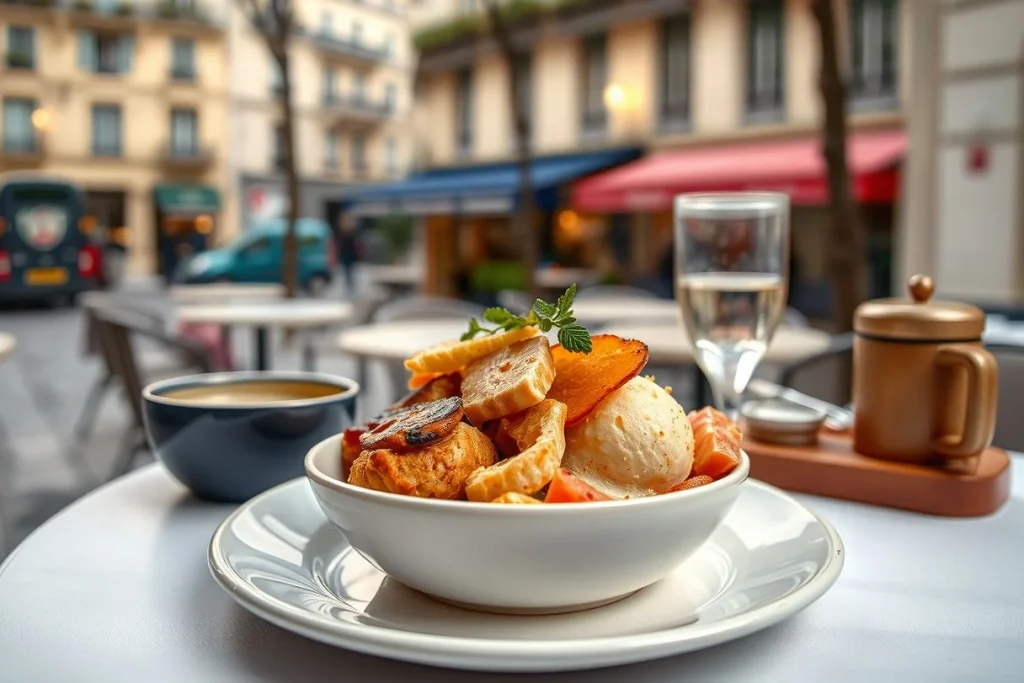
Character: The 6th arrondissement delivers the Paris many couples picture before arriving: literary cafés, galleries, elegant façades and streets made for slow walks. Café de Flore and Les Deux Magots are landmarks of the neighbourhood’s café culture, while the Seine and Musée d’Orsay are within an easy stroll.
Pros: It is one of the most dependable bases for boutique hotels, romantic restaurants and evenings that require no transport. Cons: Accommodation is expensive, and the polished central setting can feel less local than the outer arrondissements. Best for: Couples who want atmosphere at the door and do not mind paying for a prime Left Bank address.
Le Marais: historic streets with more energy
Character: Spanning the 3rd and 4th, Le Marais combines medieval streets with independent boutiques, galleries and cafés. Place des Vosges, the Picasso Museum and the lanes around the Hôtel de Ville make it particularly rewarding for wandering without a fixed plan.
Pros: Walkability is excellent, and the neighbourhood gives first-time visitors a broad mix of history, shopping and nightlife; the Paris Tourist Office specifically recommends it for romantic stays and first visits. Cons: Weekends can be crowded, and well-located hotels are rarely a bargain. Best for: Couples who want to step out for dinner, browse shops and reach several central sights on foot.
The 7th: Eiffel Tower evenings
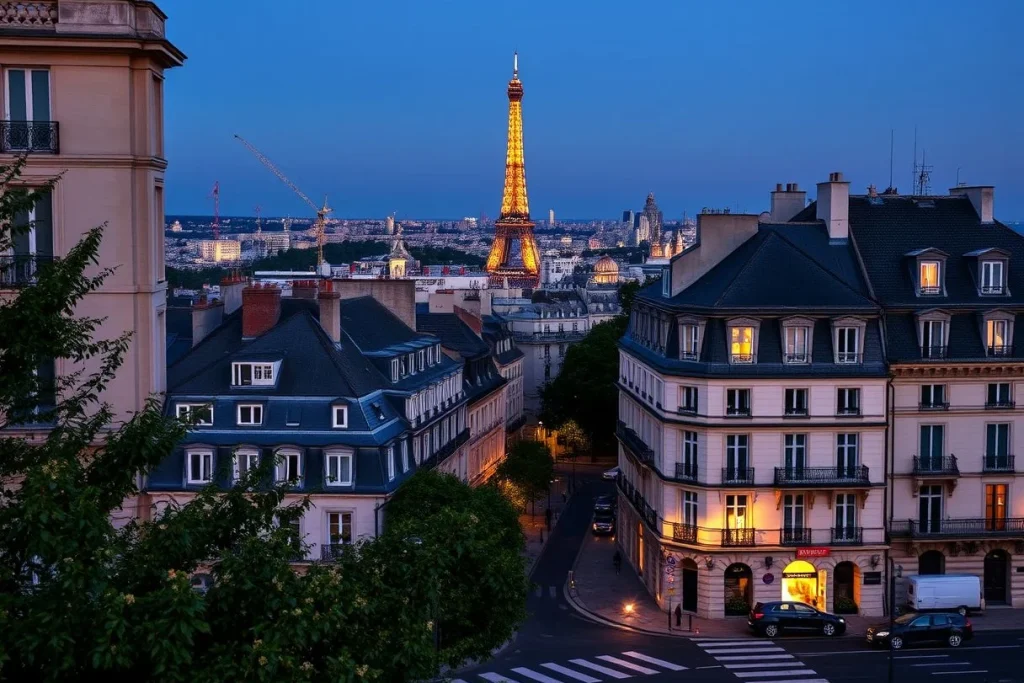
Character: This is the practical romantic choice for the Eiffel Tower, with the Musée d’Orsay, Les Invalides and residential streets around the monument adding substance beyond the view. Some hotels offer tower-facing rooms, but views depend on the individual building and room.
Pros: It suits couples who want to return from sightseeing to a calmer neighbourhood and keep the tower close. Cons: Nightlife is limited compared with Le Marais or the 11th, and hotels are expensive. Best for: A first Paris stay built around the Eiffel Tower, scenic walks and early nights rather than bar-hopping.
Montmartre: hilltop views and postcard Paris

Character: Montmartre’s cobbled streets rise towards Sacré-Cœur, where the elevated setting creates broad city panoramas and memorable sunset walks. Around Place du Tertre, however, the atmosphere is heavily touristed, as noted by the Paris Tourist Office.
Pros: The hilltop setting feels distinctive and can offer better value than Saint-Germain or the 7th. Cons: Slopes make luggage and repeated walks tiring, some pockets are less convenient for cross-city sightseeing, and the summit is busiest during the day. Best for: Couples who value views and neighbourhood character over the shortest route to the Louvre or the Seine.
Central alternatives: museums, food and easy connections
1st arrondissement: The Louvre and Tuileries Garden are the defining advantages, making this the strongest fit for museum-led days. Hotels are costly, and streets away from the main routes can become quiet after the sightseeing crowds leave.
2nd arrondissement: Food, covered passageways and central Metro connections make this a smart compromise. It has fewer headline monuments and can feel commercial rather than residential in places.
Latin Quarter, 5th: Cafés, bookshops, the Panthéon and the Jardin des Plantes create an appealing Left Bank base for culture-focused, value-minded couples. Some streets are noisy, but it offers more character per euro than the most fashionable central districts.
Further options worth considering
8th: Grand hotels, luxury shopping and the Champs-Élysées suit couples seeking polished service, though the area can feel like a business and tourist corridor. 9th: Opéra, department stores, SoPi and strong transport links bring nightlife and a useful mid-range hotel supply, with busy daytime streets.
10th: Canal Saint-Martin offers cafés and a more relaxed setting, with potentially better-value boutique accommodation; choose the exact street carefully near Gare du Nord. 11th: Oberkampf and Bastille are strong for independent bars, bistros and late dinners, but nightlife can bring noise.
12th: Marché d’Aligre and access towards the Bois de Vincennes suit longer stays and quieter mornings, at the cost of distance from the main museums. 14th: Montparnasse, its historic cafés and the Tour Montparnasse area offer calmer evenings, though less immediate romance than Saint-Germain.
15th: More space, markets and a residential feel make it a value-minded choice, with fewer major sights nearby. 16th: Trocadéro and classic Eiffel Tower views come with an upscale, calm setting that is distant from much of the nightlife.
17th: Batignolles and Épinettes provide cafés, markets and a village-like atmosphere, with the arrondissement shifting between busy and quiet pockets. 19th–20th: Parc des Buttes-Chaumont, Belleville, diverse food and lower accommodation costs suit longer stays, but central museums require longer journeys.
For accessibility, assess the hotel and its nearest station rather than relying on the arrondissement label: many older Paris Metro stations are not step-free, so individual station and attraction information needs checking.
The best area for you: Paris stays by couple travel style
For first-time visitors: choose Le Marais
For a first Paris stay, Le Marais is the strongest alternative to Saint-Germain-des-Prés: medieval streets, boutiques, galleries, cafés and easy walking towards the Seine, the Louvre and Place des Vosges. The Paris Tourist Office lists it among its recommendations for romantic stays and first-time visitors. The trade-off is weekend crowds and accommodation that is rarely a bargain.
For classic romance and cafés: choose Saint-Germain
Saint-Germain-des-Prés is the best all-round base for couples who want literary cafés such as Café de Flore and Les Deux Magots, galleries, boutique hotels and restaurants close enough for unhurried evening walks. It feels more polished and consistently romantic than Le Marais, but that atmosphere comes at a premium: central arrondissements including the 6th commonly run 20–40% above the city average, according to ParisTourism.org. Choose Le Marais instead if boutiques, varied bars and more visual street life matter more than quiet sophistication.
For Eiffel Tower priority: choose the 7th
The 7th arrondissement beats both central favourites when the Eiffel Tower is the reason for the trip. It puts tower views, the Musée d’Orsay and Les Invalides within a convenient orbit, with calmer evenings than the main nightlife districts. Hotels are expensive and the area is not the choice for late-night variety; the 16th near Trocadéro is a quieter alternative for classic views, but is less convenient for much of Paris after dark.
For postcard sunsets: choose Montmartre
Montmartre suits couples who want Sacré-Cœur, hilltop views and cobbled streets at the centre of the atmosphere. The area around Place du Tertre is heavily touristed, however, and the hills make it less convenient for spontaneous returns to the hotel; choose the 9th if you want evening energy and stronger connections instead.
For food, nightlife and boutique evenings
Choose the 11th for independent bars, bistros and a lively food scene, accepting that nightlife can mean late noise. The 9th offers the Opéra, department stores, nightlife and a broad mid-range hotel supply. For museums, the 1st is the practical choice near the Louvre and Tuileries, while the 2nd adds food, passageways and centrality without as many headline monuments.
For culture, space or better value
The Latin Quarter is a sensible value choice for cafés, bookshops, the Panthéon and the Jardin des Plantes, though some streets are noisy. For more space and downtime, consider the 12th near Marché d’Aligre, the residential 15th or market-filled Batignolles in the 17th. The 19th–20th offer green spaces, diverse food and lower accommodation costs, but longer journeys to central museums. These areas work best for longer stays rather than a tightly packed first weekend.
Before booking
- Check the exact street, not only the arrondissement, especially near major stations.
- Confirm a lift, air conditioning and room size; older Paris buildings vary considerably.
- Read noise comments carefully if choosing the 9th or 11th.
- Check late-arrival arrangements and the walk from the nearest Metro station.
- For accessibility, verify the individual station and attraction: many older Metro stations are not step-free.
Getting around Paris: walking, Metro, buses and airport connections
For couples, Paris is often easiest on foot. Journeys between major central sights commonly take around 15–30 minutes, so Saint-Germain, Le Marais, the 1st and the 7th let you turn a transfer into a walk along the Seine, through the Tuileries or past quiet side streets. This suits a slower itinerary with time for a café stop; it is less practical if every day includes Versailles or an airport journey.
The Metro is the quickest way to cross the city and connects the central arrondissements with neighbourhoods farther out. Buses are slower but offer views above ground, making them useful when you are not in a hurry. The RER is the more practical choice for longer regional journeys, including trips beyond central Paris. For late returns, heavy luggage or a direct airport transfer, a taxi or ride-hailing car avoids stairs, changes and uncertain walking time.
Paris intra-muros sits within public-transport Zone 1, but airport and Versailles journeys require a check of the current zones and product rules. RATP lists Navigo weekly, monthly and annual passes, Navigo Easy solutions and Paris Visite products; compare validity with your actual travel pattern on RATP and Île-de-France Mobilités zone guidance before buying. A short central stay may not justify a broader pass if most sightseeing is walkable.
Plan the first and last legs carefully. Check the current airport arrangements for Charles de Gaulle Airport and Orly Airport, particularly if arriving late, and allow extra flexibility for Gare du Nord connections. Pickpocketing is a recognised concern around major stations and crowded tourist approaches, including Gare du Nord, the Louvre and the Eiffel Tower. Before departure, check RATP and Île-de-France Mobilités for strikes, closures and major-event changes; verify step-free access at the individual station rather than assuming it from the neighbourhood.
Paris hotel value: where couples pay for atmosphere and convenience
Location is often the biggest price decision in a Paris stay. The Paris Tourist Office guide indicates that hotels in central arrondissements such as the 1st, 4th, 6th, 7th and 8th commonly run around 20–40% above the city average. Treat that as an indicative guide, not a current universal rule: dates, room size and demand can change the comparison.
Saint-Germain-des-Prés, Le Marais, the 1st and the 7th charge for atmosphere and time saved. A smaller room may put you within easy walking reach of dinner, the Seine and major sights; central journeys between attractions are often around 15–30 minutes on foot. The 8th adds grand hotels and shopping, but can feel less residential.
For more space or a gentler rate, compare the Latin Quarter, 9th, 10th, 12th, 15th and 17th arrondissements, as well as selected eastern neighbourhoods. The compromise is extra Metro time and less immediate access to the historic centre. Compare like with like: hotel rates may exclude breakfast and city tax, while apartment stays bring different rules and fees; airport or other transfer costs can also narrow the saving. Refresh live rates and cancellation terms before booking.
Conclusion: choose the Paris atmosphere you want to come home to
For most couples, Saint-Germain-des-Prés remains the safest all-round romantic default: cafés, dinner reservations, boutique hotels and evenings that work well on foot. Choose Le Marais instead if lively first-time exploring, galleries and medieval streets matter more than quiet; the 7th is the clear fit for Eiffel Tower-focused stays, while Montmartre suits sunset views and postcard atmosphere.
For better value, start your search in the Latin Quarter, the 9th or Batignolles in the 17th. Shortlist two areas, then inspect the exact street and nearest Metro station rather than booking by arrondissement alone. Choose the hotel that leaves enough room in your budget and location for an unhurried dinner, a long walk and downtime between sights.
Frequently asked questions
How many nights should couples spend in one Paris neighbourhood?
For a short romantic stay, keep one hotel base rather than moving between arrondissements. Central neighbourhoods make it easier to combine dinners, museums and unplanned walks, with major sights often around 15–30 minutes apart on foot, according to the Paris Tourist Office. Saint-Germain or Le Marais suit couples who want the widest choice of walkable evenings; choose the 7th instead if the Eiffel Tower is the main priority.
Can we combine a central stay with an evening in Montmartre?
Yes. Staying in Saint-Germain, Le Marais or another central arrondissement lets you spend the day near major sights, then travel to Montmartre for Sacré-Cœur views and a hilltop evening. The Metro, buses and other public transport connect Paris neighbourhoods, although the exact route depends on your hotel and should be checked with RATP. Expect the area around Place du Tertre to be heavily touristed, even later in the day.
Are Eiffel Tower-view rooms worth choosing over a more central hotel?
Choose an Eiffel Tower view when the view is central to the mood of the trip and you are happy to pay for proximity or a more limited evening scene. The 7th is recommended for access to the tower, while the 16th offers a calm base near Trocadéro and classic Eiffel views. Saint-Germain or Le Marais generally makes more sense for couples who value varied restaurants, boutiques and walkable evenings over seeing the tower from the room.
Which Paris neighbourhood is best for a slower, less sightseeing-heavy itinerary?
Saint-Germain-des-Prés is the strongest all-round choice for an unhurried couple’s stay: cafés, galleries, boutique accommodation and restaurants are close together, so the day can be built around one walk and one meal. For a more residential feel, consider Batignolles in the 17th or the 12th arrondissement near Marché d’Aligre. These areas offer quieter streets, but you will spend more time travelling to central museums.
Is the Left Bank or Right Bank better for evening walks?
Neither bank is universally better; the choice depends on the atmosphere you want. Saint-Germain and the Latin Quarter on the Left Bank suit café-led walks, the Panthéon and classic Parisian streets, while Le Marais on the Right Bank offers medieval lanes, boutiques, galleries and Place des Vosges. In either area, stay alert in crowded locations: pickpocketing is a known concern around major tourist sights and stations, according to ParisTourism.org.
What should we check before booking a boutique hotel in an older Paris building?
Check the hotel’s own details for lift access, stairs, room size and any access restrictions rather than assuming that a central address is convenient for everyone. Many older Paris Metro stations are not step-free, so also check the specific stations and attractions on your route; Paris Musées advises consulting individual accessibility information. Confirm the exact street, especially if you want quiet nights, and verify current transport arrangements with RATP before travelling.