
This article contains affiliate links. If you book through one of our links, we may earn a commission at no additional cost to you.
At 4,167 metres, Jebel Toubkal is the highest peak in North Africa, reached on the classic route from Imlil through Aroumd and Sidi Chamharouch to Refuge du Toubkal. The final ascent usually begins before dawn and can take six to 10 hours there and back, making Atlas Mountains trekking a serious outing even when the summer trail is non-technical.
This guide is for fit travellers and experienced hikers planning a first trek in Morocco. It will help you choose between a compact two- or three-day Toubkal summit attempt, the quieter high-altitude trails around M’Goun, and gentler Ait Bouguemez valley routes—then judge the fitness, equipment, guide arrangements, weather window and budget each option demands. Winter changes the decision: snow and ice above roughly 2,500–3,000 metres can turn the standard Toubkal route into a mountaineering objective.
Quick answer: For a fit hiker, the classic Toubkal trek from Imlil is usually a two- or three-day itinerary via Aroumd, Sidi Chamharouch and Refuge du Toubkal, with a strenuous pre-dawn summit day. Choose M’Goun for a quieter, longer high-altitude trek, or Ait Bouguemez for gentler valley walking and cultural stays; the best non-technical trekking windows are generally mid-March to May and September to November.
Why trek Morocco’s High Atlas?
The High Atlas changes character quickly after Marrakech: terraced valleys narrow towards Amazigh villages, mule tracks climb above irrigated fields, and the landscape becomes stark and stony at altitude. Above it all is Jebel Toubkal, at 4,167m the highest peak in North Africa, giving a short Moroccan escape a clear physical objective. Reference data on Toubkal’s elevation confirms the scale of that ambition.
That contrast is the main reason to choose Atlas Mountains trekking over a simple sightseeing trip. A Toubkal summit attempt concentrates the experience into a demanding few days: village paths, a night in basic mountain accommodation and a long climb into thin, cold air. It suits fit hikers who want a defined goal without committing to a week on the trail, but it is not a resort excursion or a casual walk from Marrakech.
Stay longer and the reward becomes less about a single summit. M’Goun, including approximately 4,071m Ighil M’Goun, offers quieter, multi-day high-altitude trekking, while Ait Bouguemez—often called the Happy Valley—favours gentler day walks, village stays and time with local communities. Explora Morocco’s route guide describes this useful distinction between summit-focused and valley-based travel. Choose the High Atlas for the effort as much as the scenery: steep paths, changing weather and simple facilities are part of the bargain, while the rewards are mountain scale, cultural contact and a genuine sense of travelling under your own power.
Best Atlas Mountains routes: Toubkal, M’Goun or Ait Bouguemez?
For most fit hikers, the choice is between a compact summit attempt and a slower valley journey. Imlil is the principal trailhead for the classic Toubkal route and is commonly reached from Marrakech by private transfer or shared taxi. M’Goun trades convenience for quieter, longer trekking, while Ait Bouguemez suits travellers who want village stays and lower-intensity walking.
| Route | Typical duration and highest point | Effort and terrain | Sleeping style | Best season | Ideal traveller |
|---|---|---|---|---|---|
| Classic Toubkal from Imlil | Two or three days; Jebel Toubkal, 4,167 m | Strenuous. Imlil–Aroumd–Sidi Chamharouch–Refuge du Toubkal, followed by a pre-dawn summit day. The refuge-to-summit return commonly takes six to 10 hours, with around 1,200–1,500 m of ascent. | Village accommodation or refuge dormitory; confirm the refuge’s seasonal arrangements | Mid-March to May and September to November for generally non-technical conditions | A fit hiker with limited time who wants North Africa’s highest peak |
| Toubkal acclimatisation or valley loop | Three to five days; summit option at 4,167 m | Strenuous at the summit, but with easier days around the approach and valleys | Village accommodation, with a refuge night if the summit is included | Spring and autumn; summer needs careful planning for heat at lower elevations | First-time high-altitude trekkers who prefer a less compressed itinerary |
| M’Goun and Ighil M’Goun circuit | Multi-day; Ighil M’Goun, approximately 4,071 m | Longer and generally quieter than Toubkal, with sustained high-altitude walking | Multi-day camps and local accommodation, depending on the itinerary | Use the main spring and autumn trekking windows | Experienced hikers who value solitude and a full trekking journey over a quick summit |
| Ait Bouguemez, or Happy Valley | Day walks or a multi-day valley trek | Gentler walking, with less emphasis on a 4,000 m summit | Village stays and local guesthouses | Spring for valley landscapes; autumn is also a practical choice | Hikers seeking cultural contact, manageable days and time in villages |
| Lower High Atlas walks | Flexible day or short multi-day routes; no summit required | Lower-intensity mountain walking, selected around villages and valleys | Local accommodation | Spring and autumn; choose lower elevations when upper routes hold snow | Travellers who want Atlas scenery without committing to 4,000 m |
| Winter Toubkal ascent | Usually planned as a multi-day summit itinerary; 4,167 m | Snow and ice commonly occur above approximately 2,500–3,000 m. The normal summer path can become a technical mountaineering route. | Refuge or winter camping arrangements, confirmed in advance | Winter and early spring only with suitable conditions and expertise | Experienced mountaineers with crampons, an ice axe and winter skills |
The classic Toubkal route is the clearest decision for a short trip: its sequence from Imlil to Aroumd, Sidi Chamharouch and Refuge du Toubkal gives the trek a defined rhythm, but the summit day is a serious effort rather than a sightseeing walk. In summer and autumn it is generally non-technical walking and scrambling; winter conditions can change that assessment completely, as reported by MT Toubkal Trek.
M’Goun is the better choice if the journey matters more than ticking off a famous summit. Ait Bouguemez is gentler still: choose it for valley scenery, spring landscapes and cultural stays, not for a single dramatic summit objective. Route conditions, snow cover and access can change, so check a short-range forecast and confirm the proposed itinerary with a local guide before leaving Marrakech.
Toubkal difficulty, fitness and mountain safety
How hard is the Toubkal trek?
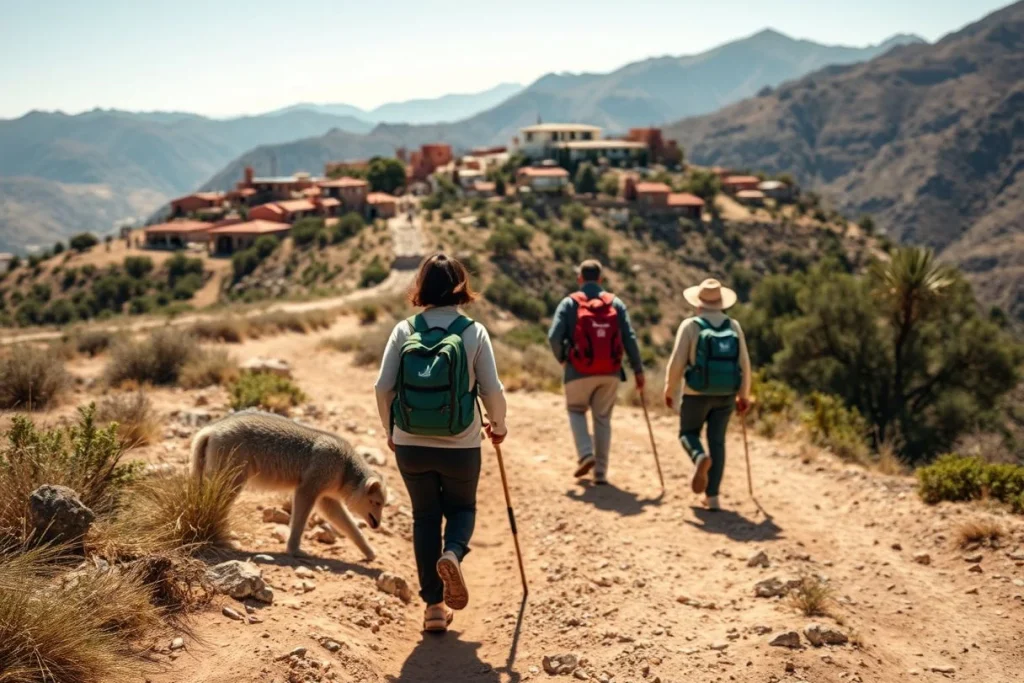
In summer and autumn, the standard Toubkal route is strenuous rather than technical: expect long uphill sections, loose or rocky ground, early starts and little recovery once you are above the valleys. Summit day usually begins before dawn and takes around six to 10 hours for the return from Refuge du Toubkal, depending on fitness and conditions. The climb reaches 4,167m, so strong legs do not remove the risk of altitude sickness.
Train for sustained climbing rather than only flat-distance mileage. Regular uphill cardio, loaded-pack walks, leg strength and, ideally, two hiking days in succession are more useful than a single long walk before departure. If you are unsure about a two-day attempt, add a valley or acclimatisation day; the slower itinerary gives your body more time to adjust and allows an early retreat if conditions deteriorate.
Altitude, weather and changing conditions
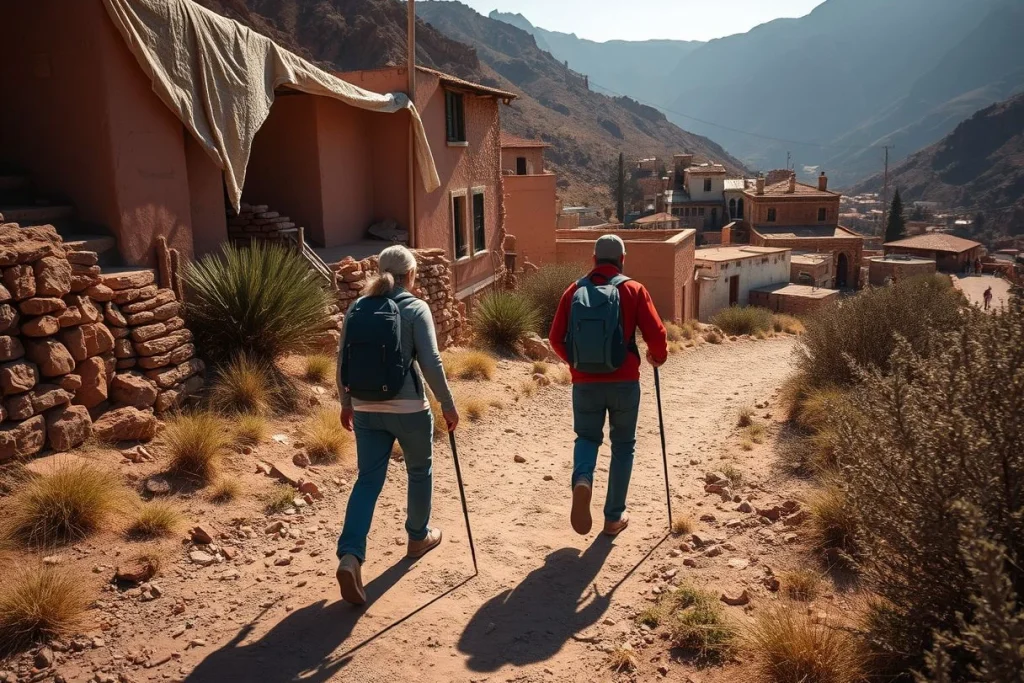
Ascend gradually where the itinerary allows, keep your pace deliberately easy and drink regularly. Headache, nausea, unusual fatigue or dizziness can indicate acute mountain sickness; stop ascending if symptoms appear, and descend if they worsen. Seek medical advice before travelling about any medication, and choose insurance that explicitly covers high-altitude trekking and evacuation, as recommended in guidance from Atlas Mountains Hike for its 2026 Toubkal advice.
Do not treat a clear forecast in Marrakech as a mountain forecast. Snow commonly appears above roughly 2,500–3,000m in winter, and the normal walking route can become an exposed, technical objective. In winter and early spring, crampons, an ice axe and winter mountaineering experience may be necessary; check snow conditions and a short-range mountain forecast shortly before departure with your guide or local trekking operator.
Navigation and emergency planning
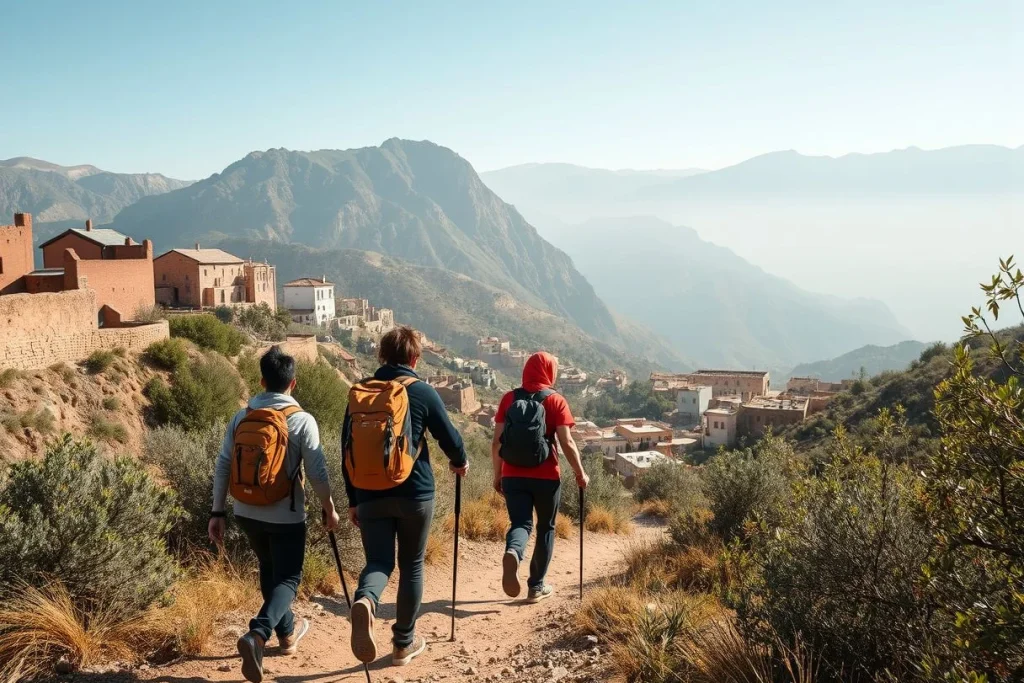
Use a local guide or a reliable map and GPS track, but do not let technology replace judgement. Share your route, overnight plan and expected return with someone outside the group; carry a charged phone, offline maps and enough backup power. Coverage and medical help may be limited higher on the mountain, so agree in advance how the group will respond to injury, worsening altitude symptoms or a forced retreat.
Local sources report that a licensed guide has been expected or enforced in practice on the Toubkal summit approach since around 2018. Confirm the current position with the Bureau des Guides in Imlil before setting out. Also check the GOV.UK Morocco travel advice, updated 15 September 2026, for current security guidance, including warnings about terrorism, occasional violent crime and scams.
Gear and preparation for a High Atlas trek
Pack for changing conditions rather than the valley temperature. For a summer or autumn Toubkal trek, bring broken-in boots or trail shoes, a warm mid-layer, waterproof jacket and trousers, sun cream, sunglasses, a brimmed hat, gloves, trekking poles and a headlamp for the pre-dawn summit start. Carry enough water capacity for the day, treatment tablets or a filter, high-energy snacks, a compact first-aid kit, personal medication, a power bank, navigation backup and a small amount of Moroccan dirham.
- Keep the overnight load light. A small pack is practical for the walk to Refuge du Toubkal or a homestay; ask your operator or local mule team whether part of the luggage can be carried.
- Confirm refuge arrangements. Refuge du Toubkal has basic dormitory accommodation and meals, but bedding, sleeping-bag requirements and seasonal services must be checked before departure, as Imlil Trek notes.
- Bring insulation even in warm months. Imlil has cold winters and marked day-to-night temperature changes, so a fleece or light down jacket earns its place even when the lower trail feels hot.
- Separate summer walking from winter mountaineering. In summer and autumn, the normal route is generally non-technical walking and scrambling. Winter and early spring snow can make it a mountaineering route: crampons, an ice axe and the skills to use them may be necessary, according to MT Toubkal Trek.
Do not rent technical equipment simply because the forecast mentions snow. If conditions require crampons and an ice axe, inexperienced hikers should not improvise; postpone, choose a lower route or use properly qualified mountain support. Ask local providers in Imlil about current rental condition and sizing rather than assuming equipment will be available.
Repeat the gear check after the short-range mountain forecast and snow report, ideally 7–10 days before departure and again before leaving Imlil. Adjust layers, traction and water planning to the actual route; conditions above roughly 2,500–3,000 m can change the character of a trek.
Guided or independent: what changes in practice?
Guided or independent: what changes in practice?
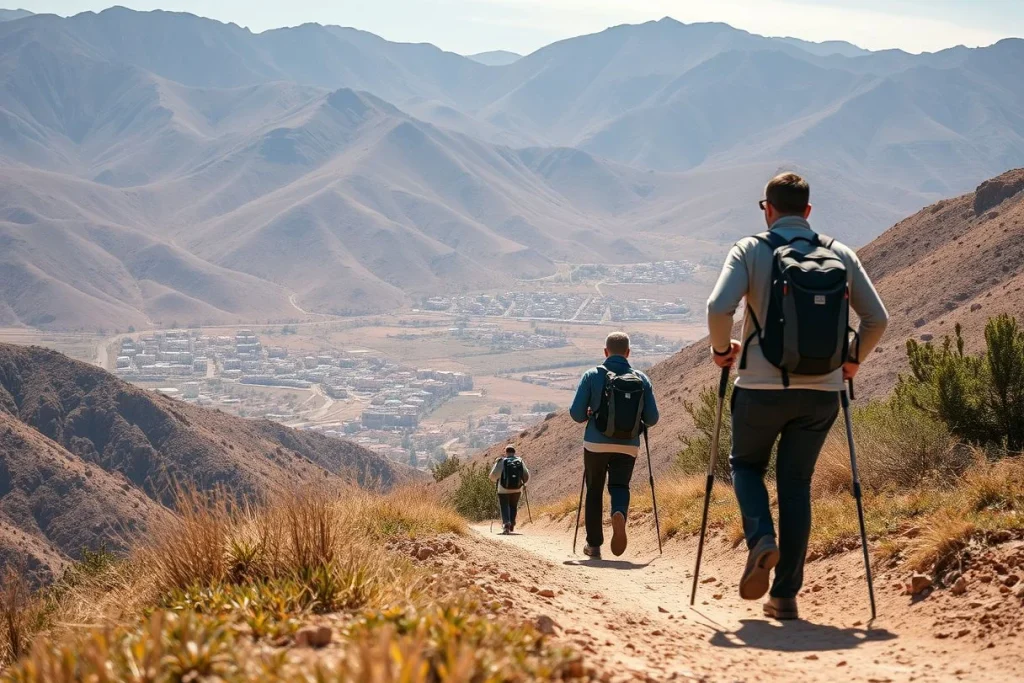
For the classic Toubkal summit approach, a licensed local guide is the least complicated choice. Local sources report that guides have been expected or enforced in practice on the summit route since around 2018. That reflects local practice, not a statement of Moroccan national law, so confirm the current position with the Bureau des Guides in Imlil before setting out, as advised by GuideMe.
A privately hired guide gives a fit, experienced hiker more control than a fixed package: you can agree the pace, route and group size, then decide whether a mule or porter carries shared equipment. An organised package is easier if you also need Marrakech–Imlil transport, meals, refuge arrangements and local logistics, but check exactly what’s included. Ask about the guide’s credentials, emergency procedure, evacuation and high-altitude insurance requirements, cancellation terms, and responsibility for rebooking the refuge if the weather changes.
Independent walking can suit someone comfortable with navigation, Arabic or Tamazight-speaking logistics and arranging accommodation, transport and food directly. It’s a poorer fit for a first Toubkal summit attempt if current guide enforcement is unclear. A guide won’t replace fitness, acclimatisation or the decision to turn back, and mobile coverage and medical help may be limited higher on the mountain, so leave an itinerary with someone and carry a realistic emergency plan.
Don’t treat a summer-style booking as suitable for every departure. Winter and early-spring snow and ice can turn the route into a technical mountaineering objective requiring crampons, an ice axe and relevant experience, according to MT Toubkal Trek. Ask the guide or operator to confirm conditions, equipment, refuge booking, mule arrangements and transport shortly before departure; a guide should support a conservative weather decision, not override it.
Best time to trek the Atlas Mountains
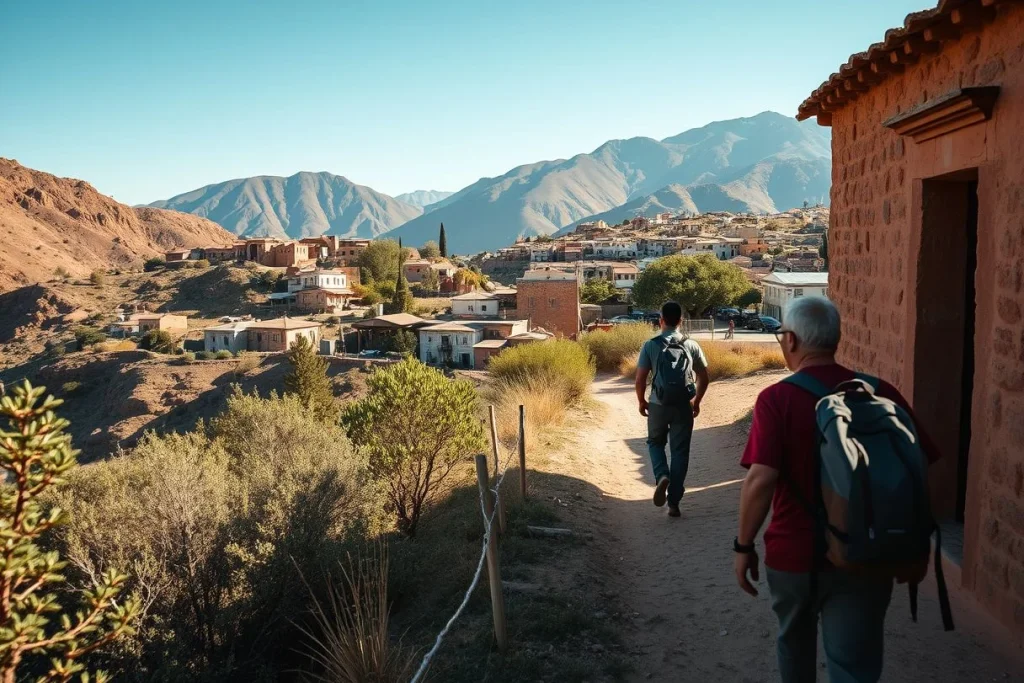
For non-technical Atlas Mountains trekking, the most reliable windows are generally mid-March to May and September to November, according to Marrakech Outdoor Hikes. Spring brings greener valley landscapes and cooler walking temperatures, but snow can remain on higher sections, particularly around the Toubkal summit route. Conditions may change quickly between a warm trailhead and a cold, snow-covered upper mountain, so treat a spring summit attempt as conditional rather than guaranteed.
September to November is often the simpler choice for a first Toubkal trek: the lower valleys have eased from summer heat, nights are cooler and the standard route is commonly suitable for walking and scrambling. Autumn can also bring stronger demand for guides and the Refuge du Toubkal, especially around holiday periods. Confirm refuge availability and booking arrangements before fixing your dates; the refuge’s dormitory accommodation, meals and seasonal services vary.
June, July and August are not automatically poor choices, but heat is a serious factor at lower elevations. Start early, carry sufficient water and consider a higher route or a valley itinerary rather than assuming that summer makes the summit easy. Ait Bouguemez is well suited to gentler valley walking, while M’Goun offers a longer high-altitude alternative; both require route-specific weather planning.
From December through early spring, snow commonly reaches above roughly 2,500–3,000m. The upper Toubkal route can then require crampons, an ice axe and winter mountaineering skills, rather than ordinary trekking equipment, as reported by MT Toubkal Trek in its 2026 weather guide. Check a mountain forecast and snow conditions 7–10 days before departure, then again immediately before setting out. For wider security information, consult the GOV.UK Foreign travel advice for Morocco, updated 15 September 2026.
Getting to Imlil and sleeping on the route
Imlil is the practical gateway to the classic Toubkal route. From Marrakech, arrange a private transfer or shared taxi, commonly via Asni, and confirm the exact drop-off point: reaching Imlil by vehicle is not necessarily the same as beginning on foot near Aroumd. The standard route continues through Aroumd and Sidi Chamharouch to Refuge du Toubkal, according to Imlil Trek.
Stay in an Imlil guesthouse before the climb if you want to sort food, water, a mule and a local guide without rushing from Marrakech. Ask in advance whether the guesthouse can store your town luggage; otherwise leave only what you need for the mountain and keep valuables with you. Confirm your return transfer before setting out, particularly if you are relying on a shared taxi.
On the summit route, Refuge du Toubkal provides basic dormitory accommodation and meals. Bedding, facilities, opening arrangements and the reservation process vary by season, so confirm them directly or through your operator before travelling; do not assume a bed or meal will be available on arrival. The refuge is part of the usual two- or three-day itinerary, rather than a substitute for planning the summit day.
Longer M’Goun and Ait Bouguemez itineraries may use village homestays, with camping possible when it is included and supplied by the itinerary or operator. Ask who carries the tent, sleeping system and cooking equipment, and agree the mule arrangement, luggage limit and meeting point before departure.
Atlas Mountains trekking costs in 2026
Atlas Mountains trekking prices vary mainly with group size, route length and what the operator carries. The figures below are indicative for 2026, not live quotes: ask for an itemised total before booking, especially if your trip starts and ends in Marrakech.
Estimated costs
| Indicative prices, 2026 | Currency | Trip type | Budget | Mid-range | Upper end | Typical inclusions and exclusions |
|---|---|---|---|---|---|---|
| Frugal two-day Toubkal trek | MAD | Shared by two people | Approx. MAD 1,450 per person | — | — | Guide, mule, refuge and meals in the example; Marrakech transport and personal costs may be extra |
| Guided two-day Toubkal package | EUR | Standard package | Approx. €150 per person | Approx. €150–€350 | Approx. €350 | Transfers, private guiding, meals and refuge arrangements vary |
| Bespoke four- to seven-day trek | EUR | Multi-day Atlas itinerary | Approx. €500 per person | Approx. €500–€1,500 | €1,500 or more | Varies with group size, accommodation, guide, mule or porter support, transport and service level |
The MAD 1,450 example is reported by Imlil Trek as a 2026 calculation for two people sharing. The package range comes from Atlas Mountains Hike, also for 2026; the bespoke- trek estimate is reported by Explora Morocco.
Budget separately for Marrakech accommodation, transfers to Imlil, tips, equipment rental, high-altitude insurance, personal snacks, single supplements and a contingency night. Confirm whether the quote includes refuge reservations, meals, mule weight limits and emergency arrangements. Prices can fall per person in a larger group, while private guiding and a small group generally raise them; check the operator’s current written quote before paying.
| Item | Budget | Mid-range | Luxury |
|---|---|---|---|
| DIY or very frugal two-day Toubkal trek | Approximately 1,450 MAD per person when shared by two people | — | — |
| Two-day guided Toubkal package | Approximately €150 per person | Approximately €150–€350 per person | Approximately €350 per person at the upper end of the cited basic-package range |
| Bespoke multi-day Atlas Mountains trek | Approximately €500 | Approximately €500–€1,500 per person | €1,500 or more |
Estimated ranges based on the sources listed below. Prices change; check with providers before booking.
Which Atlas Mountains trek should you book?
For a fit hiker with limited time, choose the classic two- or three-day Toubkal trek from Imlil. Add an acclimatisation day around Aroumd if your schedule allows; the extra margin is worthwhile before the pre-dawn summit push. This is the most direct choice for Mount Toubkal, not the quietest or most flexible.
Choose M’Goun if the journey matters as much as the summit and you want a longer, quieter High Atlas trek. Choose Ait Bouguemez for gentler walking, village stays and cultural encounters rather than a high-altitude objective.
Before paying, confirm guide arrangements with the Imlil Bureau des Guides, reserve Refuge du Toubkal space, check the forecast and snowline 7–10 days before departure, and buy insurance covering high-altitude trekking and evacuation.
Frequently asked questions
Can I attempt Toubkal if I have never trekked above 3,000 metres?
Possibly, but treat the ascent as a serious altitude objective rather than an ordinary hike. Jebel Toubkal reaches 4,167 m, and acute mountain sickness is a risk; build in acclimatisation where possible, keep a sensible pace and descend if symptoms worsen. Arrange insurance covering high-altitude trekking and evacuation, and seek medical advice about altitude medication before travelling.
What should I do if Refuge du Toubkal is full or closed?
Do not start the summit itinerary until your guide has confirmed a workable overnight plan. Refuge du Toubkal provides basic dormitory accommodation and meals, but its facilities and opening arrangements vary by season, so confirm availability and booking requirements before departure. Ask the Bureau des Guides in Imlil or your operator about an alternative itinerary rather than assuming you can sleep at the refuge.
Is Ait Bouguemez a good choice for a first multi-day mountain trek?
Yes, particularly if your priority is learning the rhythm of multi-day trekking without committing immediately to a 4,167 m summit. Ait Bouguemez, also called the Happy Valley, offers gentler day walks and multi-day valley routes, with village stays and cultural interaction. It is a better fit than Toubkal for lower-intensity walking, though you should still confirm the route, accommodation and guide arrangements locally.
Can I leave my main luggage in Marrakech while trekking?
This can be practical, but the supplied travel information does not guarantee storage at any particular hotel, riad or trekking operator. Arrange it directly with your Marrakech accommodation or guide before travelling to Imlil, and confirm how the bag will be secured and collected after the trek. Carry only the equipment needed for the mountains, while keeping important documents, medication and valuables with you.
Are mules available for luggage on routes beyond Toubkal?
Mule support is part of the arrangements commonly discussed for Toubkal treks, but availability beyond the classic Imlil route is not guaranteed by the available sources. Ask your guide or operator to confirm mule availability, luggage limits, cost and the villages or camps they can reach before booking M’Goun or Ait Bouguemez. Confirm again shortly before departure, especially in peak months and holiday periods.
What food and water arrangements should I expect on a High Atlas trek?
On the classic Toubkal route, Refuge du Toubkal offers meals alongside basic dormitory accommodation, although services and opening arrangements vary by season. For M’Goun, Ait Bouguemez and other routes, agree in advance whether meals are provided by a refuge, village accommodation, camp crew or guide. The available information does not specify a universal water system, so ask your operator what water is available and what treatment or carrying plan you need.