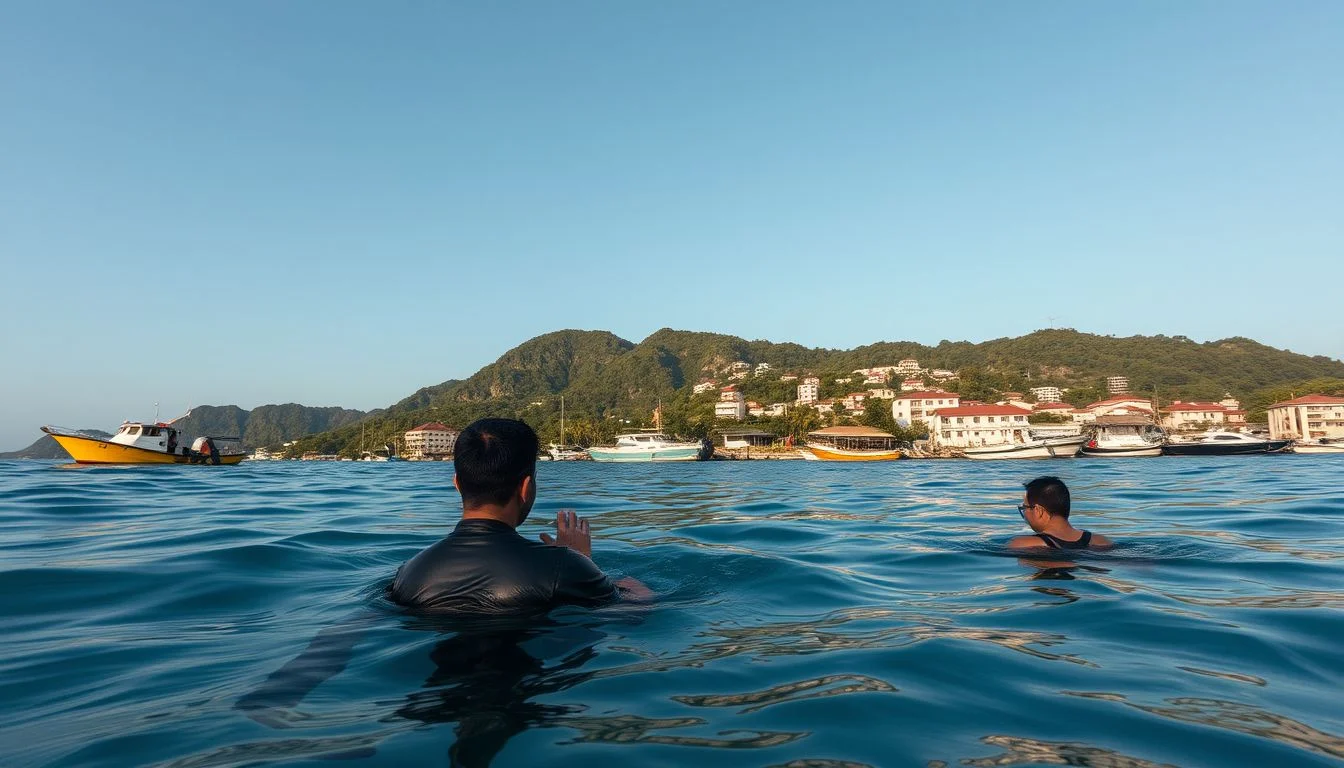
Mae Haad and Sairee hold one of Thailand’s largest concentrations of beginner dive schools, while sheltered bays such as Ao Leuk and Shark Bay provide calmer settings for first skills. That makes learning to dive on Koh Tao accessible, but the island’s low headline prices should not decide your booking: course length, instructor ratios, equipment and emergency procedures vary between operators.
This guide is for independent travellers taking their first scuba course, especially those choosing between a one-day introduction and a full Open Water qualification. It helps you match a base to your priorities, choose dates around sea conditions and demand, check a school properly, plan the ferry from Koh Samui or the mainland, and leave enough time before flying after your final dive.
Quick answer: Yes: Koh Tao is a major beginner-certification hub, with many schools around Sairee and Mae Haad and sheltered training options such as Ao Leuk and Shark Bay. An Open Water course usually takes 3–4 days and combines theory, confined-water skills and four open-water dives; December to April generally offers the most favourable learning conditions, although weather and schedules should be checked before booking.
What to expect when learning to dive on Koh Tao
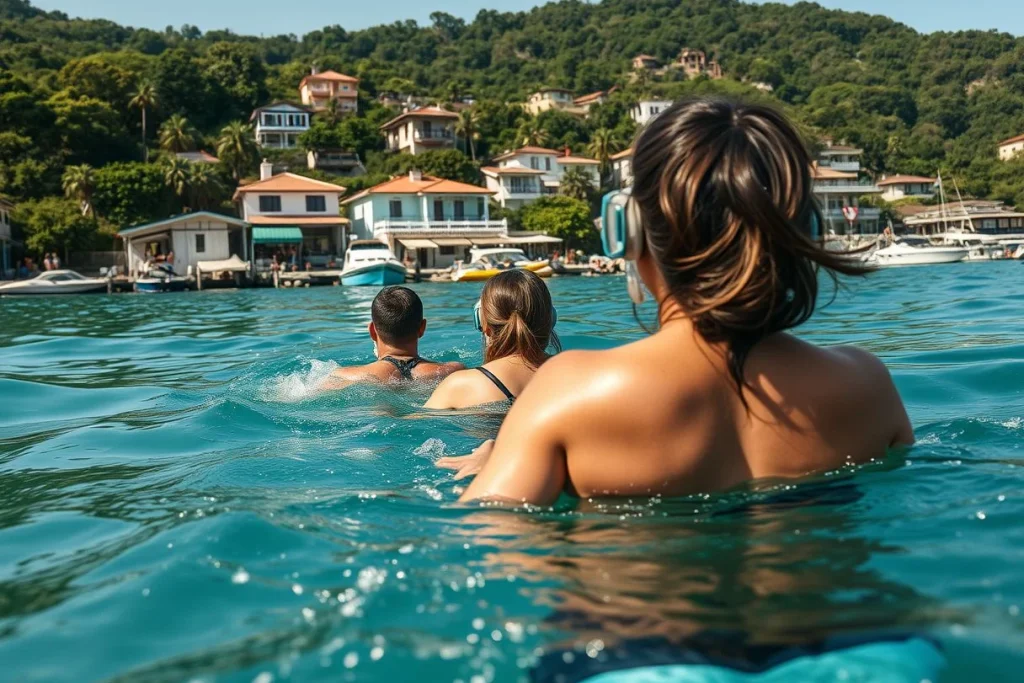
The first minutes are deliberately slow: a boat ride out from Koh Tao, a final equipment check, then a controlled descent while an instructor watches each hand signal and breath. For a beginner, the work is less about athleticism than staying calm, clearing a mask and learning to move without fighting the water.
That makes Koh Tao a strong place to learn, provided you choose the school rather than simply the cheapest advertised course. The island is a major certification hub, with many operators around Sairee Beach and Mae Haad. Dive Curated’s 2026 guide describes the standard Open Water pathway as theory or e-learning, confined-water skills and four open-water dives, normally spread over 3–4 days. Training is generally conducted to a recommended maximum depth of 18 metres.
You do not need previous scuba experience to start. You will, however, complete a medical declaration before entering the water; some conditions require a doctor’s clearance, so answer the form accurately and ask the school about it before paying. If you are unsure about committing to a qualification, a Discover Scuba session can provide a supervised introduction, but it is not a substitute for Open Water certification.
The course is physically manageable for many first-timers, but it is not entirely passive. Boat boarding, shore entries, carrying equipment and repeated practice can be tiring, while anxiety, poor sleep or seasickness can affect learning. Tell the instructor about concerns early rather than trying to conceal them.
What matters most is the fit between your plan and the operator: a sheltered training site, a pace that leaves room for questions, current equipment and clear emergency procedures. Dive shops generally operate year-round, although Destination Thailand’s 2026 guide notes greater teaching and boat-schedule capacity from December to March. Allow extra time after the final dive too: Dive Curated advises waiting at least 18–24 hours before flying and checking current PADI or SSI guidance.
The decisions ahead are practical ones: where to base yourself, which dates give you the best chance of settled conditions, whether a taster or full course suits you, how to vet a school and how to arrive without missing the first briefing.
Where to train: choosing between Sairee, Mae Haad and the southern bays
The right base depends less on the name of the bay than on how you want to spend the hours outside training. Sairee and Mae Haad contain the largest concentration of dive schools; the school may then take you to a separate shore or boat-training site, chosen according to conditions. Destination Thailand describes Ao Leuk and Shark Bay as sheltered, shallow or convenient for beginners, but neither bay is guaranteed to be calm or used on every course day.
| Base | Atmosphere | Logistics for a beginner | Trade-offs |
|---|---|---|---|
| Sairee Beach | Social, with the largest spread of restaurants, accommodation and dive schools | Good for comparing schools and keeping transfers short if your operator is nearby | Busier and less quiet after training; confirm whether transport to the actual training site is included |
| Mae Haad | Central and practical rather than resort-like | The easiest arrival base beside Mae Haad Pier, especially if your course starts soon after reaching Koh Tao | Ferry traffic and boat boarding can make the first day feel hectic; check luggage storage and pickup arrangements |
| Chalok Baan Kao | Quieter southern base with accommodation and some dive-school options | Suits learners who prefer a slower evening and do not need to be beside the main pier | Fewer nearby choices than Sairee or Mae Haad, so verify daily transport and meeting points before booking |
As a training environment, ask specifically about Ao Leuk and Shark Bay. Their sheltered, shallow character can make early skills less intimidating, while the usual Open Water qualification still progresses towards a recommended maximum depth of 18 metres, according to Dive Curated. The operator decides the final site, boat schedule and entry method; wind, visibility and sea state can change that plan.
Accessibility deserves a direct question, not an assumption. Boat boarding, shore entries, steps and Koh Tao’s hilly terrain may be difficult with limited mobility or heavy equipment. Before paying, ask the school to describe the route from accommodation to water, whether assistance is available, and where equipment is assembled; the location that looks most convenient on a map may not be the easiest one physically.
Best time to learn to dive on Koh Tao: calmer seas versus peak demand
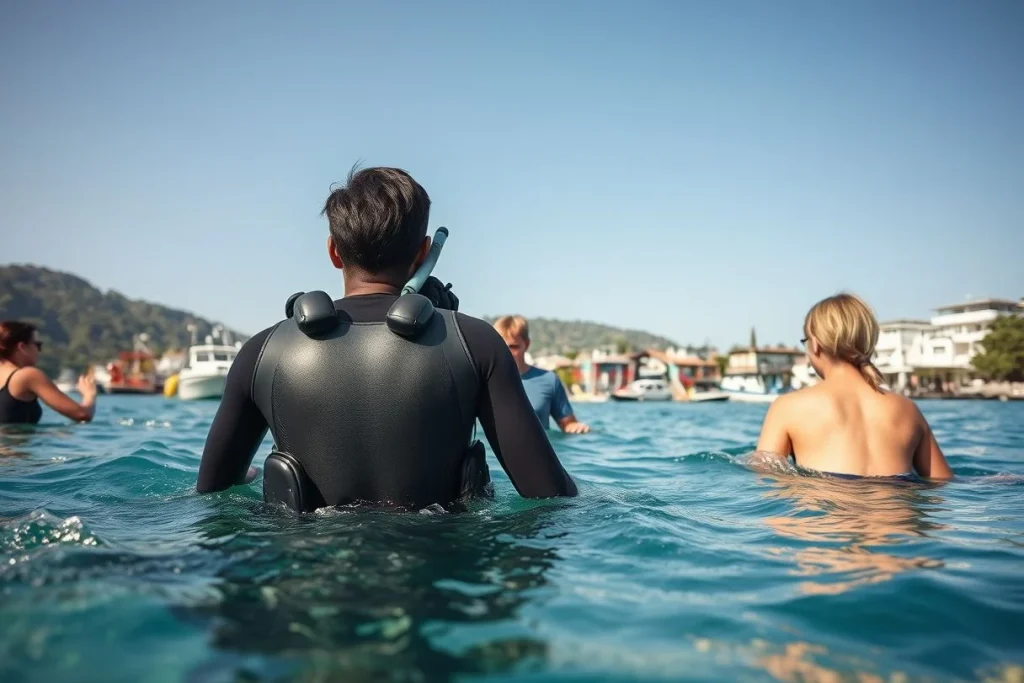
For most first-time learners, the strongest window for learning to dive on Koh Tao is December to April. The Gulf of Thailand is generally drier and seas are often calmer, making the first confined-water session and boat dives easier to manage. Dive shops operate year-round, but Destination Thailand reports greater teaching and boat-schedule capacity from December to March.
May to November can still work, but conditions are less predictable: rain, cloud and wind may affect visibility, sea state and the day’s dive plan. Treat this as a flexible-season choice rather than a reason to cancel. Ask your school, before booking, how it reschedules cancelled dives, whether unused course days can be carried forward and how much notice it gives when weather changes.
Demand is a separate consideration. Christmas and New Year, Thai public holidays and Full Moon Party periods on nearby Koh Phangan can put pressure on accommodation, ferries and course places; Lomprayah’s timetable information also flags the importance of checking current sailings. December to March may offer the most reliable teaching capacity, but it is not automatically the quietest or easiest time to find a room.
Build at least one spare day into an itinerary centred on a three- or four-day Open Water course. That buffer protects the qualification if a boat day is cancelled and gives you room to handle a delayed arrival without compressing training. Check the forecast close to departure, confirm ferry schedules and event dates with the relevant operator or official source, and ask the school about its weather policy in writing. If you plan to fly after certification, follow current PADI or SSI guidance and allow at least 18–24 hours after the final dive; the exact advice depends on your dive profile.
How to book your course and reach the first dive
Choose the course before you choose the school
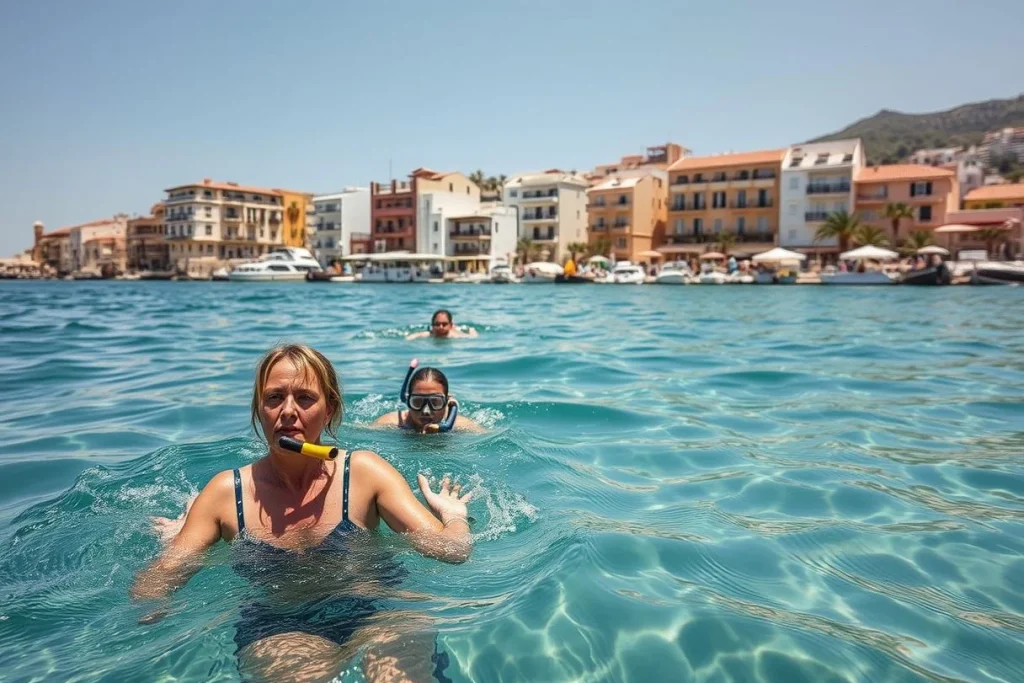
Start with the outcome you want. Discover Scuba is a one-day, supervised introduction for travellers who want to try breathing underwater without committing to certification. An Open Water course is the more useful choice if you plan to dive again: it normally takes three to four days and combines theory or e-learning, confined-water skills and four open-water dives, generally to a recommended maximum depth of 18 metres. A 2026 guide from Dive Curated describes this as the usual Koh Tao beginner pathway.
PADI, SSI and RAID are different training systems rather than a simple safety ranking. Choose the instructor, class size, schedule and equipment standard first, then confirm which agency issues the certification. A very low price deserves questions: course quality can differ in instructor-to-student ratios, equipment and emergency procedures, as OutThailand notes in its 2026 Thailand diving guide.
Use a three-school shortlist
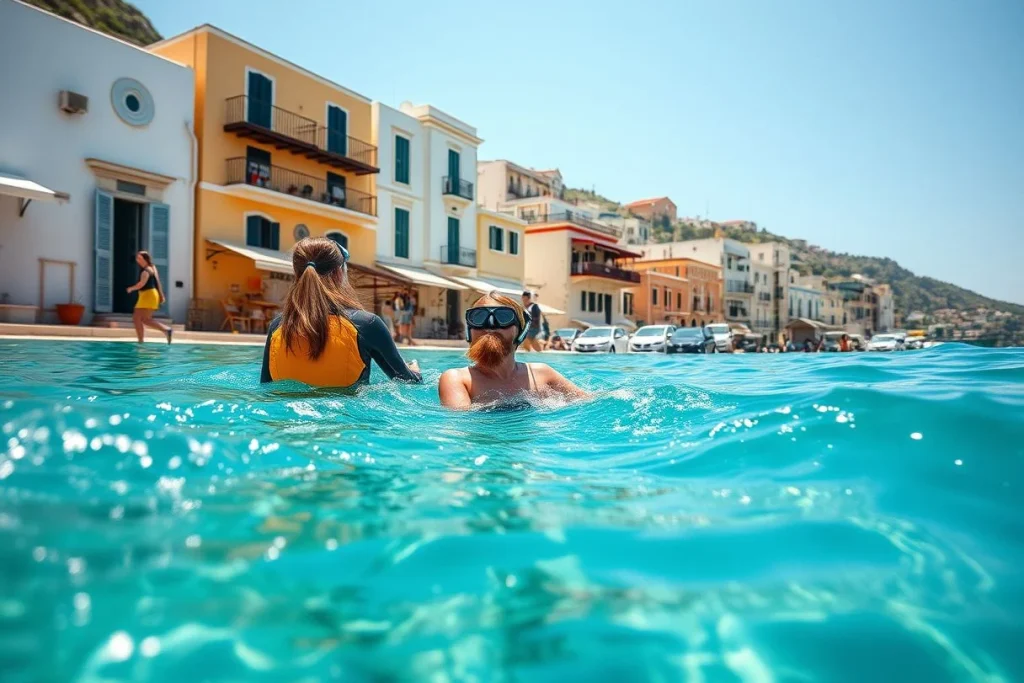
Shortlist three operators around Sairee or Mae Haad, where many Koh Tao dive schools are concentrated. Send each the same questions: what is the maximum class size, the instructor-to-student ratio and the teaching language? Ask whether equipment is serviced and inspected, and whether the boat carries emergency oxygen, first-aid equipment and appropriate insurance. Confirm the policy for weather cancellations, rescheduling and missed ferry connections.
Request a written breakdown of what the quoted course includes: e-learning or classroom work, equipment, boat trips, certification processing, hotel transfers and any park or other local charges. Recent independent reviews can reveal communication and organisation, but they cannot replace a direct answer about safety procedures. The school should also explain the medical declaration. Some conditions require a doctor’s sign-off before participation, so disclose relevant information rather than hoping it will not matter.
Build the arrival around the first lesson
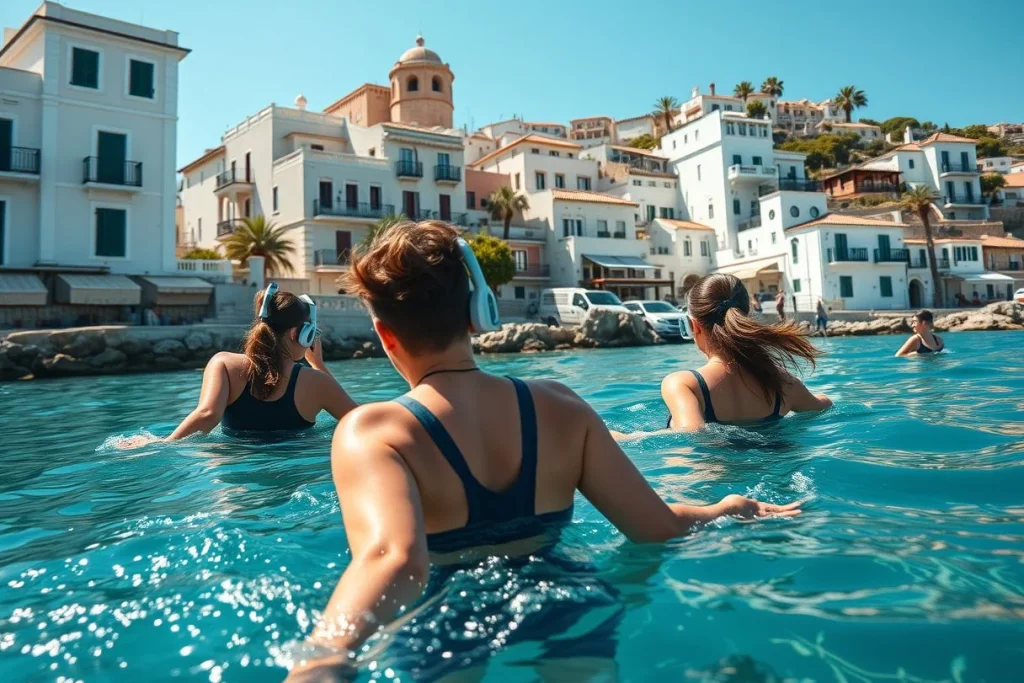
Reach Koh Tao at least one day before training, particularly if your route includes a flight, a long mainland transfer or a tight ferry connection. Travellers commonly come through Koh Samui, Surat Thani or Chumphon and continue by high-speed ferry. Lomprayah High-Speed Ferries and Seatran Discovery are relevant operators where services are available; the Lomprayah timetable should be checked alongside the booking page before you commit. Published 2026 Samui–Koh Tao fares commonly fall around THB 550–740 one way, while mainland combined bus-and-boat tickets vary more widely by route and operator.
Book accommodation near the school or confirm its transfer arrangements, then leave enough margin for a delayed boat. Mae Haad is practical for arrival; Sairee suits travellers who want restaurants and services close by, while southern bases may involve a longer transfer. Tell the school about mobility needs in advance: steps, hilly roads, boat boarding and shore entries can all affect accessibility, and assistance must be arranged with the operator.
Finally, check dive insurance exclusions and the agency’s current flying-after-diving guidance before booking flights home. The conservative advice supplied for this guide is to allow at least 18–24 hours after the final dive, with the exact recommendation depending on the dive profile.
Koh Tao diving course prices and a realistic 2026 trip budget
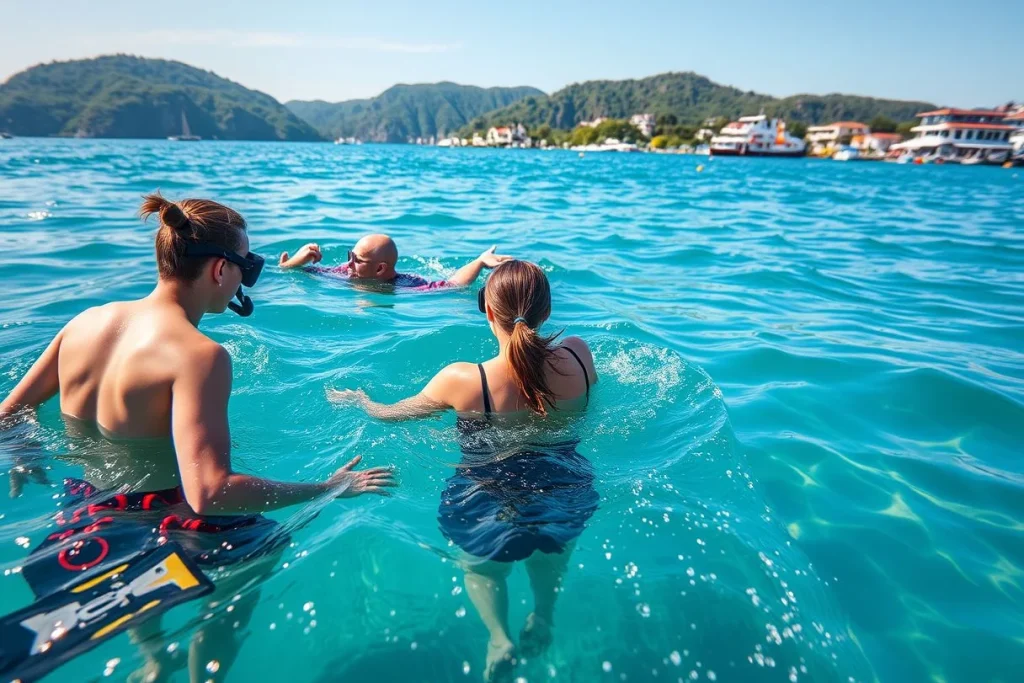
For learning to dive on Koh Tao, the course is only part of the bill. The estimates below are checked for 2026 and separate training, transport, accommodation and complete-trip examples. Prices come from the 2026 figures reported by Dive Curated, Top Dive Shops, Destination Thailand, ThailandAddict and the Lomprayah timetable; live operator prices can change.
| Estimated cost (2026) | Budget | Mid-range | Luxury |
|---|---|---|---|
| Open Water course, 3–4 days | THB 9,000 | THB 11,000 | THB 13,000 |
| Discover Scuba, one day | THB 2,600 | THB 2,800 | THB 3,000 |
| Samui–Koh Tao high-speed ferry, one way | THB 550 | THB 645 | THB 740 |
| Mainland bus-and-boat ticket, one way | THB 350 | THB 575 | THB 1,100 |
| Budget accommodation, per night | THB 300 | THB 550 | THB 800 |
| Mid-range accommodation, per night | THB 1,200 | THB 2,100 | THB 3,000 |
| Luxury accommodation, per night | THB 4,000 | Above THB 4,000 | Above THB 4,000 |
| Sample budget learner trip | THB 13,500 | THB 15,750 | THB 18,000 |
| Sample mid-range learner trip | THB 22,000 | THB 28,500 | THB 35,000 |
| Premium learner package | Above THB 50,000 | Above THB 50,000 | Above THB 50,000 |
Course estimates typically include e-learning or theory, equipment, four open-water dives and certification processing. Confirm the inclusions: meals, hotel transfers, extra nights, travel to the pier and any medical or insurance costs may sit outside the quote. The sample budget total assumes an Open Water course, four nights, return ferry travel, basic food and local transport; the mid-range example uses four nights of private accommodation, meals and transfers.
These are planning bands, not guarantees. Ferry operator, sailing date, booking channel, room demand and exchange rates can move the total, particularly around Christmas, New Year, Thai public holidays and Full Moon Party periods. Check the chosen school, Lomprayah or another ferry operator, and accommodation directly before paying.
An unusually cheap Open Water quote deserves questions rather than an instant booking. Ask about instructor-to-student ratios, equipment servicing and replacement, emergency oxygen, first-aid provision and boat procedures. A slightly higher fee can be better value if it gives a small group and enough time to repeat a skill without rushing.
| Item | Budget | Mid-range | Luxury |
|---|---|---|---|
| PADI, SSI or comparable Open Water course | THB 9,000 | THB 11,000 | THB 13,000 |
| Discover Scuba one-day taster | THB 2,600 | THB 2,800 | THB 3,000 |
| High-speed ferry from Koh Samui to Koh Tao | THB 550 one way | THB 645 one way | THB 740 one way |
| Mainland-to-Koh Tao combined bus-and-boat ticket | THB 350 one way | THB 575 one way | THB 1,100 one way |
| Budget accommodation | THB 300 per night | THB 550 per night | THB 800 per night |
| Mid-range accommodation | THB 1,200 per night | THB 2,100 per night | THB 3,000 per night |
| Luxury accommodation | THB 4,000 per night | Above THB 4,000 per night | Above THB 4,000 per night |
| Sample budget learner trip | THB 13,500 | THB 15,750 | THB 18,000 |
| Sample mid-range learner trip | THB 22,000 | THB 28,500 | THB 35,000 |
| Premium learner trip | Above THB 50,000 | Above THB 50,000 | Above THB 50,000 |
Estimated ranges based on the sources listed below. Prices change; check with providers before booking.
Practical tips for a safer, smoother first course
- Leave four full days for the course. The normal Open Water pathway combines theory or e-learning, confined-water skills and four open-water dives, and generally takes three to four days, according to Dive Curated’s 2026 guide. Don’t force it into a two-day island itinerary: a slower schedule gives you room to repeat a skill, rest between dives or accommodate a weather change.
- Keep the day before training light. Arrive with time to settle in, sleep properly and organise your swimwear, rash protection, towel, water bottle and a compact dry bag. Avoid alcohol before diving, and drink regularly in the tropical heat; dehydration and a late night are a poor combination for an early boat departure.
- Answer the medical questionnaire honestly. A standard dive medical declaration is required, and some conditions may require a doctor’s clearance before you enter the water, according to Dive Curated’s 2026 course guidance. Do not dive with congestion, and ask the school before booking if you have a medical condition, recent illness or anxiety in the water. Your instructor and certifying agency’s requirements take priority over general travel advice.
- Tell the school how confident you are in water. You don’t need to be a competitive swimmer, but you do need to meet the relevant agency’s swimming and water-comfort requirements. If you’re nervous, a weak swimmer or uneasy with mask removal, say so in advance and ask exactly what assessment and support the course includes rather than hoping to manage it on the day.
- Check the kit before the first open-water dive. Ask for a mask that seals without painful tightness, a correctly sized wetsuit and a regulator you can breathe from comfortably. Use confined-water practice to check buoyancy and weighting; equipment that pinches, leaks or feels unfamiliar should be adjusted before the boat leaves shore.
- Build ferry and flying buffers into the plan. Koh Tao is commonly reached from Koh Samui, Surat Thani or Chumphon by high-speed ferry. Around Full Moon Party periods and Thai public holidays, check the current operator timetable and allow extra time rather than booking a course immediately after arrival. After the final dive, follow current PADI or SSI guidance and leave at least 18–24 hours before flying.
- Ask about access before paying. Hilly roads, stairs, shore entries, boat ladders and wet decks can make a course harder for travellers with limited mobility. Describe your needs to the school and confirm what assistance is available; accessibility varies by accommodation, training site and boat.
- Carry suitable insurance and don’t treat a checklist as clearance. Choose travel insurance that explicitly covers scuba diving and keep the policy details accessible. These are planning safeguards, not a substitute for the instructor’s briefing, the certifying agency’s rules or a decision to stop if you feel unwell.
The simplest good choice for your first Koh Tao course
For most first-time divers, the simplest good choice is a four-day Open Water course with a safety-transparent school near Mae Haad or Sairee. These bases make ferry arrival, accommodation and daily transfers easier; choose December to April if your dates are flexible, when conditions are generally more favourable for learning.
Ao Leuk or Shark Bay may provide sheltered training, but the instructor should select each site according to the day’s conditions and your progress. Before paying, compare three schools on instructor-to-student ratio, equipment and emergency procedures—not price alone.
Ask each school to confirm what the fee includes, where confined-water and open-water sessions take place, and whether your ferry arrival leaves enough time for registration. Submit the medical paperwork honestly, check diving insurance, and leave at least 18–24 hours between your final dive and any flight, following current agency guidance.
Frequently asked questions
Can I start a course if I have never been in the sea with scuba gear before?
Yes. The standard Open Water pathway on Koh Tao is designed around learning from the beginning: theory or e-learning, confined-water skills and four open-water dives. Courses generally take three to four days, and training is normally conducted to a recommended maximum depth of 18 metres. Tell the school about your experience before booking, and complete the required medical declaration honestly.
What happens if I feel anxious or cannot complete a skill on the first attempt?
Do not hide discomfort or rush to keep pace with a group. Tell your instructor immediately and ask how the skill can be practised again in confined water or at a slower pace; the course structure includes dedicated skill training before the open-water dives. Ask the school in advance how it handles missed skills, extra practice and unfinished dives, since procedures and instructor ratios vary between operators.
Is Koh Tao suitable for travellers with limited mobility or difficulty climbing steps?
It may be possible, but suitability depends on the school, boat, shore entry and your individual needs. Koh Tao involves boat boarding, steps and hilly terrain, and some training areas may require a shore entry. Contact several schools before booking, describe the assistance you need, and ask them to confirm access arrangements, equipment handling and emergency procedures rather than assuming a standard course will work.
Should I choose PADI, SSI or RAID for my first qualification?
The agency name should not be your only deciding factor. PADI and SSI are among the course systems referenced in current Koh Tao guidance, while RAID is also available; the usual beginner content remains theory or e-learning, confined-water skills and four open-water dives. Compare the school’s instructor ratios, equipment, emergency oxygen, first-aid provision and boat condition, and investigate unusually low prices before choosing.
Can I combine an Open Water course with snorkelling or other island activities?
Yes, but protect the course timetable first. An Open Water course generally takes three to four days and includes four open-water dives, so adding activities is easiest before or after the training rather than between demanding sessions. Ask the school for its daily schedule, then leave room for weather changes and recovery. Snorkelling or other bookings should remain flexible until the dive dates are confirmed.
What should I do if weather cancels one of my training dives?
Speak to the school before rearranging transport or flying onward. Weather and sea conditions can be variable, particularly outside the more favourable December-to-April period, and the course should not be rushed to meet a ferry or flight. Ask about the next available boat or training slot and keep an extra day in your itinerary where possible. After the final dive, follow current PADI or SSI guidance and allow at least 18–24 hours before flying.