
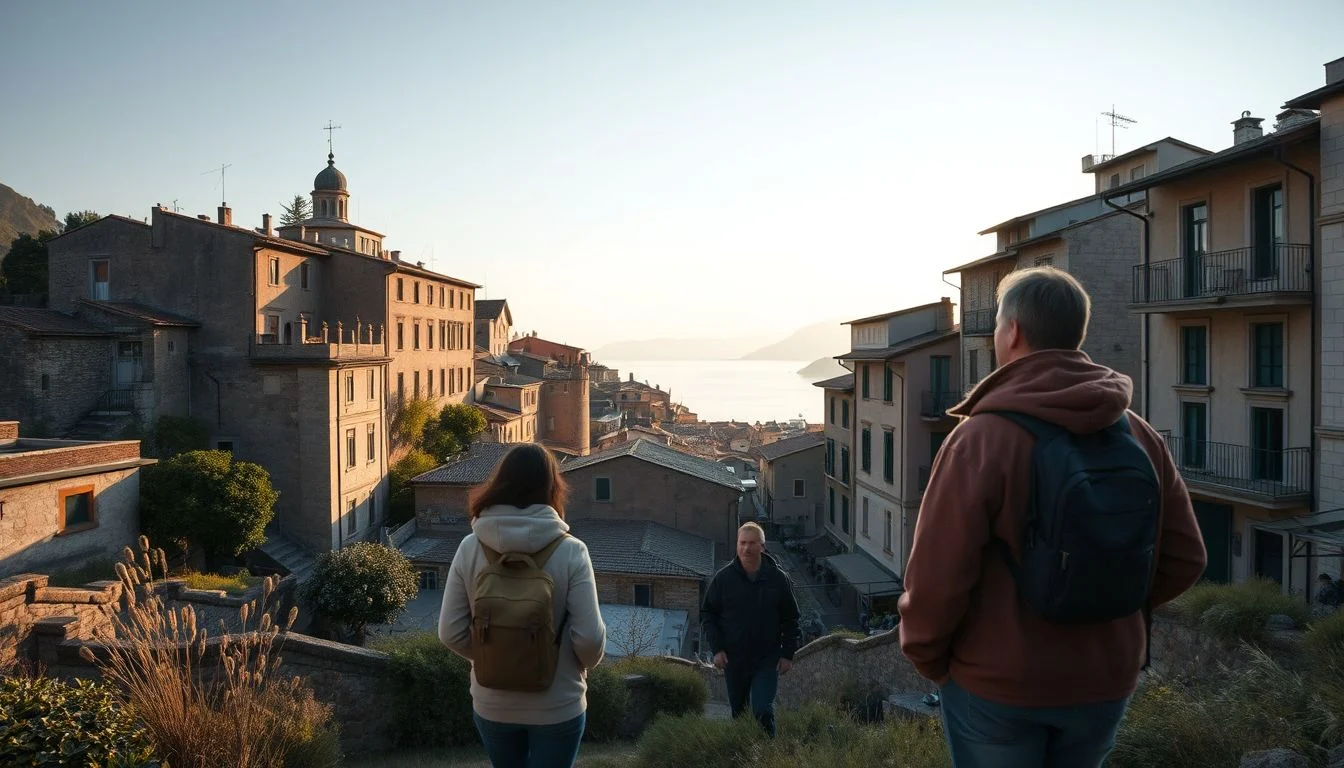
A small-group departure commonly carries around 8–12 travellers, while a large coach tour may take 30–50 or more. That difference affects more than the atmosphere: it can change how much attention a guide gives, how easily the group handles steep routes or mobility needs, and how long everyone waits at hotels, restaurants and transport stops.
This small-group vs large-group tours comparison is for senior travellers weighing comfortable pacing, fewer hotel changes, accessibility and dependable health planning against price, structured logistics and fixed departure dates. It looks beyond the label to the details that matter on the road: daily walking, vehicle access, guide-to-traveller ratios, rest opportunities, emergency arrangements and the total cost of travelling with confidence.
Quick answer: For many senior travellers, a small-group or specialist 50+ tour is the stronger default because it can offer more guide attention, a gentler feel and greater flexibility. A large coach tour may suit travellers prioritising lower prices, structured logistics and more fixed departure dates; in either case, check the itinerary’s pace, hotel changes and accessibility rather than relying on the group-size label.
At a glance: Small groups versus large coach tours
The labels are useful only as a starting point. There is no industry-wide definition of “small group”: operators commonly advertise averages of around 8–12 travellers, with maximums of about 15–16, while large coach departures often carry 30–50 or more. These ranges are drawn from operator and industry descriptions from Intrepid Travel and Travelstride’s Trafalgar profile.
| Consideration | Small group | Large coach group | Senior verdict |
|---|---|---|---|
| Typical size | About 8–12 on average; roughly 15–16 maximum | About 30–50 or more | Small is easier to manage socially and practically. |
| Guide attention | More opportunity for questions and adjustments | More structured, with less individual attention | Small usually suits travellers who need reassurance or a slower explanation. |
| Pace | Can feel more flexible, but the itinerary still decides the walking | Fixed departure and meeting times are more common | Check daily starts, stairs and rest stops rather than trusting the label. |
| Hotels | May use smaller properties or varied locations | Often organised around coach access and group logistics | Compare hotel changes and lifts line by line. |
| Vehicle access | Smaller vehicles may help, but steps and luggage space vary | Coaches offer scale, but boarding arrangements vary | Ask for the exact vehicle and accessibility procedure. |
| Social atmosphere | Quicker to know the group | More choice of conversation and less pressure to socialise closely | Choose small for intimacy; large for anonymity. |
| Flexibility and dates | More adaptable on some itineraries | Often more fixed departures and established logistics | Large may win when dates are the priority. |
| Likely value | More personal service, sometimes at a premium | Scale can support lower prices and included logistics | Compare inclusions, not just the headline fare. |
For older travellers, the strongest choice is the itinerary that clearly states walking demands, hotel-change frequency, accessibility and support arrangements. Group size matters, but it cannot confirm that a route is suitable for a wheelchair, mobility aid or medical need.
Head-to-head: Pace, access, hotels, care and value
Daily pace and rest stops
Small-group advantage: A vehicle carrying around 8–12 travellers can usually spend less time gathering people, which may make it easier to pause, adjust a morning start or skip an optional stop when the itinerary and guide allow it. Intrepid describes flexibility and closer guide attention as typical small-group advantages, but the operator’s published pace still matters more than the label.
Large-group advantage: A coach tour provides a clear daily structure, with transport, sightseeing and group movements arranged in advance. That predictability can be reassuring, although waiting for 30–50 or more people may make departures, meal stops and toilet breaks feel less personal.
Senior verdict: Choose the itinerary that states walking time, rest opportunities, optional activities and start times. A small group is not automatically slow, and a large coach is not automatically exhausting.
Walking, stairs, terrain and crowds

Small-group advantage: Smaller vehicles may reach narrower streets or smaller venues, reducing some crowd exposure and allowing a guide to explain the practical difficulty of a stop. That can help when uneven paving, steep approaches or long museum visits are concerns.
Large-group advantage: Coaches can reduce the need to navigate local public transport and may offer a stable seat between organised visits. They do not, however, make every sightseeing stop step-free.
Senior verdict: Treat “small vehicle” and “accessible vehicle” as different claims. Ask about vehicle steps or a lift, the distance from the drop-off point, uneven surfaces, stairs, accessible toilets and whether a mobility aid can be stored. Intrepid’s trip information and accessibility guidance are useful starting points, but confirm the exact departure directly with the operator.
Hotel changes and room logistics

Small-group advantage: Fewer travellers can make check-in, luggage collection and room requests easier to coordinate. Some itineraries may also use a smaller number of bases, but group size alone does not tell you how often you will pack and move.
Large-group advantage: A larger operator may have highly structured transfers and a consistent process for room allocation and luggage handling. The trade-off can be more time spent unloading, queuing and distributing keys.
Senior verdict: Read the day-by-day itinerary for the number of hotel changes, then ask for a room near a lift or on a lower floor if needed. Confirm whether the hotel has lifts, how far rooms are from reception, and who handles luggage; do not assume a premium or escorted tour removes these practical demands.
Guide attention, health and emergencies

Small-group advantage: With fewer people, it is generally easier to tell a guide that you need a rest, cannot manage an optional walk or require help understanding local logistics. AARP’s advice on trips with like-minded travellers also supports checking the group’s interests and expectations before booking.
Large-group advantage: A bigger operation may have established procedures and a tour director coordinating transport, hotels and local contacts. That is logistical support, not medical care.
Senior verdict: Guides can respond to concerns and coordinate arrangements, but they should not be expected to provide nursing, manage medication or guarantee emergency treatment. The CDC Yellow Book advises considering travel health and medical-evacuation insurance and checking exclusions, particularly for pre-existing conditions. Do not assume the operator or a credit-card benefit provides adequate cover; ask how an emergency is escalated and carry your own medication plan and medical information.
Transport, toilet breaks and social atmosphere
Small-group advantage: Smaller vehicles can make boarding and group communication feel calmer, and a guide may be able to discuss sensible break points. Yet a small vehicle can still have high steps, narrow access or limited luggage space.
Large-group advantage: A coach offers an established seating arrangement and a social setting for travellers who enjoy meeting a broad mix of people. Toilet facilities, where provided, and the timing of stops vary by vehicle and route, so obtain the details rather than relying on the word “coach”.
Senior verdict: Ask how often breaks are planned, whether the vehicle has steps, and how long passengers remain seated on transfer days. Choose the social scale in which you can comfortably speak up when you need a pause.
Flexibility, departure dates and value

Small-group advantage: The format can support more flexible local visits and access to smaller venues. Large-group advantage: Scale and structured logistics may mean more fixed departure choices and a lower headline cost, although dates, availability and inclusions change by itinerary and season.
Senior verdict: Compare the total day: hotel category, meals, transfers, optional excursions, single supplements, walking demands and insurance. The most useful comparison is not simply small versus large, but the amount of comfort and support included for the price.
Accessibility checklist before you pay
- Ask for the maximum daily walking distance, including sightseeing and transfers.
- Check for uneven surfaces, steep sections, stairs and crowded routes.
- Confirm vehicle steps or a lift; a small vehicle is not proof of step-free access.
- Verify hotel lifts, room location, bathroom layout and luggage handling.
- Request typical start times, rest days and the planned frequency of toilet breaks.
- Ask whether accessible toilets are available and whether a companion must travel with you.
- Have the operator explain what happens if you miss an activity or need medical help; then check current government or embassy guidance for destination-specific entry requirements.
Which format is right for you? Recommendations by traveller type
Choose small group for attention and a quieter pace

Small-group tours are the stronger default for seniors who value easier communication, less crowded experiences and the possibility of adjusting the day when the group needs a break. Operators commonly advertise average groups of around 8–12 travellers, with maximums of about 15–16, although “small group” has no industry-wide definition. Fewer people can also make smaller restaurants, local transport and venues more practical, but it does not automatically mean fewer hotel changes or gentle walking.
Choose this format if you tire in crowds, prefer to ask questions without holding up a coach, or want a guide to notice quickly when the pace is becoming uncomfortable. It is less suitable if you need guaranteed step-free access, a private room for regular treatment, or a highly predictable routine: ask for those arrangements in writing before booking, rather than relying on the group-size label.
Choose a large coach for structure, dates and a livelier group
Large-group coach tours commonly carry around 30–50 or more travellers, depending on the operator and itinerary. Their advantages are scale, organised transfers and a more structured programme; they may also offer a wider choice of fixed departure dates and a lower advertised price. The trade-off is less individual guide attention, slower boarding and more waiting at stops, plus a greater chance that the itinerary feels designed for the group average rather than your walking speed.
This format suits a senior traveller who is comfortable keeping to set departure times, enjoys meeting many fellow passengers and wants logistics handled in one established system. It is a weaker choice for someone who finds crowded coaches tiring, needs frequent unscheduled breaks or wants the guide to respond discreetly to changing mobility needs.
Match the format to your travel profile
- Limited walking or wheelchair use: start with a small group or a specialist accessible itinerary, but do not assume either is suitable. Ask the operator to assess vehicle steps, lifts, surfaces, walking distances, bathroom access and what happens if you skip an excursion.
- Solo traveller: a small group usually makes repeated conversations and guide access easier; a large coach can provide a broader social scene and potentially more departure choices. Check room-sharing rules and single supplements before comparing prices.
- Couple with different stamina: favour an itinerary with optional activities, rest opportunities and a clear meeting point, so one person can sit out a steep route without derailing the day. Get the activity-level description in writing.
- Stable health condition: choose the operator that can explain the daily rhythm, nearby health-care arrangements and emergency procedure, not simply the one with the smallest group. A guide is not a clinician and should not be expected to administer medication or provide medical treatment.
- First international trip: a large coach can feel reassuring because transfers and sightseeing are tightly organised. A small group may be better if you want more explanation and individual help navigating unfamiliar routines.
- Age-peer pacing and fewer moves: investigate specialist 50+ programmes from providers such as Road Scholar, or premium operators including Tauck and Insight Vacations. These may fit better than either generic format, but compare the actual itinerary, hotel-change pattern and walking demands.
Disclose mobility, dietary and health needs early. The CDC Yellow Book recommends considering travel health and medical-evacuation insurance and checking exclusions, including those for pre-existing conditions; do not assume the operator or a credit-card benefit is sufficient. For destination-specific entry requirements, check current official government or embassy guidance.
Travel costs: What small-group and coach tours cost
Headline fares rarely tell the whole story. The two dated examples below show that a small-group tour is not automatically cheaper or more expensive than a coach departure: itinerary length, destination, inclusions and travel style matter. Prices were researched in September 2026 and checked for October 2026 publication.
Estimated costs
| Estimated tier | Example and format | Total per person | Approximate daily cost |
|---|---|---|---|
| Budget | G Adventures Highlights of Guatemala, small group, approximately nine days | US$1,319 | US$146 |
| Mid-range | Trafalgar Best of Italy, large-group coach tour, 13 days | From US$3,428 | US$264 |
| Luxury | No verified fare supplied for this comparison | Check current operator pricing | Not available |
The G Adventures figure is the October 2026 departure listing accessed in September 2026, before checking final inclusions, supplements, insurance and optional activities. Trafalgar’s 2026 fare was captured during September 2026 research; its price varies by date, occupancy, availability and inclusions. These are useful benchmarks, not like-for-like quotes: Guatemala and Italy differ in duration, destination costs and itinerary design.
For a luxury benchmark, check a currently published quotation from an operator such as Tauck or Insight Vacations and record its date, itinerary length and inclusions before comparing it. Do not infer a luxury price from the mid-range example.
Build the real total around the headline fare. Ask about the single supplement, internal transport, meals, tips, excursions, hotel nights, airport transfers and any mobility-related private transfers. A lower-cost coach tour may include more transport and scheduled sightseeing, while a smaller tour may charge separately for activities or require more independent arrangements.
June, July, August and December can affect availability and pricing. Check the operator’s live fare for your departure date, then compare cancellation terms and insurance separately. The CDC Yellow Book advises considering travel health and medical-evacuation insurance and checking exclusions, including those for pre-existing conditions; neither the operator nor a credit-card benefit should be assumed to provide adequate cover.
| Item | Budget | Mid-range | Luxury |
|---|---|---|---|
| Budget-style small-group tour: G Adventures Highlights of Guatemala | US$1,319 total | — | — |
| Mid-range large-group coach tour: Trafalgar Best of Italy | — | From US$3,428 total | — |
Estimated ranges based on the sources listed below. Prices change; check with providers before booking.
Conclusion: Choose the itinerary, not just the group size
For most older travellers, a small-group or specialist 50+ tour is the stronger default: fewer people can mean more responsive guide attention, a gentler social rhythm and greater scope to manage mobility needs. Choose it only after checking the itinerary, since “small group” does not guarantee fewer hotel changes, accessible transport or a slower pace.
A large coach tour is the better fit when price, fixed departure dates and highly structured logistics matter more than flexibility. It can also suit travellers comfortable with a bigger social group and more predetermined scheduling.
Shortlist one itinerary in each format, then request written answers about walking distances, stairs, vehicle access, hotel lifts, rest periods, emergency procedures, insurance requirements and the single supplement. Compare those answers—not just the advertised group size—before booking.
Frequently asked questions
What is a typical small-group tour size?
There is no industry-wide definition of “small group”. Operators cited in the research commonly advertise average group sizes of approximately 8–12 travellers, with maximums around 15–16. Check the specific departure’s stated maximum rather than relying on the label, since a smaller group may offer more guide attention and flexibility, but does not automatically guarantee an easier pace or accessible itinerary.
How many travellers usually share a large coach tour?
Large coach-style tours commonly accommodate approximately 30–50 or more travellers on a departure, depending on the operator and itinerary. The larger format can provide structured logistics and may help keep prices competitive, but boarding, rest stops and group movement can take longer. Ask the operator for the expected group size, coach configuration and daily schedule before booking.
Can a tour guide help with medication or medical needs?
Do not assume that a guide can provide medical care, manage medication or guarantee emergency treatment. The tour operator should explain its procedures for emergencies and any limits on staff assistance, while you remain responsible for arranging your medication and medical support. The CDC also advises travellers to consider travel health insurance and check policy exclusions, including restrictions involving pre-existing conditions, in its Yellow Book guidance.
How do I confirm that a group tour is wheelchair accessible?
Ask the operator to confirm the complete itinerary in writing, not just whether the vehicle is described as accessible. Check vehicle steps, wheelchair access, hotel lifts, walking distances, terrain, daily start times, rest opportunities and the ability to remain with the group during excursions. Accessibility varies by departure and destination, so request specific answers for your mobility aid and do not infer suitability from “small group” or “premium” wording.
Do large coach tours usually offer more departure dates?
They may: large coach tours can suit travellers who prioritise structured logistics, lower prices or more fixed departure dates, while small-group availability varies by operator and itinerary. This is not guaranteed, particularly during peak periods such as June, July, August and December. Compare the actual dates, group-size limit, hotel-change pattern and pace; then confirm availability and inclusions directly with the operator before paying.
What should medical evacuation insurance cover on a group tour?
Start by checking that the policy includes medical evacuation and travel health cover for the destination and the activities on your itinerary. The CDC Yellow Book recommends reviewing exclusions, including restrictions involving pre-existing conditions, and warns that a tour operator or credit-card benefit may not provide adequate protection. Ask the insurer to explain the limits and claims process, and verify the cover before departure because terms vary by policy.