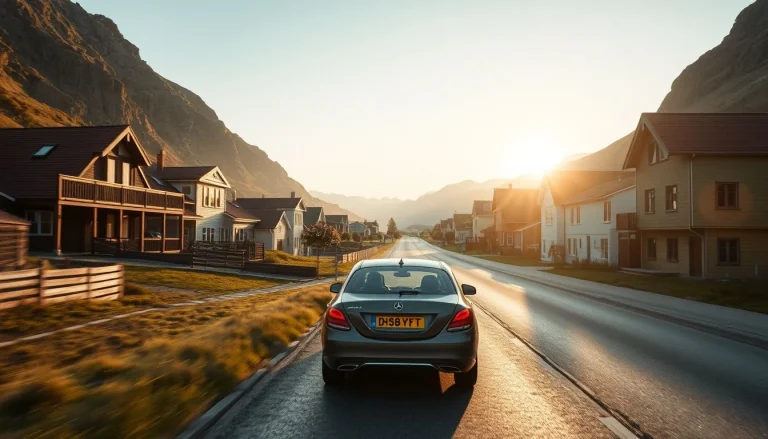
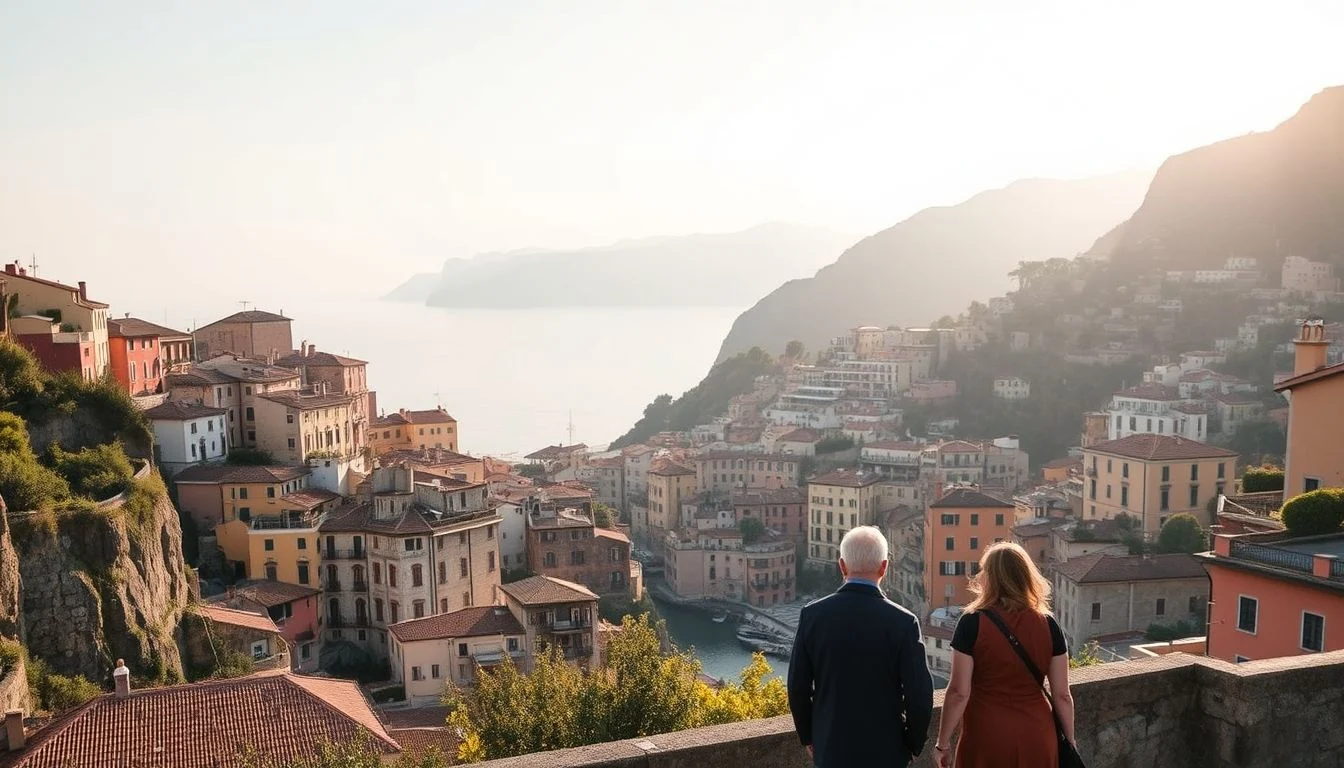
The classic Amalfi Coast drive follows the approximately 50-kilometre SS163 Amalfitana from the Meta/Sorrento area to Vietri sul Mare, linking cliffside towns, ferry ports and hilltop detours in a route that can take 2.5–4 hours even without long stops. Narrow, vertiginous roads, scooter traffic, limited lighting and seasonal controls mean the distance is a poor guide to the day’s pace.
This guide is for couples who want scenic dinners, walkable bases and time to enjoy places such as Positano, Praiano, Amalfi, Ravello and Atrani rather than spend the trip searching for parking. It weighs the freedom of an Amalfi Coast road trip against ZTL rules, alternate-plate restrictions and traffic, then sets out realistic driving times, overnight choices, costs and the points where ferries or a private driver make more sense than staying behind the wheel.
Quick answer: The classic route runs from the Meta/Sorrento area to Vietri sul Mare along the approximately 50-kilometre SS163 Amalfitana. Driving it takes about 2.5–4 hours without long stops, but traffic and seasonal controls can make the journey much longer, so couples should split it across several stops and consider ferries for the busiest sections.
Amalfi Coast route overview: distance, driving time and the right pace
For couples, the SS163 works better as a slow scenic route than as a single transfer. Allow at least two or three coastal nights: use Sorrento as the practical gateway, then choose a quieter base such as Praiano, or stay in Amalfi or Maiori for walkable evenings and less daily packing. A one-day drive is possible in theory, but it leaves little time for beaches, viewpoints or a long dinner.
| Section | Approximate driving time | Why stop |
|---|---|---|
| Sorrento or Meta to Positano | 45–75 minutes | Begin with Marina Grande, Positano’s stairways and sunset dining |
| Positano to Praiano | 15–25 minutes | Stay near coves and viewpoints, with a quieter evening atmosphere |
| Praiano to Amalfi via Conca dei Marini | 25–40 minutes | Combine coastal scenery with Amalfi’s restaurants and ferry connections |
| Amalfi to Minori and Maiori | 5–20 minutes per leg | Choose beaches, easier logistics and a more practical overnight base |
| Maiori to Vietri sul Mare | Allow extra time for stops | Finish with Vietri’s ceramics, then continue to Salerno |
The full coastal route is approximately 50 km, and the commonly quoted 2.5–4 hours refers to driving without long stops; traffic can extend that considerably. The route’s geography is described by Wikipedia’s SS163 reference. Treat Ravello differently: Villa Rufolo and Villa Cimbrone make it a rewarding hilltop detour, but it is not a straightforward stop along the coastal line. For the most relaxed Amalfi Coast itinerary by car, keep the first and last days light and reserve one day for ferries between Sorrento, Positano and Amalfi when services are operating.
Car hire and road conditions: licences, SS163 driving and local restrictions
A rental car can use the SS163 Amalfitana, but this is not an easy road for an inexperienced driver. The route is narrow, winding and sometimes vertiginous, with tight bends, cliff exposure, limited lighting and frequent scooter traffic. Allow extra concentration for oncoming coaches and vehicles stopping at viewpoints; night driving adds fatigue and makes the road harder to read.
A small car is the sensible choice. It is easier to place on bends, less stressful when passing oncoming traffic and more practical in tight parking areas. If you prefer an automatic, specify it when booking and confirm the transmission with the rental company before collecting the vehicle. Check that the air conditioning works, and ask about roadside assistance and any one-way or collection charges.
Licence rules depend on where your licence was issued. GOV.UK’s Italy travel advice says UK photocard licences are accepted in Italy, while some non-EU visitors may need an International Driving Permit. Confirm the requirement with your embassy and rental company before travel rather than relying on a general online summary.
Warning: check ZTLs and plate controls before collecting the car. Camera-controlled ZTLs operate in Positano, Amalfi, Ravello and other municipalities. Unauthorised entry can produce a fine passed to the rental company, as the Comune di Amalfi’s published guidance explains. If a hotel says it can arrange access, obtain the exact procedure and permit confirmation in writing; a booking alone does not prove that the vehicle is authorised.
Temporary targhe alterne or alternate-flow measures have applied on parts of the SS163 in 2026. The permitted plate pattern and affected stretches can change, so check the current district calendar and municipal notices for your dates; never assume a rental car is exempt. Also review the latest ANAS notices for rockfall repairs, closures, reopened sections and detours shortly before departure and again before setting out.
Stop by stop: a relaxed Amalfi Coast itinerary by car
Plan the Amalfi Coast drive as a sequence of short coastal legs rather than a single dash along the SS163 Amalfitana. The classic route runs from the Meta/Sorrento area to Vietri sul Mare for approximately 50 km, yet the full drive takes about 2.5–4 hours without long stops; traffic, seasonal controls and parking can stretch that considerably. For couples, two or three nights on the coast usually create a better rhythm than trying to cover every town in one day.
Morning
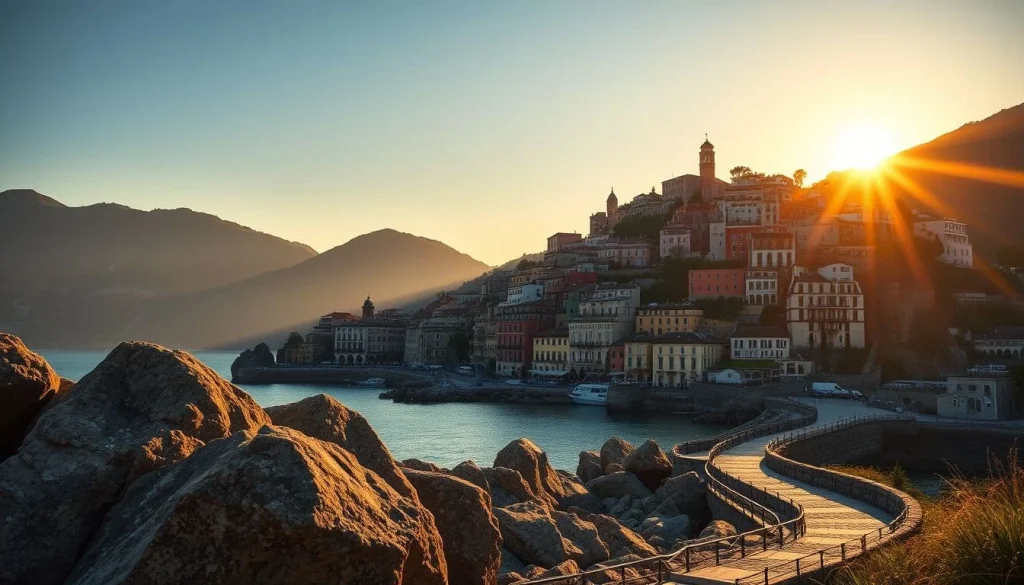
Start in Sorrento or nearby Meta, where collecting a small rental car is generally more practical than entering Positano with luggage. The first coastal leg to Positano takes approximately 45–75 minutes, depending on traffic and conditions. Treat it as a scenic transfer, not a timed commute: the road is narrow and winding, with scooter traffic and limited opportunities to stop safely.
In Positano, leave the car at your accommodation or a confirmed car park and explore on foot. Walk down through the steep streets towards Marina Grande, browse the boutiques and continue towards Fornillo if energy and daylight allow. Positano is the iconic choice, but its steep lanes, crowds and parking pressure make it a demanding base for drivers. Confirm in advance that any accommodation can explain its parking and ZTL arrangements; unauthorised entry into camera-controlled zones can lead to a fine passed to the rental company, according to municipal guidance from Amalfi.
Afternoon
| Leg | Approximate drive | Best use of the stop | Overnight decision |
|---|---|---|---|
| Sorrento or Meta to Positano | 45–75 minutes | Marina Grande, the stepped centre, Fornillo and a sunset dinner | Iconic and atmospheric, but busy and more difficult with a car |
| Positano to Praiano | 15–25 minutes | Viewpoints, coves and a slower afternoon away from the main crowds | The calmer coastal base for couples who still want sea views |
| Praiano to Amalfi via Conca dei Marini | 25–40 minutes | Coastal scenery, a long lunch and time around Conca dei Marini | Amalfi suits ferry connections; Praiano suits quiet evenings |
| Amalfi to Minori and Maiori | Approximately 5–20 minutes for the short legs | Beaches, a less hurried waterfront and practical local services | More relaxed and often easier logistically than Positano |
| Maiori to Vietri sul Mare or Salerno | Allow extra time for stops and traffic | Vietri ceramics, then Salerno’s rail connections | Salerno is convenient for onward travel and may offer lower accommodation prices |
The most balanced couple-focused sequence is Positano for one atmospheric night, followed by Praiano or Amalfi for a slower stay. Praiano gives up some of Positano’s postcard immediacy but offers a quieter evening and easier access to viewpoints. Amalfi is the more useful base if the next day will be by boat, while Atrani is a compact alternative: its small square is reachable from Amalfi on foot or by a short transfer.
Continue from Praiano towards Amalfi through Conca dei Marini rather than rushing directly to the next hotel. In Amalfi, see the Duomo di Amalfi, then use the waterfront as a base for ferries, restaurants and an evening stroll. If the car is staying overnight, ask the hotel exactly where it should be left; do not follow navigation instructions into a restricted centre without checking the local ZTL.
Evening
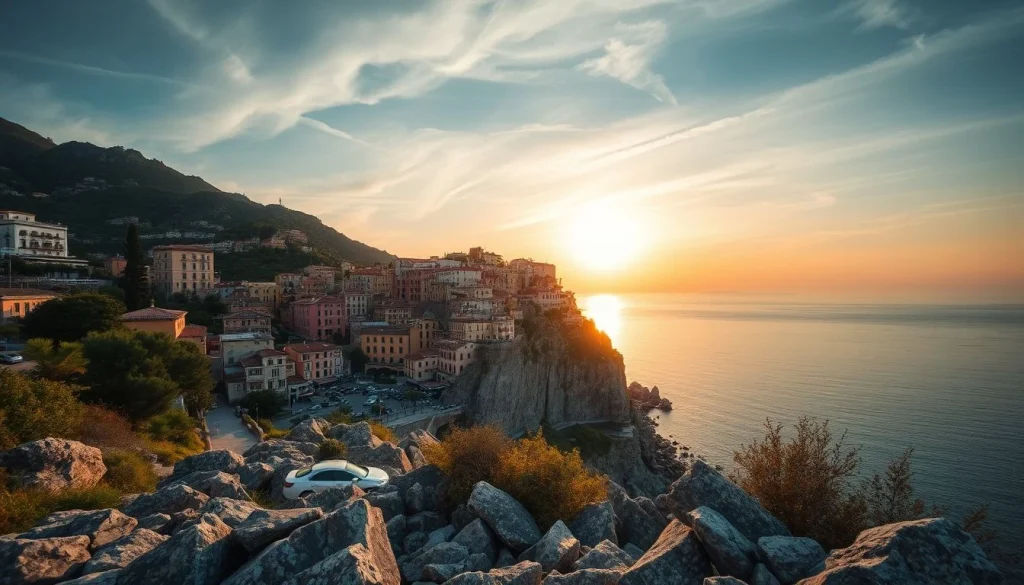
Choose one town for dinner instead of driving after dark. Positano works for a sunset terrace and a slow descent through the centre; Praiano is better when privacy and a quieter view matter more than nightlife. In Amalfi, combine the Duomo area with a walk to Atrani, while Maiori offers a flatter waterfront and a more practical end to a driving day.
Ravello is a worthwhile side trip, but it is a hilltop detour rather than a simple SS163 stop. Allow time for the climb inland to visit Villa Rufolo and Villa Cimbrone, and avoid treating it as an extra viewpoint squeezed between coastal transfers. The supplied 2026 event listing gives the Ravello Festival as running from 4 July to 5 September 2026; check the programme and road arrangements before committing to an evening performance.
Where to eat

Base lunch around a simple coastal plate: local seafood, lemon-forward dishes, pasta with tomatoes or aubergine, and gelato for the walk between stops. In Positano and Amalfi, reserve a dinner with a view if that is central to the trip, but choose a walkable restaurant so neither partner has to drive afterwards. Maiori and Salerno are generally more practical for a broader choice of casual restaurants and a less formal evening.
Getting around
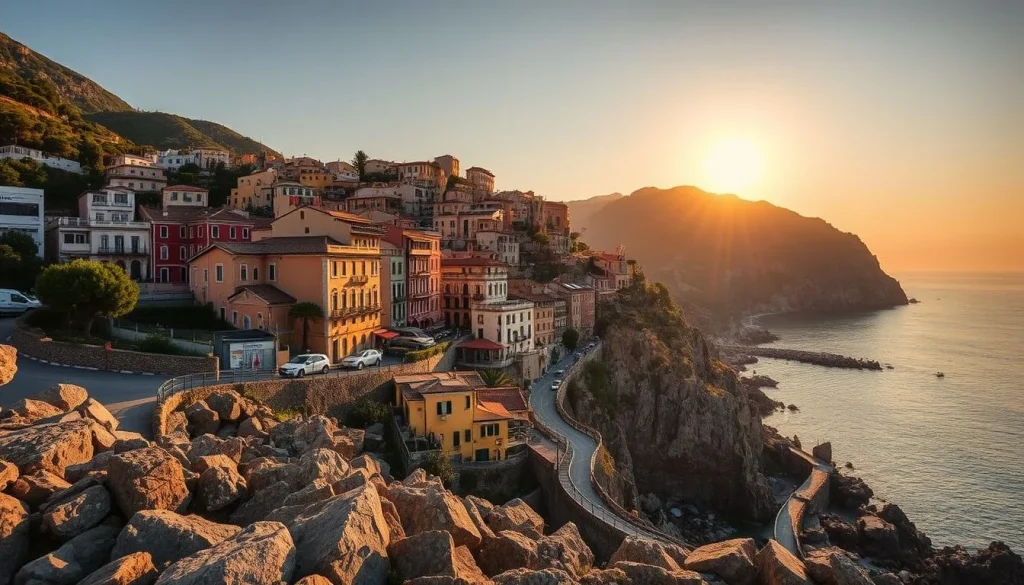
Use the car for the outer transfers and scenic flexibility, but keep it parked once you reach Positano, Amalfi or Ravello. The SS163 is demanding: narrow bends, scooters, rockfall controls and limited lighting make night driving tiring. Check current ANAS notices for closures and repairs, and verify any 2026 targhe alterne restrictions before setting out.
For the busiest coastal section, swap the steering wheel for the water. During the operating season, ferries and hydrofoils commonly link Sorrento, Positano, Amalfi and Salerno; check current schedules and weather-related cancellations with operators such as NLG, SNAV or Caremar. SITA buses provide a useful land alternative, though they can also be affected by traffic.
Estimated time
- Sightseeing: around four to six hours for one or two towns, including walks and viewpoints.
- Driving: 45–75 minutes for Sorrento to Positano, then 15–40 minutes per shorter coastal leg, excluding parking and stops.
- Meals: allow at least 60–90 minutes for a relaxed lunch or dinner.
- Rest: keep two to three hours for a hotel terrace, beach or unplanned viewpoint; this is what prevents the route becoming a driving exercise.
Optional extras
- For a quieter day: stay in Praiano and skip the car after arrival, using the afternoon for viewpoints and a long dinner.
- For easier logistics: base yourselves in Sorrento, take a ferry day to Positano and Amalfi, and return without moving luggage or negotiating coastal parking.
- For onward travel: finish in Vietri sul Mare, then continue to Salerno rather than adding another coastal overnight; this keeps rail connections simple.
Best time for an Amalfi Coast road trip: weather, crowds and events
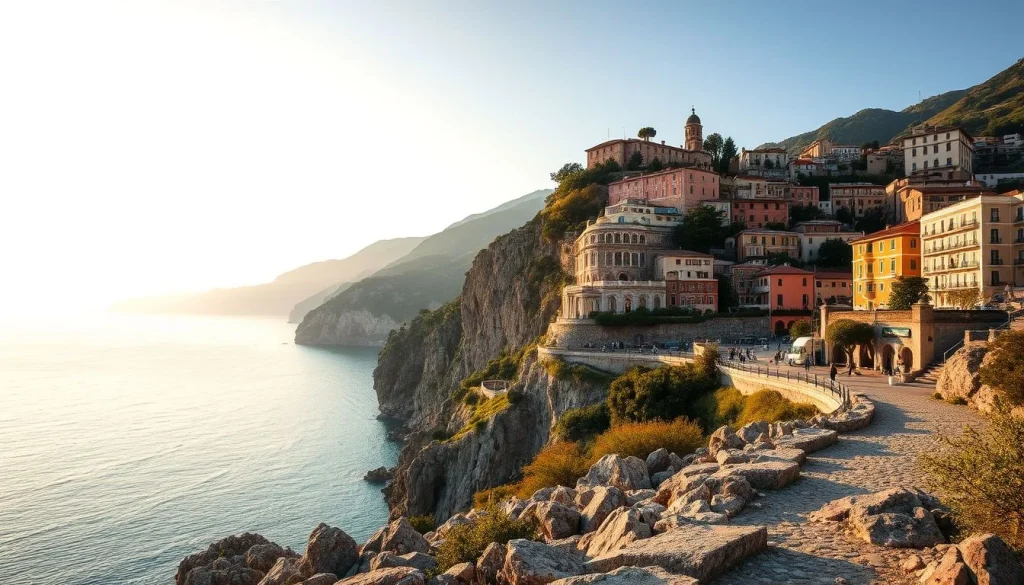
For a couple planning an Amalfi Coast drive, May–June and September–October offer the most balanced conditions. Weather is generally warm, crowds are lighter than in high summer, and ferry, restaurant and hotel services are more widely available than in the quieter winter period, according to WeatherSpark’s Amalfi Coast climate guide. You’ll have more room to pair a driving day with an unhurried dinner or a boat trip.
July and August put the greatest pressure on the route, with hotter conditions, heavier traffic, stronger demand for accommodation and car hire, plus more competition for parking. Drive early if you travel then. Don’t rely on spontaneous parking, and leave the car behind for the busiest Positano–Amalfi days. Check the current ferry timetable before committing to a water-based plan, since services vary by season and weather.
June can suit couples who want a cultural event alongside the scenery. The supplied 2026 event listing gives Amalfi’s Festa di Sant’Andrea as 27 June 2026. Ravello’s listed 2026 Festival period runs from 4 July to 5 September, making the hilltop town a useful addition; confirm event dates, traffic controls and accommodation demand before booking through the organiser or local tourism authority.
Winter gives the coast a quieter atmosphere, but some hotels close and ferry services reduce. December isn’t automatically low season: the supplied destination data flags it as a peak month, so check festive demand and restaurant opening schedules. In every month, review current ANAS notices for SS163 repairs, closures and rockfall controls shortly before departure.
Amalfi Coast travel costs: dated budget, mid-range and splurge planning
Plan the Amalfi Coast road trip as a set of components rather than one headline total. The ranges below cover typical building blocks for two people; they are not a fabricated total-trip price. Your final spend will depend mainly on season, nights, parking, and how often you replace driving with ferries or private transfers.
Estimated costs

| Estimated component | Budget | Mid-range | Luxury |
|---|---|---|---|
| Small rental car | €30–€50 per day | €50–€100 per day | Not supported |
| Accommodation for two | €70–€140 per night | €140–€300 per night | €350–€900+ per night |
| Casual lunch | €10–€25 per person | — | — |
| Mid-range dinner | — | €30–€70 per person | — |
| Ferry or hydrofoil | €6 per person per short hop | €6–€30 per person per segment | Not supported |
| SITA bus | €2–€6 per person per segment | €2–€6 per person per segment | Not supported |
| Parking | €2–€4 per hour | €2–€4 per hour or higher | Not supported |
| Water taxi or private-driver transfer | From €60 per transfer | €60–€200+ per transfer | €200+ per transfer |
Basis: September 2026 rental-car sample searches, 2026 accommodation, transport, food, parking and local-operator pricing checks. Rental-car headline rates may exclude insurance, fees, one-way charges and surcharges; July and August accommodation prices commonly rise.
For couples, a smaller car keeps the rental within the lower ranges but does not remove parking costs or ZTL risk. Check live prices with the rental company, accommodation, ferry operator and municipality before booking, particularly for parking, private transfers and seasonal services.
| Item | Budget | Mid-range | Luxury |
|---|---|---|---|
| Small rental car | €30–€50 per day | €50–€100 per day | Not supported by the source |
| Accommodation for two | €70–€140 per night | €140–€300 per night | €350–€900+ per night |
| Ferries or hydrofoils | €6 per person per short hop | €6–€30 per person per segment | Not supported by the source |
| SITA bus | €2–€6 per person per segment | €2–€6 per person per segment | Not supported by the source |
| Food | €10–€25 per person for a casual lunch | €30–€70 per person for a mid-range dinner | Not supported by the source |
| Parking | €2–€4 per hour | €2–€4 per hour or higher | Not supported by the source |
| Water taxi or private-driver transfer | €60 per transfer | €60–€200+ per transfer | €200+ per transfer |
Estimated ranges based on the sources listed below. Prices change; check with providers before booking.
Travel tips that make driving the Amalfi Coast less stressful
Use this checklist before handing over the keys. The coast rewards a light schedule; it punishes assumptions about access, parking and travel time.
- Check the road twice. Review current ANAS notices 7–14 days before travelling and again before departure for rockfall repairs, closures, reopening notices and single-lane controls on SS163.
- Verify targhe alterne for your exact dates. Alternate-plate or alternate-flow measures have been used on sections of SS163 in 2026; check the current district calendar and municipal notices before collecting a rental car.
- Get ZTL instructions in writing. Ask each hotel whether its address is inside a restricted zone, how a guest vehicle is registered and where to unload. Camera-recorded unauthorised entry in Amalfi, Positano, Ravello and other towns can produce a fine passed to the rental company, as the Comune di Amalfi explains.
- Book walkable accommodation with confirmed parking. Do not assume a boutique hotel can take a car; ask about the exact parking arrangement, cost and access before booking, particularly in Positano and Amalfi.
- Inspect the car before leaving. Photograph every panel, wheel and windscreen, check the fuel and damage record, and confirm that the air conditioning works. Carry water and sun protection in warm weather.
- Finish driving before dark. Narrow, steep sections, scooters, limited lighting and fatigue make night driving a poor trade for a late dinner. On arrival, plan no major sightseeing immediately after a long transfer.
- Swap the car when the day becomes congested. Ferries and hydrofoils link Sorrento, Positano, Amalfi and Salerno during the operating season; SITA buses or a private driver can also remove the most stressful sections. Check schedules close to departure: services reduce or cancel outside summer and in poor weather.
- Keep the couple’s pace deliberate. Plan one major viewpoint or town, one memorable meal and genuine downtime each day instead of collecting every stop.
Conclusion: drive slowly, stay walkable and trade one car day for the water
The most rewarding Amalfi Coast drive is not a one-day circuit. Allow several days for the SS163, with time to linger over a sunset dinner rather than spend the evening searching for parking or navigating after dark.
Choose a compact rental car if flexibility matters, but base yourselves in walkable Praiano, Amalfi, Atrani or Maiori. For the busiest coastal stretch, swap the car for a ferry or private driver; you will keep the views and lose much of the traffic stress.
Start by choosing dates and reserving accommodation with confirmed parking. Before booking the car, check current ANAS notices, municipal ZTL maps, the targhe alterne calendar and ferry schedules for your exact travel period. Recheck all four shortly before departure, since road controls and seasonal services can change.
Frequently asked questions
What kind of luggage is easiest to manage on the Amalfi Coast?
Choose compact, manageable luggage rather than large hard-sided cases. The route includes steep approaches and Positano’s stairs, while a couple may also change between walkable coastal bases, ferries and vehicles. Keep one small day bag accessible for water and sun protection, and confirm whether your accommodation offers luggage assistance before arrival.
Should couples plan a rest day during the drive?
Yes, especially if you want scenic dinners and time to explore rather than simply complete the route. The approximately 50-kilometre SS163 can take 2.5–4 hours without long stops, and traffic or seasonal controls may extend that considerably. A rest day in Positano, Praiano, Amalfi or Ravello gives you time to walk, eat and recover from the concentration required on the road.
Can we combine a coastal drive with a ferry day?
Yes. A practical plan is to drive one section, leave the car at your overnight base, then use a ferry or hydrofoil between Sorrento, Positano, Amalfi or Salerno on another day. This preserves the coastal views while avoiding the most stressful driving sections in high season. Ferries are seasonal, so check the current operator timetable and cancellation notices before travelling.
Is Ravello better as an overnight stop or a day trip?
Ravello works either way, depending on the atmosphere you want. It is an inland, hilltop detour rather than a straightforward SS163 coastal stop, with Villa Rufolo, Villa Cimbrone and summer festival programming. Choose an overnight stay for a quieter evening and hilltop setting; choose a day trip if you prefer to keep your base on the coast or near ferry connections.
What happens if bad weather disrupts ferry services?
Ferry and hydrofoil services can be cancelled or altered, particularly outside summer and during poor weather. Keep the car or SITA bus as a fallback where practical, and avoid building a tight same-day connection around a boat departure. Check the operator’s live information close to travel; SITA buses provide an inter-town alternative, although road traffic can still affect the journey.
How early should we check for SS163 closures before departure?
Check current ANAS notices and municipal updates within 7–14 days of publication, then check again immediately before setting out. ANAS periodically publishes rockfall, repair, closure and reopening notices affecting SS163. Also verify the current alternate-plate calendar and any local traffic controls, since temporary measures have been applied in 2026 and can change how rental cars use sections of the route.