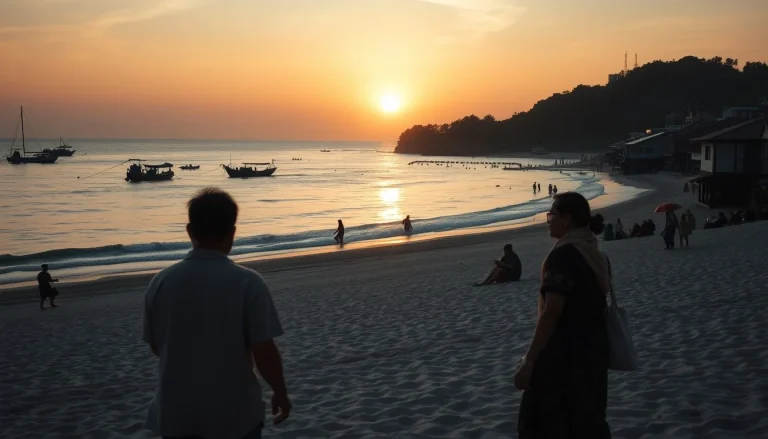

The Maldives’ northeast monsoon is generally its drier period from January to March, while the wetter southwest monsoon runs from May to October. That seasonal split makes the archipelago a strong winter choice for couples seeking a private resort, warm-water days and little need to move between beaches—but January to March is also high season, with higher prices and fewer rooms available.
This guide to the best beach destinations by month helps couples match their available travel dates to the right kind of coast: a resort-led escape in the Maldives, a walkable Greek island with sunset dinners, or a beach base in Thailand with restaurants and excursions nearby. Each month weighs weather, sea conditions, crowds and seasonal services, so you can choose between peak-season reliability and a quieter shoulder-season stay without overloading the itinerary.
Quick answer: Choose the Maldives, the Caribbean or Thailand’s Andaman coast from January to March; Greece or Hawaiʻi in April and May; the Mediterranean or Hawaiʻi from June to August; and Mediterranean islands, Hawaiʻi or the Canary Islands in September and October. In November and December, the Canaries, the Caribbean, Phuket and Krabi are strong options, with the final choice depending on whether you prefer a private resort or a walkable coastal town with evening dining.
Why timing matters for a couples’ beach holiday
There is no single best beach month worldwide. The right choice depends on the trade-off you want as a couple: the Maldives for private, resort-led days; Thailand’s Andaman coast for beaches paired with restaurants and excursions; or a Mediterranean island for a town where you can walk to dinner after swimming.
Match the season to the kind of escape
January to March is the clearest seasonal fit for the Maldives. The Maldives Meteorological Service describes the northeast monsoon as generally drier from January to March, while the wetter southwest monsoon runs from May to October. This is also high season, with higher prices and fewer rooms reported by Maldives.com, so couples should expect stronger booking pressure.
The Caribbean broadly moves into its drier period from December to April, while Thailand’s mainland and Andaman coast—particularly Phuket and Krabi—are generally driest from November to April, according to Visit Thailand. These destinations suit couples who want more choice beyond the beach: local restaurants, boat trips and evenings that do not depend entirely on a resort. Thailand’s Gulf islands follow a different pattern, so do not apply Andaman coast weather to Koh Samui without checking island-specific advice.
April and May are useful shoulder-season months. The Mediterranean, including Crete, Santorini and Naxos, can offer pleasant beach conditions before the heat and crowds of July and August; Visit Greece identifies May and September as less crowded alternatives to the core summer period. Hawaiʻi is another option: late April and May are commonly identified as a compromise between warm seas, visitor numbers and price by the Honolulu Tourism Authority.
June to August brings classic Mediterranean beach weather, but also peak demand, hotter days and busier coastal towns. September and October often preserve warm sea conditions with a gentler pace in Mediterranean islands and Hawaiʻi; the Canary Islands offer a relatively mild climate across the year, according to the Government of the Canary Islands.
Allow for conditions beyond the forecast

A dry-season label is not a promise of calm seas or uninterrupted sunshine. Check the relevant meteorological service, hurricane and tropical-storm advisories, surf information and marine conditions for the travel year. This matters particularly in the Caribbean during the wetter season and in Thailand during monsoon months.
Seasonal services can change too. Ferry and domestic-flight frequency may be reduced outside the main season, while Maldives resorts may require a speedboat, domestic flight or seaplane transfer. Confirm the route, transfer window and beach-club or excursion operations directly with the accommodation before paying a deposit.
Where to go each month: the strongest beach matches
January to March: dry-season beaches with the strongest resort choice

Best for: private resort time, warm-water swimming and uncomplicated sunset dinners. The Maldives is the clearest seasonal match: the Maldives Meteorological Service identifies January to March as the generally drier northeast-monsoon period. It suits couples who want privacy and are happy to spend most evenings at their resort, but January to March is also high season, with higher prices and fewer rooms available according to Maldives.com.
A Maldives stay is not a walkable beach-town holiday. Depending on the atoll and resort, you may need a speedboat, domestic flight or seaplane, so check the transfer arrangement and operating window before booking. For more independent evenings, choose the Caribbean or Thailand’s Andaman coast instead.
The Caribbean broadly enters its drier season from December to April, making January to March a strong period for couples who want beach time, resort dining and a choice of excursions. Barbados, Saint Lucia, Turks & Caicos and Antigua each offer a different balance of beaches and accommodation styles, but weather is not guaranteed; check current tropical-weather advice before travelling. Phuket and Krabi are the better fit for couples who want restaurants, excursions and a more developed coastal base: Thailand’s mainland and Andaman coast are generally driest from November to April, according to Visit Thailand.
April and May: the most useful shoulder-season window

Best for: scenic coastal drives, boutique stays and quieter evenings before the Mediterranean peak. Crete, Santorini and Naxos work well in April and May if you want beaches combined with villages, archaeological sites and tavernas rather than a resort-only escape. The Greek National Tourism Organisation describes May as a pleasant Mediterranean month with fewer crowds than the core summer period; sea temperatures and individual ferry schedules still vary, so check the island connections for your travel year.
Late April and May are also useful compromise months in Hawaiʻi. The islands offer beach time with different landscapes and evening atmospheres, while visitor numbers and prices can be more manageable than in the main summer and winter holiday periods. Use official climate information from the US National Weather Service, then choose the island around the experience you want: Oʻahu for a more urban, dining-led stay, Maui or Kauaʻi for a slower scenic base, or the Big Island for varied landscapes.
April is the exception for travellers who actively want a major cultural celebration rather than a quiet beach break. Thailand’s Songkran is held nationally in mid-April, commonly 13–15 April; check the official dates for the year of travel and expect popular areas to be busier. The Andaman coast can still suit a beach itinerary in April, but May begins the broad wetter period, so build in flexibility.
June to August: classic Mediterranean summer

Best for: warm sea swimming, long lunches and the full summer rhythm of a Greek island or Mediterranean town. Crete, Naxos and other Greek islands are strong choices for couples who want a balance of beaches, walkable evening streets and independent restaurants. The trade-off is clear: the Mediterranean is typically hot and dry from June to August, but this is also the busiest and most heat-intensive period. Reserve a boutique hotel early and avoid packing every day with excursions.
Hawaiʻi is the more long-haul alternative in these months. Summer beach travel is possible across Oʻahu, Maui, Kauaʻi and the Big Island, but exposure, surf and local conditions differ by island and coastline. Check island-specific sea and weather advice rather than treating the destination as one uniform beach forecast; a sheltered swimming cove and a surf-facing beach can feel like entirely different holidays.
September and October: warm water with less intensity

Best for: couples who want lingering summer conditions without the full July and August pressure. Mediterranean islands are especially persuasive in September, when the Greek National Tourism Organisation identifies pleasant beach conditions with fewer crowds than the core summer months. Early October can still work well, but confirm ferry frequency, beach-club operations and the opening pattern of seasonal restaurants before choosing a smaller island.
September is also highlighted as a useful Hawaiʻi compromise between warm seas, visitor numbers and price by the Honolulu Tourism Authority. The Canary Islands provide a more dependable alternative when you prefer a mild, relatively even climate across the year. They are less tropical in feel than the Maldives or Caribbean, but coastal towns and resort areas can make planning simpler.
November and December: winter sun, with different trade-offs
Best for: a shorter winter escape in the Canary Islands, or a tropical trip built around the right regional season. The Canaries are a practical choice in November and December because their climate is relatively mild and tourism is distributed more evenly across the year, according to the Government of the Canary Islands. Choose a coastal base with a promenade and restaurants if shared evening walks matter more than an all-inclusive resort.
Phuket and Krabi return to the shortlist from November, as Thailand’s Andaman coast generally enters its drier November–April period. Check current conditions, ferry timetables and excursions for the specific island before committing; the Gulf islands do not necessarily follow the same pattern. December can be particularly attractive for couples combining beach time with dining, but Christmas and New Year demand can reduce availability across the Caribbean, Thailand and popular islands.
The Caribbean’s broad dry season begins in December, making it appealing for warm beaches and resort-led evenings. It is not a risk-free weather choice: hurricane risk has historically been highest from July to October, but tropical conditions can change, so consult current advice from the US National Oceanic and Atmospheric Administration before paying a non-refundable deposit. For the quietest couples’ pace, consider the Canaries or an early-December Mediterranean alternative; for tropical warmth, compare the Caribbean with Phuket and Krabi rather than assuming one region will suit every island.
Events and festivals with a confirmed travel window
For couples choosing a beach holiday around an event, Thailand’s Songkran is the clearest confirmed seasonal marker in the available guidance. The national water festival takes place in mid-April, commonly from 13–15 April, according to Visit Thailand. Check the official dates for the relevant travel year before booking flights or accommodation.
Songkran can add a major cultural experience to a stay in Thailand, particularly if you base yourselves somewhere with restaurants, local life and easy access to the celebration. It also changes the tone of a beach escape: popular areas may see increased demand and a livelier atmosphere, so it suits couples who want to combine downtime with participation rather than spend every day in quiet seclusion.
For uninterrupted pool time, private dinners and a slower resort rhythm, choose dates outside the festival window or look beyond Thailand for that month. The Andaman coast, including Phuket and Krabi, is generally in its drier November-to-April period, but weather and sea conditions still vary and should be checked close to departure.
Other recurring beach events may be attractive reasons to travel, but their dates and access arrangements can change from year to year. Do not treat an event name or its usual month as confirmation when comparing hotels, flights or island transfers.
Editorial check before booking: Recheck the event’s official dates, local access arrangements and expected hotel demand every year. Festival periods can affect the atmosphere of a beach town as well as the availability of the quieter boutique stay you may prefer.
Planning and booking: lead times, transfers and a fair price comparison
Once you have chosen a month, plan around the destination’s operating season rather than relying on a broad “best time” label. Demand is strongest for the Maldives from January to March, for Mediterranean islands in July and August, and around Christmas and New Year in the Caribbean and elsewhere. Reserve earlier in these periods if you want a particular boutique room, a private transfer or a stay in a small property with limited inventory.
Shoulder-season travel can leave couples with more choice, but it still needs checking. The Mediterranean’s May and September conditions can suit a slower beach holiday, while late April and May or September are useful compromise periods for Hawaiʻi, according to Visit Greece and Honolulu Tourism. Confirm that your chosen hotel, beach club, excursion operator and local transport are actually operating on your dates before paying a non-refundable deposit.
Compare like with like

There is no useful single price comparison between a Maldives resort and a room in a walkable Greek island town. Compare the same number of nights, room category, meal plan, taxes, baggage, cancellation terms and included activities. Add airport transfers and inter-island transport to the total, then separate a resort package from an independent beach-town stay: a lower room rate may not include breakfast, restaurant meals, boat trips or the convenience of having evening dining within walking distance.
For a couple, flexibility can be worth more than the lowest headline rate. A cancellable boutique room gives you room to change islands if weather advice shifts, while a resort package may be simpler when most meals, activities and transfers are arranged in advance. Check live prices directly with accommodation providers, airlines and licensed transport operators; no sourced cost data is available here for a reliable range.
Build transfers into the booking
The Maldives needs particular care. A resort stay may involve a speedboat, domestic flight or seaplane, and the resort should confirm the transfer arrangement before you pay for international flights, advises the official Maldives destination guide. Ask what happens if your arrival is delayed, whether the transfer is included in the quoted accommodation rate and how late arrivals are handled.
Island logistics can also change outside the main season. Ferry and domestic-flight frequency may be reduced, while beach clubs, lifeguards and excursions may run limited schedules; check each operator’s timetable for your travel year rather than assuming summer service continues. For any island itinerary, leave enough slack for a relaxed dinner or a quiet afternoon instead of connecting straight from a boat to a flight.
A practical booking sequence
- Choose the month first. Treat seasonal climate patterns as guidance, not a guarantee: the Maldives’ northeast monsoon is generally drier from January to March, while Hawaiʻi’s late April-to-May and September periods can balance warm seas, visitor numbers and price.
- Shortlist two climate-compatible regions. This gives you a fallback if one destination has unsuitable sea conditions, reduced services or unhelpful transport connections.
- Check advisories and conditions. Review the relevant meteorological service, storm or sea-condition advice and the destination’s official travel information shortly before committing.
- Verify the details that shape the atmosphere. Confirm restaurant, ferry, beach-club, excursion and lifeguard operations if a quiet evening or walkable dining is central to the trip.
- Reserve accommodation and transfers together. Match cancellation terms and arrival times, then recheck entry requirements for both travellers’ nationalities and travel year through the destination’s official immigration or embassy source.
Finally, ask about access rather than assuming a romantic resort is effortless to reach. Docks, stairs, boats and seaplanes can affect mobility and luggage handling; confirm the route and any assistance directly with the resort and transfer operator before booking.
Conclusion: match your month to your kind of beach escape
Start with the month you can take off, then decide how much of the holiday should happen inside the resort. For a private, resort-led escape, the Maldives is most compelling from January to March, its generally drier period, although it is also high season with higher prices and fewer rooms, according to the Maldives Meteorological Service and Maldives.com. The Caribbean is another dry-season option, but Christmas and New Year bring stronger demand.
If shared dinners, local restaurants and walkable evenings matter more than complete seclusion, shortlist Thailand, the Greek islands, Hawaiʻi or the Canary Islands. May and September are particularly useful shoulder-season compromises in the Mediterranean, while Hawaiʻi identifies late April to May and September as practical balances between warm seas, visitor numbers and price. The Canaries suit couples who want milder conditions beyond summer.
Take your available month, choose two destinations, and compare the trade-offs rather than chasing a universal winner. Before booking, recheck current weather advisories, event dates, seasonal ferry or flight timetables, transfer arrangements and boutique-hotel availability through official destination sources and the accommodation itself. July and August, plus Christmas and New Year, require more tolerance for demand and higher prices.
Frequently asked questions
Which month is usually best for a couples’ beach escape if we want the fewest compromises?
May and September are strong compromise months for couples who want beach weather without the full intensity of peak summer. Visit Greece identifies May and September as pleasant Mediterranean periods with fewer crowds than June to August, while Honolulu Tourism highlights late April to May and September as useful Hawaiʻi windows for balancing warm seas, visitor numbers and price. Conditions still vary by island, so check local forecasts before booking.
Can we combine a beach stay with a walkable town and good evening restaurants?
Yes, choose a beach destination with an established coastal town rather than an isolated resort island. Phuket and Krabi suit couples who want Thailand beach time alongside restaurants and excursions, while Greek islands such as Crete, Santorini and Naxos offer coastal scenery and evening dining in a more town-based setting. The Maldives is better suited to a private resort stay, where dining and activities are largely arranged around the property.
Is the Maldives better for a private resort break or an active island-hopping trip?
The Maldives is the clearer fit for couples seeking privacy, resort beaches and downtime, particularly from January to March, when the Maldives Meteorological Service describes the northeast monsoon as generally drier. It can still involve more logistics than the map suggests: resort stays may require a domestic flight, speedboat or seaplane. Check the transfer plan with the resort before booking, especially if you want a flexible island-hopping itinerary.
How do Thailand’s Andaman coast and Gulf islands differ when choosing travel dates?
Thailand’s mainland and Andaman coast, including Phuket and Krabi, are generally driest from November to April, according to Visit Thailand. Gulf-island conditions differ, so the Andaman pattern should not be applied automatically to every Thai island. For a beach holiday in a drier period, compare the specific island’s official or current weather guidance rather than relying only on the broad label of ‘Thailand’s dry season’.
What should couples check before travelling to the Caribbean during hurricane season?
The Caribbean’s wetter season broadly runs from May to November, with historical hurricane risk highest from July to October, according to regional climate information published through NOAA. Before committing to a non-refundable stay, check current tropical-storm outlooks, destination-specific meteorological advisories and your accommodation’s change or cancellation terms. December to April is broadly drier, although Christmas and New Year can bring higher demand and reduced availability.
Are ferries, beach clubs and excursions available in the shoulder season?
Some seasonal services may continue, but availability is destination-specific and should not be assumed. Visit Greece notes that ferry and domestic-flight frequency to islands can be reduced outside the main season, so check the operator’s timetable for your travel year and ask the hotel about beach clubs, boat trips and excursions. This matters particularly when a couple is combining several islands or relying on one daily connection.