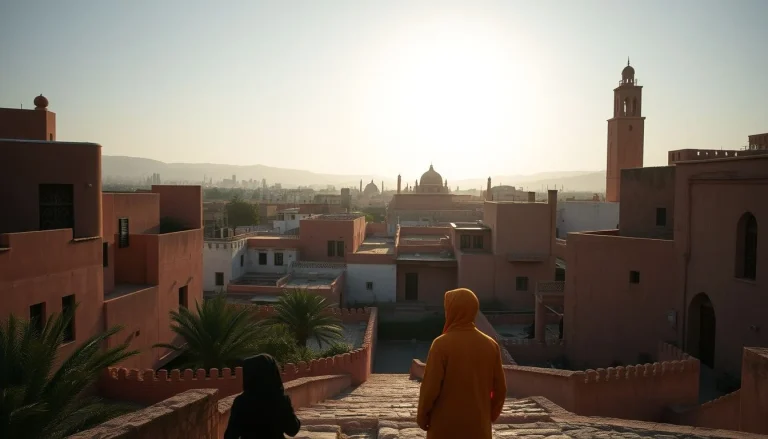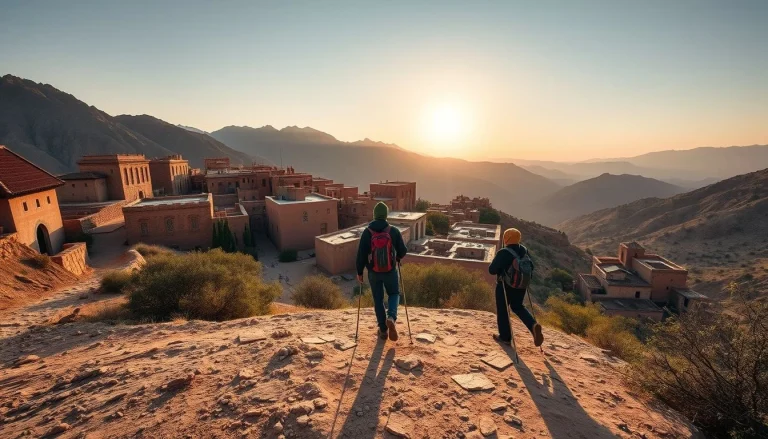
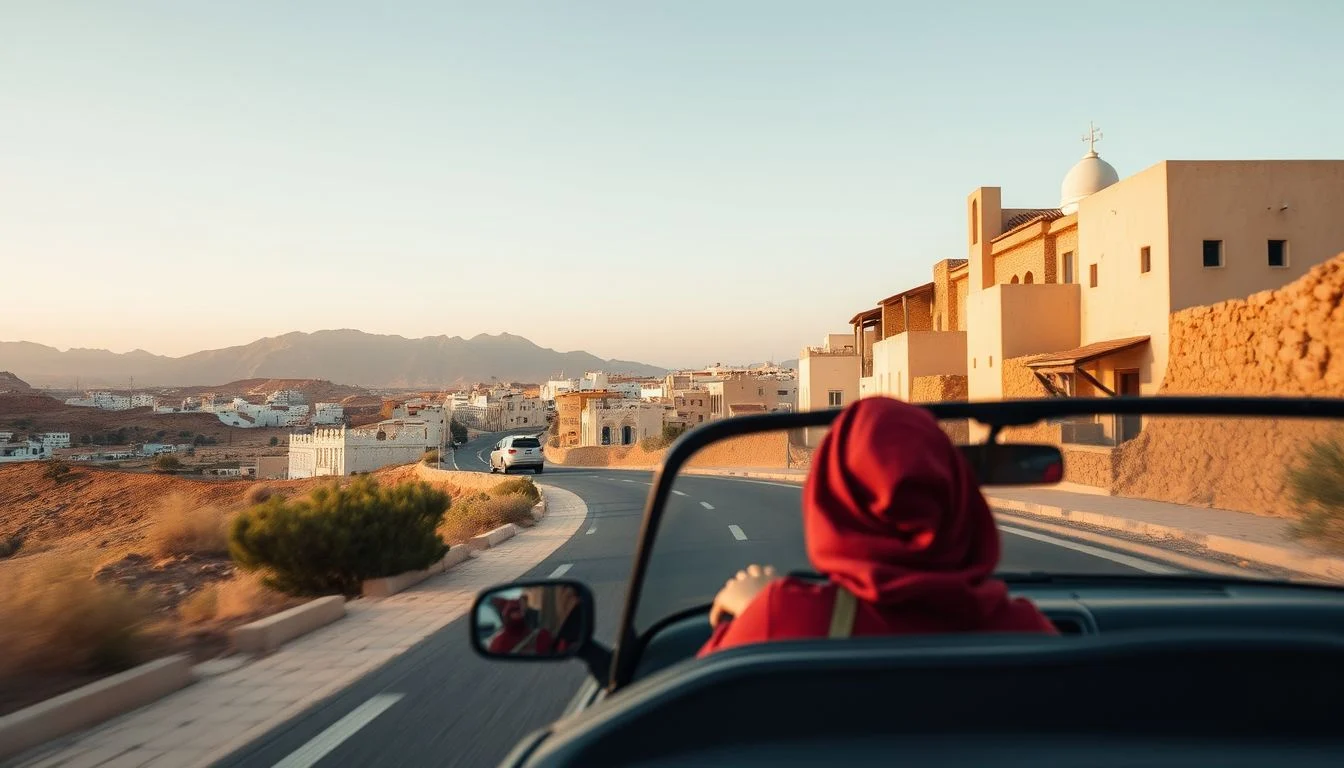
From Marrakech to Merzouga, the road climbs through the hairpins of the Tizi n’Tichka pass before reaching the kasbahs of Aït Benhaddou, the palm groves of the Dades Valley and the dunes of Erg Chebbi. The route is commonly reported at about 550–620 km and 9–10 hours of pure driving. Mountain bends, village roads, fuel stops, livestock and viewpoints mean you’ll need to pace the journey carefully.
This guide to driving in Morocco is for adventure travellers choosing between a self-drive itinerary and a private driver, or between a small rental car and a 4×4. It separates published driving times from realistic travel days, explains where the paved route is manageable and flags when winter weather, desert heat, darkness or fatigue should change the plan. The route runs through Ouarzazate and Skoura, then the Dades Valley, Todra Gorge, Erfoud, Rissani and Merzouga before the long drive north to Fes.
Quick answer: The Marrakech–Merzouga drive is commonly reported at about 550–620 km and 9–10 hours of pure driving, but it’s more realistic to divide it over two or three travel days before continuing to Fes. The main route is paved and usually manageable in a standard small car. A 4×4 is mainly useful for dunes or remote off-road travel, while spring and autumn offer the best driving conditions.
Marrakech–Merzouga–Fes route: distances, driving time and difficulty
Treat the headline figures as planning markers, not as a promise of an easy day behind the wheel. Hairpin bends over the High Atlas, village traffic, fuel stops, photographs and unplanned pauses make the route feel much longer than its pure driving time. A six- to eight-day Morocco self-drive itinerary is the practical minimum for Marrakech, the desert and Fes; add time if hiking in the valleys or taking a desert excursion matters to you.
| Leg | Published distance | Pure driving time | Practical approach |
|---|---|---|---|
| Marrakech–Ouarzazate | Approximately 200–210 km | About 3.5–4 hours | Allow most of a day for Tizi n’Tichka, viewpoints and Aït Benhaddou |
| Ouarzazate–Merzouga | Approximately 355–370 km | About 5–6 hours | Split with Skoura, the Dades Valley, Todra Gorge or an overnight in Tinghir |
| Merzouga–Fes | Approximately 450–500 km | Generally a full day | Stop in Midelt to avoid an exhausting desert-to-city push |
The route figures come from published route guides including MerzougaWay’s distance breakdown and guides to the Ouarzazate–Merzouga section. The central route suits confident adventure drivers who enjoy changing scenery and are comfortable slowing down for mountain roads. A standard small car is normally adequate on the paved route; the difficult part is concentration and pacing, not a need for specialist off-road equipment.
First-time visitors should avoid compressing Marrakech to Merzouga into one day, even if the map appears to make it possible. Travellers with limited time may prefer a private driver for the mountain and desert sections, then self-drive elsewhere; independent driving offers flexibility, but it demands daylight planning and patience. If Fes is fixed and the schedule is tight, consider dropping a valley stop rather than driving the Merzouga–Fes leg after fatigue has set in.
Car hire in Morocco: licences, vehicles and road conditions
Documents and licence requirements
Before collecting the car, carry your valid domestic driving licence, passport, rental documents and proof of insurance. Many rental companies also request an International Driving Permit (IDP) alongside your domestic licence, but recognition can vary by nationality and provider. Confirm the exact requirement with the rental company and your embassy or consulate before departure, rather than assuming that a licence written in Latin characters will be sufficient; this is also the guidance in Morocco’s official transport information.
Check the contract as carefully as the vehicle. In particular, ask about the insurance excess, deposit, roadside assistance, one-way fees and any exclusion for unpaved roads. Those details matter here: a standard rental can be suitable for the main route, but cover that excludes gravel tracks will not help if you take a desert excursion beyond the paved road.
Which vehicle suits the route?
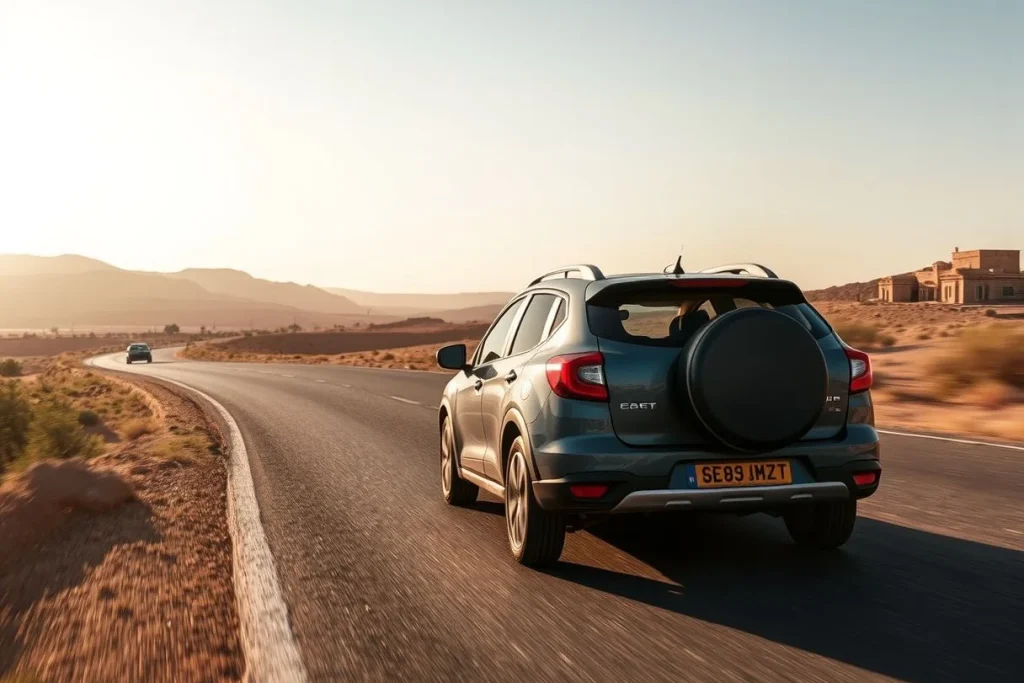
The main Marrakech–Merzouga route, using the N9, N10 and N13, is paved to Merzouga. A standard small car is generally adequate for that journey, according to Morocco Travel and Tourism’s 2026 vehicle guidance. You do not need a 4×4 simply to reach the dunes; hire one, or arrange a local 4×4 excursion, for dune driving and remote off-road travel instead.
The difficult part is not the final approach to the desert but the changing road environment. Around villages and on secondary roads, expect narrow or uneven surfaces, limited lighting, unmarked speed bumps, livestock and pedestrians. The High Atlas crossing adds bends and mountain driving, so allow more time than a map’s estimate suggests and avoid treating the route as a race between viewpoints.
What driving in Morocco feels like
On autoroutes, speed limits generally reach 120 km/h; other roads have lower limits, with police and speed cameras enforcing the rules, according to the ASIRT Road Safety Review: Morocco. In towns, roundabouts, sudden crossings and overtaking require particular attention. Leave a generous following distance, reduce speed before blind bends and assume that a vehicle, person or animal may appear beyond the edge of the carriageway.
ASIRT identifies a higher collision risk than in many European countries, which makes defensive driving more than a matter of comfort. Daylight is the sensible limit for rural sections: night driving combines unlit roads, livestock and poorly marked hazards with fatigue after a long mountain day.
Self-drive or private driver?
Self-drive suits an experienced adventure traveller who wants to stop in a valley, change an overnight plan or explore independently. A private driver costs more, but removes much of the navigation, overtaking and mountain-pass stress and lets passengers concentrate on the landscape. The practical compromise is to drive the easier paved sections independently and use a driver or local 4×4 for demanding mountain, canyon or desert excursions.
Stop by stop: a realistic Marrakech–Merzouga–Fes itinerary
The workable Morocco self-drive itinerary is a sequence of short, scenic legs rather than one heroic Marrakech to Merzouga drive. The main route is paved and a standard car is usually sufficient, but the High Atlas crossing, remote fuel gaps and desert logistics reward an unhurried plan.
Morning

Marrakech to Tizi n’Tichka and Aït Benhaddou
Leave Marrakech with the High Atlas crossing as the day’s main objective. The N9 climbs towards Tizi n’Tichka through hairpins and changing mountain scenery; allow more time than the published driving estimate suggests, since gradients, slower traffic, viewpoints and weather can all stretch the journey. Marrakech to Ouarzazate is commonly reported as around 200–210 km and 3.5–4 hours of pure driving, before stops and delays.
Continue towards Aït Benhaddou once over the pass. The UNESCO-listed kasbah village is a natural first cultural stop, but avoid turning this into a late push towards the desert. After a demanding mountain crossing, sleeping at Aït Benhaddou or in Ouarzazate is the sensible choice.
Ouarzazate as a useful reset
Ouarzazate works better as a practical base than as a rushed photo stop. It gives the car, driver and passengers a chance to recover, and provides access to the eastern road towards Skoura and the Dades Valley. The film-studio area is an optional visit for travellers interested in cinema and production history; those prioritising landscapes should save their time for the valleys ahead.
Afternoon
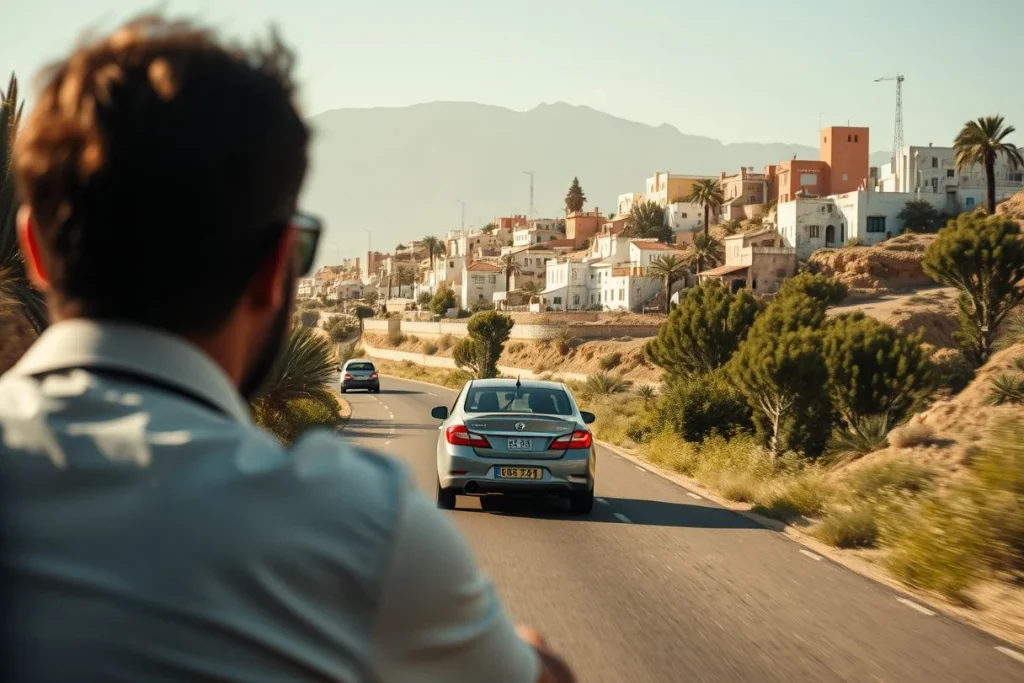
Skoura and the Route of 1000 Kasbahs
From Ouarzazate, take the eastern route through Skoura, where palm groves interrupt the dry landscape. The road then leads into the Route of 1000 Kasbahs and towards the Dades Valley. This is a scenic driving day, not a race between pins on a map: stop for viewpoints, allow for village traffic and arrive at a kasbah stay around Dades or Boumalne Dades while there is still daylight.
A self-drive car is useful here because it allows short detours and pauses, but secondary and village roads may be narrow or unlit, with speed bumps and livestock. The main route through the N9, N10 and N13 is paved to Merzouga; do not assume every attractive side road has the same surface.
Dades Valley, Todra Gorge and Tinghir
Use the next leg to connect two worthwhile canyon landscapes rather than trying to cover both quickly. Start with the Dades Valley, then continue towards Todra Gorge and Tinghir. The gorge and surrounding palm groves provide a deliberate walking and photography break after several hours behind the wheel. A short exploration is manageable for active travellers, but uneven ground, heat and limited shade make sturdy footwear and water sensible.
Stay in Tinghir or nearby if the gorge visit has taken much of the day. Continue east only when daylight, concentration and road conditions are all favourable. Pushing on while tired saves little and makes the narrow, rural sections less comfortable.
Evening
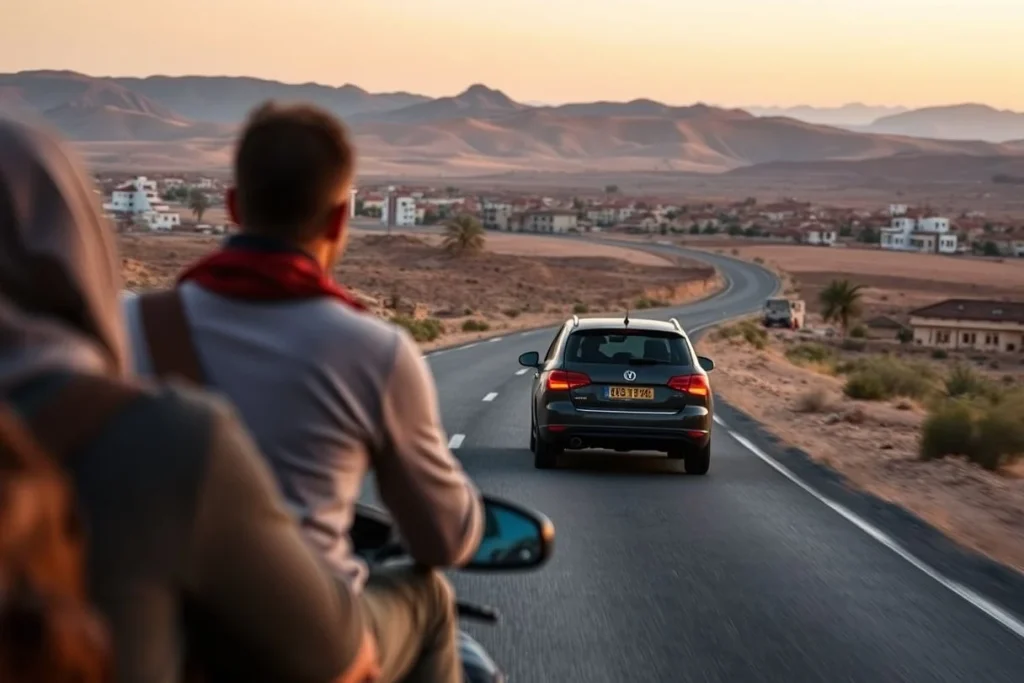
Tinghir to Erfoud, Rissani and Merzouga
The final approach to Erg Chebbi passes through Erfoud and Rissani. Treat both as useful service points: refuel, collect food and make any necessary cash or supply stop before the last desert section. Reliable fuel and other services are concentrated in towns such as Ouarzazate, Tinghir and Erfoud, according to the published route guidance, so refill when the opportunity arises rather than relying on the next settlement.
In Merzouga, the rental car normally remains on the paved approach. Desert camps and local operators arrange the camel or 4×4 transfer into the dunes; a 4×4 rental is mainly justified for remote off-road travel, not for the standard road to town. Plan for sunset, then keep the evening quiet. A sunrise excursion the following morning is more rewarding than adding a long night drive.
Merzouga to Fes
Merzouga to Fes is commonly reported at around 450–500 km and is generally a full travel day. The more realistic route breaks at Midelt, crossing the Ziz Valley and inland landscapes before continuing north. From Midelt, the road towards Ifrane offers a cooler northern transition and possible cedar-forest scenery before the final approach to Fes.
Driving directly to Fes is possible for a well-rested pair who are comfortable with a long day, but it leaves little room for stops and makes an early departure essential. Midelt is the better plan for most independent drivers.
Where to eat
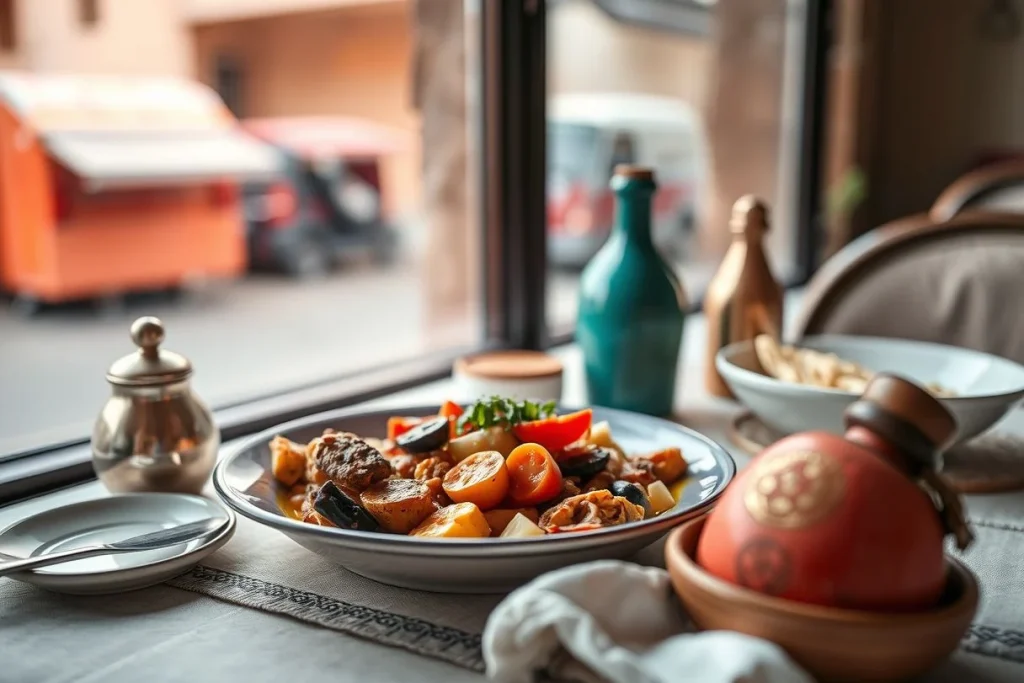
Use established town stops for fuel, breakfast and a proper lunch rather than waiting for isolated roadside services. In the valleys, look for a simple meal built around tagine, couscous, salads and bread; in Rissani, ask locally about regional market food and dates. Carry water and a few durable snacks for the longer stretches between towns. Desert camps can usually arrange dinner and breakfast, but confirm what is included when booking.
Getting around
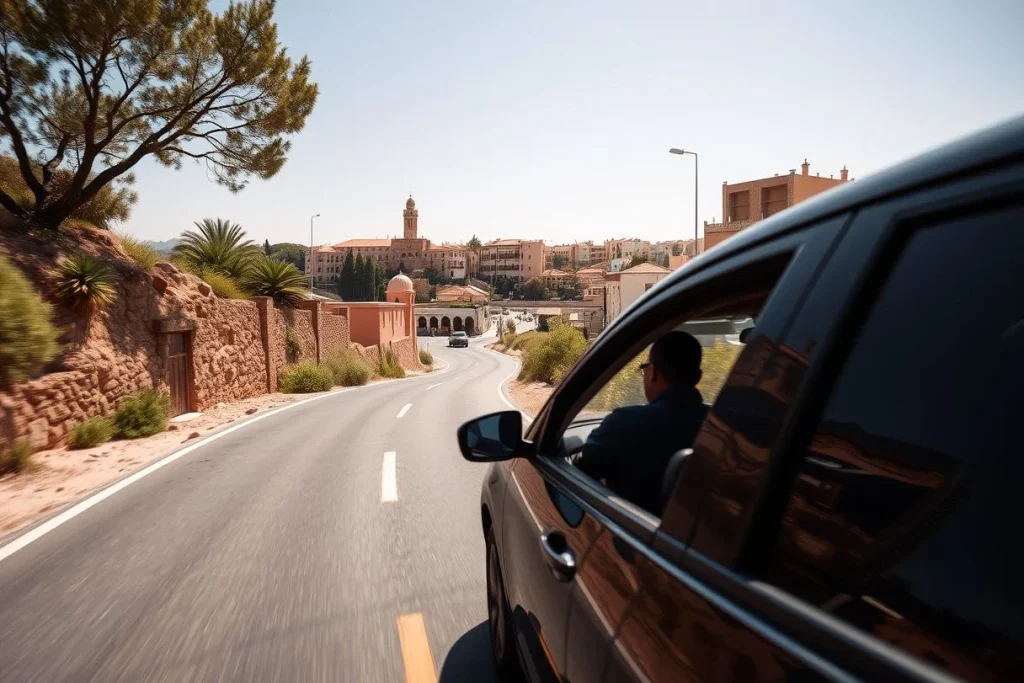
For the core route, choose a small car or compact SUV with clear rental terms, roadside assistance and insurance details. Carry your domestic driving licence, passport, rental documents and proof of insurance; many rental companies request an International Driving Permit as well, so confirm the requirement with the selected company before collection.
Published route estimates put Marrakech to Merzouga at about 550–620 km and 9–10 hours of pure driving, but sightseeing and mountain roads make two or three travel days more realistic. The route is best driven in daylight. Rural roads may be unlit, and Morocco’s road-collision risk is higher than in many European countries, so use conservative overtaking and take breaks before concentration drops.
Estimated time
| Plan | Driving | Stops and activities | Best overnight pattern |
|---|---|---|---|
| Eight days | Moderate daily legs, with one long return day avoided | Aït Benhaddou, Ouarzazate, Skoura, Dades, Todra Gorge, Erg Chebbi and Midelt | Marrakech; Aït Benhaddou or Ouarzazate; Dades; Tinghir; Merzouga; Midelt; Fes |
| Six days | Several long days and fewer pauses | Keep Aït Benhaddou, one valley stop, Todra Gorge and Merzouga | Combine Ouarzazate with the eastern route, and consider Merzouga to Fes only if the driver is fresh |
Across an eight-day version, allow roughly half a day to a full day for the main drive on each travel day, then add time for meals, fuel, viewpoints and walking. The six-day version must cut either the slower Dades and Tinghir sequence or the Midelt overnight; it should not also include Chefchaouen.
Optional extras
- For extra time: add Fes to Chefchaouen, a 190–210 km drive commonly reported at around 3.5–4.5 hours, then stay overnight rather than treating it as a return excursion.
- For lower driving stress: hire a private driver for the High Atlas and desert approach, then keep a rental car only for easier sections.
- For winter or poor weather: check official road and weather notices before crossing Tizi n’Tichka. Snow, ice, flooding or temporary closures should change the overnight plan, not be treated as a minor delay.
Best time for this Morocco road trip: weather, crowds and closures
For the most manageable driving in Morocco, choose March to May or September to October. These windows generally combine more comfortable temperatures for mountain stops and desert walks with more favourable High Atlas driving conditions, according to GuideMe’s seasonal guidance and the World Bank’s Morocco climate profile.
Summer is workable only with an early-start itinerary and a tolerance for heat. Temperatures in southern lowlands and the Sahara can exceed 40°C, making long stretches behind the wheel, canyon walks and time around Erg Chebbi uncomfortable. Keep water in the car, protect fuel and tyre checks from the hottest part of the day, and avoid building a demanding hike into a long driving leg.
November to February brings cooler desert conditions and can produce clear mountain scenery, but the route becomes less predictable. Snow and ice may affect Tizi n’Tichka, with temporary closures possible on High Atlas roads. Treat a pass crossing as weather-dependent: leave flexibility for an extra night in Marrakech, Aït Benhaddou or Ouarzazate rather than committing to a tight desert-camp booking.
Demand is reported to be highest in June, July, August and December, so reserve desert camps and popular riads ahead during those periods. If travelling around a Moroccan festival or public event, confirm dates before booking, since calendars and local traffic patterns can change. Immediately before departure, check the World Bank climate profile, DGM weather warnings and current local road notices, particularly for Tizi n’Tichka, flooding, heat and roadworks.
Morocco road-trip costs: budget, mid-range and luxury estimates
Plan the route by travel style rather than by car hire alone: the desert leg, accommodation and excursions can change the daily total more than the vehicle itself. The figures below are per person and exclude international flights.
Estimated costs (2025–2026 published estimates)
| Travel style | Estimated cost per person per day | What the estimate includes |
|---|---|---|
| Budget self-drive | USD 35–60 | Shared economy rental, budget accommodation, inexpensive meals and fuel |
| Mid-range self-drive | USD 90–180 | Compact SUV, mid-range riads, guided day tours and a desert bivouac with camel excursion |
| Luxury or private-driver trip | USD 250+ | Private 4×4 with driver, high-end accommodation and bespoke desert experiences |
Basis and date: these are published estimates for 2025–2026, drawn from Budget Your Trip for budget travel, Morocco Guide Travel for mid-range travel, and a 2024–2026 published itinerary estimate for luxury travel. Separate mid-range and luxury sub-ranges are not supported, so they should not be inferred from the table.
Allow extra room for the insurance excess, security deposit, optional tours, tips, tolls, parking and single-occupancy supplements. Live rental rates, fuel prices and accommodation costs vary by dates and vehicle, so check the rental contract and current booking prices before committing.
Sharing the car and room reduces the per-person cost most noticeably for two or more travellers; a solo driver absorbs the full vehicle, fuel and often single-room cost. Compare that saving with a private driver, whose higher price buys less navigation stress and a local guide through the mountain and desert sections.
| Item | Budget | Mid-range | Luxury |
|---|---|---|---|
| Budget self-drive | USD 35–60 per person per day | Not separately supported | Not separately supported |
| Mid-range self-drive | Not separately supported | USD 90–180 per person per day | Not separately supported |
| Luxury or private-driver trip | Not separately supported | Not separately supported | USD 250+ per person per day |
Estimated ranges based on the sources listed below. Prices change; check with providers before booking.
Driving tips that prevent mistakes on the Marrakech–Sahara route
The safest Morocco road trip is built around small checks rather than heroic driving days. Use this routine before leaving Marrakech and repeat it whenever you change vehicles or route.
- Collect the car in daylight. Photograph every existing mark, check the spare tyre, jack, lights and warning equipment, and confirm the insurance excess, roadside-assistance number and emergency procedure in the rental contract.
- Carry the right documents. Keep your passport, domestic driving licence, any requested International Driving Permit, rental papers and proof of insurance together. Requirements can vary by rental company, so confirm them before collection.
- Fuel with a margin. Fill up in Ouarzazate, Tinghir and Erfoud rather than assuming there will be continuous services between towns; fuel and reliable facilities are concentrated in these larger stops, according to Merzouga Desert Tours.
- Leave mountain legs early. The N9 and connecting roads over the High Atlas are more manageable with daylight in hand. Download offline maps, save the accommodation address, and allow time for viewpoints, slower traffic and unexpected delays rather than treating published driving time as the whole day.
- Avoid rural night driving. Secondary roads may be unlit, with unmarked speed bumps, livestock and pedestrians. The route is paved to Merzouga, but village roads can be narrow; if the light is fading, stop at the next sensible town instead of pressing on.
- Drive defensively. ASIRT’s Morocco road-safety review describes a higher collision risk than in many European countries. Overtake conservatively, stay patient behind slow vehicles, reduce speed on hairpins and never continue when tired; autoroute limits are generally 120 km/h, with lower limits elsewhere and enforcement by police and cameras.
- Pack for isolation and temperature swings. Keep water, snacks, warm layers, a power bank and cash in the car. Check DGM weather warnings, pass status, roadworks, phone coverage and the latest GOV.UK Foreign travel advice for Morocco, updated 15 September 2026, including its guidance on protests, terrorism, scams and street crime. Verify your nationality-specific entry and passport rules before departure.
If something goes wrong: stop somewhere safe, contact the rental company and document the scene. For a puncture or collision, use local assistance if needed, but do not surrender your passport; avoid informal repairs unless the work and payment are recorded for the rental company.
Conclusion: choose the route that matches your driving tolerance
Choose a self-drive Morocco road trip if you’re comfortable with hairpins, long rural legs and adjusting plans when mountain weather changes. A small rental car is sufficient for the paved Marrakech–Merzouga route; allow two or three travel days before continuing to Fes, and favour spring or autumn dates.
If that sounds tiring rather than adventurous, hire a private driver for the Tizi n’Tichka crossing and desert section. You’ll give up some independence, but gain a calmer pace and local support on demanding roads.
Next, select your dates, check current official road and weather conditions, confirm licence, insurance and rental terms, then reserve realistic overnight stops and your Merzouga desert camp. Build in daylight margins rather than planning around the shortest published driving time.
Frequently asked questions
Is this route suitable for a first-time mountain driver?
It can be, provided you are comfortable with slow, attentive driving rather than treating the route as a race. The Tizi n’Tichka crossing involves hairpins, while secondary and village roads may be narrow, unlit and affected by speed bumps or livestock. Morocco’s collision risk is higher than in many European countries, so the ASIRT road-safety review supports defensive driving, conservative overtaking and avoiding rural driving after dark.
What should I do if Tizi n’Tichka is closed or conditions deteriorate?
Do not attempt to cross a pass affected by snow, ice, flooding or an official closure. Pause in Marrakech or another suitable town, then check the latest Moroccan weather and road notices before continuing; winter conditions can temporarily close High Atlas passes. The GOV.UK Morocco travel advice, updated 15 September 2026, recommends checking current local conditions, while the route guidance also flags changing roadworks and weather as reasons to recheck timings.
How many nights should I spend around Merzouga?
Allow at least two nights if the desert is a main reason for taking this route. That gives you a travel day to reach Merzouga, a night in or near an Erg Chebbi camp, and time for a sunrise, sunset or optional camel and 4×4 excursion without immediately turning around. One night is possible, but it makes the desert stop feel like a fixed appointment and leaves little margin for delays on the road from Ouarzazate.
Can I add Chefchaouen without making the itinerary too rushed?
Yes, but add it after Fes rather than trying to squeeze it between the desert and the imperial city. Merzouga to Fes is already commonly reported as approximately 450–500 km and generally a full travel day; Fes to Chefchaouen adds approximately 190–210 km and around 3.5–4.5 hours by car. Give the Rif extension at least an extra night, and omit it if reaching Fes already requires an exhausting push.
Should I book a desert camp before starting the drive?
Book ahead when travelling during the reported high-demand periods of June, July, August or December, particularly if you need a specific camp style or date. In quieter periods, leaving more flexibility may suit an adventure traveller who wants to adjust the itinerary after mountain delays, but confirm the camp’s meeting point and transfer arrangements before setting out. The route guidance identifies desert accommodation as worth booking ahead in busy periods; check current availability directly with the camp.
What should I do if my rental car breaks down in a remote area?
Before collecting the car, confirm the rental company’s roadside-assistance number, insurance excess, recovery conditions and any restrictions on unpaved roads. If a problem occurs, contact the rental company first and follow its recovery instructions rather than arranging an unapproved repair or off-road recovery. Services are concentrated in towns such as Ouarzazate, Tinghir and Erfoud, so the route guidance for reaching Merzouga supports refuelling and checking the vehicle whenever you reach one of these service centres.